
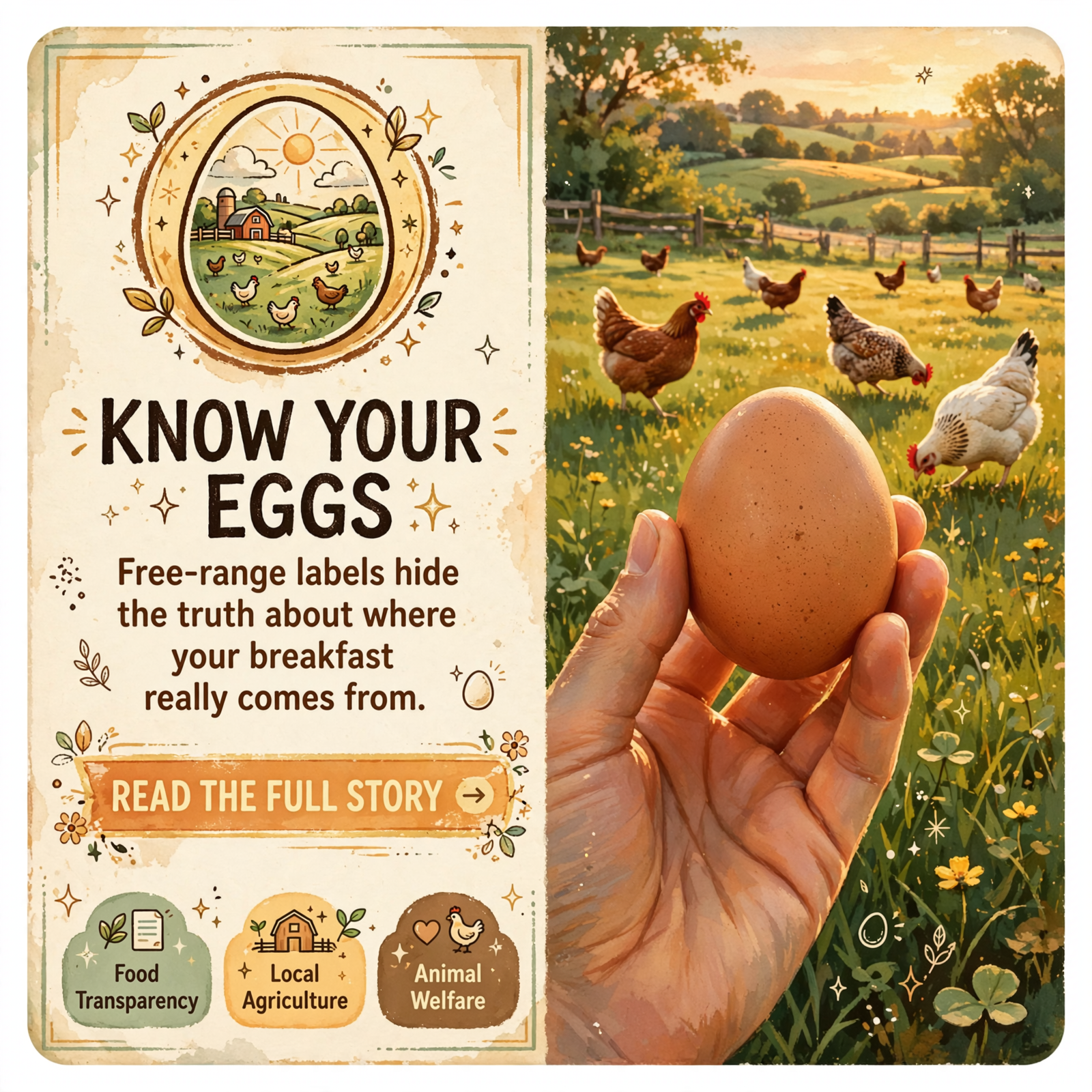
🥚 What “Free Range” Really Means – And Why Local Egg Choices Matter
When you reach for eggs at the grocery store, the label might say “free range,” but that term can mean very different things depending on where those eggs came from. For residents in the Sequatchie Valley and nearby communities who care about knowing their food sources, understanding the difference between commercially produced “free-range” eggs and truly pasture-raised eggs can change how you shop and what you feed your family.
📍 The Real Difference Between Labels and Reality
The term “free range” doesn’t always mean what shoppers assume. Commercially produced “free-range” eggs typically come from hens that have access to outdoor space, but that space is often minimal-sometimes just a small concrete yard with thousands of other birds. The hens may never actually go outside, and they’re usually fed a standard industrial diet heavy in corn and soy.
True pasture-raised eggs come from chickens that spend their days doing what chickens naturally do: scratching through grass, hunting for bugs, soaking up sunshine, and foraging. When those birds also eat quality, corn- and soy-free feed, the result is fundamentally different-not just in how the birds live, but in the nutritional profile and appearance of the eggs themselves. Many people notice the difference immediately: pasture-raised eggs often have deeper orange yolks compared to the pale yellow of grocery-store eggs. 🌾
💡 Why This Matters to Your Community
For families in the Sequatchie Valley and surrounding areas, this distinction touches on something deeper than just breakfast. It’s about food transparency, local agriculture, and the choice between industrial food systems and knowing exactly where your food comes from. When you buy eggs from a local farm or producer like McCarty Farmstead, you’re supporting neighbors who raise animals the way they believe is right-and you’re getting a product that reflects that care.
The growing interest in pasture-raised and locally sourced eggs reflects a broader shift in how people think about food quality and animal welfare. It’s a trend that strengthens local farms and gives families real alternatives to mass-produced options. ✨
🐓 Community Connections: Local Egg Sources
If you’re interested in finding truly pasture-raised eggs in your area, several local farms and producers focus on raising chickens on pasture with quality feed. Residents looking to support local agriculture and get eggs from birds raised the way they believe is right have options within reach-whether that’s through farmers markets, direct farm purchases, or community connections.
For those curious about starting their own small flock or learning more about pasture-based poultry, local agricultural communities and farming networks can offer guidance and resources. Many people in the valley have experience raising backyard chickens and are often willing to share what they’ve learned. 🌄
❤️ The Human Side: What Shoppers Really Want
Behind this conversation is a simple human desire: to know where food comes from and to feel confident about what you’re feeding your family. When you buy an egg from a local farm like McCarty Farmstead, you might know the farmer’s name, see the pasture where the chickens live, or understand the exact feed they eat. That transparency builds trust in a way a grocery-store label never can.
For families with dietary concerns, allergies, or preferences about how animals are raised, local sources offer control and certainty that industrial supply chains simply cannot match. And for the chickens themselves, the difference between a concrete yard and an open pasture is the difference between confinement and living according to their nature. 🥚
🗓️ What Residents Should Know
If you’re interested in exploring pasture-raised eggs or other locally sourced foods, here are some practical steps:
- Ask questions at farmers markets: Talk directly with producers about how their chickens are raised, what they’re fed, and how often they’re on pasture.
- Visit local farms: Many small farms welcome visitors and are happy to show you their operation. Seeing the birds and the pasture firsthand answers a lot of questions.
- Connect with neighbors: Word-of-mouth is often the best way to find local egg sources. Ask around-someone in your community likely knows a reliable producer.
- Consider a small backyard flock: If you have space and interest, raising a few chickens yourself is more feasible than many people think. Local farming communities can offer advice and support.
🌱 Long-Term Community Impact
The shift toward pasture-raised and locally sourced eggs reflects a larger movement toward food independence and agricultural resilience in rural communities. When families choose local eggs, they’re supporting small farms, keeping agricultural knowledge alive, and building food systems that are less dependent on industrial supply chains. Over time, this can strengthen the local economy, preserve farmland, and create a culture where knowing your food producer is normal rather than exceptional.
For the Sequatchie Valley and surrounding communities, this trend aligns with the region’s agricultural heritage and the growing interest in sustainable, local food systems. It’s a way for residents to participate in their own food security while supporting neighbors who share their values. 🌾
💬 Questions Worth Asking
As you think about where your eggs come from, consider these questions:
- What does “free range” actually mean on the labels you see at your local grocery store-and how is that different from what you’d get from a local farm?
- How might supporting local egg producers strengthen agriculture in your community?
- What barriers exist for families who want to buy local eggs, and how could your community address them?
- If you raised a few backyard chickens, what would change about how you think about food?
- How does knowing where your food comes from affect your confidence in what you’re eating?
🔗 Community Threads: The Farm-to-Table Relationship
The Producer-Consumer Connection: When you buy eggs directly from a local farm or farmer, you’re building a relationship based on trust and transparency. The farmer knows you care about how their birds are raised, and you know exactly what you’re getting. This direct relationship strengthens both the farm’s business and your family’s confidence in your food. It’s a thread that runs through many successful local food systems.
Agricultural Knowledge and Mentorship: Local farmers and backyard chicken enthusiasts often share knowledge freely-advice on breeds, feed, housing, and pasture management. This informal mentorship keeps agricultural skills alive in the community and makes it easier for newcomers to start their own flocks or support local producers. It’s how communities maintain food independence across generations.
Land Use and Community Identity: Pasture-raised farming requires land managed for grazing and foraging, which shapes how the landscape looks and functions. When families choose local eggs, they’re voting for a landscape that includes working farms and pastures-not just development. This affects community character, property values, and the sense of place that makes rural communities distinctive. 🌄

0 Comments