
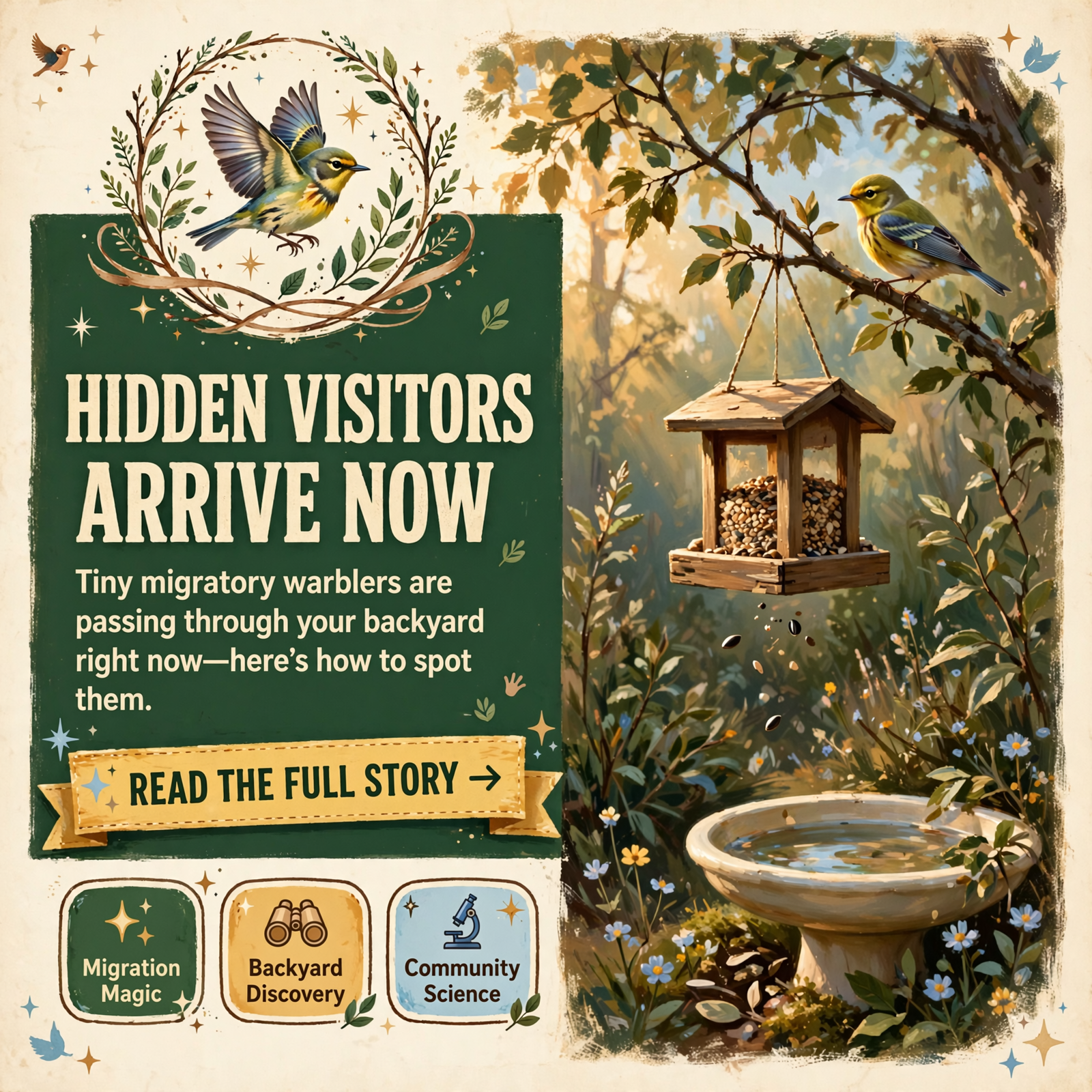
🐦 Warbler Season Arrives in Dunlap – Here’s How to Spot Fall Migration’s Hidden Visitors
As autumn migration sweeps through Middle Tennessee, backyard birdwatchers across the Sequatchie Valley and surrounding communities are getting a seasonal reminder: the birds visiting your feeder may be your best clue to spotting something far rarer. The Happy Birdwatcher Company in Dunlap is sharing practical advice to help local residents make the most of warbler season – and one stunning photograph from a Dunlap resident shows exactly what’s possible when you know where to look.
🌳 Why This Matters
Warbler season represents a brief window of opportunity for backyard birdwatchers. These small, colorful migratory birds don’t typically visit seed feeders the way chickadees and titmice do – but they often travel through the same trees and join the same mixed flocks. That means a busy feeder isn’t just a sign of local activity; it’s a signal that something more is happening in the canopy above. For residents who take time to look beyond the feeder, warbler season can transform a quiet backyard into a window on one of nature’s most dramatic annual events: the movement of millions of birds across continents.
💡 What Residents Should Know
The Happy Birdwatcher Company offers three practical steps to increase your chances of spotting warblers during fall migration:
- Keep your feeders filled. A well-stocked feeder attracts the common birds that often travel alongside warblers, signaling that activity is happening nearby.
- Keep your birdbath clean and full. Water is essential during migration, and a clean birdbath can draw birds down from the trees for a closer look.
- Look beyond the feeder. Once you notice activity at your feeder, scan the trees and shrubs around it. Warblers often forage in the canopy and mid-story vegetation, especially in areas with mixed flocks of chickadees, titmice, and other familiar species.
🎯 Community Connections
This seasonal reminder reflects a growing interest in backyard birdwatching across the Sequatchie Valley and nearby communities. Local residents like Tamara in Dunlap are already contributing to this effort – her photograph of a Black-throated Green Warbler, shared with The Happy Birdwatcher Company, shows the caliber of visitors that can appear in area backyards during migration. When residents share observations and photographs, they create a collective picture of what’s moving through the region and when, strengthening the local birdwatching community and helping others know what to expect.
❤️ Human Impact
For many residents, warbler season offers a moment of connection to something larger than their immediate surroundings. The arrival of these migratory birds – some traveling thousands of miles between breeding grounds in the north and wintering grounds in Central and South America – reminds us of the natural rhythms that shape our region. For families, it’s an opportunity to spend time outdoors together, learning to identify birds and understanding the seasonal cycles that define life in Middle Tennessee. For experienced birders, it’s a chance to add new species to their personal records and contribute to citizen science efforts that track migration patterns.
🔍 Local Perspective
The Sequatchie Valley and surrounding communities sit along a significant migration corridor. The valley’s mix of forests, open areas, and water sources makes it attractive to migrating birds, and residents with well-maintained feeders and birdbaths can play a small but meaningful role in supporting these travelers. Warbler season typically peaks in spring and fall, with fall migration often extending from late August through October. For Dunlap and nearby areas, this means the next several weeks offer prime viewing opportunities – especially in early mornings when bird activity is highest.
🌟 Opportunities for Connection
Residents interested in learning more about fall migration and warbler identification can access additional resources through The Happy Birdwatcher Company. Whether you’re a longtime birder or just beginning to notice the birds in your yard, warbler season invites participation at any level: maintaining feeders and birdbaths, learning to identify common species, photographing interesting sightings, or simply spending time observing the natural world. Sharing observations with local birdwatching communities – like those following The Happy Birdwatcher Company – helps build a collective understanding of what’s moving through the region and strengthens connections among neighbors who share this interest.
📍 What Happens Next
Warbler season will continue through the coming weeks as fall migration progresses. Residents who implement these simple practices – keeping feeders filled, maintaining clean water sources, and watching the trees – may notice increased activity in their yards. The diversity and abundance of warblers visible during any given week depends on weather patterns, food availability, and other natural factors, so each day may bring different species. For those interested in tracking what’s being seen locally, sharing photographs and sightings with The Happy Birdwatcher Company or other community birdwatching groups helps document the migration and builds a record of what passes through the Sequatchie Valley each year.
🤔 Community Questions Worth Considering
- Have you noticed increased bird activity in your yard during fall migration, and what species have you spotted?
- How might maintaining feeders and birdbaths during migration season benefit not just your own birdwatching experience, but also support birds traveling long distances?
- What would it take to turn casual backyard bird observation into a community-wide effort to document and understand migration patterns in the Sequatchie Valley?
- How can residents share their warbler sightings and photographs to help build a collective picture of what’s moving through the region?
🌍 Long-Term Community Impact
As climate change and habitat loss increasingly affect bird populations and migration patterns, the role of backyard birdwatchers becomes more important. Residents who maintain quality habitat – feeders, water sources, and native plants – contribute to a network of support for migrating birds. Over time, as more households participate in these practices and share observations, communities develop a deeper understanding of local ecology and seasonal rhythms. This awareness can inspire broader conservation efforts, from protecting local forests and wetlands to supporting organizations working to preserve critical migration habitat. For the Sequatchie Valley and surrounding communities, warbler season is not just a moment of natural beauty – it’s an invitation to become part of a larger story of migration, survival, and seasonal renewal.
🔗 Community Threads: The Backyard-to-Migration Connection
The Feeder as Migration Hub: A simple bird feeder in a Dunlap backyard connects directly to the continental migration system. When you fill that feeder during warbler season, you’re supporting not just the chickadees and titmice that visit regularly, but also the warblers and other migrants that depend on the same trees and food sources. This invisible thread links individual households to a vast network of birds, habitats, and ecosystems stretching from Canada to Central America. Understanding this connection transforms a backyard feeder from a casual hobby into participation in one of nature’s most remarkable annual events.
Observation as Community Knowledge: When Tamara in Dunlap photographed a Black-throated Green Warbler and shared it with The Happy Birdwatcher Company, she contributed to a collective body of local knowledge. Each photograph, sighting, and observation adds to the community’s understanding of what species pass through the region, when they arrive, and what conditions support them. Over time, this shared knowledge becomes a resource for new birdwatchers, a record of seasonal patterns, and evidence of how local conditions support or challenge migrating birds. The thread connecting individual observers to a community of practice strengthens both personal experience and collective understanding.


0 Comments