
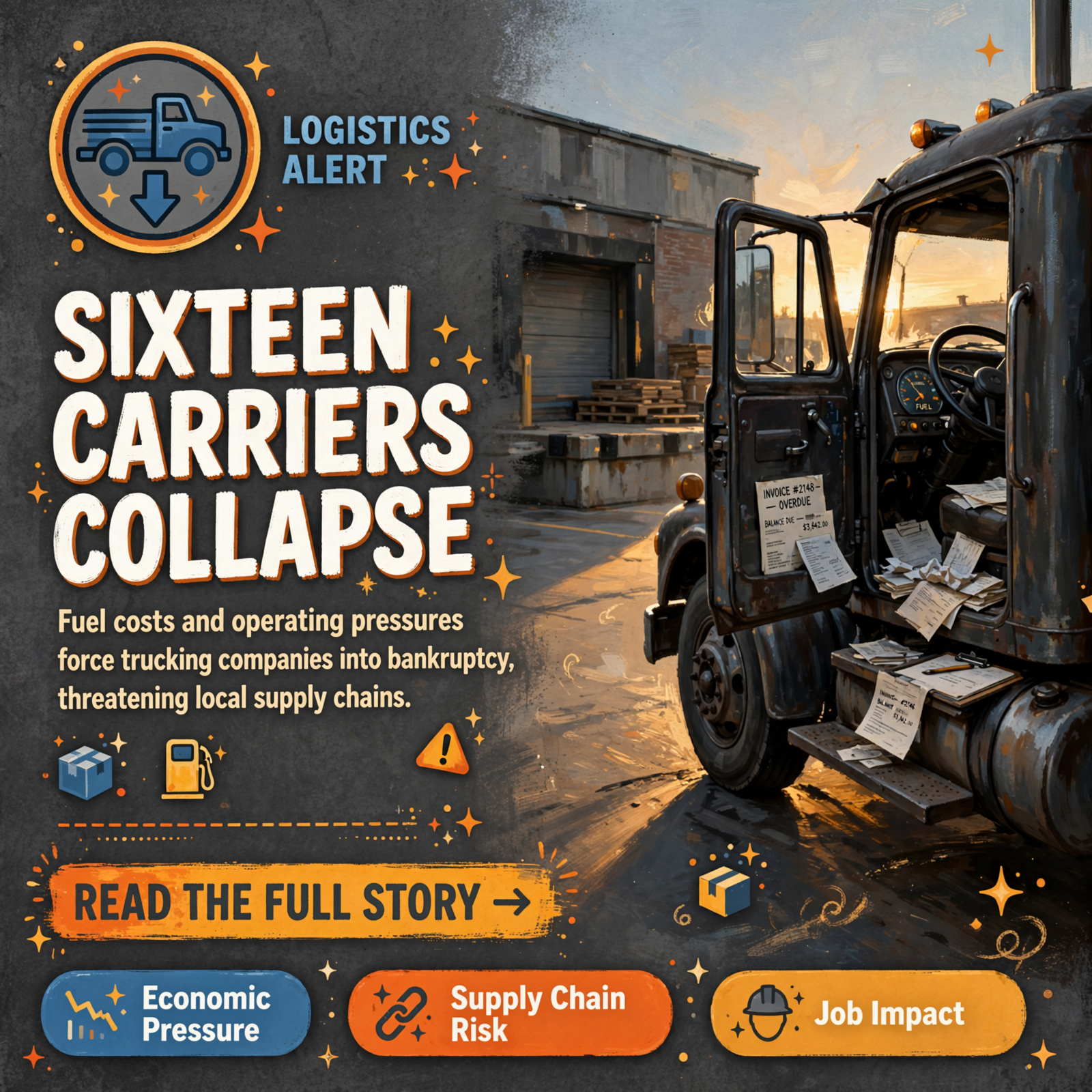
🚛 Trucking Industry Under Pressure: 16 Companies File for Bankruptcy as Diesel Costs Soar
The trucking and delivery industry is facing a sharp contraction, with sixteen companies filing for bankruptcy in a single month as fuel prices and operating costs squeeze carriers across the country. For communities like those in the Sequatchie Valley and surrounding regions where trucking, construction, and logistics are vital to the local economy, the ripple effects of these closures may already be felt-or soon will be.
📊 What’s Happening
According to recent reporting, sixteen trucking and delivery companies-ranging from single-truck owner-operators to fleets with dozens of drivers-filed for bankruptcy in less than a month. While the filings don’t point to diesel fuel alone as the sole cause, they reveal a troubling pattern: many carriers are operating with razor-thin margins. When diesel climbs above $6.50 a gallon on top of insurance, maintenance, regulatory compliance, and driver wages, even modest increases in expenses can push a business past the breaking point. 📈
💡 Why This Matters Locally
Trucking and transportation are the backbone of rural and small-town economies. Carriers move goods to local businesses, haul materials for construction projects, deliver supplies to farms and manufacturers, and connect communities to regional markets. When trucking companies fail, the effects ripple outward: construction projects may slow, delivery times may lengthen, freight rates may rise, and local drivers lose jobs. For residents who depend on reliable, affordable transportation of goods-whether that’s fuel, groceries, building materials, or equipment-bankruptcies in the trucking sector can mean higher costs and fewer options. 🏗️
👥 Who Is Affected
Owner-operators and drivers: Independent truckers and company drivers face job loss, unpaid wages, or forced transitions to other carriers-often at lower pay or with longer hours. Many owner-operators have invested their life savings in their trucks and are now watching those assets disappear.
Small businesses and manufacturers: Local shops, construction firms, and manufacturers depend on reliable trucking to move raw materials in and finished goods out. When carriers fold, businesses scramble to find alternatives, often at higher cost or with service delays.
Consumers: Higher transportation costs eventually translate to higher prices at the pump, the grocery store, and the hardware store. Delivery delays can affect everything from home repairs to medical supplies.
Communities: Trucking jobs often provide stable, middle-class income for families without requiring a four-year degree. When those jobs disappear, local tax bases shrink and families may relocate to find work elsewhere. 🏘️
🔍 The Pressure Points
The post raises a critical question: If you run a truck, what’s putting the most pressure on your business right now? The answer likely includes multiple stressors working together:
- Fuel costs: Diesel above $6.50 per gallon is a major line item for any carrier. A truck that burns 6-7 gallons per hour can see fuel bills double or triple when prices spike.
- Insurance: Commercial trucking insurance has risen sharply in recent years, driven by accident claims, litigation costs, and underwriting losses.
- Maintenance and repairs: Trucks are complex machines. A single engine overhaul or transmission replacement can cost $10,000 to $30,000 or more.
- Driver wages: Competition for qualified drivers has pushed wages up-a necessary cost, but one that squeezes profit margins for smaller carriers.
- Regulatory compliance: Hours-of-service rules, safety inspections, licensing, and permitting add overhead that larger fleets can absorb more easily than single-truck operators.
🤝 Community Connections
The trucking industry is deeply woven into the fabric of rural Tennessee. Local construction companies, manufacturers, and retailers all depend on carriers to move goods. Families in the region often have members who drive trucks-whether as owner-operators, company drivers, or dispatchers. When the industry contracts, those connections strain. A driver who loses a job may leave the community to find work elsewhere. A small construction firm that loses its preferred carrier may face delays on projects. A family business that relied on a local trucking partner may need to find a new solution. 🛣️
📍 What Residents Should Know
If you or someone in your family works in trucking, construction, logistics, or a related field, this trend is worth monitoring. Watch for:
- Rising freight rates: As carriers consolidate and competition shrinks, shipping costs may increase for local businesses-and those costs often get passed to consumers.
- Service delays: Fewer carriers may mean longer wait times for deliveries, repairs, or specialized transport.
- Job market shifts: Surviving carriers may hire drivers from failed companies, but at lower wages or with different terms. Some drivers may need to relocate.
- Local business impacts: If a local construction firm, manufacturer, or retailer loses a key carrier relationship, it may affect their ability to serve customers on time and at competitive prices.
⏭️ What Happens Next
The trucking industry will likely continue to consolidate. Larger, better-capitalized carriers with access to fuel hedging, insurance pools, and technology investments will survive and grow. Smaller operators and owner-operators will face continued pressure. Diesel prices will fluctuate based on global oil markets, but the structural cost pressures-insurance, maintenance, wages, regulation-are unlikely to ease. The question for communities is whether local trucking capacity will shrink, forcing businesses to rely on larger regional or national carriers, or whether smaller operators will find ways to adapt and survive. 🔄
💭 Community Questions Worth Asking
- How many trucking companies and owner-operators operate in or serve your area, and how many have closed or reduced service in the past year?
- Are local construction projects, manufacturers, or retailers experiencing delays or higher costs due to trucking shortages?
- What support or resources exist locally for drivers who lose jobs or need to transition to new work?
- How might rising transportation costs affect the price of goods and services in your community over the next 12 months?
- Are there opportunities for local businesses to collaborate on shared transportation solutions or to support trucking companies that serve the area?
🌱 Long-Term Community Impact
The consolidation of the trucking industry could reshape rural economies. If smaller carriers disappear, communities may lose not just jobs but also local business relationships and the flexibility that owner-operators provide. On the other hand, if larger carriers invest in the region, they may bring stability and modern equipment. The real risk is a middle ground: fewer carriers, higher costs, and less personalized service for small businesses and rural communities. Over time, this could affect where businesses choose to locate, how quickly goods move through the region, and whether young people see trucking as a viable career path. 📉
🔗 Community Threads: The Carrier-Customer Relationship
Many small businesses in rural areas have long-standing relationships with local trucking companies and owner-operators. A construction firm may have worked with the same carrier for 15 years. A manufacturer may rely on a specific driver who knows the route and the business’s needs. These relationships are more than transactional-they’re built on trust, reliability, and mutual investment. When a carrier goes bankrupt, that thread breaks. The business must find a new carrier, often a larger, more distant company with no local ties. The driver loses not just a job but a community connection. Understanding this relationship layer helps explain why trucking bankruptcies matter beyond the headline: they’re not just economic events, they’re disruptions to the networks that hold communities together. 🧵
🤔Source
Trucking Till The End – Discussion about recent trucking company bankruptcies and the rising cost of diesel fuel and business expenses.




0 Comments