
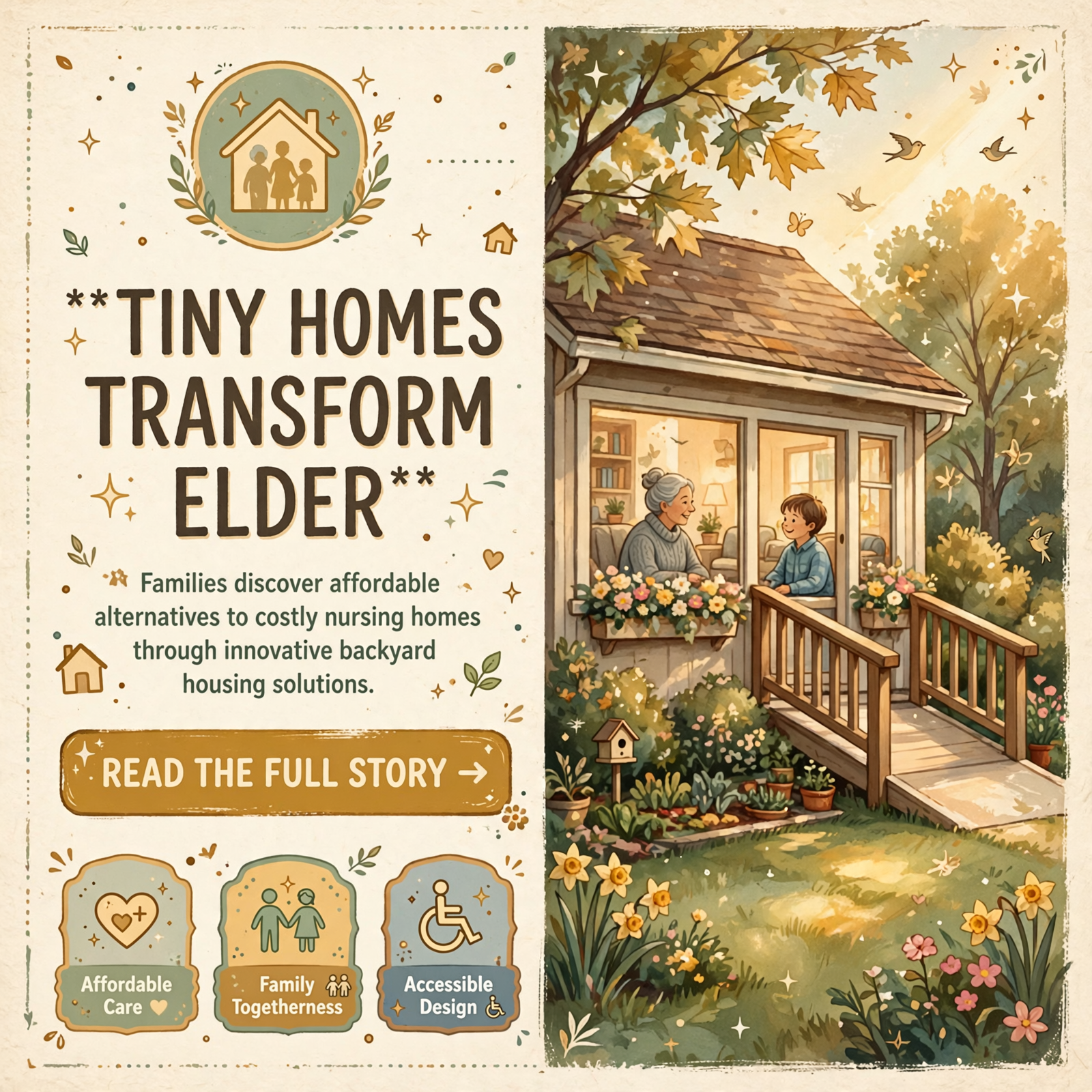
🏡 Tiny Homes Emerge as Alternative to Rising Nursing Home Costs for Aging Parents
As long-term care expenses climb across the country, families in rural and small-town communities are exploring a growing trend: building or placing small, accessible homes on family property to care for aging parents at home. This shift reflects both economic pressure and a cultural preference for multigenerational living that resonates deeply in regions like the Sequatchie Valley and surrounding areas.
📊 Why This Matters
Nursing home and assisted living costs have become a significant financial burden for many families. For residents in the Sequatchie Valley, Cumberland Plateau communities, and nearby counties, this trend carries particular weight. Many families here have deep roots in their communities and prefer to keep aging parents close-but traditional care facilities can cost thousands of dollars monthly, straining household budgets and forcing difficult choices between quality care and financial security.
Tiny homes designed specifically for aging adults offer an alternative: a way to provide safe, accessible housing while keeping family members nearby and reducing the overall cost of care. These homes can be placed on existing family property, allowing adult children to provide daily support while maintaining some independence for their aging parents. 🏠
❤️ Human Impact
For aging adults, the ability to remain in a familiar community-surrounded by family, longtime friends, and the landscape they know-can significantly affect quality of life, mental health, and sense of purpose. For adult children, it means the ability to provide hands-on care without relocating or leaving their own jobs and families.
However, this approach also brings challenges: caregiving can be physically and emotionally demanding, and not every family property or financial situation allows for this option. Some families may lack the upfront capital to build or purchase a tiny home, while others may face zoning restrictions or property limitations. Understanding these realities helps communities recognize both the promise and the practical barriers families face. 💭
🏘️ Community Connections
This trend connects to several existing community strengths in the region. Local custom home builders and construction professionals are increasingly skilled in accessible design and small-footprint building. Families exploring this option may also benefit from connections to local healthcare providers, churches, and community organizations that support multigenerational living and elder care.
For those considering tiny homes or accessory dwelling units (ADUs) on family property, understanding local zoning regulations, building codes, and available resources is essential. Many communities are beginning to recognize the value of allowing these structures and are updating regulations to make them easier to build. 🔨
💡 What Residents Should Know
If you’re considering a tiny home for an aging parent, several practical factors deserve attention:
- Zoning and permits: Check with your local county or city planning office to understand what’s allowed on your property. Some areas restrict accessory dwelling units; others are beginning to welcome them.
- Accessibility design: Tiny homes for aging adults should include features like single-floor living, wider doorways, grab bars, accessible bathrooms, and minimal steps-all of which affect cost and layout.
- Financing options: Explore whether home equity loans, construction loans, or other financing can help bridge the upfront cost gap.
- Caregiving support: Consider what daily care tasks you can realistically provide, and research local home health services, meal delivery, transportation, and respite care options to fill gaps.
- Long-term planning: Think beyond the first few years. What happens if caregiving needs increase? Are there local healthcare providers, therapists, or specialists nearby?
🌱 Long-Term Community Impact
If this trend continues to grow, it could reshape how communities think about aging, housing, and family responsibility. More tiny homes and ADUs on family property might reduce pressure on nursing homes and assisted living facilities, allowing those institutions to focus on residents with more complex medical needs. It could also strengthen multigenerational bonds and keep more older adults engaged in their home communities longer. 🌄
At the same time, communities may need to adapt zoning codes, building standards, and support services to make this option truly accessible to families across different income levels and property situations. Rural and small-town areas-where land is more available but services may be more spread out-face unique opportunities and challenges in supporting this shift.
🤔 Community Questions Worth Considering
As this trend develops, residents might reflect on:
- Does your local zoning code allow accessory dwelling units or tiny homes on residential property? If not, should it?
- What support services (home health, meal delivery, transportation, mental health care) are available locally for aging adults living at home?
- How can communities help families who lack the upfront capital or property to build a tiny home for an aging parent?
- What role should local builders, healthcare providers, and community organizations play in making this option more accessible?
- How might this trend affect local nursing homes and assisted living facilities, and what should they do to adapt?
🔗 Community Threads: Multigenerational Living and Local Care Networks
The Family-Property Connection: Families with land in rural and small-town areas have a unique advantage in exploring tiny homes for aging parents. This thread connects property ownership, family proximity, and the ability to provide daily care-a relationship that’s particularly strong in communities where families have lived for generations and own their homes outright.
Local Builders and Accessible Design: As demand for tiny homes grows, local custom home builders and construction professionals become key partners in making this option real. Their expertise in accessible design, local building codes, and cost-effective construction directly affects whether families can afford and successfully build these homes.
Healthcare and Home Support Services: Tiny homes on family property only work when aging adults have access to nearby healthcare, home health services, and community support. This thread connects local doctors, nurses, meal delivery services, transportation providers, and churches-all of which play a role in keeping aging adults healthy and engaged at home.
Zoning, Regulation, and Community Values: Whether a community welcomes or restricts accessory dwelling units reflects its values around family, aging, and housing. Communities that update zoning codes to allow tiny homes signal that they support multigenerational living and recognize the economic and social benefits of keeping aging adults close to family and community.
📍 What Happens Next
For families in the region considering this option, the next steps involve research and conversation: learning what’s allowed locally, exploring financing, connecting with builders who understand accessible design, and honestly assessing what caregiving support you can provide. For communities, the opportunity lies in examining zoning codes, supporting local builders, and ensuring that home health and support services are available to aging adults living at home. 🚀
As nursing home costs continue to rise and more families seek alternatives, expect to see more tiny homes and accessory dwelling units appearing on family property across rural and small-town America-including in the Sequatchie Valley and surrounding communities. The question for local leaders and residents is whether to embrace this trend and make it easier, or to maintain restrictions that limit options for families seeking to care for aging parents at home.

0 Comments