
🍕 The Story Behind the Margherita: How a Queen’s Visit Shaped Pizza History
Food traditions often carry stories deeper than the ingredients themselves. At Pyro Pies Wood Fired Brick Oven Pizza in Dunlap, the classic Margherita pizza represents more than a menu item-it’s a window into how culinary heritage travels across centuries and continents, landing on local tables today.
📖 A Royal Commission That Changed Pizza Forever
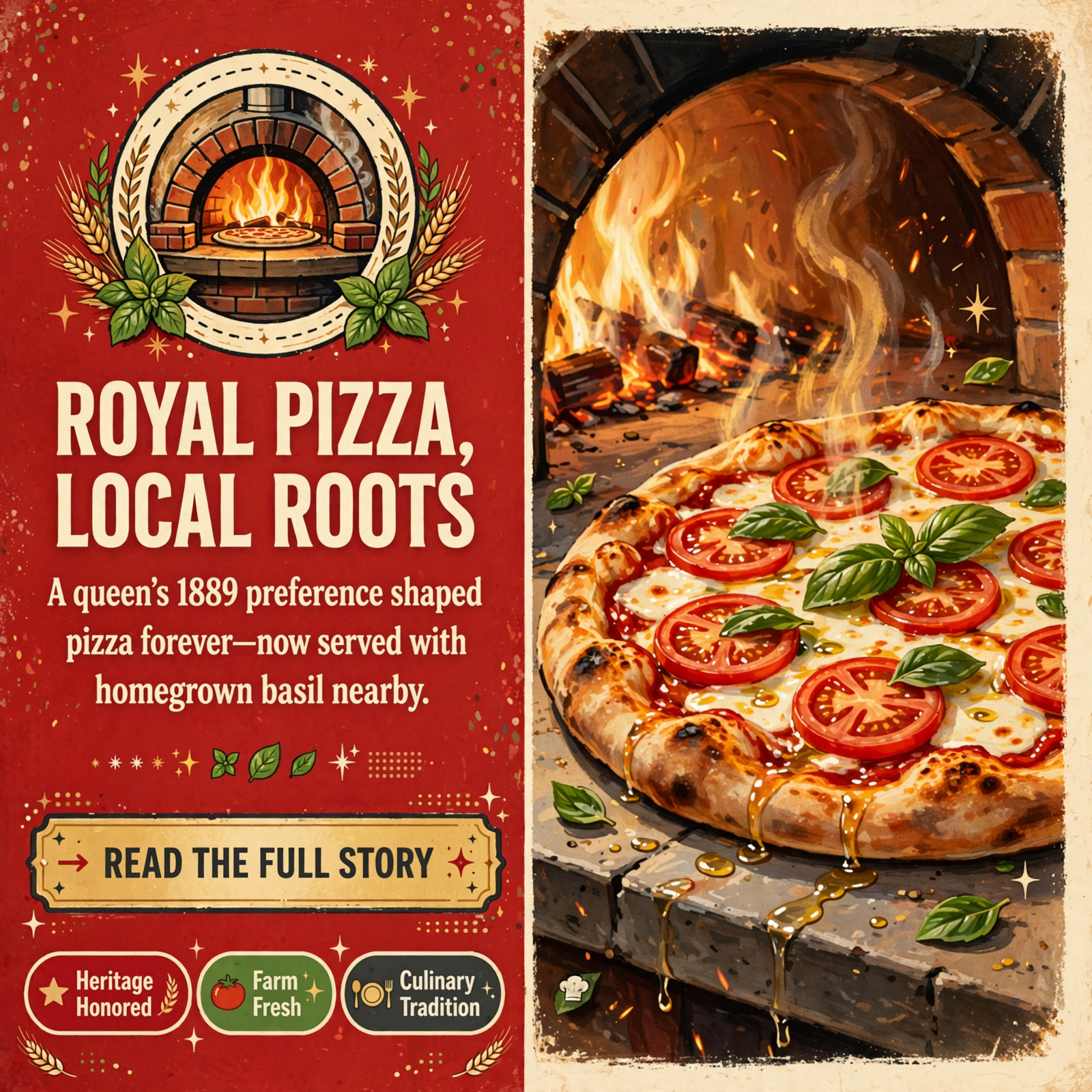
The Margherita pizza has a documented origin story that reads like a historical moment frozen in time. In 1889, Queen Margherita of Savoy visited Naples, and a pizzaiolo named Raffaele Esposito created three pizzas for the royal guest. Her favorite featured the colors of the Italian flag: red tomatoes, white mozzarella, and green basil. Esposito named the pizza after the queen, and the Margherita was born. ✨
What began as a royal preference became a global standard-a pizza so iconic that it now appears on menus from Naples to the Sequatchie Valley. The simplicity of the dish is its strength: just a few quality ingredients, each one essential, each one visible.
🌿 Why This Matters Locally
When a restaurant chooses to honor traditional recipes, it signals something important about how it approaches food. Pyro Pies Wood Fired Brick Oven Pizza brings together the traditions of authentic Neapolitan-style pizza with bold American-inspired flavors and fresh ingredients. The Classic Margherita at Pyro Pies stays true to the original formula-tomato, mozzarella, basil grown on-site, and imported olive oil. 🫒
This commitment to authenticity matters in a region where food traditions often blend heritage with local sourcing. When a restaurant grows its own basil and imports quality olive oil rather than cutting corners, it reflects a philosophy that extends beyond profit to craft. For residents and visitors seeking genuine food experiences, that distinction shapes where they choose to eat and what they expect from local dining.
🤝 Community Connections
The Margherita story illustrates how food connects people across time and place. A queen’s preference in 1889 Naples influences what diners order today in Dunlap. That chain of connection-from royal court to pizzaiolo to modern restaurant owner to your table-is part of what makes food culture meaningful. 🌍
Local restaurants that honor culinary traditions while sourcing fresh ingredients also strengthen ties to the broader food community. When Pyro Pies grows its own basil, it participates in the same ethos as other area food businesses that prioritize quality and local sourcing-a shared commitment to bringing better food to the table.
💡 What Residents Should Know
If you’re curious about the story behind what you eat, Pyro Pies Wood Fired Brick Oven Pizza offers a chance to taste history. The Classic Margherita is a direct line to that 1889 moment in Naples, adapted with locally grown basil and imported olive oil. It’s a simple dish, but simplicity in food often requires the most care. 🔥
The restaurant is located in Dunlap, Sequatchie County. For more information, you can reach them at 931-201-9555 or visit their website.
🍽️ Why Food Stories Matter to Communities
When a local restaurant shares the history behind a dish, it invites diners to think differently about what they’re eating. Food isn’t just fuel-it’s culture, history, and connection. The Margherita pizza carries the story of a queen, a pizzaiolo, a tradition, and now a local restaurant’s commitment to honoring that tradition with quality ingredients and care. 📍
For communities like those in and around the Sequatchie Valley, these stories strengthen the sense that dining locally means participating in something larger than a transaction. It means supporting businesses that care about where their ingredients come from, how their food is prepared, and what story they’re telling with every plate that leaves the kitchen.
❓ Questions Worth Thinking About
- What food traditions or recipes do you have in your own family, and what stories do they carry?
- How does knowing the history of a dish change the way you experience eating it?
- What role do local restaurants play in keeping culinary traditions alive in your community?
- When you choose where to eat, how much weight do you give to a restaurant’s sourcing practices and commitment to quality?
🌱 Long-Term Community Impact
Restaurants that prioritize authentic recipes and fresh, locally grown ingredients help shape the food culture of a region over time. When diners consistently choose places that honor tradition and quality, it sends a signal to other food businesses about what the community values. This can gradually shift the entire local food landscape toward better sourcing, more intentional cooking, and stronger connections between farmers, restaurants, and eaters. 🌾
The Margherita pizza-a dish born from a royal visit over a century ago-reminds us that food traditions are living things. They travel, they adapt, they survive because people choose to honor them. In Dunlap, that choice happens every time someone orders a Classic Margherita made with locally grown basil and imported olive oil.



0 Comments