
The Fiber Reached the Mountain. Did Opportunity Come With It?
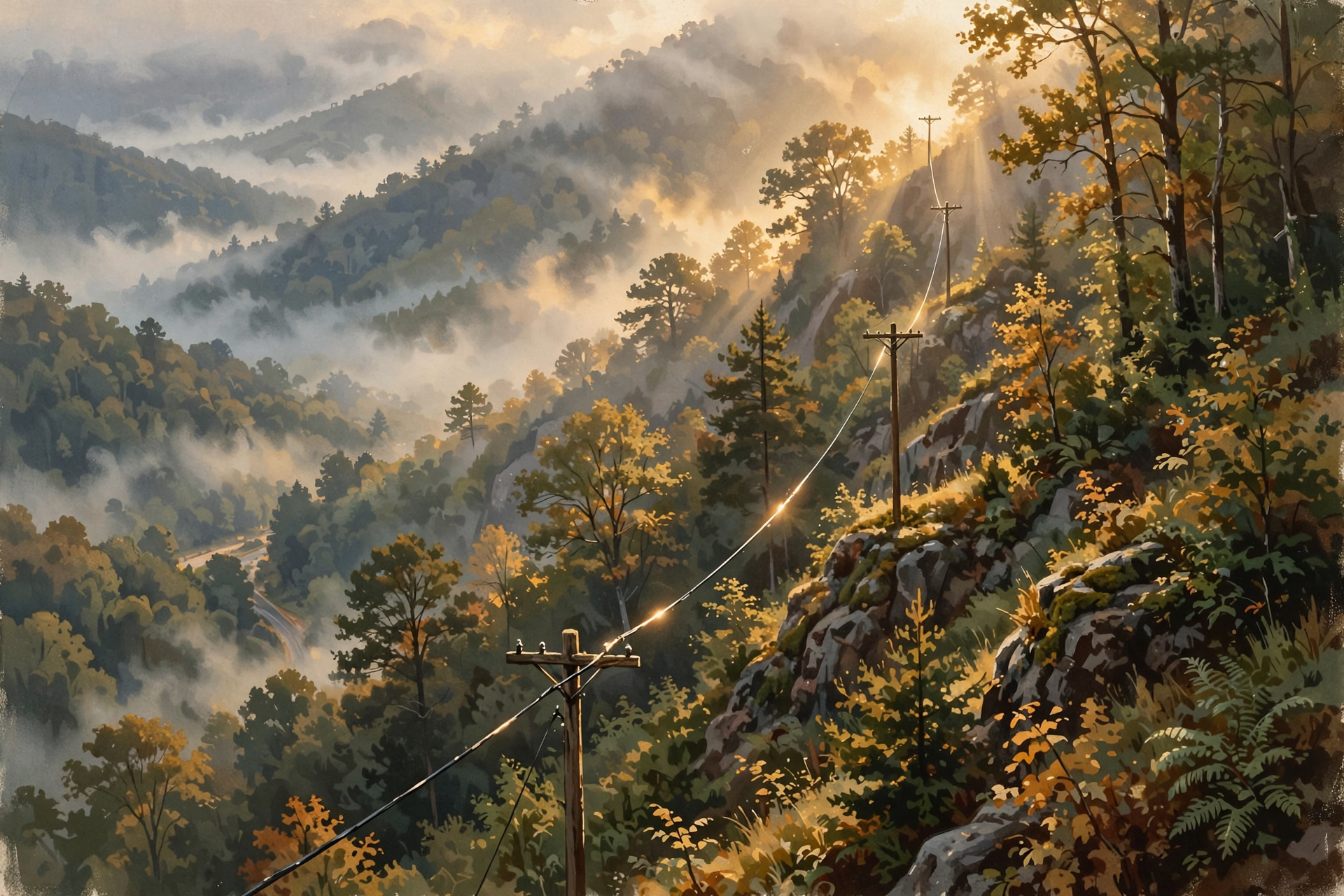
There was a time when living on a mountain in rural Tennessee meant accepting certain things.
You were farther away.
Farther from jobs.
Farther from offices.
Farther from colleges.
Farther from specialists.
Farther from customers.
Farther from opportunity.
That was simply part of the bargain.
You got the view.
You got the quiet.
You got a little more room between you and your neighbor.
You got deer in the yard, fog in the valley, and occasionally a road that somebody in Nashville apparently forgot existed.
But you gave something up.
Proximity.
And for most of human history, proximity mattered tremendously.
If the work was somewhere else, you had to go somewhere else.
If the expertise was somewhere else, you had to travel to it.
If your customers were somewhere else, you had to figure out how to reach them.
Then somebody started running glass up the mountain.
And that little strand of fiber changed the equation.
🌄 I Can Be Remote Without Being Disconnected
That may be one of the strangest changes of the modern era.
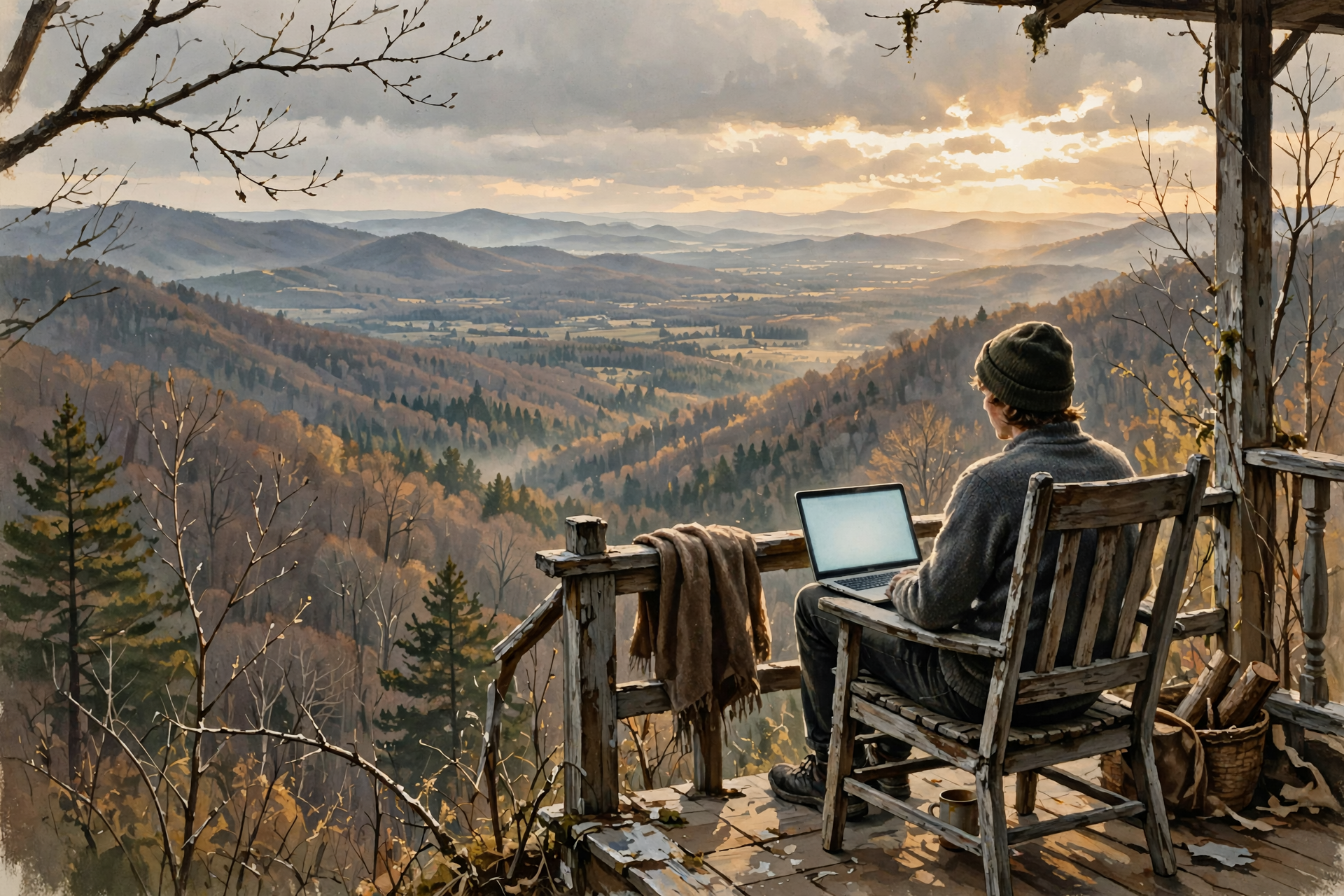
A person can now be geographically remote while being digitally close to almost everything.
You can sit on a porch overlooking a Tennessee valley and talk face-to-face with somebody in New York.
You can send files to California.
You can buy equipment from Japan.
You can work with a company in Chicago.
You can take a class from somewhere you’ve never visited.
You can consult an expert hundreds of miles away.
You can run a business whose customers may never set foot in your county.
Twenty-five years ago, distance determined what was practical.
Today, distance still matters.
But it doesn’t always get the final vote.
🛣️ We May Need a New Definition of “Remote”
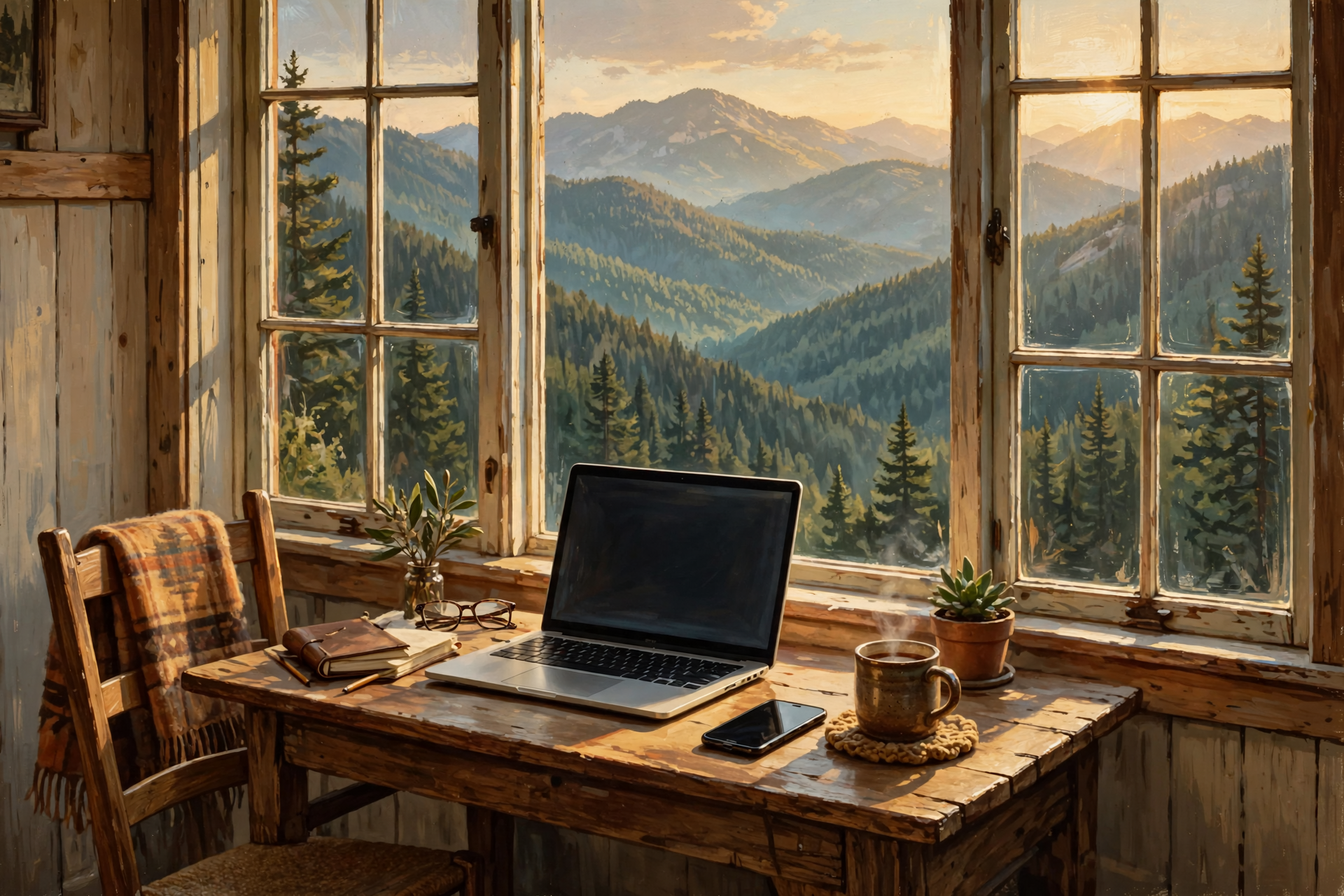
We still use the phrase remote area as though geography automatically means isolation.
Sometimes it does.
If the power is unreliable, the roads are bad, emergency services are distant, or broadband is unavailable, geography still creates very real limitations.
But what happens when the house on the mountain has:
⚡ Reliable electricity
🌐 Gigabit fiber
📱 Cellular service
💻 Modern computers
☁️ Access to cloud systems
🤖 Artificial intelligence
📦 Nationwide delivery
💳 Digital banking and payments
🎥 Video conferencing
At that point, what exactly makes it remote?
The driveway?
Maybe we’re still using a 20th-century word to describe a 21st-century condition.
💼 Opportunity Used to Have an Address
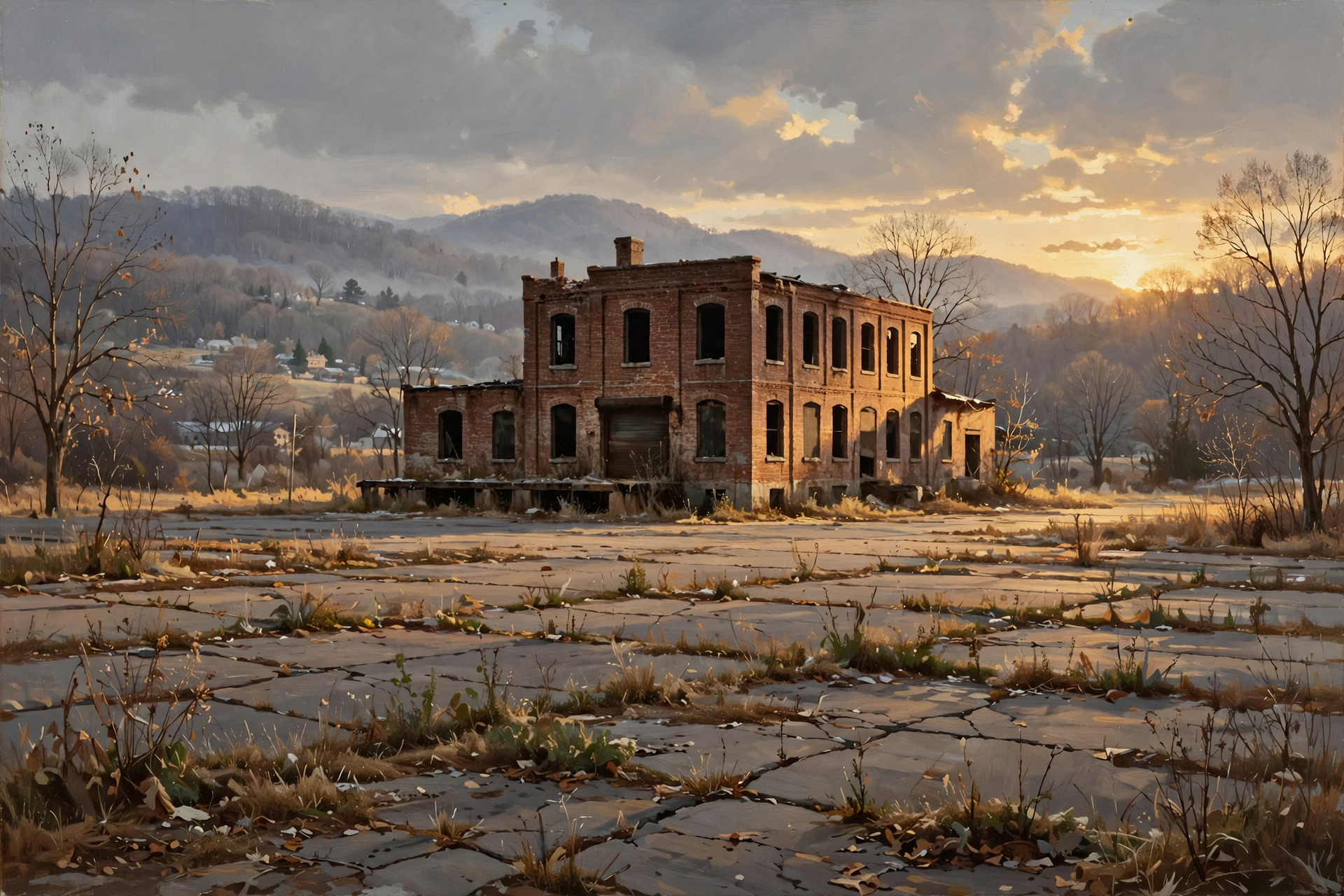
For a long time, employment was closely tied to place.
The factory was there.
The office was there.
The university was there.
The hospital was there.
The headquarters was there.
If you wanted access to those opportunities, you moved toward them.
That’s one reason rural communities have struggled for generations with brain drain.
We raise smart kids.
We educate them.
We encourage them.
Then, if they want certain careers, we tell them they may have to leave.
And often they do.
Sometimes they come back.
Sometimes they don’t.
But what happens when more kinds of work no longer require the worker and employer to share the same ZIP code?
That’s a very different economic-development question.
🏠 What If Home and Opportunity Stop Being Opposites?
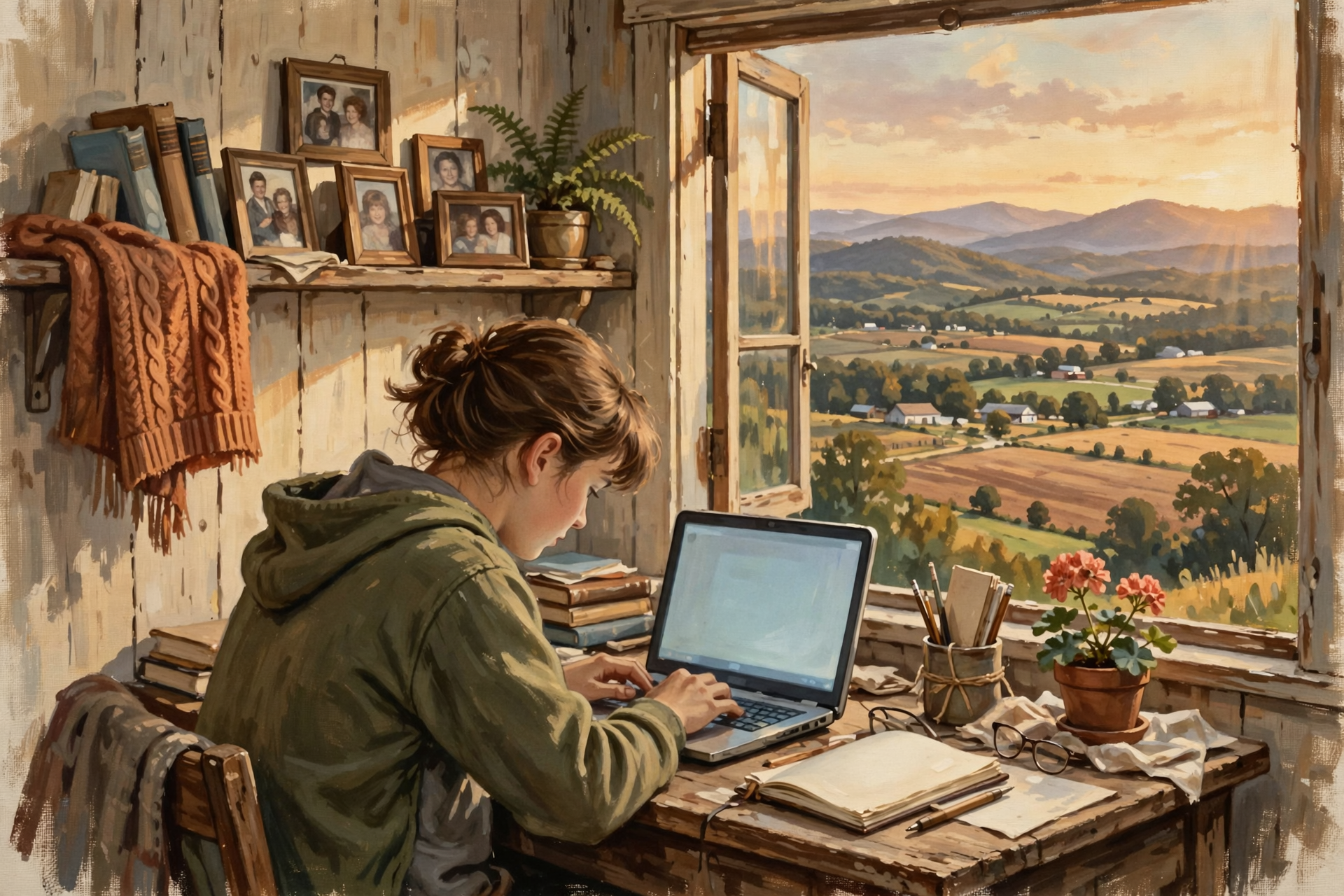
For generations, talented rural young people have often been forced into an unnecessary choice:
Stay close to home.
Or:
Pursue the opportunity.
That’s a hard choice.
Especially when home means:
Family.
Grandparents.
Church.
Land.
Community.
People who know your name.
A place where you want to raise children.
Technology cannot eliminate every reason someone might need to leave.
Nor should it.
Young people should explore the world.
They should experience other places.
They should chase opportunities.
But they ought to have another option, too.
Leave because you want to.
Not because you’re required to.
💻 The Job May Not Need to Move Here Anymore
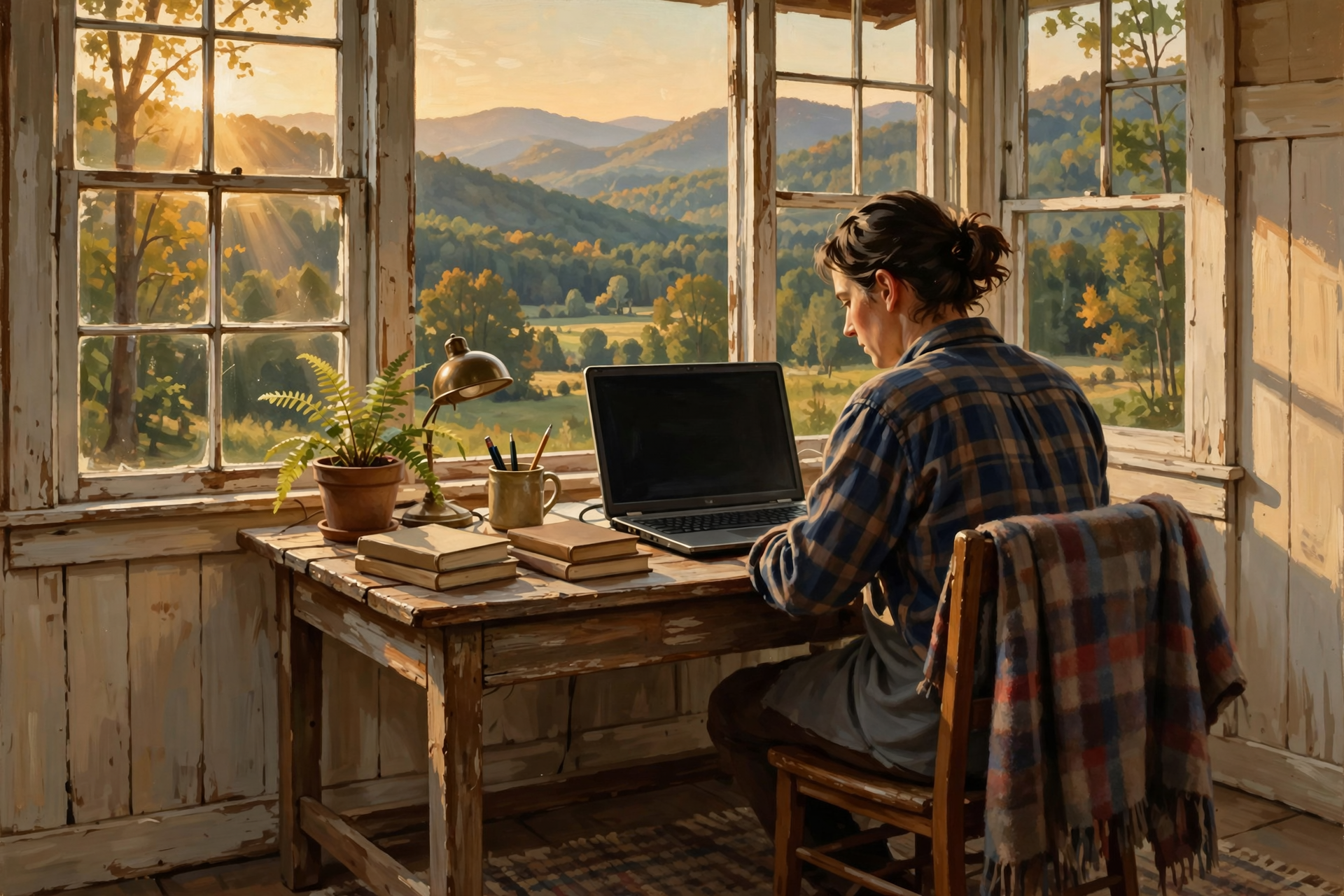
Traditional economic development often focuses on getting an employer to relocate.
We offer land.
Tax incentives.
Infrastructure.
Industrial sites.
Road improvements.
And those projects matter.
A good employer can transform a community.
But broadband gives us another tool.
Instead of always asking:
How do we move the company here?
We can also ask:
How do we let the worker stay here?
That’s a subtle difference.
But potentially a huge one.
🌎 The World’s Economy Can Come Through a Wire
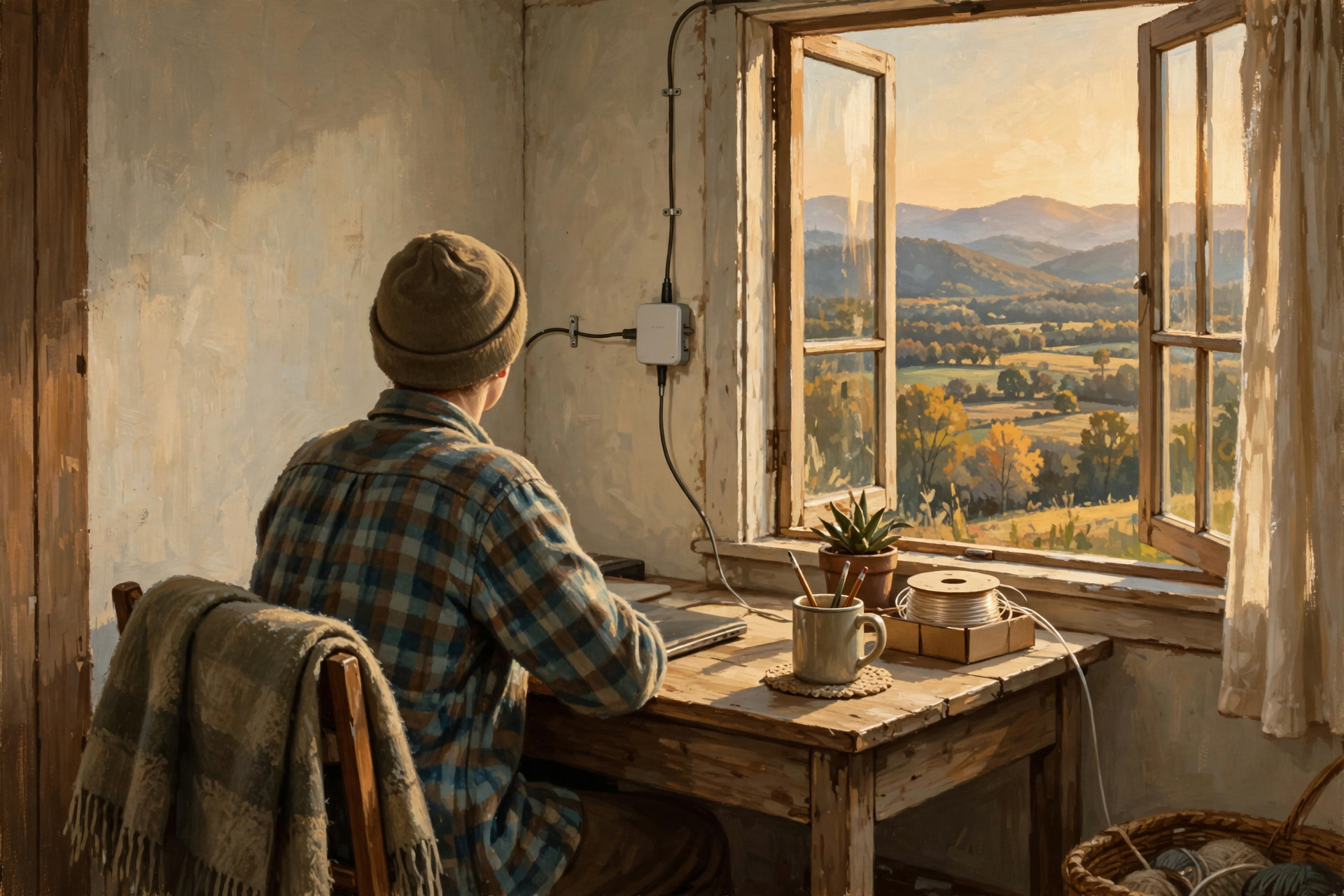
A rural worker no longer has to depend entirely on the businesses physically located nearby.
A graphic designer can serve clients across the country.
A bookkeeper can work for companies in several states.
A programmer can work for an employer they may rarely visit.
A consultant can advise clients around the world.
An online retailer can sell from a barn, garage, spare bedroom, or small storefront.
A craftsman can find customers far outside the local market.
A writer can publish globally from a kitchen table.
A small manufacturer can reach specialized buyers that never would have discovered them twenty years ago.
The local economy is still important.
But it no longer has to be the only economy available to the person living here.
The world’s economy can now come through a wire.
🤖 And Artificial Intelligence Makes Distance Matter Even Less
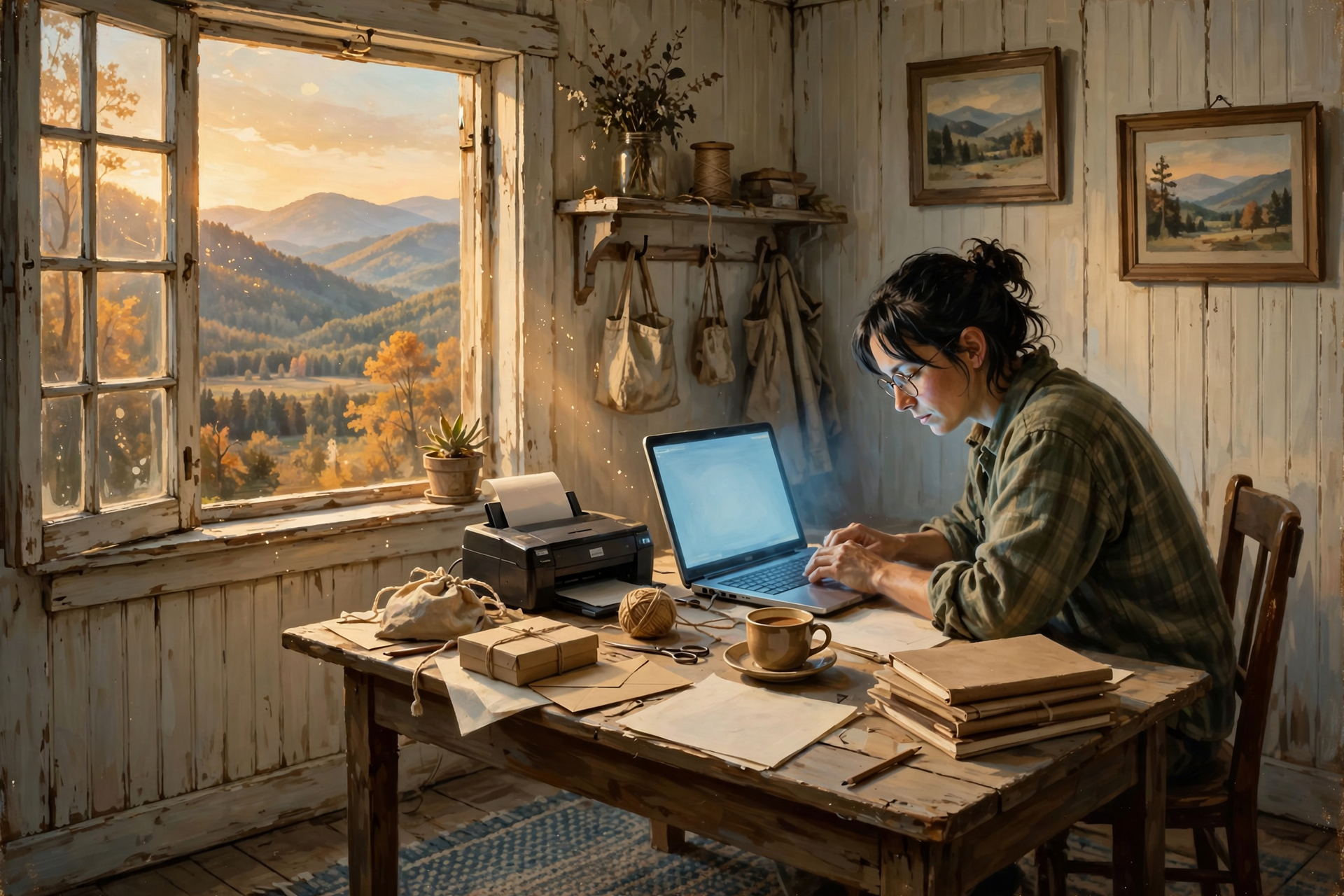
Broadband connected people to information and other people.
Artificial intelligence adds something else:
capability.
Imagine a one-person business in a rural community.
Historically, that person might have lacked access to:
A marketing department.
A researcher.
A graphic designer.
A technical writer.
A data analyst.
A programmer.
A receptionist.
A translator.
AI does not perfectly replace any of those people.
But it can give that one-person business pieces of all those capabilities.
That matters anywhere.
It may matter even more in places where specialized help has traditionally been scarce.
🔨 Rural Skills Become More Valuable When Geography Matters Less
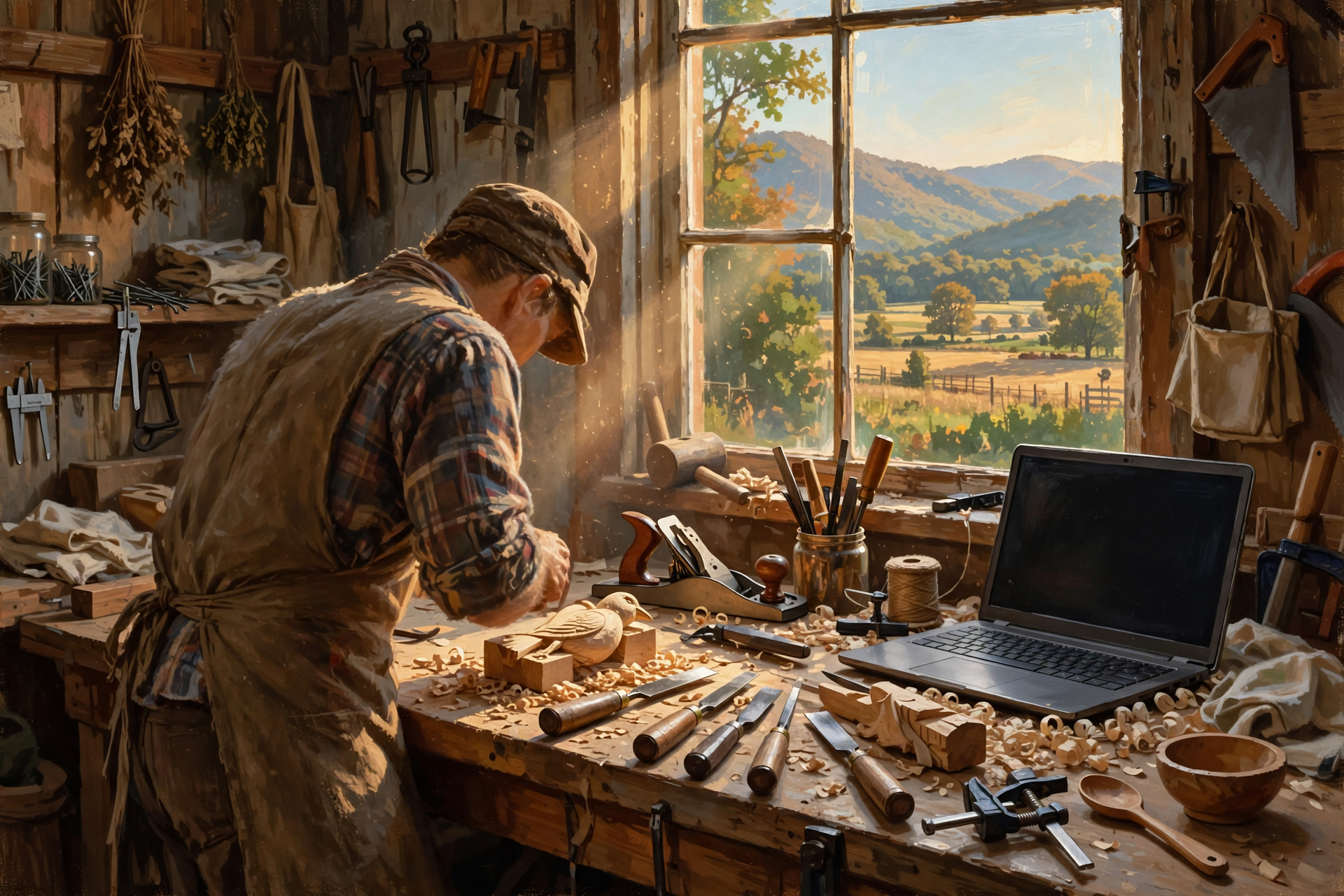
There is another side to this that I think gets overlooked.
Technology doesn’t only help people with office jobs.
It can help people who make things.
Repair things.
Grow things.
Build things.
A cabinetmaker may be physically located in rural Tennessee.
His customers don’t have to be.
A farm can sell directly to consumers farther away.
A specialty mechanic can become known far beyond the county line.
A small manufacturer can sell into a niche market nationally.
A local artist can find buyers worldwide.
A business does not have to move in order for its market to expand.
🧭 But Access Is Not the Same Thing as Direction
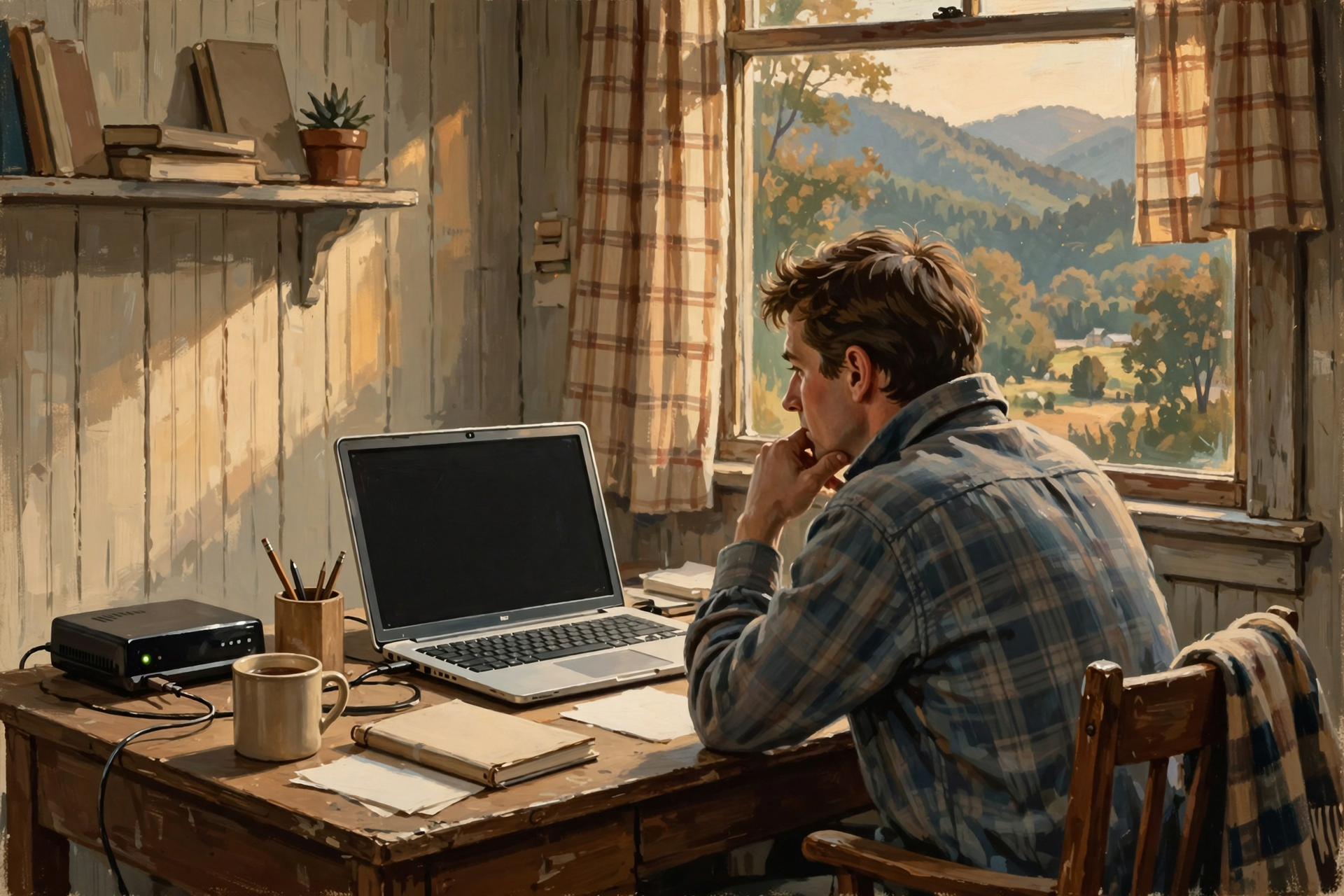
This is where I think we have to be careful.
Fiber creates possibilities.
It does not tell us what to do with them.
You can have world-class broadband and still have:
No digital skills.
No business idea.
No online presence.
No plan.
No confidence.
No awareness of what is possible.
The technology can remove a barrier.
It cannot provide direction automatically.
That’s why the next stage of rural technology development cannot simply be about infrastructure.
It has to be about imagination.
Skills.
Education.
Experimentation.
Entrepreneurship.
And helping people see possibilities they may not have realized existed.
👴 The Biggest Barrier May Eventually Be What We Think Is Possible
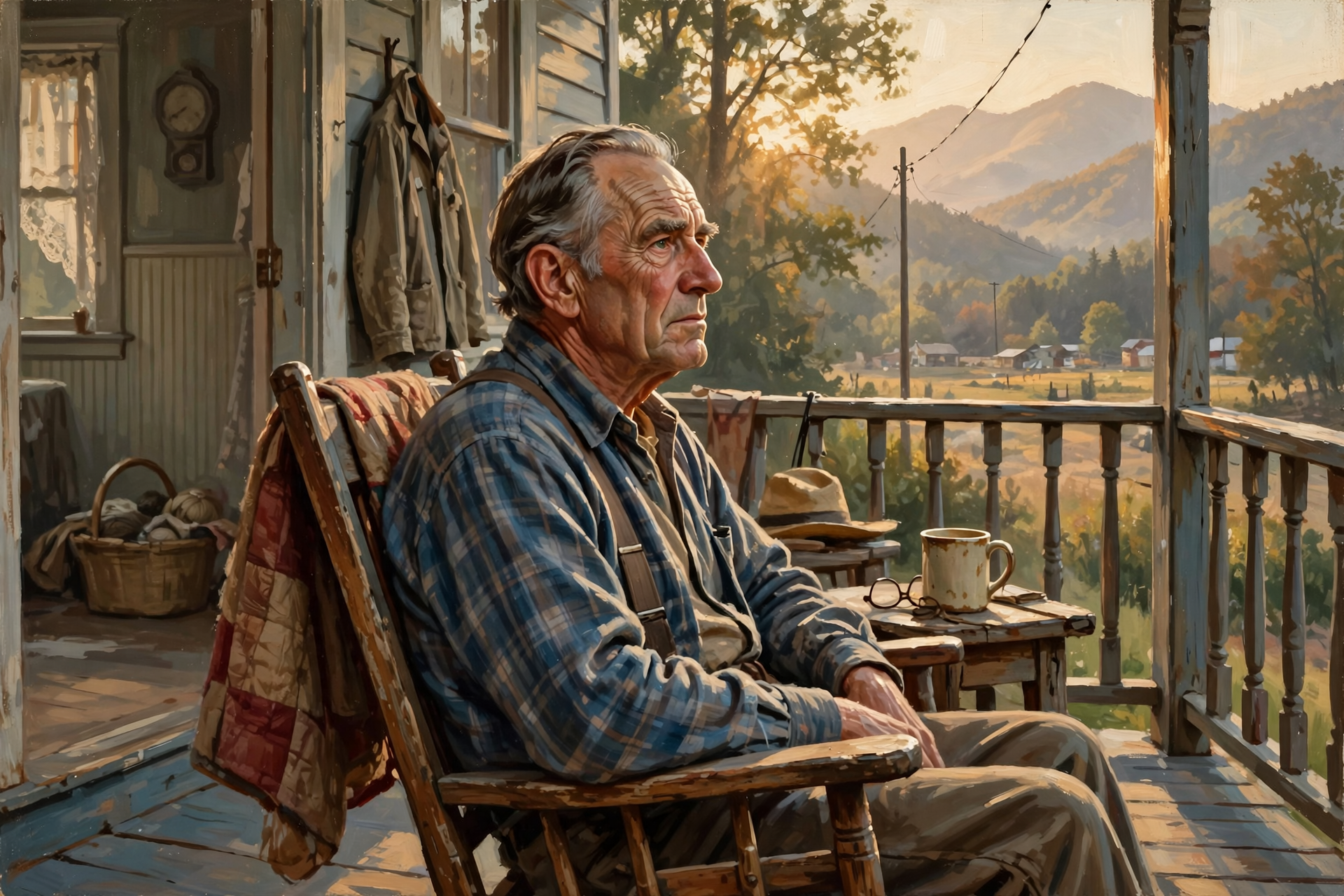
Rural communities have adapted to limitations for generations.
Sometimes those limitations become assumptions.
You can’t do that from here.
There’s no market for that around here.
You’d have to move.
You need a big company to do that.
You need employees.
You need a lot of money.
Some of those statements are still true in some situations.
But fewer of them are automatically true than they once were.
That’s important.
Because infrastructure can change faster than human assumptions.
📍 There Is Still Something Special About Being Here
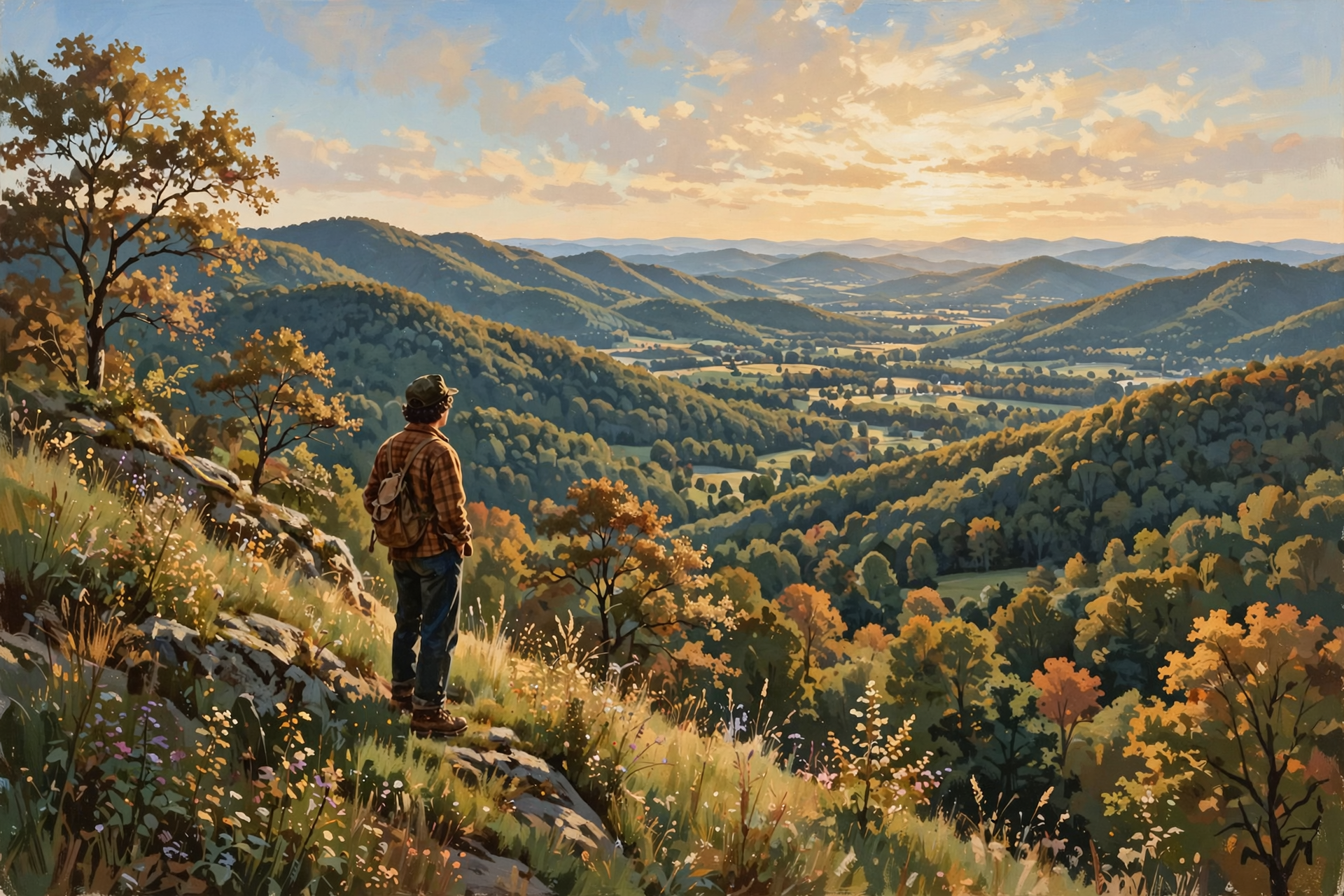
None of this means geography has stopped mattering.
Quite the opposite.
If work becomes more portable, then people gain more freedom to choose where they want to live.
And that makes quality of place more important.
People may choose a community because of:
Mountains.
Family.
Lower costs.
Outdoor recreation.
Schools.
Community.
Churches.
Land.
Quiet.
Safety.
A slower pace.
That could turn what was once considered an economic weakness into an advantage.
If the work can travel, the worker gets to choose home for different reasons.
🚗 We Still Have to Solve the Physical World
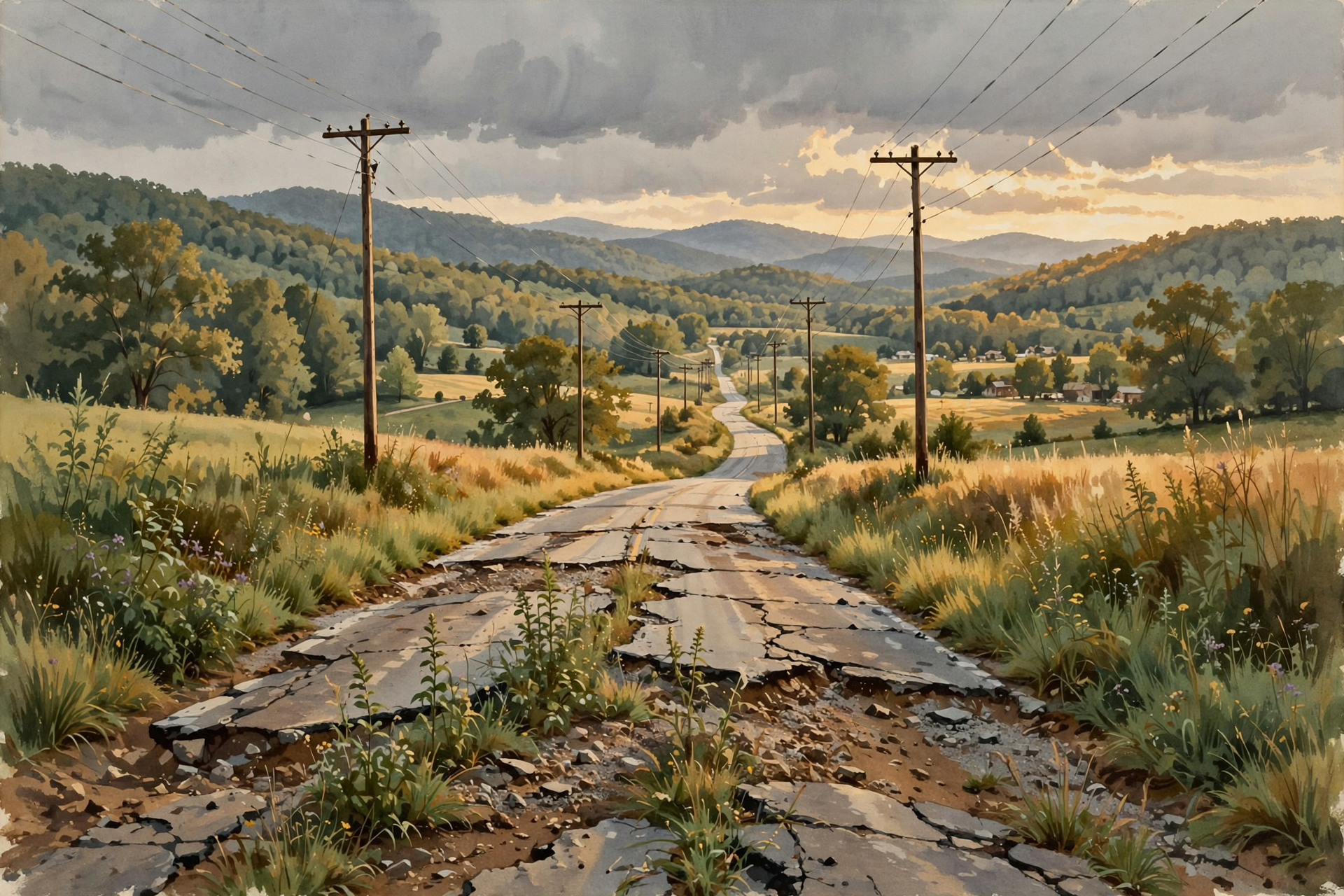
And before anybody gets too carried away, there is an important reality check.
You cannot download a bridge.
You cannot Zoom your way around a washed-out road.
A computer cannot install your septic system from California.
Amazon cannot digitally deliver gravel.
Healthcare sometimes still requires a human being in the room.
Children still go to physical schools.
Electricity still comes through physical infrastructure.
Farms still need land.
Factories still need buildings.
The physical world isn’t going away.
The opportunity is that the digital world can now supplement it.
Rural communities don’t have to become virtual communities.
They simply gain access to tools that reduce some of the disadvantages of distance.
📈 Maybe This Changes Economic Development
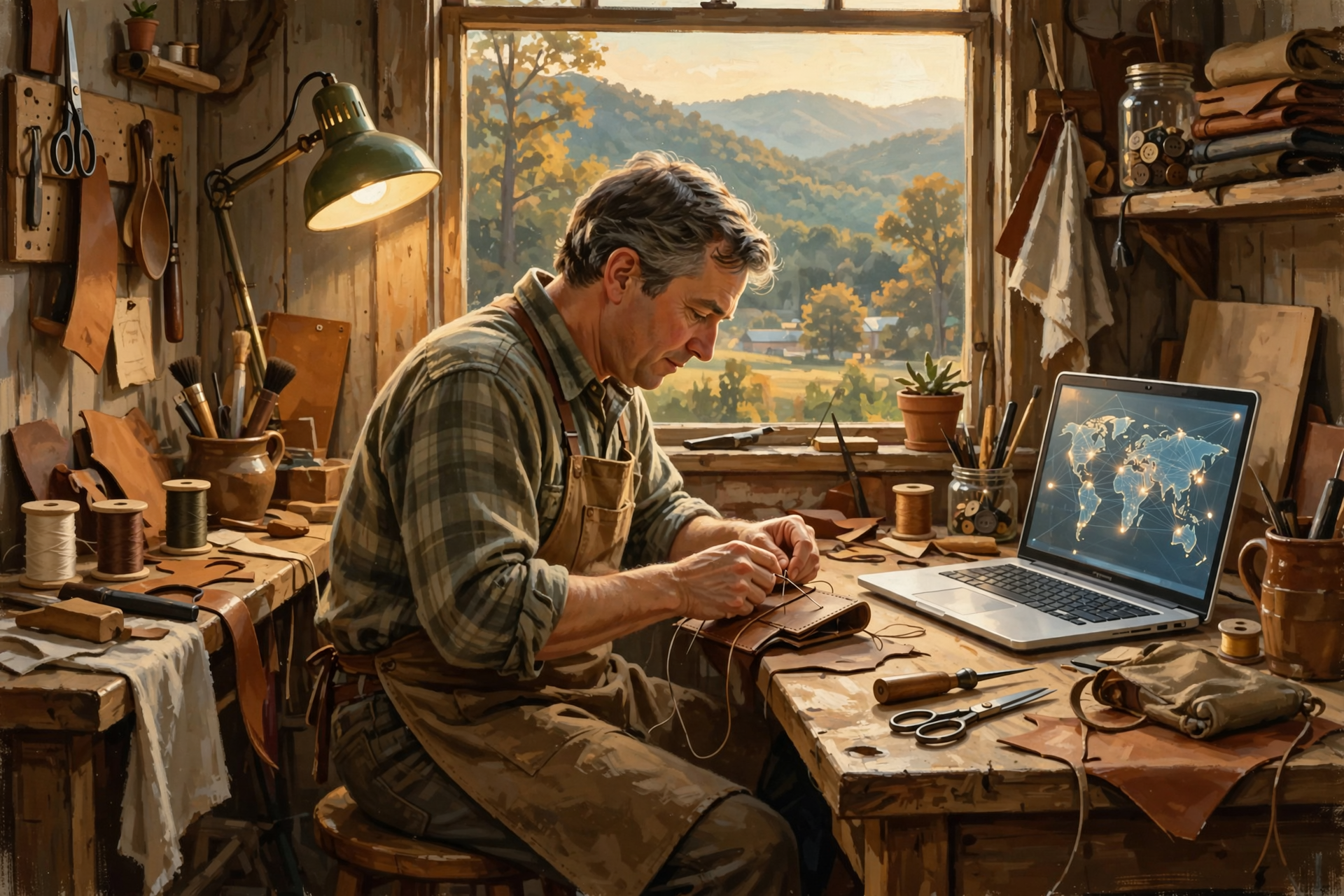
Here’s a question worth considering:
What if rural economic development isn’t only about attracting businesses?
What if it’s also about increasing the productive capability of the people already here?
Help one existing business become stronger.
Help one person begin working remotely.
Help one teenager build something.
Help one retiree turn decades of expertise into consulting work.
Help one craftsman find customers outside the county.
Help one small business automate the paperwork that consumes its evenings.
Help one entrepreneur reach a market that doesn’t exist locally.
Do that enough times and something interesting begins to happen.
Economic development starts becoming distributed.
Not one giant announcement.
Thousands of smaller increases in capability.
🤝 The Fiber Didn’t Bring Opportunity. It Brought Access to Opportunity.
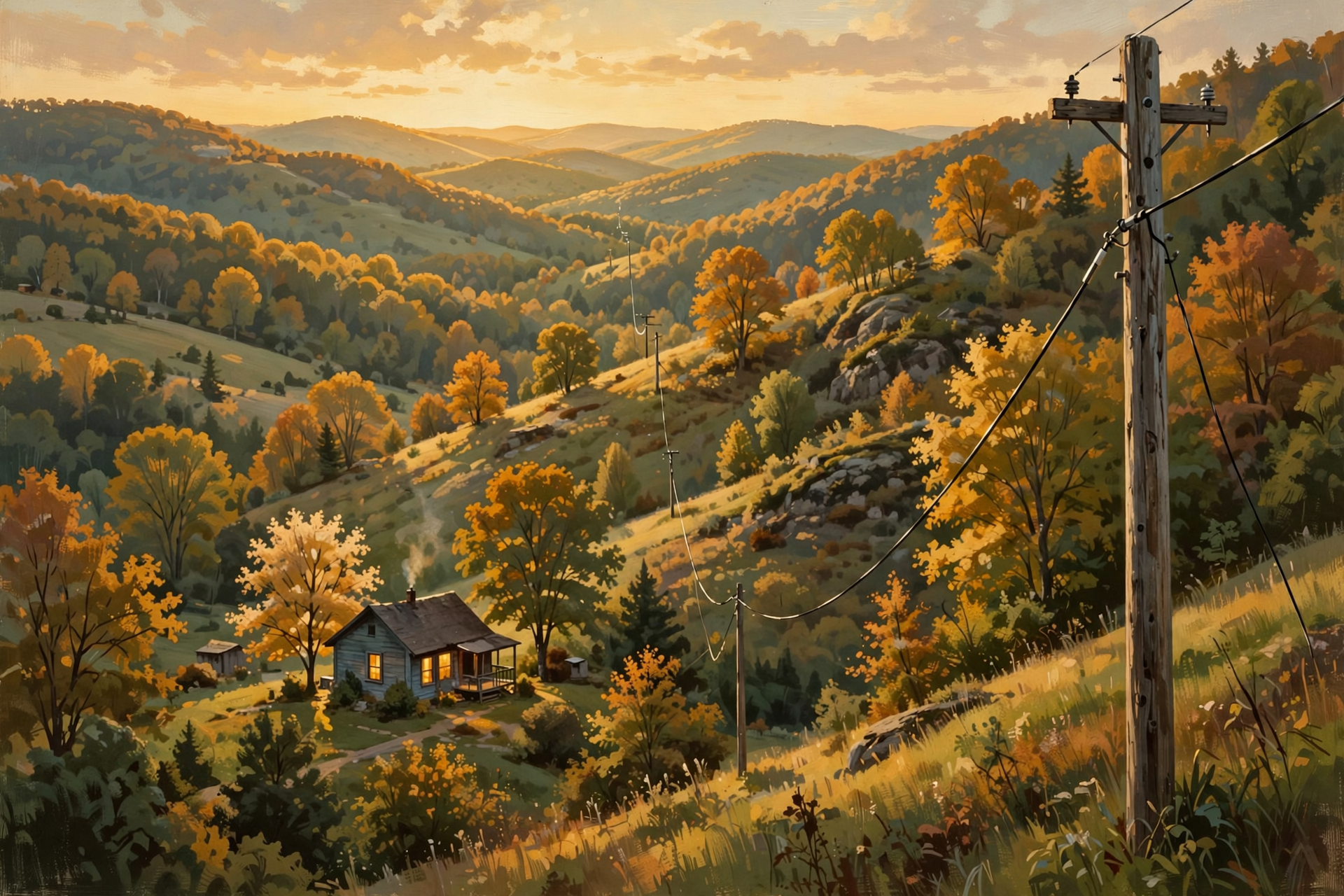
That’s an important distinction.
Fiber doesn’t create a job.
Fiber doesn’t start a business.
Fiber doesn’t teach a skill.
Fiber doesn’t create ambition.
Fiber doesn’t make someone curious.
Fiber doesn’t create community leadership.
Fiber doesn’t solve every rural disadvantage.
What it does is remove one enormous barrier.
It allows more things to become possible from here.
And that may be its greatest economic value.
📅 This Is One of the Questions We’re Carrying Toward November 19
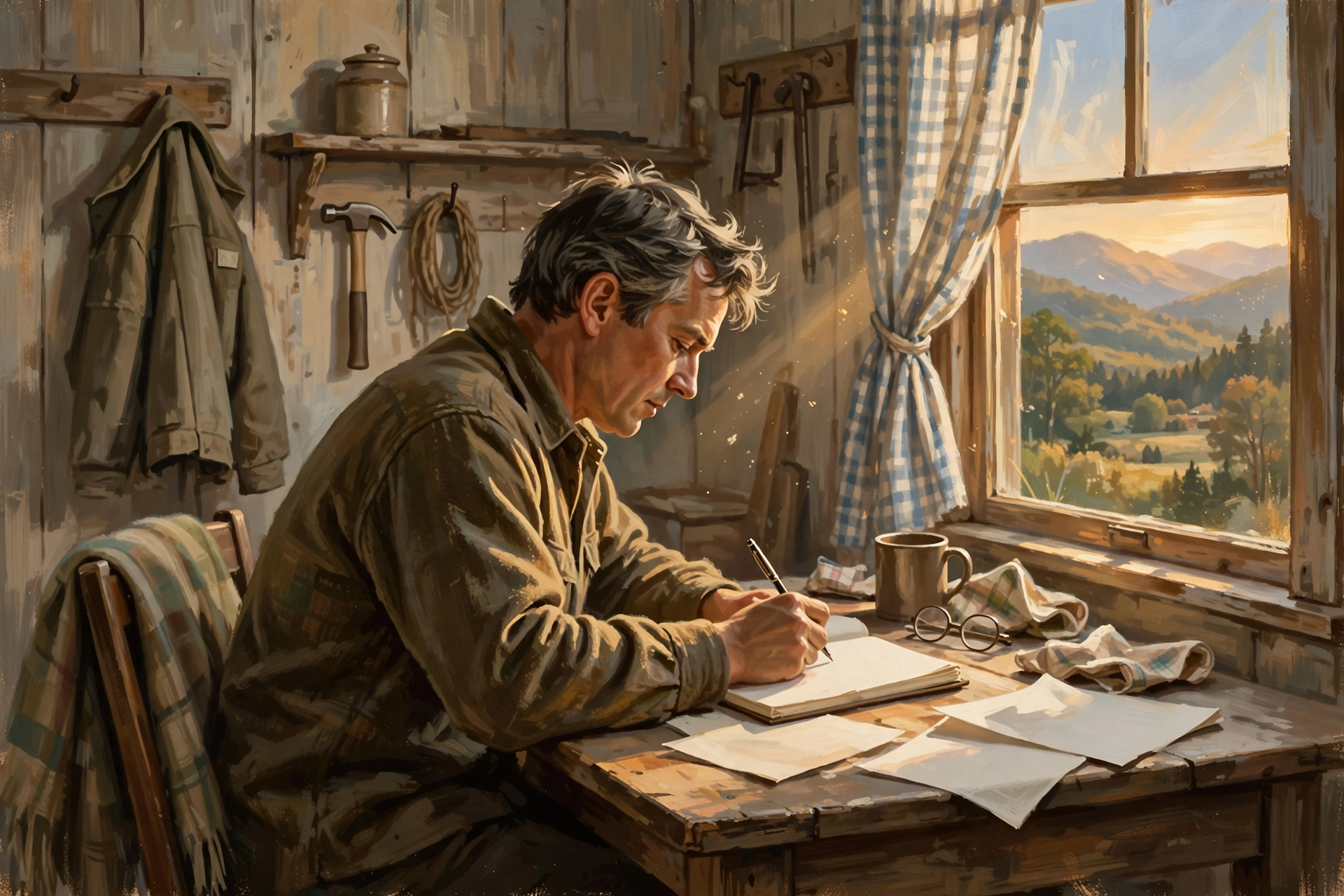
Between now and November 19, we’re exploring what broadband, artificial intelligence, cybersecurity, remote work, entrepreneurship, automation, and emerging technology actually mean for rural communities.
Not in theory.
Here.
What can we do now that we couldn’t do before?
What barriers remain?
What opportunities are we overlooking?
What should we be cautious about?
And perhaps most importantly:
How do we make sure rural people are participants in the technological future instead of spectators?
💬 Today’s Question
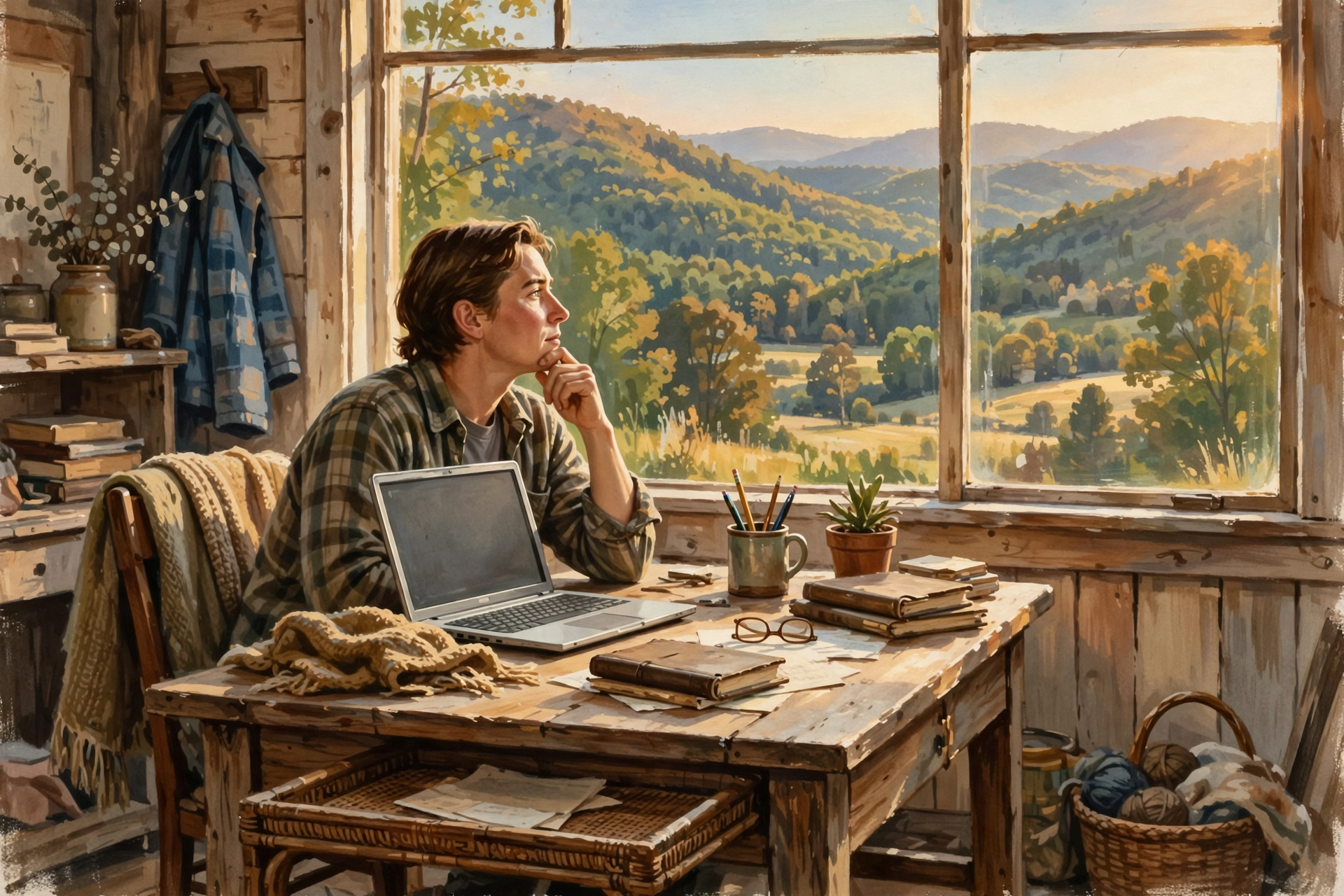
Here’s the question I’d like you to think about today:
If you could earn the same living, build the same career, or operate the same business from rural Tennessee that you could from a major city, where would you choose to live?
And if your answer is:
“I’d stay right here.”
Then we need to ask something else.
What is still preventing more people from doing exactly that?
🌄 Maybe the Mountain Isn’t as Far Away as It Used to Be
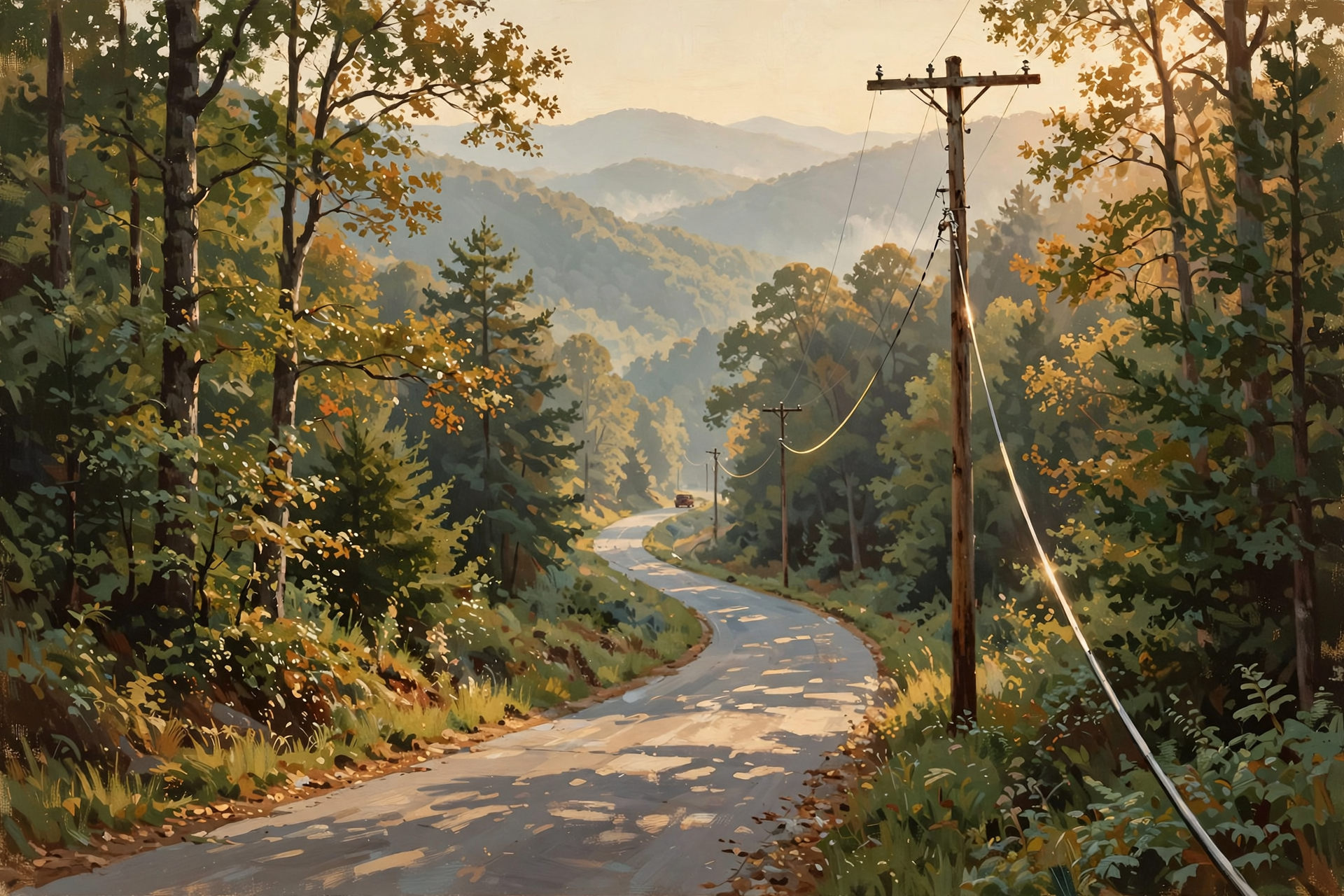
The road down the mountain is still the same length.
The nearest big city hasn’t moved any closer.
The mountains haven’t gotten any shorter.
But something else happened.
The world got closer.
A thin strand of glass connected places that geography once kept apart.
And now artificial intelligence, remote work, online commerce, and digital services are building on top of that connection.
So maybe the question isn’t whether rural Tennessee is too remote for opportunity.
Maybe the better question is:
How much does “remote” really matter anymore?
The fiber reached the mountain.
Now we have to decide what we send through it.
🌄 The Rural Future Is Already Here
This story is part of an ongoing series exploring artificial intelligence, broadband, technology, economic opportunity, cybersecurity, community, and the future of rural Tennessee leading up to a regional technology symposium on November 19.
The Future Didn’t Ask Permission Before It Came to Rural Tennessee
We Spent Years Asking for Better Internet. Now What?
We want your questions. What do you most want rural communities like ours to understand, protect, build, or figure out as technology changes around us?
Follow the series between now and November 19—and join the conversation.

0 Comments