
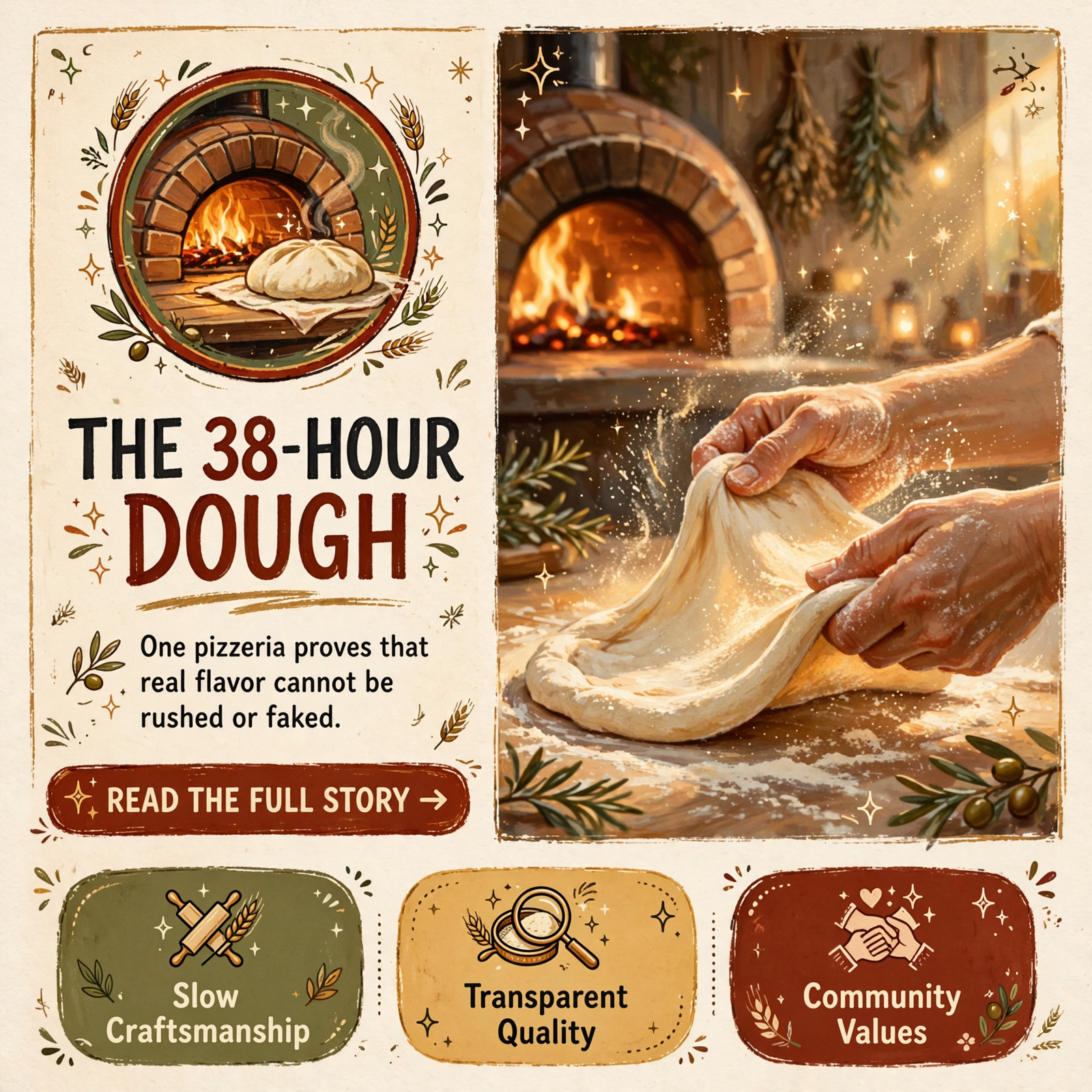
🍕 The 38-Hour Dough: Why Slow Fermentation Changes Everything at Pyro Pies
In a food culture often defined by speed and convenience, one local pizzeria is making a deliberate choice to slow down. Pyro Pies Wood Fired Brick Oven Pizza is sharing the craft behind its crust-a process that takes 32 to 48 hours or more before a single pie reaches the oven.
📍 What Makes the Wait Worth It
Most pizza dough can be mixed and baked the same day. It works. But according to Pyro Pies, it tastes mostly of flour. The real flavor-the faint sweetness and subtle tang that distinguishes an exceptional crust-comes from time. Long, slow fermentation allows the dough to develop complexity that no shortcut can replicate. 🧪
The business is walking customers through its process in a series of posts, breaking down the science and craft that goes into every pie. This isn’t marketing jargon. It’s an invitation to understand why their pizza tastes the way it does.
❤️ Why This Matters to Local Diners
When a restaurant shares this level of detail about its process, it signals something important: the business cares more about quality than speed. For residents choosing where to eat, that transparency matters. You’re not just buying a meal; you’re supporting a kitchen that has chosen the harder path because it produces better results. 🎯
In a region where family-owned restaurants and local food traditions are central to community identity, this kind of craftsmanship reinforces what many residents already value-food made with intention, not just efficiency.
🍽️ Community Connections
Pyro Pies’ commitment to slow fermentation connects to a broader local food culture. The Sequatchie Valley and surrounding areas have a strong tradition of home cooking, farmers’ markets, and businesses that prioritize fresh ingredients and traditional methods. Bakeries like Flour & Bloom, BREADZILLA Sourdough Bakery, and The Bread Cottage in Dunlap share similar philosophies-they understand that real flavor requires patience and skill. 🥖
When local food businesses talk openly about their methods, they strengthen community understanding of what quality looks like. They also inspire conversations about food, craft, and the value of supporting neighbors who do the work right.
💡 What Residents Should Know
Pyro Pies is continuing to share its dough story. The business has promised a fourth installment on Monday, focusing on why the inside of the crust is soft-another detail that reveals the thought behind every bite. For anyone curious about how their food is made, following along offers a real education in pizza craft. 📚
The restaurant is located in Dunlap, Sequatchie County. Those interested in learning more or experiencing the results of this 38-hour process can reach out or visit.
🤔 Community Questions Worth Considering
- How often do we think about the time and skill behind the food we eat?
- What role does transparency about food preparation play in building trust between local restaurants and their customers?
- How does supporting businesses that prioritize quality over speed affect the broader local food culture?
- What other local food businesses are using traditional methods that deserve more attention?
⏳ Long-Term Community Impact
When local restaurants educate customers about craft-whether it’s fermentation time, ingredient sourcing, or cooking technique-they shift expectations. Over time, this can strengthen the entire local food ecosystem. Customers begin to understand why quality costs more. They become more willing to support businesses that do things the right way. And they’re more likely to pass those values to their families. 🌱
For a region like this, where food traditions and family gatherings are woven into community life, that shift matters. It’s not just about pizza. It’s about what we collectively decide to value and support.
🔗 Community Threads: The Craft-to-Table Relationship
The Slow Food Philosophy in Action: Pyro Pies’ 38-hour dough process reflects a broader movement toward intentional, unhurried food preparation. This thread connects the restaurant to other local businesses and home cooks who believe that real flavor can’t be rushed. When residents understand this shared value, they’re more likely to seek out and support neighbors doing similar work-whether that’s a local bakery, a farmer’s market vendor, or a family kitchen.
Transparency as Community Building: By explaining its process publicly, Pyro Pies invites the community into its kitchen. This openness builds relationships. It transforms customers from passive consumers into informed participants who understand and appreciate the work. That relationship strengthens loyalty and creates a sense of shared investment in local food culture.
Craft as Cultural Identity: In communities where traditions run deep, the way food is made matters as much as how it tastes. Pyro Pies’ commitment to traditional methods-slow fermentation, wood-fired brick ovens, fresh ingredients-connects to the region’s broader identity. It says: we honor the way things have been done, because that way produces something worth honoring.




0 Comments