
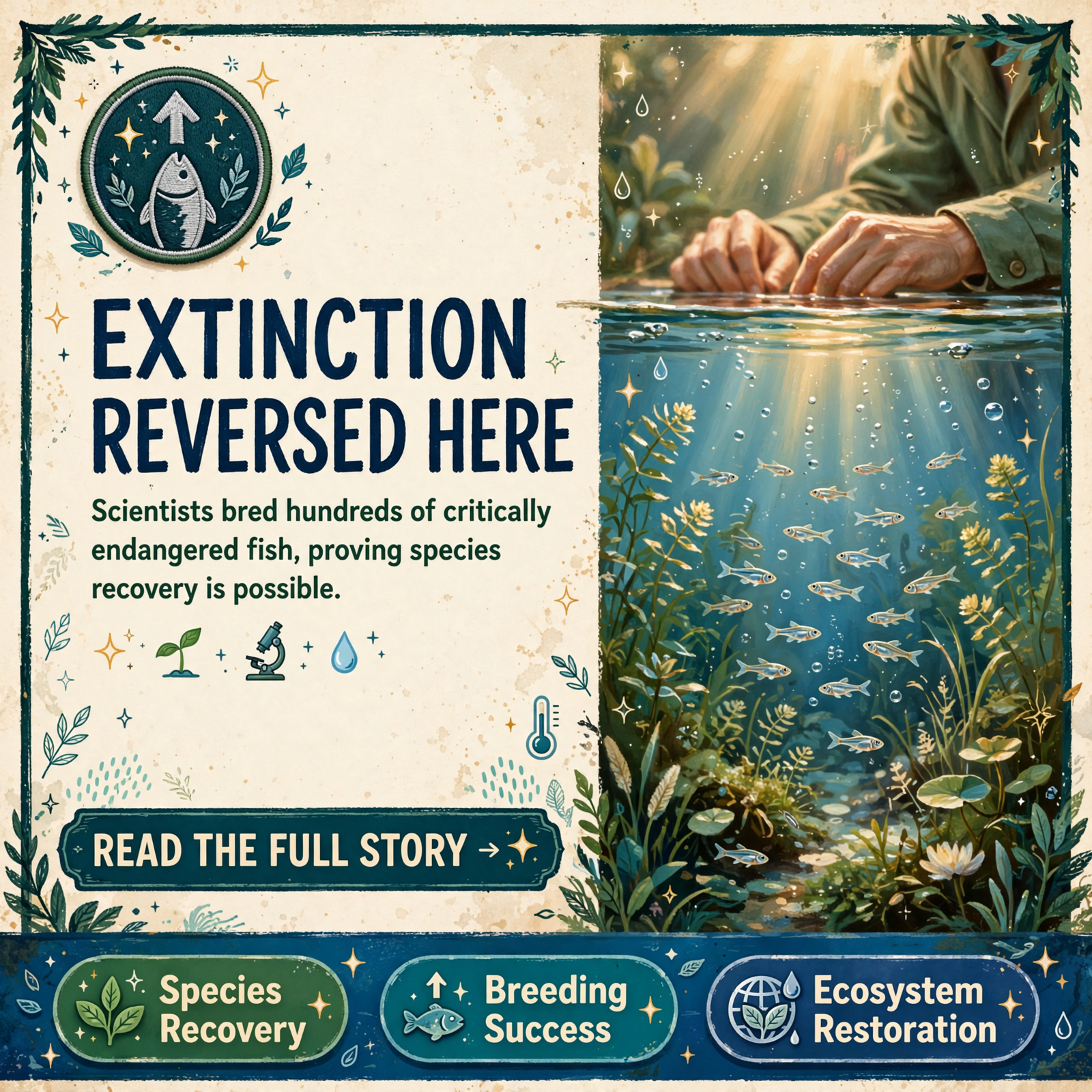
🐟 Tennessee Aquarium Scientists Successfully Breed Hundreds of Endangered Laurel Dace
A major conservation milestone is unfolding in Chattanooga’s freshwater science community. Biologists at the Tennessee Aquarium Conservation Institute have successfully spawned hundreds of baby Laurel Dace this year-a breakthrough for one of North America’s most critically endangered fish species and a signal that dedicated breeding and reintroduction work can reverse the decline of species on the brink of extinction.
🌊 Why This Matters
The Laurel Dace ranks among North America’s 10 most-endangered fish. Its survival depends almost entirely on human intervention at this point. When a species becomes this rare, every successful breeding cycle represents a lifeline-not just for the fish, but for the entire freshwater ecosystem that depends on healthy populations of native species. For residents across the Sequatchie Valley and surrounding communities who care about regional water quality, wildlife conservation, and the health of local streams and rivers, this work directly supports the health of the natural systems that define the region.
💡 What This Breakthrough Means
Breeding hundreds of baby Laurel Dace in a controlled environment is a technical and biological achievement. It means the Tennessee Aquarium Conservation Institute has cracked the code on reproduction conditions-temperature, water chemistry, diet, and habitat-that allow these fish to thrive and reproduce. The next critical phase will be reintroduction: returning these young fish to their native habitat in Young’s Creek (as indicated in the conservation documentation) and monitoring their survival and reproduction in the wild. Success at this stage would represent a genuine recovery of a species that was sliding toward extinction.
❤️ Human Impact and Community Connection
This work reflects the dedication of biologists, aquarium staff, and conservation partners who have committed years to understanding and protecting a single species. It also represents a broader community value: the belief that humans can repair damage to nature when we invest knowledge, resources, and patience. For families visiting the Tennessee Aquarium in Chattanooga, this story offers a tangible example of how museums and scientific institutions contribute to real-world conservation-not just education and entertainment, but active species recovery.
🔬 The Science Behind the Success
Breeding endangered fish in captivity requires solving multiple biological puzzles simultaneously. Scientists must replicate the exact conditions that trigger spawning, ensure water quality supports egg and fry development, prevent disease, and manage genetics to maintain genetic diversity in the population. The fact that the Tennessee Aquarium Conservation Institute achieved this with hundreds of individuals suggests a well-designed program with proper facilities, expertise, and ongoing research. This kind of work often goes unnoticed by the public, but it represents some of the most important conservation happening in the region.
🌿 Long-Term Community Impact
If the reintroduction of these young Laurel Dace succeeds, the ecological and cultural implications extend far beyond a single species. Successful reintroduction demonstrates that freshwater ecosystems in Tennessee can recover with intervention. It strengthens the case for protecting remaining wild habitat, managing water quality in streams and rivers, and investing in conservation science. For communities in the Sequatchie Valley and Cumberland Plateau region-areas with deep connections to rivers, springs, and freshwater resources-this work affirms that the natural systems residents depend on can be restored.
📍 What Residents Should Know
The Tennessee Aquarium, located at 1 Broad Street in Chattanooga, is the institution leading this conservation effort through its Conservation Institute. Visitors interested in learning more about this work, the Laurel Dace, or other freshwater conservation projects can visit the aquarium or explore its educational resources. The aquarium’s phone number is (800) 262-0695, and more information is available at its website. This is an opportunity for residents to connect with the science and see firsthand how local institutions contribute to regional and national conservation.
🔄 What Happens Next
The immediate next steps will likely involve monitoring the health and development of the hundreds of young Laurel Dace in the aquarium’s facilities, preparing them for eventual release, and coordinating with habitat managers and regulatory agencies to plan reintroduction into Young’s Creek. The success of the program will depend on whether these young fish survive and reproduce in the wild. This is a multi-year process, and updates on progress will be worth following as the reintroduction phase unfolds.
💭 Questions Worth Considering
- How will the Tennessee Aquarium and its partners monitor the survival of reintroduced Laurel Dace in Young’s Creek over time?
- What habitat protections or water quality improvements are necessary to ensure the reintroduced population can thrive long-term?
- Are there other critically endangered freshwater species in Tennessee or the Southeast that could benefit from similar breeding and reintroduction programs?
- How can residents and local communities support freshwater conservation efforts in their own watersheds?
🧵 Community Threads: Conservation and Regional Identity
The Aquarium-Community Connection: The Tennessee Aquarium is not just a tourist attraction-it is a working conservation institution embedded in the Chattanooga community. When it succeeds in breeding and reintroducing endangered species, it strengthens the region’s identity as a place that values and protects natural heritage. This work connects visitors, residents, and scientists in a shared commitment to freshwater ecosystems.
Freshwater Science and Local Stewardship: The Sequatchie Valley and surrounding plateau region are defined by springs, streams, and rivers. The success of the Laurel Dace program reflects a broader regional conversation about water quality, habitat protection, and the role of science in environmental stewardship. Residents who fish, hike, or simply care about clean water benefit from institutions and scientists who work to restore and protect these systems.
Hope and Restoration as Community Values: The story of the Laurel Dace is ultimately a story about hope-the belief that species on the brink of extinction can be saved through knowledge, dedication, and collaboration. This reflects values that resonate across the region: resilience, connection to nature, and the possibility of restoration and recovery.



0 Comments