
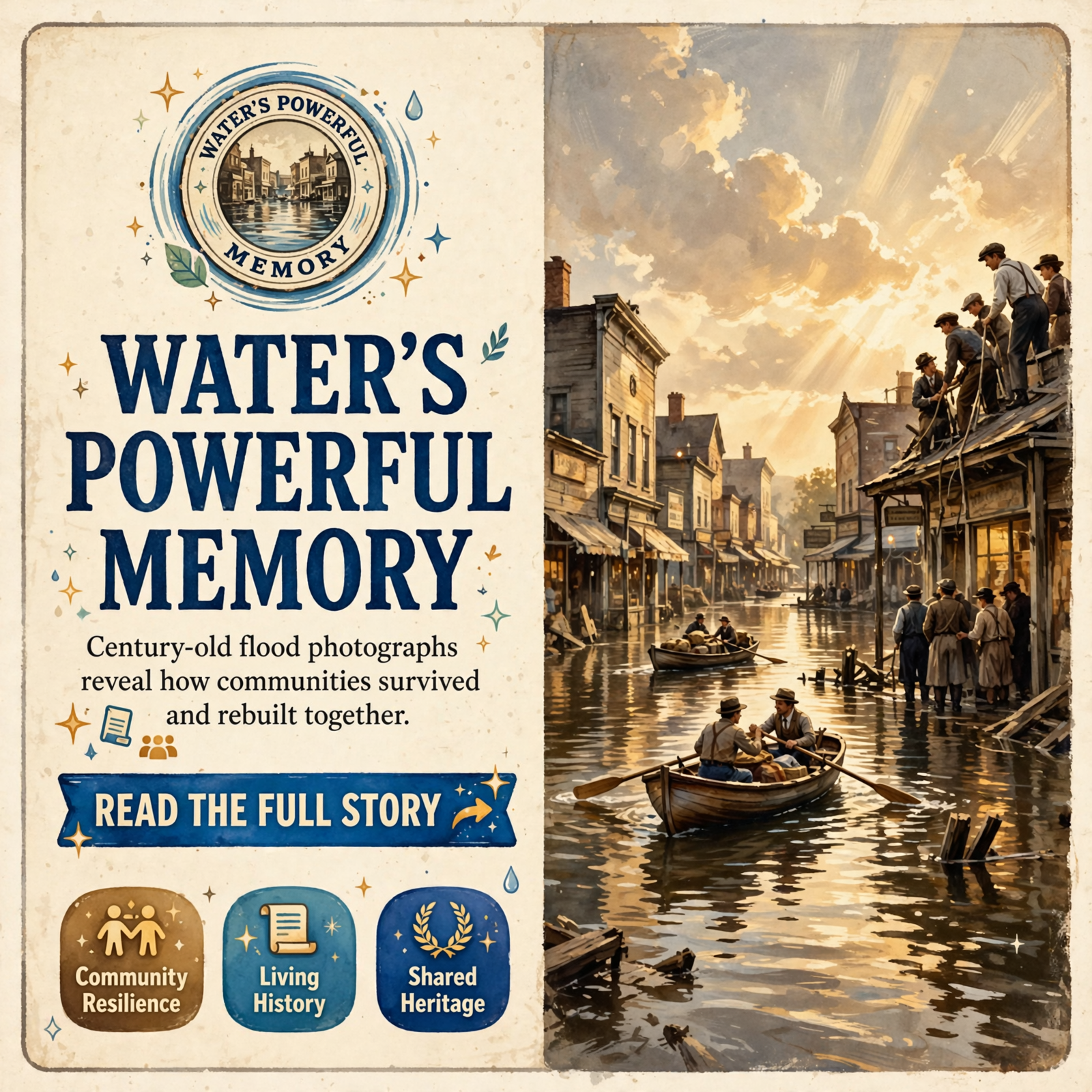
🌊 Restored Photos Reveal Chattanooga’s Great Flood of 1917 – A Century of Community Memory
When heavy rains swelled the Tennessee River more than 25 feet above normal levels on March 7, 1917, Chattanooga experienced one of the most dramatic natural disasters in its history. Now, more than a century later, carefully restored photographs are bringing that pivotal moment back into focus – and reminding residents of the region how far flood management and community resilience have come.
📸 A Family’s Archive Becomes Community History
Sarah Hubbard, a Chattanooga resident, recently discovered a collection of photographs from the 1917 flood buried in a family box. The images, faded and damaged by time, captured the raw reality of that March day: submerged neighborhoods, streets transformed into rivers, and homes surrounded by water. With permission from Hubbard, a local historian carefully restored the photographs – some using digital enhancement, others by hand – to reveal details that had been lost to age and deterioration. The result is a vivid visual record of how the disaster reshaped the city’s landscape and its people’s lives. ✨
💭 Why This Matters
The 1917 flood is not merely a historical curiosity. It is a foundational event in Chattanooga’s relationship with water management and infrastructure. The disaster directly influenced decisions that shaped the region for generations – including the eventual creation of the Tennessee Valley Authority (TVA) dam system, which transformed how the Tennessee River and its tributaries are managed across multiple states. Understanding that connection helps residents today appreciate why flood control infrastructure exists, how it protects communities, and why ongoing maintenance and planning remain critical. 🏗️
For families with deep roots in Chattanooga, the flood represents a shared ancestral experience. Hubbard’s grandmother, for instance, grew up on one of the houseboats that sheltered families under the Market Street Bridge during and after the disaster. Her grandfather was part of a group known as the “Dirty Dozen,” who accompanied barges downriver – a detail that speaks to the informal networks of mutual aid and labor that emerged when formal systems failed. These personal stories humanize the historical record and connect past resilience to present community identity. ❤️
🧵 Community Threads: Memory, Resilience, and Shared History
The Family-to-Community Archive Thread: Hubbard’s decision to share her family photographs with the broader community transforms a private memory into a public resource. This thread reveals how individual families hold pieces of collective history and how the act of sharing – and restoring – those pieces strengthens community understanding. When residents see their ancestors’ experiences documented and preserved, they develop deeper investment in local history and a stronger sense of belonging to a place with continuity and meaning.
The Infrastructure-and-Trust Thread: The 1917 flood directly led to infrastructure decisions that still protect residents today. Understanding that connection builds trust in systems that may seem abstract or distant. When residents know that a dam or levee exists because of a specific historical disaster, they are more likely to support maintenance, planning, and adaptation as climate and weather patterns evolve. This thread links past survival to present safety. 🌊
The Intergenerational Knowledge Thread: Hubbard’s recollection of her grandmother’s stories about life on houseboats and her grandfather’s work with the Dirty Dozen illustrates how oral history passes through families. The restoration of photographs creates an opportunity for younger generations to connect with those stories in a new way – seeing the actual places and conditions their ancestors navigated. This thread strengthens family identity and local pride across generations. 📖
🎯 What Residents Should Know
The restored photographs are now part of the public record, shared through community groups and social media. Residents interested in Chattanooga’s flood history, local heritage, or family connections to the 1917 event can view and discuss the images in community forums. The restoration project demonstrates how digital tools and patient historical work can recover details from damaged archives – a reminder that old family photographs, even if faded or stained, may hold recoverable value. 💡
For those researching family history or local heritage, these photographs offer visual context for understanding how the 1917 flood affected specific neighborhoods and how residents adapted. The images also provide a baseline for comparing how the same areas have changed over the past 107 years – from waterlogged streets to modern infrastructure.
🔮 What Happens Next
As more residents become aware of the restored photographs, additional family archives may emerge. Community members who have their own flood-era photographs, documents, or stories may feel encouraged to share them, creating a richer collective record. Local historians, schools, and heritage organizations may incorporate these images into educational materials, exhibits, or digital archives. The restoration work also raises awareness of how digital preservation techniques can recover fading family photographs – a skill that may inspire other residents to preserve their own historical collections. 📚
❓ Questions for the Community
- Do you have family stories or photographs from the 1917 flood or other significant local events? What details do those stories reveal about how your ancestors adapted and survived?
- How has Chattanooga’s relationship with the Tennessee River changed since 1917, and what role has infrastructure like dams and levees played in that change?
- What other fading family archives or local historical records might benefit from restoration and community sharing?
- How can residents today learn from the informal networks of mutual aid – like the Dirty Dozen – that emerged during the 1917 flood?
🌍 Long-Term Community Impact
The preservation and sharing of the 1917 flood photographs contribute to a broader cultural shift: the recognition that local history is a community asset, not just an individual or institutional possession. When residents see their city’s past documented, discussed, and valued, they develop stronger attachment to place and greater investment in its future. This sense of continuity and shared identity can strengthen civic participation, support for local preservation efforts, and resilience in the face of future challenges. 🏘️
The flood itself – and the infrastructure decisions it prompted – remains relevant as climate patterns shift and weather events become less predictable. Understanding how Chattanooga responded to a major disaster more than a century ago provides both practical lessons and emotional grounding for residents facing contemporary environmental challenges. The story of the 1917 flood is ultimately a story of survival, adaptation, and community – themes that resonate across generations and remind residents that they are part of a long continuum of people who have weathered crises and built resilience together. ✨
🤔Source
Gary Williams – Historical post sharing restored photos and information about the Great Flood of 1917 in Chattanooga, TN.

0 Comments