
🐇 Rabbit for Cats: Why This Local Protein Is Especially Interesting
🐾 The Scaredy Cat Project — Article #11
We’ve looked at chicken.
We’ve looked at eggs.
We’ve looked at venison.
Now we’re getting to an animal that immediately sounds like it should be relevant to cats.
Rabbit.
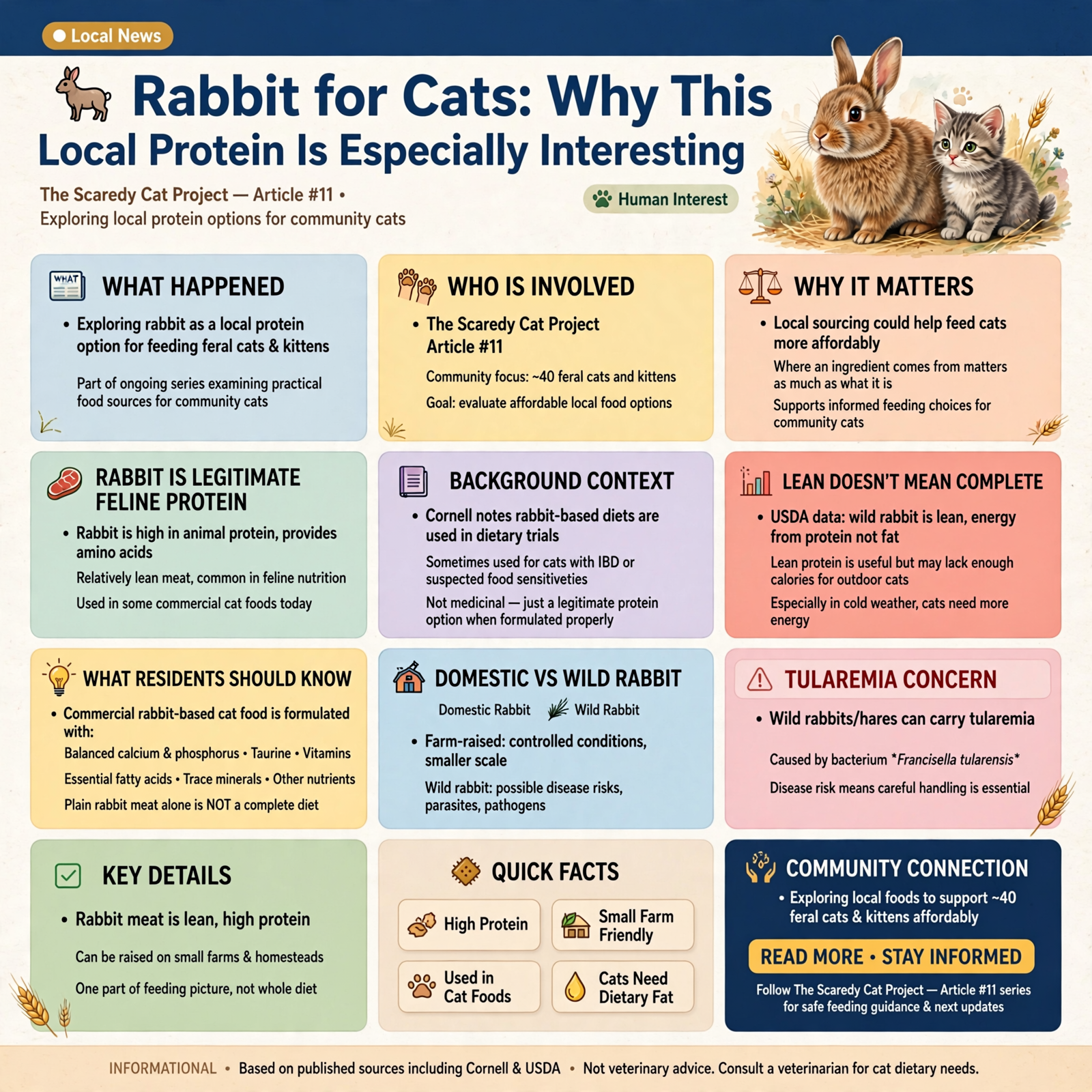
Rabbit meat is lean.
It’s high in animal protein.
It’s already used in some commercial cat foods.
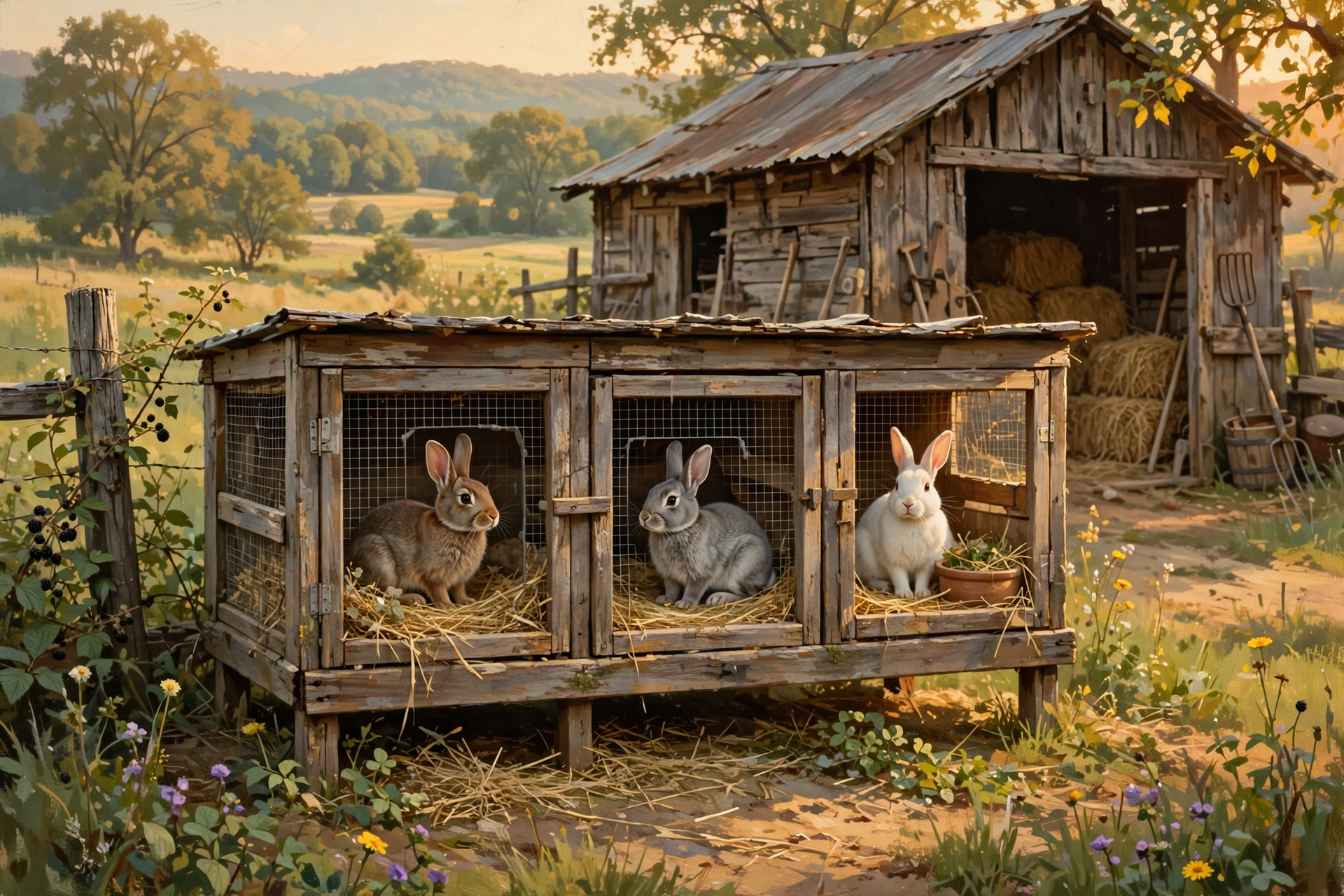
It’s also something that can be raised on relatively small farms and homesteads.
That makes it especially interesting for a project trying to understand whether local food sources might help us feed roughly 40 feral cats and kittens more affordably.
But rabbit gives us an important new lesson.
Where an ingredient comes from can matter just as much as what the ingredient is.
🥩 Rabbit Is Legitimate Feline Protein
Let’s start with the straightforward part.
Rabbit meat is animal protein.
It provides amino acids and can be relatively lean.
In fact, rabbit is common enough in feline nutrition that Cornell mentions rabbit-based diets among the protein options sometimes used during dietary trials for cats with inflammatory bowel disease or suspected food sensitivities. :chatgpt-content-reference{index=”0″}
That doesn’t mean rabbit is medicinal.
It means rabbit is a perfectly legitimate protein source for cats when used in an appropriately formulated diet.
🐱 But “Rabbit Cat Food” and “Feed the Cat a Rabbit” Are Not the Same Thing
This distinction matters.
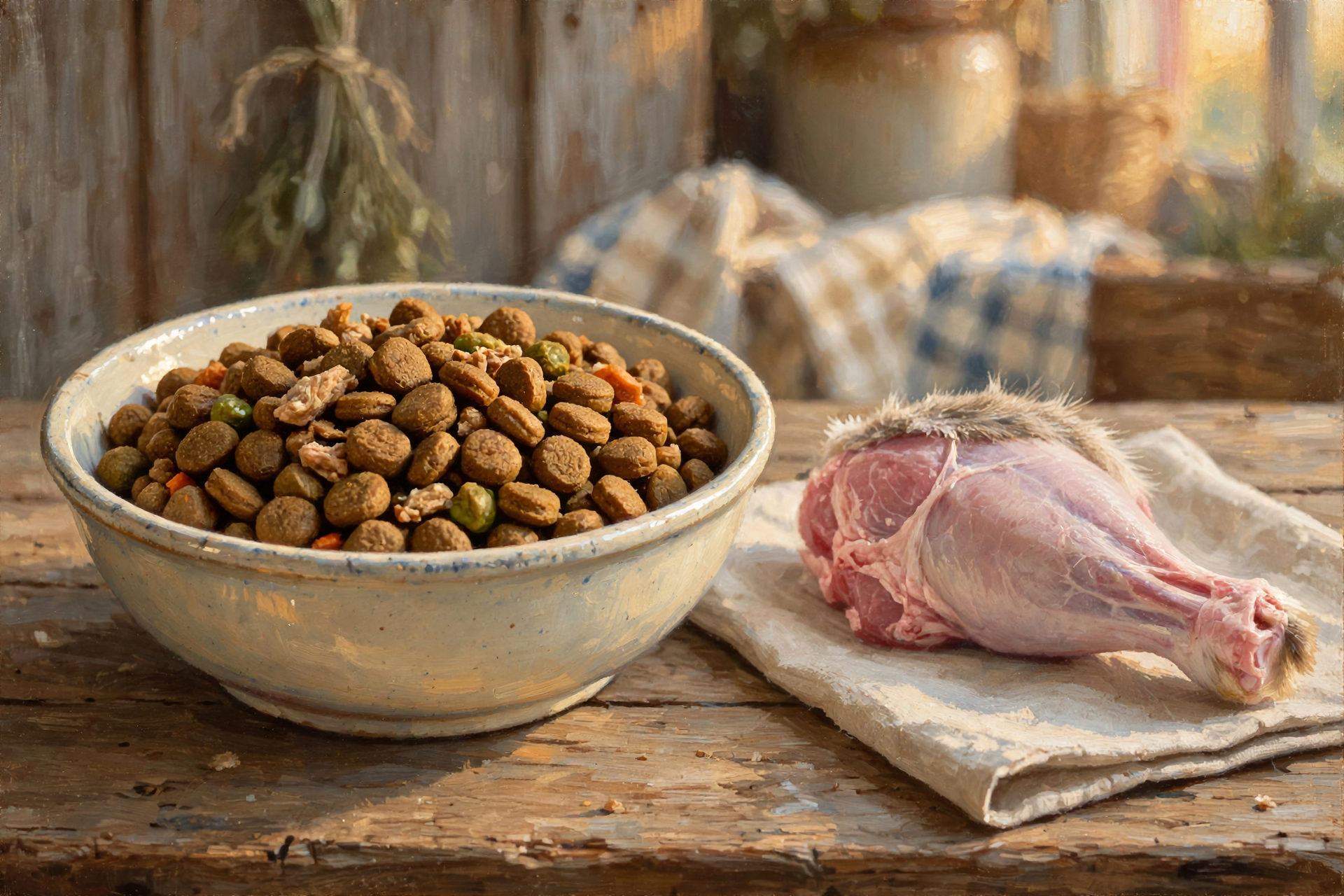
A commercial rabbit-based cat food may include rabbit protein along with:
- ⚖️ Balanced calcium and phosphorus
- ❤️ Taurine
- 💊 Vitamins
- 🧈 Essential fatty acids
- ⚙️ Trace minerals
- 🥩 Other necessary nutrients
A plain piece of rabbit muscle meat does not automatically contain all of those things in the correct amounts.
So once again:
A useful ingredient is not automatically a complete diet.
🥩 Rabbit Is Generally a Lean Meat
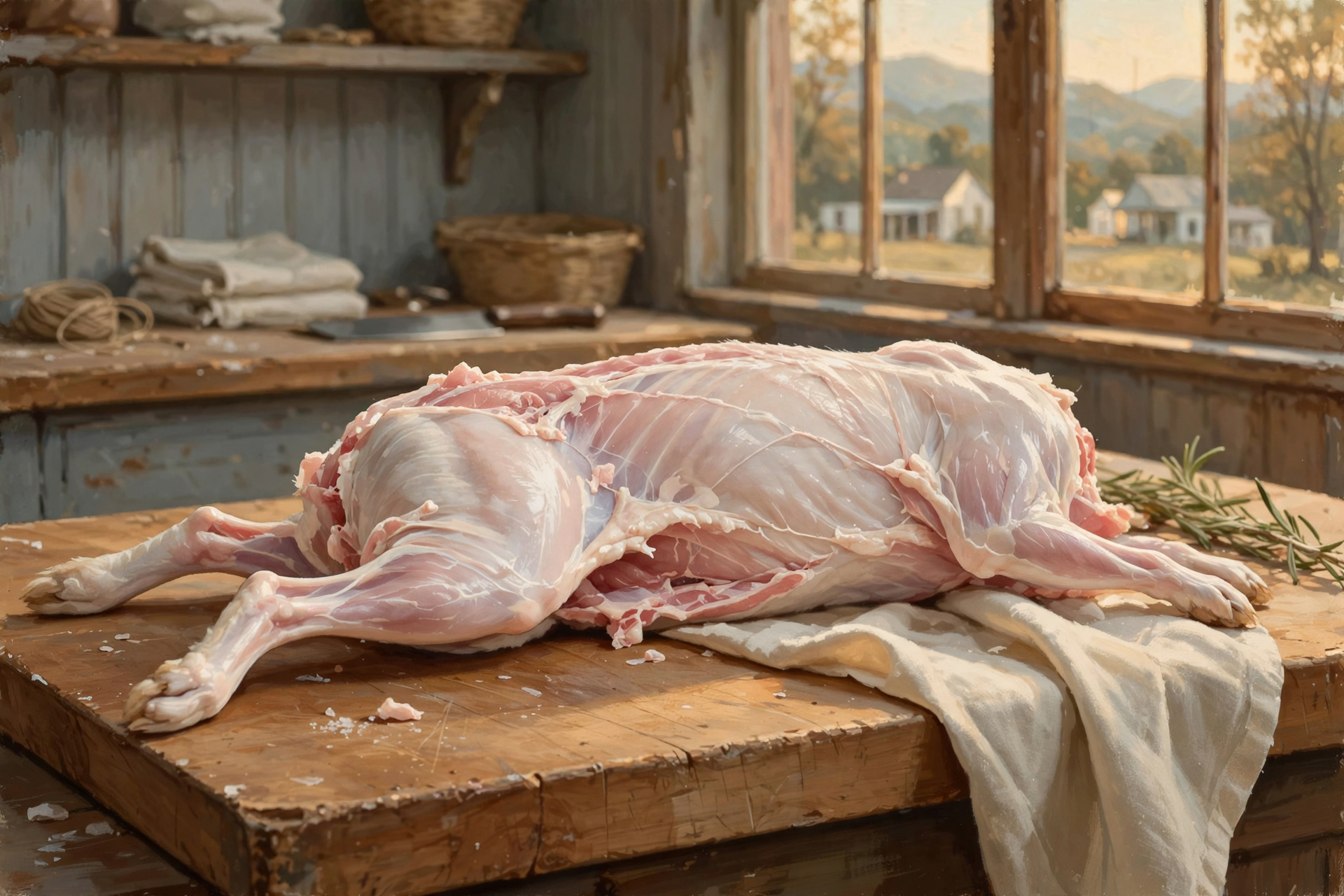
USDA nutrient data for wild rabbit classifies it as a game meat and shows that much of its energy comes from protein rather than large amounts of fat. :chatgpt-content-reference{index=”1″}
That makes rabbit potentially useful as a lean protein.
But we’ve already learned that “lean” isn’t automatically better for every cat.
An outdoor cat trying to maintain weight through cold weather may need plenty of calories.
A very lean meat can provide excellent protein without necessarily providing a lot of energy.
That means rabbit may need to be viewed as one part of the feeding picture rather than the entire picture.
🔥 This Is Another Place Where Human Diet Logic Can Mislead Us
People often hear:
Lean meat = healthy.
That’s a simplification even for people.
For cats, it can be more misleading.
Cats need fat.
Fat provides:
- 🔥 Energy
- 🧈 Essential fatty acids
- 💊 Support for fat-soluble vitamins
- 😸 Palatability
So rabbit’s leanness may be useful, but it also means we shouldn’t expect plain rabbit meat to solve every nutritional need.
🐇 Domestic Rabbit and Wild Rabbit Are Two Different Conversations
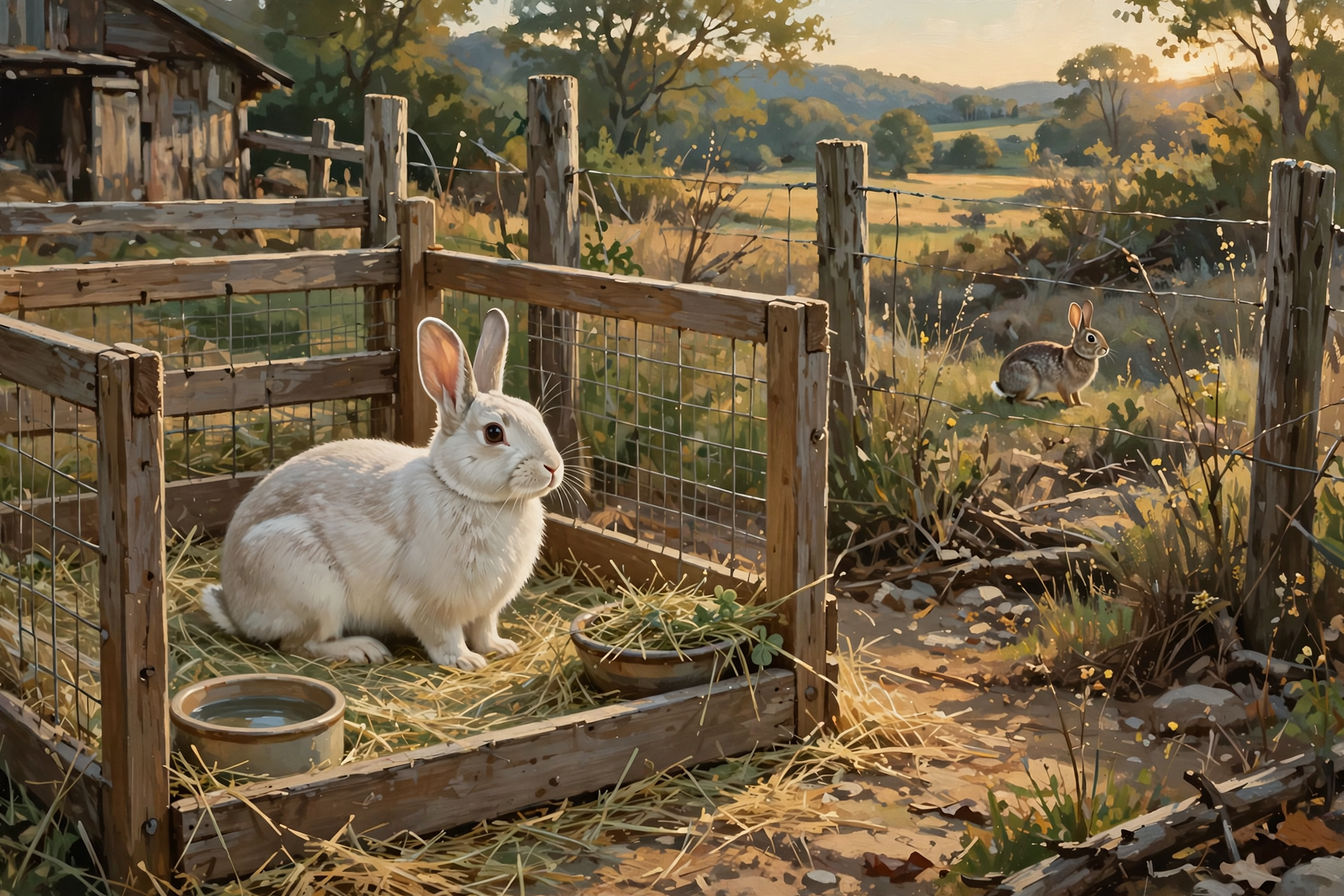
This may be the most important distinction in the article.
A rabbit raised on a small farm under controlled conditions is one thing.
A wild rabbit found or harvested outdoors is another.
They may both be rabbits.
But their disease risks, handling histories, diets, and exposure to parasites and pathogens can differ.
That’s particularly important because rabbits and hares are associated with a disease called tularemia.
⚠️ Tularemia Changes the Wild-Rabbit Conversation
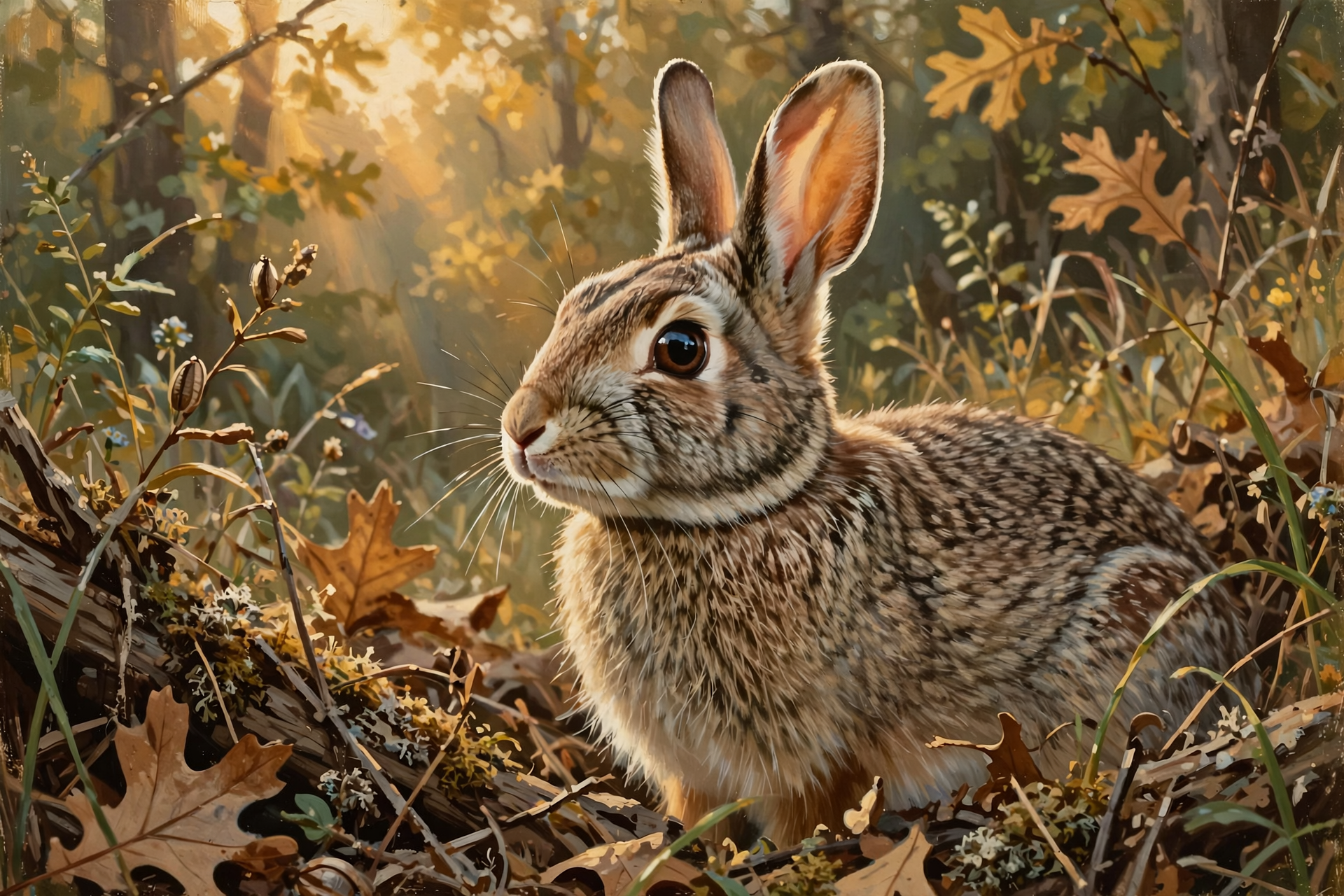
Tularemia is caused by the bacterium Francisella tularensis.
The Tennessee Department of Health identifies rabbits, hares and rodents as natural hosts and notes that people and pets can become infected through exposure to infected animals or tissues. :chatgpt-content-reference{index=”2″}
The CDC also specifically warns that rabbits and hares can transmit tularemia and notes that domestic cats are particularly susceptible. :chatgpt-content-reference{index=”3″}
That immediately changes my attitude toward the idea of simply feeding wild rabbit to our cats.
🐱 Cats Can Get Tularemia Too
This isn’t merely a human food-safety issue.
Cats themselves can become infected.
In a 2024 Minnesota increase in tularemia cases, most of the reported infected domestic animals were cats. :chatgpt-content-reference{index=”4″}
That matters to The Scaredy Cat Project because our entire goal is to improve the lives of these cats.
Introducing an avoidable disease risk in the name of cheap protein would be the opposite of progress.
🚫 So We Are Not Going to Collect Dead Wild Rabbits
This seems worth saying plainly.
If we find a dead rabbit on the property:
that is not free cat food.
It is a dead wild animal of unknown cause.
The Tennessee Wildlife Resources Agency specifically advises caution when handling rabbits found dead because some signs of rabbit hemorrhagic disease can resemble tularemia, which can infect people. :chatgpt-content-reference{index=”5″}
So our food-recovery principle remains:
Unknown does not equal useful.
🧤 Hunters and Rabbit Handlers Need to Use Common Sense
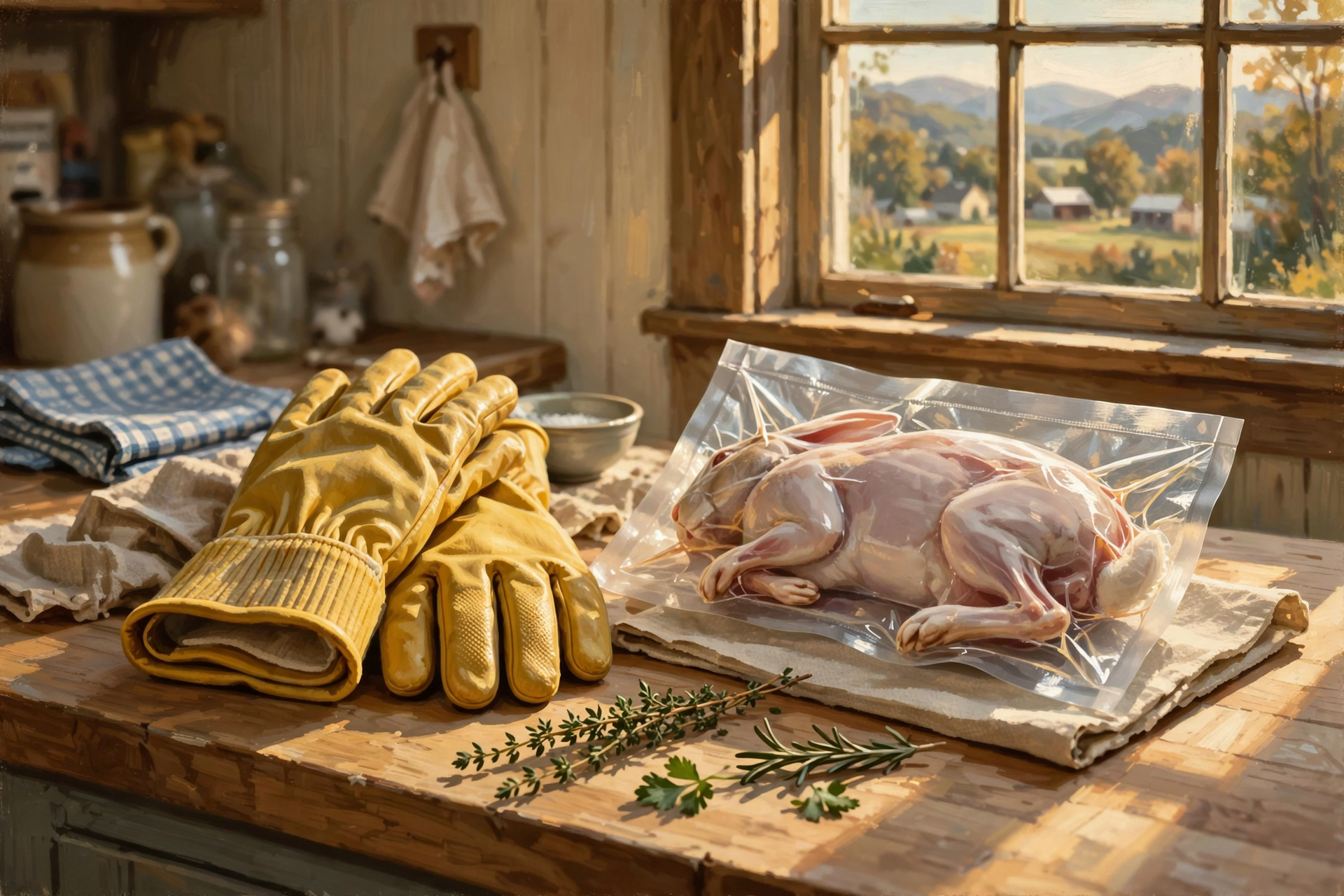
The CDC recommends gloves when handling rabbits and other game animals and advises cooking game meat thoroughly. :chatgpt-content-reference{index=”6″}
That is good guidance for anyone considering wild rabbit as food.
For our project, however, I think the better starting point is even simpler:
domestic or commercially processed rabbit is more interesting than random wild rabbit.
🏡 Farm-Raised Rabbit May Be the Real Opportunity
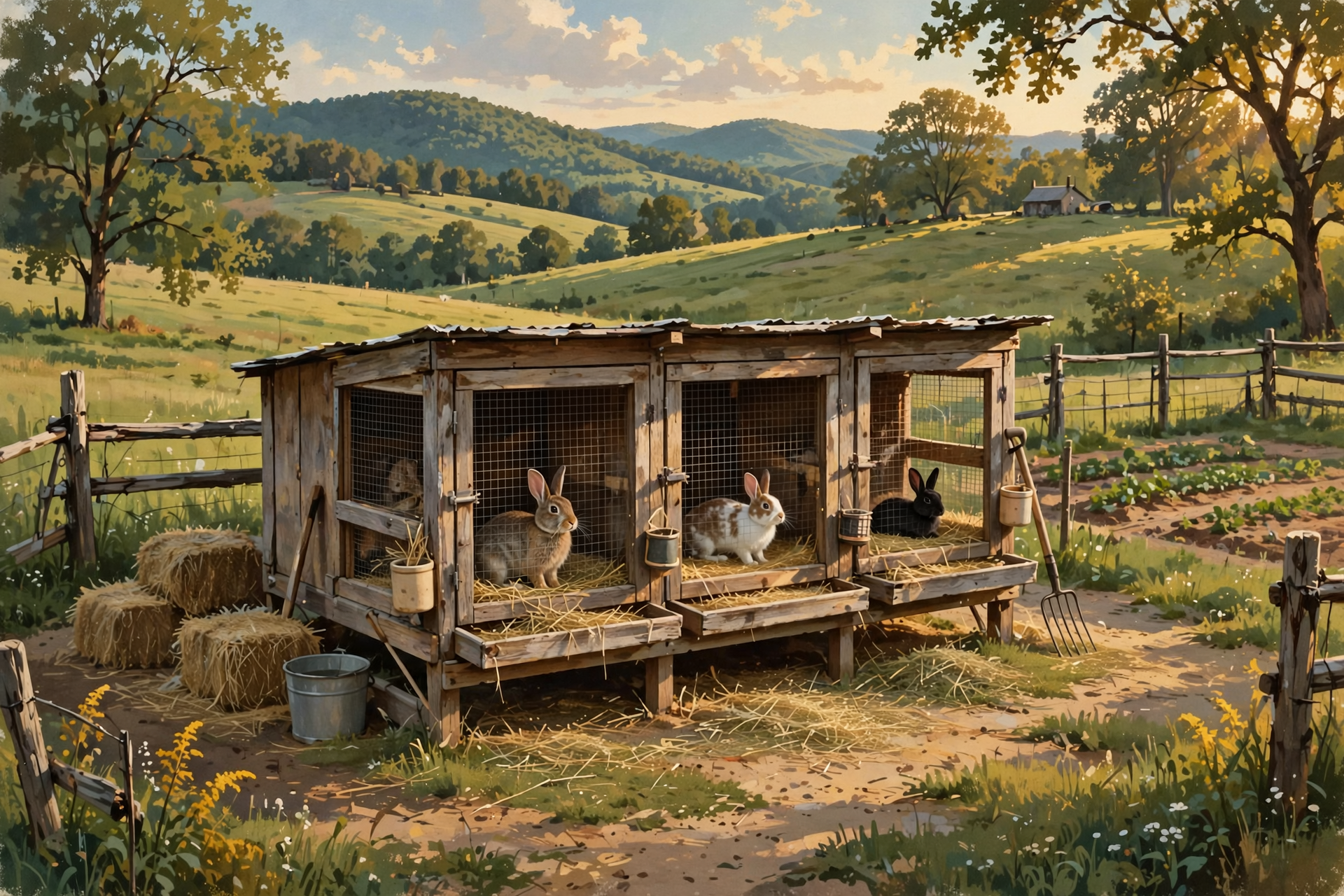
This is where rabbit gets exciting again.
Small farms and homesteads can raise rabbits without requiring the land or infrastructure needed for cattle.
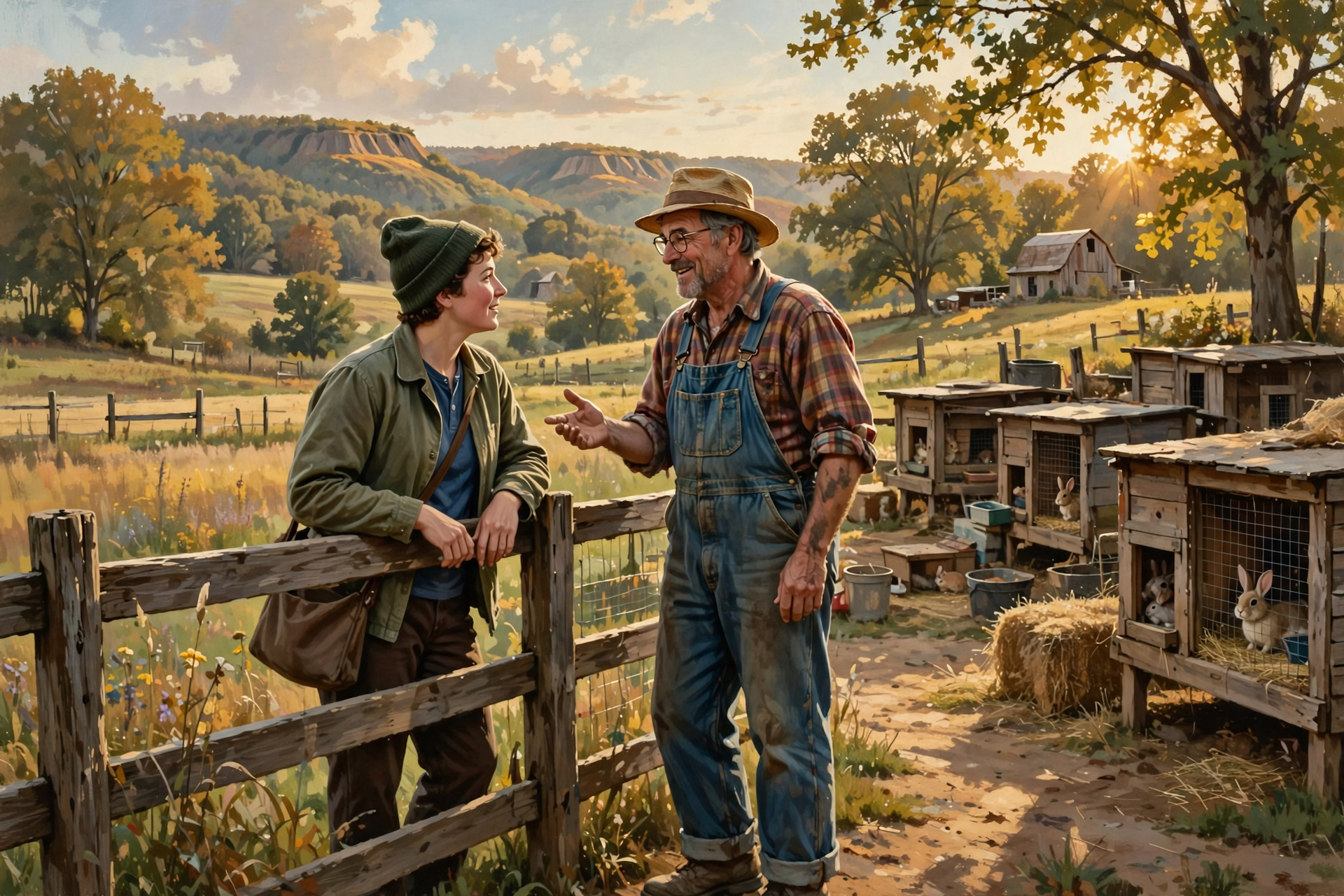
That could make local rabbit producers particularly interesting to talk with.
I want to know:
- 🐇 Are people raising meat rabbits locally?
- 🥩 What cuts are most desirable?
- ♻️ Are there trimmings with little human demand?
- 🫀 What happens to organs?
- 🧊 Are lower-value portions frozen or discarded?
- 💵 What does rabbit actually cost per pound locally?
Those questions could tell us whether rabbit is merely nutritionally interesting or economically useful too.
💰 Rabbit May Have One Big Problem: Price
This may be where the idea struggles.
Chicken gizzards can be cheap because human demand is low.
Venison may be available as donated surplus.
Eggs may occasionally be donated by people with too many.
Rabbit meat, however, is often a specialty product.
That can make it relatively expensive.
So the economics may not work if we’re buying premium rabbit meat at retail price.
But remember what we’re actually looking for.
Not rabbit tenderloin for Scaredy.
We’re looking for:
safe, lower-demand portions with nutritional value.
🔪 What Parts of a Rabbit Might Be Interesting?
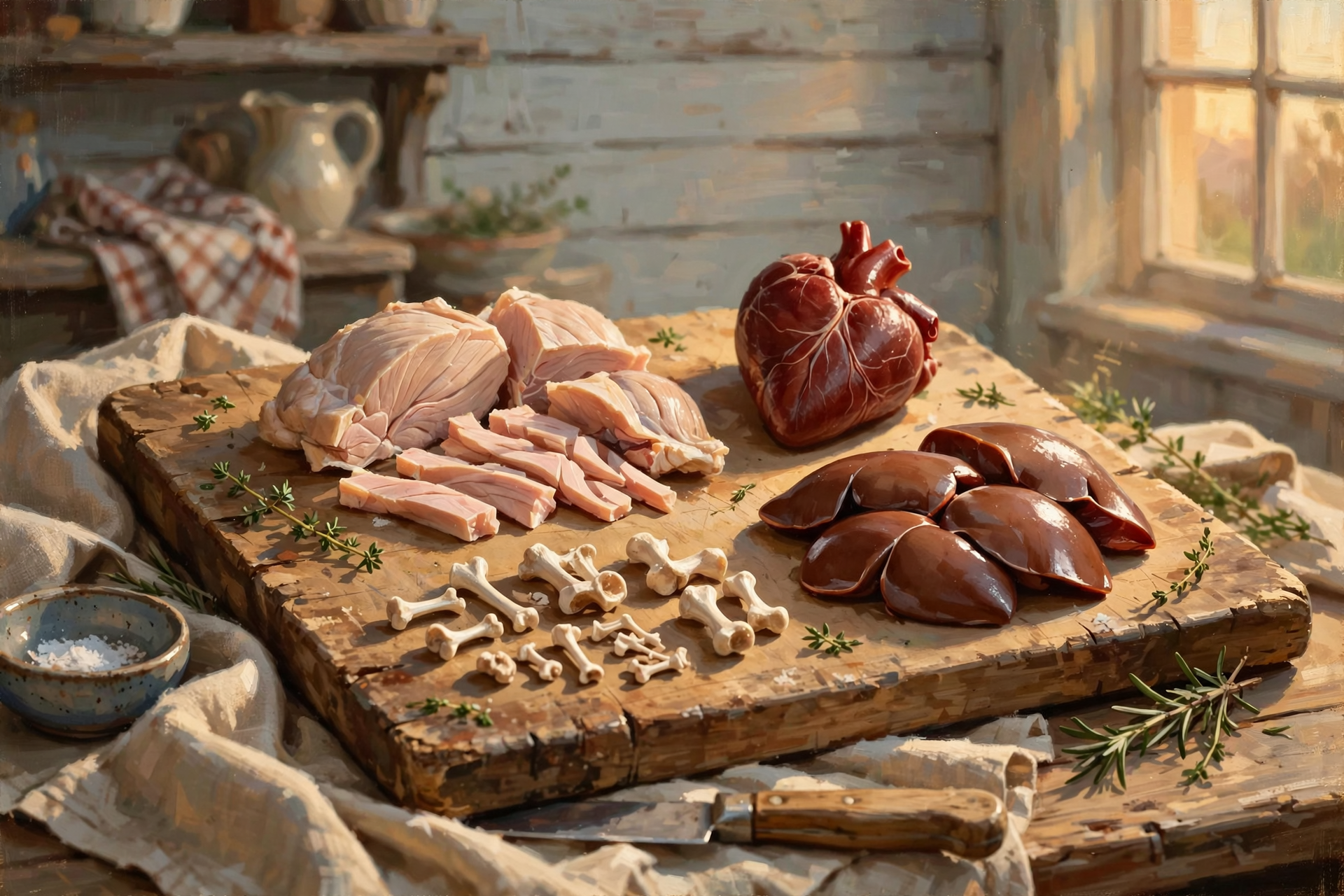
Just like chickens and deer, different parts deserve separate consideration.
🥩 Muscle Meat
Useful animal protein.
Lean.
Not nutritionally complete by itself.
❤️ Heart
Muscular organ tissue and potentially interesting for many of the same reasons chicken heart interested us.
🫀 Liver
Nutrient-dense and valuable in appropriate amounts, but the same rule applies:
concentrated nutrition means portion matters.
🦴 Bone
Bone contains minerals, but bone safety and diet balancing make this much more complicated than simply handing out cooked rabbit bones.
Cooked bones are not something we’re going to use casually.
🍖 Trimmings
This may be where local producers become particularly relevant.
Small pieces of usable meat that have little retail value might fit our project much better than premium cuts.
🐁 Whole Prey Raises a Different Nutritional Question
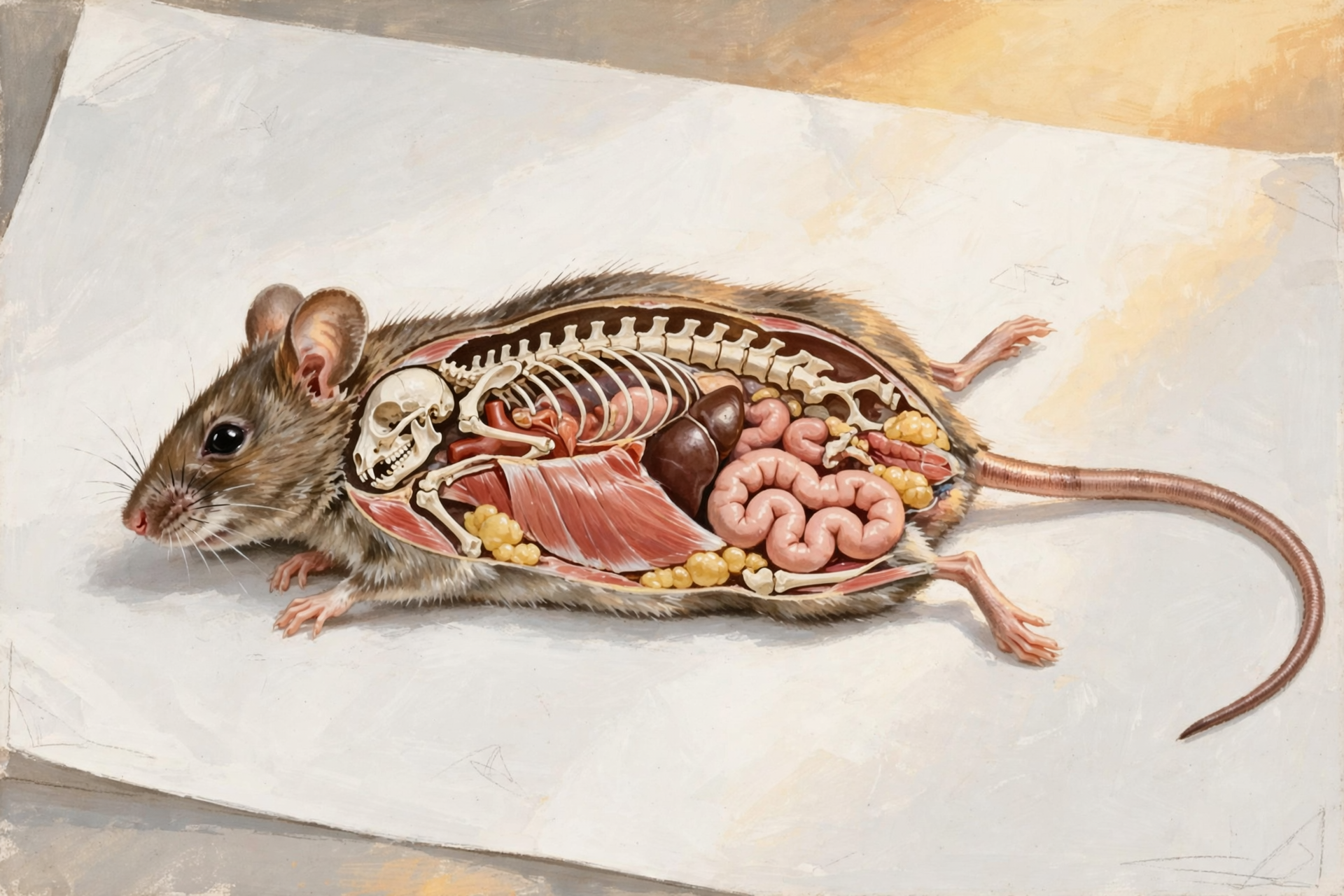
We’ve used the mouse analogy before.
A whole small animal contains much more than boneless muscle meat.
It includes:
- 🥩 Muscle
- 🫀 Organs
- 🦴 Bone
- 🧈 Fat
- 💧 Moisture
- 🧬 Numerous micronutrients
That illustrates an important nutritional principle without requiring us to take a position on anyone’s beliefs about the origin of species.
Observable feline biology tells us that cats can consume animal tissues and require nutrients commonly supplied by animal-based foods.
The practical question for us is:
How do we provide those nutrients safely, affordably and in appropriate balance?
⚠️ Whole Rabbit Still Doesn’t Mean “Automatically Balanced”
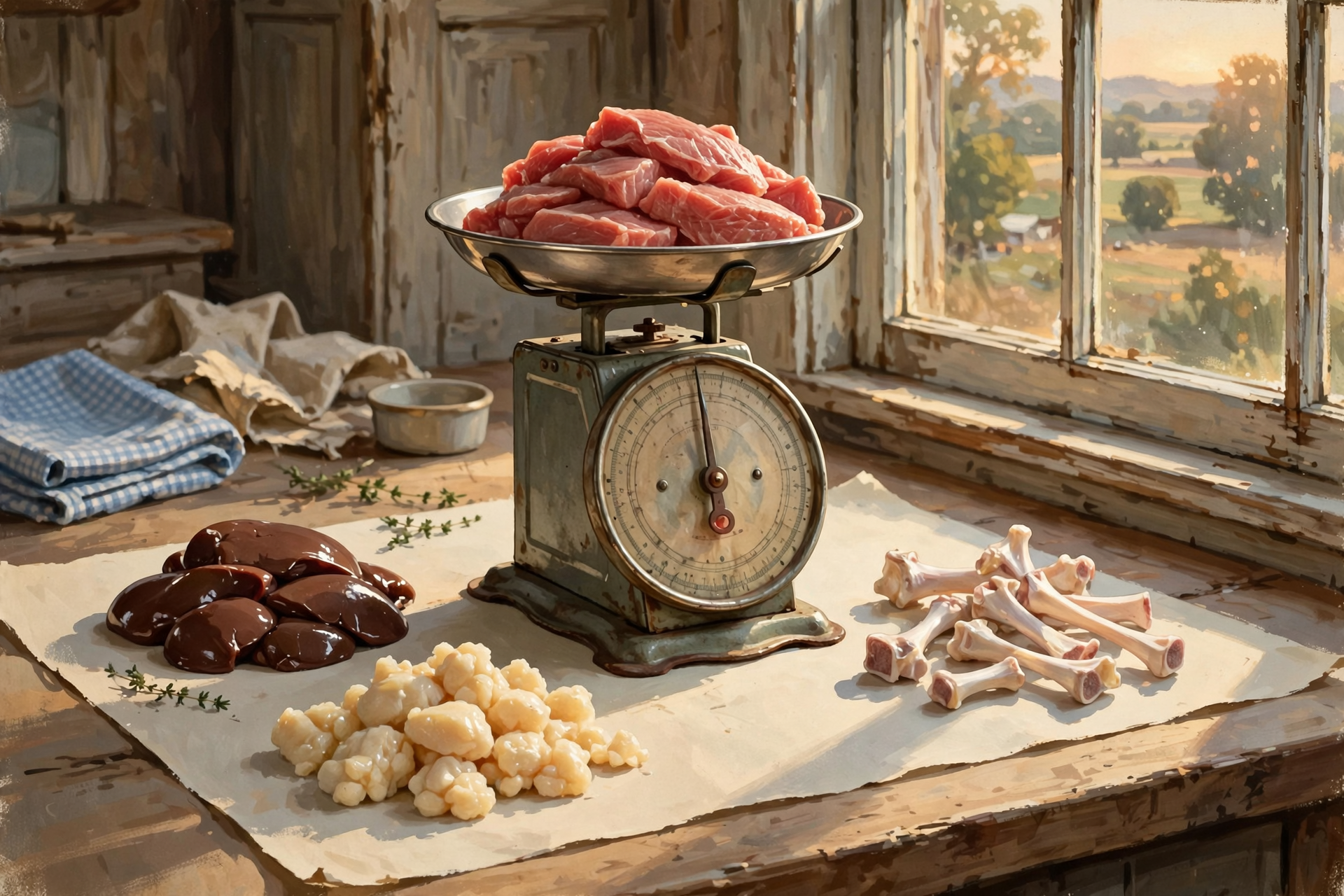
This is another place where internet discussions can oversimplify things.
Even if someone uses multiple parts of an animal, the proportions matter.
How much muscle?
How much liver?
How much bone?
How much fat?
How much taurine survives storage and preparation?
What nutrients are still missing?
That’s why professionally formulated complete diets still have such an important role.
🧪 Rabbit Is Already Used as a “Novel Protein”
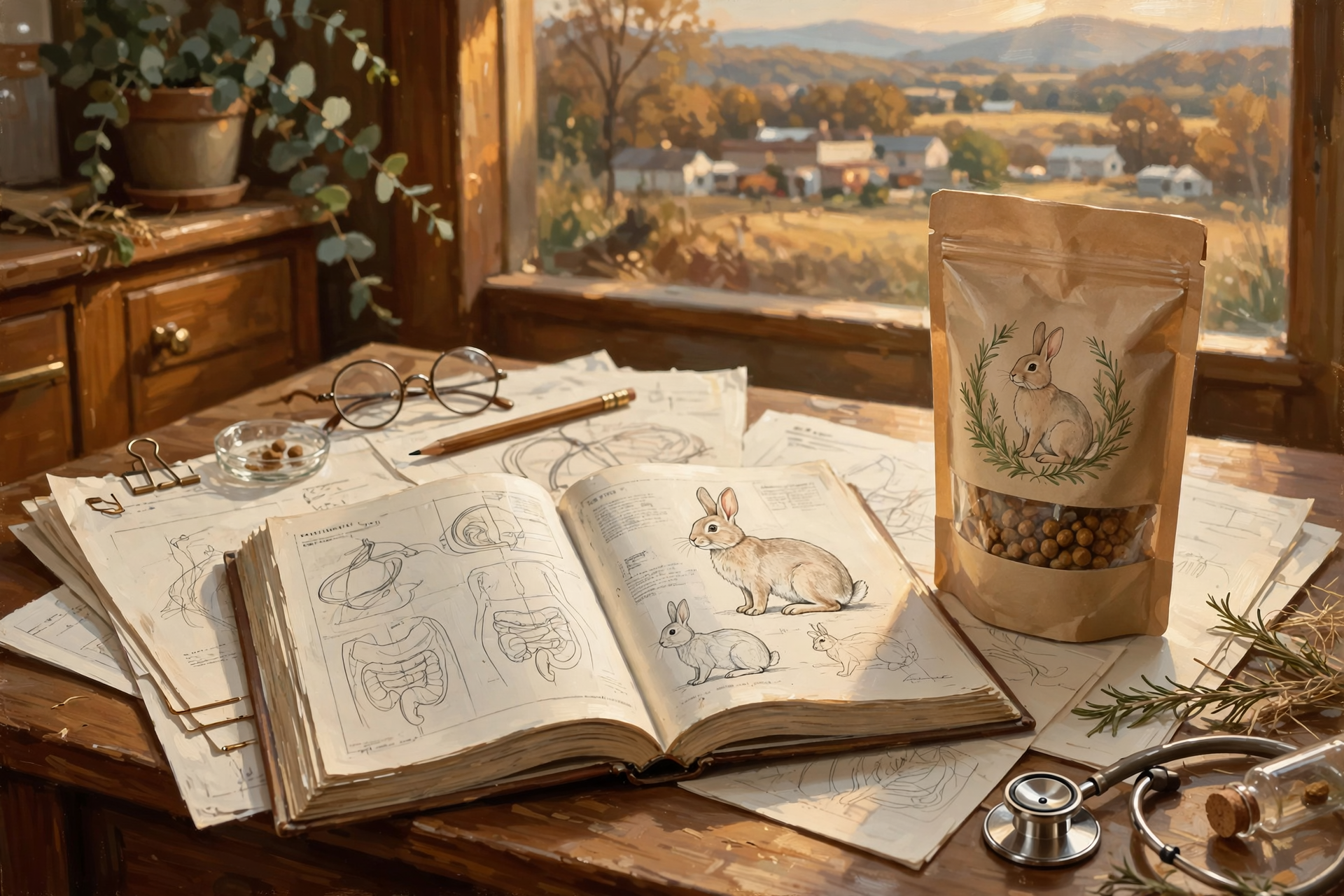
Rabbit has another interesting role in veterinary nutrition.
Commercial rabbit-based foods are sometimes used in dietary trials because rabbit may be a protein a particular cat hasn’t previously eaten. Cornell and Merck both list rabbit among proteins used in such diets. :chatgpt-content-reference{index=”7″}
That doesn’t mean every cat needs rabbit.
And once a cat eats rabbit regularly, it isn’t “novel” to that cat anymore.
But it tells us rabbit is already an established feline protein source rather than some strange homemade-food experiment.
🍳 Cooked or Raw?
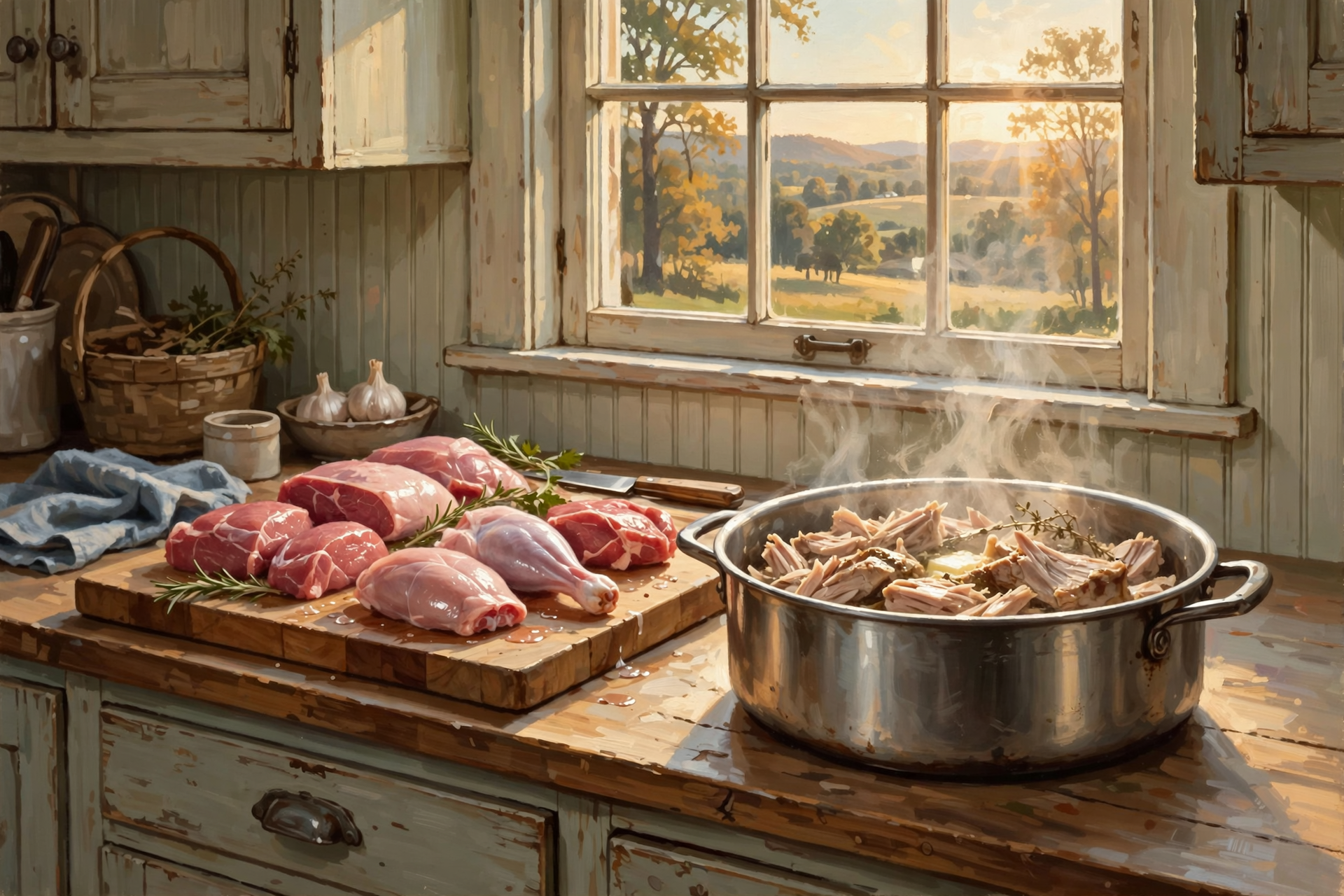
For The Scaredy Cat Project, the answer remains boring.
Cooked.
Especially when we’re talking about rabbit.
Wild rabbit brings tularemia and other disease concerns.
Raw animal foods generally increase food-safety complexity.
And feeding roughly forty cats is already complicated enough.
I don’t need a hobby involving bacterial cultures in the kitchen.
🔥 Thorough Cooking Matters With Wild Game
The CDC specifically recommends cooking game meat thoroughly as part of tularemia prevention. :chatgpt-content-reference{index=”8″}
That doesn’t transform suspicious meat into safe meat.
Source still matters.
If an animal looked sick or was found dead, it shouldn’t enter the system at all.
🧂 Plain Rabbit, Not Rabbit Stew
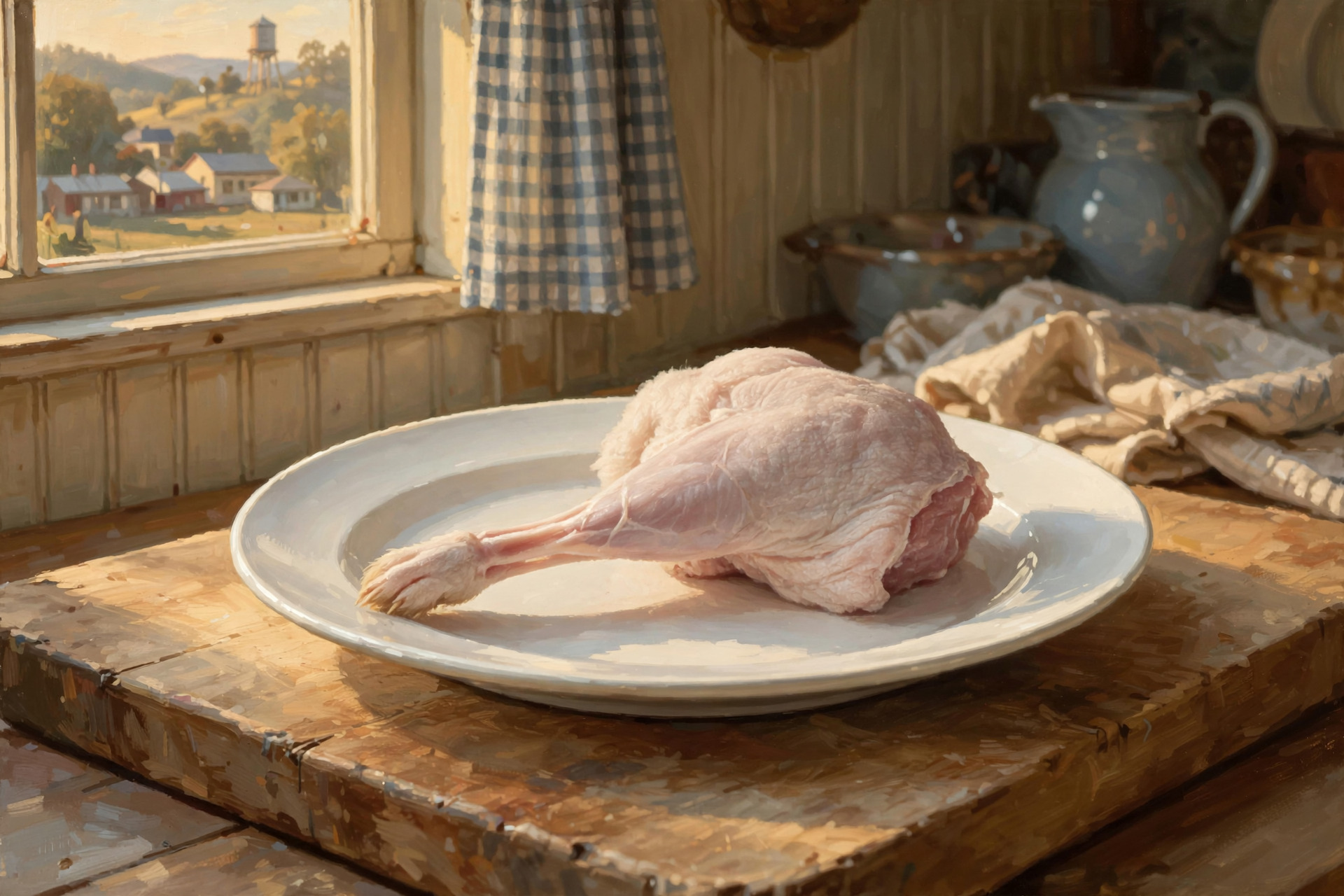
The same rule applies as always.
No onion.
No garlic.
No heavy salt.
No seasoning mixes.
No barbecue sauce.
No leftover rabbit stew.
We’re interested in the nutritional value of the rabbit.
Scaredy does not need Grandma’s recipe.
🧊 Rabbit Freezes Well
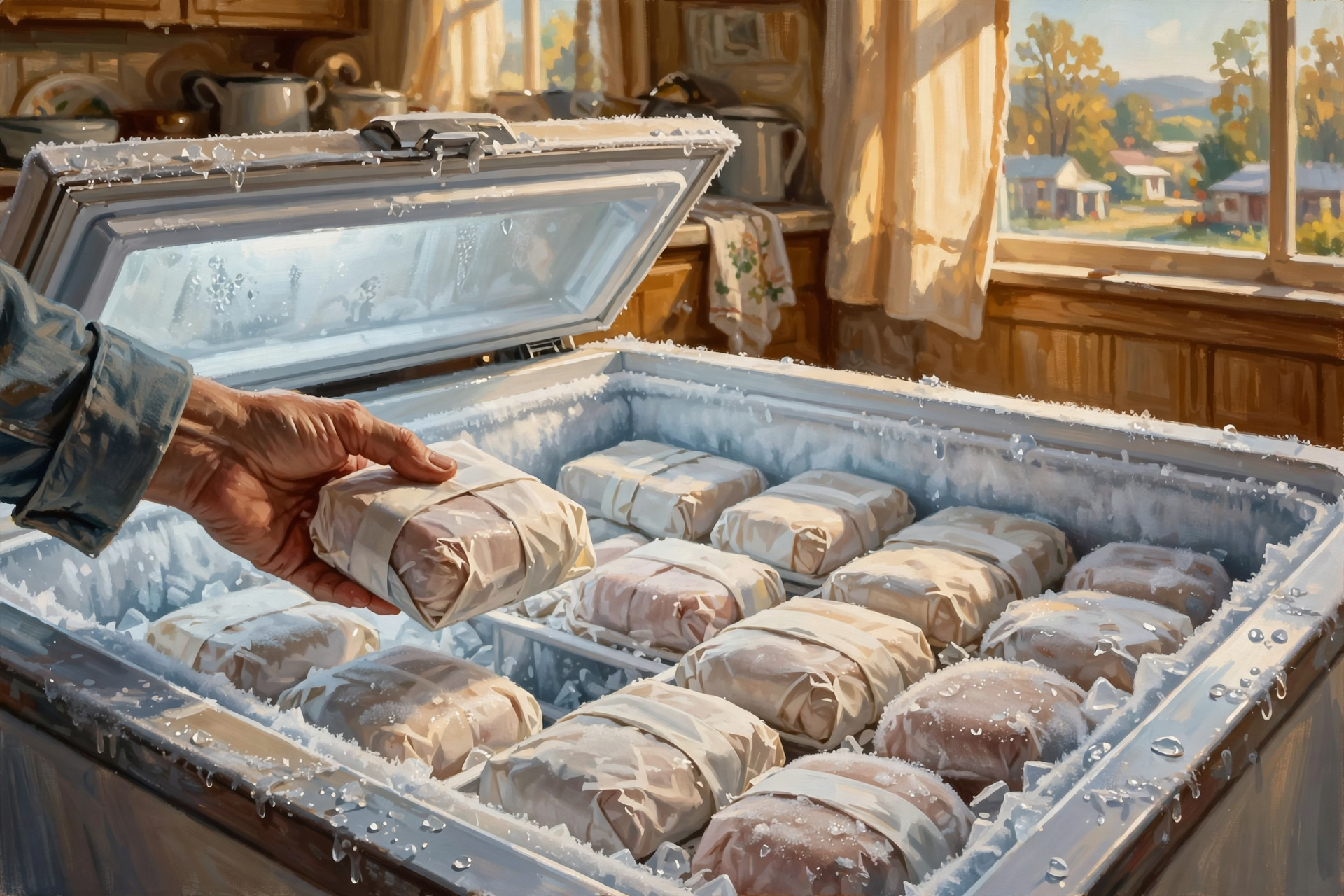
From a logistics standpoint, rabbit meat is easy to handle.
Properly packaged portions can be frozen.
That means if a local producer ever has a larger quantity of usable lower-demand meat available, it could potentially be divided into feeding portions and stored.
We’d want the same basic system we’ve discussed before:
- 🏷️ Label the source
- 📅 Record the date
- ⚖️ Portion before freezing
- 🔄 Rotate oldest stock first
- ❄️ Thaw only what we need
🐾 What About Kittens?
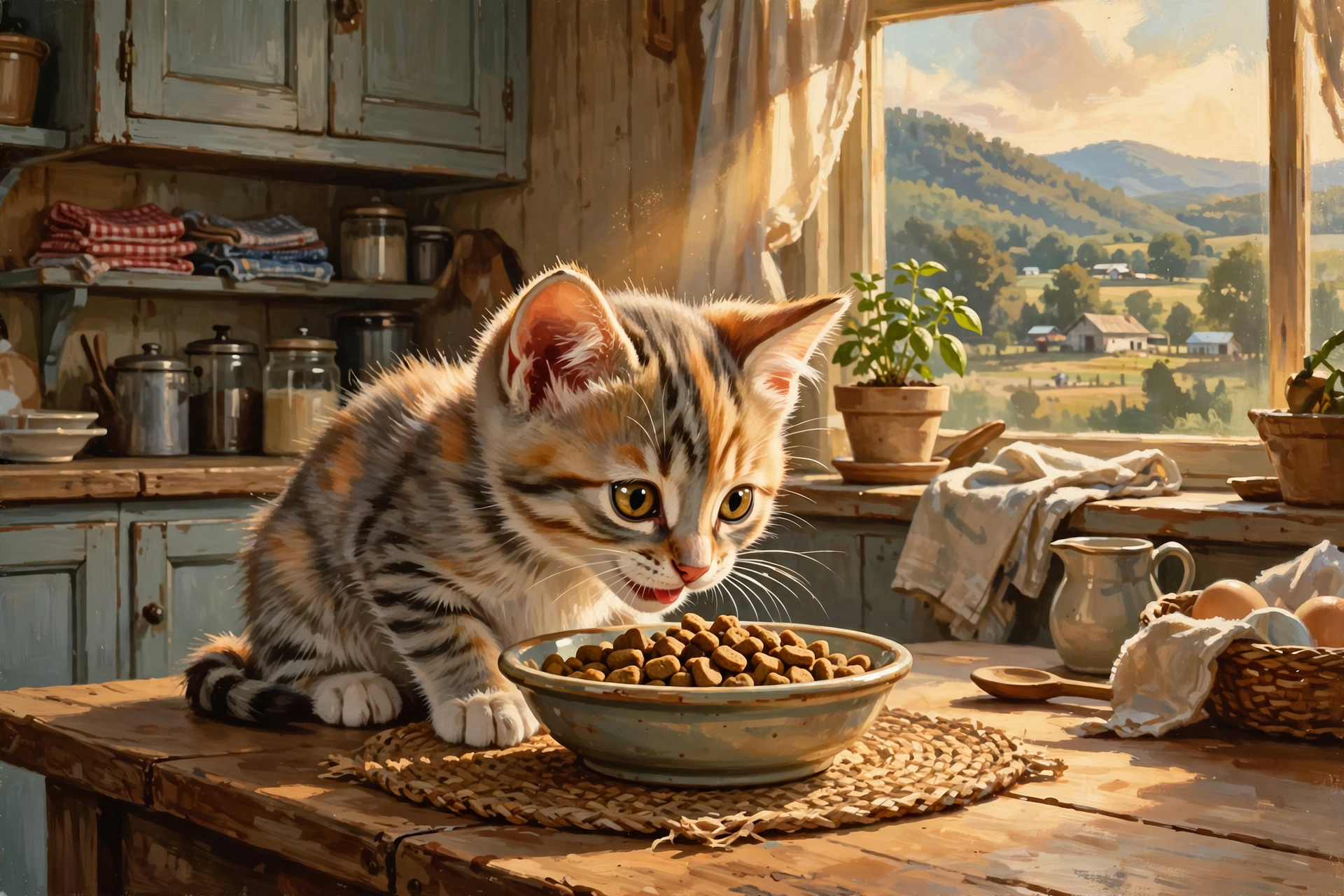
Rabbit meat may provide excellent protein.
But kittens need complete nutrition for growth.
That means rabbit meat should not push properly formulated kitten or all-life-stages food out of the diet.
It’s an especially important distinction because a growing kitten can look perfectly happy eating plain meat while still missing nutrients it needs for proper development.
Appetite is not a nutritional analysis.
📊 The Cost Question May Decide Everything
Let’s say rabbit costs $7 per pound locally.
Interesting nutritionally.
Not especially useful economically for forty cats.
Now suppose a rabbit producer has clean trimmings or lower-demand parts for $1 per pound.
That’s a different conversation.
Or suppose safe portions are occasionally donated.
Different again.
So for rabbit, perhaps more than most ingredients we’ve studied, the answer may depend almost entirely on source.
🧪 How We Could Test Rabbit With the Colony
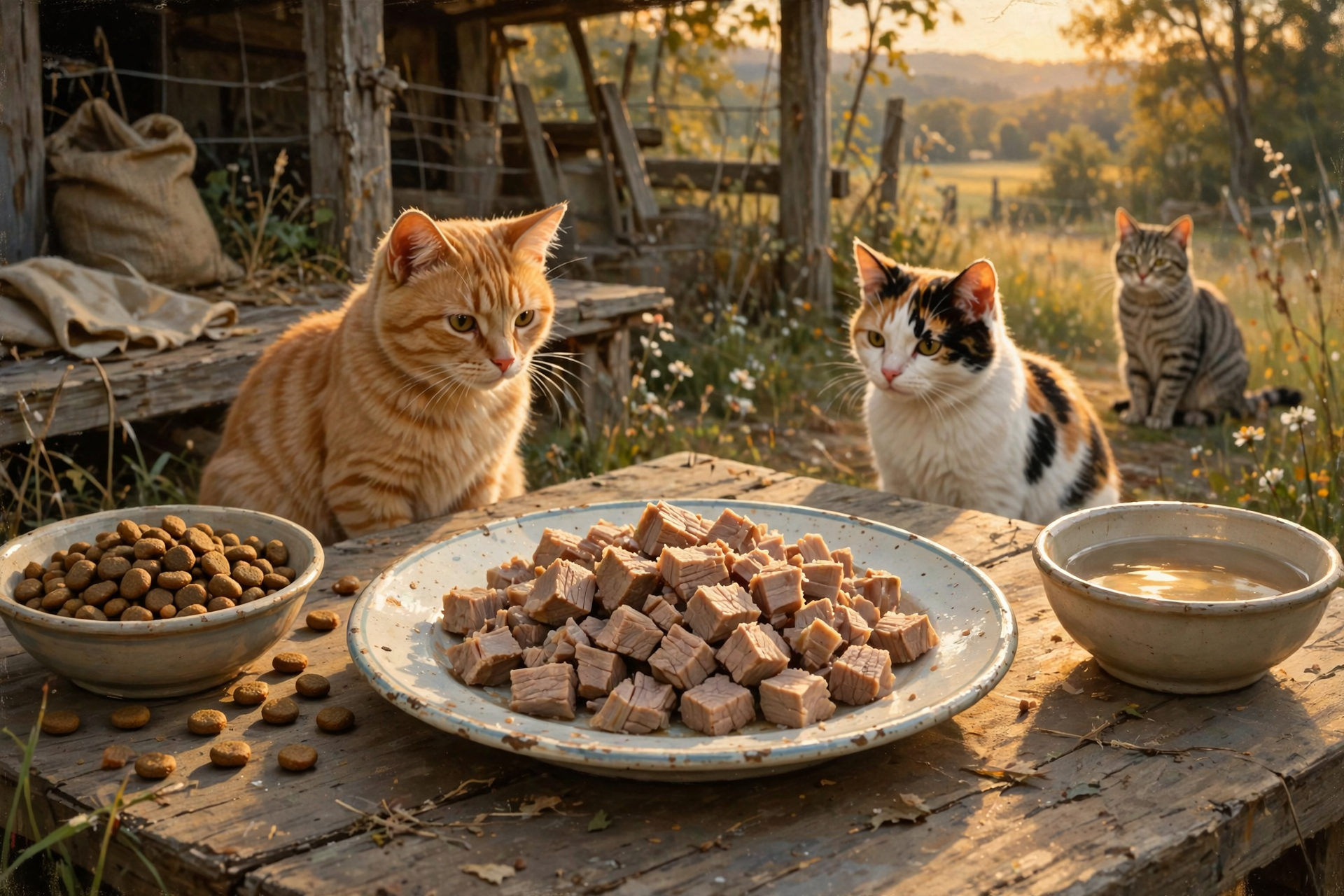
1️⃣ Start With Farm-Raised or Commercial Rabbit
A known source is much more attractive than wild rabbit of uncertain health.
2️⃣ Start Small
No reason to fill a freezer until we know whether the cats like it.
3️⃣ Cook It Plainly
Keep the preparation simple and repeatable.
4️⃣ Chop It Into Small Pieces
That helps distribution across the colony.
5️⃣ Keep Complete Food Available
The rabbit remains supplemental.
6️⃣ Watch Acceptance
Do the cats like it?
Does Scaredy?
Do kittens?
7️⃣ Track Waste
Premium protein left in the grass is an expensive experiment.
8️⃣ Record the Real Cost
Purchase.
Pickup.
Freezing.
Preparation.
Waste.
That’s the number that matters.
📋 The Scaredy Cat Ingredient Scorecard: Rabbit
🥩 Protein Value
High.
Rabbit meat provides high-quality animal protein.
🔥 Fat and Calories
Usually relatively lean.
That makes it useful protein but may limit calorie density.
💧 Moisture
Good.
Fresh cooked rabbit contributes much more moisture than dry food.
⚖️ Nutritional Completeness
Low when plain muscle meat is used alone.
A properly formulated rabbit-based cat food is very different from feeding plain rabbit meat.
🦴 Calcium Balance
Poor in boneless muscle meat.
Plain rabbit meat does not solve the calcium-to-phosphorus balance problem.
🦠 Wild-Game Disease Concern
High enough to matter.
Wild rabbits and hares are associated with tularemia, which can infect both cats and people. :chatgpt-content-reference{index=”9″}
🍳 Preparation
Easy for known-source domestic rabbit.
Wild rabbit requires substantially more caution.
🧊 Storage
Excellent.
Rabbit portions freeze well.
💵 Cost Potential
Highly variable.
Premium retail rabbit may be too expensive. Lower-demand portions or donations could be much more interesting.
🏡 Local Availability
Potentially good.
Small farms and homesteads may be the best opportunity.
😸 Cat Appeal
Promising.
Rabbit is already used in commercial feline diets, but our cats get the final vote.
🐱 Scaredy Cat Project Rating
High Nutritional Interest—Local Economics and Source Safety Will Decide Its Practical Value.
👨🌾 This Is Another Article Where Local Producers Matter
If you raise rabbits for meat around Dunlap or Sequatchie County, I’d especially like to hear from you.
What does your local market look like?
Which cuts sell?
Which don’t?
What happens to trimmings?
What happens to hearts and livers?
Is there anything safe and nutritious that has little enough commercial value that community-cat feeding might make sense?
Those are questions only the people actually raising and processing rabbits can answer well.
🤝 We Should Learn From Local Farmers Before We Invent Solutions for Them
This principle is becoming increasingly important to me.
It’s easy for someone sitting at a computer to decide farmers ought to have all kinds of cheap leftover food available.
That doesn’t make it true.
A rabbit producer may already have a market for everything.
Processing may make certain donations impractical.
Regulations may matter.
Labor may matter.
Freezer space may matter.
The product may simply cost more to produce than I realize.
So rather than assuming, The Scaredy Cat Project should ask.
The people producing the food deserve a seat at the table when we’re talking about how that food could be used.
♻️ The Best Opportunity May Still Be Lower-Demand Portions
The pattern keeps repeating.
We’re not trying to divert food people actually want.
We’re trying to understand whether some foods have:
low market demand + legitimate nutritional value + safe handling + practical cost.
When those things line up, we’ve found something interesting.
Rabbit may fit.
Or it may not.
The local economics will tell us.
❤️ Rabbit Teaches Us Something New About “Local”
Local doesn’t automatically mean cheap.
Local doesn’t automatically mean nutritionally complete.
And local doesn’t automatically mean safe.
But local can mean:
- 🤝 We know the producer
- 📍 We know the source
- 🧊 We understand the handling
- 💬 We can ask questions
- ♻️ We can identify lower-demand resources before they become waste
That may be the real advantage.
🔜 Next: Fish for Cats—Why “Cats Love Fish” Is Only the Beginning
We’ve delayed this long enough.
Scaredy has filed multiple complaints.
It’s time to talk about fish.
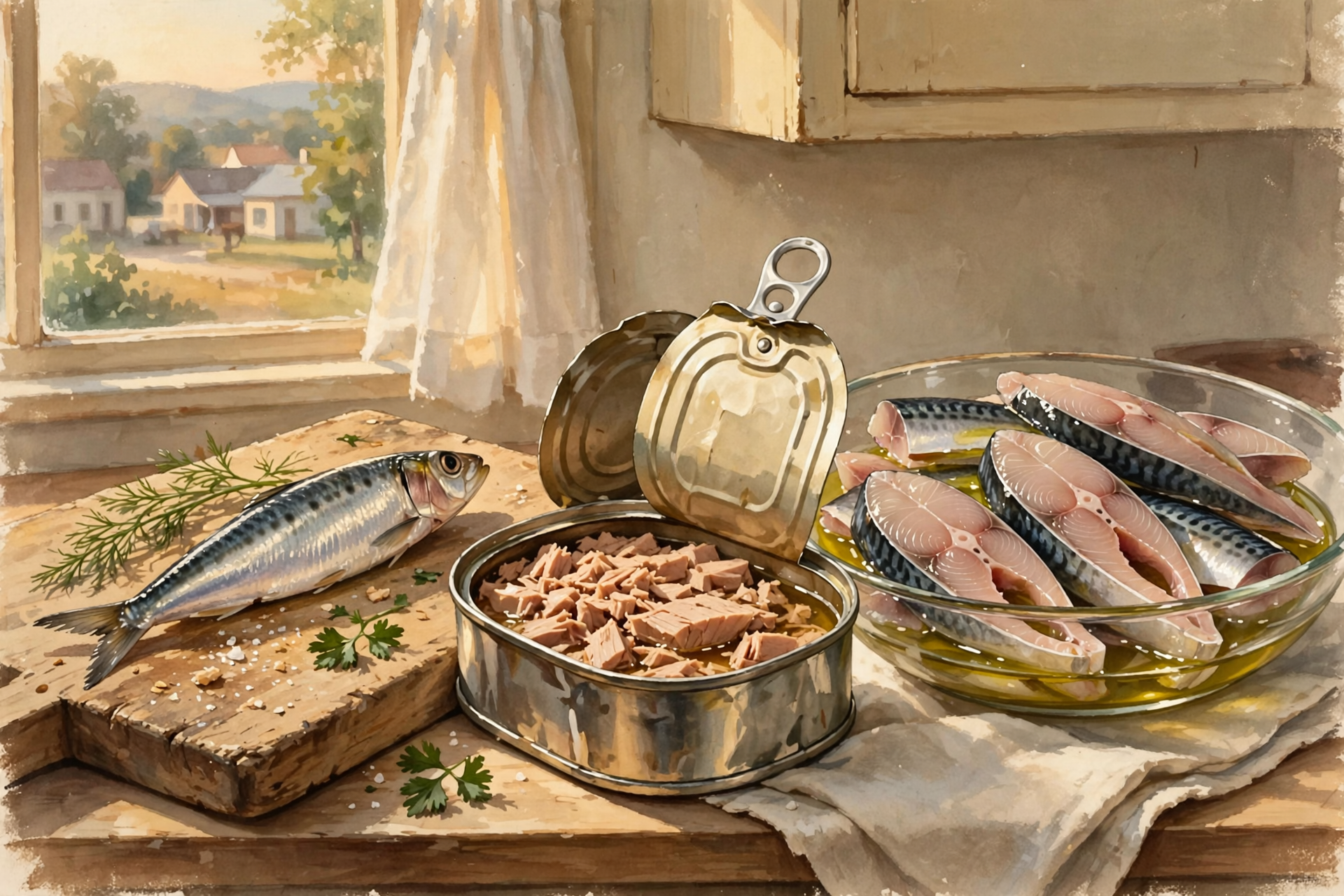
Tuna.
Sardines.
Other oily fish.
Fresh fish.
Canned fish.
And all the nutritional and practical differences between them.
We’ll look at:
- 🐟 Protein
- 🧈 Omega-3 fats
- 🥫 Canned versus fresh
- 🧂 Sodium
- ⚠️ Thiaminase in some raw fish
- 💵 Cost
- 🏡 Local availability
- 😸 Scaredy’s entirely unbiased opinion
📣 Do You Raise Meat Rabbits?
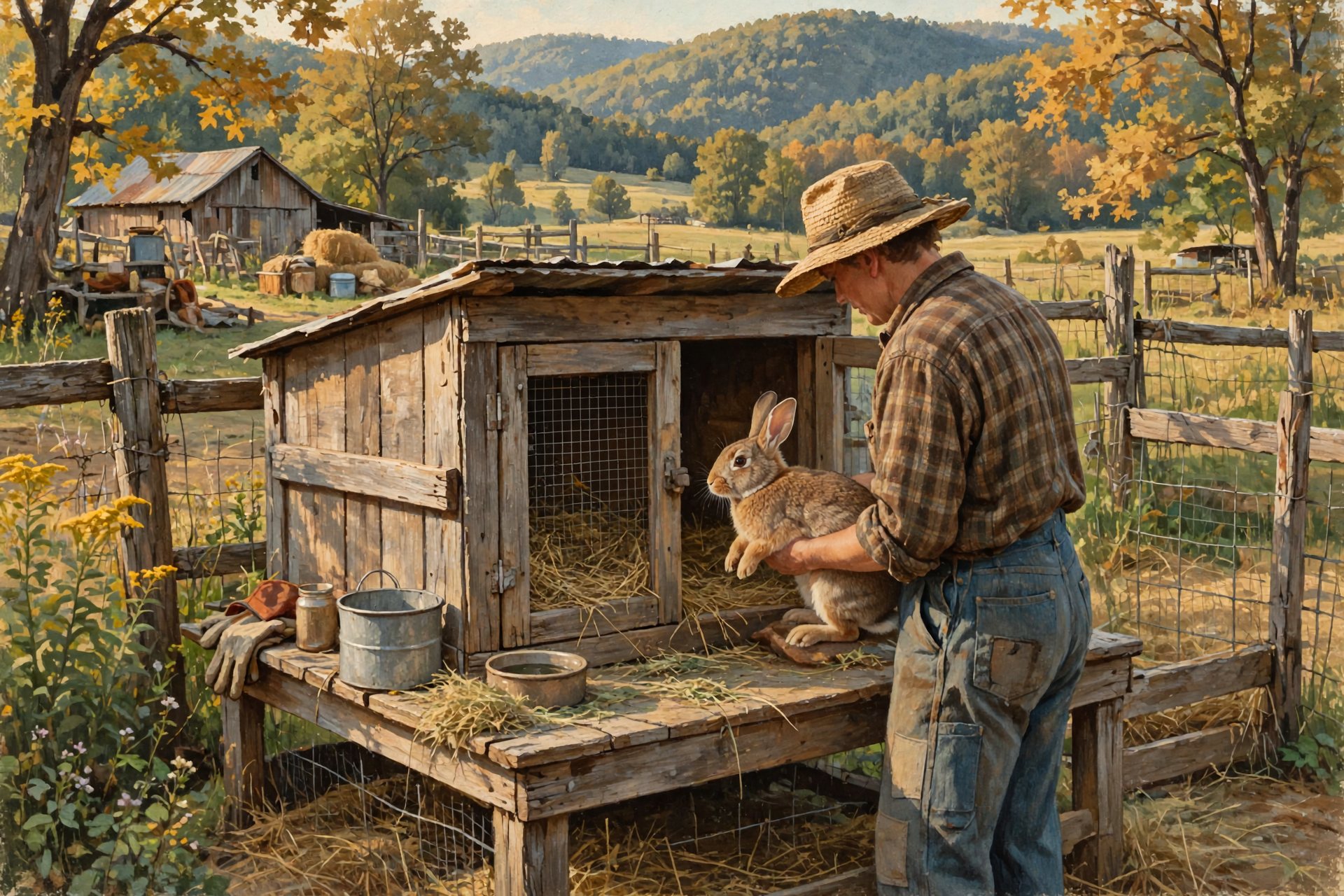
If you raise or process rabbits around Dunlap or Sequatchie County, we’d like to hear from you.
We’re particularly interested in understanding:
- 🐇 Local rabbit production
- 🥩 Lower-demand cuts and trimmings
- 🫀 Organs
- 💵 Real production costs
- ♻️ Whether any safe food goes unused
And if you’ve fed commercially prepared rabbit-based food or plain cooked rabbit to cats, we’d like to hear about that experience too.
❤️ Feed Them. Fix Them. Find Them Homes When We Can. Help the Rest Age Gracefully.
Rabbit looks promising.
But once again, this project is teaching us not to fall in love with ingredients before we understand them.
Good protein?
Yes.
Complete diet by itself?
No.
Local?
Potentially.
Cheap?
Maybe.
Wild rabbit without knowing its health status?
That’s where enthusiasm needs to give way to caution.
The best feeding system won’t be the one with the cleverest ingredient.
It will be the one that consistently balances:
nutrition, safety, affordability, local resources and common sense.
🐾 Feed them. Fix them. Find them homes when we can. Help the rest age gracefully.
🔎 Sources & Further Reading
- Cornell University College of Veterinary Medicine — Feline Health Center, Inflammatory Bowel Disease
- Merck Veterinary Manual — Nutrition in Disease Management in Small Animals
- USDA National Nutrient Database — Game Meat, Rabbit, Wild
- Centers for Disease Control and Prevention — How Tularemia Spreads
- Centers for Disease Control and Prevention — Preventing Tularemia
- Tennessee Department of Health — Tularemia
- Tennessee Wildlife Resources Agency — Wildlife Disease


0 Comments