

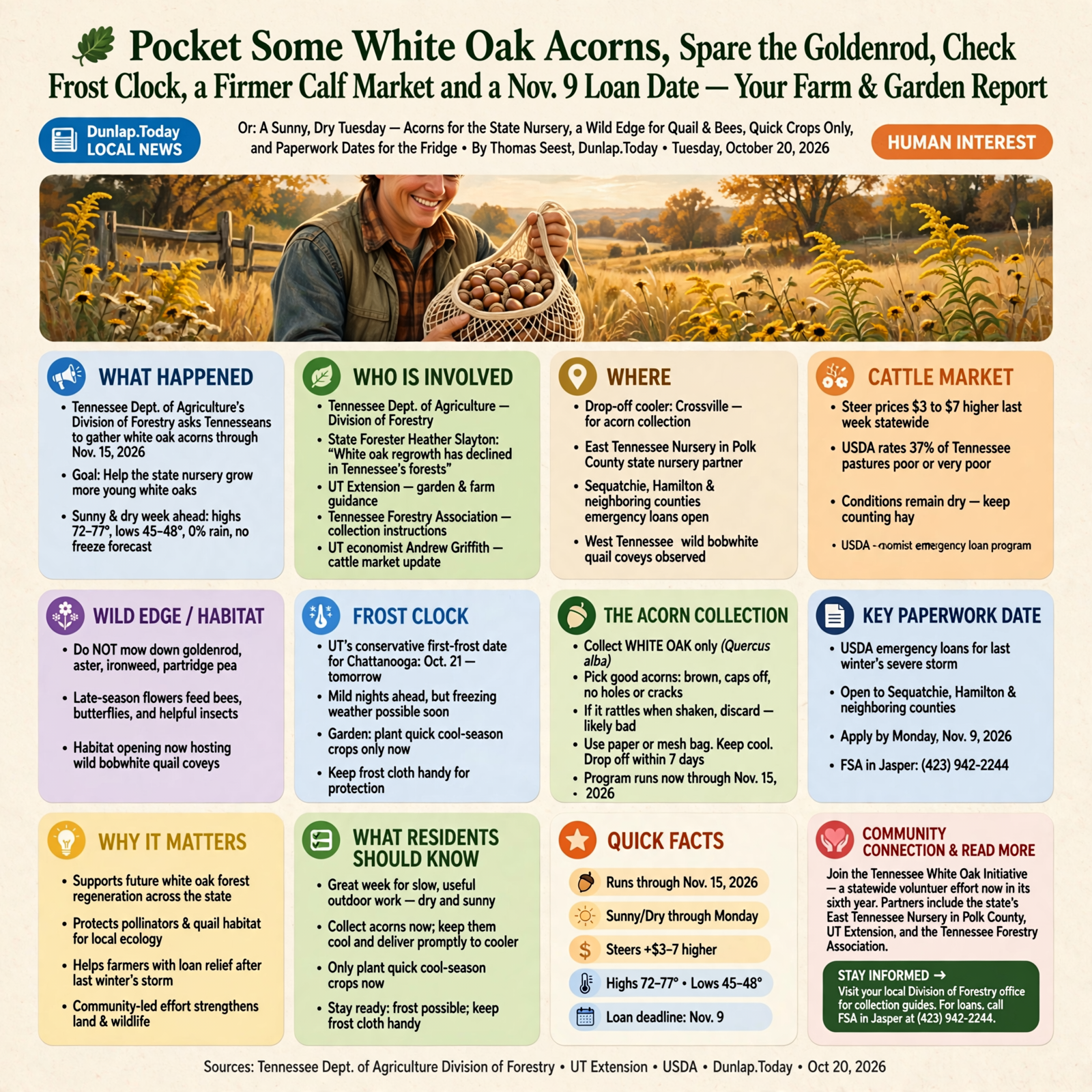
🌰 Pocket Some White Oak Acorns, Spare the Goldenrod, Check the Frost Clock, a Firmer Calf Market and a Nov. 9 Loan Date — Your Farm & Garden Report
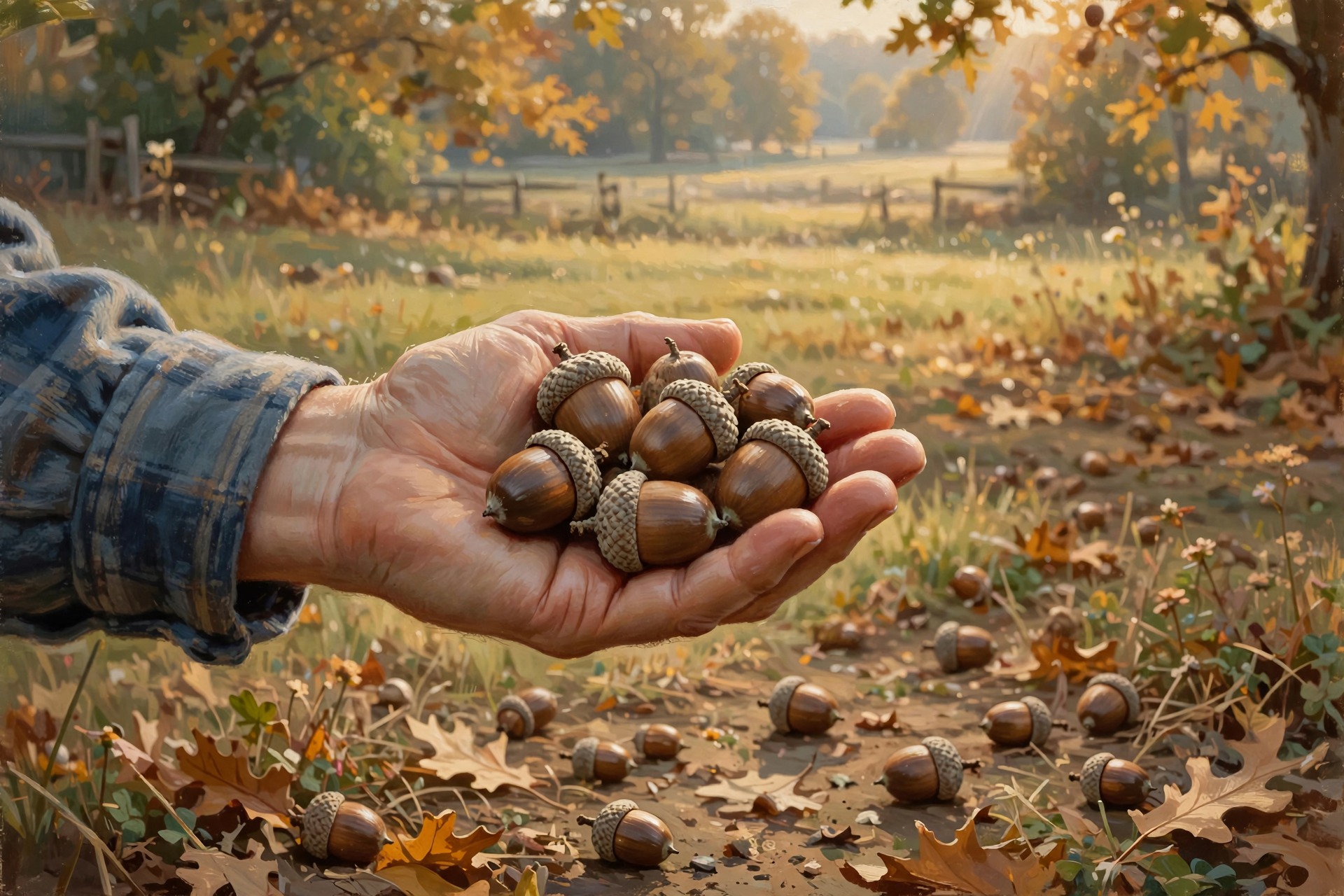
Or: A Sunny, Dry Tuesday in Dunlap — Acorns for the State Nursery, a Wild Edge for Quail and Bees, Quick Crops Only, and Paperwork Dates for the Fridge
By Thomas Seest, Dunlap.Today · Tuesday, October 20, 2026
Good Tuesday morning. If you walked to the mailbox early, you probably crunched a few acorns on the way. Hold that thought. National Weather Service Dunlap says it stays sunny through next Monday, with highs from 72 to 77, lows from 45 to 48, a 0% chance of rain every day, and no freeze anywhere in the forecast. It’s a fine week for slow, useful outdoor work.
Here’s the roundup. This morning the Tennessee Department of Agriculture’s Division of Forestry asked Tennesseans to gather white oak acorns through Nov. 15 to help the state nursery grow more young white oaks, and there’s a drop-off cooler in Crossville. UT Extension’s garden calendar asks us not to mow down goldenrod, aster, ironweed and partridge pea this time of year, and UT reports wild bobwhite quail coveys showing up where habitat was opened in West Tennessee. UT’s conservative first-frost date for Chattanooga is Oct. 21 — tomorrow, so even with mild nights ahead, new garden plantings should be quick crops only. Statewide, UT economist Andrew Griffith says steer prices were $3 to $7 higher last week, while USDA rates 37% of Tennessee pastures poor or very poor. And the paperwork date to circle: USDA emergency loans for last winter’s severe storm are open to Sequatchie, Hamilton and neighboring counties until Monday, Nov. 9. A short checklist is at the end.
⏱️ What this means for you in 30 seconds
- Weather: Sunny and dry through Monday. Highs 72–77, lows 45–48. No rain, no freeze in the forecast.
- Acorns: Gather white oak acorns in a paper or mesh bag. Keep them cool. Drop off within 7 days. Program ends Nov. 15.
- Wild edge: Leave goldenrod, aster and ironweed standing. Late flowers feed helpful insects.
- Garden: Only plant quick cool-season crops now. Keep frost cloth handy anyway.
- Cattle: Steers $3–7 higher last week statewide. Pastures still dry, so keep counting hay.
- Remember: Nov. 9 is the last day to apply for winter-storm emergency loans. Call FSA in Jasper, (423) 942-2244.
🌰 The Acorns in Your Yard Could Grow Tomorrow’s Forest: White Oak Collection Runs Through Nov. 15
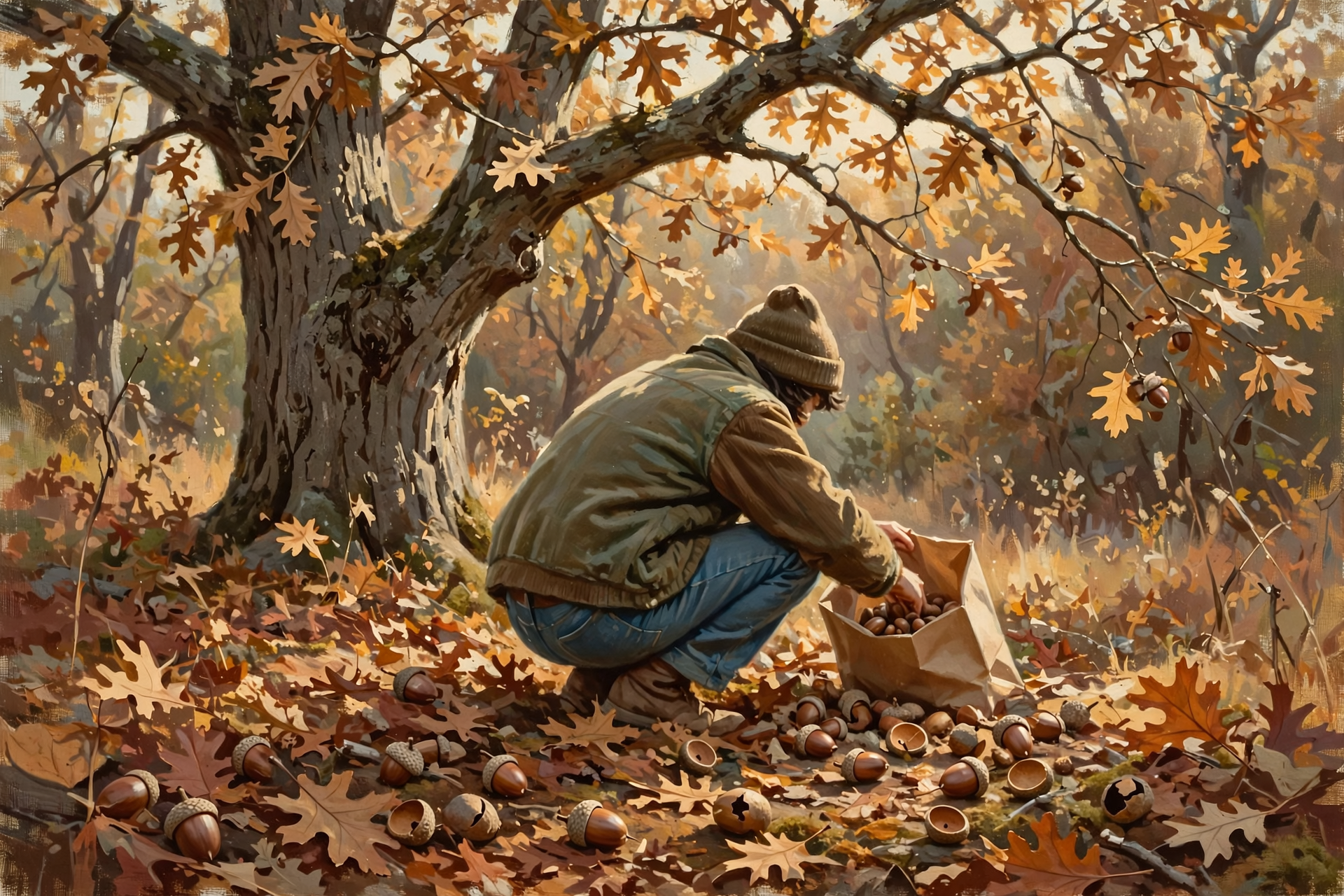
This is a statewide program, and it’s brand-new news this morning. The Tennessee Department of Agriculture’s Division of Forestry is inviting everyone to join the Tennessee White Oak Initiative, an acorn collection effort that runs through Nov. 15, 2026. Partners include the state’s East Tennessee Nursery in Polk County, UT Extension and the Tennessee Forestry Association. “White oak regrowth has declined in Tennessee’s forests,” State Forester Heather Slayton said in the announcement. The state says seed suppliers haven’t been able to meet the nursery’s needs in recent years, and this sixth year of public collecting helps fill the gap. Wild-gathered seed also tends to grow larger, stronger seedlings. You don’t have to own woods to help.
The Tennessee Forestry Association’s instructions are simple:
- Pick the right tree. White oak only (Quercus alba). Not sure? Use the collection guide, or ask your local Division of Forestry area forester.
- Pick good acorns. Brown, caps already off, no holes or cracks. If it rattles when you shake it, or it’s still green, leave it.
- Use a breathable bag — paper, mesh or a box, not plastic. Tuck in a slip of paper with your name, phone, email, where and when you collected, and the species. One bag per spot, if you can.
- Keep them cool, not frozen. The fridge, a cellar, basement or garage works.
- Deliver within 7 days. The closest listed drop-off coolers to the Valley are the Crossville office, 2670 Highway 127 South, and the Westel cooler, 1084 Westel Road, Rockwood. You can also ship to the East Tennessee State Nursery, 9063 Highway 411, Delano, TN 37325.
What it means for you: Think of it like saving seed from your best tomato, only the payoff is a tree your great-grandkids can sit under. A morning walk with a paper sack and a grandchild is about as calm a farm chore as there is. If you’re headed up the mountain to Crossville anyway, the cooler is right on Highway 127. Just remember the two rules: white oak only, and cool for no more than a week.
👉 Read more (TN Dept. of Agriculture: White Oak acorn collection) · Tennessee Forestry Association: how to collect and where to drop off
🌼 Leave a Wild Edge: Goldenrod for the Bees, Cover for the Quail
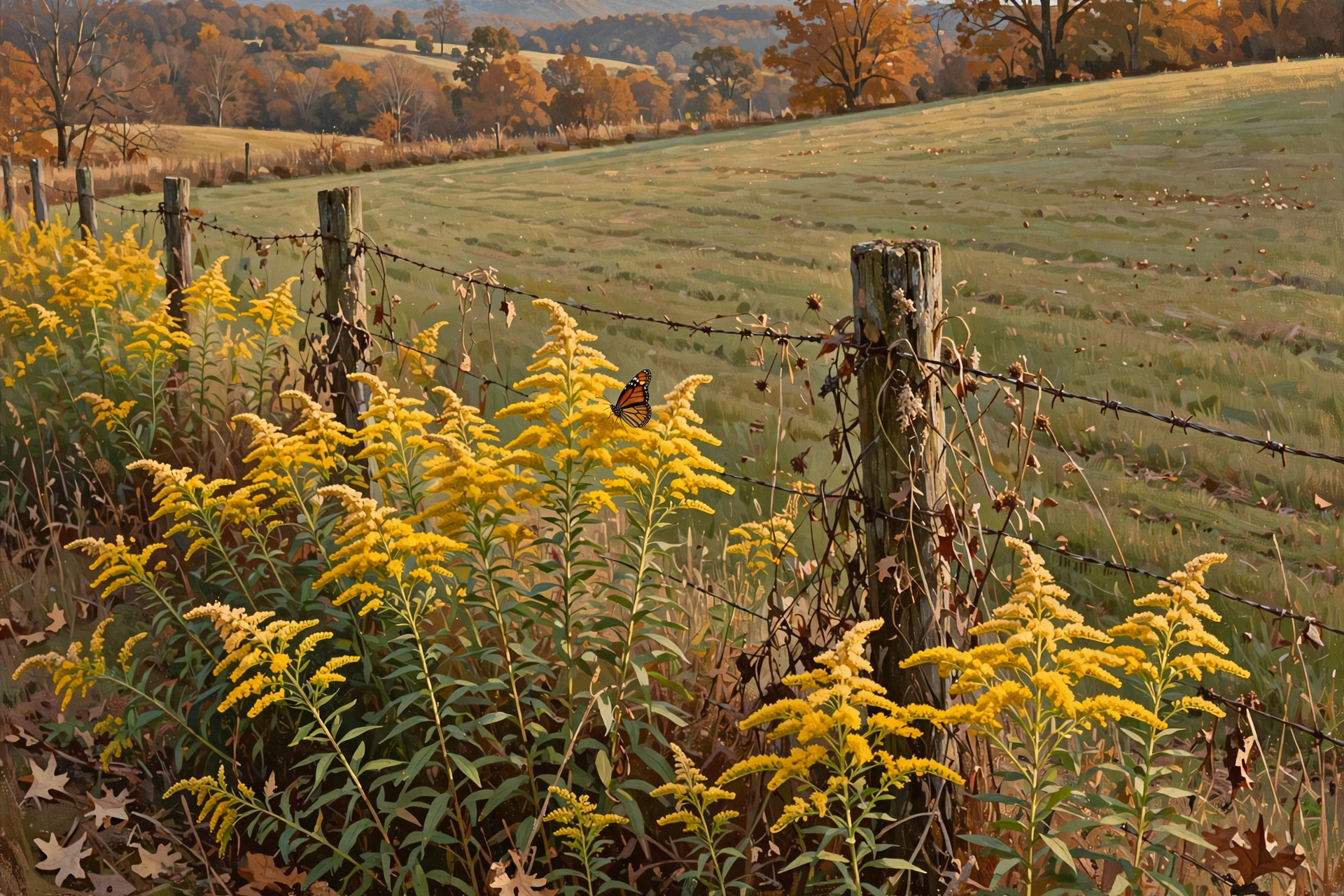
UT Extension’s 2026 home garden calendar has a pollinator tip that fits a dry October: “Late season nectar sources are critical for beneficial insects. Be careful not to mow down native late summer/fall flowering species like Goldenrod, Aster, Ironweed and Partridge Pea.” The same calendar adds that many flowering plants that help pollinators should be seeded in the fall, and that many native perennials actually germinate better in spring after a cold, moist winter in the ground.
There’s good news on the bigger version of that idea, too. This one is from West Tennessee, not here. UT reported on Oct. 12 that multiple coveys of wild bobwhite quail were spotted at its Ames AgResearch and Education Center near Grand Junction. Since 2025, UT and the nonprofit Tall Timbers have managed about 1,500 acres there with tree thinning, mulching and prescribed fire, turning thick, closed-in woods into the open savanna bobwhites need for nesting and year-round survival. UT calls the bobwhite Tennessee’s official state game bird, and Tall Timbers notes that what helps quail tends to help many other kinds of wildlife as well.
What it means for you: A strip of goldenrod along the fence row is like leaving the porch light on for late company. The bees, butterflies and helpful bugs that pollinate next year’s squash need a last meal before winter. You don’t have to let the whole place go. Just mow around one patch or one ditch bank until spring. If you’ve been meaning to try a wildflower corner, fall is the time to scatter native seed. Call the Extension office at 423-949-2611 for help picking what grows well here.
👉 Read more (UT Extension 2026 garden calendar, October pollinator tips) · UT: wild bobwhite quail return at Ames
🗓️ The Frost Clock: How Much Garden Time Is Left?
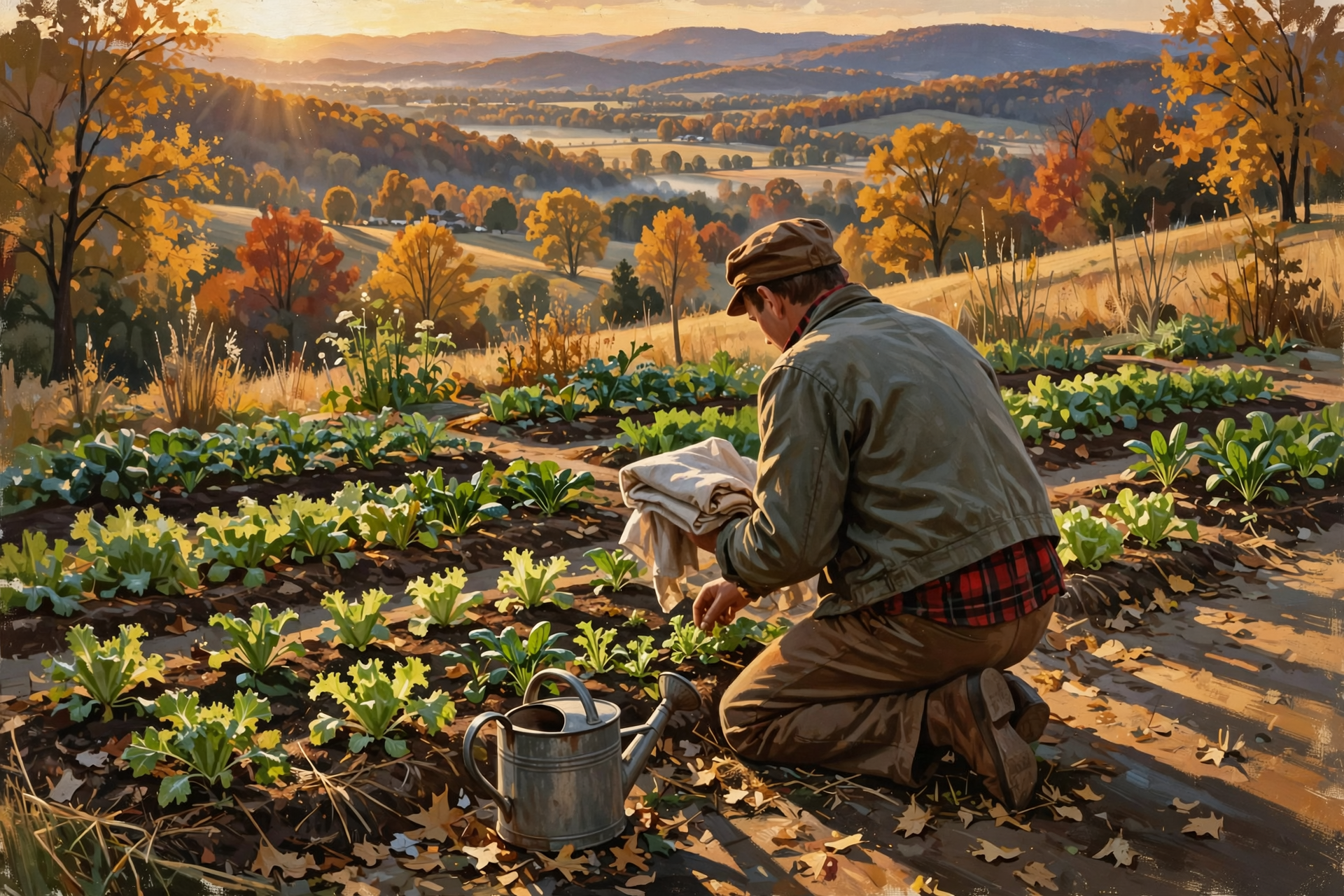
Three numbers are worth knowing this week. UT Extension’s 2026 garden calendar lists Oct. 21 as Chattanooga’s conservative first-fall-frost date. That’s the date when only about a 1-in-10 chance of frost remains before it, so it’s an early marker on purpose. For Crossville and the higher plateau, the same table says Oct. 4. And the National Weather Service lists Chattanooga’s median first frost on Oct. 31 and median first freeze on Nov. 9. Dunlap sits in between, down in the valley.
Right now, the forecast is kind. Dunlap’s coldest night through Monday is near 45, with no freeze in sight. But UT’s calendar gives a fair warning for anyone tempted to plant: cool-season vegetables can survive frost but may not grow and produce much fall yield when planted too late. Its October list says to choose fall cool-season crops with shorter days to harvest, and it reminds us that crops need less water as it cools. In a 0%-rain week, they still need some.
What it means for you: Think of the season like the last stretch of daylight on a fall evening. There’s time to finish a job, but not to start a big one. If you sow anything now, pick quick growers and read the “days to harvest” on the seed packet. Keep a frost cloth or old bedsheet folded by the back door, because the calendar is closer than the forecast looks. Give the fall beds a deep drink once or twice this week.
👉 Read more (UT Extension: Tennessee Home Fruit and Vegetable Garden 2026) · NWS: Chattanooga climate and frost dates · Dunlap forecast
🐄 Sale Barn Check: Calves Firmed Up, Pastures Still Thirsty
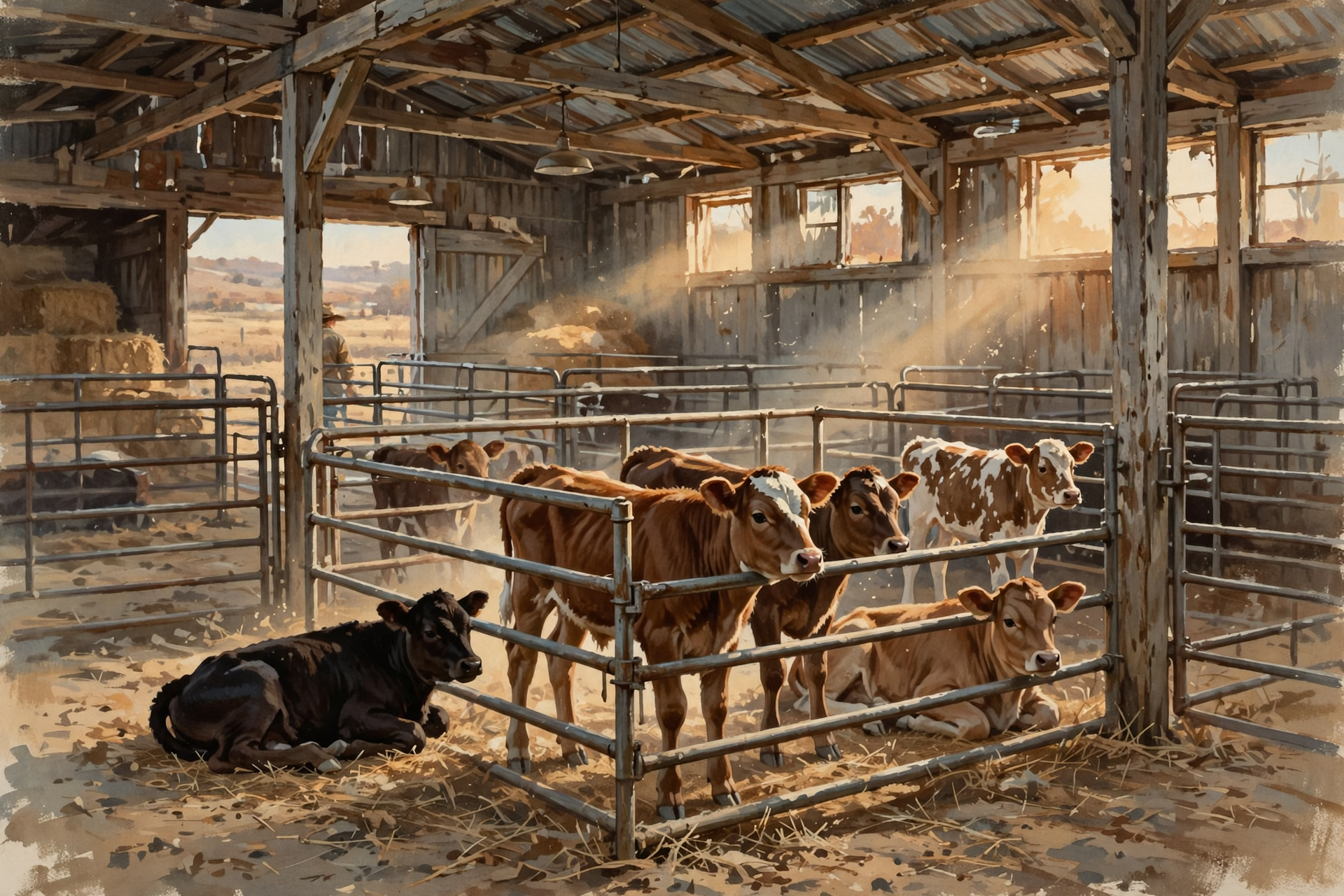
These are statewide numbers, not Valley-only. Last week Dunlap.Today reported calves a little softer. This week the needle swung back. UT Extension livestock economist Dr. Andrew Griffith, in his Oct. 16 market notes, says Tennessee auction steer prices were $3 to $7 higher than the week before and heifer prices $3 to $6 higher. Slaughter cows were $2 to $4 lower and bulls $3 to $4 lower, which he says follows the usual fall pattern. He calls the calf market “contra seasonal” for now, since calves often soften in fall, and he’s candid that the direction is hard to call. For producers who aren’t trying to time the market, his advice is to focus on management and marketing steps that capture the value already in the calves.
The grass side is still tight. USDA’s Crop Progress report released Monday, for the week ending Oct. 18, rates Tennessee pastures 15% very poor and 22% poor. That’s 37% poor or very poor, with 34% fair and 29% good or excellent. Topsoil moisture statewide is 71% short or very short.
What it means for you: Prices are like the weather vane on the barn. Watch it, but don’t let one week’s spin change the whole plan. If you’re selling soon, ask your sale barn or Extension agent which steps, such as weaning or preconditioning, might add value for your calves. And with dry topsoil and a dry week ahead, keep counting bales against the winter. A little hay math now beats a February scramble.
👉 Read more (UT Market Highlights, Oct. 16) · USDA Crop Progress, Oct. 19
📋 Paperwork Corner: A Nov. 9 Loan Date, Thursday’s Drought Map and Two Mailbox Reminders

None of these is urgent for everyone. Think of this as the folder by the phone.
- Monday, Nov. 9 — winter-storm emergency loans. USDA’s Farm Service Agency lists Sequatchie and Hamilton as primary counties, and Bledsoe, Grundy, Marion and Van Buren as contiguous counties, under a severe winter storm disaster declaration. That makes farmers there eligible to apply for FSA emergency loans until Nov. 9, 2026. FSA says the loans can help replace equipment or livestock, reorganize an operation or refinance certain debts, and it reviews each request on losses, security and repayment ability. This is separate from the drought designation Dunlap.Today covered Oct. 6, which runs to Jan. 6, 2027.
- Thursday, Oct. 22 — the next drought map. On Oct. 15, Dunlap.Today noted that USDA’s grazing-loss drought program (LFP) can trigger after four straight weeks of severe drought, and Sequatchie had shown a small severe slice for three. Thursday’s map is the next one to watch. Whether the county qualifies is FSA’s decision, not ours.
- Early November — FSA county committee ballots. FSA mails ballots to eligible voters in early November. They’re due back at the USDA Service Center by Dec. 7. If you farm and don’t get one, the office can give you one.
- Row-crop farms with base acres — ARC/PLC. The 2026 election and enrollment window runs through Dec. 11. Enrollment for 2027 opens Nov. 2.
What it means for you: Paperwork is like a gate latch. Easy to fix while you’re standing there, a real chore once the cows are out. If last winter’s storm cost you equipment, fence or stock, make one call to the Jasper Service Center, (423) 942-2244, before Nov. 9 and ask whether a loan fits. Nobody has to borrow. It’s just good to know the door is open.
👉 Read more (FSA: winter storm emergency loan counties and deadlines) · FSA county committee elections · ARC/PLC dates
📌 Sticky Notes for the Fridge

- This week: Sunny and dry in Dunlap through Monday. Highs 72–77, lows 45–48. No freeze in the forecast.
- Wednesday, Oct. 21: UT’s conservative first-frost date for Chattanooga. Keep a frost cloth handy.
- Thursday, Oct. 22: Next U.S. Drought Monitor map.
- Thursday, Oct. 22, 7 a.m. Central (8 a.m. Eastern): UT’s Woods and Wildlife Field Day at the UT Arboretum, Oak Ridge. Check the page for registration details.
- Saturdays, Oct. 24 and 31, 9 a.m.–1 p.m.: Last two regular Dunlap Farmers Market days (confirm before you go).
- Burning: No burn bans in Tennessee. Free same-day permit required for leaf and brush piles. Friday through Sunday have the dampest afternoon air.
- Saturday, Oct. 31: NWS median first-frost date for Chattanooga.
- Sunday, Nov. 1: Clocks fall back one hour.
- Friday, Nov. 6: Tennessee Forage & Grassland Council meeting, Crossville.
- Monday, Nov. 9: Last day to apply for winter-storm emergency loans. It’s also Chattanooga’s median first-freeze date.
- Sunday, Nov. 15: White oak acorn collection ends.
- Friday, Nov. 20: Apply-by date for 2027 NRCS conservation funding in Tennessee.
- Monday, Dec. 7: FSA county committee ballots due.
👉 BurnSafeTN permits · Woods and Wildlife Field Day · Dunlap Farmers Market
✅ Your Farm & Garden Checklist for This Sunny Week
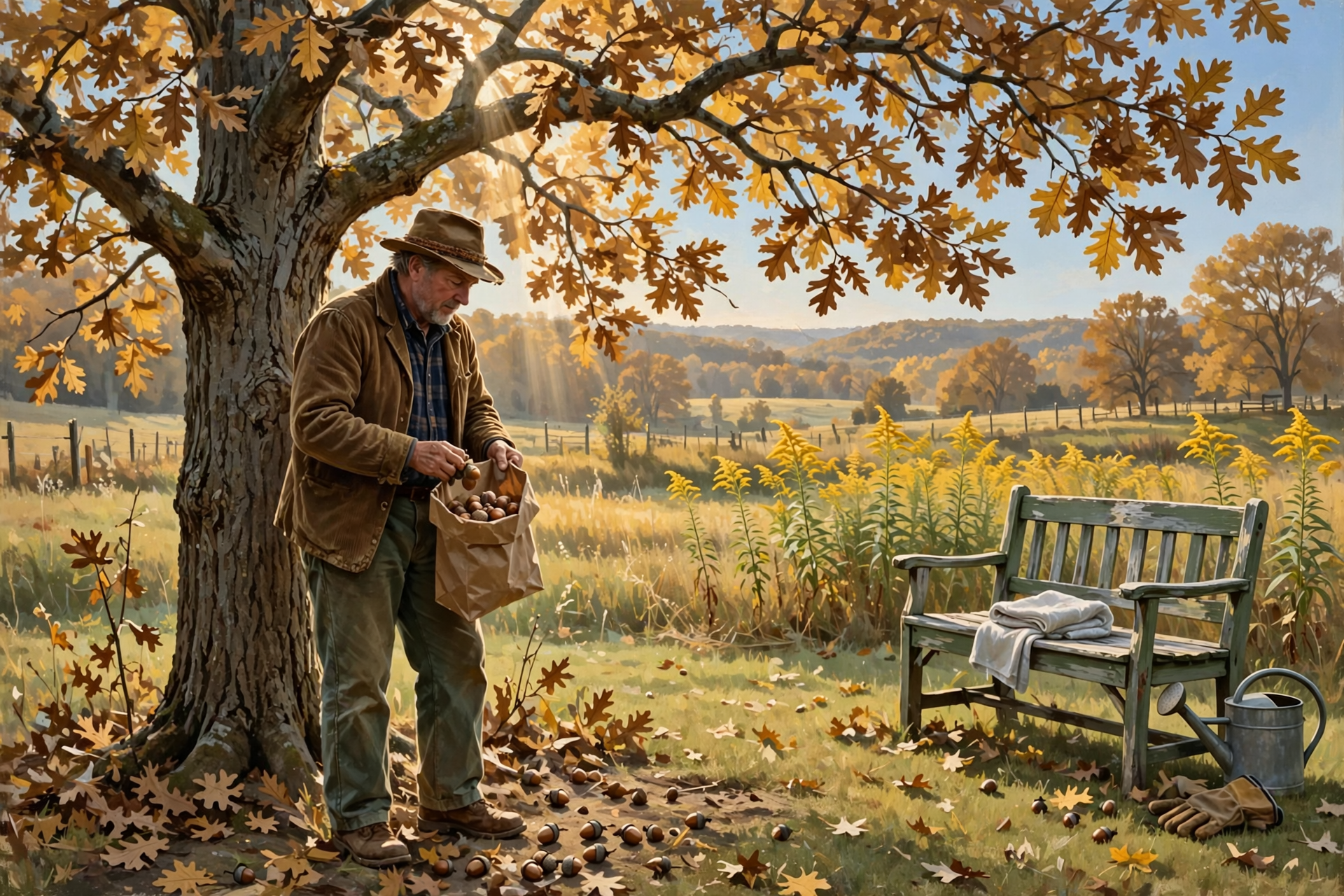
- ✅ Find a white oak. Gather brown, cap-off, solid acorns in a paper or mesh bag. Skip any that rattle.
- ✅ Label the bag, keep it cool (not frozen), and drop it off in Crossville or Rockwood within 7 days.
- ✅ Mow around one patch of goldenrod, aster or ironweed and leave it until spring.
- ✅ Sow only quick cool-season crops now, and check “days to harvest” on the packet.
- ✅ Fold a frost cloth or old sheet by the back door. The calendar is ahead of the forecast.
- ✅ Water fall beds deeply once or twice this week.
- ✅ Cattle folks: talk to your sale barn about weaning and preconditioning, and recount the hay.
- ✅ Storm losses last winter? Call FSA in Jasper, (423) 942-2244, before Nov. 9.
Practical rule: White oak acorns in a paper sack, goldenrod left standing, quick crops only, and one phone call before Nov. 9.
— Dunlap.Today
📚 Plain-English Farm & Garden Glossary

- White oak (Quercus alba): A native oak with rounded leaf lobes and light-gray bark. The state nursery uses its acorns to grow seedlings, so they need quick, cool handling.
- Viable acorn: One that can still sprout. That means solid, brown, with no holes, cracks or rattle.
- State nursery: The Division of Forestry’s East Tennessee Nursery in Delano, which grows tree seedlings for Tennessee landowners.
- Beneficial insects: Bees, butterflies and predator bugs that pollinate crops or eat garden pests.
- Covey: A small group of quail that feeds and roosts together through fall and winter.
- Prescribed fire: A planned, controlled burn done by trained crews to improve wildlife habitat or reduce brush.
- First-frost date: A historical marker for when the first frost usually comes. UT’s “conservative” date is early on purpose. The NWS median is the date half of past years beat.
- Days to harvest: The number on a seed packet that tells you about how long a crop needs before it’s ready to pick.
- Contra seasonal: Moving opposite to the usual pattern for the time of year.
- Emergency loan: An FSA loan that helps farms recover from losses in a declared disaster area.
- Primary vs. contiguous county: A primary county is named in the disaster declaration. Contiguous counties border it. Farmers in both can apply.
- ARC/PLC: Federal programs that help farms with “base acres” of crops like corn, soybeans or wheat when prices or revenue fall.
❓ Frequently Asked Questions

How do I know it’s a white oak and not a red oak?
White oak leaves have rounded lobes, while red oak leaves have pointed, bristle-tipped lobes. The Tennessee Forestry Association’s collection guide has photos, and your local Division of Forestry area forester can help you identify the tree.
Do I need to own woods to take part?
No. The state says anyone can join, whether or not they own wooded land. A white oak in a yard, churchyard or along a fence row counts. Just ask before you gather on someone else’s property.
What if I can’t get to Crossville or Rockwood within a week?
The Tennessee Forestry Association also lists shipping to the East Tennessee State Nursery at 9063 Highway 411, Delano, TN 37325. Keep the acorns cool until they go out, and send them within seven days of collecting.
Isn’t goldenrod just a weed?
UT’s garden calendar names goldenrod with aster, ironweed and partridge pea as native fall bloomers that feed beneficial insects late in the year. It asks gardeners to be careful not to mow them down. You don’t have to keep them everywhere, but a patch along a fence or ditch helps.
Is it too late to plant a fall garden?
For big plantings, mostly yes. UT says cool-season crops planted too late may survive frost but not produce much. If you plant now, choose quick crops with short days to harvest, and plan to cover them on cold nights.
Does the cattle price bump mean I should sell now?
That’s your call. Dr. Griffith says the direction of prices is hard to predict right now, and hitting the top is partly luck. For producers not trying to time the market, he suggests management and marketing steps that capture the calves’ value. Your sale barn and Extension agent can help you weigh your options.
Who can apply for the Nov. 9 emergency loans?
FSA lists Sequatchie and Hamilton as primary counties, and Bledsoe, Grundy, Marion and Van Buren as contiguous counties, for the severe winter storm declaration. Eligible producers in those counties can apply through Nov. 9, 2026. Call the Jasper Service Center at (423) 942-2244 to talk it through.
🔗 Other Resources

- TN Department of Agriculture: White Oak acorn collection (Oct. 20, 2026)
- Tennessee Forestry Association: acorn collection guide and drop-off locations
- UT School of Natural Resources: Tennessee White Oak Initiative
- UT Extension: Tennessee Home Fruit and Vegetable Garden 2026
- UT Institute of Agriculture: wild bobwhite quail spotted at Ames
- National Weather Service: Dunlap forecast
- National Weather Service: Chattanooga climate page
- UT Extension: Livestock Comments by Dr. Andrew Griffith
- USDA NASS: Crop Progress, Oct. 19, 2026
- USDA FSA: severe winter storm emergency loan designation
- U.S. Drought Monitor: Tennessee
- USDA FSA: county committee elections
- USDA FSA: ARC and PLC
- USDA Service Center Locator (Sequatchie FSA: Jasper Service Center · 423-942-2244)
- UT Forest Resources Center: Woods and Wildlife Field Day
- Dunlap Farmers Market
- BurnSafeTN: burn permits
- UT Extension Sequatchie County (170 Church Street, Dunlap · 423-949-2611)
- Dunlap.Today
🏡 Keep Learning, Stay Calm and Come Back to the Porch

Nothing in today’s report needs hurrying. A sack of acorns, one unmowed patch of goldenrod, a frost cloth by the door and one phone call is a good week’s work. The sun’s out, the nights are mild, and every acorn you pick up is a small vote for the woods your grandkids will walk in.
When you want the next calm, practical update for Sequatchie Valley readers, pull up a chair at Dunlap.Today.
Know about an upcoming event or story in the Sequatchie Valley? Submit it here.



0 Comments