
🍄 Parasol Mushrooms Thrive in Appalachian Woodlands – A Fall Foraging Guide for the Region
As autumn settles across the Appalachian region, Harrison Bay State Park in Lake Crest, Hamilton County, is drawing attention to one of fall’s most distinctive fungi: the parasol mushroom. These tall, umbrella-like specimens are appearing in local woodlands and fields, offering a seasonal reminder of the rich natural cycles that define life in East Tennessee.
🌿 What’s Growing in Local Woodlands
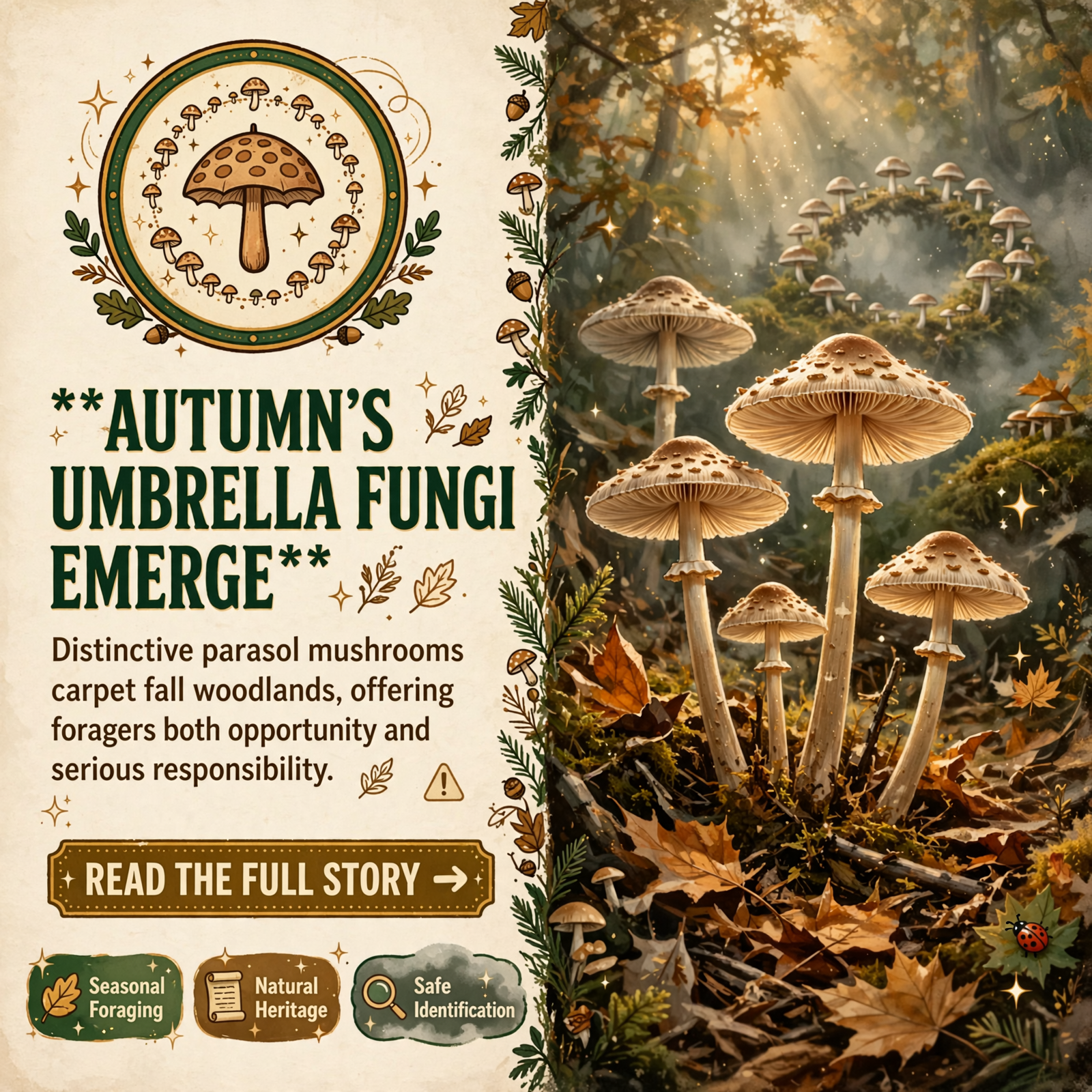
Parasol mushrooms (Macrolepiota procera) are a common sight from August through November across Appalachian woodlands and fields. They thrive in environments rich with nitrogen and organic matter-exactly the conditions found in places like Maddux Cemetery, where fallen leaves, decomposing wood, and natural forest debris create ideal growing conditions. These mushrooms are distinctive: they grow tall (4 to 12 inches), with brown or white caps, white gills held close together, and a characteristic ring (called a stipe) that loosens as the mushroom ages. Young parasol mushrooms have a rounded, egg-like shape that gradually opens into the umbrella form that gives them their name.
⭐ Why This Matters for Local Foragers
Parasol mushrooms are edible and have long been foraged in Appalachian communities. However, they closely resemble toxic mushroom species, making proper identification critical before harvest. The seasonal appearance of parasol mushrooms each fall represents both an opportunity and a responsibility for anyone interested in foraging in the region. Understanding the difference between safe and dangerous varieties is essential knowledge for residents who explore local woodlands and fields during autumn.
🎓 A Natural History Lesson
One of the most enchanting characteristics of parasol mushrooms is their tendency to form “fairy rings”-circular patterns of growth in wooded areas. These formations occur naturally as the fungal network expands outward from a central point, creating what appears to be a magical circle. For residents and visitors exploring local parks and natural areas, spotting a fairy ring can be a memorable moment of connection with the natural world.
💡 What Residents Should Know About Fall Foraging
If you’re considering foraging parasol mushrooms or any wild fungi this fall, Harrison Bay State Park and local naturalists emphasize one critical rule: if you’re not sure about identification, don’t eat it. Misidentification can have serious health consequences. Residents interested in learning more about safe foraging practices may want to connect with local nature centers, parks, or experienced foragers who can provide hands-on guidance. Many communities in the region offer seasonal workshops on mushroom identification and safe harvesting practices.
🌄 Seasonal Rhythms in East Tennessee
The appearance of parasol mushrooms is part of the broader seasonal cycle that shapes life across the Sequatchie Valley and surrounding areas. Fall foraging has deep roots in Appalachian tradition-a practice passed down through generations as families and communities gathered wild foods to supplement their diets. Today, that tradition continues, blending cultural heritage with modern outdoor recreation and nature education. Harrison Bay State Park‘s attention to these seasonal fungi reflects the broader role that state parks play in helping residents understand and appreciate the natural systems that surround them.
🔍 Community Questions Worth Considering
- How many residents in the area have experience foraging, and what role does that knowledge play in local food traditions?
- Are there local naturalists, master naturalists, or community groups that offer foraging education or guided nature walks during fall?
- How can families safely explore local woodlands and learn to identify wild plants and fungi without taking unnecessary risks?
- What role do state parks like Harrison Bay play in connecting residents to seasonal natural cycles and outdoor learning opportunities?
📍 Where to Learn More
Harrison Bay State Park, located at the intersection of Harrison Bay Road and Lasata Lane in Lake Crest, is a major outdoor recreation destination along Chickamauga Lake. The park offers trails, natural areas, and seasonal educational opportunities for residents interested in exploring local ecosystems. For more information about Harrison Bay State Park, visitors can call (888) 867-2757 or visit the Tennessee State Parks website.
🌱 What Happens Next
As fall progresses through November, parasol mushrooms will continue to appear in local woodlands. Residents who spot these distinctive fungi are encouraged to observe them in their natural habitat, photograph them for identification practice, or simply appreciate them as part of the seasonal landscape. For those interested in foraging, the key is patience and proper education-taking time to learn identification from reliable sources before attempting to harvest any wild mushrooms.



0 Comments