
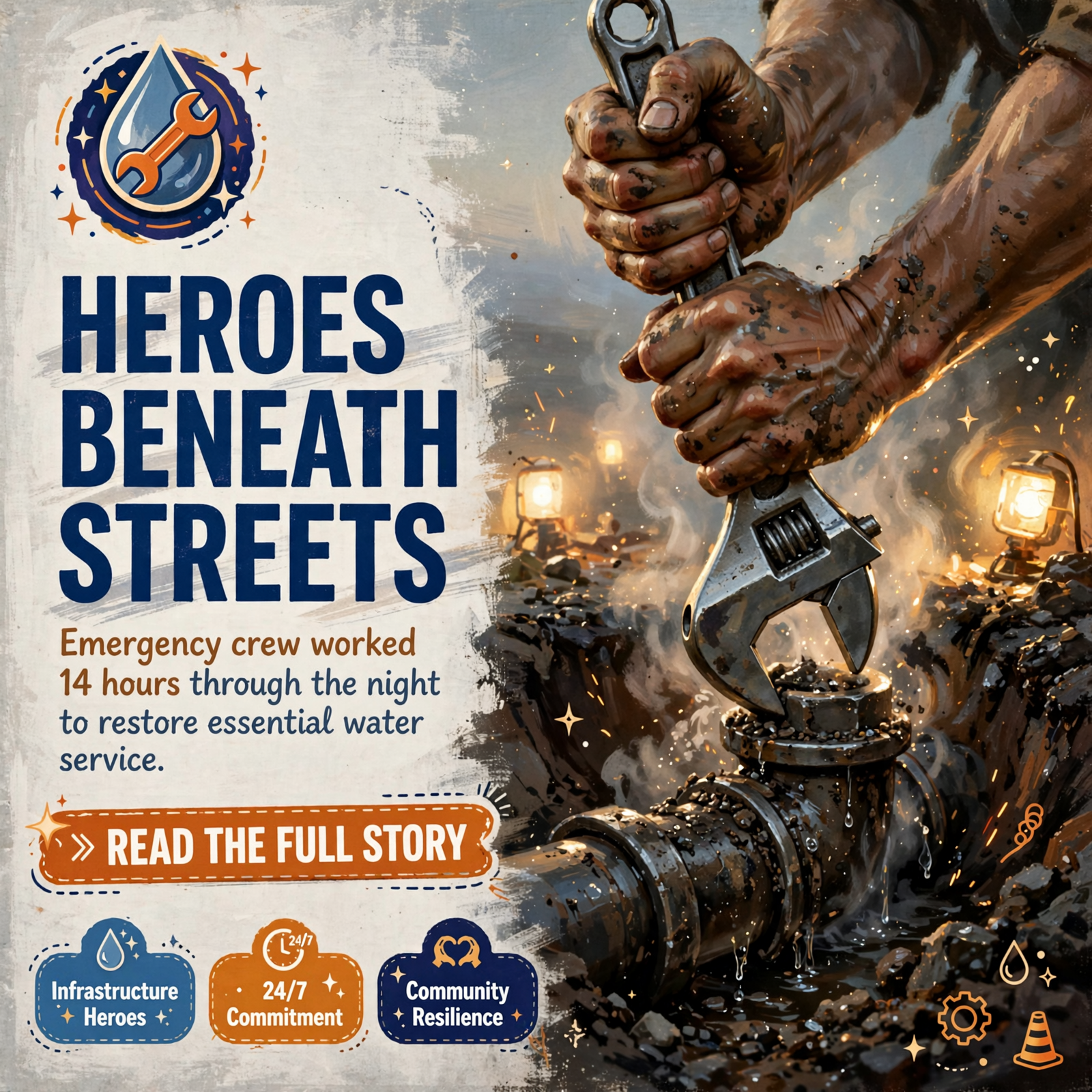
🚰 McMinnville Water & Wastewater Crew Praised for 14-Hour Emergency Repair
When a burst water line threatened service to downtown McMinnville residents over the weekend, the city’s Water & Wastewater team responded with extraordinary dedication-working through the heat and into the early morning hours to restore essential service. The City of McMinnville publicly recognized the crew’s commitment this week, highlighting the often-invisible work that keeps community infrastructure running.
📍 What Happened
A burst water line on the west side of downtown McMinnville required immediate attention. The Water & Wastewater crew spent 14 consecutive hours on site, working through the weekend and staying until nearly 3:00 AM to complete the complex repair. The Public Works team followed immediately after to restore the roadway, ensuring traffic could resume safely once water service was restored.
❤️ Why This Matters
Water infrastructure failures affect every household and business in a community. A burst line can disrupt daily routines-from basic hygiene to cooking, cleaning, and business operations. The speed and quality of the repair directly impact how quickly residents regain normalcy. The city’s public recognition of this work also signals something deeper: that infrastructure maintenance and emergency response are community priorities, and that the people who do this work are valued.
🤝 Community Connections
This story reveals the network of municipal workers-Water & Wastewater crews, Public Works teams, and city management-who coordinate during emergencies. These departments don’t operate in isolation; they depend on each other to solve problems completely. The Water & Wastewater crew’s repair was only half the solution; the Public Works team’s roadway repair was equally essential. Together, they represent the kind of cross-departmental coordination that keeps a city functioning.
👥 Human Impact
For residents on the west side of downtown, the burst line meant an immediate loss of water service-no water for drinking, cooking, bathing, or cleaning. Families with young children, elderly residents, and people with medical needs faced particular challenges. Businesses in the area may have had to close or operate at reduced capacity. The 14-hour repair window meant that residents regained service relatively quickly, minimizing disruption to their daily lives and work.
For the Water & Wastewater crew, the repair meant working through heat, fatigue, and the pressure of knowing that hundreds of people were waiting for service to be restored. Staying on site until 3:00 AM suggests they worked through the night to complete the job-a physical and mental endurance test that reflects professional commitment.
💡 What Residents Should Know
While the immediate crisis has been resolved, this incident underscores the importance of water infrastructure maintenance. Burst lines can happen without warning, and they require skilled crews, specialized equipment, and coordination across multiple departments. The city’s public acknowledgment of this work also invites residents to think about the systems that support daily life-systems that often go unnoticed until something breaks.
🔄 Community Threads: The Infrastructure-Resident Relationship
This story reveals an invisible but essential thread connecting municipal workers to residents. Most people don’t think about water lines until they stop working. The crew’s 14-hour effort-and the city’s decision to publicly recognize it-strengthens awareness of that connection. When residents understand the effort required to maintain infrastructure, they may develop greater appreciation for municipal services and the people who provide them. This awareness can translate into community support for infrastructure investment, maintenance budgets, and the recruitment and retention of skilled workers.
🔮 What Happens Next
The immediate repair is complete, and water service has been restored. However, questions may emerge about what caused the burst and whether similar vulnerabilities exist elsewhere in the system. The city may conduct follow-up inspections, assess the age and condition of other water lines, and plan preventive maintenance or upgrades. Residents may also wonder whether the repair will hold or if similar emergencies are likely in the future.
❓ Questions for the Community
- How often do water line failures occur in McMinnville, and are they becoming more frequent?
- What is the age and condition of the water infrastructure on the west side of downtown, and are there plans for upgrades or preventive maintenance?
- How does the city prepare for and respond to other types of infrastructure emergencies-gas lines, electrical systems, or sewage backups?
- What can residents do to support the city’s infrastructure maintenance efforts, whether through conservation, reporting problems early, or community engagement?
🏗️ Long-Term Community Impact
Infrastructure reliability is foundational to quality of life and economic vitality. When water systems work seamlessly, residents and businesses can plan confidently. When failures occur frequently or repairs take a long time, people may lose trust in municipal services or consider relocating. The city’s rapid response and public recognition of the crew’s work sends a signal that infrastructure is taken seriously. Over time, consistent, visible commitment to infrastructure maintenance can strengthen community confidence and support for the investments required to keep systems running.
The story also highlights the value of skilled municipal workers. Retaining experienced crews, investing in training, and maintaining competitive compensation are essential to keeping infrastructure reliable. Communities that recognize and support their public servants are more likely to attract and keep the talent needed for long-term infrastructure health.



0 Comments