
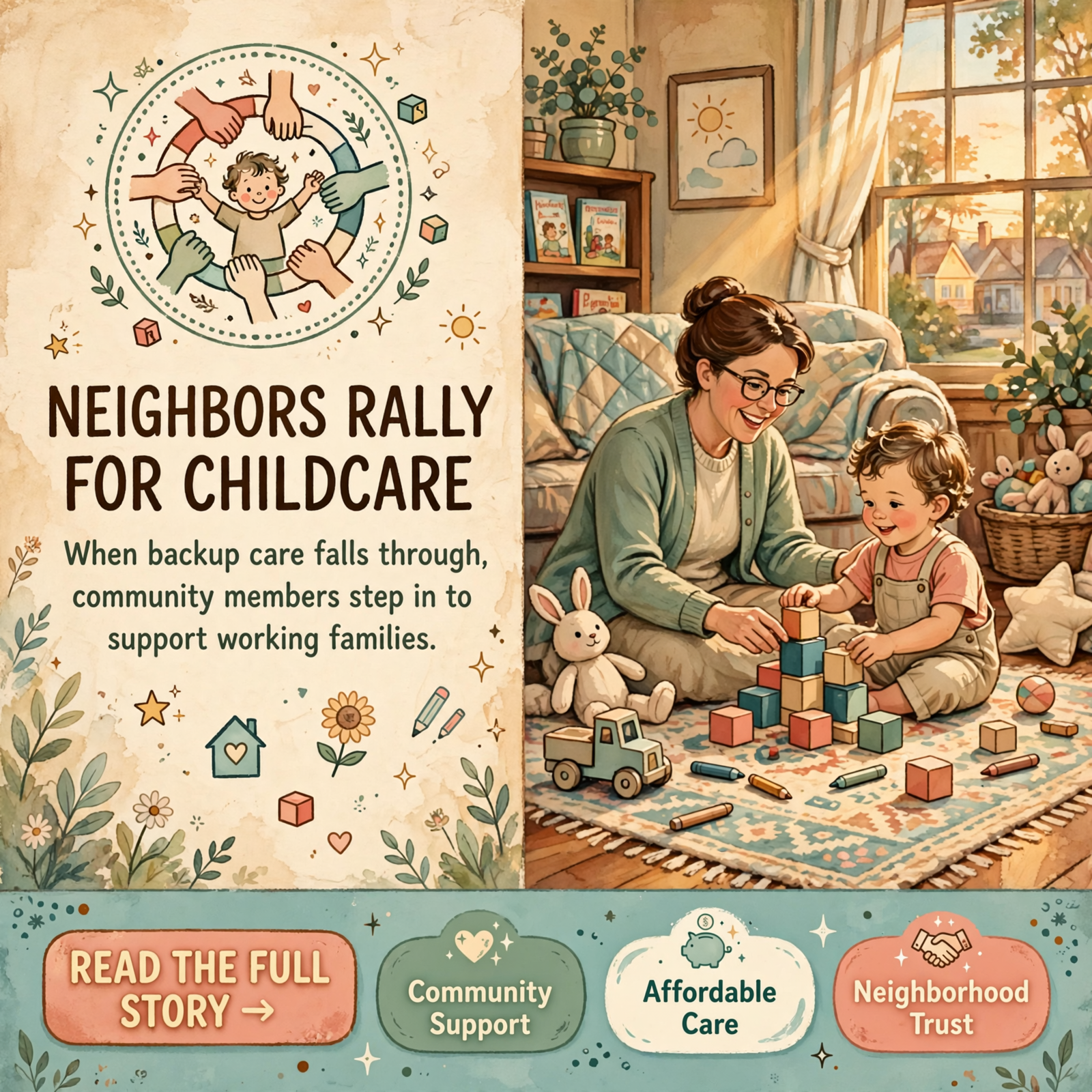
🔍 Local Parent Seeks Backup Childcare Support – Community Responds
Finding reliable, affordable childcare remains one of the most pressing challenges for working families across the region. A recent post in the community group highlights how local parents continue to navigate the search for trustworthy backup care when primary arrangements fall through.
💬 What’s Being Asked
A parent in the area is actively seeking an on-call backup babysitter for times when their regular childcare provider is unavailable. The key requirement: rates that stay below $100 per day. The post reflects a common reality for families juggling work schedules, school calendars, and unexpected gaps in childcare coverage. ✨
👥 Why This Matters
Childcare reliability directly affects whether parents can maintain stable employment, attend to emergencies, or simply manage the unpredictability of family life. When a primary sitter cancels or becomes unavailable, families need quick, trustworthy alternatives. The affordability concern-staying under $100 daily-signals that many local families are working within tight budgets and cannot absorb sudden premium rates. This is a real economic pressure point for working households in the area.
🤝 Community Connections
The post generated immediate interest from community members offering to help. Responses included clarifying questions about whether the role involves drop-off or in-home care, and at least one person expressing willingness to provide backup childcare with references available. This kind of peer-to-peer problem-solving-where neighbors and community members step in to fill gaps-reflects the informal networks that often sustain family life in smaller communities. These connections matter because they build trust, reduce costs, and strengthen relationships beyond a simple transaction.
❤️ Human Impact
For the parent posting, finding backup care means peace of mind and the ability to stay employed without constant anxiety about “what if.” For potential caregivers responding, it represents an opportunity to earn income on a flexible, as-needed basis. For children, consistent backup care from trusted adults can reduce stress during transitions. The human element here is about reliability, trust, and mutual support-not just a service exchange.
🗓️ What Residents Should Know
If you’re seeking childcare or considering offering backup care services, community groups like this one remain active spaces for connecting. When posting or responding, clarity about expectations-drop-off versus in-home, rates, references, and availability-helps both parties make informed decisions. Many families in the area rely on these informal networks, and word-of-mouth recommendations from trusted community members often carry more weight than formal advertising.
💡 Opportunities for Connection
This situation opens doors for community members to support working families in practical ways. Whether you’re a caregiver looking for flexible income, a parent seeking backup support, or someone interested in strengthening neighborhood networks, childcare coordination remains an area where local connections create real value. Building a roster of trusted, affordable backup caregivers strengthens the entire community’s resilience.
❓ Questions Worth Asking
- How many families in your immediate circle struggle with childcare gaps, and what solutions have worked for them?
- What would make backup childcare more accessible and affordable for working families in your community?
- Are there informal childcare networks or referral systems already active in your neighborhood that could be strengthened?
- What barriers prevent people from offering flexible childcare services, and how might those be addressed?
🌱 Long-Term Community Impact
Reliable, affordable childcare is foundational to economic stability, workforce participation, and family well-being. Communities that build strong informal networks for childcare-where neighbors know and trust each other, where rates remain reasonable, and where flexibility is built in-tend to see stronger family retention and more stable employment. Over time, these peer networks can reduce the pressure on formal childcare systems and create a culture where families support families. The post reflects a broader reality: local solutions, built on trust and community relationships, often work better than distant, expensive alternatives.
🤔Source
Jeremy Landsem – An advertisement for home repair services including roofing, siding, gutters, windows, and decks ahead of the holidays.




0 Comments