
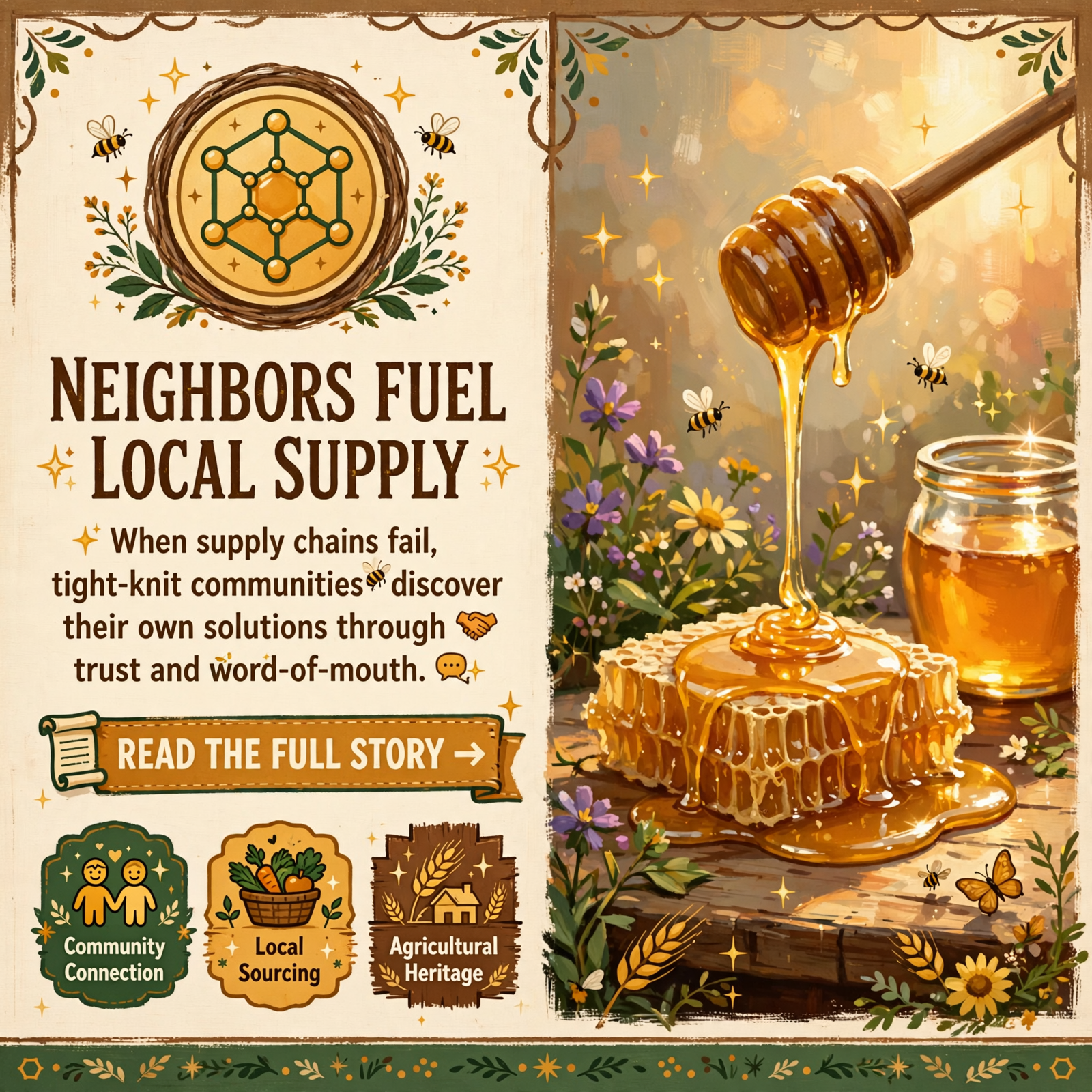
🍯 Local Honey Search Highlights Community Supply Connections in Dunlap
A local shop’s search for reliable honey suppliers reveals how small businesses in the Sequatchie Valley region depend on direct community relationships and word-of-mouth recommendations to source quality products. When supply chains break down, neighbors step in with trusted alternatives.
📍 What’s Happening
Feral Forrest Pantry & Apothecary, based in Dunlap, recently posted a call for local honey recommendations after experiencing several no-shows from suppliers. The request sparked immediate community response, with residents pointing toward Rolling Oak Distillery as a reliable source. The distillery, located on Lewis Chapel Road in the area, maintains its own beehives and produces honey that community members describe as high-quality.
💡 Why This Matters
For small retail businesses like Feral Forrest Pantry & Apothecary, sourcing local products isn’t just a marketing choice-it’s a practical necessity. When suppliers fail to deliver, shops face empty shelves and disappointed customers. Local honey sourcing also supports the region’s agricultural heritage and keeps money circulating within the community rather than flowing to distant distributors. For customers, it means access to fresh, locally-produced goods with a known story behind them.
🤝 Community Connections
This exchange demonstrates how the Sequatchie Valley and Cumberland Plateau communities rely on informal networks of trust. Rolling Oak Distillery‘s beekeeping operation connects to the broader agricultural tradition of the region, where small-scale farming and value-added production have long been part of the local economy. When a business owner asks for help, neighbors respond with recommendations based on personal experience-a pattern that strengthens local relationships and builds reputation over time.
👥 Human Impact
Shop owners like those at Feral Forrest Pantry & Apothecary depend on reliable suppliers to keep their doors open and their shelves stocked. Customers benefit from knowing their honey comes from a nearby source they can visit or learn about. Beekeepers and producers like those at Rolling Oak Distillery gain customers through word-of-mouth and community trust rather than expensive advertising. When these connections work, everyone wins.
🌱 Local Perspective
The search for local honey reflects a broader trend in small communities: as supply chain disruptions become more common, residents increasingly turn to neighbors and local producers. In areas like the Sequatchie Valley and nearby Cumberland Plateau communities, this shift aligns with long-standing values around self-reliance and supporting local enterprise. The willingness of community members to offer recommendations-and the existence of local producers like Rolling Oak Distillery-shows that infrastructure for local sourcing already exists; it just needs to be connected.
🔄 Community Threads: The Producer-Retailer Relationship
This story reveals an important invisible connection: the relationship between local producers and retail businesses. When retailers like Feral Forrest Pantry & Apothecary can source directly from producers like Rolling Oak Distillery, both benefit. The retailer gets reliable supply and a story to tell customers. The producer gains a steady outlet and direct feedback. This thread strengthens when community members actively recommend local producers to business owners-turning casual conversation into economic opportunity.
❓ Questions for the Community
- How many other local products could Dunlap-area shops source from nearby producers if supply chains were better connected?
- What other local agricultural or artisan producers in the region might benefit from direct relationships with retail shops?
- How can community members help strengthen these connections between local makers and local businesses?
- What barriers prevent more local sourcing, and how might the community address them?
📈 Long-Term Community Impact
If local sourcing becomes more systematic-rather than relying on chance recommendations-the Sequatchie Valley and nearby communities could see stronger local economies, more stable agricultural income, and deeper relationships between producers and consumers. Retail shops gain competitive advantage by offering authentic local products. Producers gain predictable markets. Customers get fresher goods and a stronger connection to where their purchases come from. Over time, this pattern can help retain young people in rural areas by creating viable business opportunities.
✨ What Residents Should Know
If you’re a local producer or artisan with products to sell, community members and business owners are actively looking for local suppliers. If you’re a shop owner seeking local goods, asking your community directly-as Feral Forrest Pantry & Apothecary did-can yield quick results and build relationships. If you’re a customer, supporting local sourcing strengthens the entire community network and ensures fresher, more traceable products on store shelves.
🤔Source
Feral Forrest Pantry & Apothecary – After a few no-shows, we’re looking for LOCAL honey for our shop in Dunlap TN. Please send your recommendations our way! {Comments on this post:} Corinne…

0 Comments