
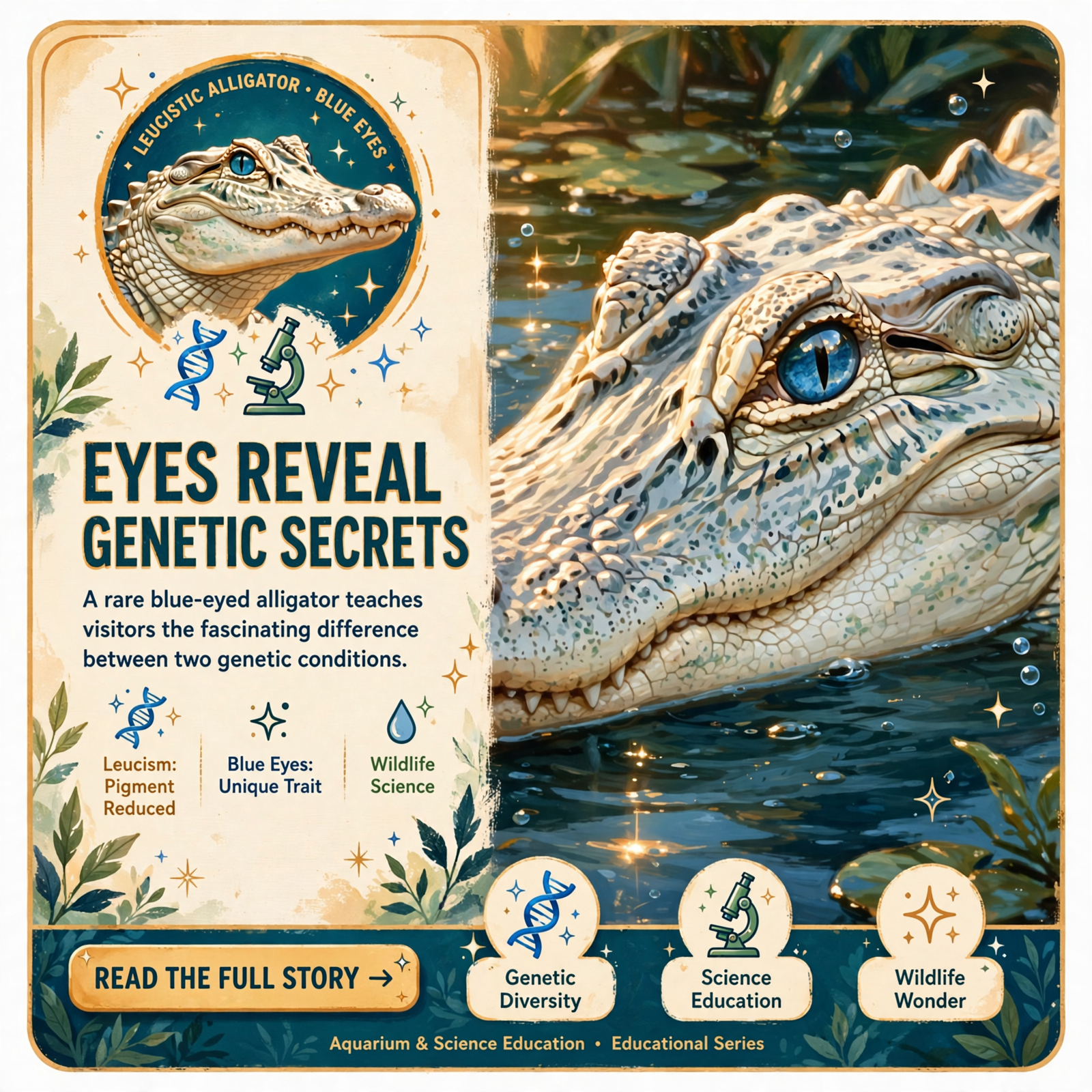
🐊 Leucistic Alligator at Tennessee Aquarium Shows How Eyes Tell the Story of Genetic Difference
Chattanooga’s Tennessee Aquarium is using one of its most striking residents-a tiny leucistic alligator with brilliant blue eyes-to teach visitors a fundamental lesson about genetics and animal biology. The aquarium recently shared an educational post highlighting the difference between leucism and albinism, two genetic conditions that affect pigment in animals but manifest in distinctly different ways.
🧬 What Makes This Alligator Special
The leucistic alligator on display at Tennessee Aquarium has a rare genetic condition that affects pigmentation across its body, but not in the way many people might assume. Unlike albino animals, which lack melanin entirely and typically have red or pink eyes, leucistic animals retain pigment in their eyes-which is why this aquarium resident sports striking blue eyes. The alligator also displays what the aquarium describes as a cute little “hat” of melanin on its head, a visible reminder that leucism and albinism, while both genetic pigmentation disorders, work in fundamentally different ways. 💙
📚 Why This Matters for Local Learners
For families, students, and curious visitors across the Chattanooga metro and nearby communities, encounters with unusual animals like this leucistic alligator offer real-world opportunities to understand genetics, adaptation, and biodiversity. Educational moments like these-where a single animal becomes a teaching tool-help residents of all ages grasp scientific concepts that might otherwise feel abstract. The aquarium’s willingness to explain the “why” behind what visitors see encourages deeper thinking about the natural world and the genetic variations that exist within species.
🌍 Community Connections to Conservation and Learning
Tennessee Aquarium serves as a regional hub for environmental education and conservation awareness. When the aquarium highlights individual animals and their unique characteristics, it strengthens the connection between local residents and the broader mission of understanding and protecting aquatic ecosystems. Schools, homeschooling families, and community groups throughout the Sequatchie Valley and surrounding counties often visit to support that educational mission. Posts like this one extend that learning beyond the walls of the facility, reaching people who may not have visited recently or who are considering a trip.
💡 What Residents Should Know
The leucistic alligator is currently part of Tennessee Aquarium‘s collection at 1 Broad Street in Chattanooga. Visitors interested in seeing this rare animal and learning more about genetic diversity in nature can plan a visit. The aquarium’s educational approach-breaking down complex biological concepts into accessible, visual explanations-makes it a valuable resource for anyone curious about how genetics shape the animals we encounter, whether in person or online.
❤️ Human Impact: Curiosity and Connection
Stories about unusual animals often spark curiosity in children and adults alike. A visitor who learns to distinguish leucism from albinism through this alligator may develop a lifelong interest in genetics, animal biology, or conservation. Families might use this post as a conversation starter during a visit, turning a casual observation into a teachable moment. Teachers in local schools may reference this example when discussing genetic variation in their classrooms, connecting abstract concepts to a real animal that students can actually see.
🔍 Community Questions Worth Considering
- How does understanding genetic variation in animals help us appreciate biodiversity in our own region’s waterways and ecosystems?
- What role do institutions like Tennessee Aquarium play in making science accessible and engaging for families across the Chattanooga metro and nearby communities?
- How might learning about rare genetic traits inspire younger generations to pursue careers in biology, conservation, or environmental science?
- What other animals or natural phenomena in our region could benefit from similar educational storytelling?
🌱 Long-Term Community Impact
When cultural institutions like Tennessee Aquarium invest in clear, engaging science communication, they strengthen the scientific literacy of the entire community. Over time, residents who encounter these educational moments-whether through social media, in-person visits, or conversations sparked by what they’ve learned-develop a deeper appreciation for the natural world and the importance of conservation. This foundation of understanding can influence decisions about environmental stewardship, support for wildlife protection, and career paths for young people. The leucistic alligator, in its own way, becomes an ambassador not just for its species, but for the value of curiosity and lifelong learning.
🧵 Community Threads: The Educator-Visitor Relationship
Tennessee Aquarium‘s role extends beyond displaying animals; it serves as a trusted educator and guide for residents seeking to understand the natural world. When the aquarium shares detailed, accurate information about genetic conditions and animal biology, it strengthens the invisible thread connecting the institution to families, schools, and lifelong learners throughout the region. Visitors return not just to see animals, but to learn-and that relationship of trust and curiosity is what transforms a simple visit into a meaningful educational experience. This thread matters because it reminds us that community institutions are most valuable when they actively engage residents in understanding the world around them.


0 Comments