
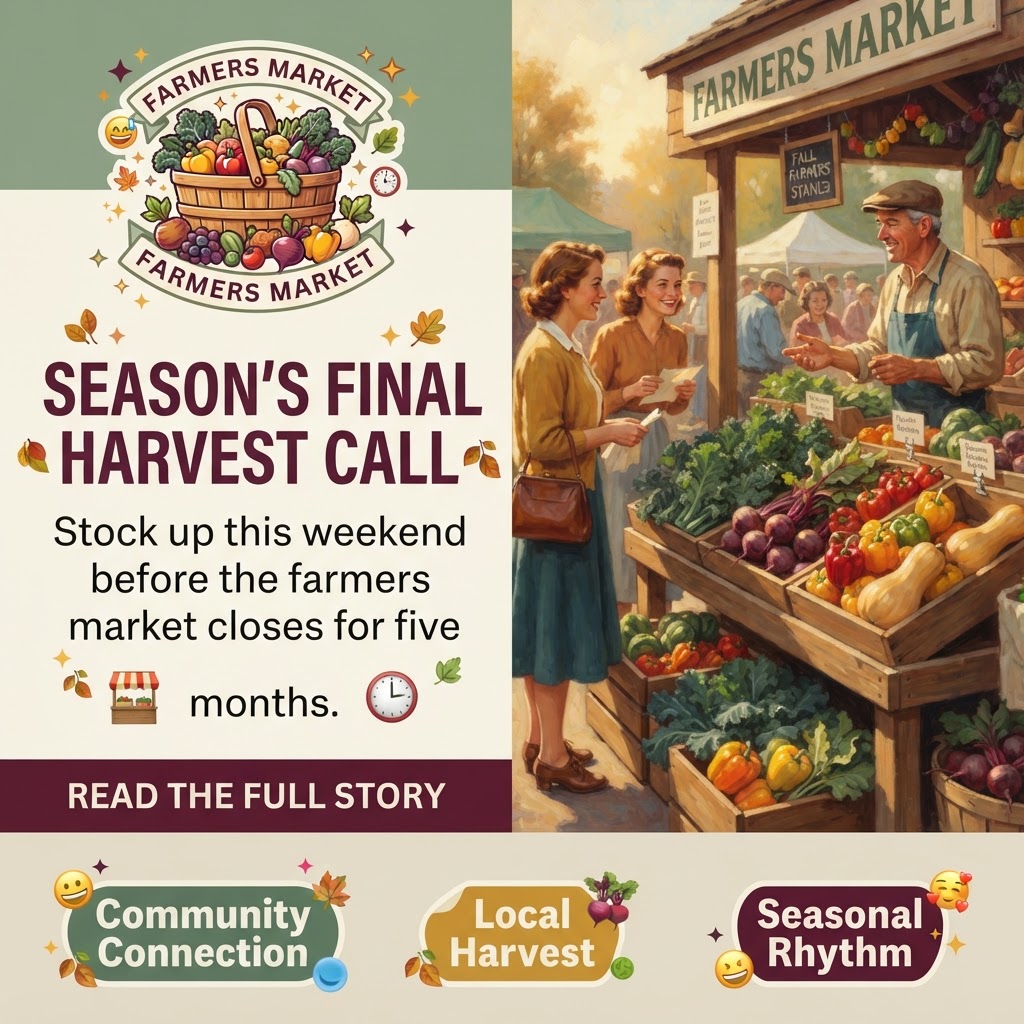
🌽 Last Weekend for Fall Farmers Market – Season Wraps Before Spring 2027 Return
For many residents across the region, the weekly farmers market has become a seasonal rhythm-a place to find fresh produce, connect with local growers, and support neighbors who work the land. This weekend marks the final opportunity of the 2026 season to visit before the market closes for winter.
📍 What’s Available This Final Weekend
The last market day will feature a full harvest lineup, reflecting the tail end of fall production. Shoppers can expect leafy greens including kale and spring mix, root vegetables like red and gold beets, carrots, and both Yukon Gold and red potatoes. The produce list also includes late-season peppers-Hatch peppers, jalapeños, banana peppers, and bell peppers-along with okra, tomatoes, cherry tomatoes, squash, zucchini, cucumbers, scallions, head lettuce, and green beans. Beyond produce, vendors will have pork, chicken, eggs, and baked goods available. 🥬🥕
❤️ Why This Matters to the Community
Farmers markets serve as more than shopping destinations-they are gathering places where residents build relationships with the people who grow their food. The final market of the season often carries extra significance: it’s a moment to thank growers for months of work, to stock up on favorites before the winter gap, and to celebrate the community bonds that form around local food. For families who have made the market part of their weekly routine, this weekend represents both an ending and a reminder of the cycle that will begin again in May 2027. 🤝
🗓️ What Residents Should Know
This is the last market day until May 2027. If you have relied on the market for fresh produce, eggs, meat, or baked goods throughout the season, this weekend is your final chance to stock up before the winter break. Plan your visit accordingly and arrive early for the best selection, as final-day markets often draw larger crowds. 📅
🌱 Community Connections and Local Food Systems
Farmers markets across the region-whether in Dunlap, Spencer, Pikeville, or other nearby communities-play a vital role in connecting residents to local agriculture. These markets support small-scale growers, preserve farming traditions, and keep food dollars circulating within the community. The seasonal rhythm of opening in spring and closing in fall reflects the natural growing cycle that has shaped rural life for generations. When one market closes for the season, it reminds residents of the broader network of local food producers and the interdependence between growers and shoppers. 🌾
💡 Opportunities for Connection
This final weekend offers a chance to thank vendors for their work throughout the season, ask about their plans for next year, or inquire about winter CSA boxes or other off-season options some growers may offer. It’s also an opportunity to introduce family members or neighbors who may not have visited yet-a way to strengthen awareness of local food sources before the market reopens in spring. For those interested in supporting local agriculture year-round, conversations with vendors this weekend could reveal winter farmers markets, farm stands, or other ways to stay connected to local producers. 🎯
📈 What Happens Next
After this weekend, the market will close for the winter season. Residents will have a five-month gap until the market reopens in May 2027. During that time, some growers may offer alternative ways to purchase their products-through farm stands, CSA programs, or other direct-sales channels. The reopening in May will mark the beginning of a new growing season and a return to the weekly rhythm that many residents have come to value. 🔄
🧠 Community Questions Worth Considering
- How has the farmers market changed your family’s food shopping habits or routines this year?
- Are there growers or products you’ll miss most during the winter months, and what alternatives might you explore?
- What would make the market experience even stronger when it returns in spring-more vendors, different hours, or new offerings?
- How can residents stay connected to local growers and agriculture during the off-season?
🌄 Long-Term Community Impact
Seasonal farmers markets are anchors for local food systems and rural economies. Each season that operates successfully strengthens the relationship between growers and consumers, builds trust in local agriculture, and creates economic stability for farming families. The cycle of opening and closing also reinforces the reality of seasonal living-a connection to the land and natural rhythms that many residents value. As the market prepares to close this weekend, it also signals the beginning of planning for next season: which growers will return, what new varieties might be tried, and how the community can continue to support local food production. The market’s return in May 2027 will depend on the relationships, loyalty, and community support built during seasons like this one. 🌻
🔗 Community Threads: The Grower-Shopper Relationship
At the heart of every farmers market is an invisible but powerful thread: the relationship between growers and the families who buy from them. Over a season, shoppers learn which vendors grow the best tomatoes, which ones offer rare pepper varieties, and which bakers have the most reliable bread. Growers, in turn, learn what their customers want, remember regulars by name, and adjust their planting based on feedback. This final weekend is a moment when that thread is most visible-when both sides recognize the value of what they’ve built together. When the market closes, that thread doesn’t disappear; it simply goes dormant, waiting to be picked up again in spring. Understanding this relationship helps residents see farmers markets not as temporary shopping venues, but as essential community infrastructure that strengthens local resilience, food security, and human connection. 💚



0 Comments