
🌾 Last Warm Days to Pick and Cover: Frost Saturday Night, Prussic Acid Timing, and a Hay Inventory Check — Your Farm & Garden Report
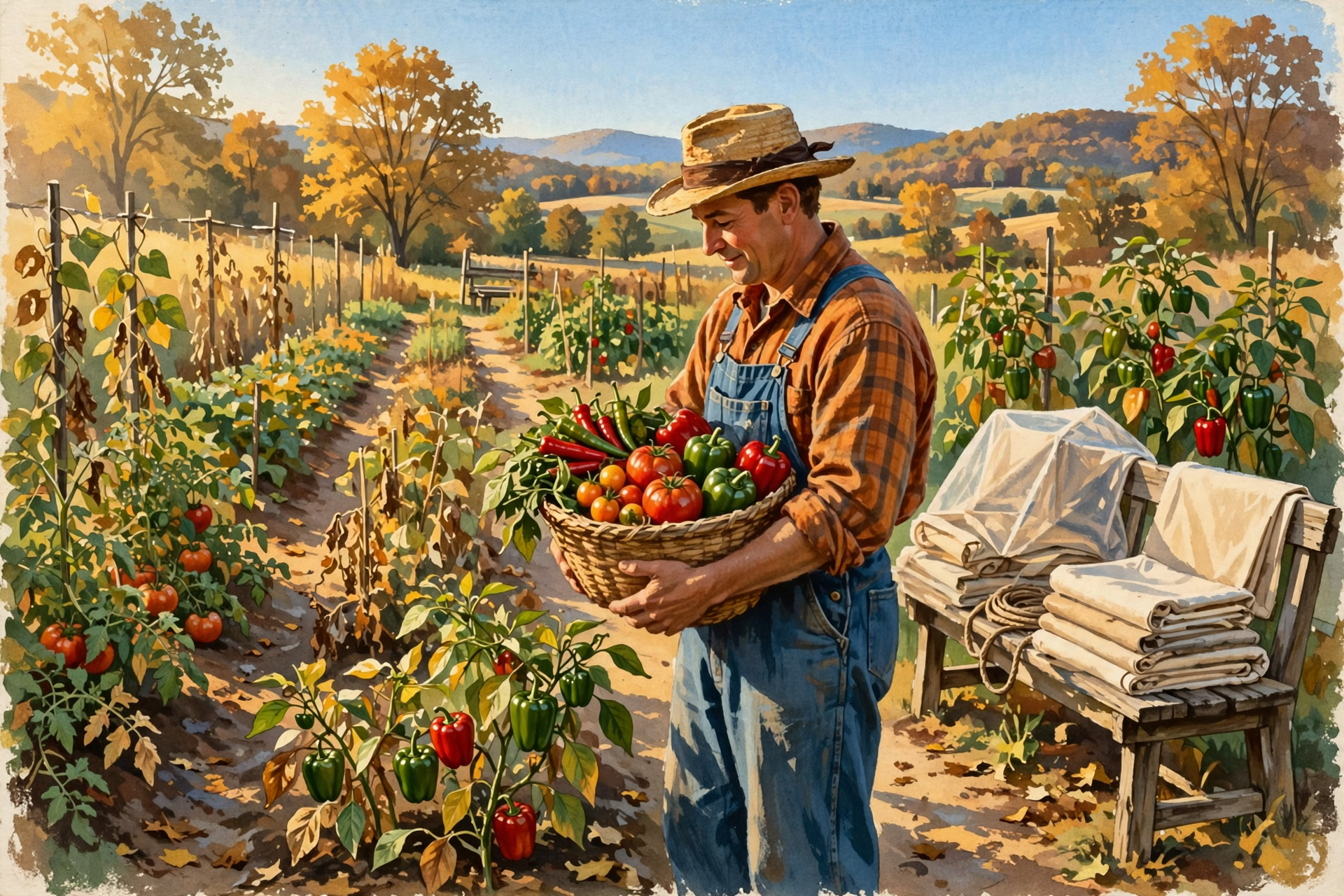
Or: Tomatoes Off the Vine, Sheets Over the Beds, Cattle Off Frosted Johnsongrass — Plus Count Your Hay Before February
By Thomas Seest, Dunlap.Today · Wednesday, October 14, 2026
This week is a little like the last laundry day before company comes: you finish the warm-weather chores while the sun’s still high, then you tuck everything in before the night turns sharp. Nothing’s wrong with the season. You’re just changing the sheets.
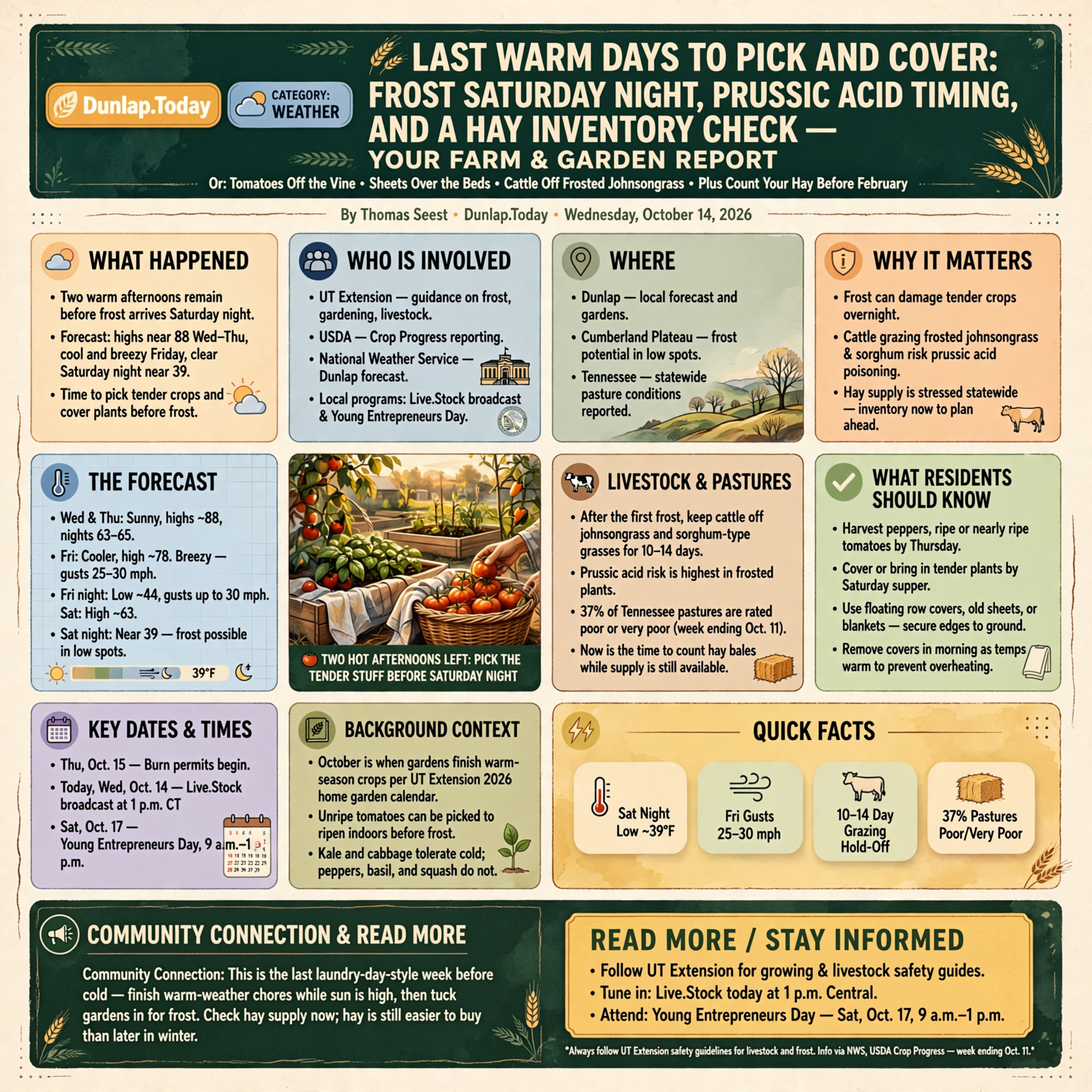
Here’s where things stand Wednesday morning. Dunlap’s National Weather Service forecast still calls for highs near 88 today and Thursday, then a breezy Friday and a clear Saturday night near 39. That makes the next two afternoons the last easy window to pick tender crops, get covers ready, and finish a few fall garden jobs. UT Extension says after the first frost, keep cattle off johnsongrass and sorghum-type grasses for 10 to 14 days. USDA’s fresh Crop Progress numbers say 37 percent of Tennessee pastures are poor or very poor, and Upper Cumberland agents say count your hay now while it’s still easier to buy. Burn permits start tomorrow, Young Entrepreneurs Day is Saturday, and UT’s Live.Stock broadcast is today at 1 p.m. Central. A short checklist is at the end.
⏱️ What this means for you in 30 seconds
- Weather: Sunny, near 88 Wed–Thu in Dunlap. Breezy Friday (gusts to 25–30 mph). Saturday night near 39.
- Garden: Pick peppers and ripe or nearly ripe tomatoes by Thursday. Cover or bring in tender plants by Saturday supper.
- Livestock: After the first frost, keep cattle off johnsongrass and sorghum grasses for 10–14 days. Count hay bales this week.
- Statewide: USDA rates 37% of TN pastures poor or very poor (week ending Oct. 11). New Drought Monitor map comes out Thursday.
- Dates: Burn permits begin Thu., Oct. 15. Live.Stock today 1 p.m. CT. Young Entrepreneurs Day Sat., Oct. 17, 9 a.m.–1 p.m.
🍅 Two Hot Afternoons Left: Pick the Tender Stuff Before Saturday Night
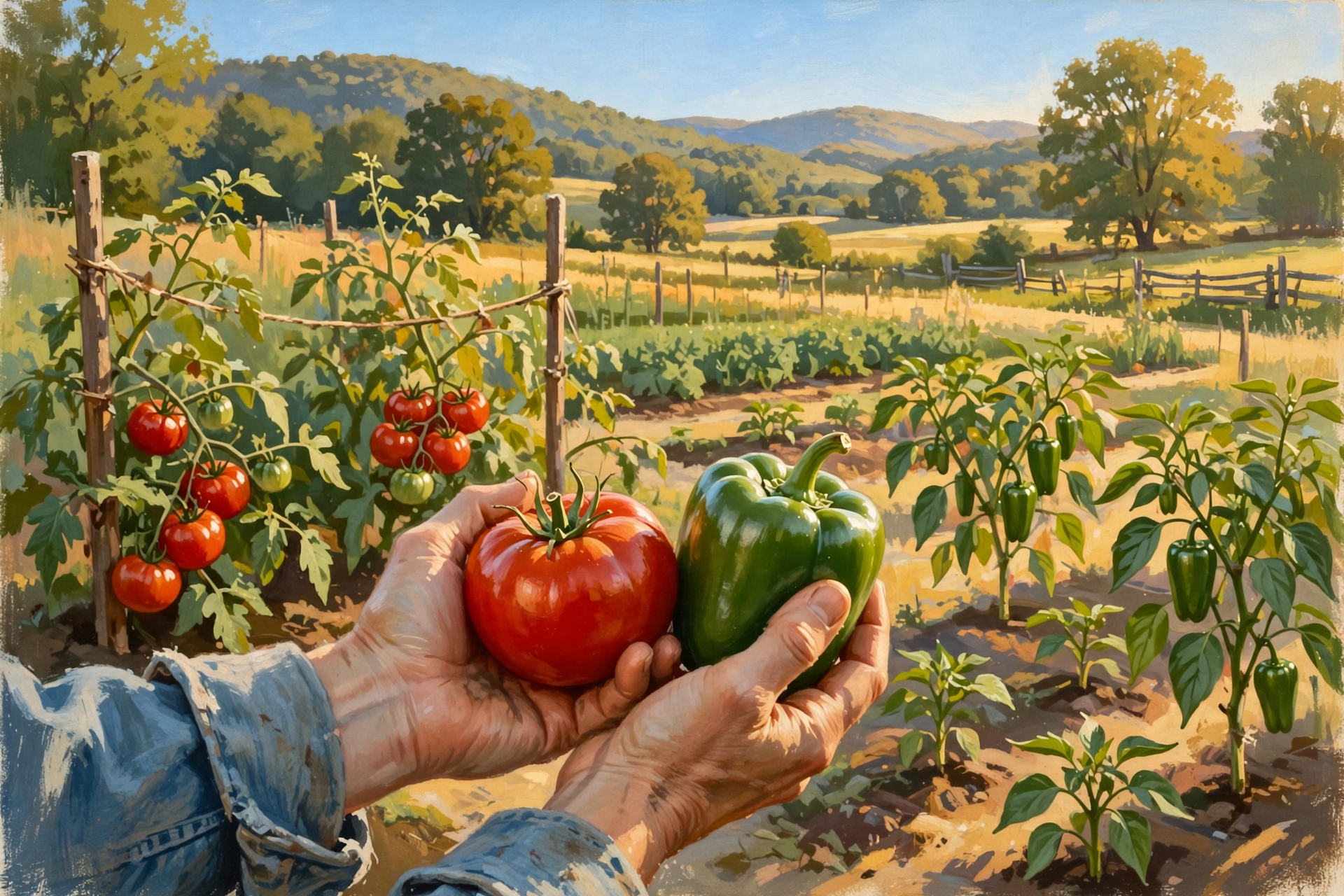
Dunlap’s point forecast, updated at 6:06 a.m. Central Wednesday, still shows sunny skies and highs near 88 Wednesday and Thursday, with nights around 63 to 65. Friday cools to about 78 with northwest winds and gusts that can reach 25 mph, then Friday night near 44 with gusts up to 30 mph. Saturday tops out near 63, and Saturday night drops to about 39 under clear skies. That’s cold enough for frost in low spots and on the Plateau, even if your porch thermometer stays a tick higher. The Tennessean, citing the National Weather Service in Nashville, notes frost potential on the Cumberland Plateau around the morning of Oct. 18 as this same cool air settles in.
UT Extension’s 2026 home garden calendar says October is when you finish picking remaining warm-season crops, and that unripe tomatoes can be harvested to ripen indoors if frost is coming. Peppers, basil, squash and other tender plants don’t shrug off a near-freezing night the way kale and cabbage do. For plants you want to keep producing a little longer, UT’s season-extension guide points to floating row covers — light fabrics that trap warmth rising from the soil. Secure the edges to the ground; a cover that hangs open at the bottom does almost nothing. Pull covers off or vent them once the morning warms so plants don’t cook in the sun. Old sheets and blankets work the same way if you don’t have frost cloth — just don’t leave plastic draped directly on the leaves.
What it means for you: Use Wednesday or Thursday afternoon to pick every pepper and any ripe or firm, nearly ripe tomato. Green tomatoes don’t need light to ripen; keep them somewhere around room temperature, not in the fridge. Ferns, geraniums and other tender porch pots can come inside Saturday afternoon. Lay covers on the garden before dark Saturday — think of it as tucking in the grandkids. Kale, cabbage and other cool-season greens can take a light frost and often taste sweeter afterward.
👉 Read more (NWS Dunlap forecast) · UT: 2026 Home Fruit & Vegetable Garden Calendar · UT: Season Extension (W346-F)
🐄 After the First Frost: Give Johnsongrass Two Weeks Before the Cows Go Back
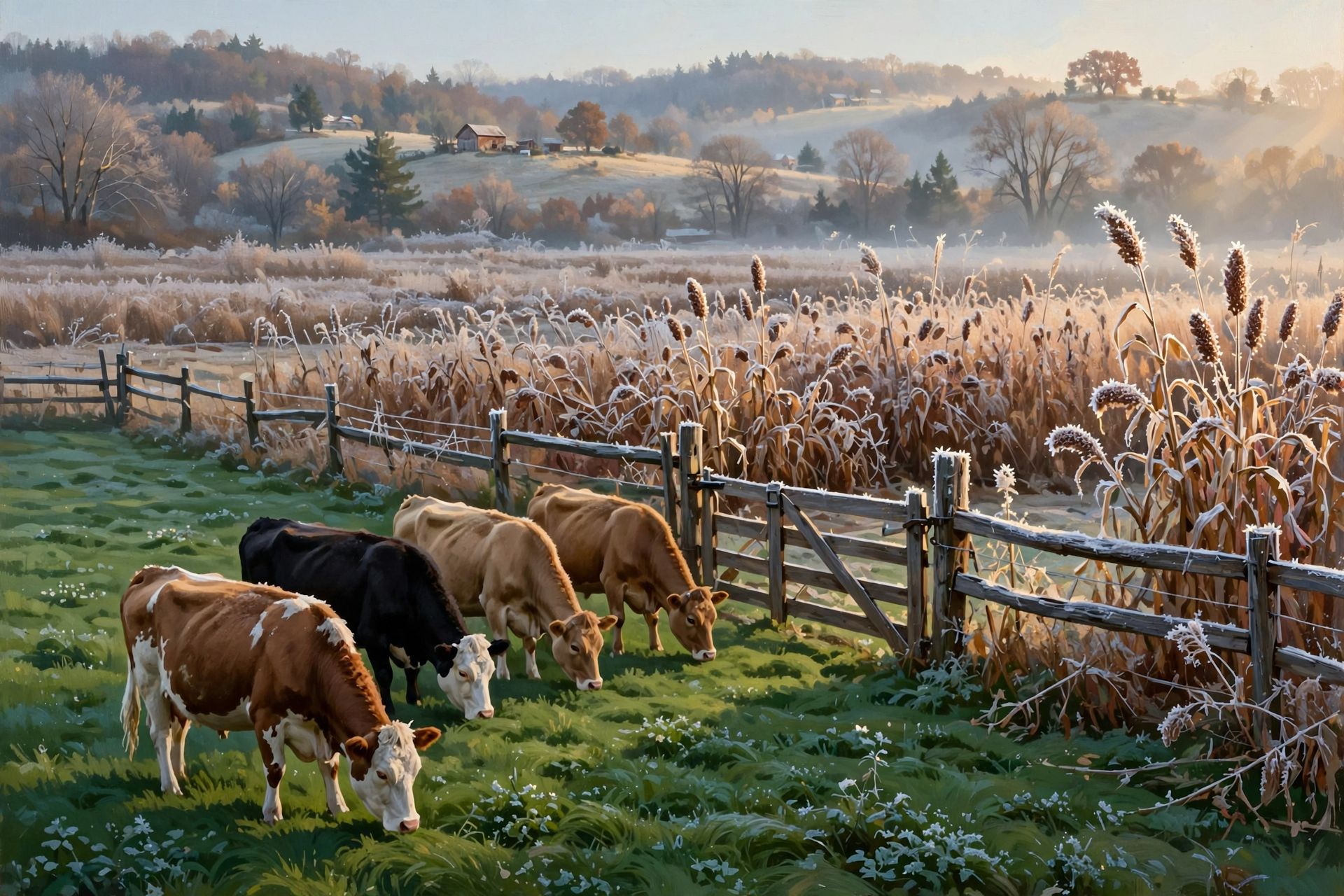
If you have johnsongrass, sudangrass or sorghum-sudangrass in a pasture or along a fence line, Saturday night is the night to mark on the calendar. UT Beef & Forage Center specialist Hannah Wright Smith explains that freezing damages plant cells and can release large amounts of prussic acid (a cyanide compound). The short rule hasn’t changed: withhold grazing of sorghum species for 10 to 14 days following frost. Watch for any new green shoots after a frost, too — those young leaves can be especially high in prussic acid until they dry down or reach 18 to 24 inches, which is unlikely this late in the year.
The good news is that prussic acid is relatively short-lived once the plants die and dry. Waiting those 10 to 14 days is usually enough. Hay made from frosted sorghum forages is a different story from nitrate risk in drought hay; if you’re unsure what you have, ask your county Extension agent before you feed it.
What it means for you: Treat the first frosty morning like a gate that needs a padlock for two weeks. Move cattle to a clean fescue or other safe pasture, or feed hay in a lot where they can’t reach frosted johnsongrass. Write the frost date on the barn calendar and count forward 10 to 14 days before you open that gate again.
👉 Read more (UT: Prussic Acid After Frost)
🍂 Fall Beds Still Open: Garlic, Leaf Mulch, Cover Crops and a Careful Onion Trial
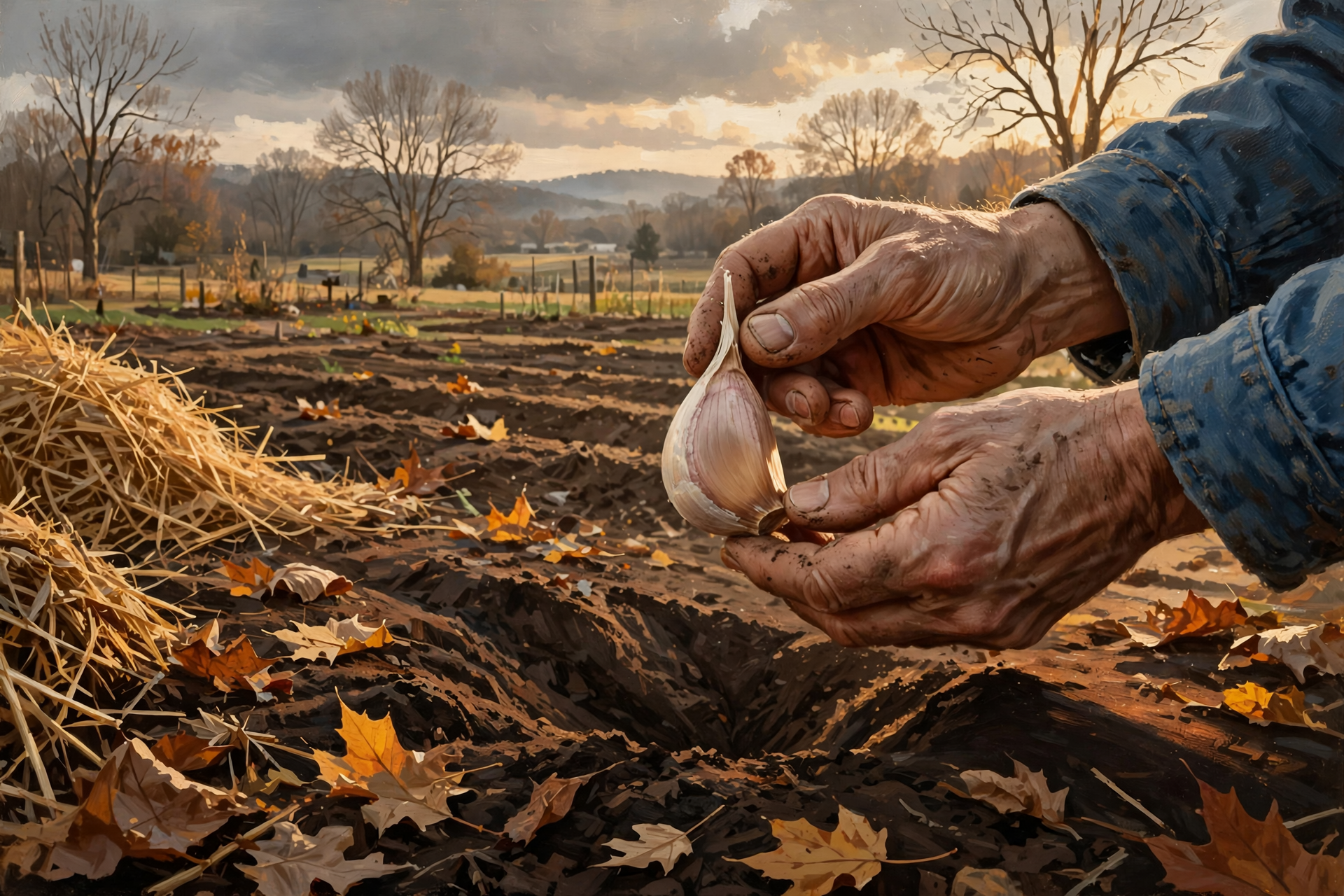
Garlic: UT Extension still lists East Tennessee’s usual garlic window as Sept. 1 through Nov. 1. Plant the biggest cloves pointy end up, 1 to 1½ inches deep, about 4 inches apart, and water them in if the ground stays dry. A straw mulch helps with weeds through winter.
Cover crops: UT’s East Tennessee planting-date work found mid-September through mid-October most dependable, and the 2026 garden calendar notes that many cover crops can still produce well in East Tennessee if planted in mid-October. Cereal rye is the tough, cold-hardy choice if you’re late. Seed needs moisture in this dry fall.
Leaves and compost: UT’s home composting guide is a good partner for the next few weeks of leaf fall. Finished, stable compost belongs worked into beds; fresh leaf piles are better for mulch or the compost heap than for burying next to hungry roots. Shredded leaves or straw make a light winter mulch that holds soil and slows weeds.
Onions and shallots: UT’s onion guide says sets and transplants usually go in early spring, but some gardeners also try a mid-fall (September–October) transplant for spring bulbs. UT is clear that this overwinter method hasn’t been trialed enough in Tennessee for firm recommendations, so treat a short row as an experiment, not a guarantee. Loose, well-drained soil and a raised bed help.
What it means for you: Think of this as putting Christmas presents under the tree early. You won’t open them until spring, but you’ll be glad you did. Stop by UT Extension Sequatchie County at 170 Church Street in Dunlap (423-949-2611) if you need a soil box or a second opinion on seed.
👉 Read more (UT: Garlic D75) · UT: Fall Cover Crop Dates · UT: Onions, Leeks & Shallots (D127)
📦 Before February Gets Expensive: Count the Hay, Watch the Pasture Numbers
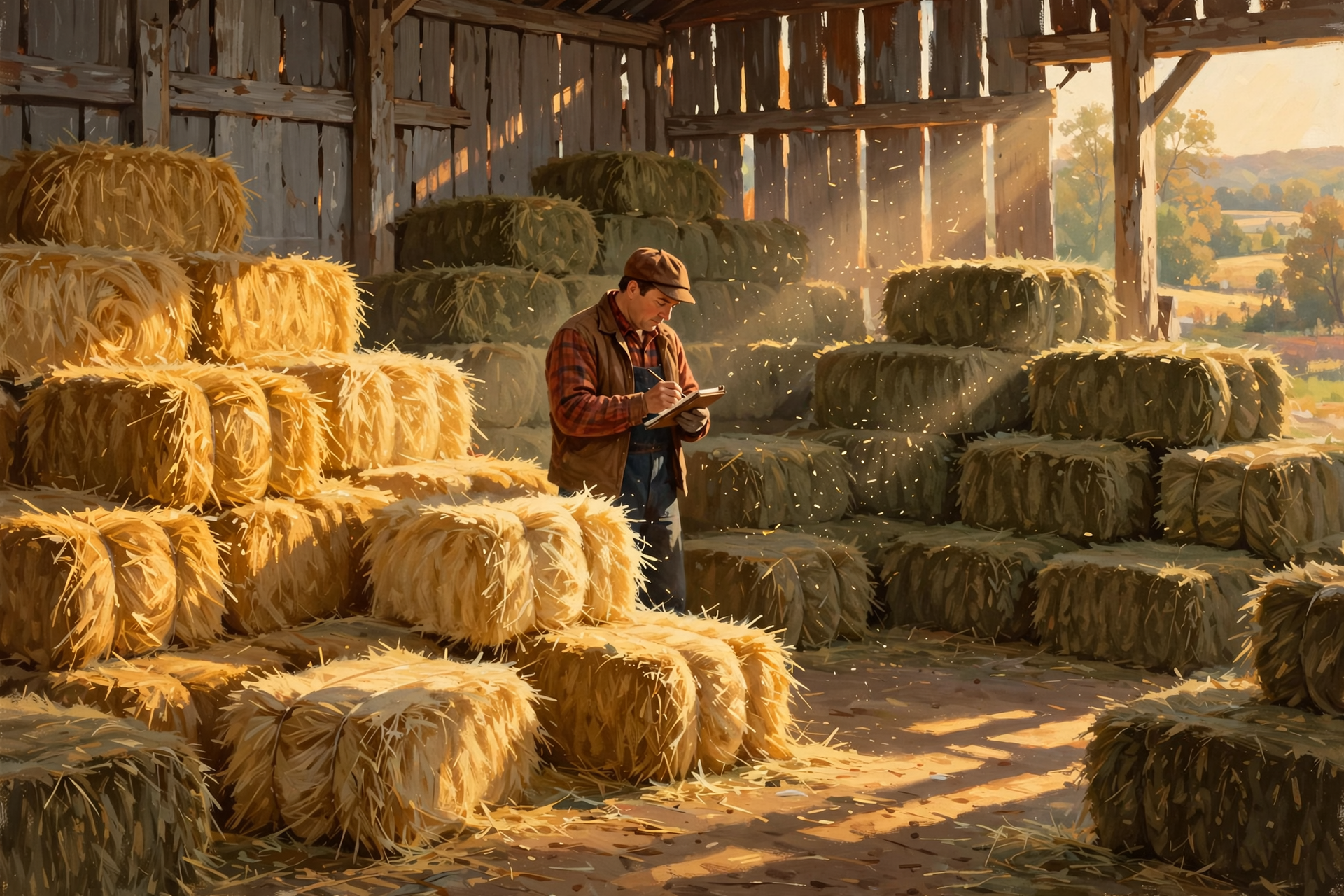
USDA’s Crop Progress report released Oct. 13 (week ending Oct. 11) is the freshest statewide snapshot. Tennessee pastures were rated 16 percent very poor, 21 percent poor, 33 percent fair, 27 percent good and 3 percent excellent — so about 37 percent poor or very poor. Topsoil moisture was 30 percent very short and 42 percent short; subsoil was similarly tight. On the bright side for row crops, Tennessee corn harvest reached 91 percent (five-year average 78 percent) and soybeans 67 percent (average 41 percent). Those are statewide figures, not Sequatchie-only numbers.
The U.S. Drought Monitor map still on the books uses data as of Oct. 6 (map released Oct. 8). The next map comes out Thursday and should better reflect any rain since then. Locally, conditions still vary farm to farm.
Nearby, Putnam County Extension agent Wayne Key told Upper Cumberland Now on Oct. 5 that drought-stressed pastures are pushing some producers to start feeding hay earlier, that first-cutting yields in his area ran about 40 to 50 percent of normal, and that the smart move is to evaluate hay inventory now while supplies are still easier to find than in February and March. That’s Upper Cumberland reporting, not a Sequatchie County survey — but the same dry pattern has been on our side of the Plateau too.
What it means for you: Walk the barn this week with a notepad. Count bales by lot, note which stack looks best, and decide whether you need to buy before winter demand climbs. If you haven’t tested a drought-year summer-grass lot yet, ask Extension about a forage or nitrate check. Knowing what’s in the stack is like reading the pantry labels before you invite company for Sunday dinner.
👉 Read more (USDA Crop Progress, Oct. 13) · U.S. Drought Monitor: Tennessee · Upper Cumberland Now: Forage & Hay
📌 Sticky Notes for the Fridge

- Today, Wednesday, Oct. 14, 1 p.m. Central (2 p.m. Eastern): UT Beef & Forage Center’s Live.Stock online broadcast with timely cattle and forage topics. Details at utbeef.tennessee.edu/live-stock.
- Thursday, Oct. 15: Free burn permits required for natural debris. Get one the same day you burn at BurnSafeTN.org or 1-877-350-BURN. Thursday looks calmer than windy Friday — save brush piles for a still day.
- Saturday, Oct. 17, 9 a.m.–1 p.m.: Dunlap Farmers Market Young Entrepreneurs Day at the Jeff Johnson Pavilion, Harris Park. Youth vendors apply at dunlapfarmersmarket.com (note “kids market” on the form).
- Mid-December: TAEP cost-share approval letters are due in the mail. The Oct. 1–7 application window is closed; keep your confirmation email handy, and alert the TAEP office if nothing arrives by mid-January.
👉 UT Live.Stock · BurnSafeTN · Dunlap Farmers Market · TAEP timeline
✅ Your Farm & Garden Checklist for Last-Pick Week
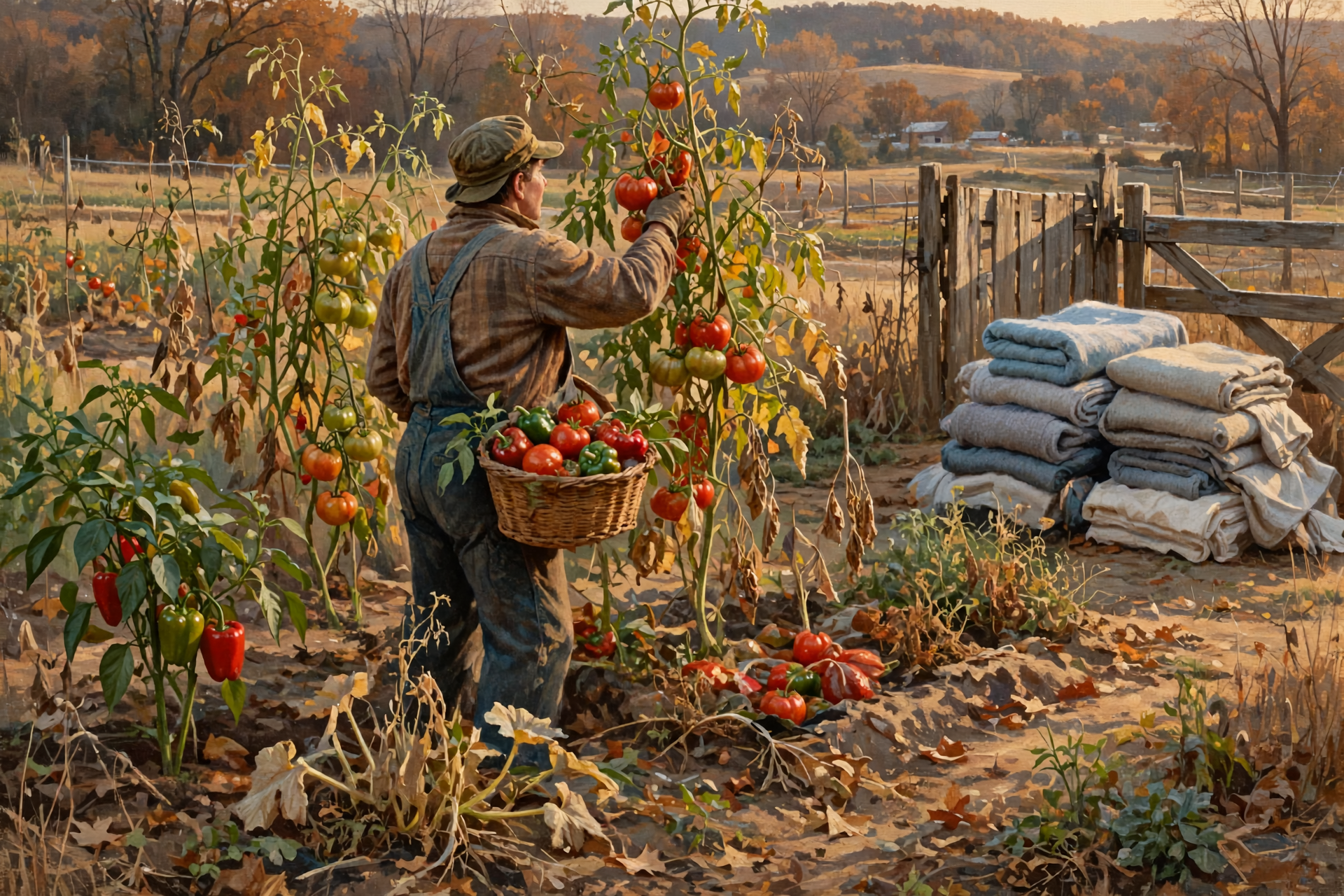
- ✅ Wed–Thu: Pick all peppers and ripe or nearly ripe tomatoes. Dig any remaining sweet potatoes if you haven’t.
- ✅ Set aside green tomatoes to ripen indoors at room temperature.
- ✅ Stack frost cloth, old sheets or blankets by the back door for Saturday evening.
- ✅ Plant or water garlic; sow a quick cover crop if the bed is empty.
- ✅ Rake leaves into mulch piles or the compost heap — not into fresh planting holes.
- ✅ Count hay by lot. Call around now if you need to buy before late winter.
- ✅ After the first frost, keep cattle off johnsongrass and sorghum grasses for 10–14 days.
- ✅ Today 1 p.m. CT: Tune in to UT Live.Stock if you can.
- ✅ Thursday: Burn permits begin — burn only on a calm day with a permit and a hose nearby.
- ✅ Saturday afternoon: Cover or bring in tender plants before the near-39 night.
- ✅ Saturday 9–1: Shop the Dunlap Farmers Market and cheer on the young vendors.
Practical rule: Pick while it’s warm, cover before dark, wait two weeks on frosted johnsongrass, and count the hay before February.
— Dunlap.Today
📚 Plain-English Farm & Garden Glossary
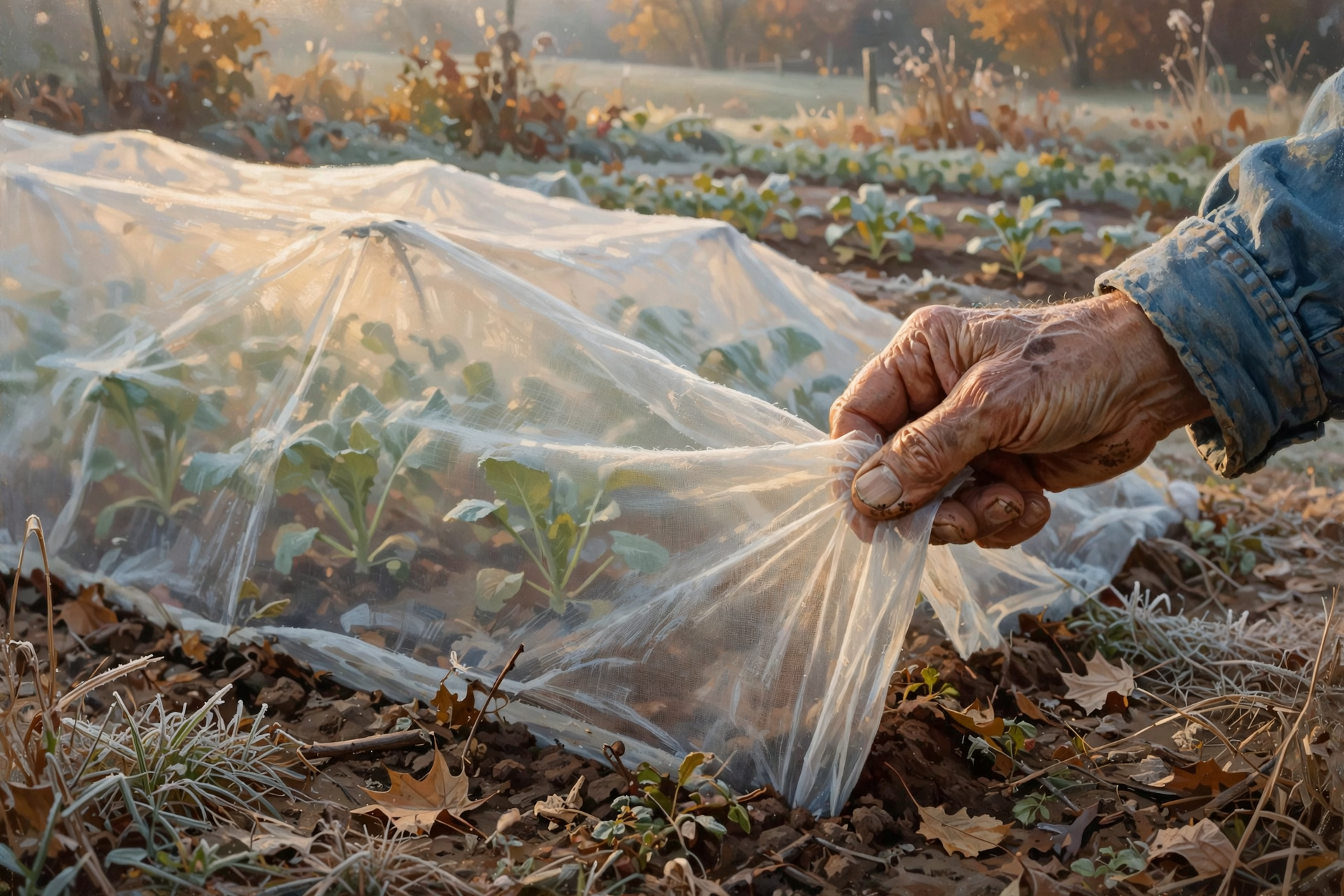
- Floating row cover: A light fabric laid over plants to trap ground heat on cold nights. Edges need to touch the soil.
- Prussic acid: A poison released by frosted johnsongrass and sorghum-type grasses. It fades as the plants dry over about 10 to 14 days.
- Cover crop: A crop such as rye or crimson clover grown over winter to protect and feed the soil instead of being harvested.
- Hay lot: Hay cut at the same time, from the same field, under the same conditions. Count and feed each lot separately when you can.
- Crop Progress report: USDA’s weekly snapshot of planting, harvest and crop/pasture condition by state, usually released Mondays.
- U.S. Drought Monitor: A weekly national dryness map, released on Thursdays.
- TAEP: Tennessee Agricultural Enhancement Program, a state cost-share program for eligible producers. 2026 applications closed Oct. 7; approvals are due mid-December.
- Live.Stock: UT Beef & Forage Center’s periodic online broadcast with specialists on cattle and forage topics.
❓ Frequently Asked Questions

Will it really frost in Dunlap Saturday night?
Dunlap’s official point forecast low is near 39 under clear skies. That’s cold enough for frost in low spots and hollows even if town stays a degree or two warmer. Cover or bring in tender plants Saturday evening to be safe.
Should I pick green tomatoes now?
Yes, if frost is coming. UT’s calendar says unripe tomatoes can be harvested to ripen indoors. Keep them around room temperature; the fridge slows ripening and can hurt quality.
How long after frost before cattle can graze johnsongrass?
UT recommends waiting 10 to 14 days after a frost. Also avoid grazing new green shoots that come up after a frost until they dry down.
Is it too late for cover crops?
You’re at the tail end of the best window. UT says many cover crops can still do well in East Tennessee from a mid-October planting; rye is a reliable late choice. Water the seed in if it stays dry.
How bad are Tennessee pastures right now?
For the week ending Oct. 11, USDA rated 37 percent of Tennessee pastures poor or very poor. That’s a statewide average — your farm may be better or worse. The next Drought Monitor map is due Thursday.
When are TAEP approval letters coming?
The state says approval notifications are announced in mid-December. Alert the TAEP office if you don’t receive yours by mid-January. The Oct. 1–7 application window is closed.
What time is Live.Stock today?
Wednesday, Oct. 14, at 2 p.m. Eastern — that’s 1 p.m. Central. Details are at utbeef.tennessee.edu/live-stock.
🔗 Other Resources

- UT Extension Sequatchie County (170 Church Street, Dunlap · 423-949-2611 · 8 a.m.–4:30 p.m., closed noon–1)
- National Weather Service: Dunlap forecast
- UT: 2026 Home Fruit & Vegetable Garden Calendar (W436)
- UT: Season Extension in the Garden (W346-F)
- UT: Prussic Acid After Frost
- UT: Garlic for the Tennessee Vegetable Garden (D75)
- UT: Onions, Leeks and Shallots (D127)
- USDA NASS Crop Progress (Oct. 13, 2026)
- U.S. Drought Monitor: Tennessee
- UT Beef & Forage Center: Live.Stock
- BurnSafeTN (free burn permits)
- Dunlap Farmers Market vendor form
- TAEP timeline
- Dunlap.Today
🏡 Keep Learning, Stay Calm and Come Back to the Porch
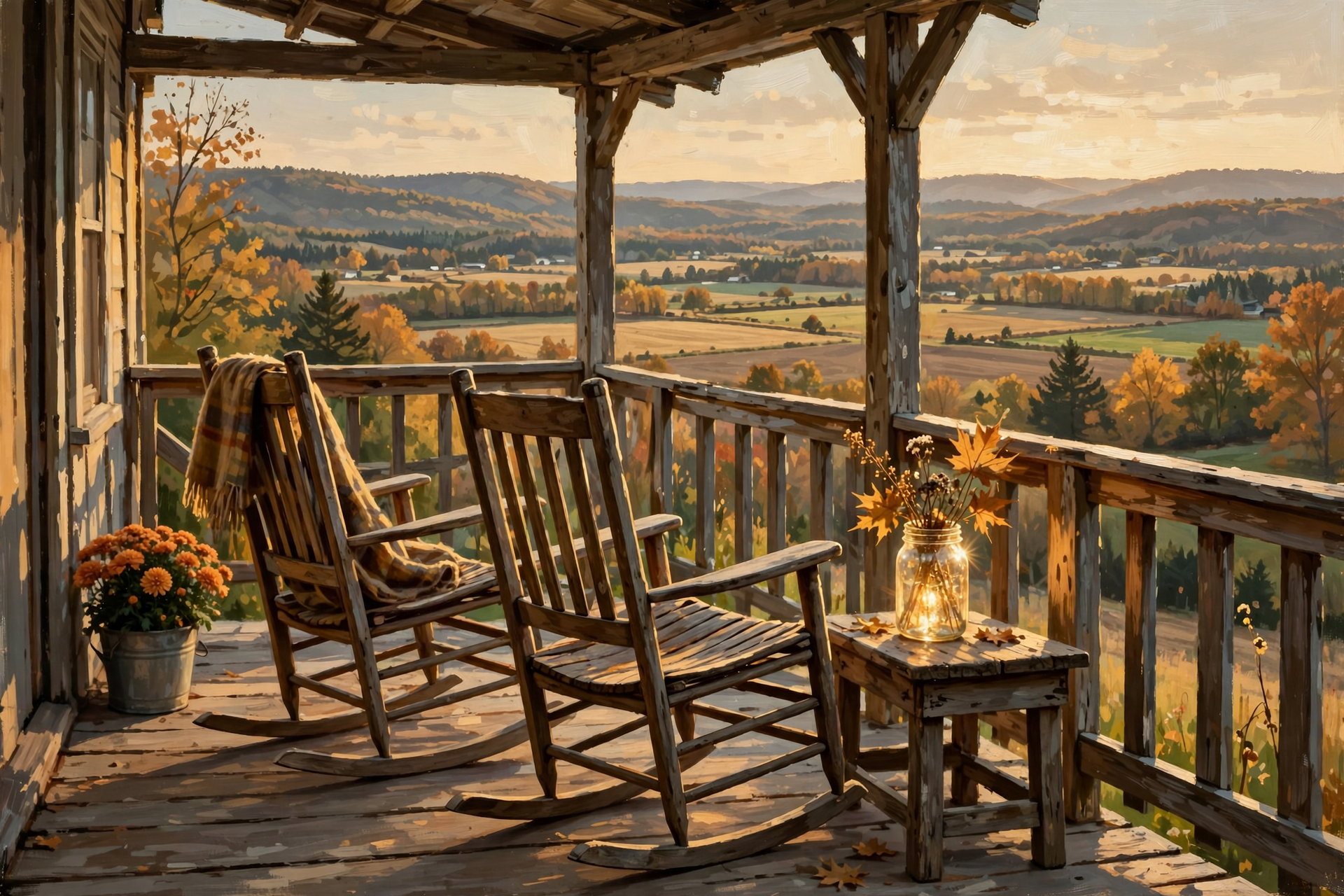
A hot Wednesday and a frosty Saturday night aren’t a crisis in this Valley. They’re October doing what October does. Pick the tomatoes, cover the beds you still care about, give the cattle a safe pasture for two weeks after frost, and know how many bales you really have. Then go buy a jar of jam from a young neighbor on Saturday morning. That’s a good week’s work.
When you want the next calm, practical update for Sequatchie Valley readers, pull up a chair at Dunlap.Today.
Sources
Know about an upcoming event or story in the Sequatchie Valley? Submit it here.



0 Comments