
If You Can’t Fix It, Do You Really Own It?

There are few things more offensive to a mechanically minded person than throwing away a perfectly good machine because one little part broke.
The washing machine works.
The motor is fine.
The drum is fine.
The cabinet is fine.
One little electronic board gives up.
Suddenly the repair estimate begins with:
“Well, for what it’ll cost…”
That sentence has sent a lot of appliances to the dump.
Cars are increasingly full of computers.
Tractors contain software.
Phones may contain parts that need electronic approval before they work properly.
Printers can recognize cartridges.
Appliances can require computerized diagnostics.
Even products that are mechanically sound can become difficult to repair because the broken part is no longer just a part.
It’s a part, a computer, some software, a password, a diagnostic tool, and possibly a conversation with a manufacturer.
That’s why something called the right to repair has become part of the larger conversation about digital independence.
And despite the political and legal arguments that sometimes surround the phrase, the ordinary question underneath it is wonderfully simple:
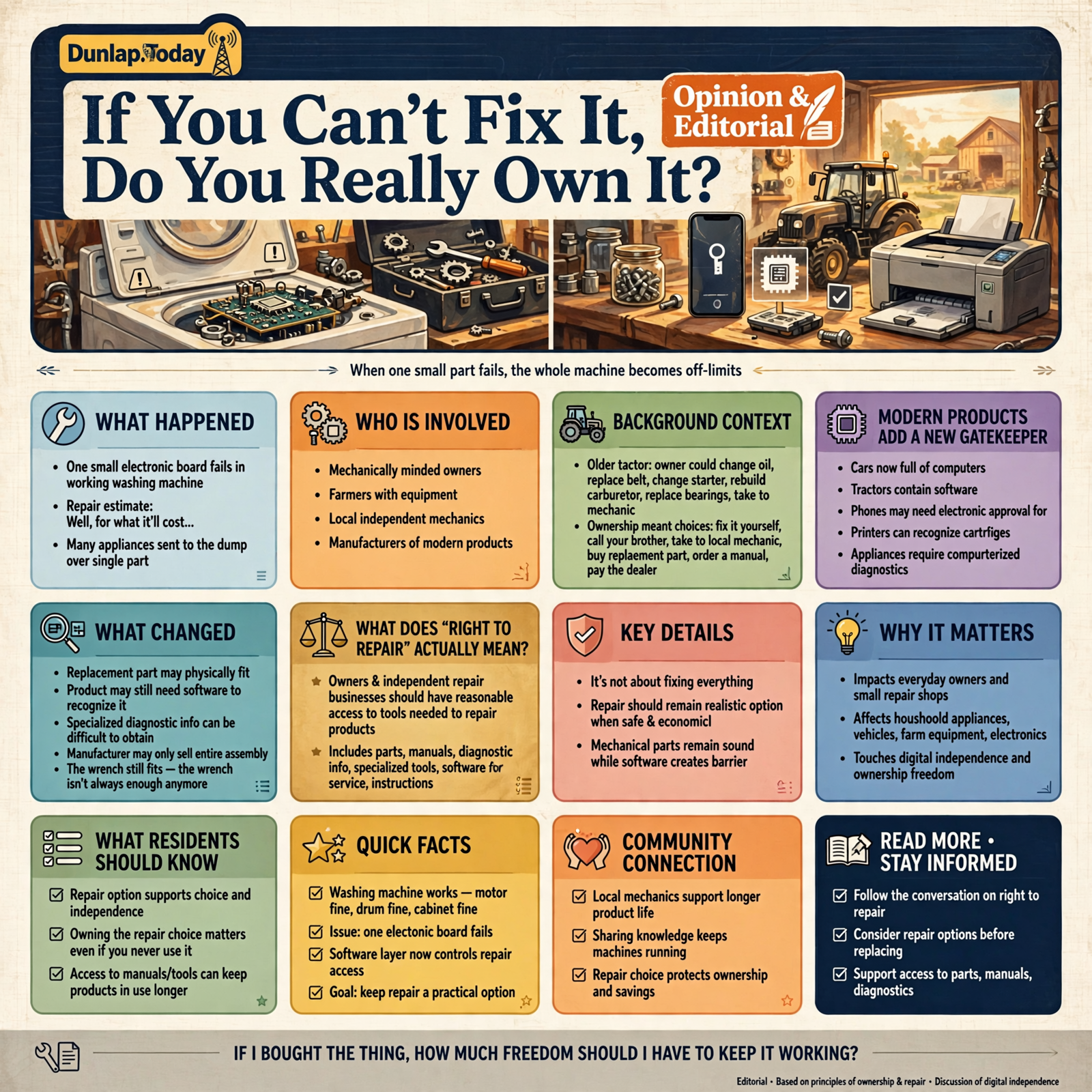
If I bought the thing, how much freedom should I have to keep it working?
Repair Used to Be Part of Ordinary Ownership
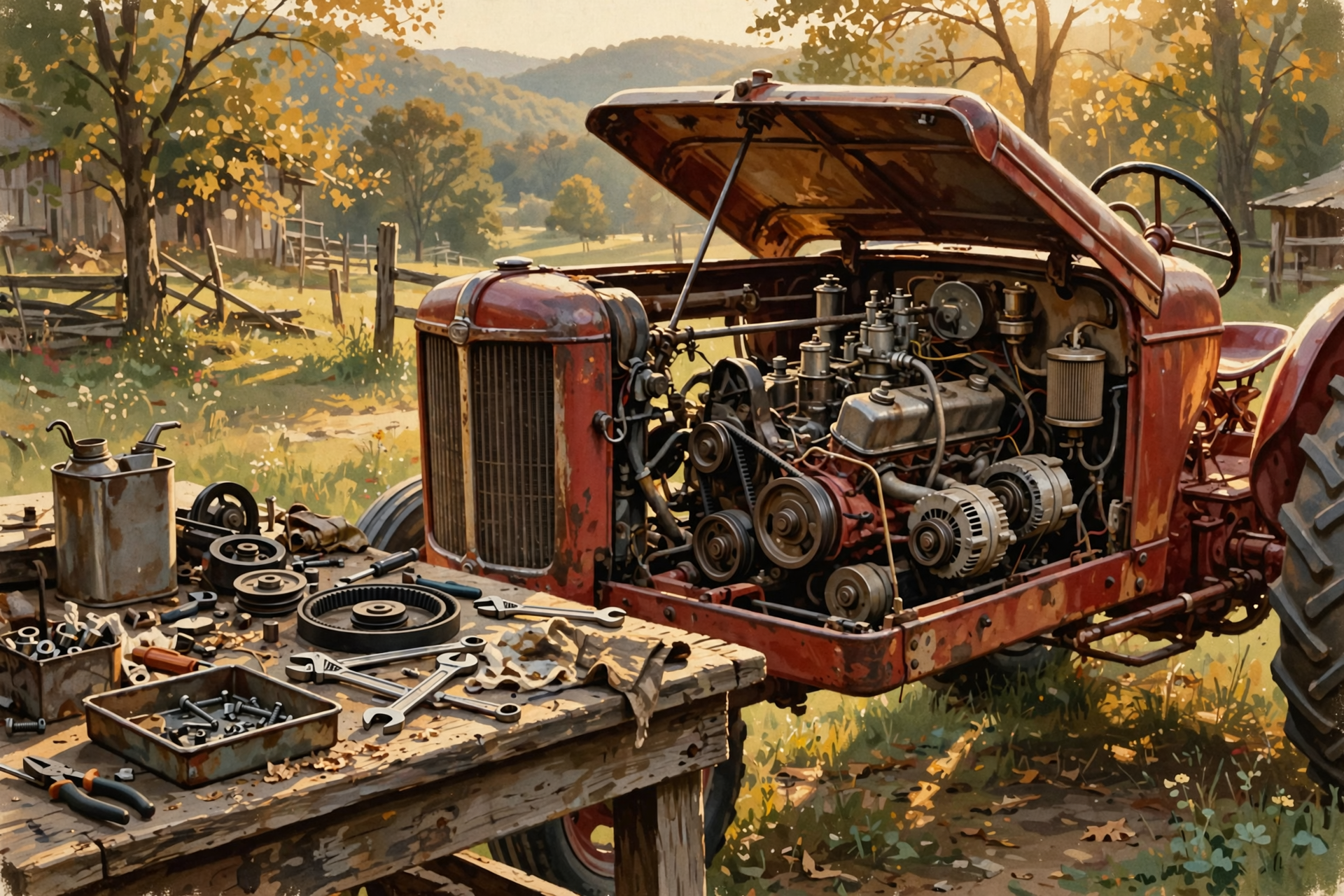
Think about an older tractor.
A farmer might:
- Change the oil
- Replace a belt
- Change a starter
- Rebuild a carburetor
- Replace bearings
- Take something complicated to a mechanic
He did not necessarily perform every repair himself.
That’s an important distinction.
The value wasn’t that the owner personally knew how to rebuild everything.
The value was that he had choices.
Fix it himself.
Call his brother.
Take it to the local mechanic.
Buy a replacement part.
Order a manual.
Pay the dealer.
Ownership included options.
Modern Products Can Add a New Gatekeeper
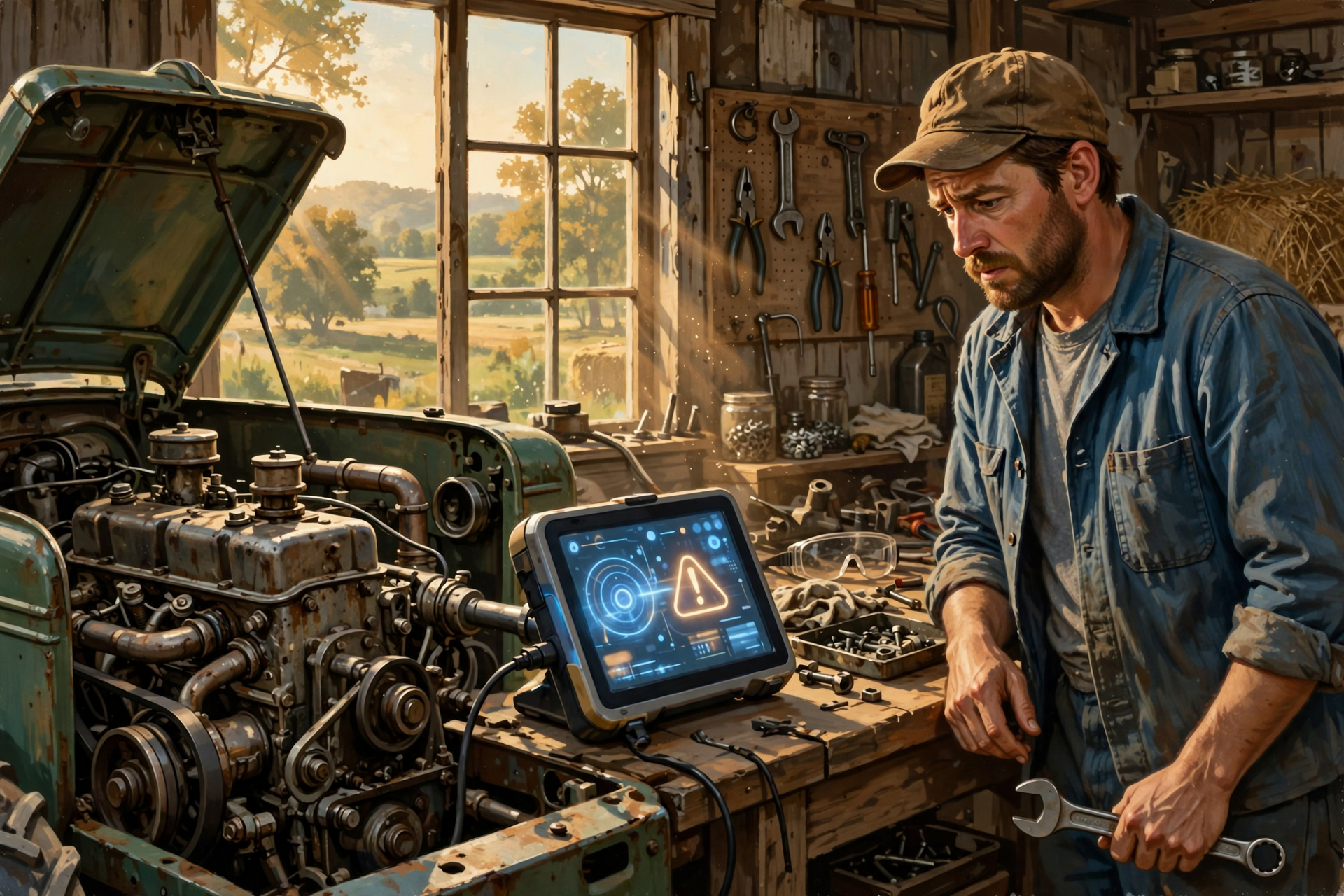
Today’s machines may contain something older equipment didn’t:
software.
Software can make products dramatically better.
Modern vehicles can diagnose problems.
Appliances can control themselves more precisely.
Phones can perform jobs that once required half a desk full of equipment.
Farm equipment can use sophisticated guidance and monitoring.
That’s real progress.
But software can also create another layer between the owner and the machine.
A replacement part may physically fit.
But the product may still need software to recognize it.
A mechanic may understand what’s wrong.
But specialized diagnostic information may be difficult to obtain.
A component may be repairable.
But the manufacturer may only sell an entire assembly.
The wrench still fits.
The wrench just isn’t always enough anymore.
What Does “Right to Repair” Actually Mean?
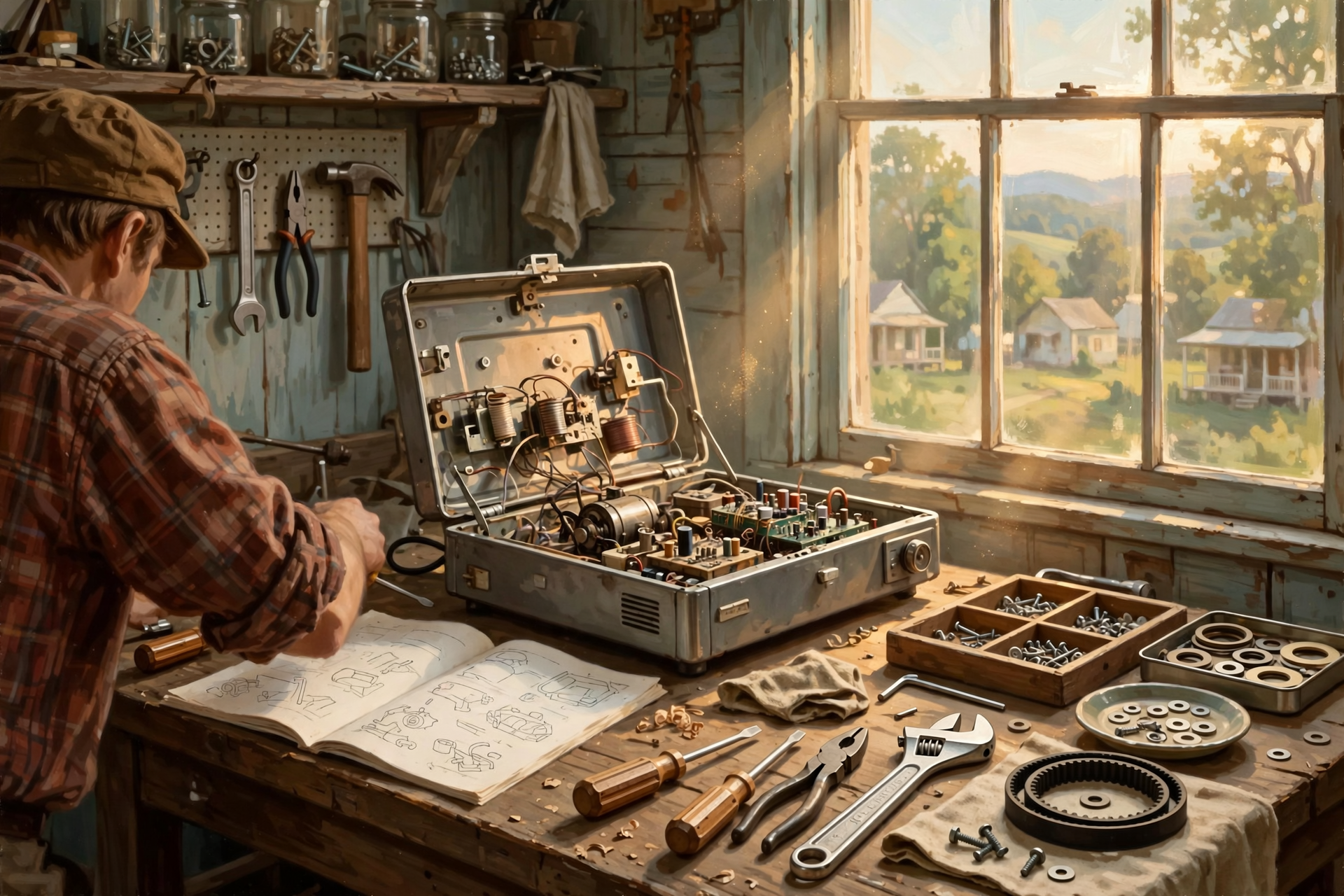
The phrase can sound like something written by lawyers.
In ordinary language, right to repair generally refers to the idea that owners and independent repair businesses should have reasonable access to the things needed to repair products.
Depending on the product, that can include:
- Replacement parts
- Repair manuals
- Diagnostic information
- Specialized tools
- Software needed for service
- Instructions for replacing components
The basic idea isn’t:
“Every person should be able to fix everything.”
Heavens, no.
I don’t want my neighbor performing open-heart surgery because somebody uploaded a service manual.
The idea is:
Repair should remain a realistic option when it can be done safely and economically.
Owning the Repair Choice Matters Even If You Never Use It
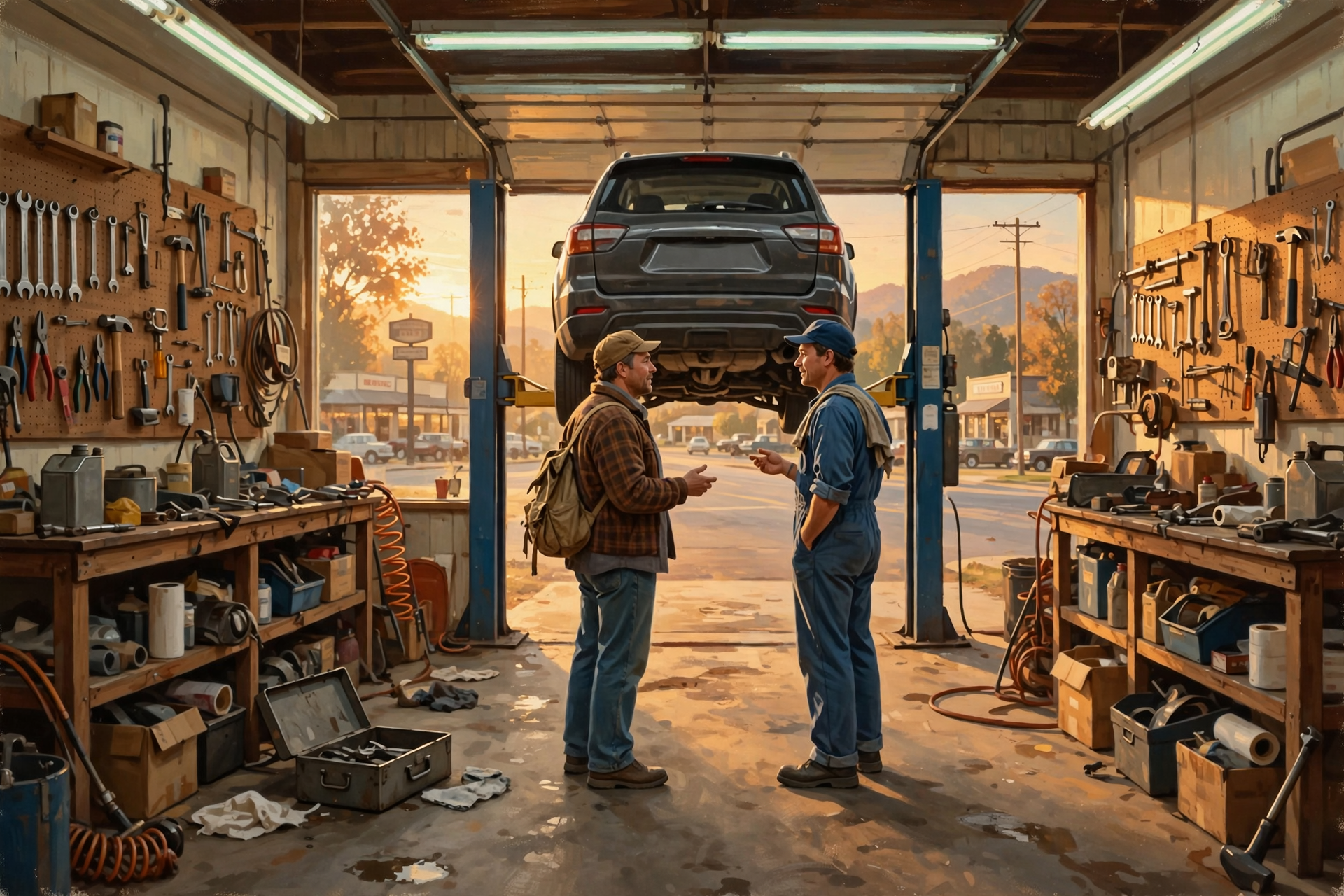
This point gets overlooked.
I don’t personally need to rebuild my vehicle’s transmission to benefit from independent transmission shops existing.
The fact that I can choose among:
- The dealer
- An independent mechanic
- A specialist
creates competition.
Competition affects:
- Price
- Service
- Convenience
- Availability
The same principle applies to electronics.
You may never open your laptop.
But if three local shops can replace its battery, you have more options than if only the manufacturer can.
The Dunlap Test: Can Somebody Local Fix It?

Here’s a useful question before buying expensive equipment:
If this thing breaks three years from now, who around here can fix it?
Not:
“Who can fix it while the warranty is active?”
Three years from now.
Five years from now.
Maybe ten.
If the answer is:
“Ship the entire thing somewhere and hope,”
that is worth knowing before you buy it.
Repairability Is Part of the Real Purchase Price
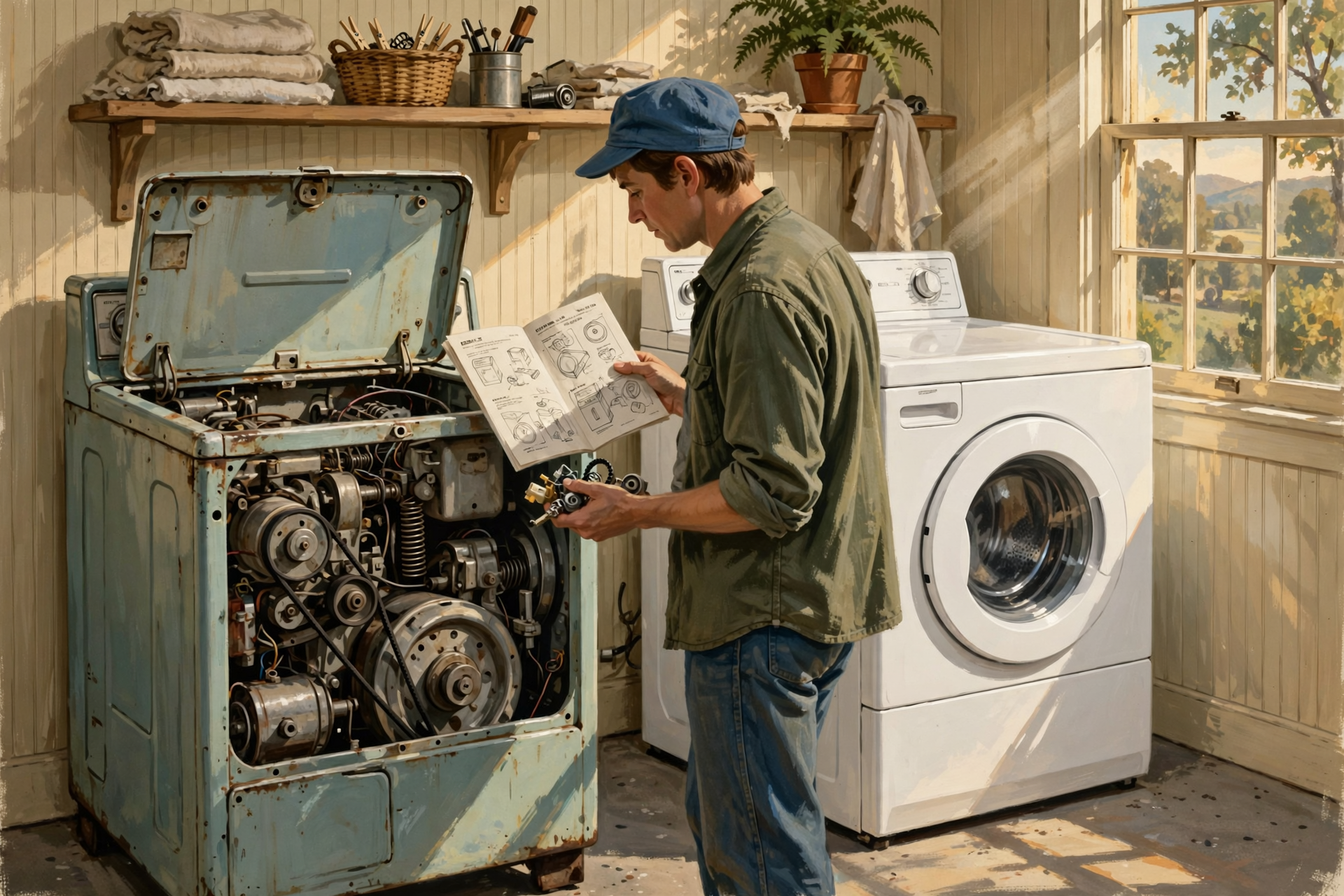
Imagine two washing machines.
Machine A costs $700.
Machine B costs $900.
Machine A has difficult-to-obtain parts and complicated electronic assemblies.
Machine B costs more but has:
- Available replacement parts
- Service documentation
- Several local technicians who understand it
- A reputation for being repairable
Which one is cheaper?
You don’t know yet.
The sticker price answers only the first question.
The useful question is:
What will it cost me to own this thing for ten years?
A $40 Part Can Save a $900 Appliance
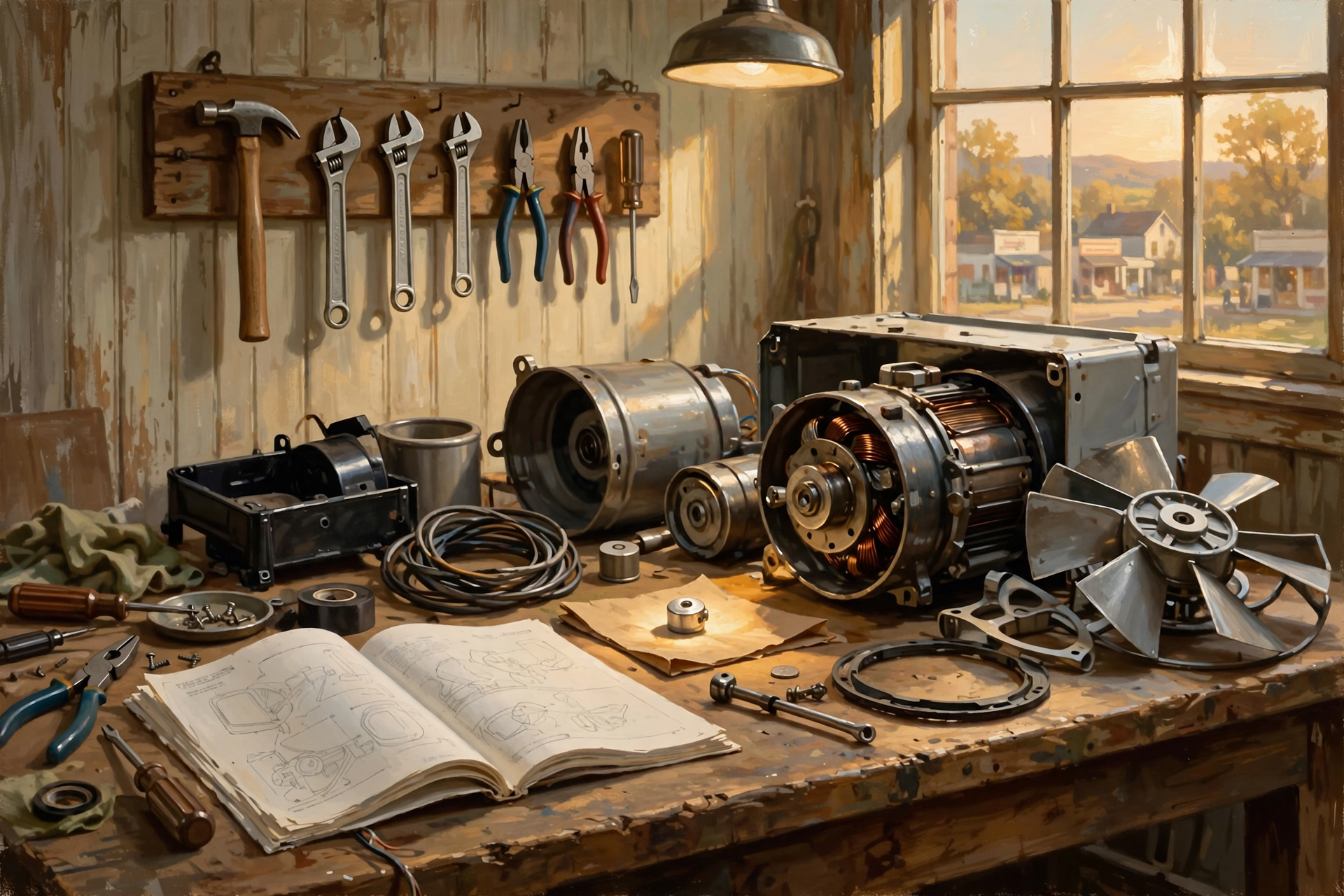
This is why repairability has real economic value.
If a $40 component keeps a $900 appliance alive another five years, that’s a good repair.
If the $40 component is unavailable and the only approved repair is a $500 assembly plus labor, suddenly replacement begins looking attractive.
The technical failure did not change.
The repair system changed the economics.
Small Parts Can Become Big Problems
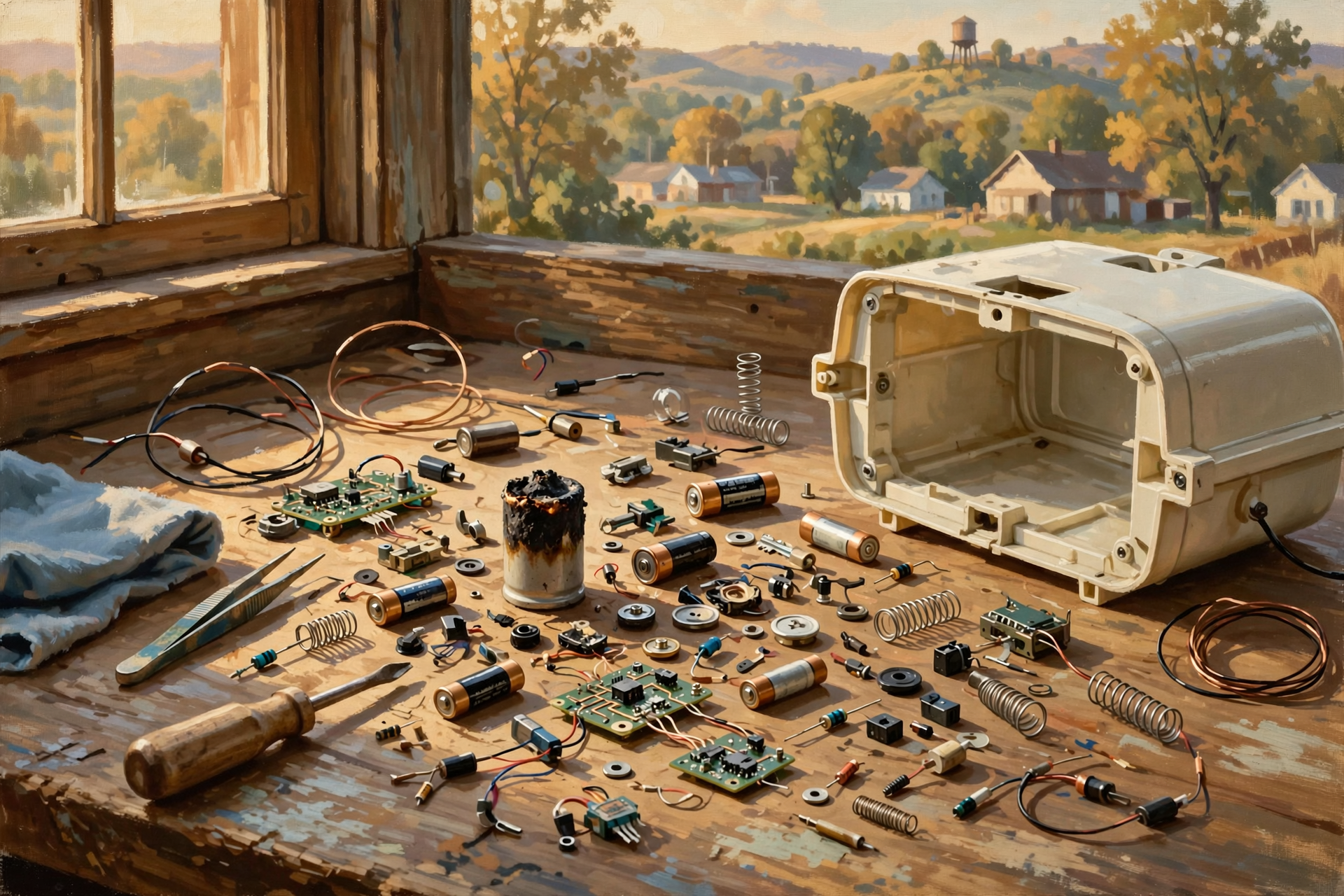
This happens across modern products.
A battery wears out.
A charging port fails.
A sensor dies.
A button breaks.
A display stops working.
A bearing fails.
One component reaches the end of its life while 95 percent of the product remains perfectly usable.
Repairability determines whether that becomes:
a repair
or:
a replacement.
Phones Made This Problem Easy to See
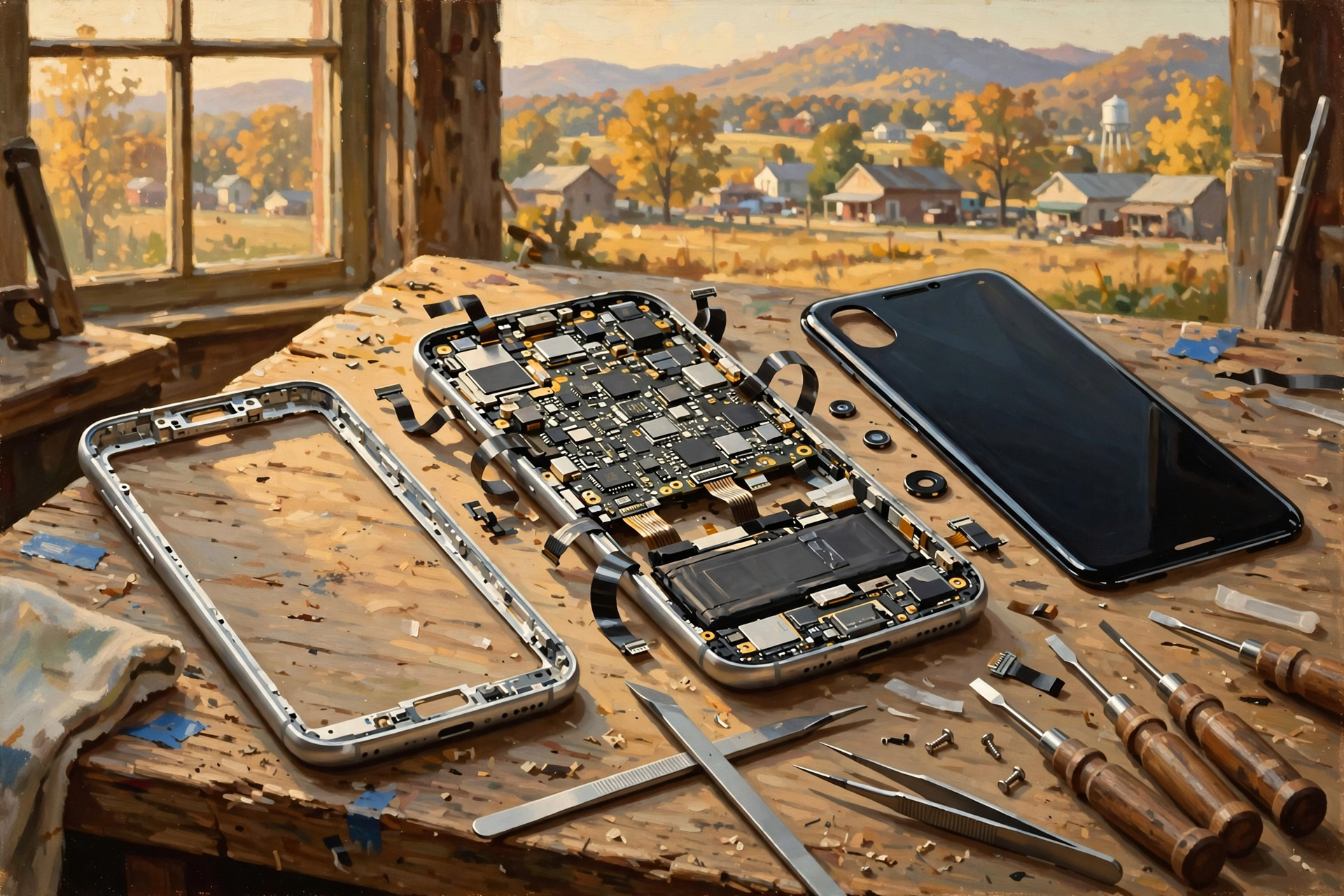
Smartphones are wonderful machines.
They’re also a useful example of repair tradeoffs.
Modern phones are thin, tightly sealed, water-resistant, and packed with components.
Those design choices provide real benefits.
But they can make repair more difficult.
An old mobile phone might let you pop the back off and replace the battery in thirty seconds.
A modern phone may require:
- Special tools
- Adhesive removal
- Careful disassembly
- Replacement seals
- Software procedures
That’s not necessarily evidence of evil intent.
Design involves tradeoffs.
Water resistance, thinness, strength, battery capacity, safety, and repairability can pull in different directions.
The question is whether consumers understand the trade.
The Thinnest Product Isn’t Automatically the Best Product
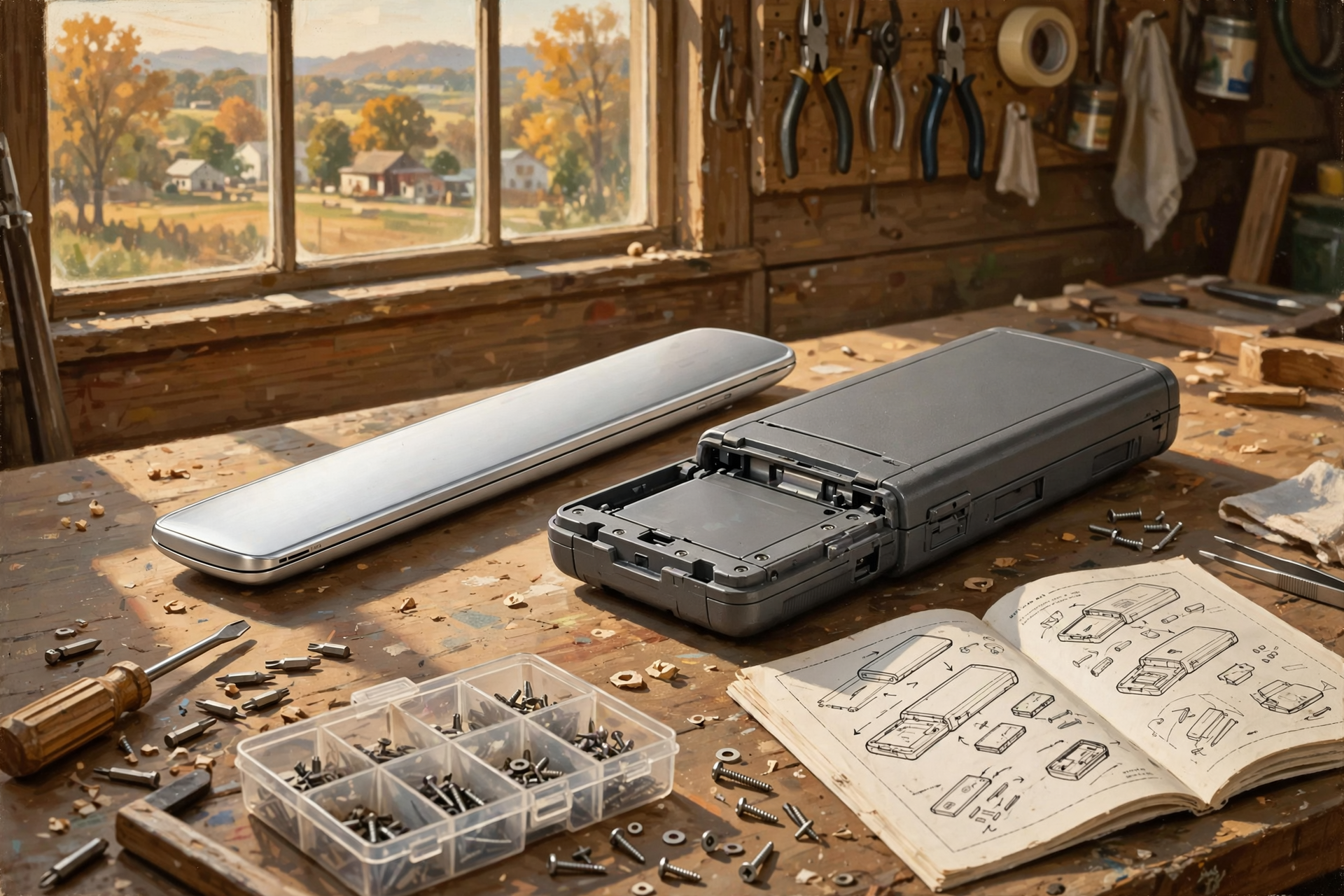
Technology reviews often celebrate:
Thinner.
Lighter.
Sleeker.
Those things are nice.
But there are other qualities worth celebrating too:
- Replaceable batteries
- Accessible storage
- Standard screws
- Available parts
- Clear repair instructions
- Long service life
A product can be beautifully designed and repairable.
Those goals aren’t mutually exclusive.
The Tractor Gets More Complicated
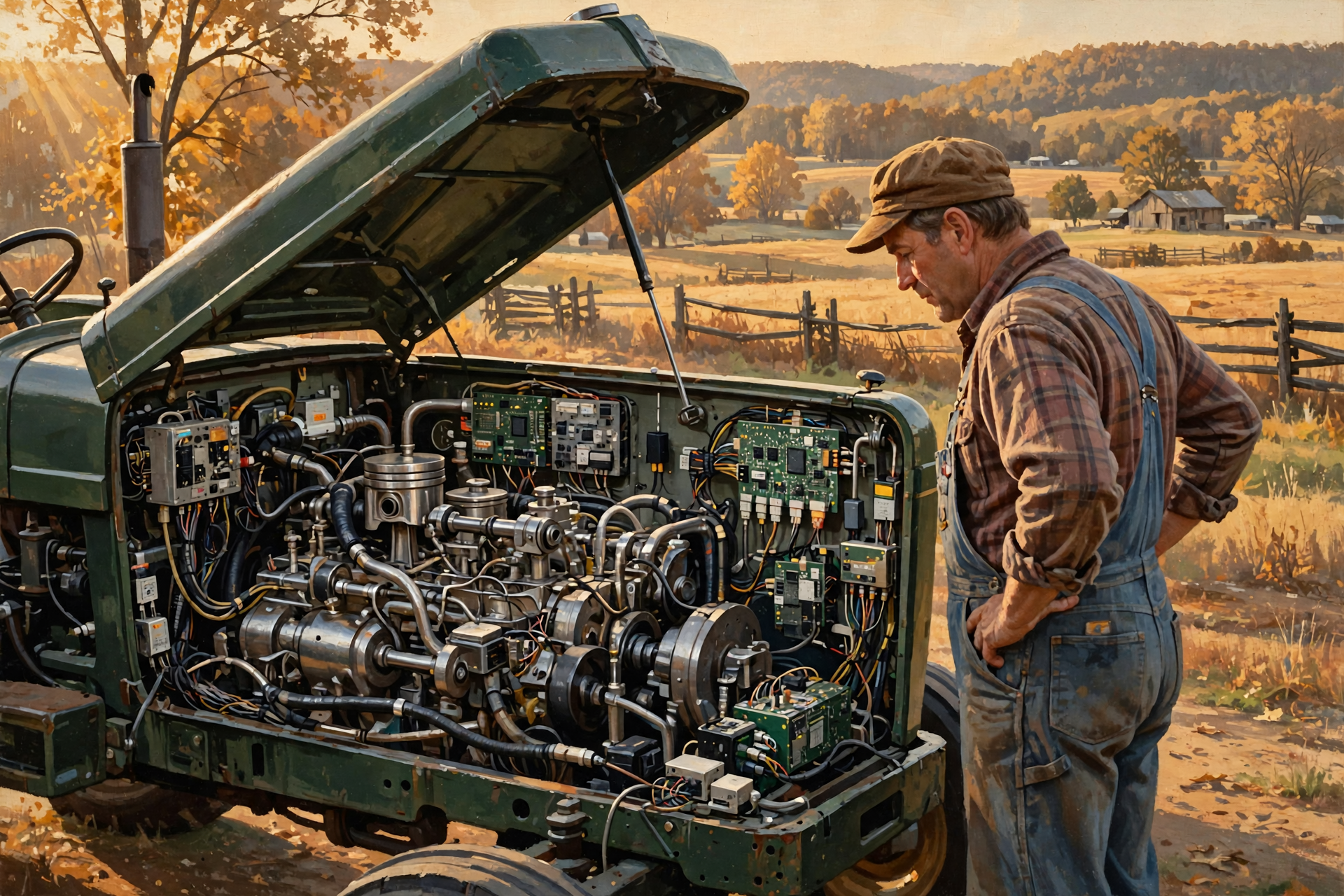
A modern tractor isn’t merely an engine connected to wheels.
It may contain:
- Sensors
- Computers
- Electronic controls
- GPS systems
- Diagnostic systems
- Software
Those technologies can dramatically improve farming.
But when something fails, diagnosing the machine may require more than mechanical knowledge.
This creates tension between:
the owner’s need to keep equipment running
and:
the manufacturer’s need to maintain safety, reliability, intellectual property, and complex software.
The sensible discussion lives somewhere between pretending those concerns don’t exist.
Manufacturers Have Legitimate Concerns Too

Right-to-repair discussions can become unnecessarily tribal.
Let’s avoid that.
Manufacturers may reasonably worry about:
- Safety
- Battery fires
- High-voltage systems
- Cybersecurity
- Warranty responsibility
- Counterfeit parts
- Emissions systems
- Proprietary technology
If somebody improperly repairs a high-voltage battery and burns down a garage, that’s not a theoretical inconvenience.
If software modifications defeat a safety system, that matters.
If a counterfeit replacement part creates a hazard, that matters too.
The right question isn’t:
“Should there be absolutely no restrictions?”
It’s:
“Which restrictions are genuinely necessary, and which unnecessarily prevent legitimate repair?”
Safety and Repairability Can Coexist
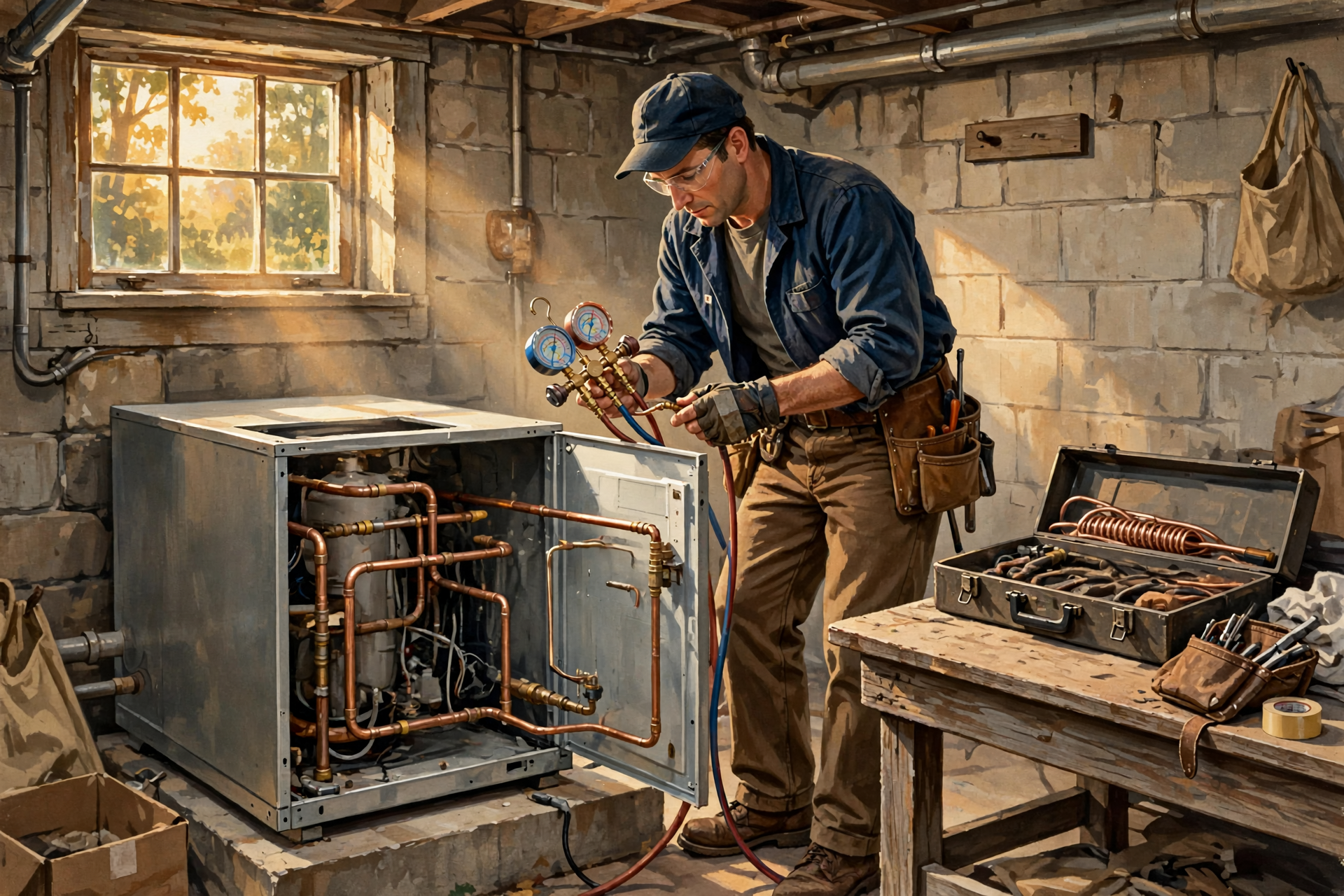
We already understand this in other industries.
Electricians work around dangerous voltage.
Mechanics repair braking systems.
HVAC technicians handle refrigerants and high-voltage equipment.
Professionals use training, documentation, procedures, and appropriate tools.
Danger doesn’t automatically require eliminating independent repair.
It may require competent repair.
Software Can Turn a Physical Repair Into a Permission Problem
This is where the subject becomes particularly relevant to Digital Independence.
Suppose a technician replaces a perfectly good compatible component.
Mechanically, the repair is complete.
But software still needs to:
- Recognize the component
- Calibrate it
- Pair it
- Authorize it
Now the repair depends partly on digital permission.
Sometimes there is an excellent technical reason for that process.
Sometimes it mainly creates dependence.
Consumers should at least understand that this layer exists.
Part Pairing Is Worth Understanding
You may hear the phrase part pairing.
It generally refers to a system where a replacement component must be electronically recognized or matched to a particular device.
There can be legitimate reasons:
- Calibration
- Security
- Safety
- Quality control
But part pairing can also make independent repair harder if only the original manufacturer can complete the required software step.
This is a good example of why modern repair is increasingly both mechanical and digital.
Your Printer Already Taught You This Lesson

Printers deserve a special place in the history of human frustration.
You insert ink.
The cartridge physically fits.
There is ink inside.
The printer pauses thoughtfully.
Then informs you that it has opinions about your purchasing decision.
Printers helped ordinary people discover something important:
physical compatibility does not always equal digital acceptance.
That idea now reaches far beyond printers.
Repair Manuals Are Part of Digital Ownership
Owners used to expect equipment manuals to contain useful technical information.
Modern consumer manuals sometimes seem to consist mostly of:
Do not place product in bathtub.
Do not eat product.
Contact authorized service provider.
Those warnings probably exist because somebody made them necessary.
But repair documentation still has value.
For technicians, access to:
- Wiring diagrams
- Diagnostic procedures
- Error-code explanations
- Parts diagrams
- Calibration instructions
can determine whether equipment is realistically repairable.
Independent Repair Helps Rural Areas More Than Cities
This matters particularly in communities like ours.
In a large city, an authorized service center may be twenty minutes away.
In a rural area, it may be:
An hour.
Two hours.
Or farther.
Shipping a large product can be impractical.
A local technician may be the most reasonable repair option.
Repairability is therefore not merely a convenience issue.
It can be a geography issue.
Small Businesses Feel Downtime Differently

If your home printer breaks, you may be annoyed.
If the shipping printer at a business breaks, orders may stop.
If a warehouse scanner fails, employees may wait.
If production equipment fails, revenue may stop.
For businesses, repairability affects:
- Downtime
- Revenue
- Employee productivity
- Customer service
A machine that can be repaired locally this afternoon may be worth far more than one requiring a two-week manufacturer service process.
Downtime Belongs in the Purchase Price
Suppose Machine A costs $1,000 less.
Machine B can be repaired locally.
Machine A requires factory service.
If Machine A eventually sits idle for a week and costs the business $5,000 in lost productivity, the cheaper machine becomes surprisingly expensive.
Total Cost of Ownership appears again.
That concept is becoming the unofficial mascot of this series.
Repairable Products Can Last Longer
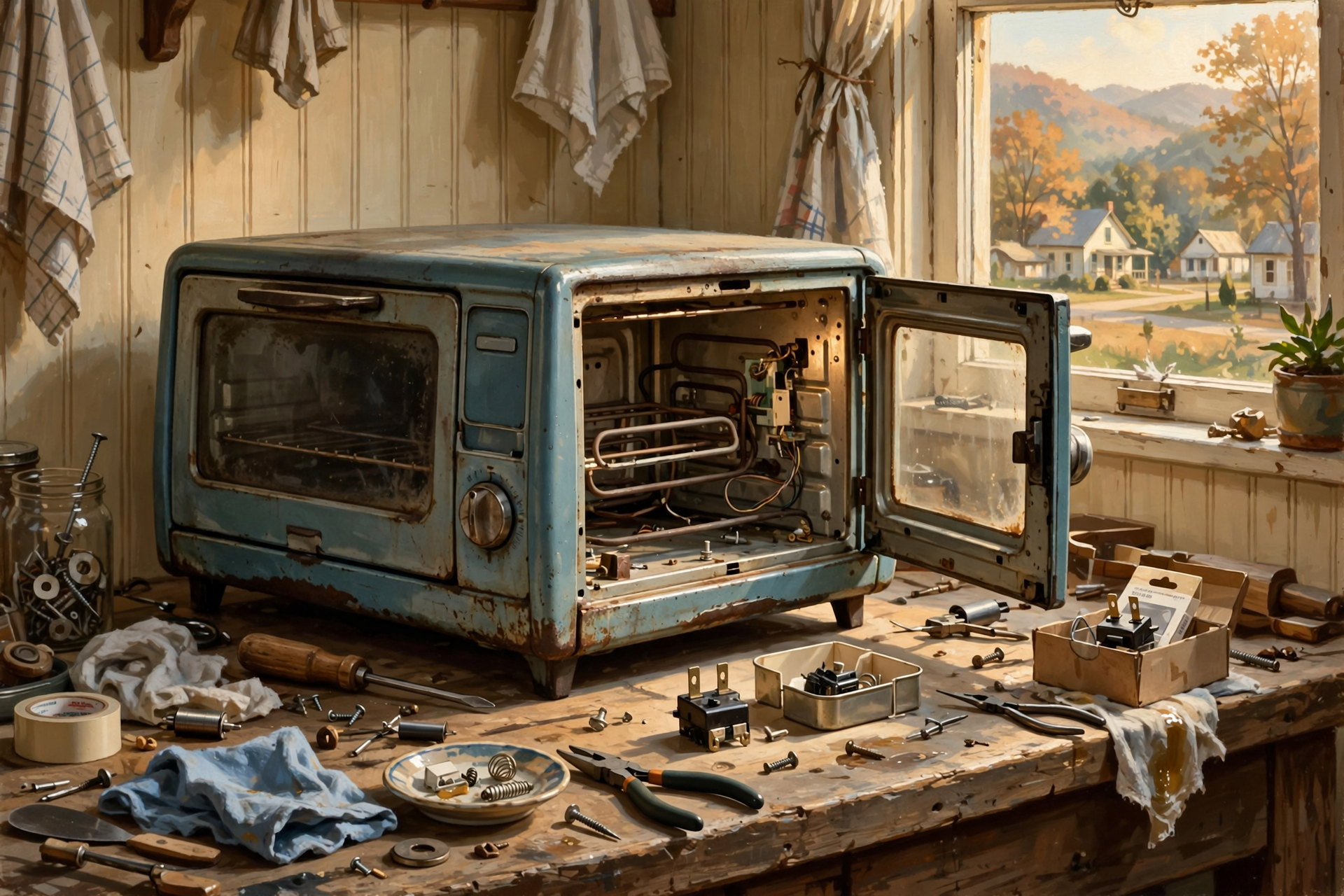
This seems obvious.
If you can replace worn components, the rest of the product can continue serving you.
That’s good for the household budget.
It’s good for businesses.
And it can reduce waste.
You don’t need an environmental ideology to appreciate not throwing away a 70-pound machine because a $30 switch failed.
That’s just common sense.
But Repair Isn’t Always Economical

Let’s be equally realistic.
There comes a point where repairing something no longer makes sense.
An old appliance may:
- Need repeated repairs
- Use substantially more energy
- Lack modern safety features
- Have multiple failing components
A ten-year-old computer may technically be repairable while being too slow for current needs.
Repairability gives you the option to repair.
It does not obligate you to keep rebuilding the same toaster until 2084.
The Best Repair Is Sometimes Replacement

That sounds contradictory.
It isn’t.
If the repair costs 90 percent of replacement and the replacement is meaningfully better, replacement may be rational.
The important thing is that the decision should ideally belong to the owner.
Not to an artificial barrier that made an otherwise sensible repair impossible.
What Should You Ask Before Buying?

For expensive products, add repairability to your shopping questions.
Ask:
- How long is the warranty?
- Are replacement parts available?
- Are batteries replaceable?
- Are local repair shops familiar with the product?
- Does the manufacturer publish useful service information?
- Will common repairs require factory service?
- How long does the manufacturer typically support the product?
You don’t need a perfect answer to every question.
You need enough information to understand the long-term bargain.
Buy for the Second Owner Too

Here’s another way to think about quality.
Will the product still have value after you’re finished with it?
A repairable:
- Vehicle
- Laptop
- Tool
- Appliance
can be sold, donated, handed down, or reused.
A device locked tightly to one owner, one account, or one support system may have much less useful life.
Repairability helps create resale value.
Account Locks Can Affect Used Products Too

Connected devices introduce another complication.
A perfectly good used device may still be tied to the previous owner’s account.
Before buying used connected equipment, confirm:
- It can be reset
- The previous owner can remove it from their account
- You can activate it yourself
- The manufacturer still supports it
A used smart device that cannot be transferred isn’t necessarily a bargain.
Digital Independence Includes the Secondhand Market

A healthy used market gives people more options.
It lets:
- One person recover value from an old product
- Another person buy useful equipment affordably
- Products remain useful longer
Repairability and transferability both help that market work.
Businesses Should Track Critical Spare Parts
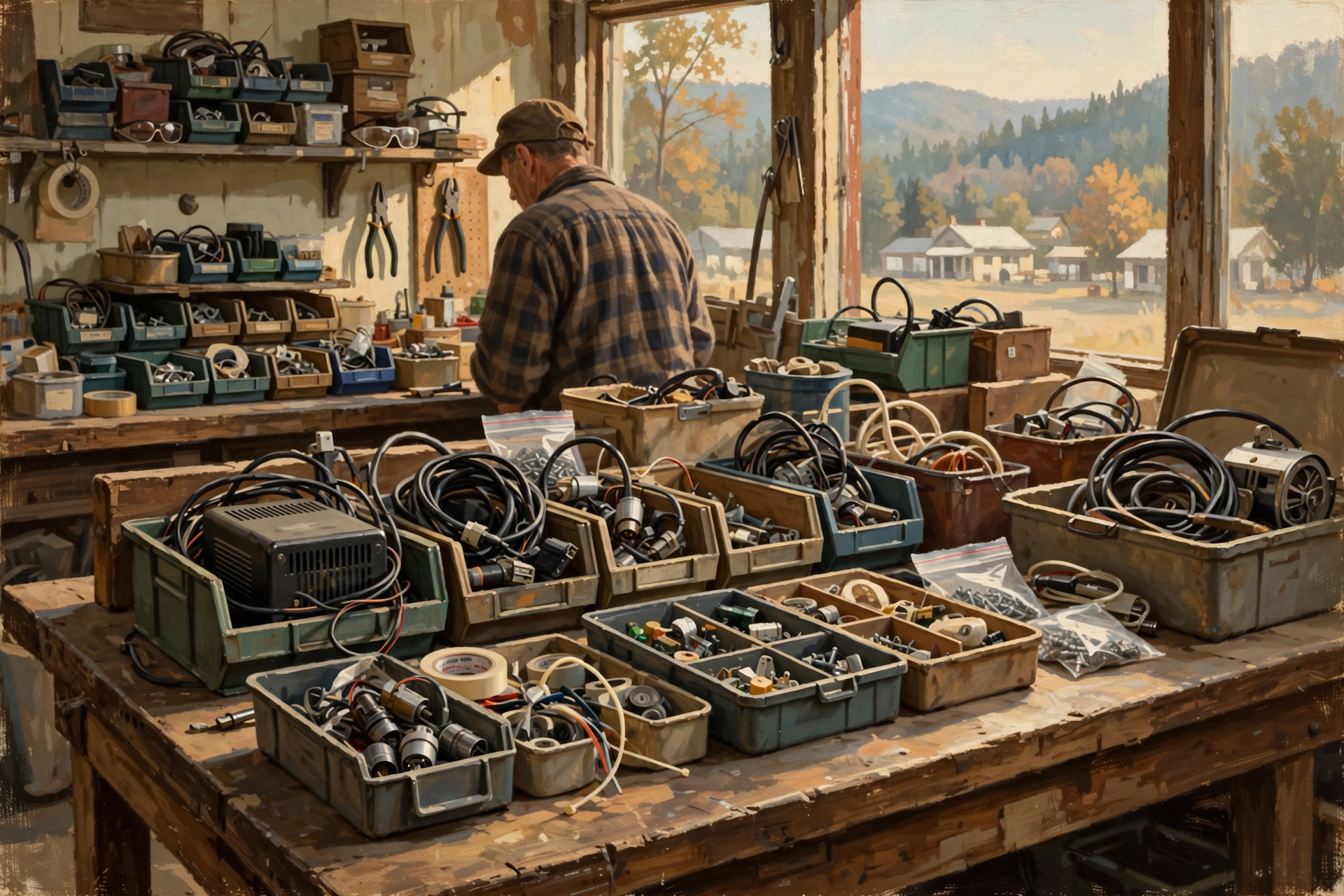
Small businesses can take this lesson beyond consumer repair.
If one inexpensive component can stop production, consider keeping a spare.
Maybe:
- A power supply
- A scanner
- A printer
- A cable
- A sensor
- A drive
You don’t need a warehouse full of emergency equipment.
But knowing your likely failure points can save a business day.
The Two-Hour Part Versus the Two-Week Part
Suppose a $50 component can be:
Purchased locally and installed this afternoon.
Or:
Ordered only from one manufacturer with a two-week lead time.
The price of the component is identical.
The business cost may not be remotely similar.
Availability is part of repairability.
Documentation Should Survive the Employee Who Knows Everything
This parallels an earlier lesson in the series.
If only one employee knows how to reset the machine, calibrate the sensor, or recover the system, you have a dependency.
Write things down.
Keep manuals.
Keep model numbers.
Keep supplier information.
Keep configuration records where appropriate.
A little documentation turns tribal knowledge into business knowledge.
Artificial Intelligence May Make Repair Easier

Here’s an interesting development.
AI can increasingly help people understand:
- Manuals
- Error messages
- Diagnostic information
- Parts diagrams
- Troubleshooting procedures
That could make repair information more accessible to ordinary people and technicians.
Imagine asking:
“Explain this service manual procedure in plain English.”
Or:
“What does this error code mean?”
That’s useful.
But AI cannot create a replacement part that nobody will sell you.
Information helps only when the repair ecosystem allows action.
AI Can Also Be Wrong
This deserves emphasis whenever repair involves safety.
An AI assistant can misunderstand a manual.
It can invent a procedure.
It can confidently recommend something foolish.
For:
- High voltage
- Gas appliances
- Vehicle brakes
- Structural systems
- Refrigerants
- Other dangerous repairs
verified procedures and competent technicians matter.
Use AI to understand.
Don’t confuse explanation with certification.
Sometimes the Best Repair Tool Is a Telephone

Digital independence does not mean performing every repair yourself.
It means being able to choose.
If the furnace stops working in January, your independent choice may be:
Call somebody who knows what they’re doing.
That’s still independence.
You’re selecting expertise rather than being locked into one artificial path.
Wisdom From the Front Porch

You don’t have to know how to fix everything you own.
But owning something ought to include a reasonable chance of finding somebody who can.
That’s the practical heart of right to repair.
Choice.
Not compulsory do-it-yourself repair.
Don’t Turn Repairability Into a Religion

There is a temptation in discussions like this to conclude:
More repairable is always better.
Not necessarily.
Some sealed designs provide:
- Better weather resistance
- Lower weight
- Greater structural strength
- Improved safety
Some proprietary systems provide outstanding reliability.
Some people would gladly trade repairability for convenience.
That’s a legitimate choice.
Digital independence means making that trade knowingly.
The Best Design Balances Competing Goals
Good design has to balance:
- Performance
- Cost
- Safety
- Appearance
- Durability
- Repairability
- Security
- Ease of use
There is rarely one perfect answer.
That’s why thoughtful product design matters.
Plain-English Glossary
Right to Repair
The general principle that owners and independent repair providers should have reasonable access to parts, information, tools, and other resources needed to repair products.
Repairability
How practical it is to diagnose, service, replace components in, and restore a product to useful operation.
Diagnostic Tool
Equipment or software used to identify faults and understand what is wrong with a machine or electronic device.
Service Manual
Technical documentation intended to help trained people diagnose, disassemble, repair, adjust, or maintain a product.
Part Pairing
A process where a replacement component must be electronically recognized, configured, calibrated, or associated with a specific device before it functions normally.
Firmware
Software built into a physical product that helps control how the device operates.
Independent Repair
Repair performed by an owner or service provider that is not directly operated by the original product manufacturer.
Total Cost of Ownership
The full cost of owning something over time, including purchase price, maintenance, repairs, downtime, subscriptions, and replacement.
Downtime
The period during which equipment cannot perform its intended job because it is broken, unavailable, or being repaired.
Transferability
The ability to give or sell a product to another owner who can then use it normally.
The Dunlap.Today Repairability Checklist

- ☐ I have considered repairability before buying an expensive product.
- ☐ I know whether replacement parts are reasonably available.
- ☐ I know whether local technicians can service the product.
- ☐ I understand whether basic repairs require manufacturer-only software or tools.
- ☐ I know whether batteries or other wear components can be replaced.
- ☐ I have considered likely repair costs as part of the purchase price.
- ☐ For business equipment, I have considered the cost of downtime.
- ☐ I know where important manuals and model information are stored.
- ☐ I understand whether a connected device can be transferred to another owner.
- ☐ I have considered how long the manufacturer is likely to support the product.
- ☐ For critical business equipment, I know which inexpensive spare parts might prevent extended downtime.
- ☐ I use appropriate professional help for repairs involving serious safety risks.
- ☐ I do not assume that repairing something is always more economical than replacing it.
- ☐ I understand the tradeoff I am making between convenience, design, safety, and repairability.
Frequently Asked Questions

What does “right to repair” mean?
It generally refers to the ability of product owners and independent repair providers to obtain reasonable access to parts, tools, documentation, diagnostics, and related resources needed to repair products.
Does right to repair mean manufacturers must give away their technology?
Not necessarily. Repair policy involves balancing legitimate interests including intellectual property, security, safety, product design, and owners’ ability to maintain products. Different types of products may require different approaches.
Why are modern products harder to repair?
Some are more difficult because they are smaller, more tightly integrated, sealed for durability, or electronically sophisticated. Repair can also depend on specialized software, diagnostics, calibration, proprietary components, or limited parts availability.
Is a repairable product always better?
No. Repairability is one characteristic among many. A product may reasonably trade some repairability for waterproofing, compactness, safety, performance, or other benefits. The important thing is understanding the tradeoff.
What is part pairing?
Part pairing refers to systems where a replacement part must be electronically recognized, calibrated, configured, or associated with a specific device. The process may serve legitimate technical purposes but can also limit independent repair if access is restricted.
Why should I care about repairability if I never fix things myself?
Repairability affects whether independent technicians can compete for your business, how quickly repairs can be completed, how much they cost, and how long a product can remain useful.
Does repairability matter more in rural areas?
It can. Rural customers may be farther from authorized service centers, making local repair, parts availability, and independent technicians especially valuable.
How should small businesses evaluate repairability?
Include downtime, parts availability, local service options, warranty conditions, expected product life, replacement lead times, and repair costs when comparing equipment.
Can AI help with repairs?
AI can help explain manuals, summarize troubleshooting information, interpret terminology, and organize diagnostic steps. Its answers should be verified, particularly for repairs involving electricity, gas, vehicles, structural safety, or other hazards.
What’s the simplest repairability question to ask before buying something?
Ask: “If one ordinary part breaks three years from now, do I have a realistic path to getting this thing working again?”
Repairability Is Really About Keeping Useful Things Useful
There’s something deeply practical about repair.
Not nostalgic.
Not ideological.
Practical.
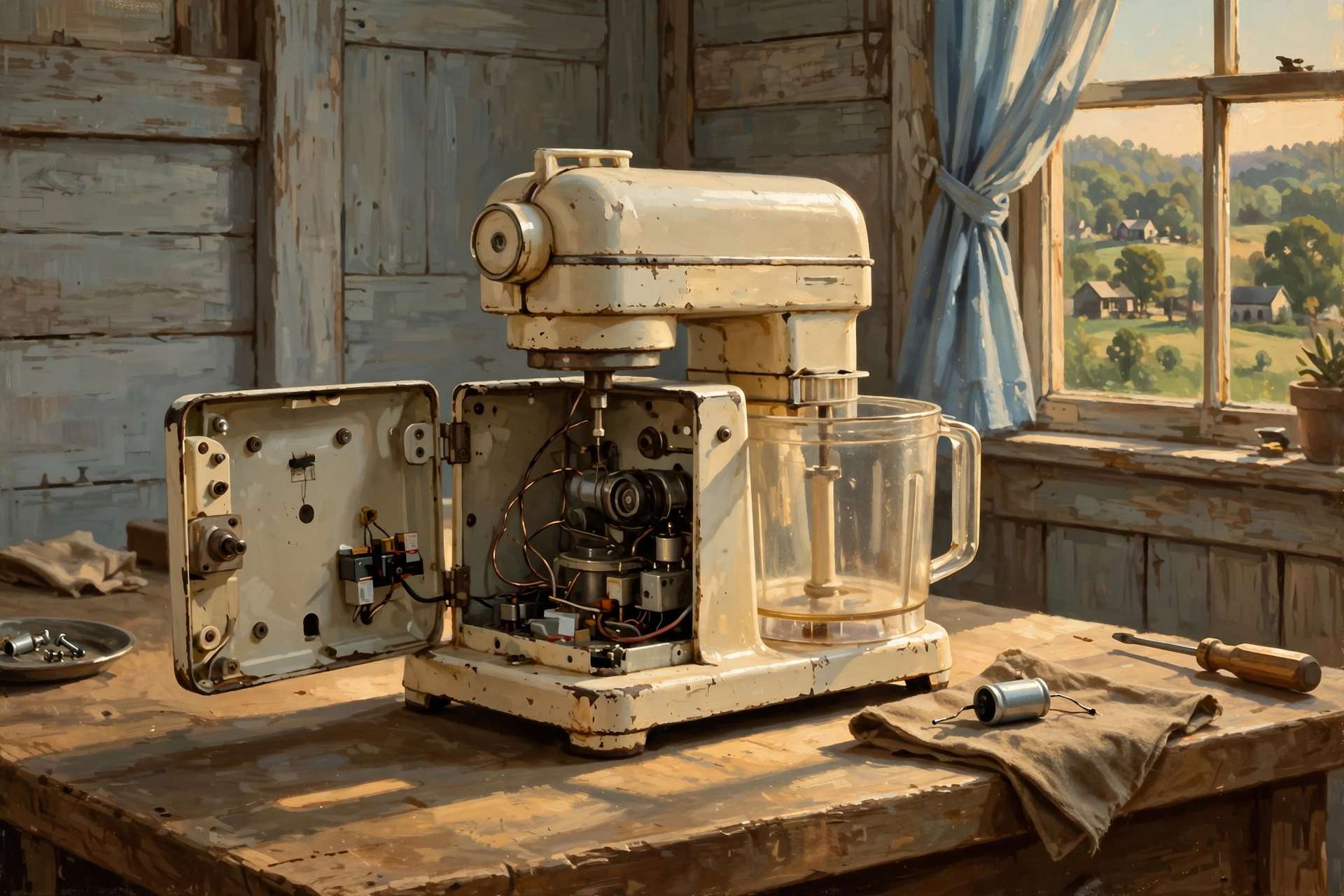
If the rest of a machine still has useful life, repairing one failed component can preserve that value.
Sometimes the repair will make sense.
Sometimes replacement will be smarter.
But ideally, the owner gets to make that decision based on:
- Cost
- Safety
- Convenience
- Remaining life
- Available options
Not because an otherwise repairable product has been designed with no realistic path back to service.
The Bottom Line
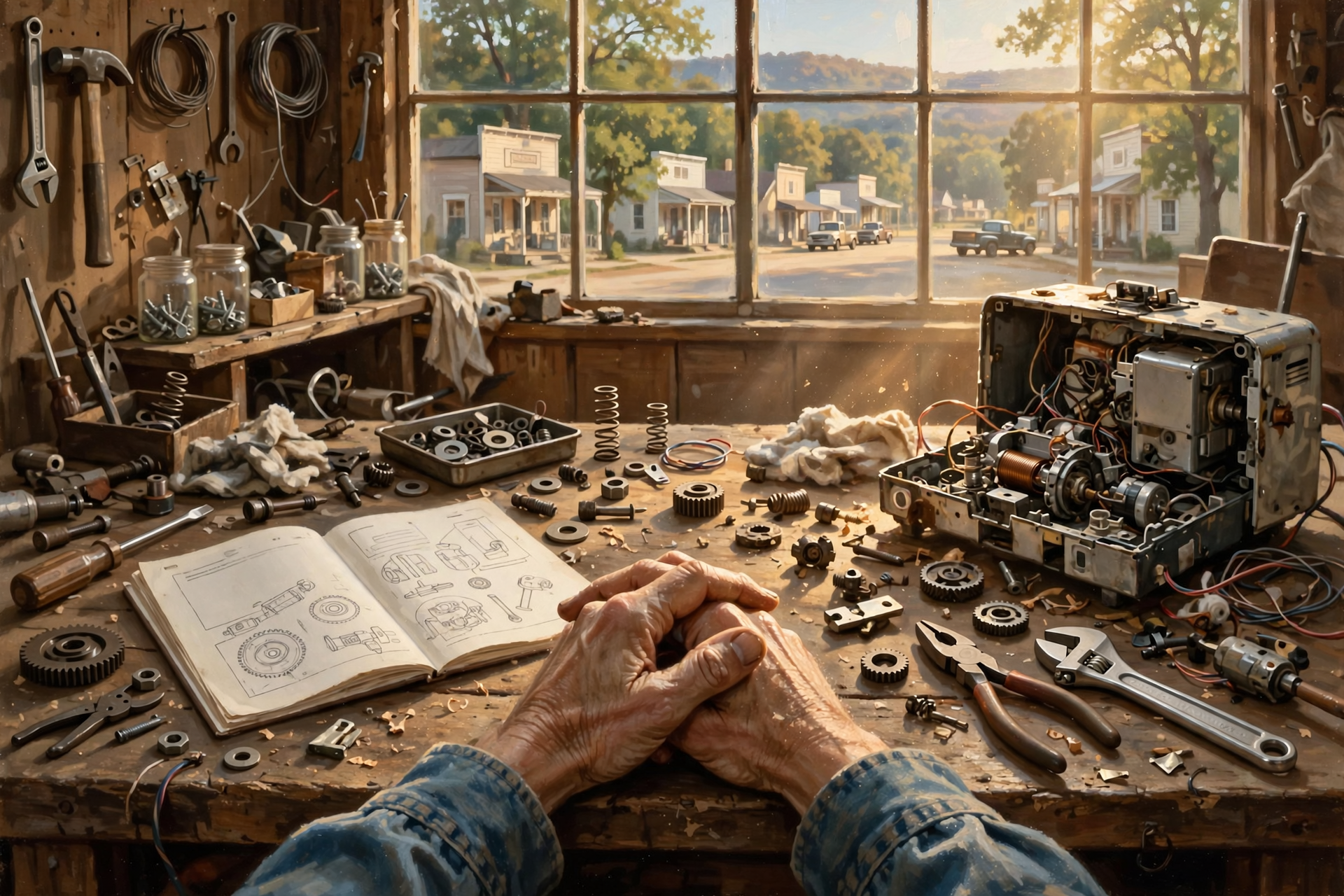
Our machines have gotten smarter.
That’s mostly a good thing.
Cars are safer.
Phones are more capable.
Appliances are more efficient.
Farm equipment is more precise.
Business equipment can diagnose itself.
But intelligence has added a new layer to ownership.
Repair may now depend on:
Mechanical parts.
Electronics.
Software.
Documentation.
Diagnostics.
Sometimes permission.
Digital independence doesn’t mean demanding that every product be designed like a 1952 tractor.
It means preserving reasonable choices.
Can you repair it?
Can somebody local repair it?
Can you obtain the part?
Can you access the information?
Can you decide when replacement makes more sense than repair?
If yes, ownership still means quite a lot.
If every answer requires one company to say yes first, then perhaps ownership has become something a little different.
You don’t have to fix everything yourself.
But it is mighty useful to own something that can still be fixed.




0 Comments