
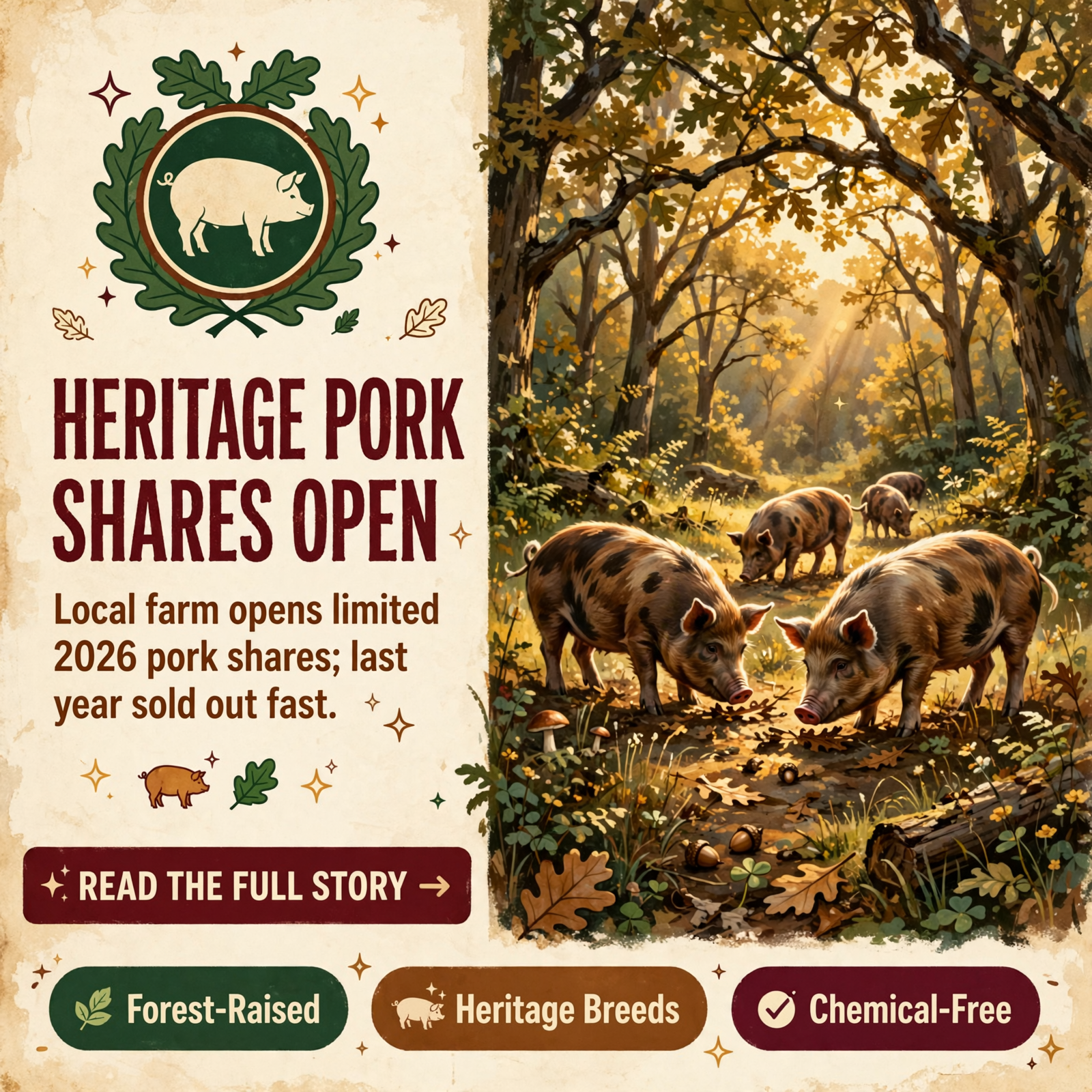
🐷 Heritage Pork Shares Now Open for 2026 – Forest-Raised Berkshire and Red Wattle Pigs
For families and households across the region looking to source high-quality pork raised without vaccines or pharmaceuticals, a local farm is opening its 2026 pork share program – and based on last year’s rapid sellout, timing matters. Switchgrass Farm is accepting deposits now for half and whole pig shares, with limited availability each year.
📍 What’s Available and How It Works
Switchgrass Farm raises Berkshire and Red Wattle heritage pigs outdoors in the woods, rotating them through forest paddocks where they forage under oak and hickory trees. The animals are supplemented with non-GMO grain sourced from a local Mennonite mill, plus seasonal garden extras like apples, pumpkins, and squash. The farm operates without vaccines or pharmaceuticals – a deliberate choice that appeals to customers seeking transparency in their food sources. 🌳
Pork shares are priced at $5 per pound of hanging weight. A half pig requires a $100 deposit; a whole pig requires a $200 deposit. Customers can reserve their share and submit deposits through the farm’s website, which also provides estimated weights, processing details, and other logistics.
⭐ Why This Matters
For residents in the region, access to locally raised, heritage-breed pork with known farming practices represents both a food security choice and a way to support regional agriculture. The farm’s emphasis on outdoor, forest-based raising and non-GMO supplementation appeals to households prioritizing animal welfare and chemical-free meat. The rapid sellout last year suggests strong local demand – and limited supply. 🥩
Heritage breeds like Berkshire and Red Wattle pigs are prized by home cooks and families for flavor and meat quality, but they require more time and space to raise than conventional breeds. Farms that commit to this slower, more labor-intensive approach often become trusted sources within their communities.
💡 What Residents Should Know
Because shares sold out quickly in 2025, interested customers should act soon. Deposits can be placed through switchgrassfarm.com, where detailed information about pig raising practices, share contents, processing, and expected weights is available. The farm welcomes questions and offers to walk customers through the ordering process. 📋
Once shares are spoken for, the farm does not take additional orders until the following year – so availability is genuinely limited and first-come matters.
🤝 Community Connections
This farm-to-table model reflects a broader regional trend toward direct relationships between producers and consumers. Families who participate in pork shares often become repeat customers, building ongoing connections with the farm and understanding the seasonal rhythms of livestock raising. The farm’s use of grain from a local Mennonite mill also strengthens ties within the regional food network. 🌾
❓ Questions Worth Considering
- How does sourcing meat directly from a local farm change your understanding of where food comes from?
- What role might heritage-breed livestock play in regional food resilience and agricultural diversity?
- How do transparent farming practices – like outdoor raising and no pharmaceuticals – influence your food choices?
- What opportunities exist for families to connect with other local producers using similar methods?
🔄 What Happens Next
Customers interested in a 2026 pork share should visit switchgrassfarm.com to review details, reserve their half or whole pig, and submit their deposit. The farm will continue accepting orders until shares are fully spoken for. Processing and delivery timelines will be communicated to customers as part of the ordering process. 📅
🌱 Long-Term Community Impact
Farms like this one contribute to regional food independence and support a model of agriculture that prioritizes animal welfare, environmental stewardship, and direct consumer relationships. As more households participate in pork shares and similar programs, local farms gain the stability to continue operating, invest in their land, and maintain heritage breeds that might otherwise disappear. Over time, this strengthens the region’s agricultural identity and resilience. ✨

0 Comments