
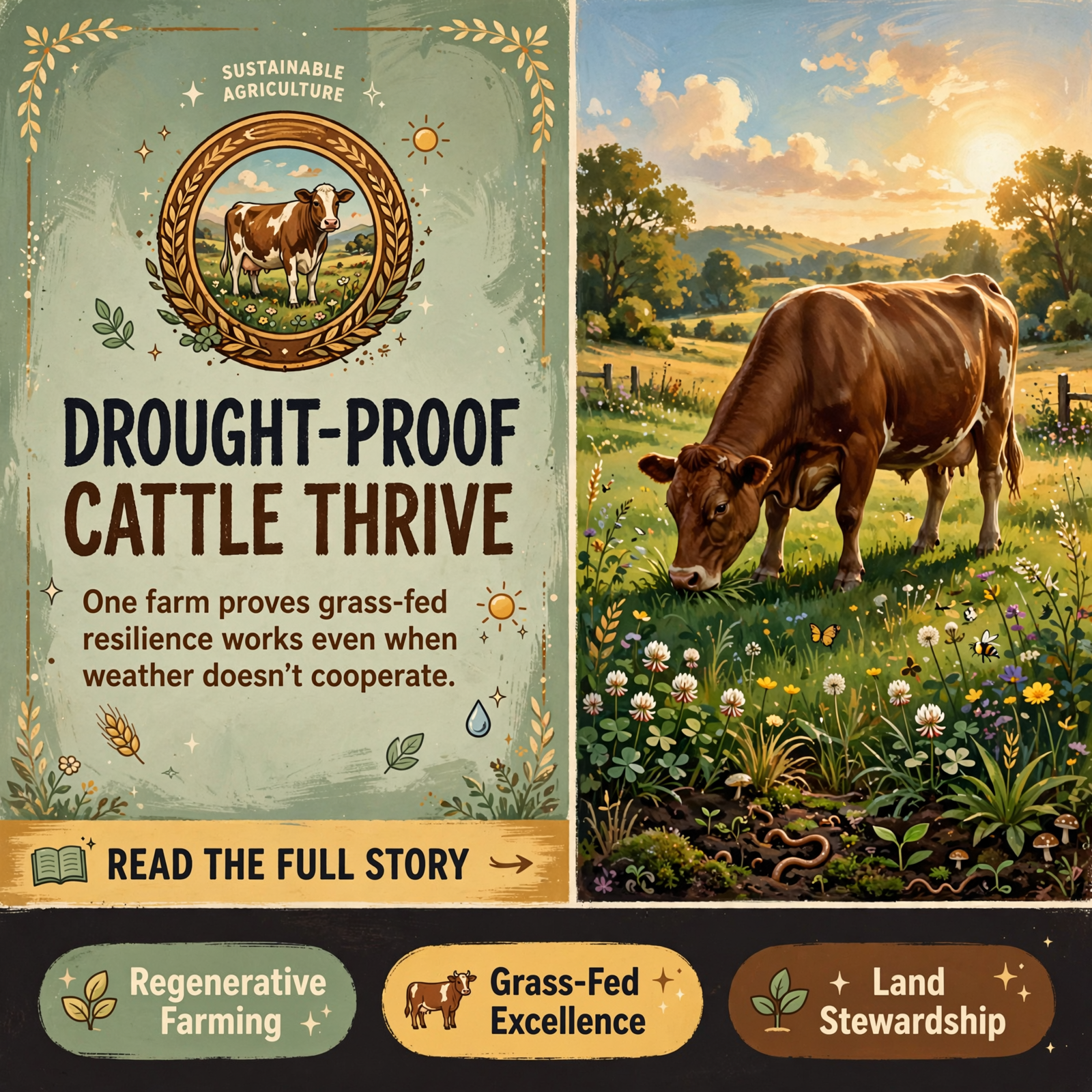
🐄 Grass-Fed Resilience: How One Local Farm’s Herd Thrives Through Drought
Wild Bergamot Farm in Dunlap is sharing a quiet victory about its South Pole cattle herd-a testament to regenerative farming practices and the farm’s commitment to sustainable, nutrient-dense food production even when weather conditions challenge the land.
📍 The Story Behind the Update
Wild Bergamot Farm recently posted an update about Mabel, a South Pole cow in their herd, highlighting an achievement that speaks volumes about the farm’s approach to animal husbandry. Despite having given birth to a calf less than a year ago, Mabel is thriving on grass alone-and doing so through a period of drought that typically stresses both livestock and pasture systems. The farm’s tongue-in-cheek observation that Mabel “looks pregnant” again is actually a marker of excellent health and nutrition, not neglect. 🌾
South Pole cattle are a heritage breed known for their hardiness, foraging ability, and meat quality. By maintaining this herd on grass-only feed through challenging conditions, Wild Bergamot Farm is demonstrating that regenerative agriculture-farming that works with natural systems rather than against them-can produce healthy animals and high-quality food even when conventional operations might struggle.
💡 Why This Matters Locally
For readers in the Sequatchie Valley and surrounding communities, this update reflects a broader shift in how some local farms approach food production. Drought is a real challenge for agriculture across Tennessee and the Southeast. Many operations respond by supplementing feed, increasing input costs, or reducing herd size. Wild Bergamot Farm’s success with grass-only cattle during dry conditions suggests an alternative model-one that may be more resilient, more sustainable, and ultimately more valuable to families seeking locally raised, nutrient-dense meat.
This also matters because it signals confidence in the farm’s operation. Farmers don’t typically highlight their herds unless they’re proud of the results. The casual, good-natured tone of the post-complete with emoji and hashtags-suggests a farm comfortable sharing its practices and inviting community attention to how it works. That transparency builds trust and helps local food consumers understand where their meat comes from and how it’s raised. 🤝
❤️ What This Reveals About Regenerative Farming
Regenerative agriculture is more than a buzzword-it’s a set of practices designed to improve soil health, increase biodiversity, and build resilience into farming systems. When a cow like Mabel can maintain excellent body condition on pasture alone, even through drought, it suggests the farm’s land management is working. Healthy pastures hold moisture better, support diverse plant species, and provide better nutrition to grazing animals. The farm’s success with Mabel is evidence that these practices are paying off in real, measurable ways.
For families in the region looking for grass-fed beef or other regeneratively raised meats, this kind of transparency matters. It’s the difference between buying meat from a farm you know is managing its land thoughtfully and buying from an operation where practices are unclear. 🌱
🗓️ What Residents Should Know
Wild Bergamot Farm is located at 330 Wild Bergamot Rd., Dunlap, Tennessee 37327. The farm focuses on sustainably raised meats and holistic agriculture. Residents interested in learning more about the farm’s practices, purchasing grass-fed beef, or supporting regenerative agriculture in the region can reach out directly at (512) 745-9525 or visit their website at wildbergamotfarm.com. The farm also maintains an active social media presence where they share updates about their herds and operations.
🌄 Community Connections and Opportunities
Wild Bergamot Farm’s work connects to a growing network of local and regional farms, food-conscious families, and community members interested in sustainable agriculture. For those in Dunlap and nearby areas who prioritize knowing their food sources, supporting local agriculture, or learning about regenerative farming practices, the farm represents an accessible local resource. The farm’s willingness to share details about its herd management-including challenges like drought-creates opportunities for community members to ask questions, visit, or build relationships with farmers who are experimenting with sustainable methods.
This also connects to broader conversations happening in rural Tennessee communities about food security, land stewardship, and the economics of farming. When a local farm succeeds with practices that are both environmentally sound and economically viable, it strengthens the case for similar approaches across the region. 🌾
💭 Questions Worth Considering
- How does knowing the specific practices behind the meat you buy-like grass-only feeding through drought-change your perspective on local food sources?
- What role might regenerative farms play in building food resilience across the Sequatchie Valley and surrounding communities?
- How can local residents support farms that are experimenting with sustainable practices, even if their products cost more than conventional alternatives?
- What would it take for regenerative agriculture to become the norm rather than the exception in rural Tennessee?
🔗 Community Threads: The Farm-to-Table Relationship
The Farmer-Consumer Connection: Wild Bergamot Farm’s social media updates create a direct line between the people who raise the animals and the families who eat them. This transparency builds trust and helps consumers understand the real work-and real challenges-behind sustainable food production. When a farm shares a photo of a healthy cow thriving through drought, it’s not just marketing; it’s an invitation to understand farming as a relationship, not just a transaction.
Land Stewardship and Community Resilience: Regenerative farms like Wild Bergamot are part of a larger community conversation about how we use land and resources. When local farms succeed with practices that improve soil, support wildlife, and build resilience, they strengthen the entire region’s capacity to adapt to challenges like drought, climate variability, and economic shifts. Supporting these farms is, in a sense, supporting the long-term health of the community itself.
📈 What Happens Next
Wild Bergamot Farm will continue managing its herds through seasonal changes and ongoing weather challenges. The farm’s success with Mabel and its South Pole cattle may inspire other local farmers to explore similar practices, or it may simply reinforce the farm’s reputation as a reliable source for high-quality, sustainably raised meat. For residents interested in supporting the farm, the next step is straightforward: reach out, ask questions, and consider whether grass-fed, regeneratively raised meat aligns with your family’s values and food priorities.
The broader story-of how local farms adapt to challenges and build resilience-will continue to unfold across the region. Updates like this one from Wild Bergamot Farm help readers understand that sustainable agriculture isn’t theoretical; it’s happening in local communities right now, with real animals, real farmers, and real results. 🌟

0 Comments