
🚰 French Drain Installation Raises Questions About Contractor Standards and Warranty Coverage
When a recently installed drainage system fails to perform as expected, it raises important questions about contractor accountability and what homeowners should expect from their investment. A local resident’s experience with a French drain installation that isn’t functioning properly is prompting community members to think carefully about contractor selection and warranty terms.
📍 What Happened
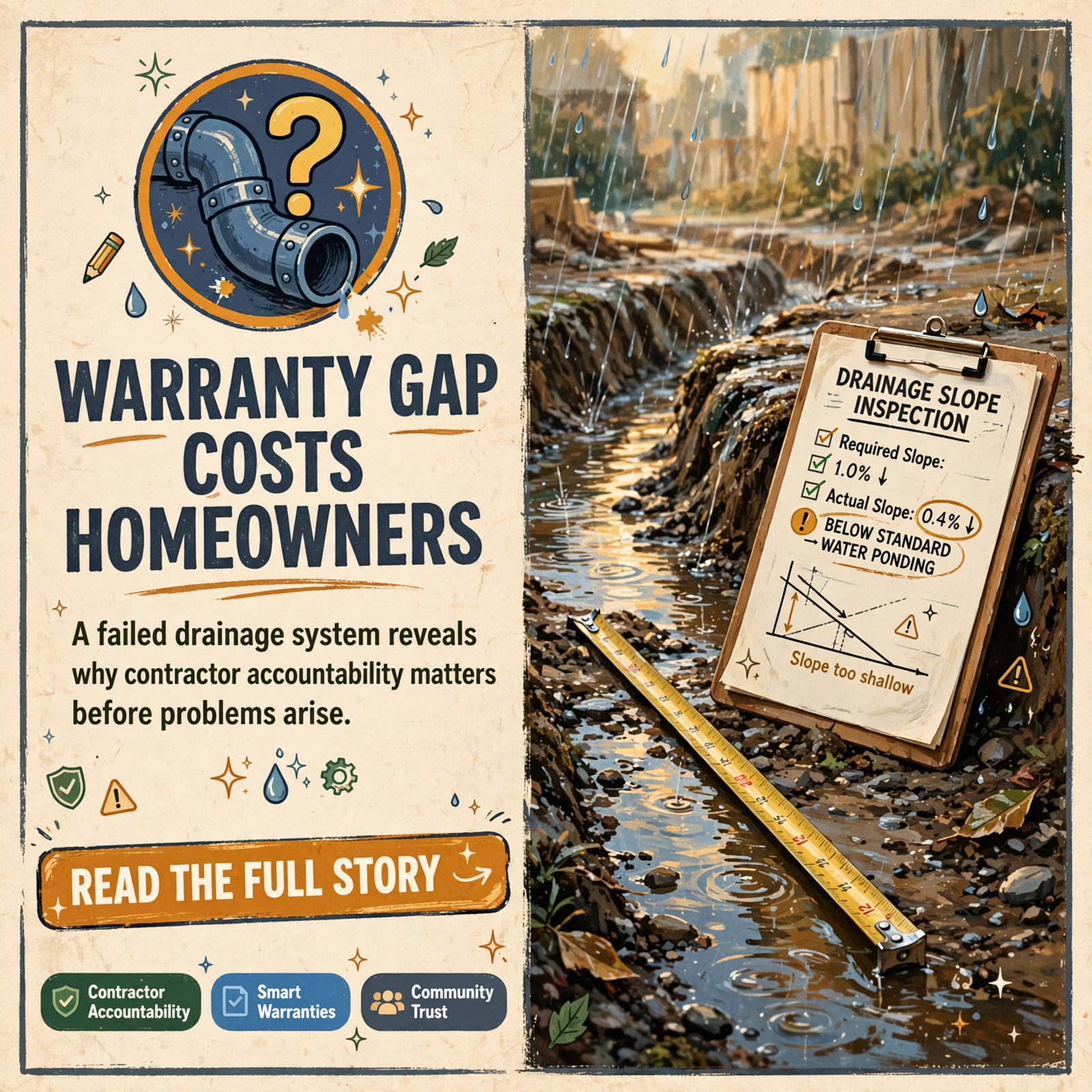
A homeowner in the area had a French drain installed two weeks ago, expecting it to manage water drainage during heavy rain. After recent rainfall, the system’s performance fell short of expectations: water is collecting in the gravity drain section rather than flowing downhill as designed. The issue appears to stem from inadequate slope in the drain line-a fundamental design element that determines whether water will flow or pool. 🌧️
The homeowner discovered that the warranty provided covers only “workmanship,” which may not address design or installation planning issues. This distinction matters significantly: a warranty focused narrowly on workmanship may not cover problems related to how the system was designed or where it was positioned on the property.
💡 Why This Matters
French drains are a common solution for managing water around homes, particularly in areas prone to heavy rainfall or poor drainage. When they don’t work as intended, the consequences can be costly-water damage, foundation problems, and the need for additional repairs. For homeowners, understanding what their warranty actually covers before problems arise is essential. 💰
This situation also highlights a broader community concern: how do residents know whether a contractor has done the job correctly, and what recourse do they have if the system underperforms? The gap between what a warranty promises and what a homeowner actually needs can be significant.
❤️ Human Impact
The homeowner is now facing a difficult choice: accept a drainage system that doesn’t work, invest additional money to fix it, or pursue a dispute with the original contractor. This situation is stressful and costly, and it’s not uncommon. Many property owners in the region deal with drainage challenges, especially during seasonal heavy rains, and rely on contractors to solve them correctly the first time.
The homeowner’s request for recommendations from others who have had positive experiences with contractors reflects a practical reality: word-of-mouth referrals from trusted neighbors often feel more reliable than other ways of finding help. Community members who have worked successfully with contractors become valuable resources for others facing similar problems.
🔧 Local Perspective
Drainage and water management are ongoing concerns for property owners throughout the region. The terrain, seasonal rainfall patterns, and soil conditions mean that many homes and properties require thoughtful drainage solutions. When those solutions don’t work as promised, it affects not just one homeowner but the community’s confidence in local contractors and the quality of work available.
This situation also reflects a common tension in home improvement and construction: the difference between what a warranty covers and what a homeowner reasonably expects. Clear communication about scope, design, and warranty terms before work begins can prevent misunderstandings and disappointment later.
🤝 Community Connections
The homeowner’s question in a community group demonstrates how neighbors turn to each other for trustworthy recommendations. Local residents who have had positive experiences with contractors-whether for drainage work, plumbing, electrical, or other home and construction needs-become informal advisors to others facing similar challenges. These recommendations carry weight because they come from people with direct experience and no financial incentive to mislead.
Community groups and local networks serve an important function: they help residents navigate decisions about which contractors to hire, what to expect, and how to protect themselves. When someone shares a positive experience, they’re not just recommending a business-they’re strengthening community trust and helping neighbors avoid costly mistakes.
📋 What Residents Should Know
If you’re considering a French drain or similar drainage system, several details matter before you sign a contract:
- Understand the warranty: Ask specifically what the warranty covers-workmanship only, materials, design, or performance? Get it in writing.
- Verify the design: Ask the contractor to explain how the drain will slope and where water will flow. If you don’t understand the explanation, ask again or seek a second opinion.
- Get references: Ask for contact information from previous customers, particularly those with similar drainage challenges on their property.
- Site inspection: After installation, observe the system during or after rain to confirm it’s working as promised. Don’t wait weeks to discover a problem.
- Ask about fixes: If the system underperforms, clarify upfront what the contractor will do to correct it and whether that’s covered under warranty.
🔄 What Happens Next
The homeowner is seeking recommendations for an honest contractor who can add a downhill extension to the existing drain-essentially fixing the design flaw in the original installation. This next step will likely involve getting quotes from multiple contractors, reviewing their experience with similar repairs, and understanding what warranty or guarantee they’ll provide for the additional work.
The outcome of this situation-whether the original contractor addresses the problem, whether a second contractor can fix it affordably, and whether the homeowner recovers their investment-will likely influence how others in the community view both contractors and the importance of careful contractor selection.
❓ Questions Worth Considering
- How can homeowners better evaluate a contractor’s design and planning before work begins, not just after?
- What should a reasonable warranty cover for drainage systems, and how does that differ from what most contractors currently offer?
- Why is word-of-mouth recommendation still the most trusted way to find contractors, and what would make homeowners feel more confident in other methods?
- When a system doesn’t work as promised, who bears the cost of fixing it-and how can that be clarified before problems arise?
🏘️ Long-Term Community Impact
Situations like this one shape how residents think about contractor accountability and quality standards in the area. When homeowners share their experiences-both positive and negative-they’re creating an informal quality-control system that influences which contractors thrive and which ones lose business. Over time, this feedback loop can raise or lower the overall standard of work available locally.
Community awareness of warranty terms, design standards, and contractor accountability also encourages property owners to ask better questions before hiring and to document their expectations in writing. This protects both homeowners and honest contractors, who benefit from clear agreements and satisfied customers.
🔗 Community Threads: Trust and Accountability in Local Services
The Recommendation Network: When a homeowner asks neighbors for contractor recommendations, they’re tapping into an invisible network of trust built on direct experience. This network is powerful because it’s based on real outcomes, not marketing. Residents who have had positive experiences become advocates, and those experiences shape which contractors get hired and which ones fade away. This informal accountability system is often more effective than formal reviews or licensing alone.
The Warranty Gap: There’s a disconnect between what homeowners expect a warranty to cover and what contractors actually promise. A warranty focused on “workmanship” protects the contractor from liability for poor execution but may not address design flaws or performance issues. Understanding this gap-and negotiating clearer terms before work begins-is essential for protecting both parties and preventing disputes later.
The Drainage Challenge: Water management is a persistent concern for property owners throughout the region, and it connects homeowners to contractors, to community knowledge, and to shared seasonal experiences. When drainage systems work well, they’re invisible and forgotten. When they fail, they become urgent and costly. This creates a strong incentive for residents to share what they’ve learned and to help others avoid expensive mistakes.



0 Comments