
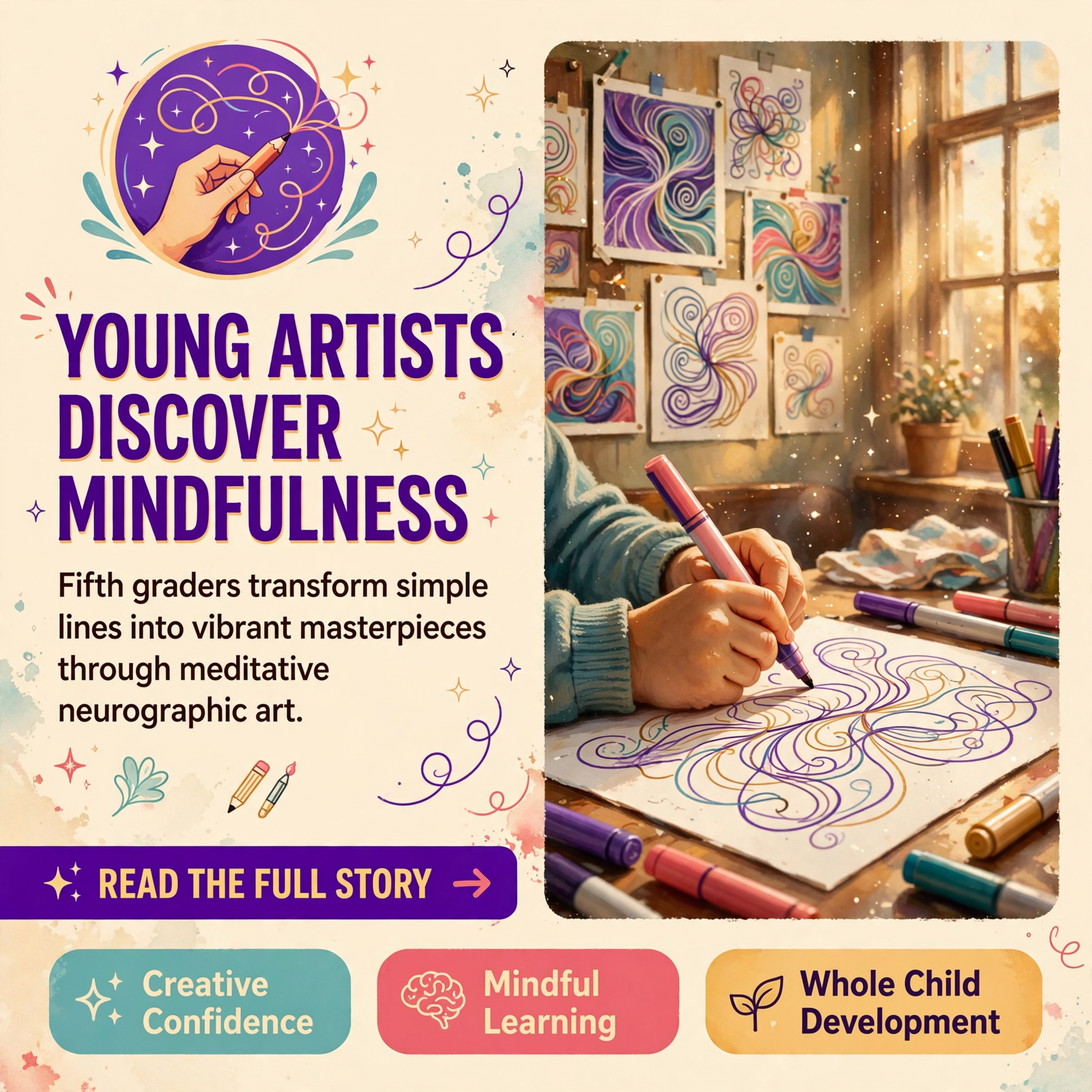
🎨 Fifth Graders at Cecil B. Rigsby Elementary Create Colorful Neurographic Art Masterpieces
Students in Pikeville are exploring the intersection of creativity and mindfulness through a hands-on art project that transforms simple lines and shapes into vibrant, personalized expressions. The neurographic art activity demonstrates how elementary schools in the region continue to blend traditional creative learning with contemporary artistic techniques.
🧠 What Neurographic Art Teaches Young Artists
Neurographic art is a meditative drawing technique that begins with spontaneous lines and evolves through layers of shapes and color. Fifth graders at Cecil B. Rigsby Elementary School recently completed this project, creating one-of-a-kind masterpieces that reflect both their individual creativity and focus. The process encourages students to slow down, observe patterns, and make intentional artistic choices-skills that extend far beyond the art classroom. 🖍️
💡 Why This Matters for Young Learners
Art projects like neurographic drawing offer students more than visual expression. They build confidence, develop fine motor skills, and provide a structured outlet for creative thinking. For elementary-age children, hands-on art experiences help develop problem-solving abilities, emotional regulation, and a sense of accomplishment. When students see their unique creations displayed or celebrated, they internalize the value of their own ideas-a foundation for lifelong learning and self-expression.
❤️ Community Connections in Elementary Education
Cecil B. Rigsby Elementary School serves PreK-5 students in Pikeville as part of Bledsoe County Schools, making it a central hub for early childhood learning in the area. Projects like this reflect the school’s commitment to offering well-rounded education that includes arts alongside core academics. Families in Pikeville and surrounding communities benefit when schools invest in creative programming-it signals that the school values the whole child, not just test scores.
🎯 What This Reveals About Local Schools
The neurographic art project is a small but meaningful indicator of how local educators are thinking about student engagement. Rather than limiting art to occasional activities, integrating creative techniques into regular instruction shows that Cecil B. Rigsby Elementary recognizes the role of creativity in child development. This approach aligns with broader educational research showing that arts integration strengthens academic performance and student well-being.
🌟 Questions for the Community
- How do creative projects like neurographic art influence your own child’s confidence and self-expression at school?
- What role do you think hands-on, meditative activities should play in elementary education?
- Are there other creative or wellness-focused programs you’d like to see expanded in local schools?
- How can families support and celebrate the artistic work their children bring home from school?
📍 How to Learn More
Families interested in Cecil B. Rigsby Elementary School can reach out directly at (423) 447-2891 or visit the school’s website for information about programs, enrollment, and upcoming events. The school is located at 8231 New Harmony Rd, Pikeville, Tennessee 37367.
🔄 What Happens Next
As the school year progresses, watch for additional creative projects and student showcases from Cecil B. Rigsby Elementary. Art displays, performances, and student-led presentations are often opportunities for families and community members to celebrate student work and connect with the school community. Following the school’s social media channels can help families stay informed about upcoming events and learning highlights.
🧵 Community Threads: The Role of Creative Expression in Childhood Development
The School-Family Connection: When schools share student artwork and creative projects with families, they invite parents and guardians into the learning process. Neurographic art projects give families concrete examples of what their children are learning and thinking about-opening conversations about creativity, focus, and self-expression at home.
The Wellness-Through-Art Thread: Meditative art techniques like neurographic drawing reflect a growing recognition that schools have a role in supporting student mental health and emotional well-being. By teaching students to engage in calming, focused creative work, schools equip them with tools for managing stress and building resilience-skills that benefit them far beyond the classroom.
The Local Pride in Education: When community members see evidence that local schools are offering thoughtful, contemporary educational experiences, it strengthens confidence in public education and builds pride in the community’s commitment to young people. Sharing these moments helps residents understand the value of supporting their schools.


0 Comments