
🌾 Feral Forrest Pantry & Apothecary Expands Organic Staples and Local Beeswax Inventory
Feral Forrest Pantry & Apothecary in Dunlap continues to deepen its role as a source for natural remedies and specialty foods in the Sequatchie Valley region. The business has recently added several organic staple ingredients and sourced raw beeswax from a local producer-moves that reflect both growing community interest in whole foods and the shop’s commitment to supporting nearby producers.
📍 What’s New at Feral Forrest
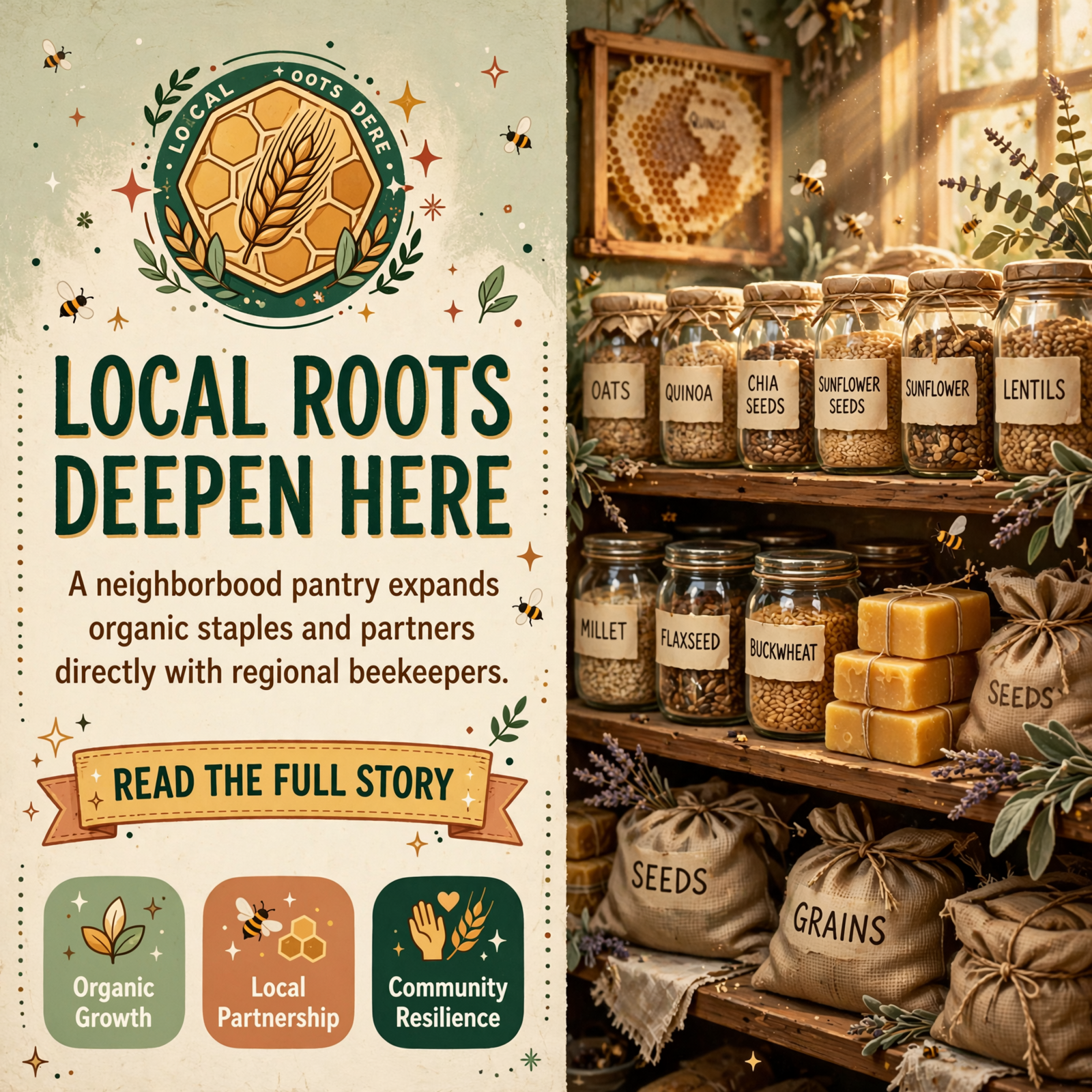
The pantry has introduced organic cornmeal, organic sunflower seeds, organic quinoa, and organic buckwheat flour to its shelves. These additions join the shop’s existing inventory of natural remedies and specialty items. Notably, the business has also secured raw unfiltered beeswax from a local beekeeper-a product that appeals to customers interested in natural skincare, candle-making, and traditional wellness practices. 🐝
💡 Why This Matters
Access to organic grains and seeds matters for families seeking alternatives to mass-market staples, whether for dietary preferences, allergies, or a desire to support organic farming practices. Raw beeswax from a local source carries additional significance: it connects customers directly to regional beekeeping, supports a neighbor’s livelihood, and offers a product with multiple household uses-from lip balms to furniture polish to candle-making.
For residents in the Sequatchie Valley and nearby communities who prioritize natural foods and local sourcing, these additions reduce the need to travel to larger regional retailers. Each new product represents a small but meaningful step toward food self-sufficiency and community economic circulation. ✨
🤝 Community Connections
Feral Forrest Pantry & Apothecary operates within a growing network of local food and wellness businesses in the area. The addition of local beeswax illustrates a direct relationship between the shop and regional producers-a thread that strengthens when customers choose locally sourced goods. This kind of producer-retailer partnership reinforces the broader community commitment to supporting neighbors and keeping food dollars circulating locally.
The shop’s focus on organic and natural products also aligns with the values of residents who shop at other local wellness and food-focused businesses throughout the valley. For those interested in natural remedies, whole foods, and sustainable living, Feral Forrest serves as a gathering point for like-minded community members.
👥 Human Impact
Home cooks and bakers now have easier access to organic grains without a long drive. Families managing dietary restrictions or allergies benefit from knowing exactly what they’re purchasing and where it comes from. Beekeepers in the region gain a retail outlet for their product, strengthening their ability to continue their work. And customers who value transparency in food sourcing can build relationships with the people behind what they buy. 🛒
🌱 Local Perspective
The Sequatchie Valley and surrounding Cumberland Plateau communities have seen growing interest in local food systems, organic agriculture, and natural wellness over the past decade. Feral Forrest’s expansion of organic staples reflects this trend-and suggests that demand for these products is strong enough to justify inventory investment. The addition of local beeswax is particularly telling: it shows that regional producers are finding retail partners, and that customers are willing to seek out and pay for locally made goods.
This kind of incremental growth-adding a few new items, deepening relationships with local suppliers-often goes unnoticed in larger media but represents the quiet infrastructure of community resilience. When a local business can source beeswax from a neighbor rather than a distant distributor, it signals a functioning local economy.
🔄 Community Threads: The Producer-Retailer Relationship
One important thread running through this story is the relationship between local producers and local retailers. The local beekeeper who supplies Feral Forrest depends on retail outlets to reach customers. Feral Forrest depends on reliable, quality suppliers to meet customer expectations. And customers benefit when that relationship is direct and transparent. When residents understand that their purchase of beeswax directly supports a neighbor’s beekeeping operation, they’re more likely to choose local-and that choice, multiplied across many customers and many products, strengthens the entire community economy.
📢 What Residents Should Know
Feral Forrest Pantry & Apothecary is located at 15781 Rankin Avenue in Dunlap. Residents interested in the new organic staples or local beeswax can visit the shop or reach out by phone at (423) 618-7964 to confirm availability or ask questions about sourcing. The business maintains an active social media presence where new inventory updates are regularly shared. 📱
❓ Questions Worth Considering
- How many other local producers in the area might benefit from retail partnerships like the one Feral Forrest has created with the beekeeper?
- What other organic staples or local products might residents want to see available locally, rather than sourced from distant distributors?
- How can community members support local producers and retailers in building these kinds of direct relationships?
- What role do specialty food shops play in keeping residents engaged with their local food system?
🌍 Long-Term Community Impact
Each time a local business adds inventory from a regional producer, it sends a signal: there is demand here, and it is worth serving locally. Over time, these signals accumulate. Producers invest in their operations because they know they have outlets. Retailers expand because they know customers will support them. Customers develop habits of seeking local goods. The result is a more resilient, interconnected community economy-one that is less dependent on distant supply chains and more capable of meeting its own needs. For the Sequatchie Valley and surrounding areas, that kind of resilience matters, especially as residents increasingly prioritize food security, natural wellness, and local connection.



0 Comments