
🌾 Farmers’ Storehouse Celebrates Local Grain and Community Choice in Sparta
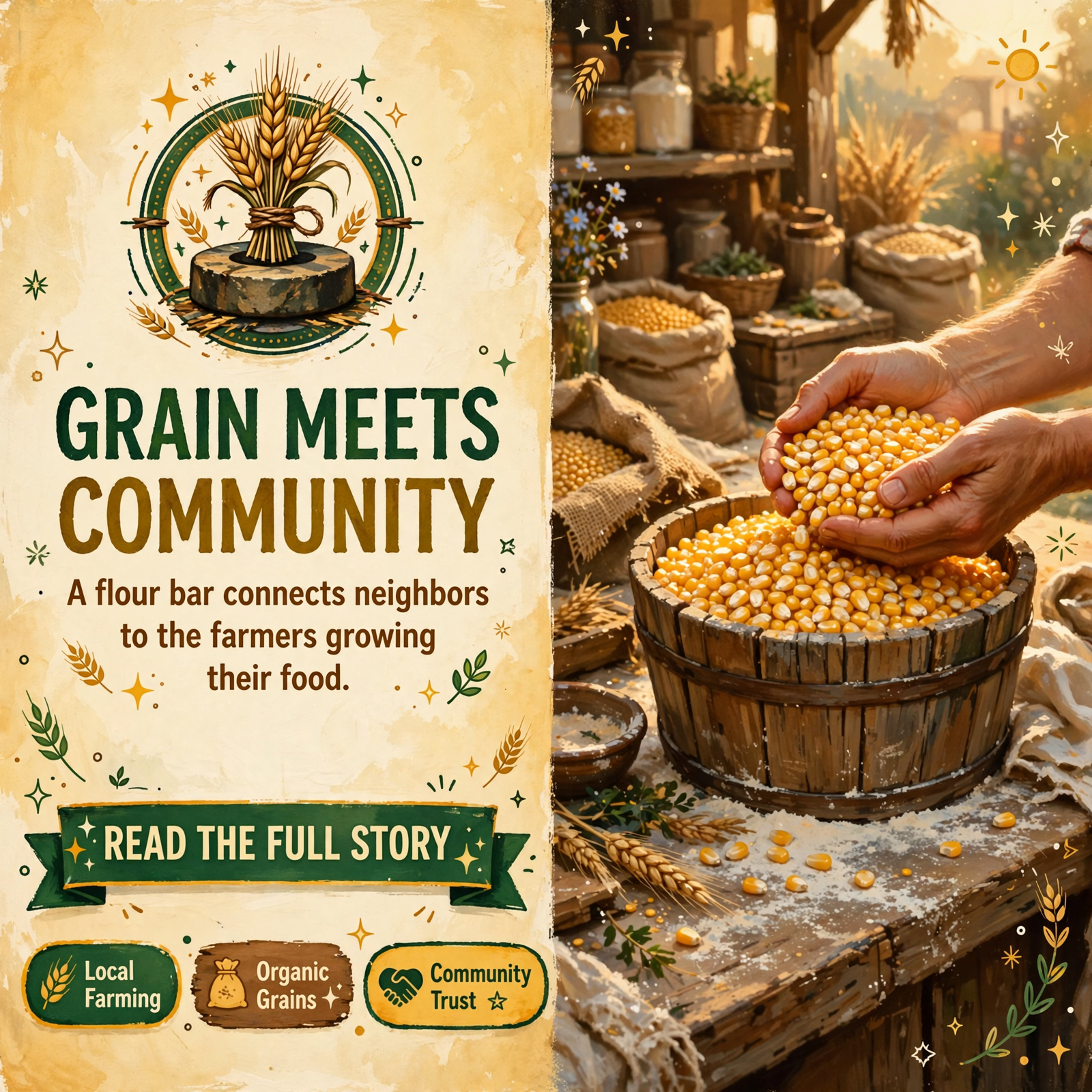
Farmers’ Storehouse in Sparta, White County, is highlighting a new addition to its offerings: a flour bar featuring yellow corn kernels from organic farmers. The announcement reflects a growing commitment to connecting regional producers directly with customers who value sustainably grown food.
📍 What’s New at the Store
The flour bar represents a tangible expansion of Farmers’ Storehouse‘s mission to distribute healthier, sustainably grown food products throughout Tennessee. By featuring organic corn kernels and milled flour on-site, the cooperative is making it easier for customers to access whole grains and see exactly where their food originates. 🌽 This kind of transparency-knowing the farmer behind the product-has become increasingly important to families and home cooks seeking alternatives to mass-market options.
❤️ Why This Matters to the Community
The flour bar signals something deeper than a new product line. It reflects a deliberate choice by Farmers’ Storehouse to invest in local agricultural relationships and to give regional farmers-particularly organic producers-a direct path to customers. For residents across the Sequatchie Valley and nearby counties, this means access to grains grown by neighbors rather than distant industrial operations. It also means supporting farming families and local millers who depend on steady demand for their work.
In a retail landscape dominated by large chains, Farmers’ Storehouse is positioning itself as a gathering place for people who prioritize food quality, farmer welfare, and community resilience. The cooperative’s message-“Thanks for choosing our farmers, millers and families”-underscores that every purchase strengthens local relationships and keeps agricultural income circulating within the region. 🤝
🧑🍳 Human Impact: Who Benefits
Home bakers and cooks gain access to fresh, traceable flour and whole grains. Organic farmers in the region gain a reliable retail outlet and direct customer connection. Millers who process local grain see increased demand for their craft. Families looking to reduce their dependence on mass-market food systems find a concrete alternative. And the cooperative itself strengthens its role as a hub for sustainable agriculture in Middle Tennessee.
🌄 Local Perspective: Part of a Broader Trend
The Sequatchie Valley and surrounding Cumberland Plateau communities have long supported farmers markets and local food networks. The White County Farmers Market in Sparta and regional cooperatives like Sequatchie Farmers Co-Op in Dunlap reflect a sustained local interest in direct-to-consumer agriculture. Farmers’ Storehouse‘s flour bar fits naturally into this landscape-it’s not an isolated experiment but rather an evolution of how local food systems are organized and accessed in the region.
The emphasis on organic kernels and milled flour also speaks to a shift in how rural communities view their own agricultural heritage. Rather than treating farming as a commodity business, Farmers’ Storehouse is framing it as a cultural practice worth celebrating and supporting. ✨
💡 What Residents Should Know
Farmers’ Storehouse is located at 971 Smithville Highway, Sparta, Tennessee 38583. The cooperative operates as a general store and local farm cooperative, offering products from regional producers. Customers interested in learning more about the flour bar, organic grains, and other offerings can contact the store at (931) 738-3838 or visit their website and social media channels for updates on product availability and special offerings.
🔗 Community Threads: The Farmer-Miller-Customer Connection
The Grain Supply Chain as Community Relationship: Traditionally, grain moves from farmer to industrial mill to supermarket shelf-each step removes the farmer further from the customer. Farmers’ Storehouse is reversing that distance. By creating a flour bar that showcases organic corn kernels and milled flour, the cooperative is making visible the relationships that industrial food systems hide. Residents who buy from the flour bar are not just purchasing a product; they’re participating in a direct economic relationship with a farmer and miller they can know by name.
The Cooperative Model as Trust Infrastructure: Farmers’ Storehouse operates as a cooperative, meaning it is structured to serve its members-farmers, millers, and customers-rather than distant shareholders. This model creates accountability: the business succeeds only if the farmers and customers it serves succeed. For residents, this means the store has a built-in incentive to maintain quality, fair pricing, and genuine relationships. It’s a different kind of business relationship than a chain store offers.
Local Food Networks and Regional Identity: The flour bar connects to a broader network of farmers markets, CSA programs, and agricultural cooperatives across the Sequatchie Valley and nearby counties. When residents choose Farmers’ Storehouse, they’re also supporting the infrastructure that makes those other local food options possible-shared knowledge, trusted suppliers, and a culture that values knowing where food comes from.
🗓️ What Happens Next
The flour bar is now available at Farmers’ Storehouse. Residents interested in exploring the offering are welcome to visit the store and ask questions about the organic farmers and millers behind the products. The cooperative may expand the flour bar offerings based on customer interest and seasonal availability of local grains. Updates on new products, seasonal specials, and farmer spotlights are likely to be shared through the store’s social media channels and website.
❓ Community Questions Worth Considering
- How might buying local flour and grains change your cooking or baking habits, and what would you want to know about the farmers who grew them?
- What barriers prevent more families in the region from shopping at cooperatives like Farmers’ Storehouse, and how might those barriers be addressed?
- How do direct relationships between farmers and customers strengthen community resilience compared to relying on distant supply chains?
- What other local agricultural products or crafts deserve a similar “showcase” in retail spaces across the valley and plateau?
🌱 Long-Term Community Impact
If the flour bar and similar direct-to-consumer initiatives succeed, they could help stabilize farming as a viable livelihood in the region. Younger people considering agriculture as a career would see a market for their products and a community that values their work. The region’s food security would improve-less dependent on distant supply chains and more rooted in local production. And culturally, the Sequatchie Valley and surrounding areas would strengthen their identity as a place where people know their farmers, support their neighbors, and choose community relationships over convenience. That kind of cultural shift, sustained over years, shapes how a region sees itself and what it values. 🌾

0 Comments