
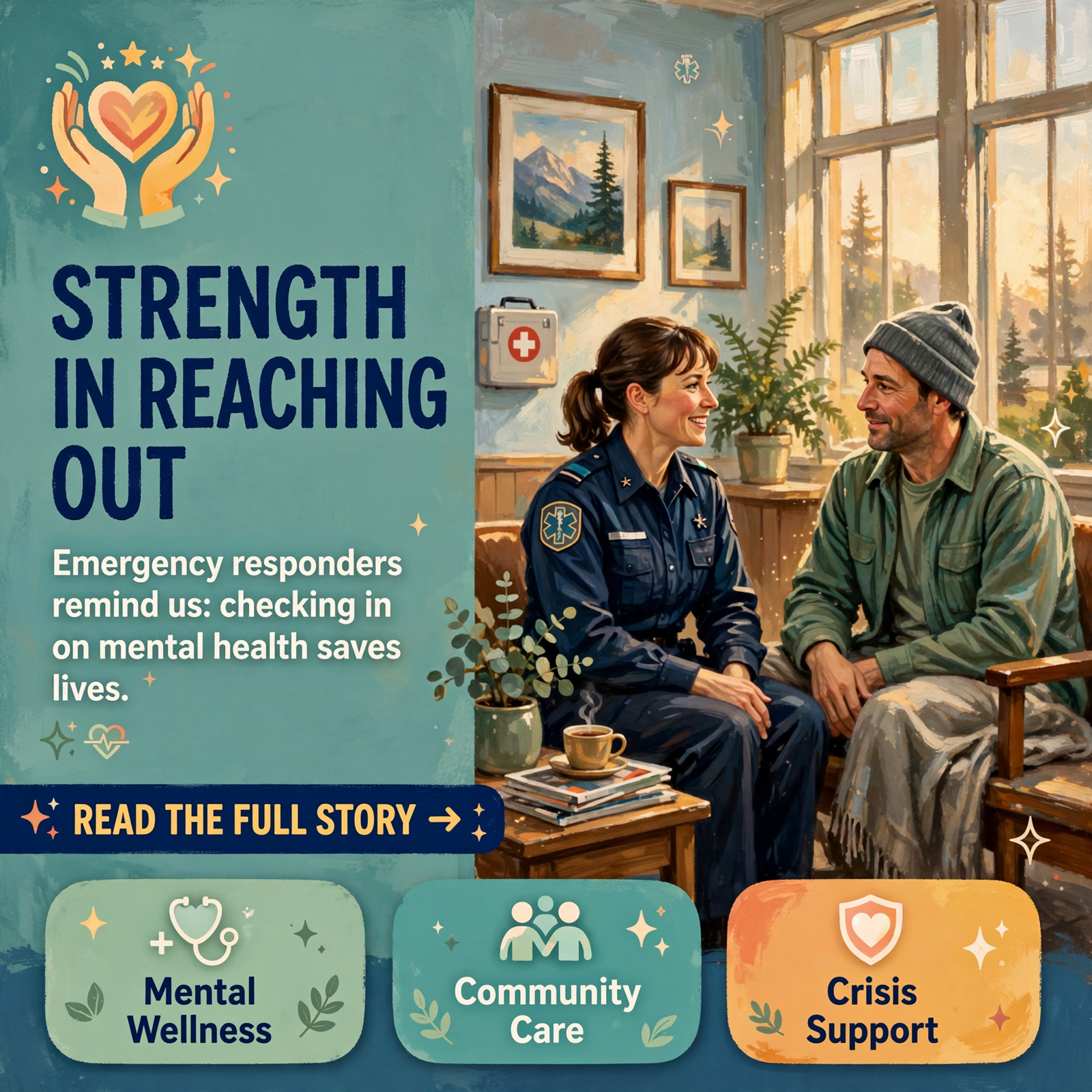
💚 EMS Leaders Mark World Mental Health Day With Call to Check In on Each Other
Emergency responders across the region are using World Mental Health Day as a moment to remind their communities that mental wellness is as vital as physical health-and that reaching out for support is a sign of strength, not weakness. For those who work in emergency services, the message carries particular weight.
🧠 Why This Matters
Mental health crises don’t wait for business hours, and they affect people across all walks of life-from teenagers navigating stress to adults managing depression, anxiety, or trauma. In communities like ours, where tight-knit relationships define daily life, the stigma around asking for help can run deep. When emergency responders and healthcare leaders speak openly about mental wellness, they model the behavior they want to see in their neighbors and families. 💙
The message is simple but powerful: checking in with yourself and the people around you matters. Taking time to rest, recharge, and reach out to someone you trust can prevent crises before they happen. And when a crisis does occur, knowing where to turn-and that asking for help is strength-can save lives.
📞 What Residents Should Know
If you or someone you know is experiencing a mental health crisis, help is available 24/7:
- Suicide & Crisis Lifeline: Call or text 988 (available 24 hours a day, 7 days a week)
- Immediate emergency: Call 911
These resources are free, confidential, and staffed by trained counselors who understand what you’re going through. Whether you’re having thoughts of suicide, struggling with depression, or just need someone to talk to, 988 is there.
❤️ Community Connections
Emergency responders-paramedics, EMTs, firefighters, and hospital staff-are often the first people to arrive when someone is in crisis. They see the full spectrum of human suffering and resilience. By speaking up about mental health, they’re breaking down the walls that keep people isolated and afraid. Their message reaches families, workplaces, schools, and neighborhoods, reminding everyone that mental health is not separate from physical health-it’s woven into everything we do.
Local healthcare and wellness providers, from urgent care clinics to home health services, also play a role in supporting mental wellness. When communities normalize conversations about mental health, these providers see more people seeking help early, before crises develop.
💭 Community Questions Worth Asking
- How often do you check in with people you care about-not just about surface-level news, but about how they’re really doing?
- What barriers keep people in your circle from asking for help, and what could change that?
- Do you know where to find mental health resources in your community, and would you know how to help someone in crisis?
- How can workplaces, schools, churches, and civic groups normalize conversations about mental wellness?
🌱 What Happens Next
World Mental Health Day is October 10 each year, but the work of supporting mental wellness happens every day. The reminder from emergency services and healthcare leaders is to carry this message forward: check in with yourself and your neighbors regularly. Notice when someone seems withdrawn or struggling. Start conversations without judgment. And remember that reaching out for help-whether you’re calling 988, talking to a trusted friend, or visiting a healthcare provider-is always the right choice.
🤝 Community Threads: The Responder-Community Bond
Why it matters: Emergency responders are part of your community. They live here, worship here, and their families go to school here. When they speak about mental health, they’re not speaking as distant professionals-they’re speaking as neighbors who understand that everyone struggles sometimes. This connection builds trust and reminds residents that asking for help is normal, not shameful.
How residents benefit: When emergency services leaders normalize mental health conversations, they create permission for everyone else to do the same. A parent might feel more comfortable talking to their child about stress. A coworker might reach out to a friend who seems withdrawn. A neighbor might check in on an elderly resident they haven’t seen in a while. These small acts of connection, multiplied across a community, can prevent isolation and crisis.

0 Comments