
🚿 Electric vs. Gas Tankless Water Heaters: What Chattanooga-Area Homeowners Should Know
For homeowners across the Chattanooga metro and surrounding communities, the choice between an electric and gas tankless water heater is more than a technical decision-it’s an investment in daily comfort, monthly utility bills, and long-term home reliability. Chattanooga Plumbing Doctor has published a practical guide to help residents understand the real differences between these systems and make a choice that fits their home and budget.
💡 Why This Matters to Your Home
Tankless water heaters have become increasingly popular in the region, offering homeowners the promise of endless hot water and smaller footprints than traditional tank systems. But the choice between electric and gas models carries real consequences. Energy costs vary significantly depending on your home’s existing infrastructure, local utility rates, and how much hot water your household uses. Installation complexity and long-term maintenance also differ-factors that can affect both upfront costs and peace of mind down the road. 🏠
For families in the Chattanooga metro area, where homes range from older properties with established gas lines to newer construction with modern electrical systems, this decision often depends on what’s already in place. Understanding the trade-offs helps homeowners avoid costly mistakes and choose a system that will serve them reliably for years.
⚡ Key Differences at a Glance
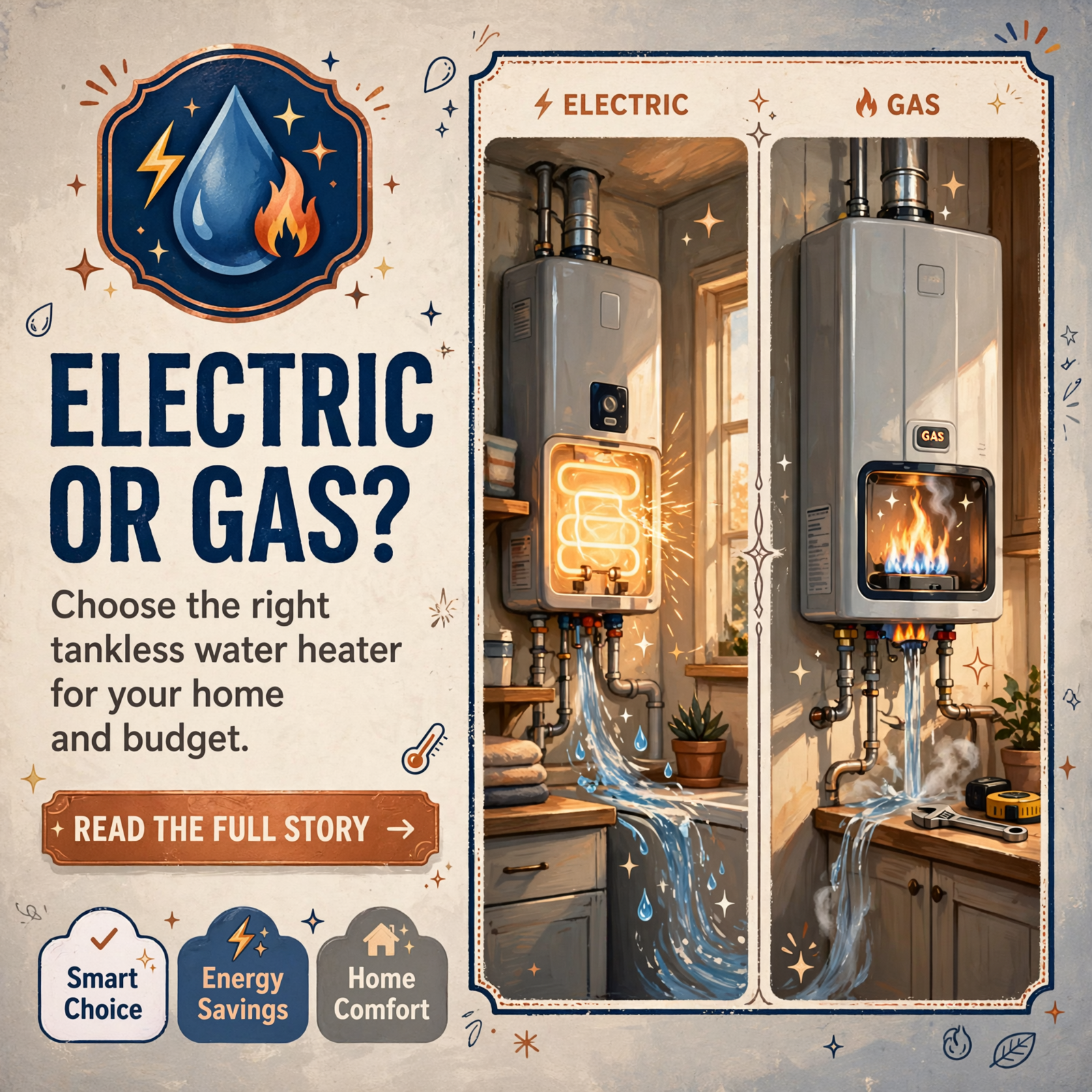
Electric tankless water heaters typically offer simpler installation-no venting required, no gas line needed-making them attractive for homes without existing gas infrastructure. They heat water on demand using electrical resistance, delivering hot water quickly and efficiently in most situations. Gas models, by contrast, use combustion to heat water and require proper venting, but they often handle higher demand and may be more cost-effective in homes where natural gas is already available and competitively priced. 🔥
The practical reality for many Chattanooga-area homeowners is that the “best” system depends on individual circumstances: your home’s current setup, your local utility costs, how many people live in your household, and your hot water usage patterns. A guide that breaks down these variables in clear terms helps residents move beyond marketing claims and toward informed decisions.
🛠️ Professional Installation Matters
Whichever system a homeowner chooses, professional installation is critical. Improper setup can lead to inefficiency, safety issues, or warranty problems. Chattanooga Plumbing Doctor serves residential and commercial properties throughout the Chattanooga area, offering the expertise needed to assess your home’s specific needs, recommend the right system, and ensure it’s installed correctly. Having a trusted local professional handle the work provides confidence that the system will perform as intended and that you’ll have support if questions arise later. ✓
❓ Questions Homeowners Should Ask
Before making a decision, consider these practical questions:
- Does your home already have a gas line, or would adding one be expensive?
- What are your local natural gas and electricity rates, and which is more economical in your area?
- How many people live in your home, and what is your typical hot water demand?
- What is the venting situation in your home-do you have adequate space and clearance for a gas unit?
- What is your timeline, and do you want the quickest installation path or the lowest long-term operating cost?
📍 What Residents Should Know
Chattanooga Plumbing Doctor has created a detailed guide to help answer these questions and walk homeowners through the decision-making process. The guide is available on their website and covers energy costs, hot water supply reliability, installation requirements, and maintenance considerations in practical, accessible language. For homeowners in the Chattanooga metro area and surrounding communities who are considering a tankless water heater upgrade or replacement, reviewing this resource before calling a contractor can help you ask better questions and feel more confident in your choice. 📚
The business serves both residential and commercial customers throughout Chattanooga and the surrounding Tennessee communities, so whether you’re a homeowner making a personal decision or a property manager evaluating options for multiple units, professional guidance is available locally.
🔄 What Happens Next
If you’re considering a tankless water heater, the next step is typically to review your options, understand your home’s current setup, and consult with a professional who can assess your specific situation. Chattanooga Plumbing Doctor‘s guide provides the educational foundation; a follow-up conversation with a licensed plumber can translate that knowledge into a customized recommendation for your home. Many homeowners find that having this information in hand before scheduling a consultation leads to more productive conversations and faster decision-making. 📞
💭 Long-Term Community Impact
As more Chattanooga-area homeowners upgrade to tankless systems, the region’s overall energy efficiency and water conservation practices may improve. Tankless water heaters, when properly sized and installed, typically use less energy than traditional tank systems, which can reduce utility costs and environmental impact across the community. Local plumbing professionals who help homeowners make informed choices contribute to this shift, supporting both individual household savings and broader sustainability goals. When residents understand their options and choose systems that fit their actual needs-rather than defaulting to outdated technology or making impulse decisions-the entire community benefits from lower energy demand and smarter resource use. 🌱
🤝 Community Connections
Chattanooga Plumbing Doctor‘s effort to educate homeowners reflects a broader trend in the region: local service professionals taking time to help residents understand complex decisions rather than simply selling a product. This approach strengthens trust between businesses and the community they serve. When homeowners feel informed and supported, they’re more likely to recommend that business to neighbors and friends, creating a ripple effect of better decision-making across the area. Educational resources like this guide also reduce the likelihood of costly mistakes, which means fewer emergency calls, less waste, and more satisfied customers-benefits that extend beyond any single household.




0 Comments