
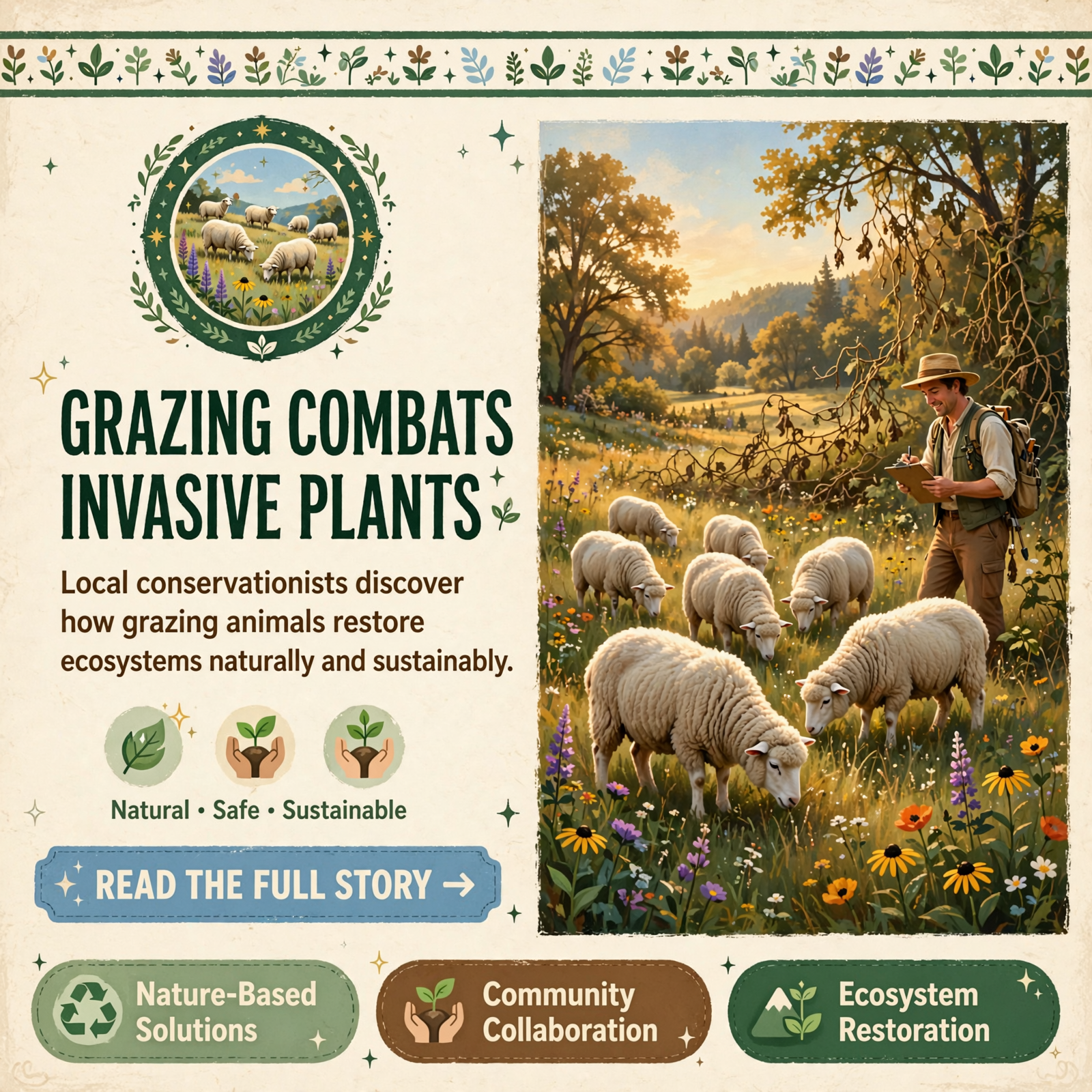
🌿 Chattanooga Audubon Society Explores Innovative Grazing to Combat Invasive Plants
Audubon Acres – Elise Chapin Wildlife Sanctuary in Chattanooga is taking a hands-on approach to one of the region’s persistent land management challenges: invasive plant species that threaten native ecosystems. Staff recently partnered with a local permaculture expert to study how grazing animals can help restore balance to local properties.
📍 A Practical Solution Takes Shape
Jessica and Jim from Audubon Acres – Elise Chapin Wildlife Sanctuary recently met with Nathaniel Bankhead of Wild Violet Permaculture to observe innovative land management techniques already in use across several Chattanooga properties. The focus: sheep grazing as a natural, effective strategy for controlling invasive plants. At Stringers Ridge, the team witnessed firsthand how grazing animals can reduce invasive vegetation while supporting broader ecosystem health. 🐑
💡 Why This Matters
Invasive plant species pose a real threat to the Chattanooga metro area’s natural spaces and wildlife habitats. Traditional removal methods-mowing, chemical treatment, manual clearing-are labor-intensive, costly, and often temporary. Grazing offers an alternative that works with nature rather than against it. For property managers, conservationists, and residents who care about local ecosystems, this approach represents a practical, sustainable option worth understanding.
The Sequatchie Valley and surrounding regions depend on healthy forests, meadows, and natural areas for water quality, wildlife corridors, and community recreation. When invasive plants take over, they degrade these spaces and reduce habitat for native species. Solutions that work locally-and that can be adapted across multiple properties-strengthen the entire region’s ecological resilience. ✨
🤝 Community Connections
Audubon Acres – Elise Chapin Wildlife Sanctuary has long served as a refuge for nature lovers, educators, and families seeking outdoor connection near downtown Chattanooga. By actively researching and testing land management strategies, the sanctuary demonstrates how established community institutions can lead by example-exploring new approaches and sharing what they learn with neighbors and peers.
The partnership with Wild Violet Permaculture reflects a growing network of local experts, land stewards, and conservation-minded businesses working to solve shared environmental challenges. When organizations collaborate across traditional boundaries-combining scientific expertise, practical experience, and community knowledge-they create solutions that benefit everyone.
👥 Human Impact
For the staff at Audubon Acres – Elise Chapin Wildlife Sanctuary, this exploration represents ongoing commitment to stewardship. Jessica and Jim’s willingness to learn from peers and test new methods shows how conservation work evolves through curiosity and collaboration. For visitors to the sanctuary and nearby natural areas, the result could be healthier, more vibrant landscapes-places where native plants and wildlife thrive, and where people can experience the natural beauty the region is known for.
Residents and property owners across the Chattanooga metro who struggle with invasive plants on their own land may also benefit. As these techniques prove effective and become more widely known, they could offer practical alternatives to conventional removal methods. 🌱
🔍 Local Perspective
The Chattanooga metro and surrounding areas face persistent invasive plant pressure-a challenge shared by parks, nature preserves, private landowners, and community organizations throughout the region. Solutions that work here often inspire similar efforts in nearby communities across the Cumberland Plateau and Sequatchie Valley. By documenting and sharing what works, Audubon Acres – Elise Chapin Wildlife Sanctuary contributes to a growing body of local knowledge about sustainable land management.
Grazing-based invasive plant control is not new globally, but its thoughtful application in the Chattanooga metro-tailored to local species, terrain, and community needs-represents adaptive, place-based conservation. This kind of learning and experimentation is how communities build resilience over time.
🎯 Opportunities for Connection
Residents interested in land stewardship, invasive plant management, or permaculture practices may find value in learning more about Audubon Acres – Elise Chapin Wildlife Sanctuary’s work and the techniques being explored. The sanctuary welcomes visitors and offers opportunities to experience the natural areas it protects. For those managing invasive plants on their own property, connecting with local experts and conservation organizations can open new possibilities.
Community members curious about how grazing and permaculture can support land health are encouraged to explore the sanctuary’s programs and stay informed about future updates or educational events. 🌄
📋 What Residents Should Know
Audubon Acres – Elise Chapin Wildlife Sanctuary is located at 900 North Sanctuary Road in Chattanooga. For more information about the sanctuary’s conservation work, visitor hours, or educational programs, contact the organization at (423) 892-1499 or visit their website at www.chattanoogaaudubon.org You can also follow their work on social media for updates on ongoing projects and initiatives.
🔮 What Happens Next
As Audubon Acres – Elise Chapin Wildlife Sanctuary continues to evaluate grazing-based invasive plant management, the organization will likely document results, share findings with peers, and determine whether these techniques can be expanded or adapted across their own properties. Future updates may include lessons learned, recommendations for other land managers, or new partnerships with local experts and organizations.
The broader question remains: how can Chattanooga-area conservation groups, property managers, and residents work together to scale solutions that protect and restore local ecosystems? This partnership suggests that collaboration, curiosity, and willingness to learn from neighbors are key ingredients.
💭 Community Questions Worth Considering
- How can residents and property owners in the Chattanooga metro learn more about invasive plant management options-including grazing and permaculture approaches-for their own land?
- What role might local organizations, schools, and community groups play in supporting and scaling effective land stewardship practices across the region?
- How can knowledge and experience from projects like this one be shared more widely so that other communities benefit from what works locally?
- What other innovative, nature-based solutions might help address environmental challenges facing the Chattanooga metro and surrounding areas?
🌍 Long-Term Community Impact
Over time, effective invasive plant management strengthens the ecological foundation that the Chattanooga metro and surrounding communities depend on. Healthier natural areas support cleaner water, more abundant wildlife, and greater recreational opportunity. They also enhance property values, support local tourism, and contribute to the region’s identity as a place where nature and community thrive together.
When organizations like Audubon Acres – Elise Chapin Wildlife Sanctuary invest in research, testing, and learning-and when they share what they discover-they help build a culture of adaptive, collaborative conservation. That culture becomes part of how the community solves problems, makes decisions, and cares for the land it shares. Over years and decades, that shift in mindset and practice can transform the health and resilience of the entire region. 🌿

0 Comments