
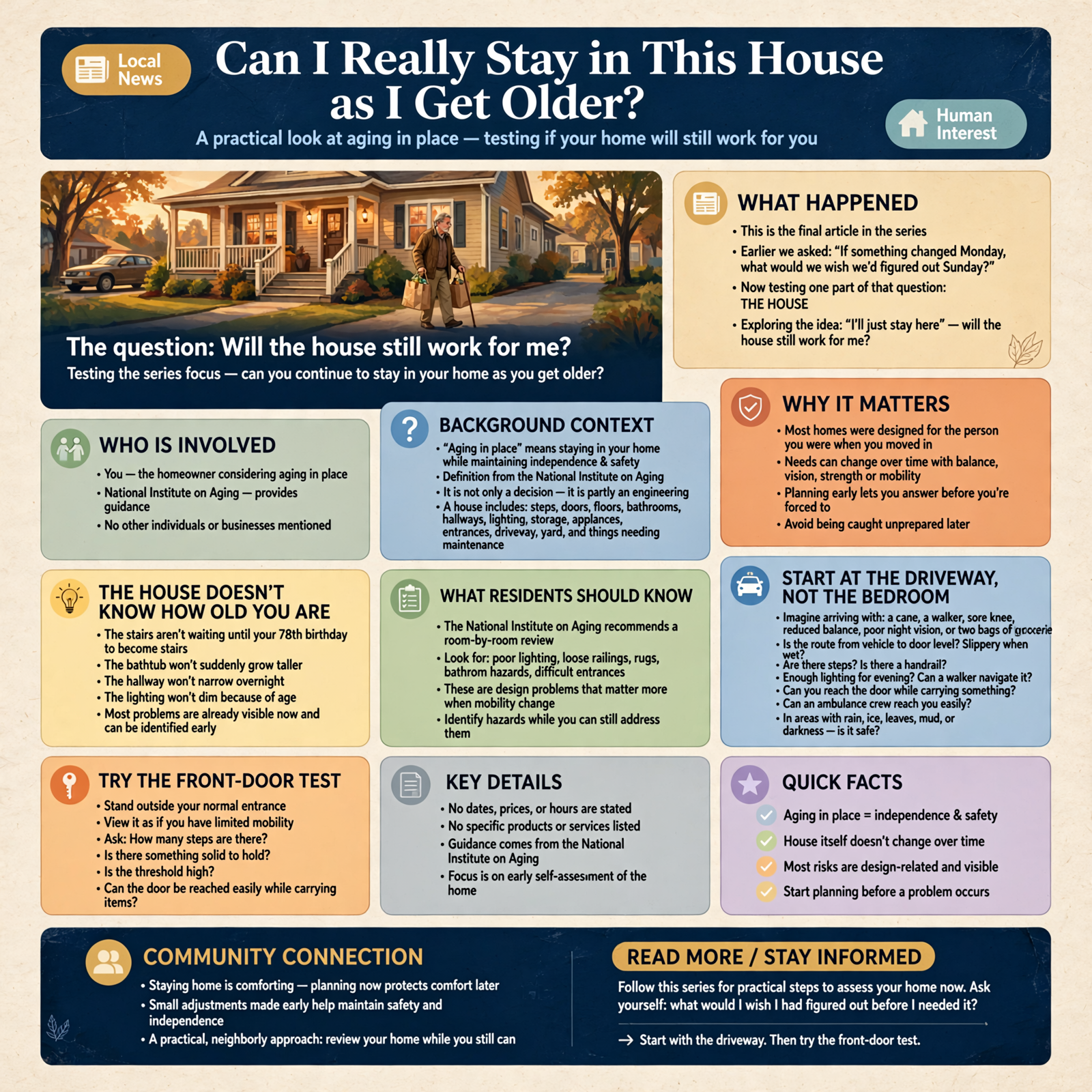
Can I Really Stay in This House as I Get Older?
In the last article in this series, we asked a fairly simple question:
If something changed Monday, what would we wish we’d figured out Sunday?
This time, I want to take one part of that question and actually test it.
The house.
Because one of the most common ideas associated with getting older sounds wonderfully simple:
I’ll just stay here.
I understand the appeal.
I like my home.
I know where everything is.
I know how things work.
I know which noises are normal and which noises mean I should probably go find a wrench.
Home is familiar.
Home is comfortable.
Home is mine.
But there is a question hiding underneath “I’ll stay here.”
Will the house still work for me?
That’s a different question.
And it’s one we can begin answering long before we’re forced to.
Wanting to Stay Home Isn’t the Same as Having a Plan
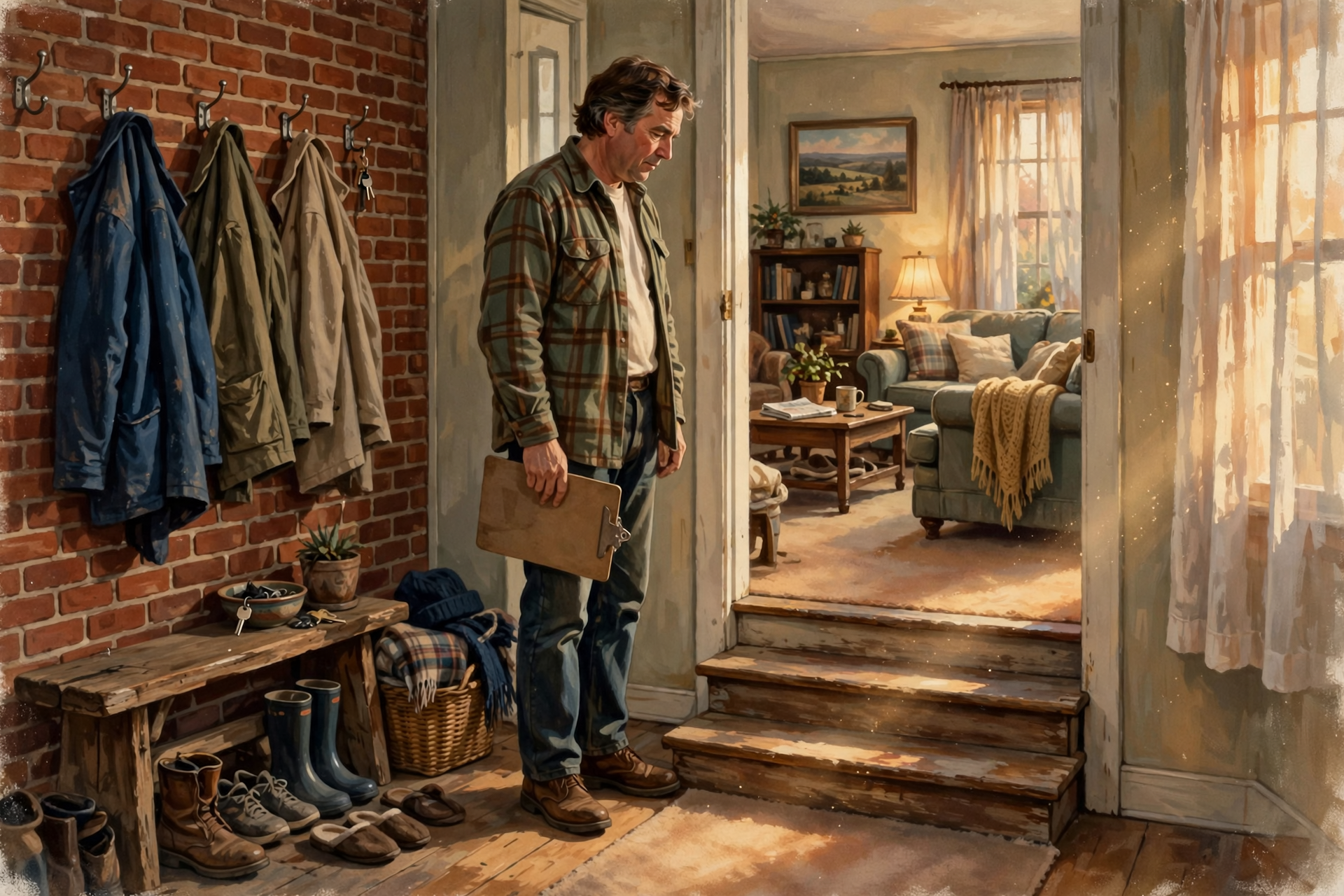
“Aging in place” is the term usually used for remaining in your own home as you get older.
The National Institute on Aging describes aging in place as staying in your home while maintaining as much independence and safety as possible.
That sounds pretty good to me.
But aging in place isn’t merely a decision.
It’s partly an engineering problem.
A house is a collection of:
- steps,
- doors,
- floors,
- bathrooms,
- hallways,
- lighting,
- storage,
- appliances,
- entrances,
- driveways,
- yards,
- and things that require maintenance.
Most of those were designed around the person you were when you moved in.
Not necessarily the person you might be twenty years later.
The House Doesn’t Know How Old You Are
Here’s the good news.
Your house isn’t plotting against you.
The stairs aren’t waiting until your 78th birthday to become stairs.
The bathtub isn’t going to suddenly grow taller.
The hallway won’t narrow itself overnight.
The lighting isn’t going to become dimmer because Medicare sent you a birthday card.
Most of the potential problems are already visible.
Which means they can often be identified early.
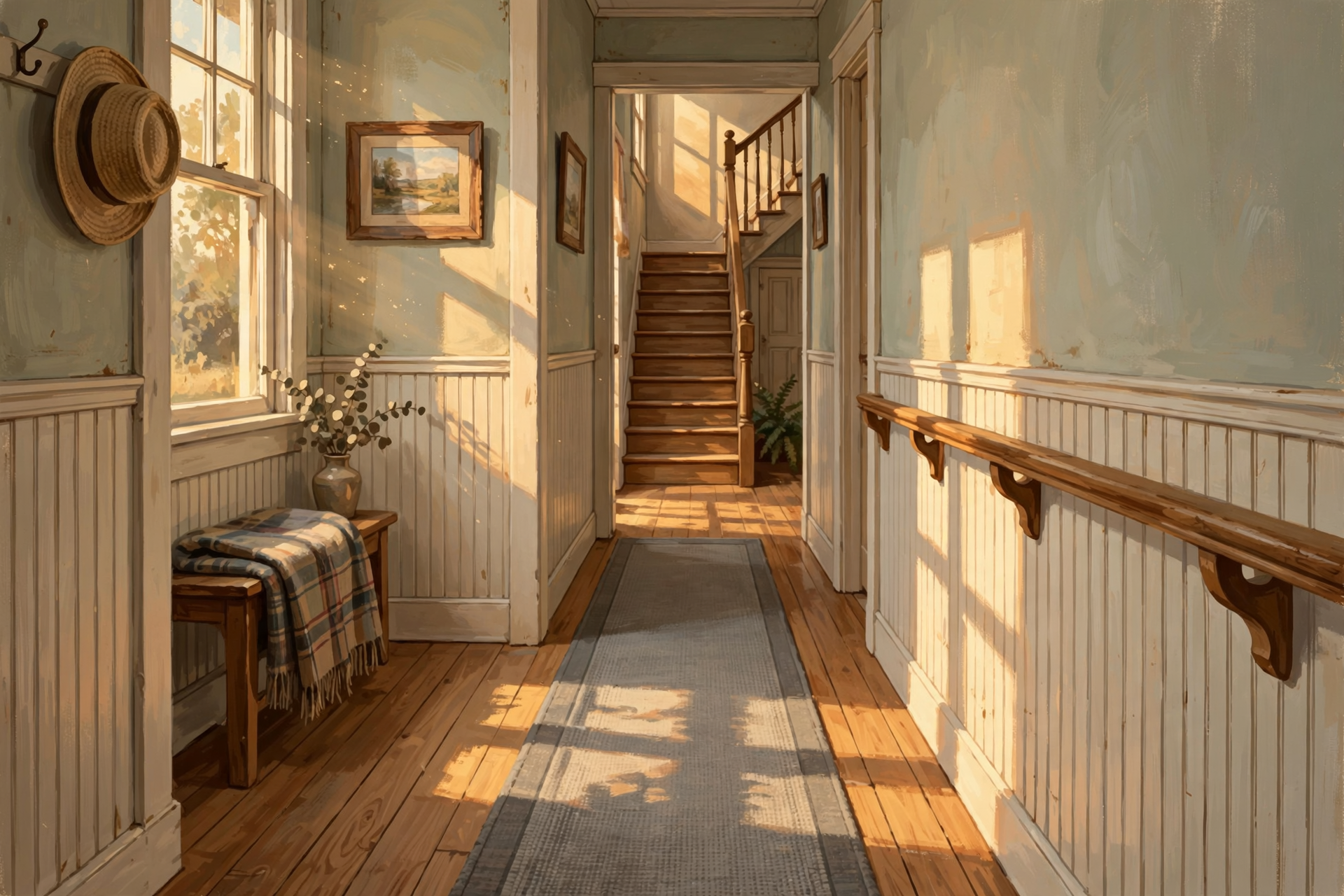
The National Institute on Aging recommends going through a home room by room to identify safety problems and accessibility issues. It specifically points to things such as poor lighting, loose railings, rugs, bathroom hazards and difficult entrances.
That’s important because many home problems aren’t really “old age problems.”
They’re design problems that become more important when balance, vision, strength or mobility changes.
Start at the Driveway, Not the Bedroom
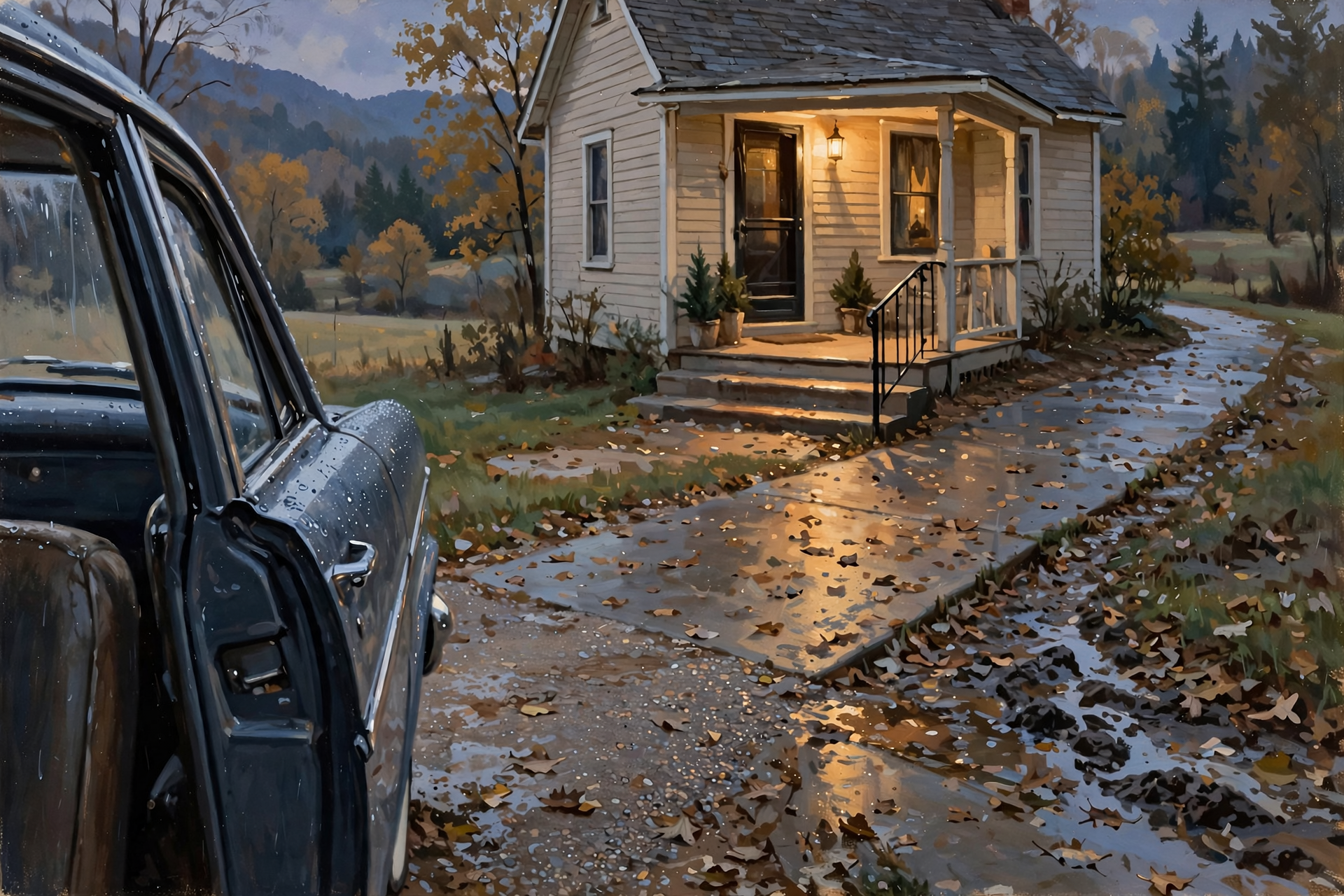
When people think about aging-in-place modifications, they often jump immediately to grab bars and wheelchairs.
Those things may matter.
But let’s start farther outside.
Imagine arriving home with:
- a cane,
- a walker,
- a sore knee,
- reduced balance,
- poor night vision,
- or simply two bags of groceries and less strength than you have today.
Now look at the route from the vehicle to the front door.
Is it level?
Is it slippery when wet?
Are there steps?
Is there a handrail?
Is there enough lighting?
Could somebody using a walker navigate it?
Could you reach the door while carrying something?
Could an ambulance crew reach you easily?
In rural Tennessee, we should probably add another question:
What does this route look like after rain, ice, leaves, mud or darkness?
Then Try the Front-Door Test
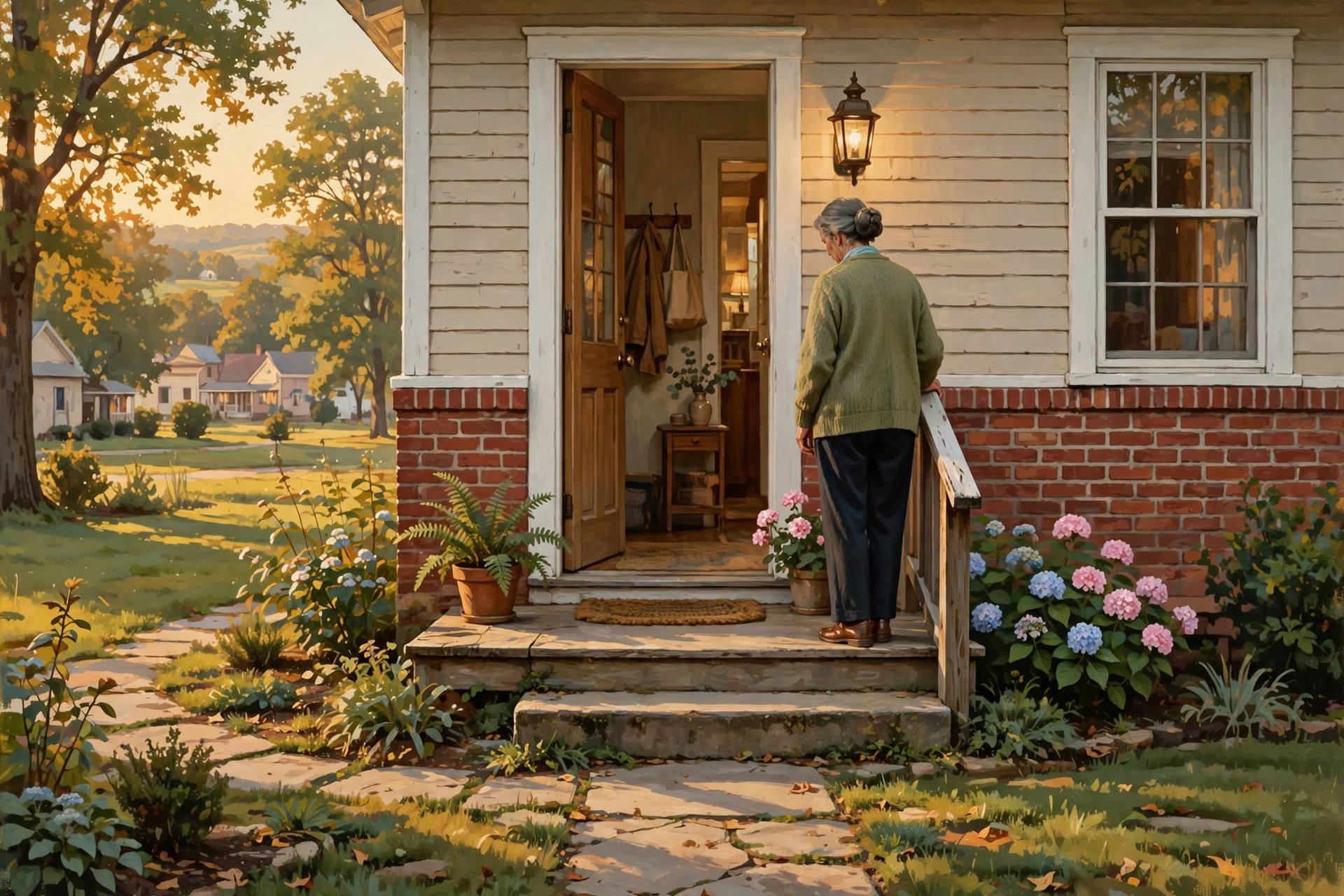
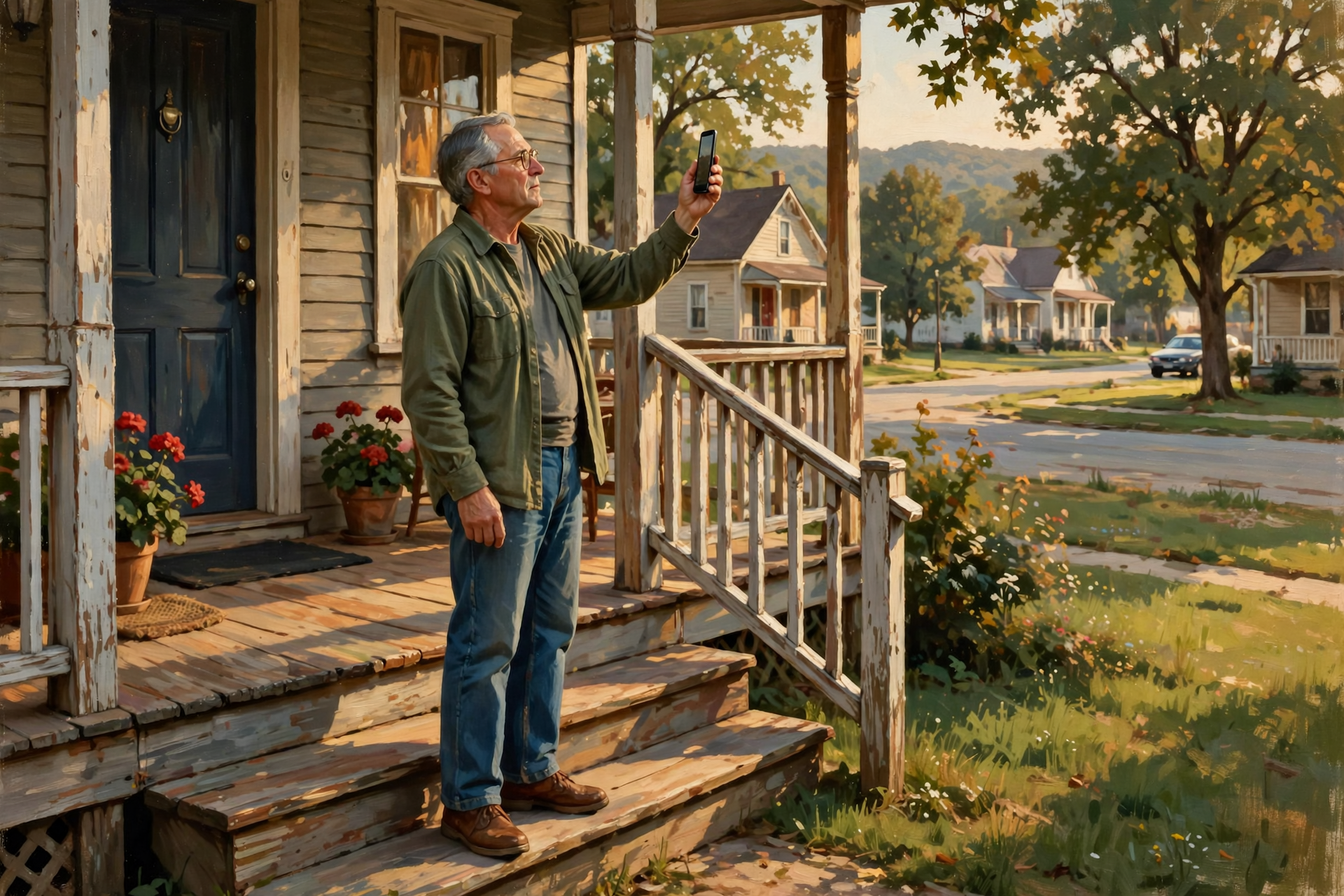
Stand outside your normal entrance.
Don’t look at it as the person who has walked through it ten thousand times.
Look at it as though you were arriving with limited mobility.
Ask:
- How many steps are there?
- Is there something solid to hold?
- Is the threshold high?
- Can the door be opened without stepping backward awkwardly?
- Is the porch large enough to stand safely while unlocking the door?
- Is the area well lit?
- Would a ramp ever be possible here if needed?
The NIA specifically includes a ramp with handrails among possible changes that can make a home easier and safer to use.
That doesn’t mean everybody needs one.
The point is to know whether one could reasonably be added if circumstances changed.
Can You Live on One Floor?
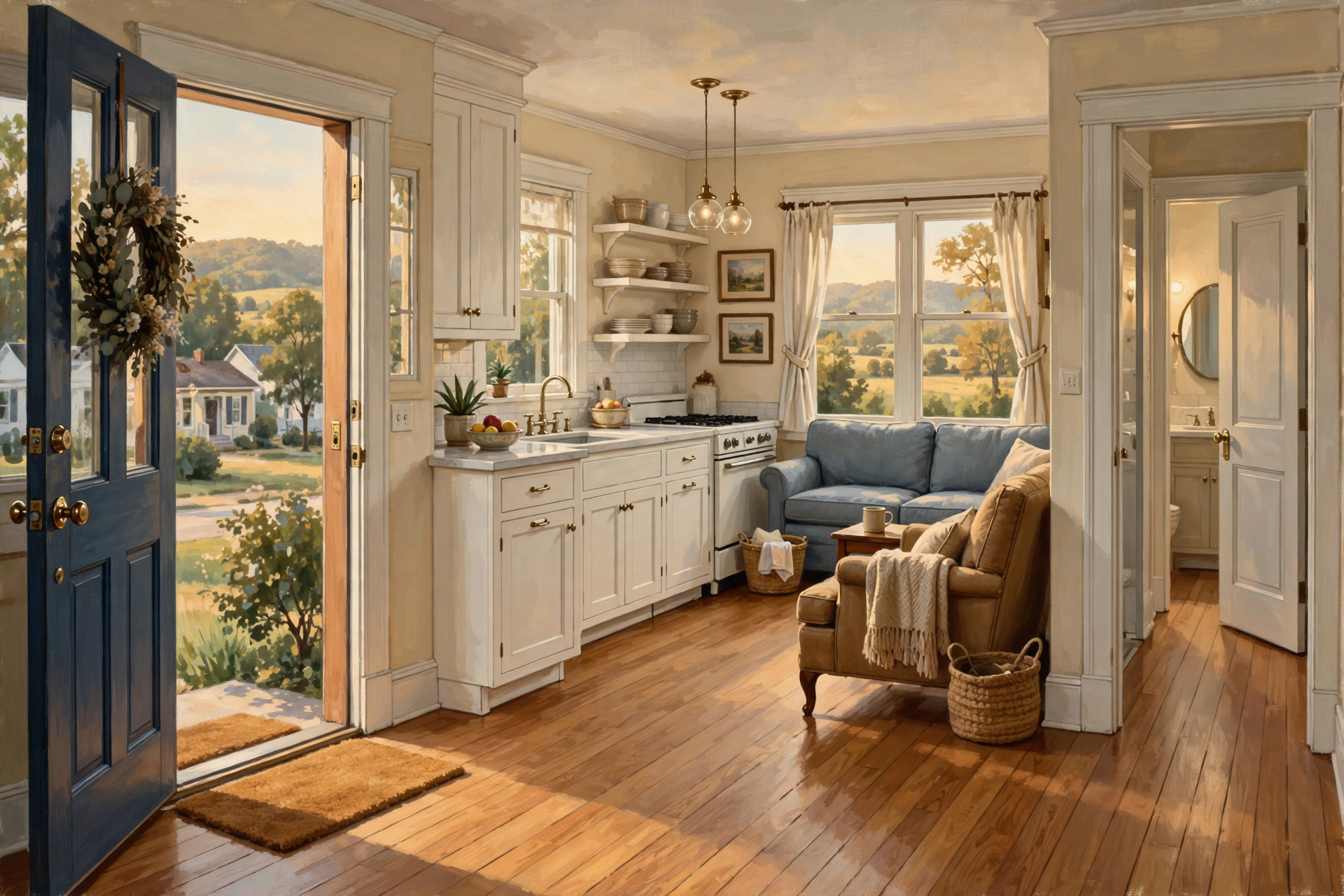
This may be one of the most useful questions in the entire audit.
If stairs became difficult tomorrow, could I still live here?
Not comfortably someday.
Tomorrow.
Is there:
- a bedroom or usable sleeping space,
- a full or usable bathroom,
- a kitchen,
- a place to sit,
- and an exterior entrance
on one level?
If the answer is yes, that’s a major advantage.
If the answer is no, you don’t necessarily need to remodel anything today.
You’ve simply identified something worth thinking about.
Could an office eventually become a bedroom?
Could a half bath be expanded?
Could a downstairs room serve several purposes?
Could another entrance work better?
Again, the goal isn’t renovation.
The goal is awareness.
The Bathroom Is Probably Worth More Attention Than the Living Room
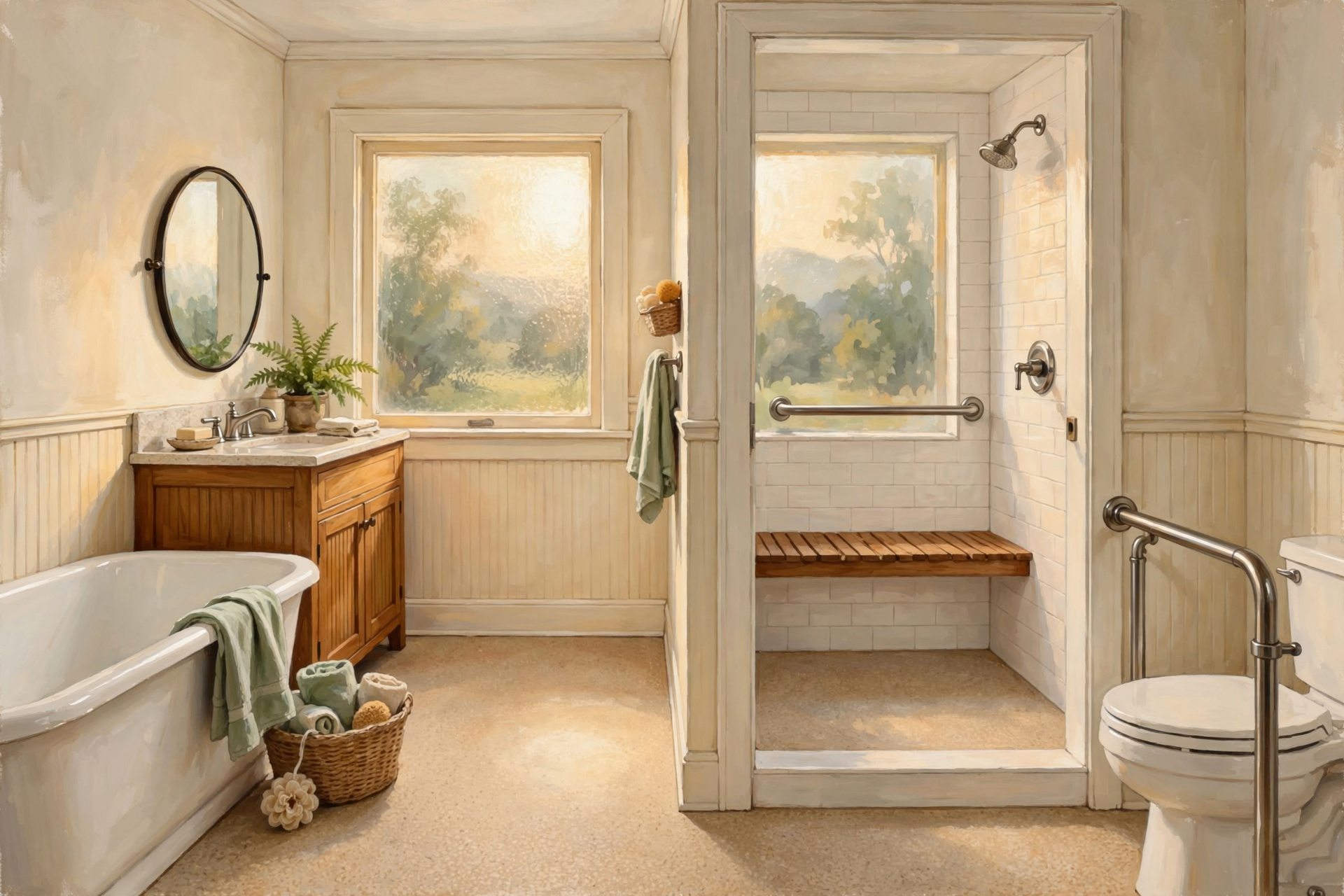
Bathrooms combine several things humans become less enthusiastic about as they age:
Water.
Hard surfaces.
Slippery floors.
Awkward movements.
And pants.
The National Institute on Aging recommends grab bars near toilets and in tubs or showers, along with nonslip surfaces in places that may become wet.
Walk into your bathroom and look at it as a system.
Can you enter easily?
Can the door be opened if someone falls behind it?
Is the toilet easy to reach?
Is there something sturdy to hold?
How high is the tub wall?
Could someone shower without stepping over it?
Is the floor slippery?
Could a stool or shower chair fit?
Is there enough room for another person to assist if that ever became necessary?
The point isn’t to make the bathroom look institutional.
Good accessibility design can be attractive.
And a well-placed handrail is useful at 61 when you’re carrying laundry too.
Look Down

Now examine the floors.
The NIA specifically warns about loose rugs and carpeting that isn’t firmly attached.
This is one of those problems that’s almost comically easy to ignore.
You know where the rug is.
You’ve stepped over that curled corner for twelve years.
Your foot knows exactly what to do.
Until one day it doesn’t.
Look for:
- loose rugs,
- uneven flooring,
- cords crossing walking paths,
- clutter,
- small steps between rooms,
- slick surfaces,
- and furniture that creates narrow passages.
Some of these can be fixed in fifteen minutes.
That’s the kind of aging-in-place planning I like.
Now Look Up
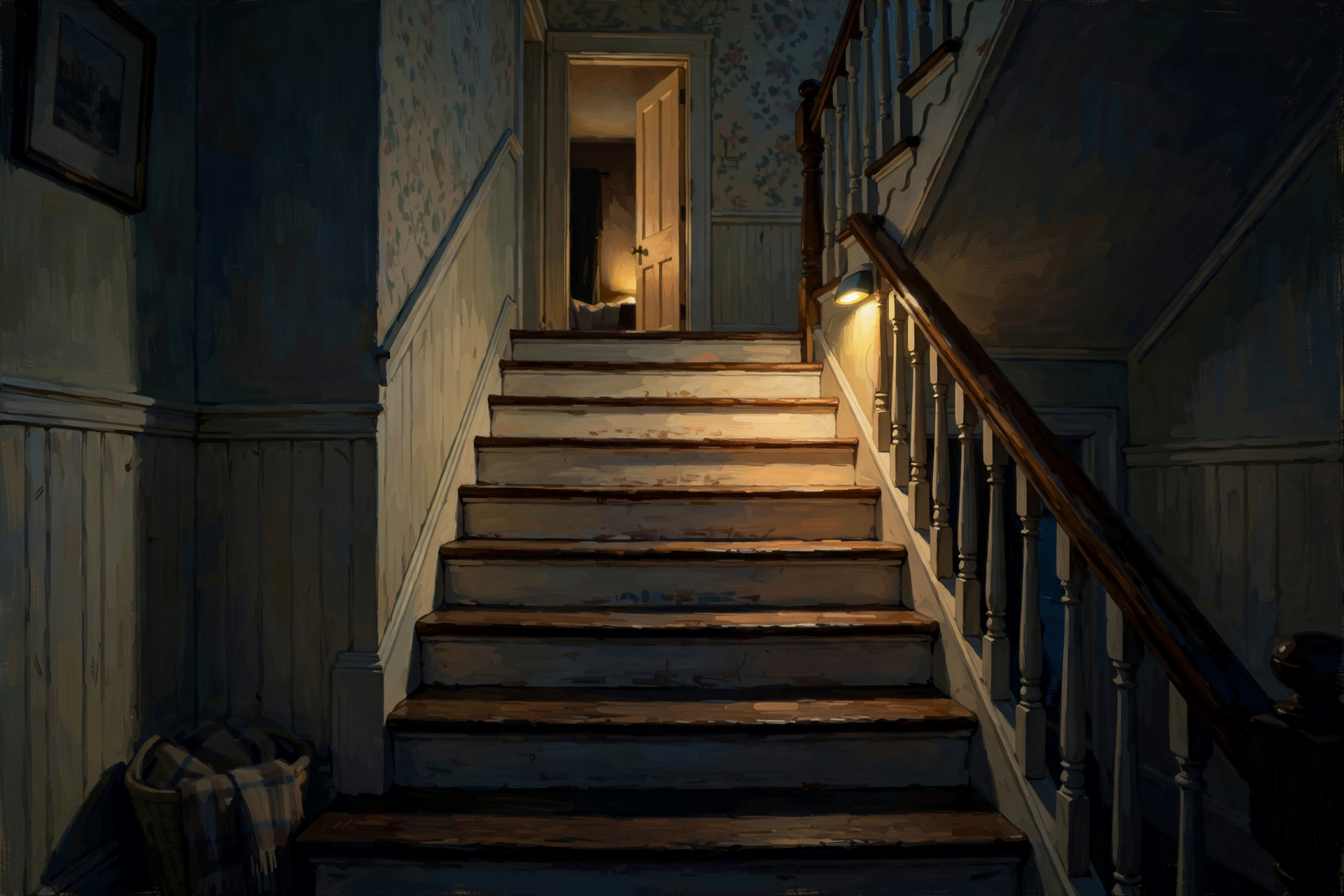
Lighting becomes more important as vision changes.
The NIA specifically recommends good lighting, especially at the top and bottom of stairs.
Walk through the house at night.
Not with every light already turned on.
Start from bed.
Can you safely reach the bathroom?
Can you see the floor?
Are switches easy to find?
What happens during a power outage?
Are stairs illuminated?
Is the exterior entrance visible?
This is another place where modern technology can help.
Motion-activated lights, smart switches and inexpensive LED lighting can solve problems that once required considerably more work.
Test the Kitchen Without Pretending You’re in a Wheelchair
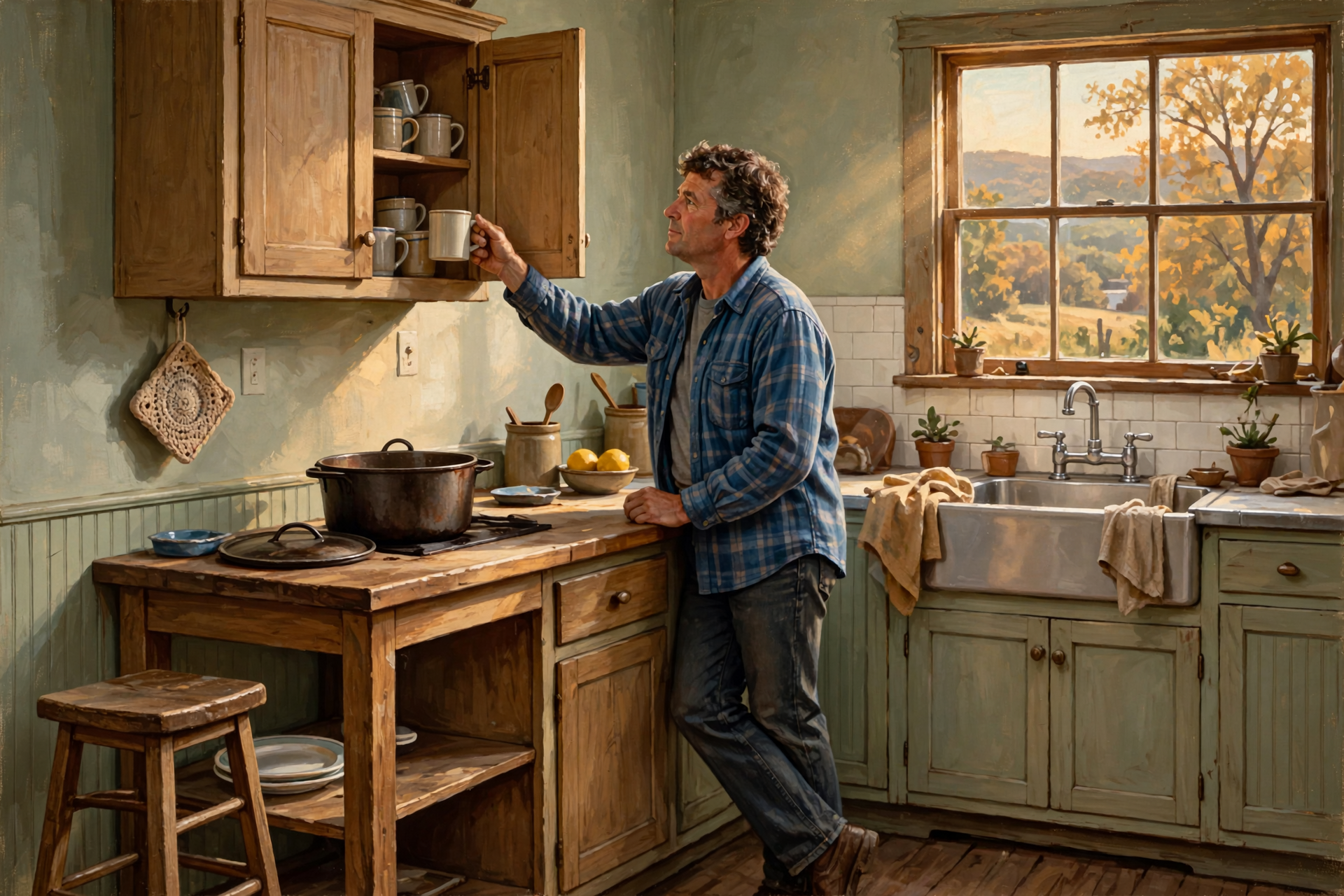
One mistake we can make in these exercises is jumping directly from “I’m fine” to the most extreme possible disability.
There are many stages in between.
Instead, imagine:
Your shoulders aren’t as strong.
Your balance isn’t as good.
Bending over is uncomfortable.
Standing for an hour isn’t appealing.
Now look at the kitchen.
Are everyday items stored at reasonable heights?
Do you need a step stool constantly?
Are heavy appliances stored overhead?
Could you prepare food while sitting?
Are frequently used pans buried at floor level?
Can you carry food safely from the kitchen to wherever you eat?
Sometimes accessibility isn’t construction.
Sometimes it’s moving the plates.
The Laundry Test Can Tell You a Lot
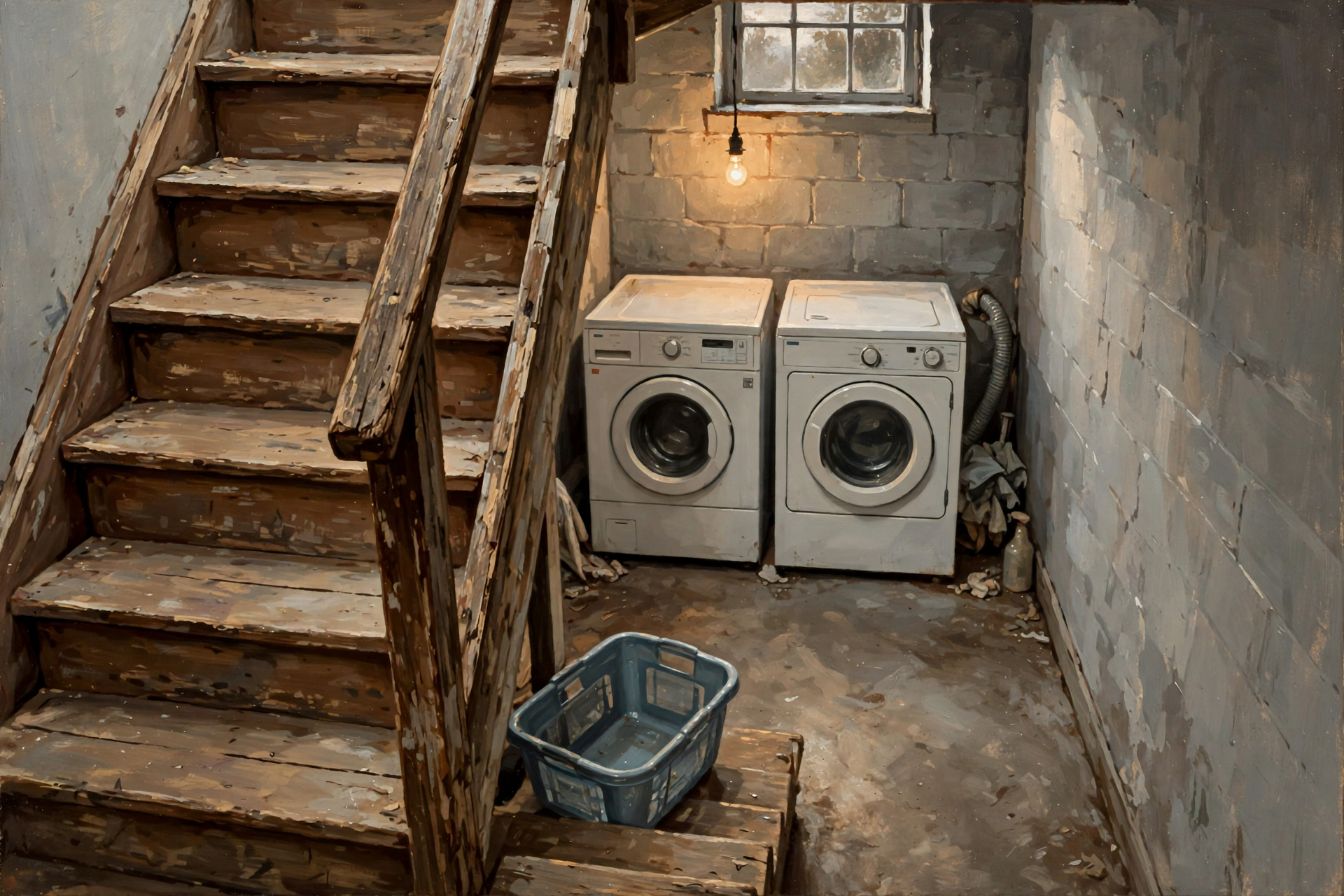
Where is the washing machine?
Basement?
Downstairs?
Across the house?
Can you get there without stairs?
Can you move laundry without carrying a basket while climbing?
A house may appear perfectly accessible until you realize one essential weekly task requires twelve basement steps.
This is why the audit needs to look at everyday routines, not merely architecture.
Don’t Forget the Property
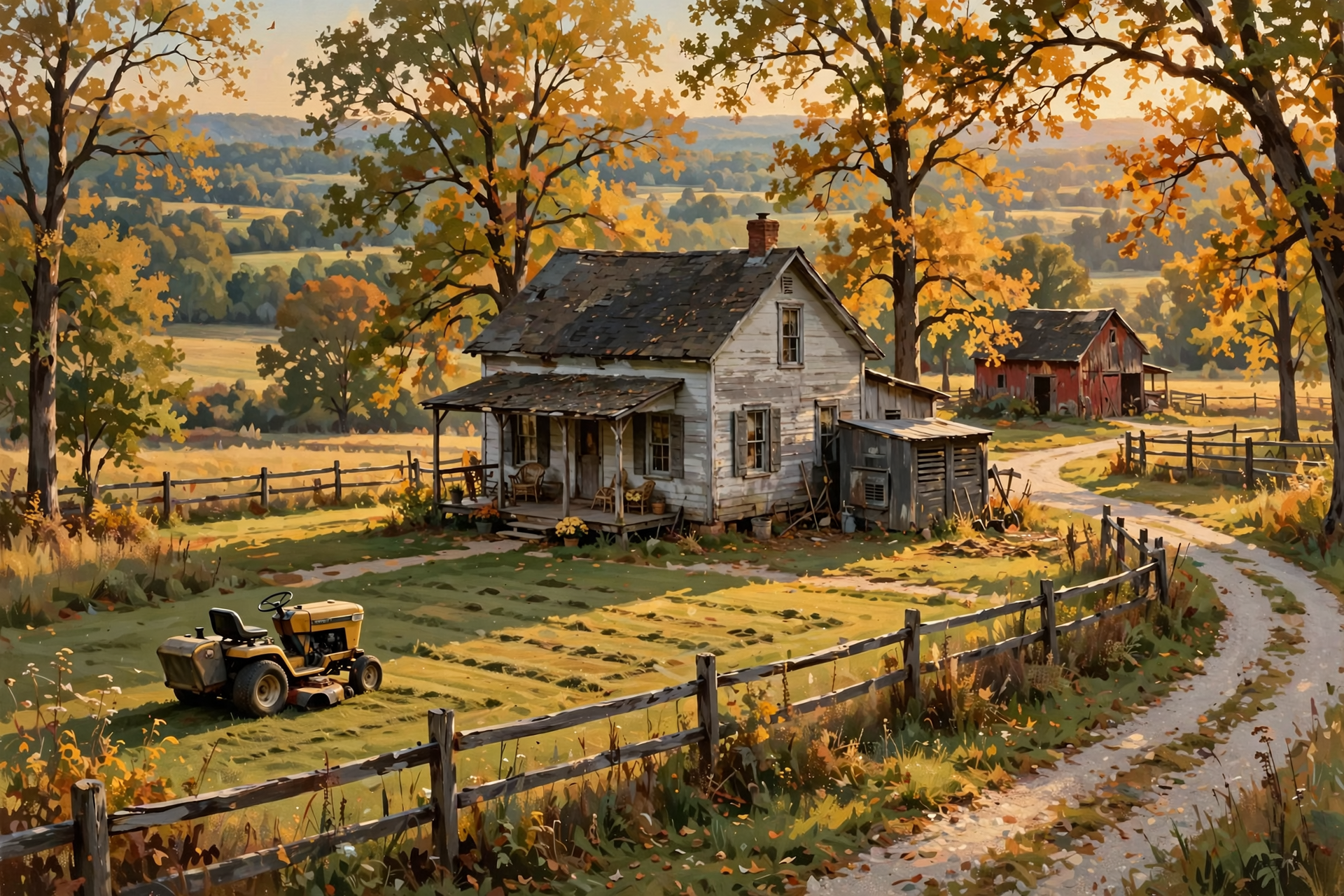
For many people in rural communities, “the house” includes much more than the structure.
It may include:
- several acres,
- grass to mow,
- a long driveway,
- trees,
- outbuildings,
- animals,
- fences,
- well systems,
- septic systems,
- generators,
- and a surprising collection of things that break on Saturdays.
So another question becomes:
Can I stay in this house if I can no longer maintain this property myself?
That may not be a house problem.
It may be a service problem.
If mowing, snow removal, repair work, cleaning and maintenance can be hired affordably, independence may continue much longer.
If those services don’t exist locally—or can’t reach the property—that changes the equation.
Now Try an AI-Assisted Home Audit
This is one of the places where AI can help surprisingly well.
Not by looking at one photograph and announcing:
Congratulations. Your house is senior approved.
That’s not the goal.
Use AI to structure the inspection.
Try this prompt:
I want to evaluate whether my current home is likely to support aging in place over the next 20 to 30 years. Interview me room by room and area by area. Cover the driveway, entrances, stairs, hallways, bedroom, bathroom, kitchen, laundry, lighting, flooring, storage, outdoor property, emergency access, power outages and home maintenance. Ask how each area currently works and what might become difficult if mobility, balance, vision, strength or endurance changed. Do not assume I need major renovations. Prioritize low-cost changes, future options and issues worth monitoring.
Then walk through the house while answering.
Don’t rely on memory.
Stand in the bathroom.
Stand on the porch.
Walk the stairs.
Look at the driveway.
Notice what you normally stop noticing.
You Can Also Use Photos—Carefully
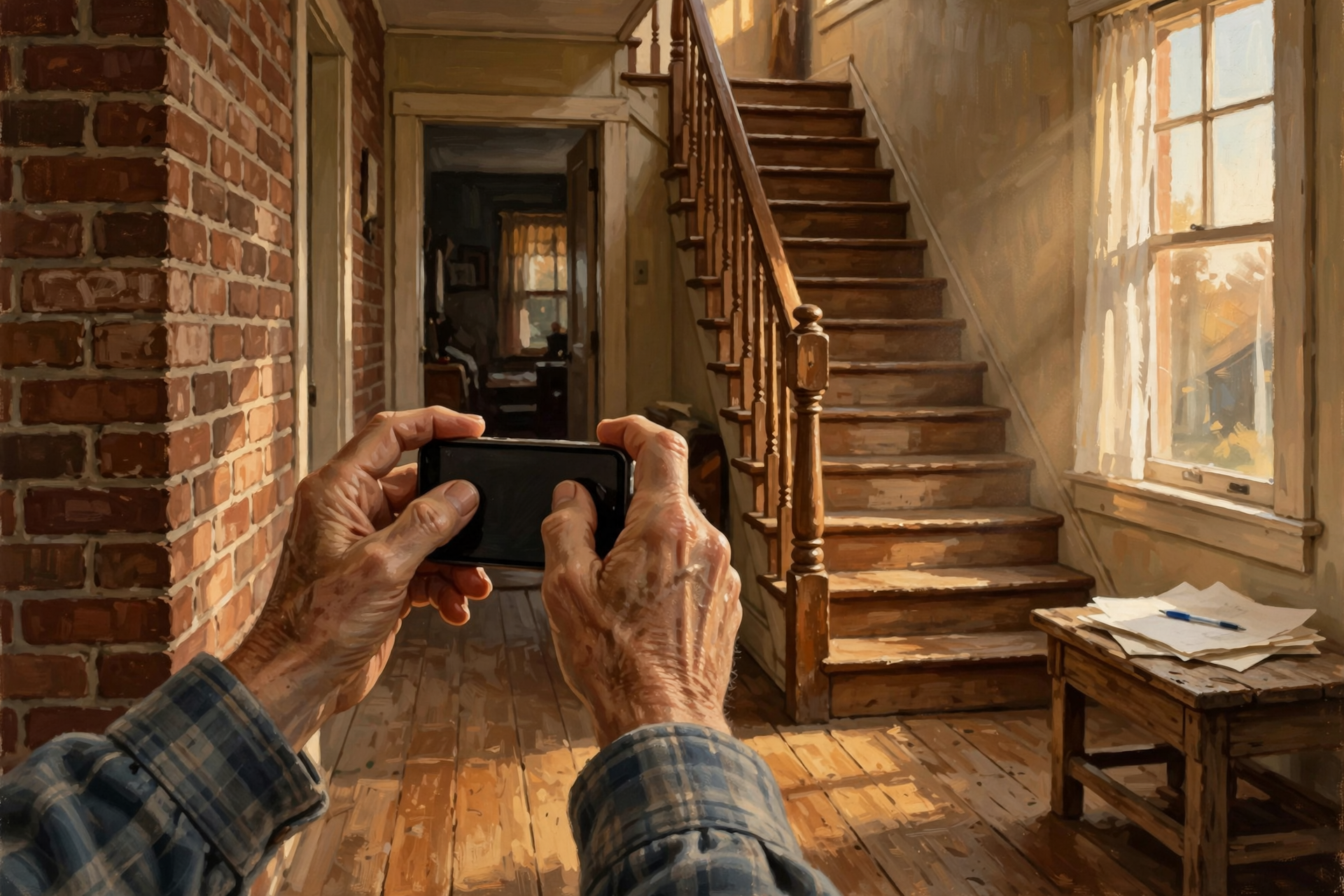
Many current AI systems can examine images.
That opens another useful possibility.
You might photograph:
- an entrance,
- a staircase,
- a bathroom,
- a hallway,
- or a kitchen.
Then ask:
Look at this area as a home-accessibility reviewer. Identify visible features that might become more difficult if someone had reduced balance, strength, mobility or vision. Separate obvious observations from things you cannot determine from the photograph. Suggest questions I should investigate rather than assuming the image tells you everything.
That last sentence matters.
A photograph can’t tell AI whether the floor is slippery when wet.
It may not know whether a railing is actually secure.
It can’t reliably determine every measurement.
But it may notice things you’ve stopped seeing because you’ve lived around them for years.
Create Three Lists, Not One

After the audit, don’t make a giant list of everything that could theoretically be changed.
That turns planning into a remodeling project.
Create three lists.
Fix Now
Things that are inexpensive, easy and useful regardless of age.
Examples might include:
- repairing a loose railing,
- improving dark lighting,
- removing a tripping hazard,
- securing a rug,
- moving frequently used items to easier locations.
Plan For Later
Things you don’t need today but should know how you’d handle.
Maybe:
- installing grab bars,
- changing a shower,
- creating a downstairs bedroom,
- adding a ramp,
- or relocating laundry.
Potential Deal Breakers
These are the bigger structural questions.
For example:
- the only bedroom is upstairs,
- every entrance requires difficult steps,
- the property requires extensive physical maintenance,
- the driveway becomes difficult in bad weather,
- or the home is simply too isolated if driving stops.
You don’t have to solve those today.
But they’re worth knowing about.
The Most Important Modification Might Be Outside the House
This is where aging in place gets more complicated than construction.
You could design the world’s most accessible bathroom.
But what happens if you can’t drive?
You could have zero stairs.
But what happens if nobody nearby delivers groceries?
You could install excellent lighting.
But what happens if you need help maintaining the property and nobody provides the service?
Aging in place depends partly on the house.
It also depends on the community around the house.
That’s particularly important in rural areas.
So the home audit should eventually expand into a community audit:
- transportation,
- medical access,
- home maintenance,
- food delivery,
- pharmacy delivery,
- home health,
- emergency response,
- technology support,
- and nearby family or neighbors.
Aging in Place Doesn’t Mean Never Leaving
I also think we need to be careful with the phrase “aging in place.”
It can sound like success means:
I will die in this house and nobody is moving me.
That’s not really the point.
The goal should be preserving independence and choice.
Maybe staying in the house is the best choice.
Maybe modifying it is.
Maybe moving closer to family eventually provides more independence.
Maybe a smaller house is easier.
Maybe an apartment eliminates maintenance.
Maybe a senior community increases social connection.
Planning isn’t about promising yourself today that you’ll never move.
It’s about making sure you don’t have to move suddenly because nobody noticed the obvious problems until Thursday.
There’s Another Benefit to Doing This at 61
If I discover something now, I don’t have to fix it tomorrow.
I have time.
That’s the advantage.
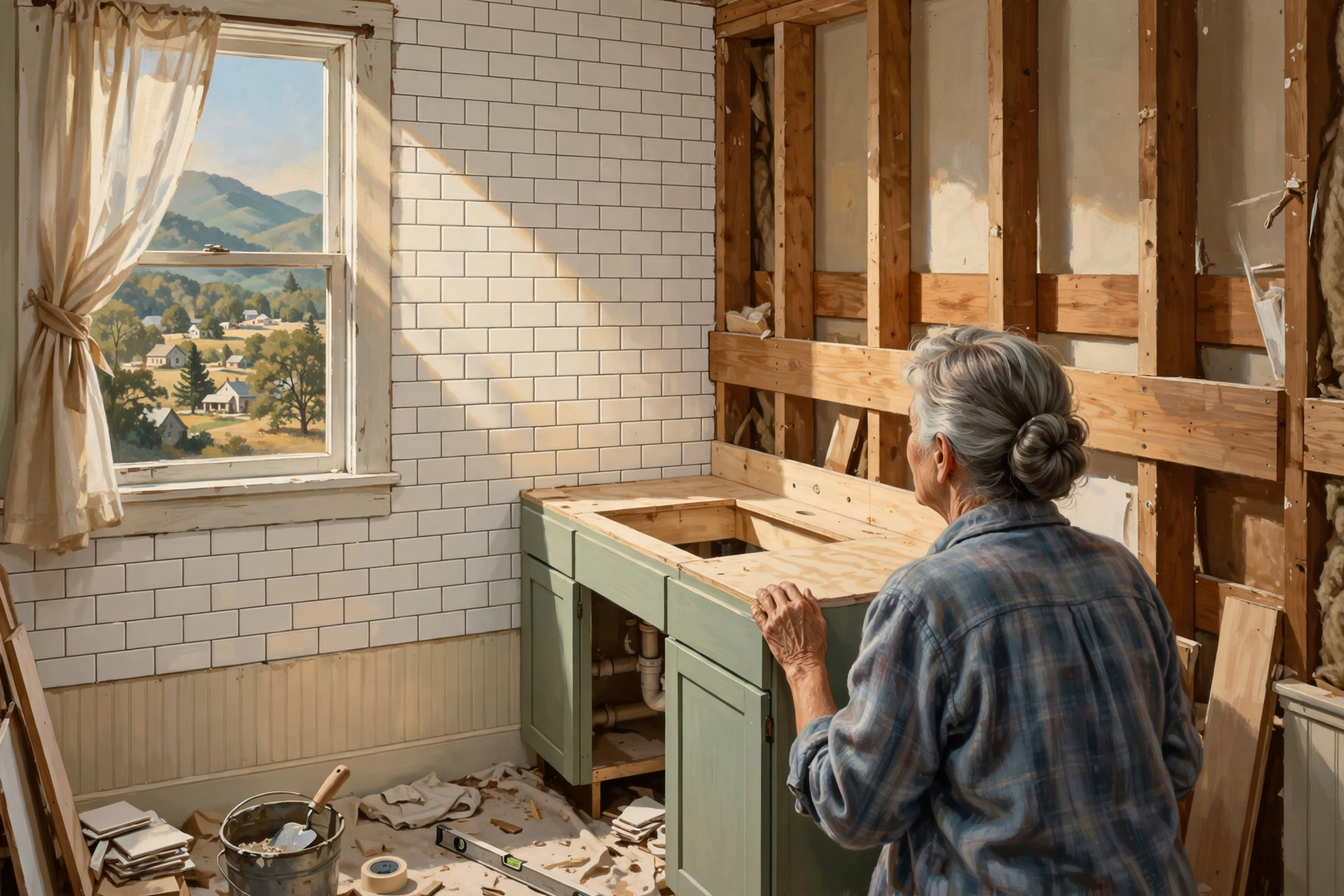
If a bathroom eventually needs modification, I can incorporate accessibility when it gets remodeled anyway.
If a railing needs replacement, I can choose a better design.
If the laundry location is a problem, maybe that gets addressed during another project.
If I eventually want a different house, I can include accessibility in the search criteria.
Planning early allows ordinary maintenance and normal home improvements to quietly make the house better for the future.
That’s much less expensive and disruptive than making every change during a crisis.
And Many Improvements Aren’t “Senior” Improvements at All
Better lighting?
Everybody benefits.
A sturdy handrail?
Useful at any age.
Less clutter?
Probably overdue anyway.
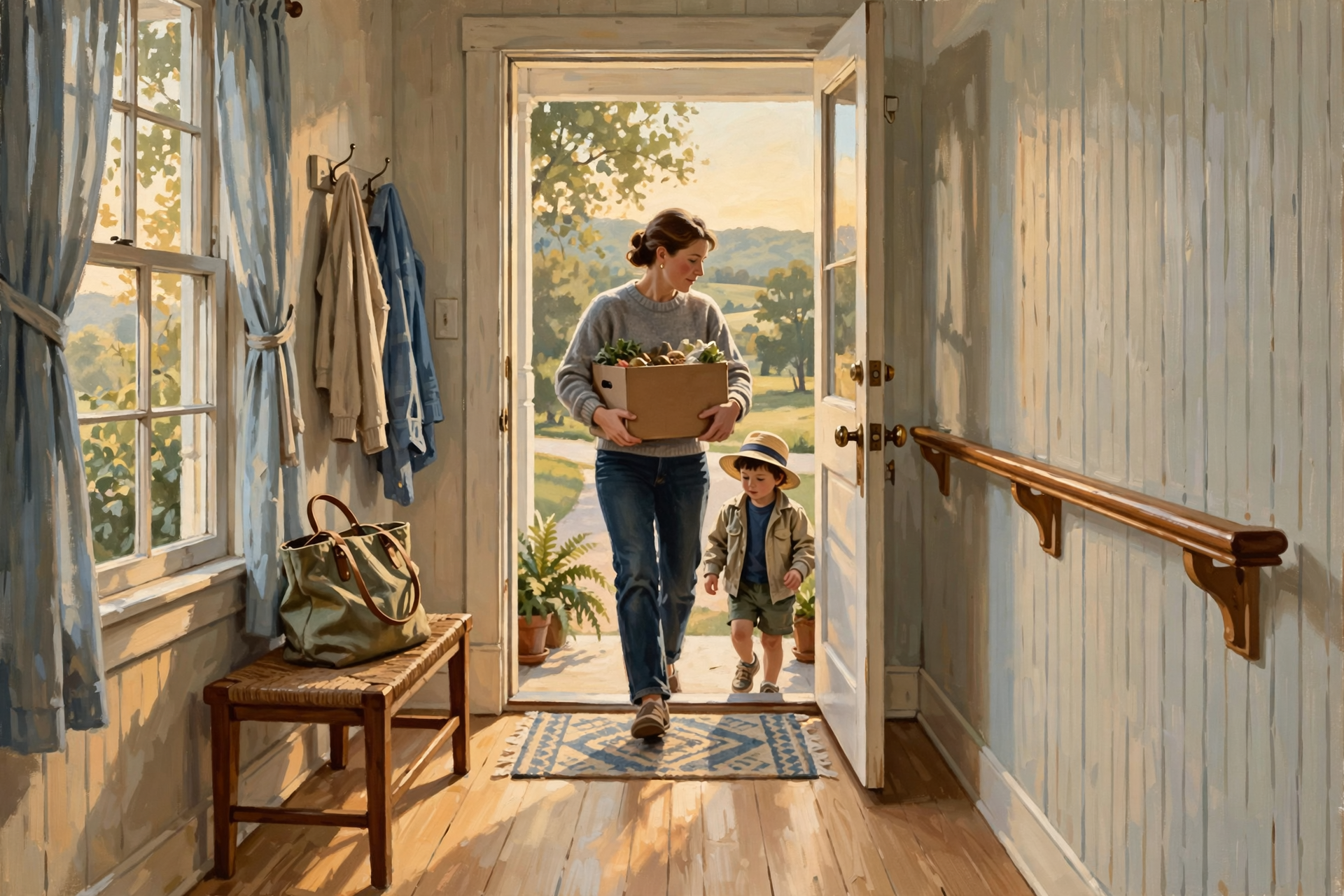
An easier entrance?
Useful when carrying groceries.
A curbless shower?
Often just good design.
Frequently, designing for an older version of ourselves means designing for ordinary humans.
Children.
Visitors.
People recovering from surgery.
Someone with an injured ankle.
Someone carrying a suitcase.
Someone carrying a grandchild.
Accessibility and convenience overlap more than we sometimes realize.
One More Thing: Falls Are Worth Taking Seriously
The CDC reports that more than one in four adults age 65 and older falls each year.
About one in ten falls results in an injury that leads to restricted activity or medical attention.
Falls also account for millions of emergency-department visits among older Americans each year.
That doesn’t mean falling is inevitable.
The CDC specifically emphasizes that falls can be prevented.
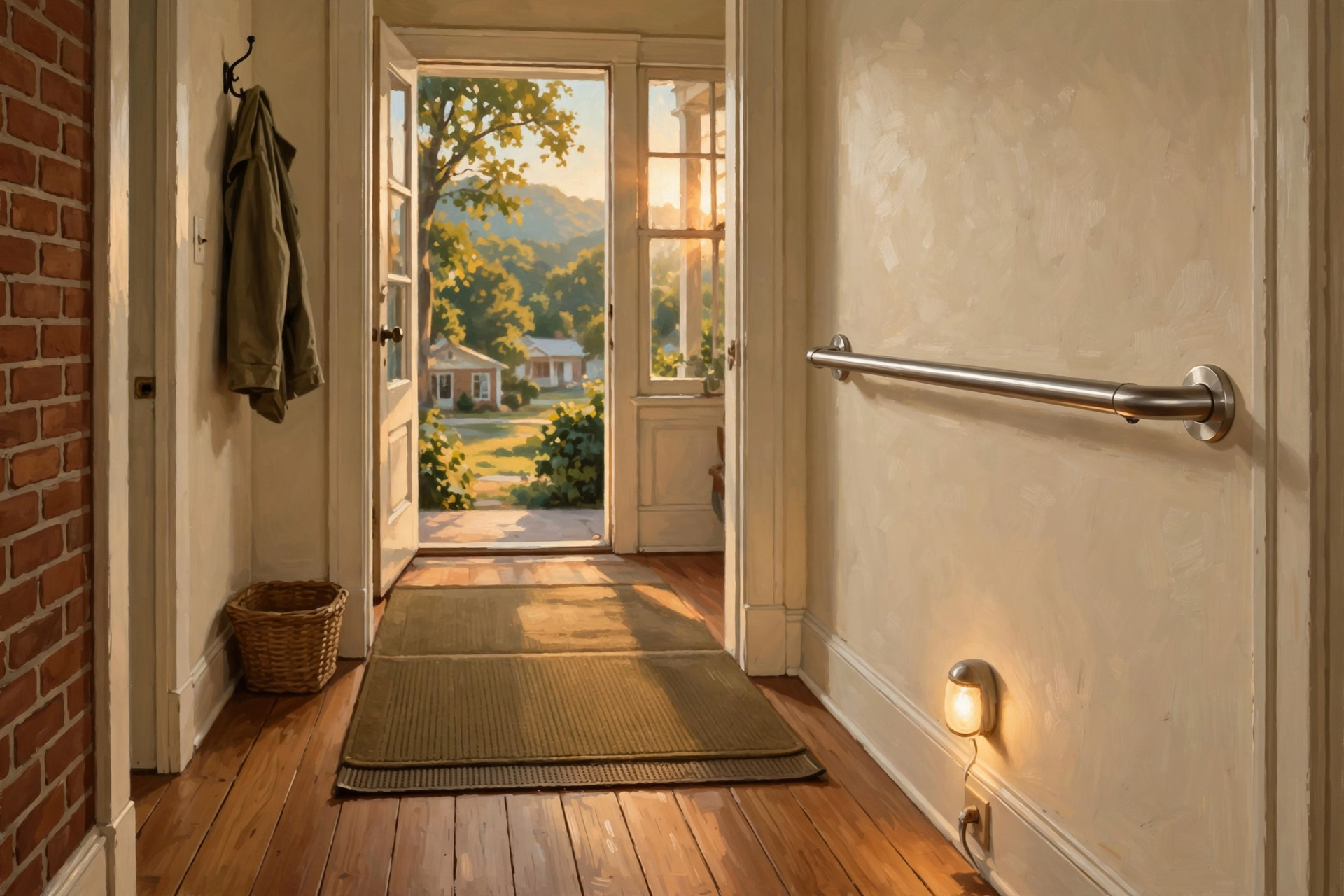
And the National Institute on Aging recommends practical home measures such as improved lighting, secure flooring, grab bars and attention to entrances and stairs.
Those are exactly the kinds of things this audit is intended to uncover.
My House Doesn’t Need to Be Ready for 81 Today
This is the part I want to keep in perspective.
I’m not trying to turn my 61-year-old home into an 81-year-old home overnight.
I’m trying to understand the path between the two.
What already works?
What could be improved easily?
What might eventually become difficult?
What would be expensive to change?
What depends on services outside the house?
And what would force a move if there were no alternative?
That’s enough.
Because once you know those answers, you have options.
And options are the thing this entire series is trying to preserve.
Try This: The 30-Minute Aging-in-Place Walkthrough
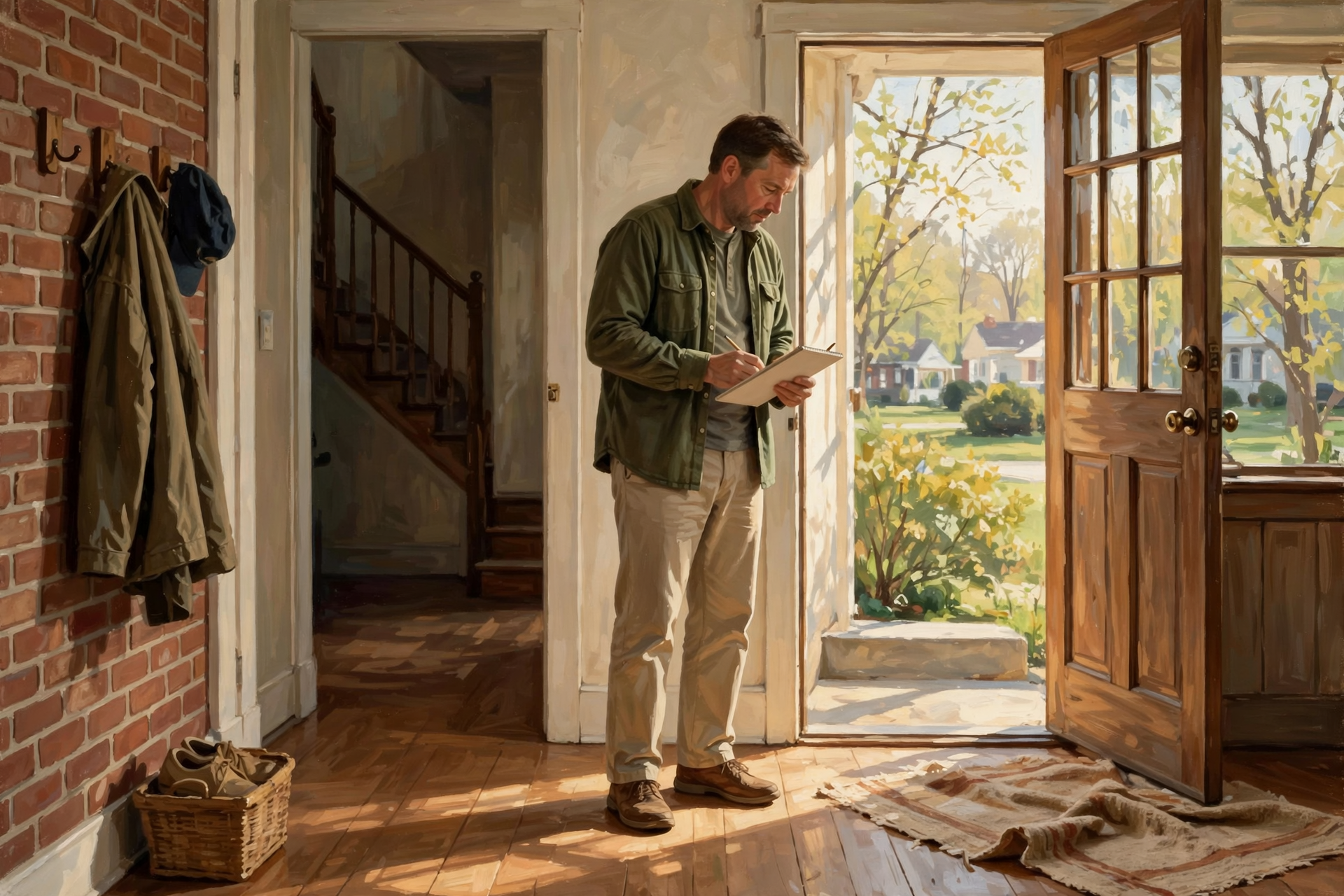
You don’t have to conduct a formal assessment today.
Take thirty minutes and walk through your home with these questions:
- Can I enter the house without difficult steps?
- Are the entrances well lit?
- Could I live primarily on one floor?
- Is there a usable bathroom on that floor?
- Could the bathroom accommodate reduced mobility?
- Are stairs well lit and equipped with sturdy railings?
- Are there loose rugs or obvious tripping hazards?
- Can I reach commonly used kitchen items easily?
- Where is the laundry, and how do I get to it?
- What household chores require significant strength or balance?
- What parts of the property require regular physical maintenance?
- What happens during a power outage?
- Could emergency responders easily reach the house?
- What would become difficult first if I stopped driving?
Then divide anything you notice into:
Fix Now.
Plan for Later.
Potential Deal Breakers.
Try This With AI: Your Home-Audit Prompt
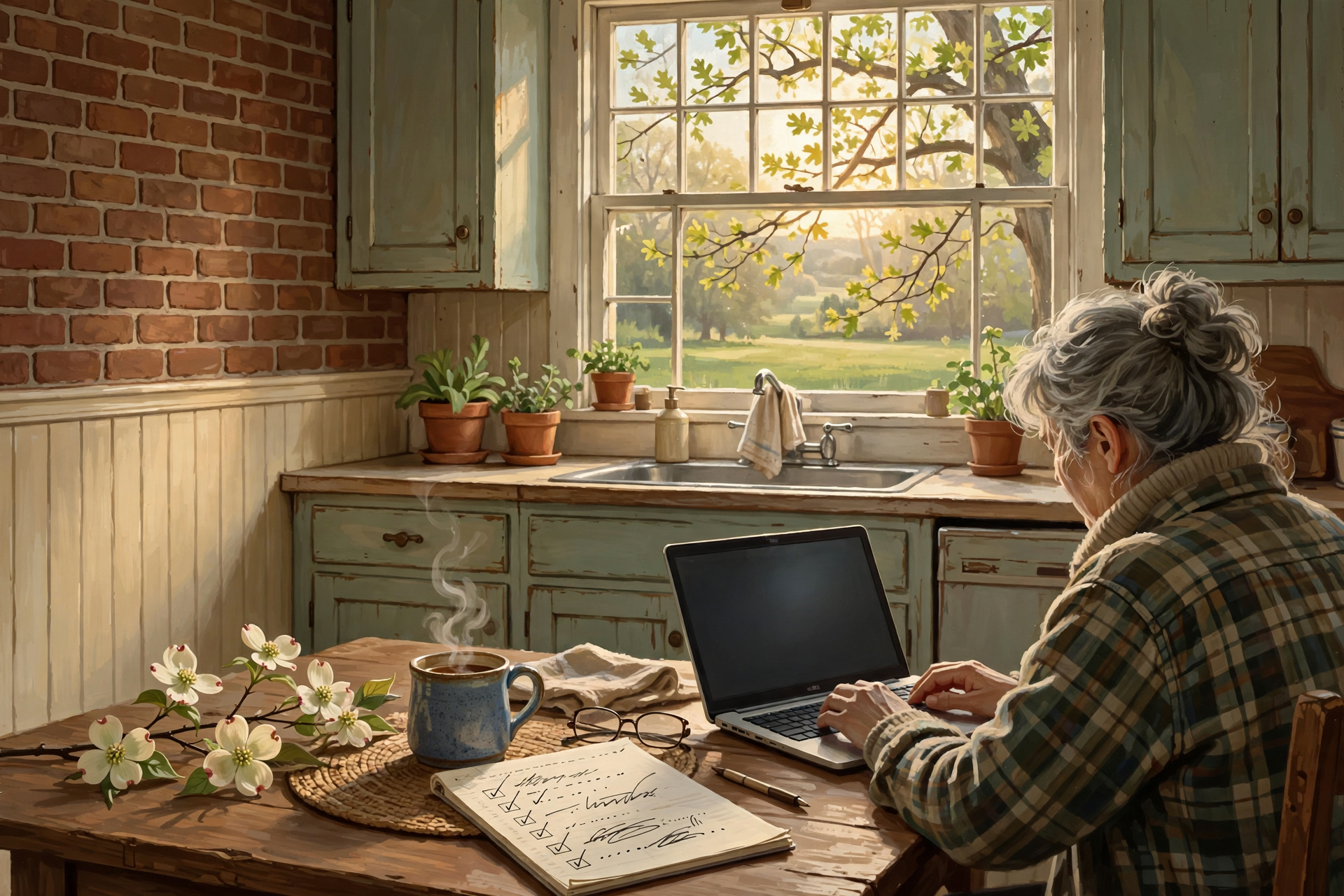
I want to determine how well my current home could support aging in place over the next 20 to 30 years. Interview me one question at a time. Work systematically through the driveway, parking, entrances, stairs, hallways, bedrooms, bathrooms, kitchen, laundry, lighting, flooring, storage, outdoor property, emergency access, power outages and maintenance requirements. For each area, ask what might become difficult if mobility, balance, strength, vision or endurance decreased. Prioritize inexpensive improvements and future planning rather than assuming major renovation is needed. At the end, organize the findings into three categories: Fix Now, Plan for Later and Potential Deal Breakers.
Questions for Your Family
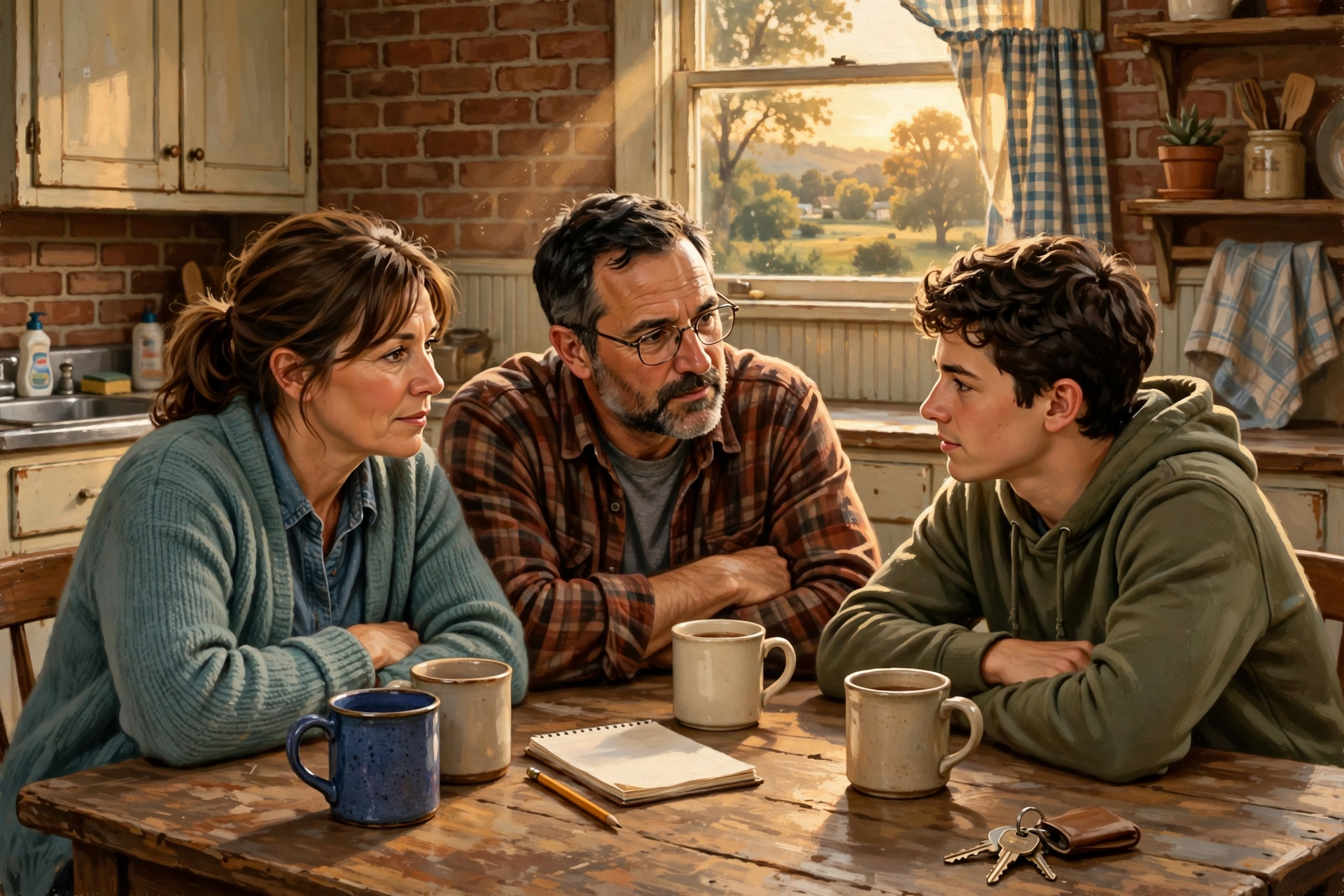
- Which part of this house would become difficult first?
- Could someone live here temporarily with reduced mobility?
- Could daily life happen on one floor?
- Which modification would make the biggest difference?
- Which problems could be fixed cheaply now?
- What property-maintenance jobs might eventually need to be hired out?
- What would happen if driving stopped?
- Which features of this house are worth preserving at almost any cost?
- Which features might someday make moving the better choice?
Wisdom From the Front Porch
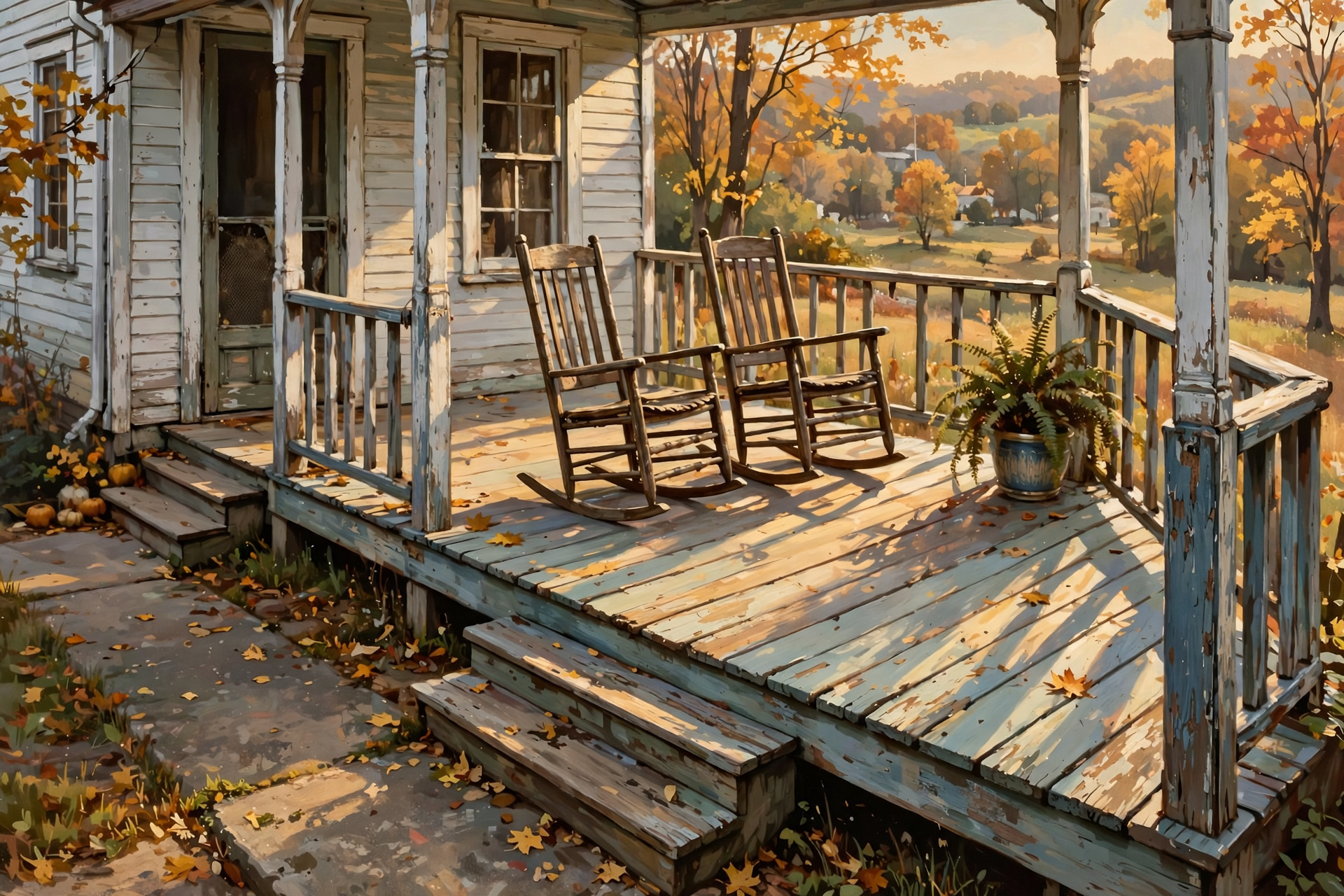
I don’t think aging in place should be a vow.
It should be an option.
And the best way to preserve that option is to understand what the house will require before we urgently need it.
The National Institute on Aging recommends reevaluating home safety periodically because needs change over time.
That seems like a much better approach than waiting until one Tuesday afternoon when somebody says:
“He can’t go home unless the house is safe.”
I’d rather know now.
At 61, I can look at the same staircase, bathroom, driveway and property my 81-year-old self may someday use.
And for once, instead of leaving him another problem to solve, maybe I can leave him some options.
Next in The Next Chapter: what happens when the house works perfectly well—but you can no longer drive?
Because in rural Tennessee, the car may be one of the most important pieces of aging-in-place equipment we own.




0 Comments