
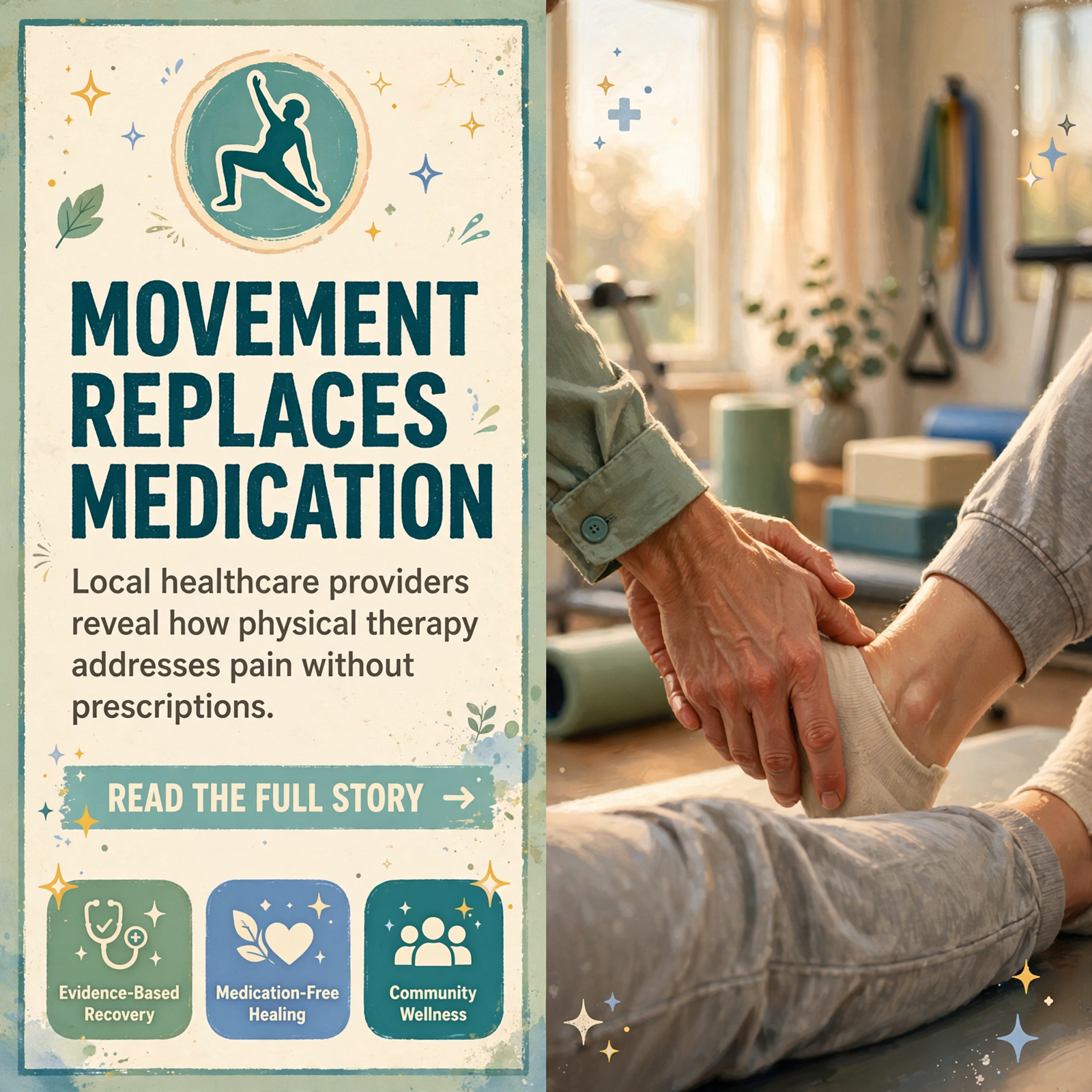
🏥 Beyond the Pill Bottle: Why Physical Therapy Is Reshaping How People Heal
As residents across the region navigate chronic pain, sports injuries, and recovery from surgery, a growing conversation is emerging about alternatives to medication-first approaches. Local healthcare providers are highlighting how evidence-based physical therapy addresses pain at its source-through movement, guidance, and personalized recovery plans.
💡 What This Means for Local Pain Management
The message is straightforward: pain relief doesn’t always require a prescription. Physical therapy works by identifying the root cause of discomfort, rebuilding strength, and restoring mobility in ways that create lasting results without the side effects associated with long-term medication use. For residents dealing with back pain, joint injuries, post-surgical recovery, or mobility loss, this approach offers a concrete alternative worth exploring.
The appeal is practical. No prescriptions. No ongoing medication costs. No risk of dependency. Instead, patients work with trained therapists to develop movement patterns and strength that address why the pain started in the first place-not just mask the symptoms.
❤️ Who This Affects
Physical therapy serves a broad spectrum of people: athletes recovering from sports injuries, older adults regaining independence after falls or surgery, workers managing repetitive strain, and anyone living with chronic pain who wants to reduce medication reliance. For families in the Sequatchie Valley and surrounding communities, having accessible physical therapy means more neighbors can stay active, return to work faster, and maintain quality of life without becoming dependent on pain medications.
This is particularly relevant in rural and semi-rural areas where transportation to specialists can be challenging and where community members often prefer hands-on, relationship-based care over distant medical interventions.
🤝 Community Connections
Physical therapy clinics often work closely with local primary care doctors, chiropractors, and wellness centers to create a coordinated care network. When a patient’s doctor refers them to physical therapy, or when someone visits a local wellness provider and learns about movement-based recovery, those connections strengthen the overall health infrastructure of the community. Residents benefit from having multiple local resources-from Head 2 Toe Massage Therapy to Dunlap Chiropractic & Wellness-that can work together to support recovery and long-term health.
📍 What Residents Should Know
If you’re considering physical therapy, here are practical steps:
- Talk to your doctor: Most insurance plans cover physical therapy with a referral. Your primary care provider can recommend a clinic and help ensure coverage.
- Ask about evidence-based approaches: Look for clinics that focus on personalized plans built around your specific condition and goals.
- Expect active participation: Physical therapy works best when patients commit to guided exercises and follow-through at home. It’s a partnership between you and your therapist.
- Plan for consistency: Recovery typically requires multiple sessions over weeks or months. Ask about scheduling flexibility and what to expect in terms of timeline.
🔄 What Happens Next
As more residents learn about physical therapy’s effectiveness, demand for these services is likely to grow. Local clinics may expand hours, add specialized programs (like sports injury recovery or senior mobility), or deepen partnerships with primary care providers to make referrals easier. For people currently managing pain with medication, this is a good time to ask your doctor whether physical therapy might be part of your recovery plan.
🧵 Community Threads: The Care Network
The Doctor-Therapist Connection: When primary care physicians refer patients to physical therapy, they’re building a local care network that keeps recovery local. Patients don’t have to travel far, and their care team stays informed about progress. This strengthens trust in the community healthcare system and makes recovery more accessible.
The Workplace Wellness Thread: Employers and workers benefit when physical therapy helps people return to work faster and with fewer complications. Fewer missed days, lower injury recurrence rates, and reduced long-term disability claims all strengthen the local economy and workforce stability.
The Family Support Network: When one family member recovers well through physical therapy, others in the family often learn about the option. This creates a ripple effect where more neighbors understand that pain management doesn’t have to mean lifelong medication-it can mean regaining strength and independence.
❓ Questions Worth Asking
- If you’ve been managing pain with medication for months or years, have you ever asked your doctor whether physical therapy might help you reduce or eliminate that medication?
- What barriers-cost, time, transportation, skepticism-keep people in your community from trying physical therapy, and how could those barriers be lowered?
- How might local employers benefit from encouraging employees to pursue physical therapy for work-related injuries instead of relying on pain medication?
- What role could community education play in helping residents understand that “movement is medicine” isn’t just a slogan-it’s backed by research?
🌱 Long-Term Community Impact
As physical therapy becomes a more visible and accessible option in the region, the community’s relationship with pain and recovery could shift. Fewer residents might become dependent on long-term pain medications. More people might stay active and independent longer. Workplaces might see fewer injuries and faster returns to productivity. Families might experience less disruption from chronic pain. Over time, this shift toward movement-based recovery could strengthen the overall health and resilience of the community-not just treating pain, but preventing it through strength, mobility, and informed self-care.




0 Comments