

🍂 A Drier Map Statewide, Winter Coats for the Fruit Trees, a Red-Leaf Tree Worth Planting and a Second Life for the Jack-o'-Lantern — Your Farm & Garden Report
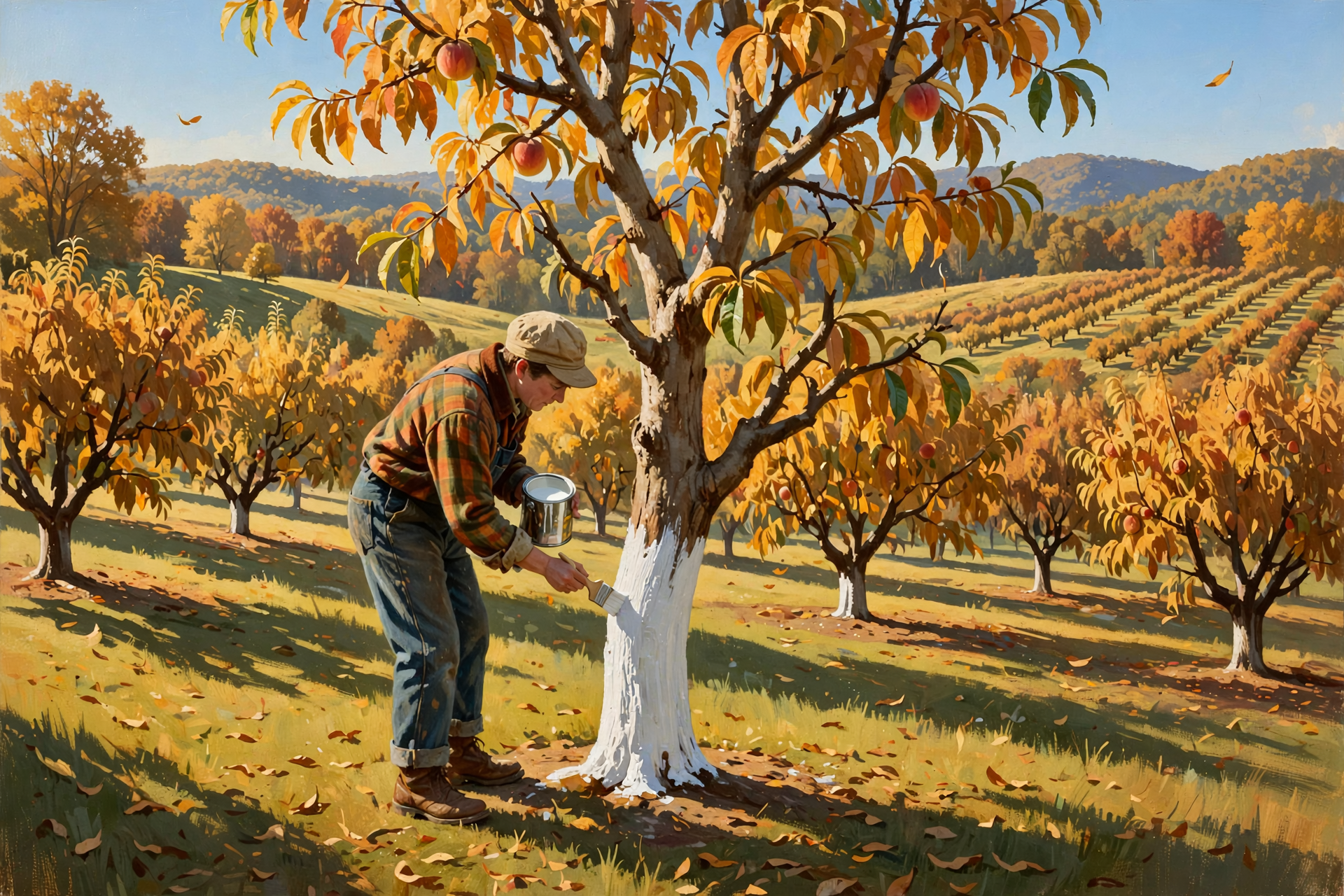
Or: A Sunny Thursday in Dunlap — Read the New Drought Map, Tell It What You See, Paint the Peach Trunks and Start a Compost Pile Before Halloween
By Thomas Seest, Dunlap.Today · Thursday, October 22, 2026
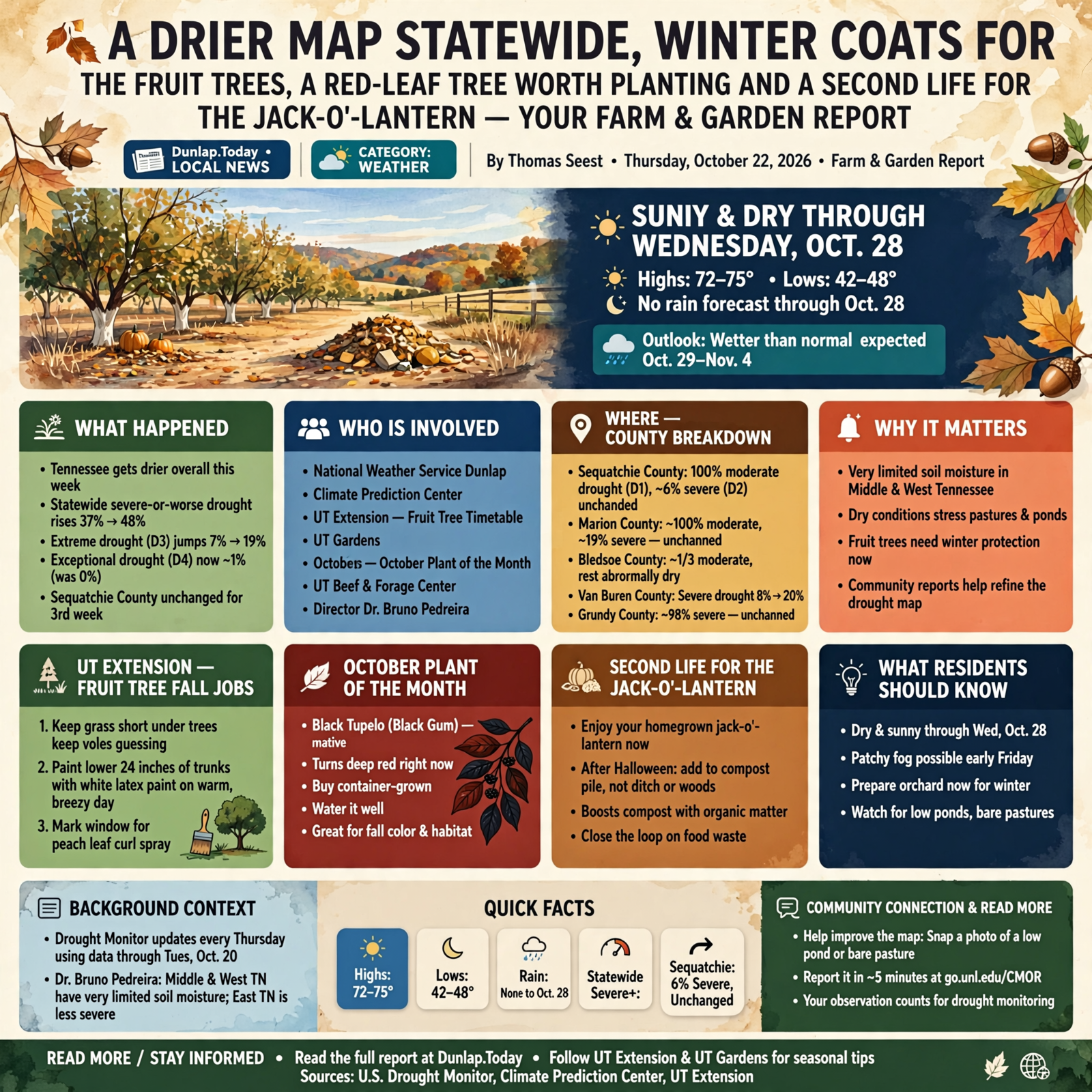
Good Thursday morning. It’s another clear one. National Weather Service Dunlap calls for sunny skies today with a high near 75, then a long run of the same: highs from 72 to 75, lows from 42 to 48, a little patchy fog early Friday, and no rain in the forecast through next Wednesday, Oct. 28. There’s a hopeful note further out, too. The Climate Prediction Center’s newest outlook leans wetter than normal for Oct. 29 to Nov. 4 across Tennessee.
Here’s the roundup. Today’s U.S. Drought Monitor map shows Tennessee getting drier as a whole, while Sequatchie County’s numbers held steady for a third straight week. There’s also a free, five-minute way to tell the map-makers what you’re seeing on your own place. For the orchard, UT Extension’s fruit tree timetable has three fall-into-winter jobs: keep the voles guessing, paint the lower trunks white, and mark the window for the peach leaf curl spray. UT Gardens’ October Plant of the Month is the black tupelo, a native tree that turns a deep red right about now. And UT’s garden calendar ends October with a nudge to enjoy a homegrown jack-o’-lantern, then put it to work in a compost pile. A short checklist is at the end.
⏱️ What this means for you in 30 seconds
- Weather: Sunny and dry through Wednesday, Oct. 28. Highs 72–75, lows 42–48. Rain odds lean higher Oct. 29 to Nov. 4.
- Drought map: Sequatchie is unchanged, with all of the county in moderate drought and about 6% in severe. Statewide, severe-or-worse drought grew from about 37% to 48%.
- Your report counts: Snap a photo of a low pond or a bare pasture and send it in at go.unl.edu/CMOR.
- Fruit trees: Paint the bottom 24 inches of the trunks with white latex paint on a warm, breezy day. Keep the grass short under the trees.
- Plant pick: Black tupelo (black gum) for red fall color. Buy it container-grown and water it well.
- Remember: After Halloween, the pumpkin goes in the compost, not the ditch or the woods.
🗺️ The New Drought Map, Farm Edition: Steady at Home, Drier Across the State
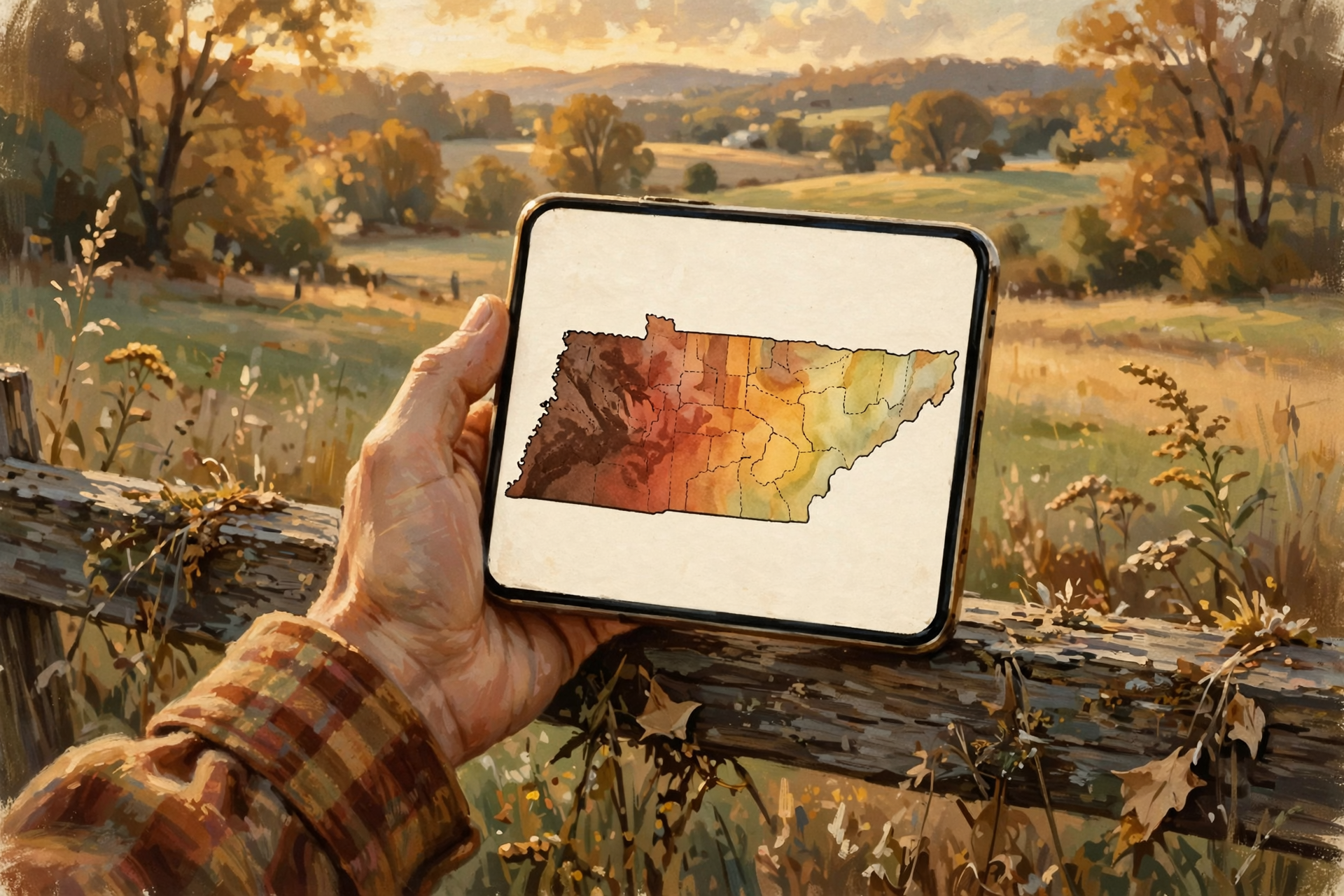
The U.S. Drought Monitor puts out a new map every Thursday, and today’s map uses data through Tuesday morning, Oct. 20. Here’s what it shows for the Valley and our neighbors, in plain numbers:
- Sequatchie County: 100% in at least moderate drought (D1), and about 6% in severe drought (D2). That’s the same as the last two maps.
- Marion County: Nearly all in moderate drought, and about 19% severe, also unchanged from last week.
- Bledsoe County: About a third in moderate drought, and the rest abnormally dry.
- Van Buren County: The severe-drought share grew from about 8% to 20% this week.
- Grundy County: About 98% severe drought, the same as last week.
Statewide, the picture got drier. The share of Tennessee in severe drought or worse rose from about 37% to 48% in one week. Extreme drought (D3) jumped from about 7% to 19%, and about 1% of the state now shows exceptional drought (D4), up from none last week. UT Beef & Forage Center director Dr. Bruno Pedreira wrote this month that Middle and West Tennessee have very limited soil moisture, while East Tennessee’s drought is less severe. Those big jumps are mostly west of us.
Here’s something many folks don’t know. The Drought Monitor’s authors can look at reports from regular people. The National Drought Mitigation Center runs a free program called CMOR (Condition Monitoring Observer Reports). You pick how dry or wet it is on a seven-step scale, check off what you’re seeing, like a low pond or a short hay crop, and add up to five photos. Reports show up on a public map. The fact sheet says the map’s author may consult those reports to spot areas that need a closer look. It also notes that the Drought Monitor helps trigger programs like USDA’s Livestock Forage Disaster Program. A report doesn’t guarantee a change on the map, but it adds your eyes to the data. You can give just your nearest town or county instead of an exact spot.
What it means for you: Think of it like telling the doctor where it hurts. The tests matter, but so does your word. If your pond is down a couple of feet or the fescue isn’t coming back, take a picture this week and send it in. The fact sheet suggests a photo each week, month or season so there’s something to compare. A “before” picture from a normal year helps too, if you have one.
👉 Read more (U.S. Drought Monitor: Tennessee, Oct. 22 map) · How to send a CMOR drought report · UT Live.Stock Companion, October 2026
🍑 Winter Coats for the Fruit Trees: Three Jobs From UT’s Timetable
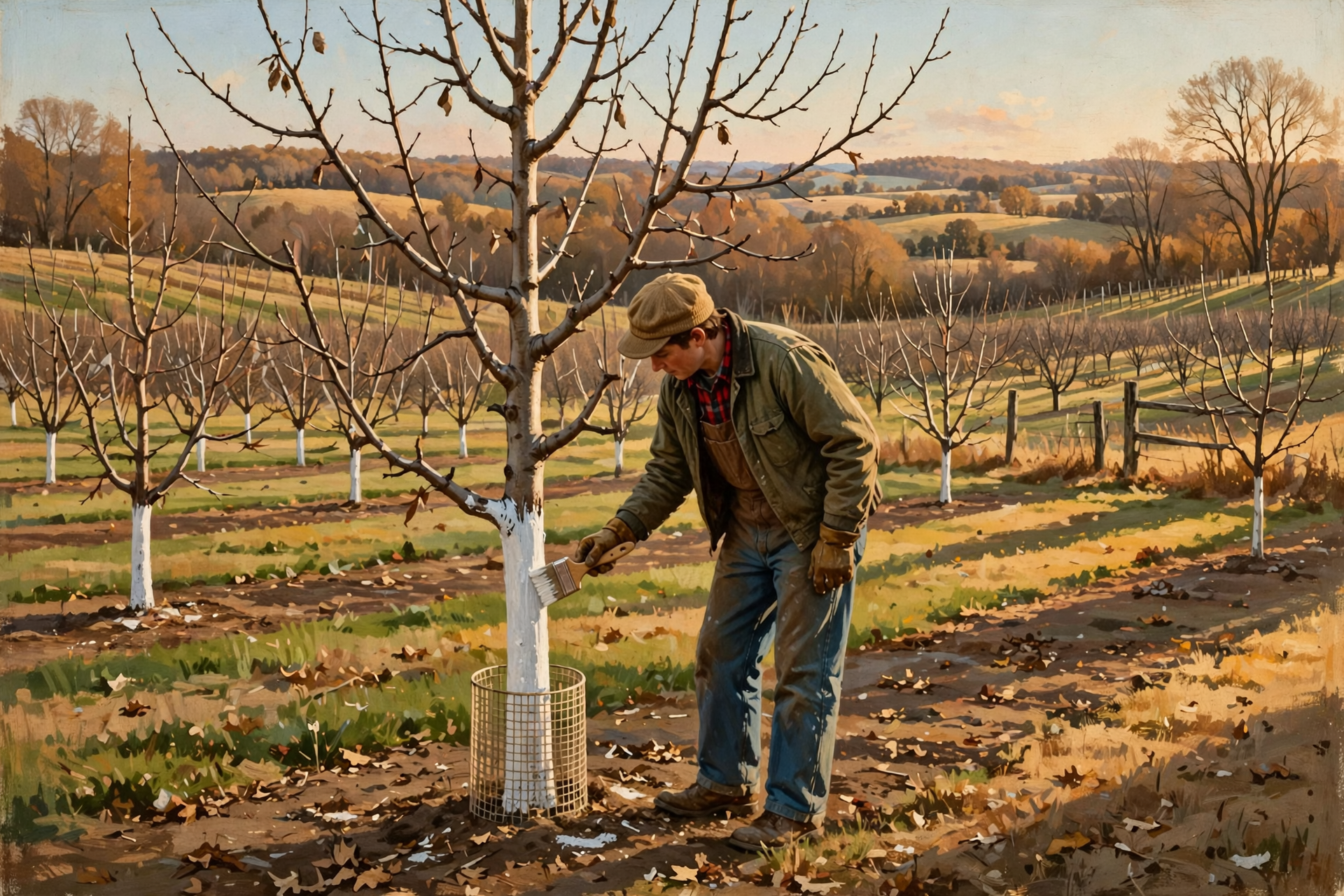
UT Extension’s Fruit Tree Management Timetable lays out the orchard year like a clock face, and the fall-into-winter part has three jobs that fit this dry, sunny stretch.
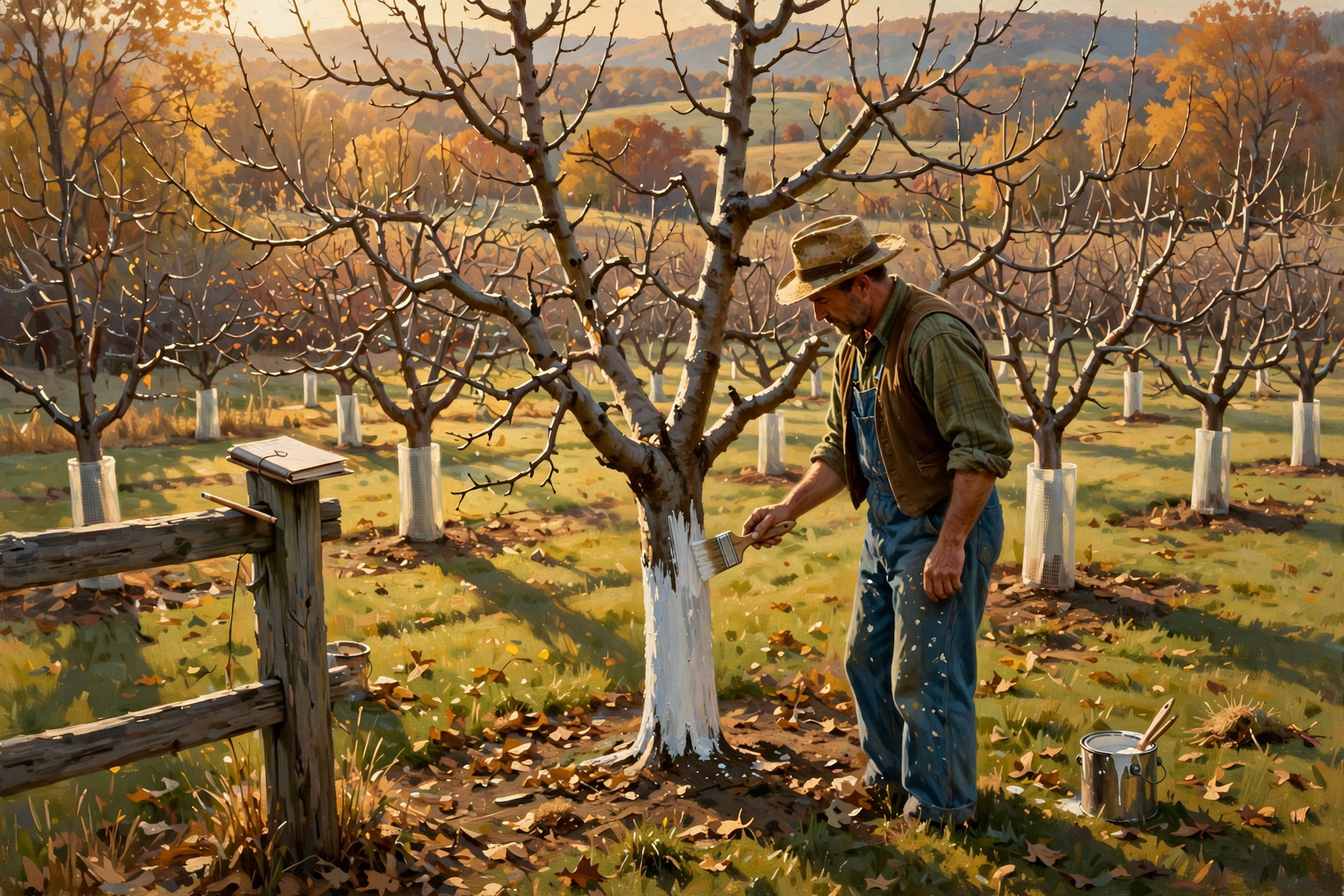
- Paint the lower trunks white. UT says winter injury to trunks, also called southwest trunk injury, “may be a severe problem in all fruit trees.” Its fix is simple: paint the lower 24 inches of each trunk with white latex paint to keep the bark from heating up on sunny winter days. UT says to paint on days with good drying conditions, warm and breezy. This week fits the bill.
- Keep the voles guessing. UT lists pine, meadow and prairie voles as orchard pests in Tennessee. Its home-orchard steps are to keep bare soil under the trees, mow the rows and edges, put on tree guards, and pick up or crush dropped fruit. UT’s wildlife guide adds that voles feed more on bark and roots in the dormant season. UT’s lawn and landscape guide says thick mulch right next to plants gives them cover.
- Mark the peach leaf curl window. UT says peach leaf curl can be controlled by spraying any time from leaf drop in the fall up to bud swell in spring. You don’t have to do it this week. Just jot it down, and check UT’s home fruit spray guide (PB1622) for the product and the label directions.
UT also calls weed and grass control under fruit trees a “year-round” job, because the grass competes with the tree for water. In a dry fall, that matters more than usual. And UT suggests a soil test for an orchard every third to fifth year.
What it means for you: It’s like putting a coat and boots on the kids before they go out in the cold. A coat of white paint shades the bark, and a short-mowed circle with a guard keeps the voles from chewing. One afternoon now can save a tree you’ve been babying for years. If you’re not sure your trunks show winter damage, take a photo by the Sequatchie County Extension office: 423-949-2611.
👉 Read more (UT Extension: Fruit Tree Management Timetable, SP307-D) · UT Extension: Managing Wildlife (voles) · UT Lawn & Landscape Guide: Moles and voles
🌳 The Tree That’s Turning Red Right Now: Black Tupelo
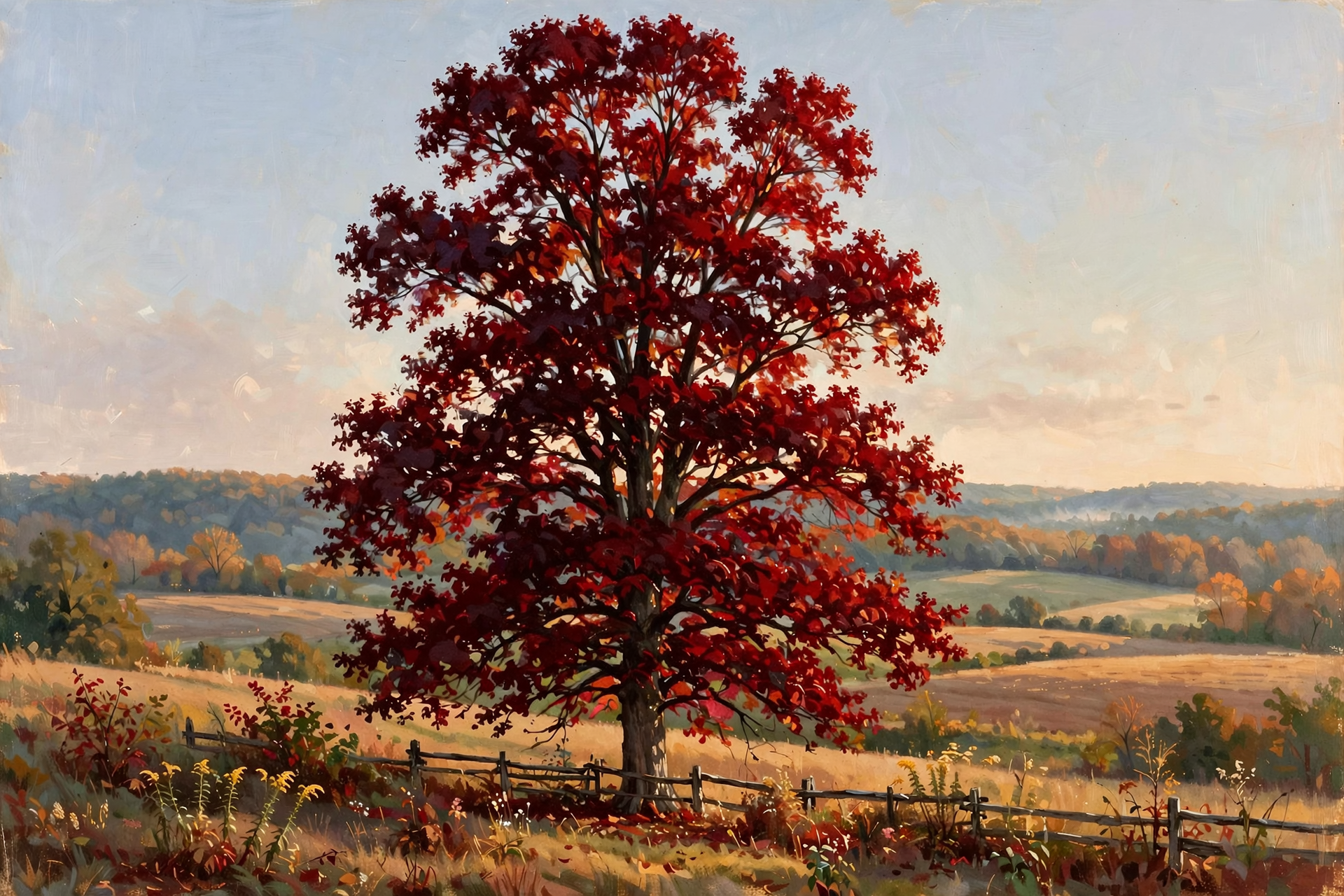
If you’ve seen a tree along a fencerow go a deep, glossy red this month, there’s a fair chance it’s a black gum. UT Gardens picked it, under its other name black tupelo (Nyssa sylvatica), as its October Plant of the Month. It’s a native of the Eastern United States, and it’s also called sour gum. UT says it grows 30 to 70 feet tall and 20 to 30 feet wide and makes excellent shade. Its fall leaves turn from orange-red to dark red, depending on the variety.
A few planting notes from UT:
- It grows best in full to part sun and in acidic, somewhat moist soil, especially when it’s young.
- It has a strong taproot, which makes moving it hard. UT suggests buying container-grown or bare-root trees, not balled-and-burlapped ones.
- Container-grown trees can go in this fall “with adequate watering.” Bare-root trees should wait for spring.
- It looks nice with smaller plants like dogwood and azalea around it.
- Female trees make small bluish-black fruit that many birds and mammals eat. You need both a male and a female tree to get fruit.
- Leaf spot is one of its few problems. UT notes a variety called Red Rage resists it.
Want to see one before you buy? UT says UT Gardens, Crossville has the species, a pretty drive up the plateau this time of year.
What it means for you: Planting a black gum is like putting money in a savings account for your grandkids. It starts slow, but one day it pays shade and color every October. Because of the dry weather, if you plant one now, plan on watering it. Then let fall’s rains take over when they come.
👉 Read more (UTIA: Sweet as Tupelo, UT Gardens’ October Plant of the Month)
🎃 Carve It, Enjoy It, Then Compost It: A Second Life for the Jack-o’-Lantern
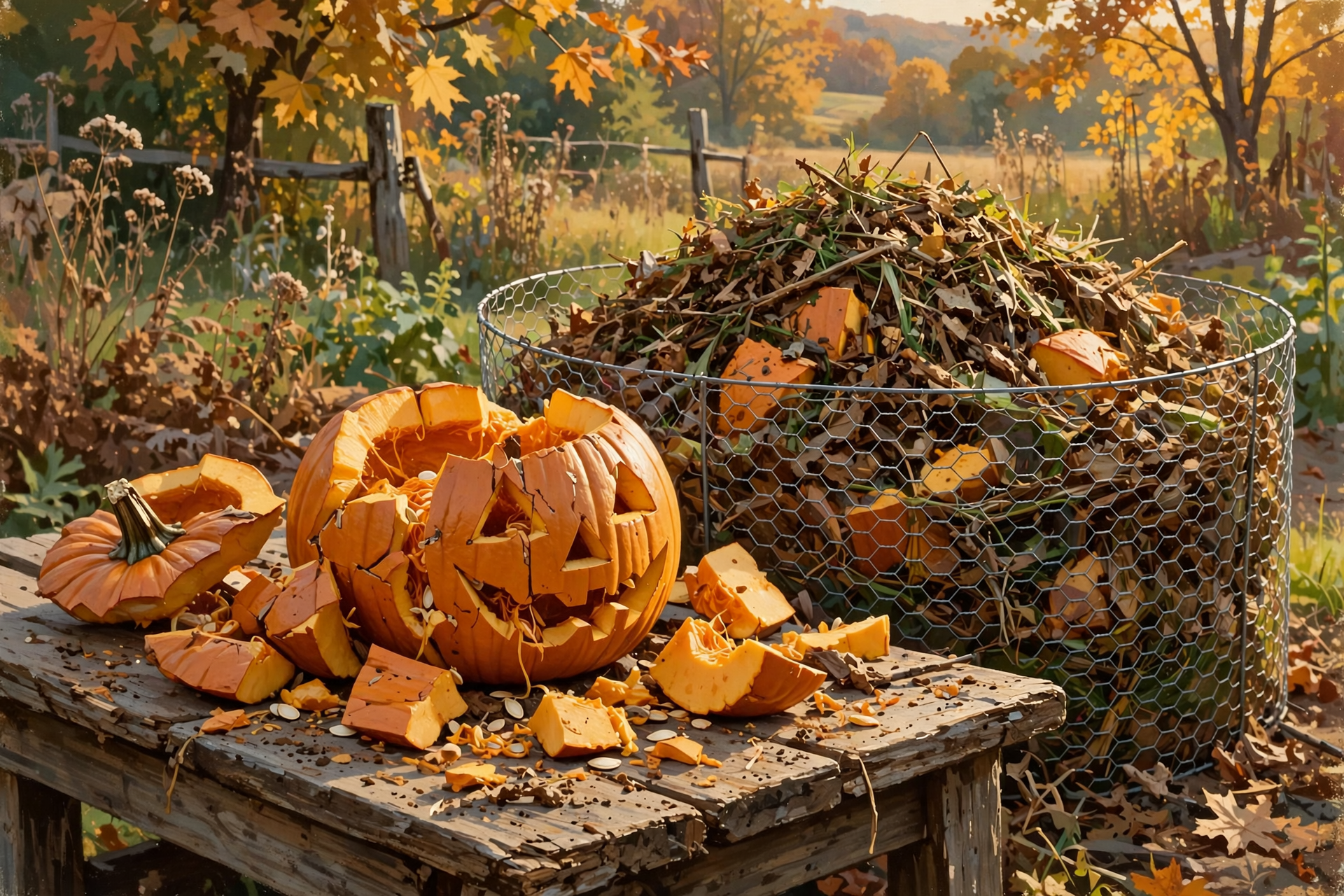
UT’s 2026 garden calendar has a cheerful note for Saturday, Oct. 31: “Enjoy a homegrown jack-o’-lantern for Halloween!” Its list of November tasks follows right behind: fall is “a great time to set up a compost pile” with disease-free garden debris, plus leaves and lawn clippings. Put those two together and the porch pumpkin has a job after Halloween.
The Tennessee Department of Environment and Conservation’s home composting guide makes it simple. A pile needs four things:
- Browns: dead leaves, twigs and small branches.
- Greens: grass clippings, vegetable and fruit scraps (a pumpkin counts), and coffee grounds.
- Water: about as damp as a wrung-out sponge.
- Air: stir it now and then so it doesn’t smell.
TDEC says to pick a spot with at least five hours of sun, and that a ring of chicken wire or a plain pile works fine. Cover food scraps with leaves so they don’t draw bugs. Leave out meat, bones, dairy, grease, pet waste, weeds that have gone to seed, and diseased plants. University of Illinois Extension adds two pumpkin tips: pull off any paint and decorations first, and don’t toss old pumpkins in the woods or a ditch. Smashing it into pieces helps it break down faster.
What it means for you: It’s like the last slice of pie going to a good home instead of the trash. The kids get a pumpkin-smashing job on Nov. 1, and next spring’s garden gets the payoff. Fall leaves are about to give you more “browns” than you know what to do with, so this is the easiest month all year to start a pile.
👉 Read more (TDEC: Residential Composting) · UT 2026 garden calendar · Illinois Extension: What to do with old pumpkins
📌 Sticky Notes for the Fridge

- This week: Sunny and dry in Dunlap through Wednesday, Oct. 28. Highs 72–75, lows 42–48. Patchy fog early Friday.
- Saturdays, Oct. 24 and 31, 9 a.m.–1 p.m.: Last two regular Dunlap Farmers Market days (confirm before you go).
- Saturday, Oct. 24: UT’s garden calendar says fall is a good time to deal with voles or other problems in fruit plantings.
- Sunday, Oct. 25, 1–5 p.m. Central: Fall in the Foothills, Little River Dairy, Walland. Free.
- About Oct. 28 to Nov. 2: Johnsongrass waiting period ends if your pasture frosted Oct. 18 or 19.
- Thursday, Oct. 29: Next U.S. Drought Monitor map.
- Oct. 29 to Nov. 4: Federal outlook leans wetter than normal for Tennessee.
- Saturday, Oct. 31: Halloween. Enjoy the jack-o’-lantern, then compost it.
- Sunday, Nov. 1: Clocks fall back one hour.
- Friday, Nov. 6, 8 a.m. Central: Tennessee Forage & Grassland Council annual meeting, Crossville.
- Monday, Nov. 9: Last day to apply for winter-storm emergency loans with FSA.
- Wednesday, Nov. 11: UT Live.Stock broadcast (details at UTBEEF.COM).
- Sunday, Nov. 15: White oak acorn collection ends.
- Friday, Nov. 20: Apply-by date for 2027 NRCS conservation funding in Tennessee.
- Monday, Dec. 7: FSA county committee ballots due.
- Friday, Dec. 11: ARC/PLC 2026 enrollment deadline.
- Friday, Dec. 18: Dairy Margin Coverage signup ends.
- Thursday, Dec. 31: Organic Certification Cost Share applications due.
👉 Climate Prediction Center: 8-to-14-day outlook · Dunlap Farmers Market · UT Extension Sequatchie County
✅ Your Farm & Garden Checklist for This Sunny Week
- ✅ Look up your county on today’s Drought Monitor map, and write down the numbers.
- ✅ Take a photo of your pond, creek or pasture and send a report at go.unl.edu/CMOR.
- ✅ Pick a warm, breezy afternoon and paint the bottom 24 inches of each fruit tree trunk with white latex paint.
- ✅ Mow short under the fruit trees, pull mulch back from the trunks, and check the tree guards.
- ✅ Write “peach leaf curl spray: leaf drop to bud swell” on the barn calendar.
- ✅ Thinking of a shade tree? Look for a container-grown black tupelo, and plan to water it.
- ✅ Pick a sunny corner for a compost pile. A ring of chicken wire is plenty.
- ✅ After Halloween, take off any paint or decorations, smash the pumpkin and add it to the pile with a layer of leaves.
Practical rule: Report what you see, paint the trunks white, plant trees you can water, and let the pumpkin feed next year’s garden.
— Dunlap.Today
📚 Plain-English Farm & Garden Glossary
- U.S. Drought Monitor: A weekly national map, released on Thursdays, that shows where drought is and how bad it is.
- D0 to D4: The Drought Monitor’s scale. D0 is abnormally dry, D1 moderate, D2 severe, D3 extreme and D4 exceptional drought.
- CMOR: Condition Monitoring Observer Reports. A free way for anyone to report dry or wet conditions, with photos, on a public map.
- Livestock Forage Disaster Program: A USDA program that can help livestock producers with grazing losses from drought. The Drought Monitor helps determine eligibility.
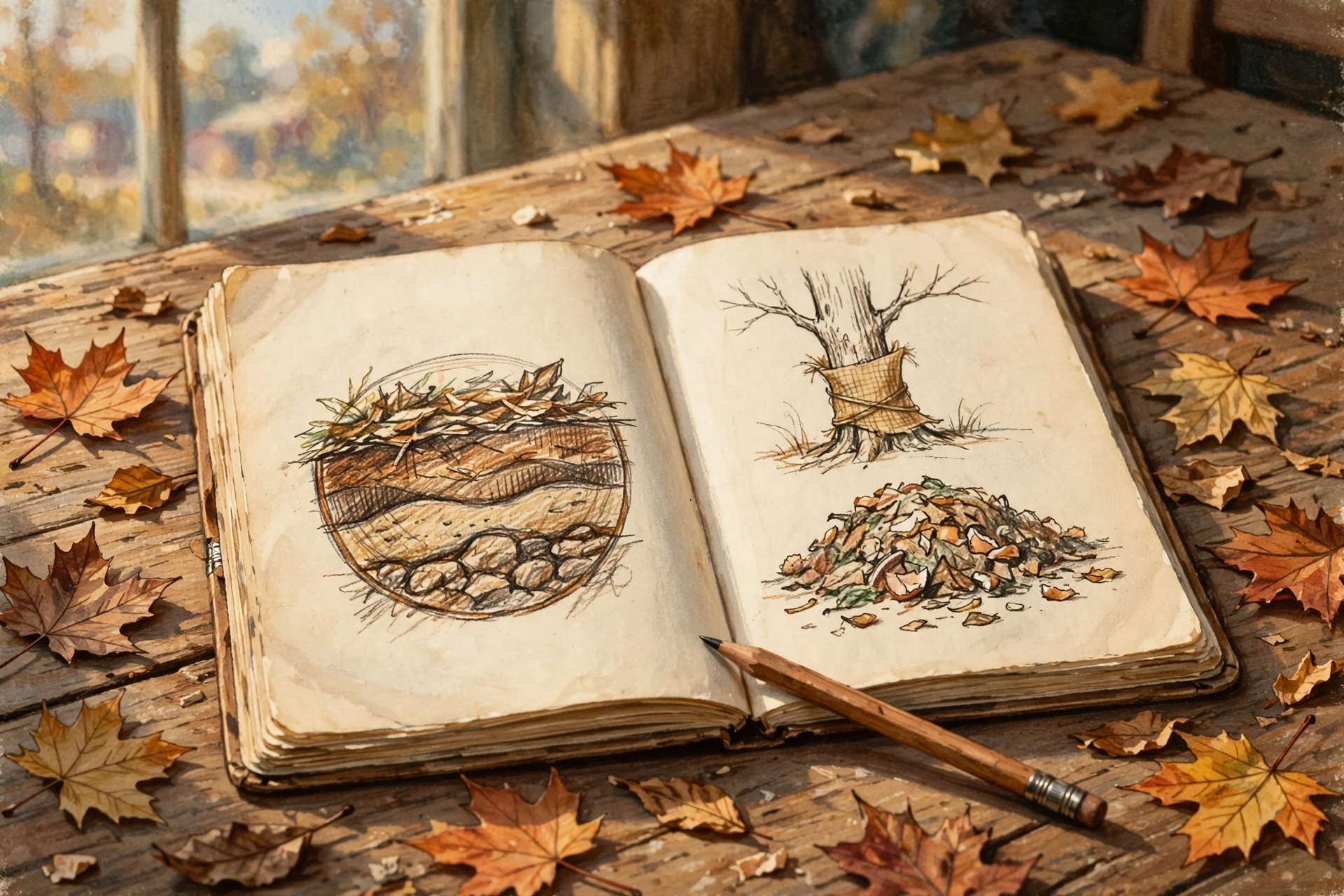
- Southwest trunk injury: Winter damage to a fruit tree’s bark. UT says white trunk paint helps by keeping the trunk from heating up on sunny winter days.
- Tree guard: A plastic or wire wrap around the bottom of a young trunk to keep rodents and rabbits from chewing the bark.
- Peach leaf curl: A fungus disease that makes peach leaves pucker, thicken and turn reddish in spring.
- Bud swell: The late-winter stage when buds start to fatten just before they open.
- Taproot: One main, deep root that grows straight down, like a carrot’s.
- Container-grown: A tree raised in a pot, so its roots come out of the nursery whole.
- Dioecious: A plant species where each tree is either male or female, so you need both to get fruit.
- Browns and greens: Compost ingredients. Browns are dry, carbon-rich things like leaves. Greens are moist, nitrogen-rich things like clippings and scraps.
❓ Frequently Asked Questions
Did the drought get worse in Sequatchie County this week?
No. Today’s map shows Sequatchie County the same as the last two weeks: all of it in moderate drought and about 6% in severe drought. Drought got worse across much of the state, and Van Buren County’s severe area grew. The forecast stays dry through Oct. 28, so the map won’t likely improve until rain comes.
Does sending a CMOR report change the drought map?
Not by itself. The National Drought Mitigation Center says the Drought Monitor’s author may consult the reports to see where to look closer. The map is built from many kinds of data and expert review. Your report adds a local, on-the-ground view, and it shows up on a public map right away.
Do I have to share my exact address in a CMOR report?
No. The fact sheet says you can type in the nearest city or county instead of pinpointing your location. You also don’t need an account. The form works on a phone, tablet or computer.
What kind of paint goes on fruit tree trunks?
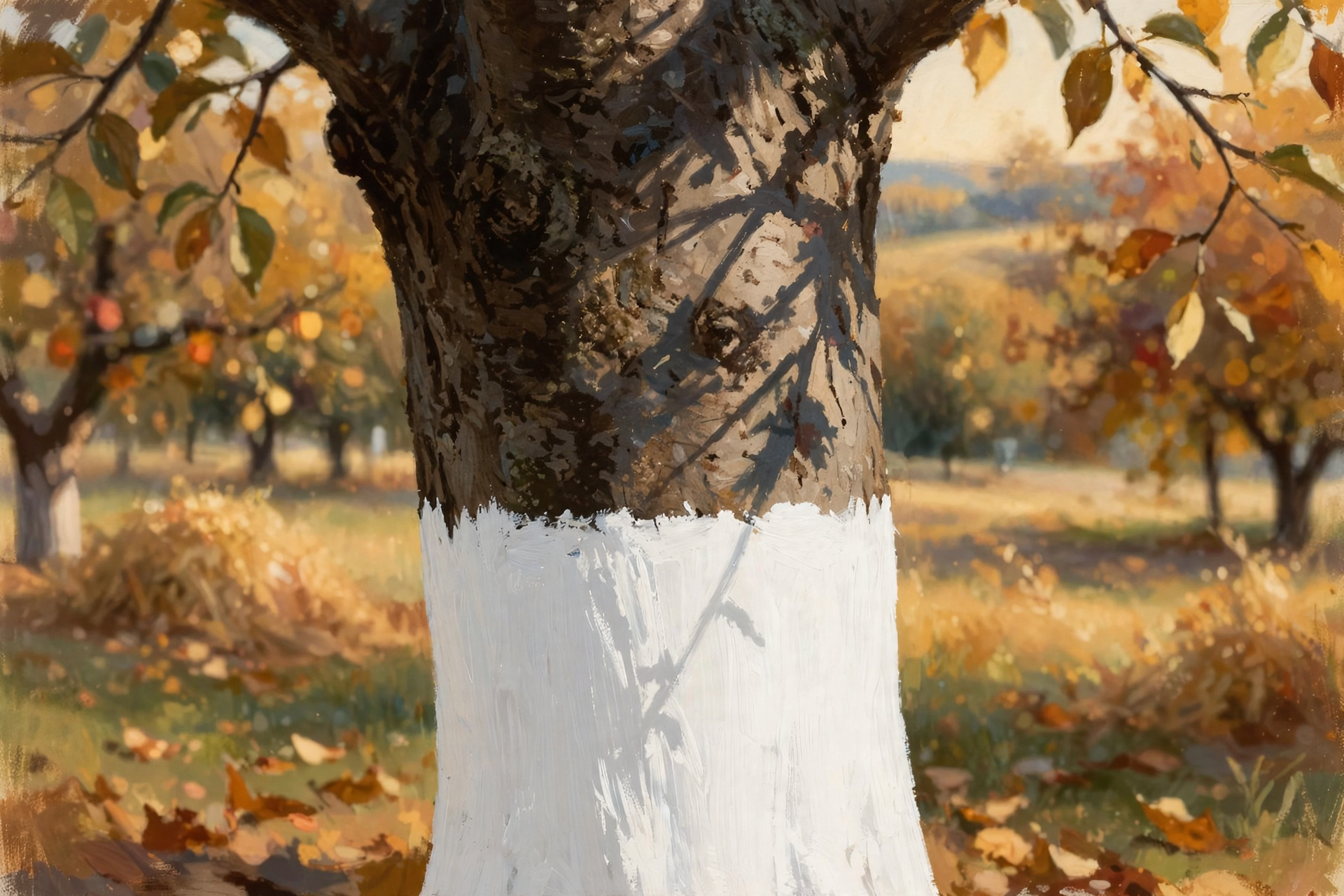
UT’s timetable says white latex paint on the lower 24 inches of the trunk. Paint on a warm, breezy day so it dries well. UT says this reduces trunk heating and winter damage.
When do I spray for peach leaf curl?
UT says the spray can go on any time from leaf drop in the fall until bud swell in the spring. For which product to use and how, UT points to its guide, PB1622, Disease and Insect Control in Home Fruit Plantings. Always follow the label. Your Extension office can help you choose.
Can I plant a tree during a drought?
UT says container-grown black tupelos can be planted in the fall with adequate watering. In a dry fall like this one, that means you’ll need to water it yourself until the rains come back. Bare-root trees should wait until spring.
Can I feed old pumpkins to deer?
University of Illinois Extension advises against feeding pumpkins to wildlife or leaving them in the woods or a ditch. If you have questions about feeding wildlife here, the Tennessee Wildlife Resources Agency can answer them. The compost pile is the simple, safe choice.
🔗 Other Resources

- National Weather Service: Dunlap forecast
- Climate Prediction Center: 8-to-14-day outlook
- U.S. Drought Monitor: Tennessee
- National Drought Mitigation Center: Help us record drought conditions through CMOR
- UT Beef & Forage Center: Live.Stock Companion, October 2026
- UT Extension: Fruit Tree Management Timetable (SP307-D)
- UT Extension: Managing Wildlife (PB1868)
- UT Institute of Agriculture: Sweet as Tupelo
- UT Extension: Tennessee Home Fruit and Vegetable Garden 2026 calendar
- TDEC: Residential Composting
- University of Illinois Extension: How to safely dispose of old pumpkins
- Dunlap Farmers Market
- UT Extension Sequatchie County (170 Church Street, Dunlap · 423-949-2611)
- Dunlap.Today
🏡 Keep Learning, Stay Calm and Come Back to the Porch
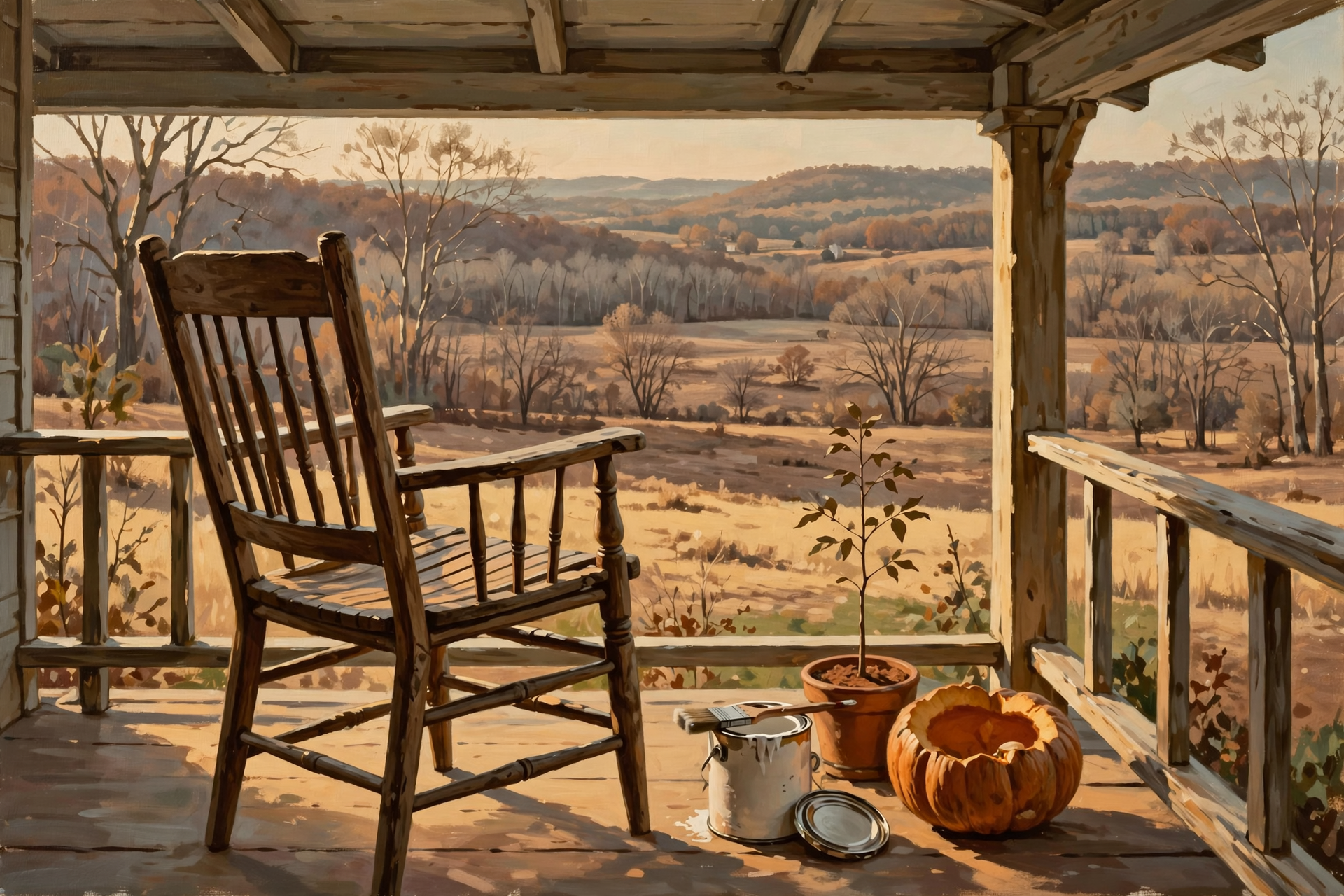
Dry spells feel long while you’re in them, but they do end, and the outlook for the week after next is the most hopeful in a while. In the meantime, there’s plenty of good, unhurried work: a photo for the drought map, a can of white paint for the fruit trees, maybe a new tree for the yard, and a compost pile waiting for its pumpkin.
When you want the next calm, practical update for Sequatchie Valley readers, pull up a chair at Dunlap.Today.
Sources
Know about an upcoming event or story in the Sequatchie Valley? Submit it here.



0 Comments