
🥫🥣 Dry Food vs. Wet Food: Which Makes More Sense When You’re Feeding a Colony?
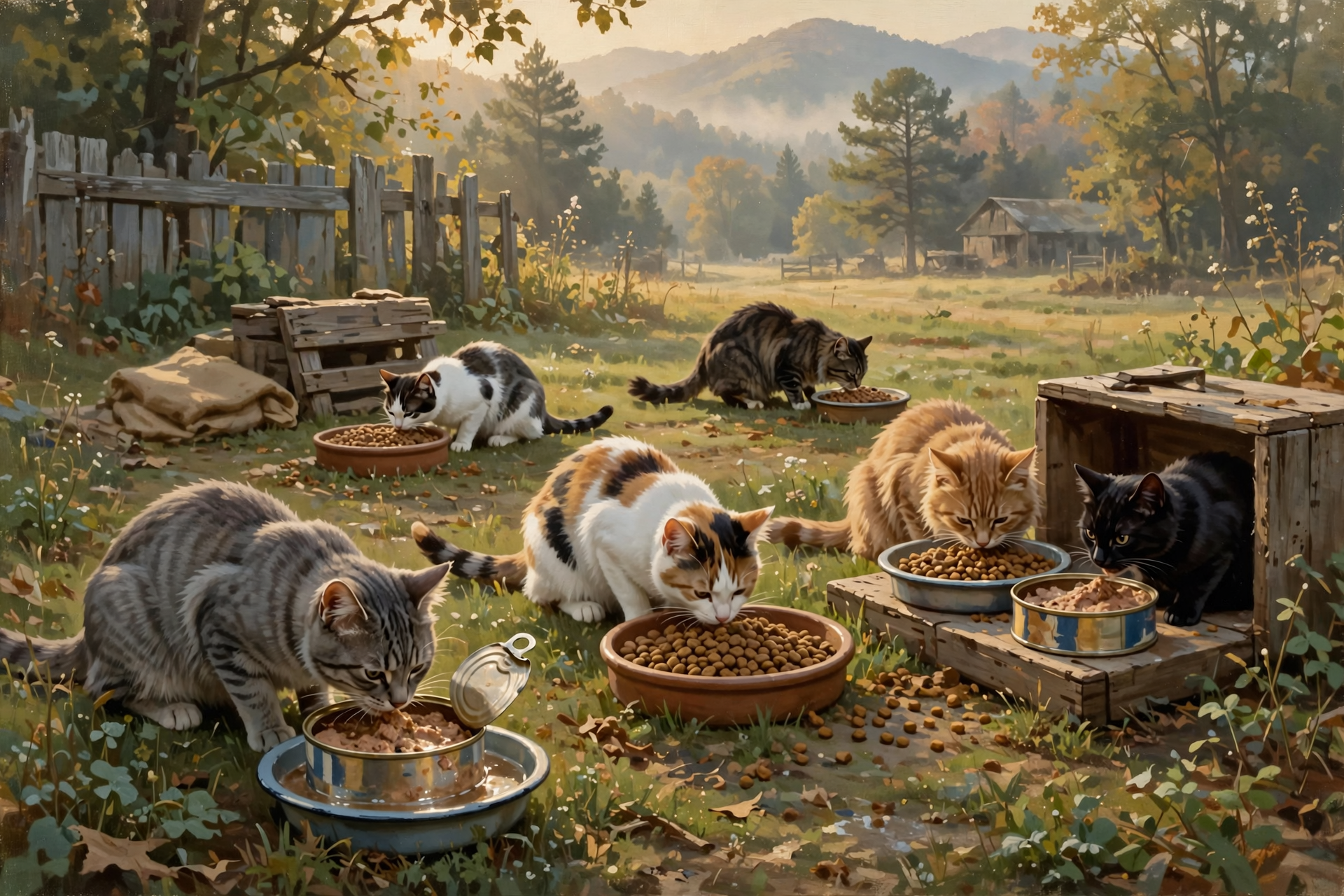
🐾 The Scaredy Cat Project — Article #17
There are certain subjects people can argue about almost indefinitely.
Politics.
Religion.
Ford versus Chevy.
Whether pineapple belongs on pizza.
And apparently:
wet cat food versus dry cat food.
Scaredy has already taken a position.
Her position arrives in a can.
Preferably tuna-flavored.
But we’re trying to feed roughly 40 feral cats and kittens, which means I don’t get to make the entire feeding plan according to Scaredy’s lobbying efforts.
We need to ask a more useful question:
What actually works best when you’re feeding a community-cat colony every day?
🐱 This Is Not Going to Be a Kibble War
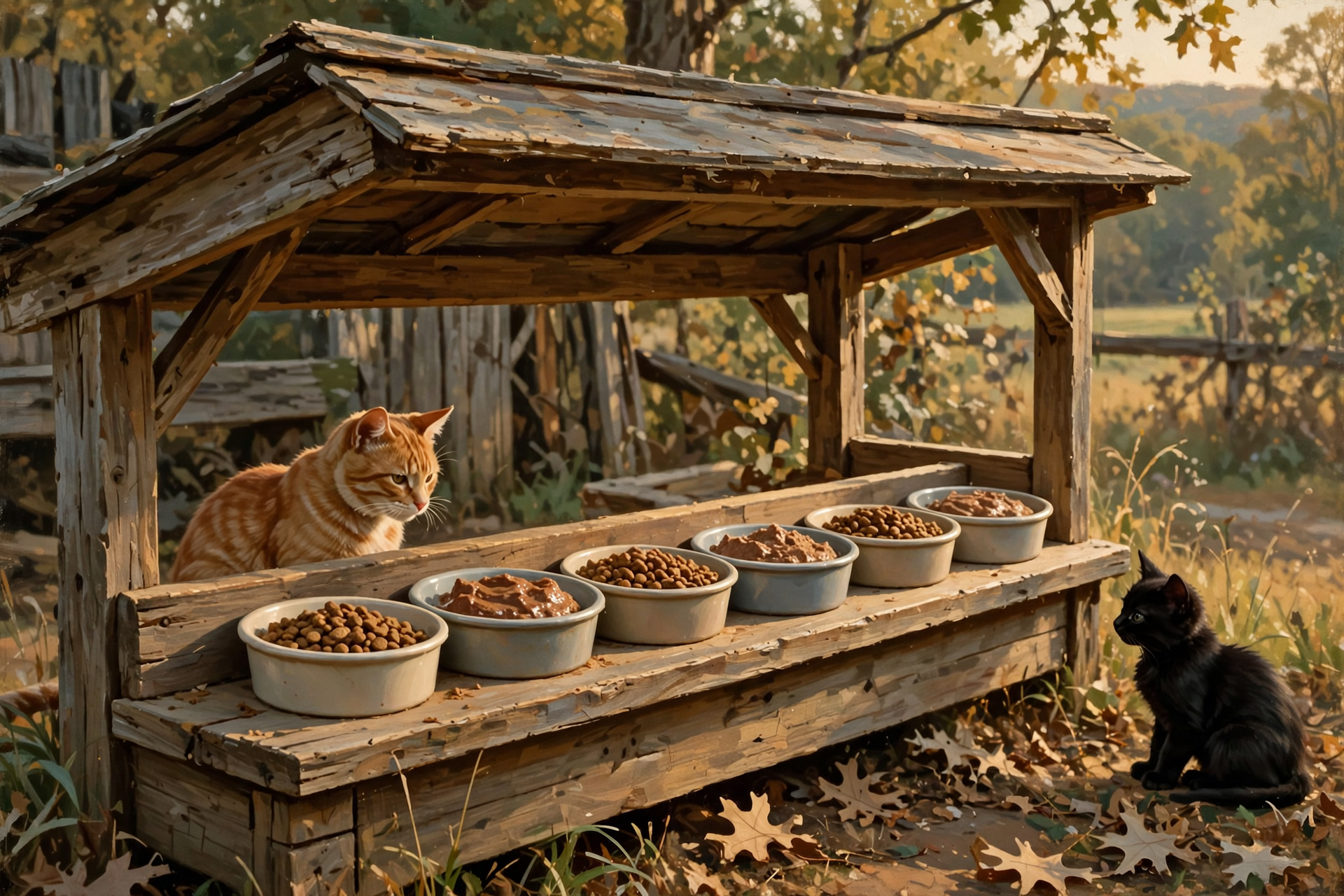
I’m not interested in declaring one format morally superior to the other.
Both wet and dry cat foods can be formulated as complete and balanced diets.
The more useful comparison is:
- 🥩 Nutrition
- 🔥 Calories
- 💧 Moisture
- 💵 Cost
- 📦 Storage
- 🌡️ Weather
- 🗑️ Spoilage and waste
- 😸 Palatability
- 🐾 Practicality with forty cats
Once we look at those things, I suspect the answer isn’t going to be:
“Only wet.”
or:
“Only dry.”
It may be:
use each one where it does the best job.
🥫 Wet Food’s Biggest Advantage Is Right There in the Can
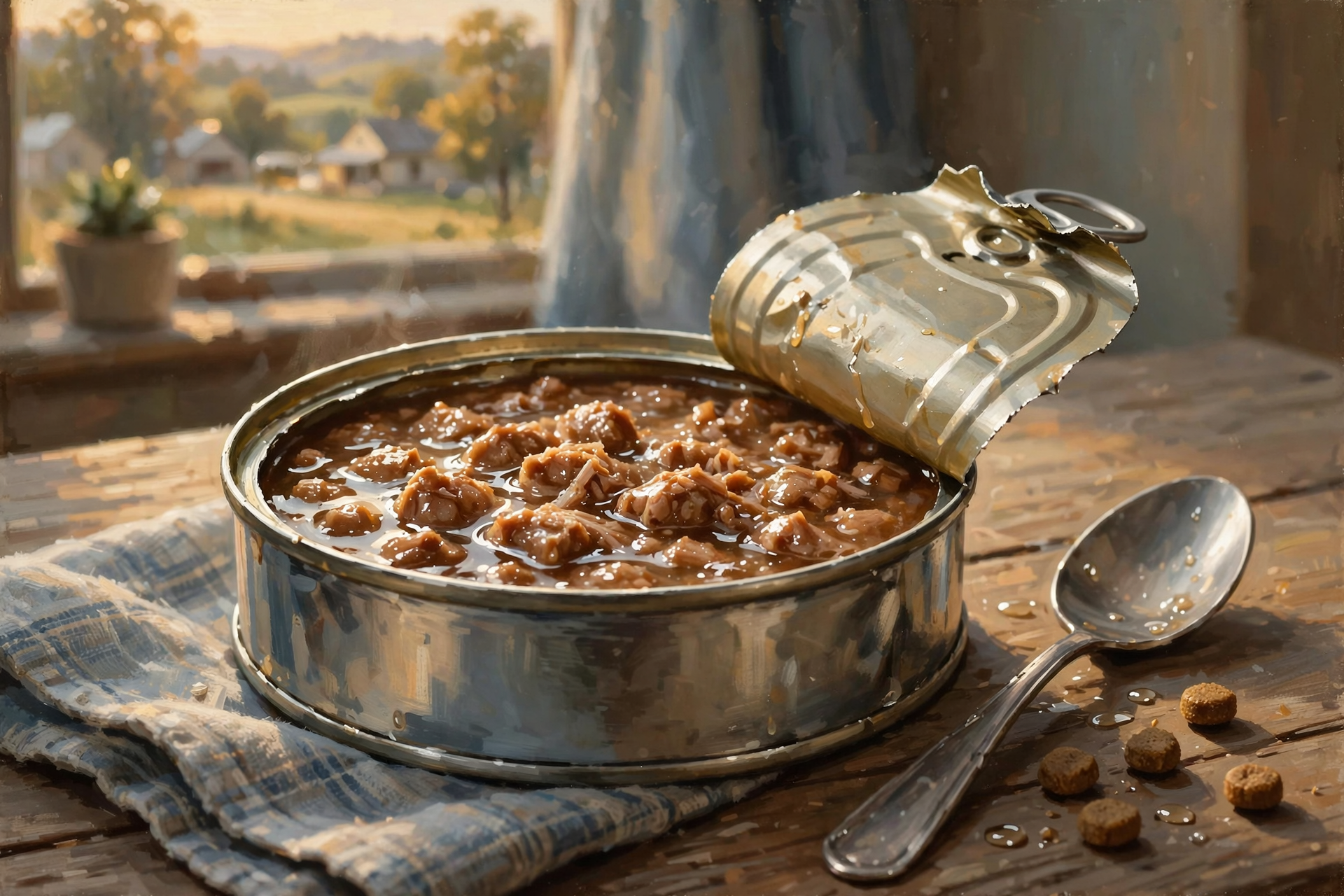
Water.
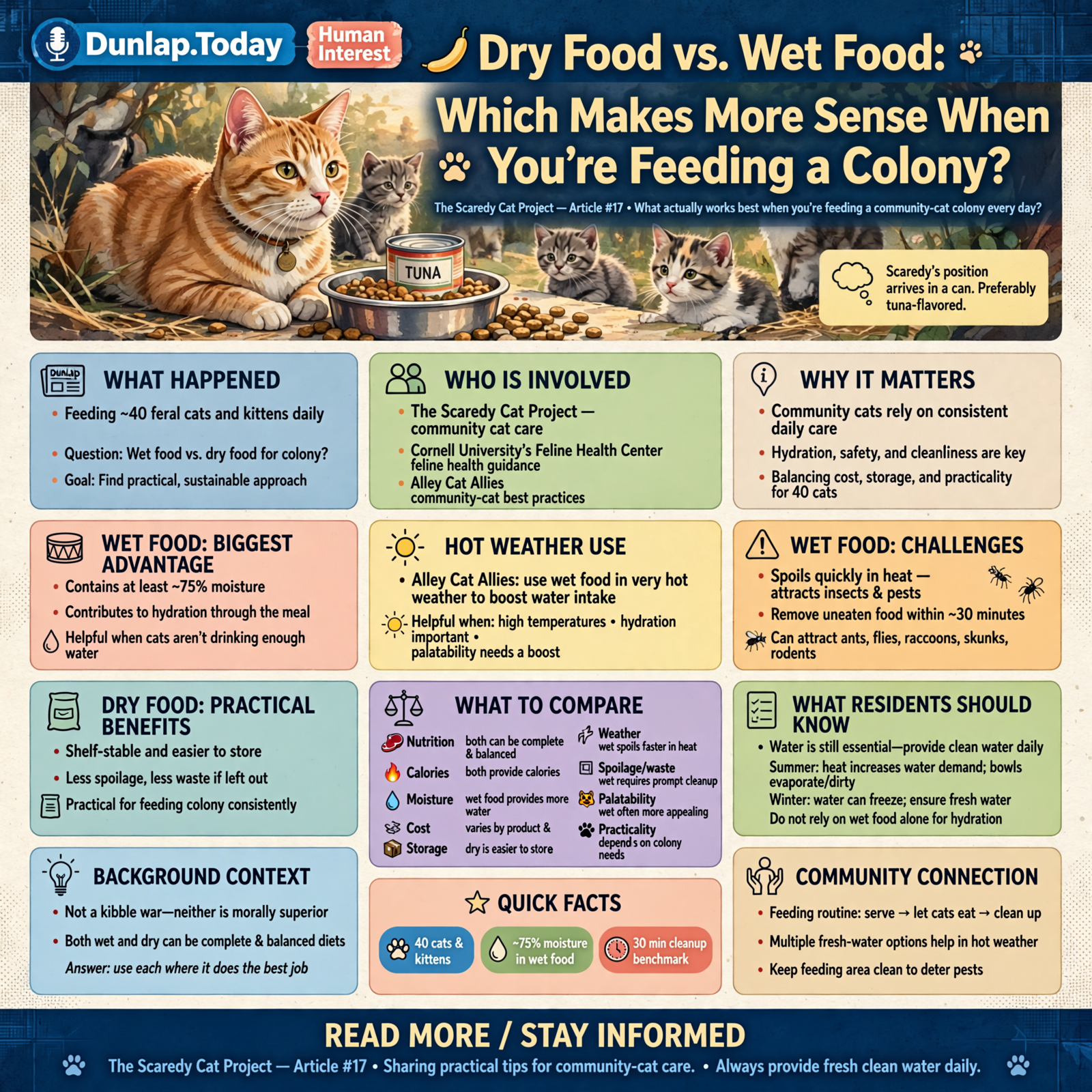
Cornell University’s Feline Health Center says canned cat food contains at least about 75 percent moisture, making it a significant dietary source of water.
That is a real advantage.
Cats need dependable access to fresh water regardless of what they eat.
But when part of the meal itself contains substantial moisture, the food contributes to hydration too.
💧 Hydration Matters
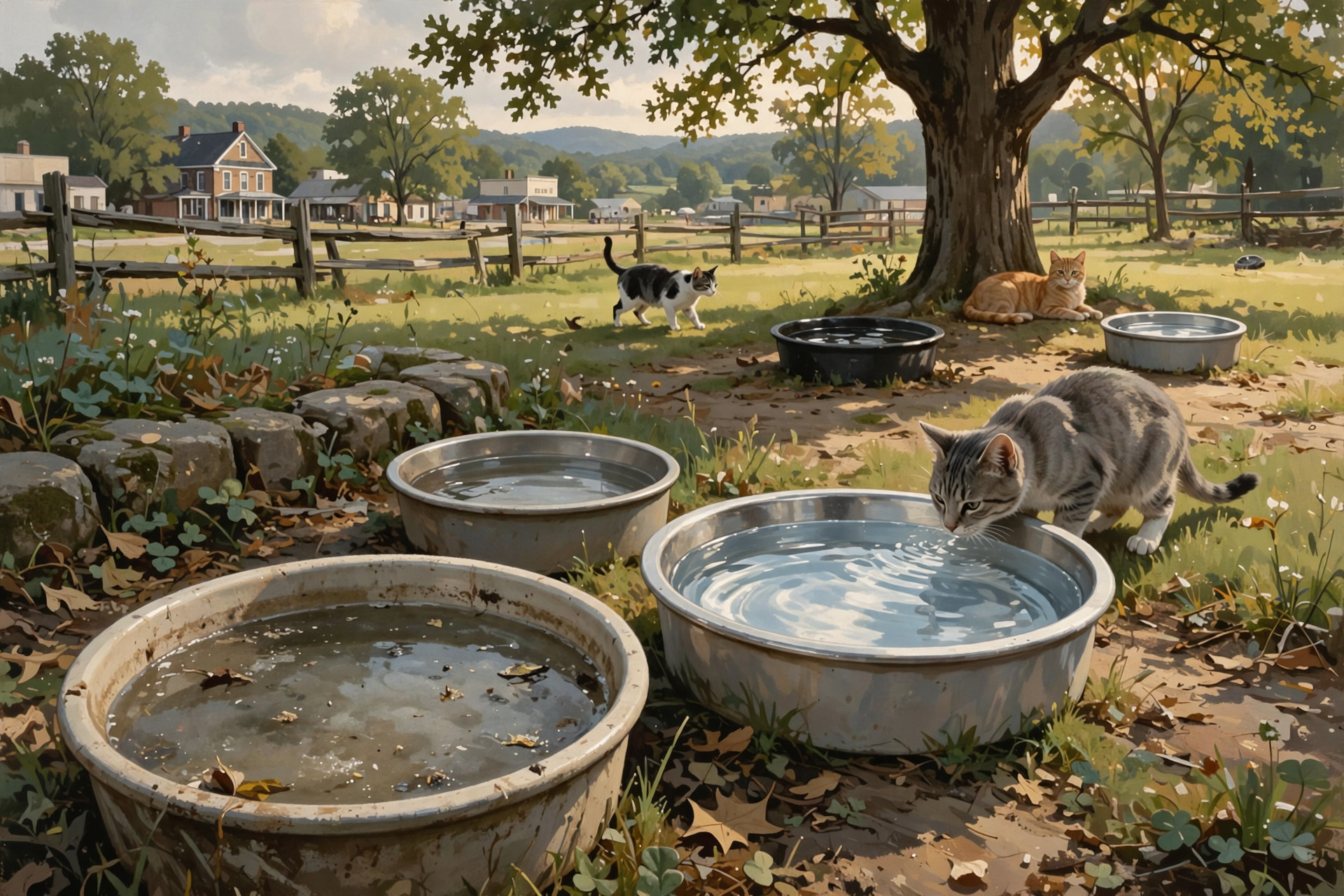
For community cats, water can become a surprisingly complicated logistical issue.
Summer heat increases demand.
Water evaporates.
Bowls get dirty.
Winter brings freezing.
And outdoor cats don’t have the convenience of walking over to the kitchen sink to file a complaint.
Alley Cat Allies emphasizes providing clean water every day and recommends multiple fresh-water options during hot weather.
Wet food can contribute additional moisture, but it does not eliminate the need for drinking water.
☀️ Wet Food Gets More Interesting in Hot Weather
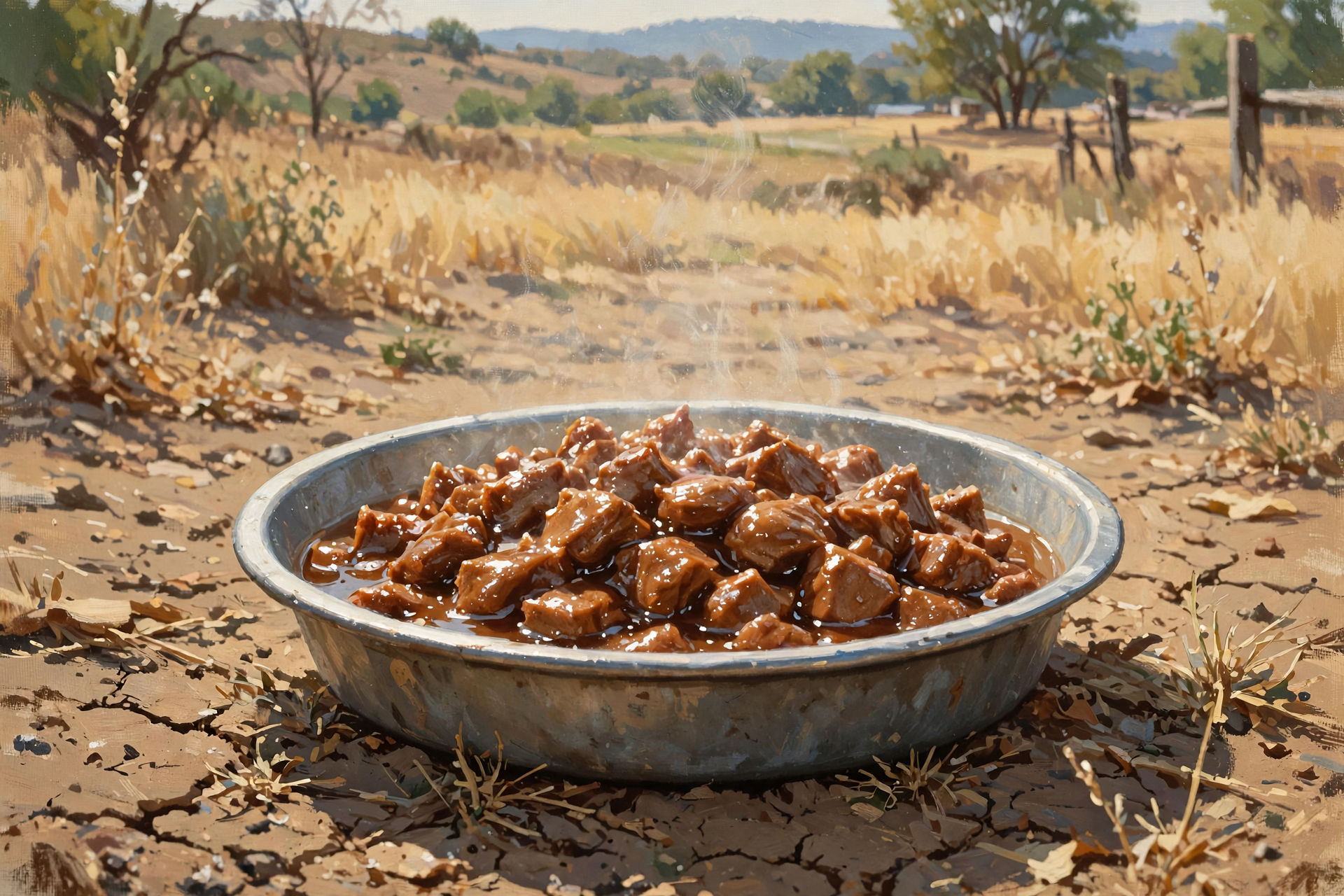
Summer may be one of the best arguments for strategically using wet food.
Alley Cat Allies specifically recommends wet food during very hot weather as one tool for increasing cats’ water intake.
That suggests a seasonal approach could make more sense than insisting on one format all year.
Perhaps wet food becomes more valuable when:
- ☀️ Temperatures are high
- 💧 Hydration is especially important
- 😿 A cat isn’t drinking enough
- 😸 Palatability needs a boost
⚠️ But Summer Also Makes Wet Food Harder to Manage
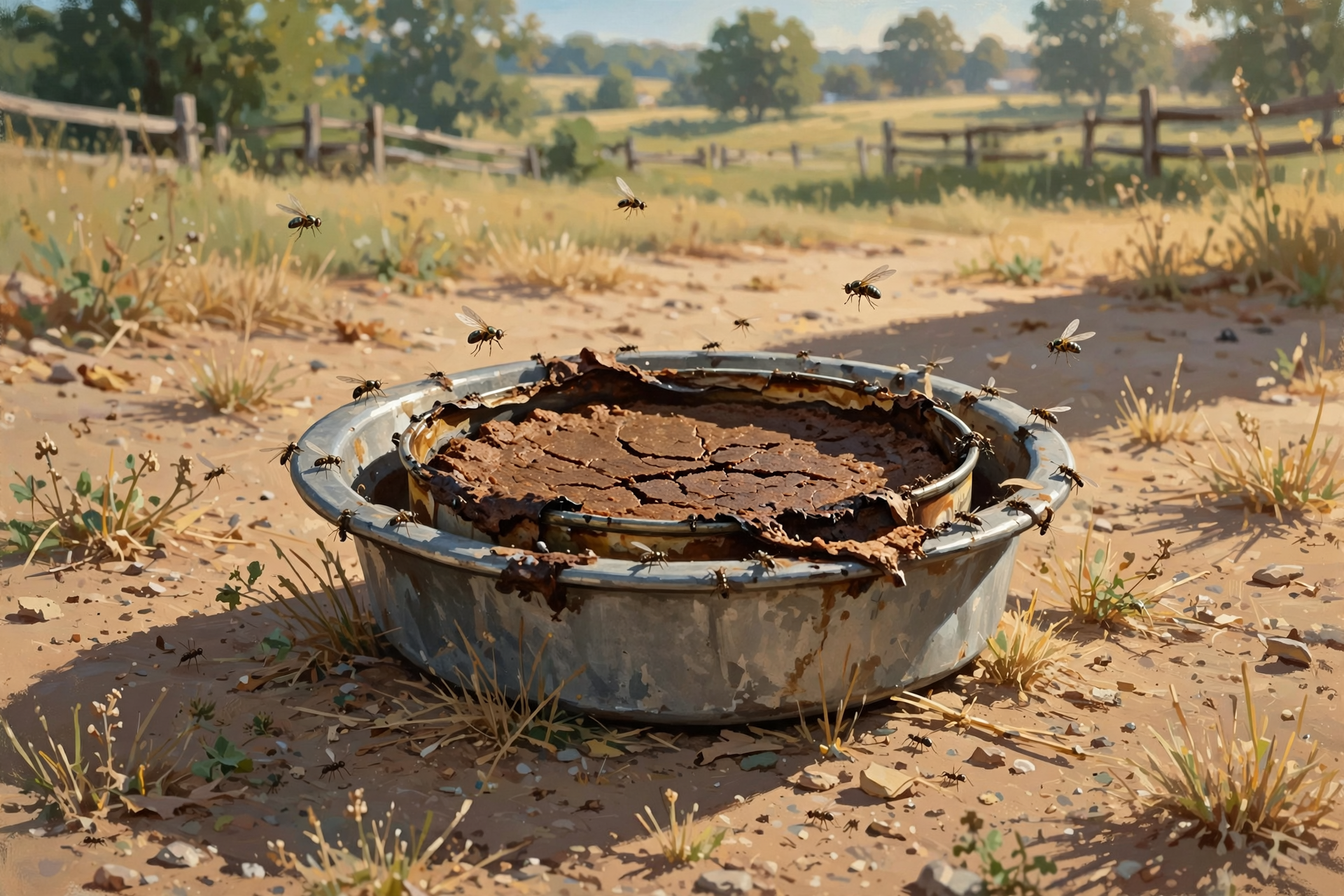
The thing that makes wet food useful also makes it vulnerable.
It’s moist.
Put canned food outside on a hot Tennessee day and it doesn’t remain an attractive meal indefinitely.
Insects find it.
Heat works on it.
And uneaten food quickly becomes something we don’t want sitting around.
Alley Cat Allies recommends removing uneaten community-cat food rather than allowing it to remain out, with roughly 30 minutes serving as a useful general benchmark.
That becomes especially important with wet food.
🪰 The Flies Also Get a Vote
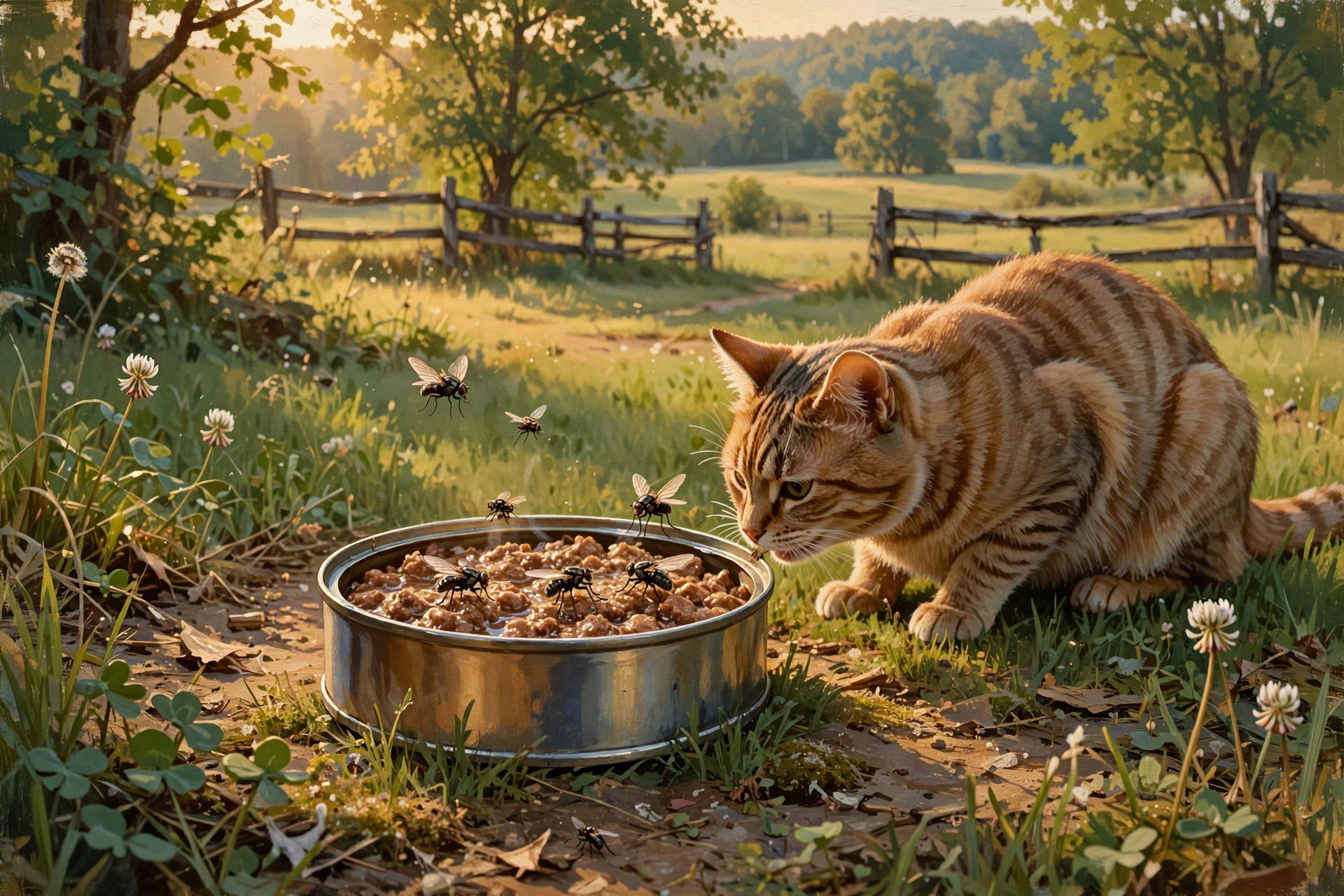
Unfortunately, the cats aren’t the only creatures interested in canned food.
Wet food can attract:
- 🐜 Ants
- 🪰 Flies
- 🦝 Raccoons
- 🦨 Skunks
- 🐀 Rodents
So if we use wet food outdoors, the feeding routine needs to be:
serve it, let the cats eat, then clean it up.
That’s additional labor compared with filling a dry-food station.
🥣 Dry Food’s Greatest Strength May Be Logistics
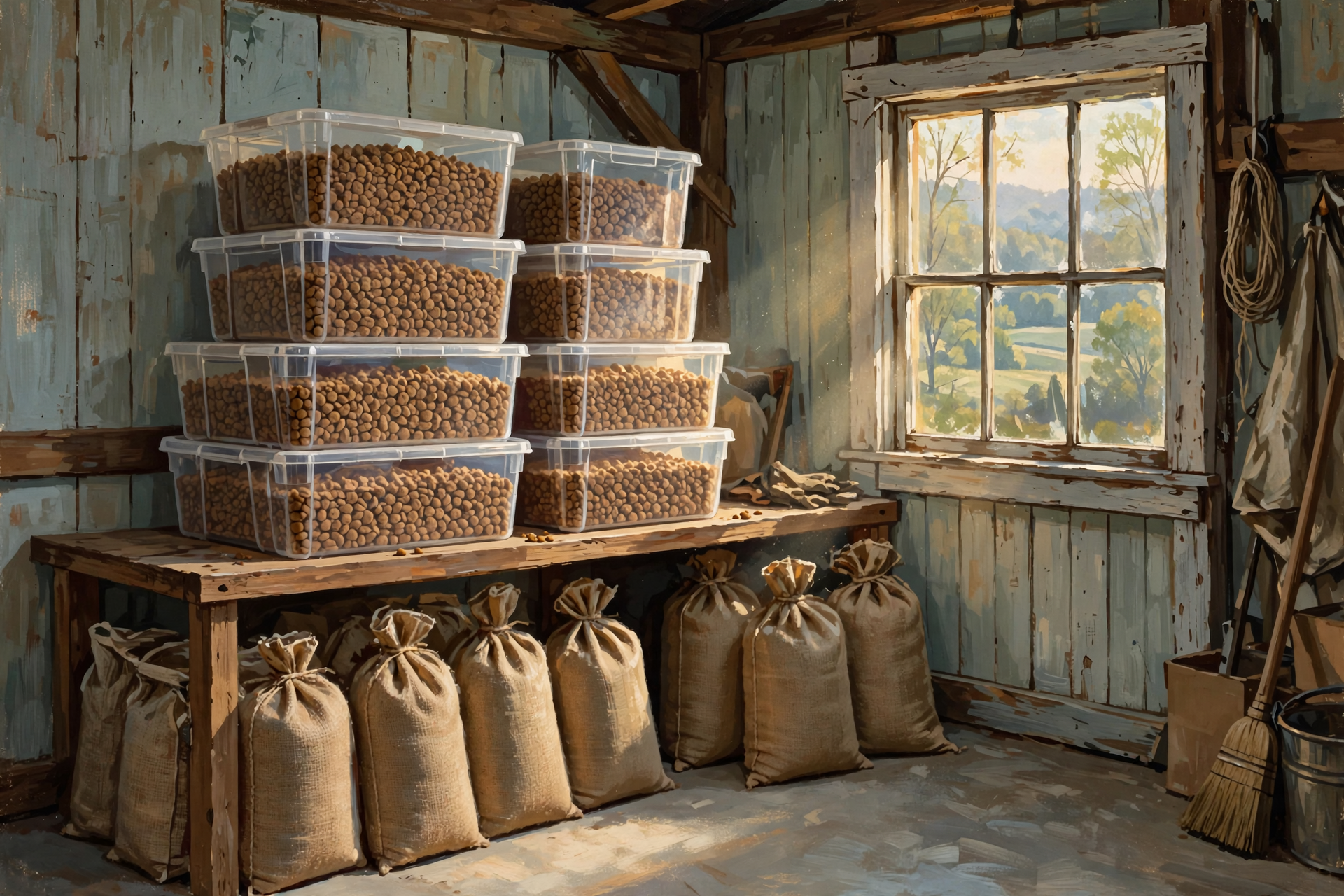
Dry food is remarkably convenient when you think about what we’re asking it to do.
It is compact.
It stores easily.
It is calorie-dense.
It portions easily.
It doesn’t require refrigeration after opening.
And outdoors, it generally remains usable longer than an open bowl of wet food.
When feeding forty cats, those aren’t minor advantages.
📦 Forty Cats Make Storage Important
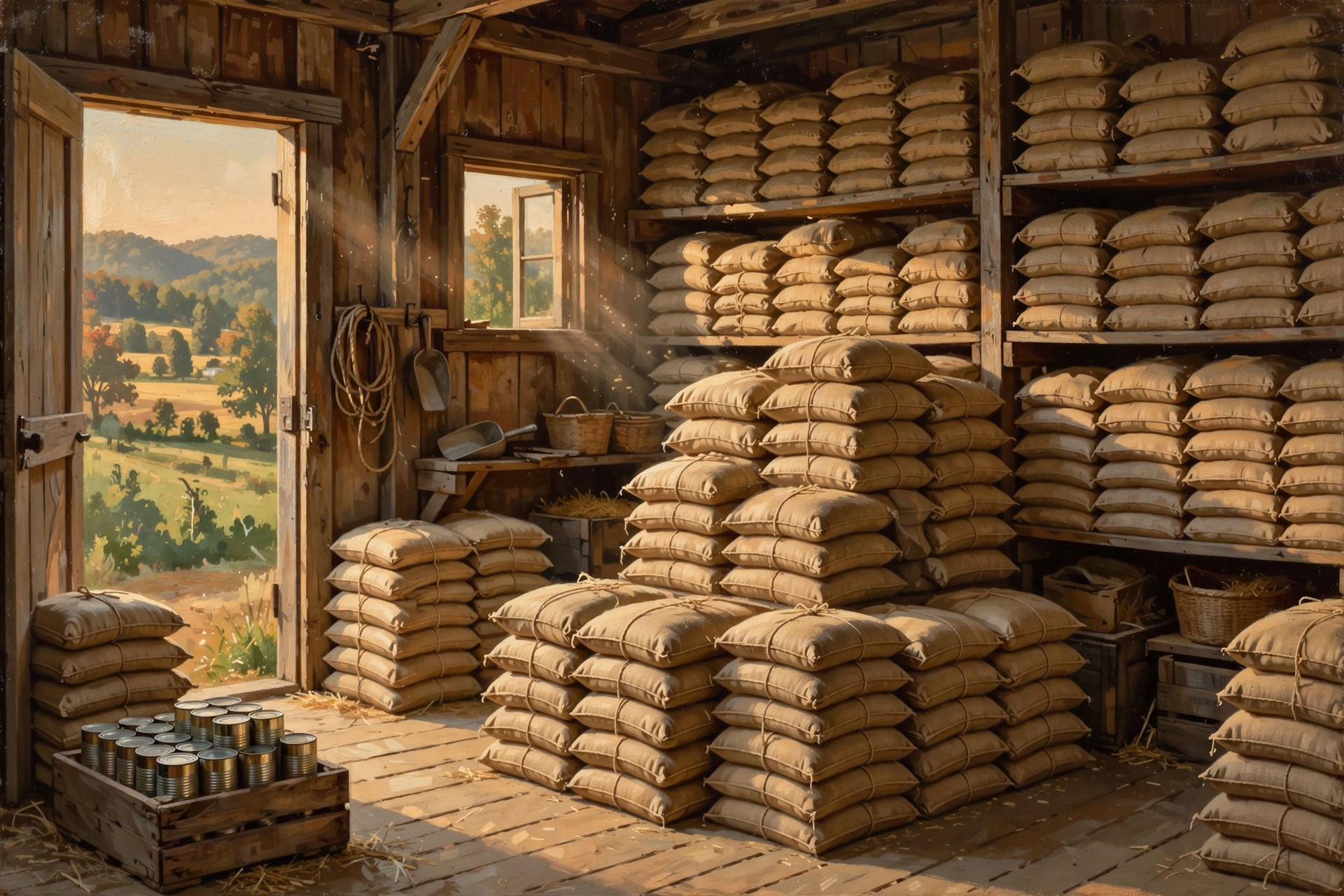
Suppose we’re using roughly 150 pounds of dry food in a month.
That’s a lot of cans if we tried to replace the same calorie supply entirely with canned food.
Dry food lets us store a large amount of nutrition in relatively little space.
That means:
- 📦 Fewer packages
- 🚗 Fewer hauling problems
- 🧹 Less packaging waste
- 🥣 Faster feeding
- 💵 Usually lower feeding cost
At colony scale, convenience becomes part of sustainability.
💵 Dry Food Usually Wins the Cost-per-Calorie Contest
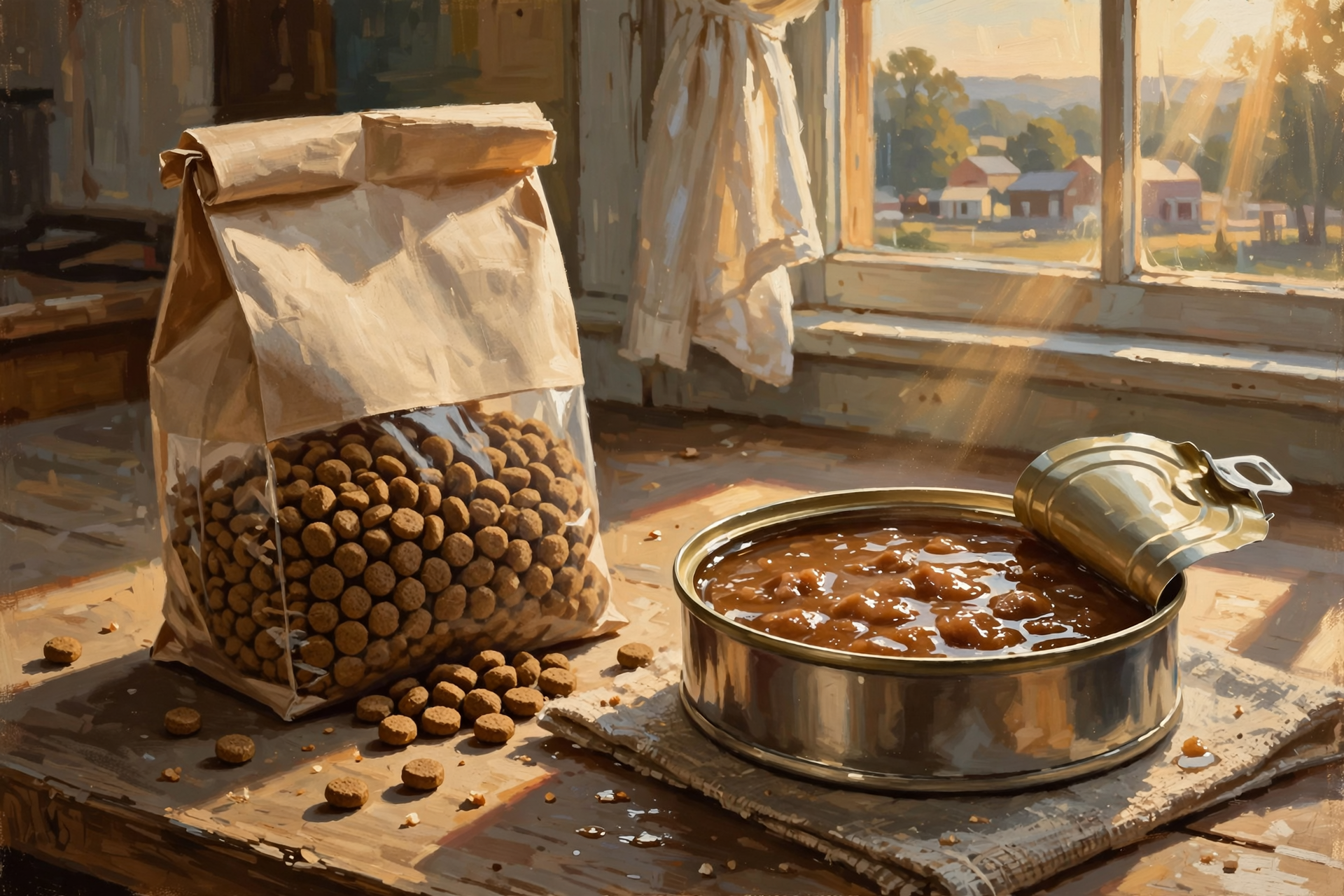
Wet food contains a lot of water.
That’s nutritionally useful for hydration.
But water also means a can contains fewer calories per ounce than concentrated dry food.
That’s why comparing wet and dry food solely by:
price per pound
doesn’t tell us much.
The better comparison is:
cost per 1,000 calories.
That’s the metric we introduced in the last article.
🔥 Calories Let Us Compare Apples to Apples—or Kibble to Tuna
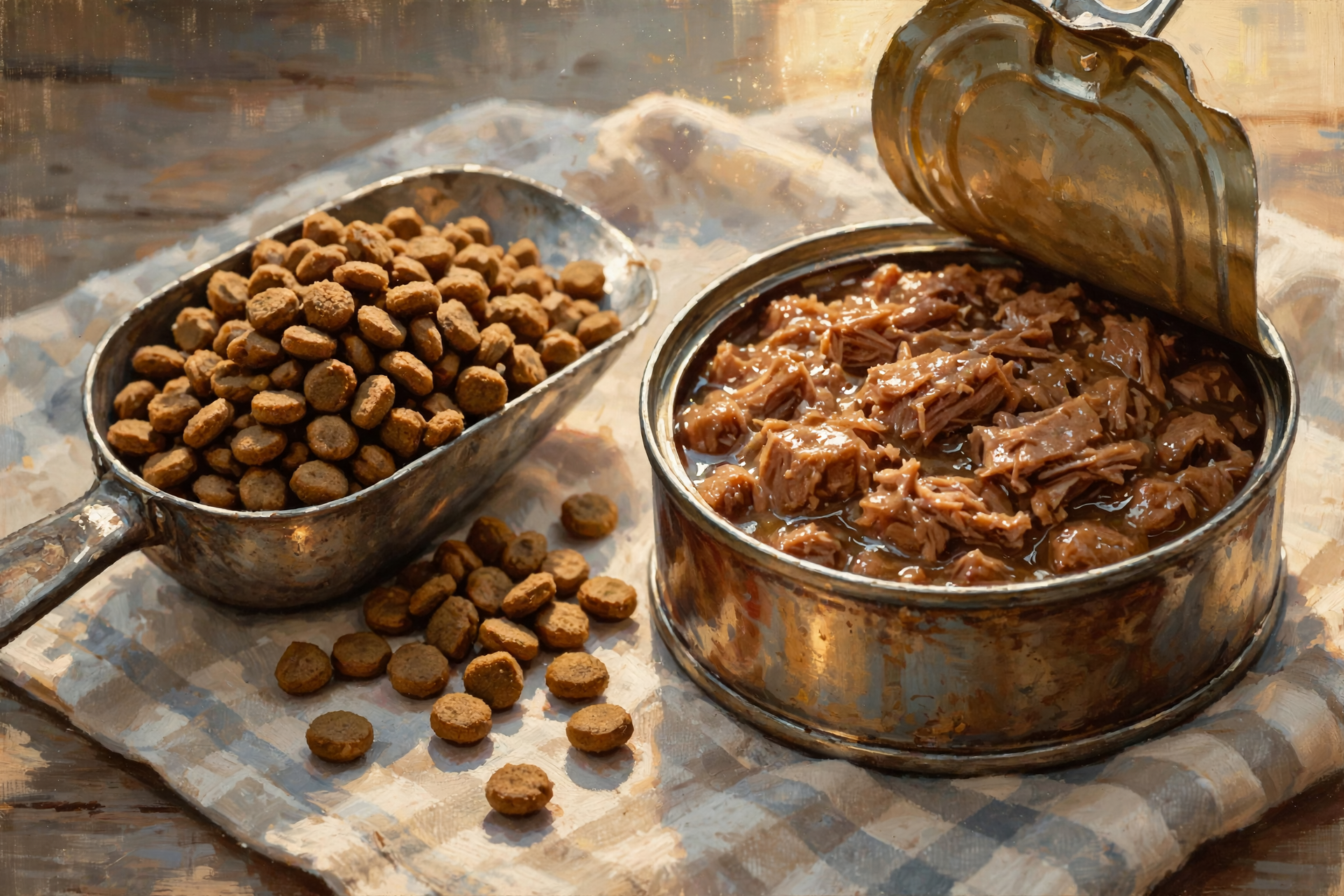
Imagine a dry food costs:
$1 per 1,000 calories.
And a wet food costs:
$3 per 1,000 calories.
The wet food may still have advantages.
Moisture.
Palatability.
Convenience for certain cats.
But now we understand exactly what we’re paying extra for.
That’s a much more intelligent comparison than saying:
“This can only costs a dollar.”
🥫 Wet Food May Win on Palatability
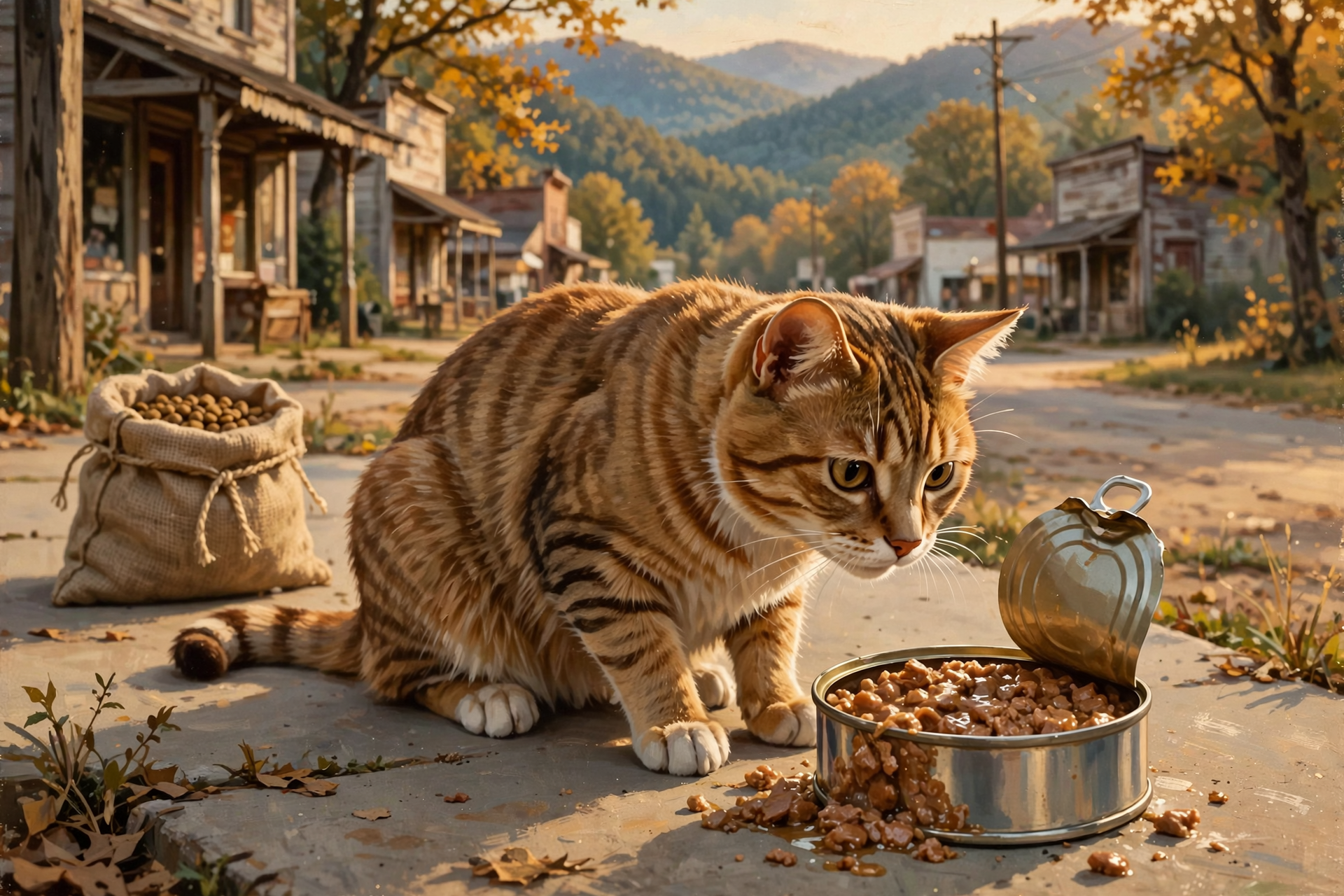
Cornell notes that canned food is highly palatable for many cats.
That tracks pretty well with my field research involving Scaredy.
Open dry-food bag:
Scaredy notices.
Open wet-food can:
Scaredy begins active management supervision.
That strong appeal can be useful.
😿 Wet Food Can Help When a Cat Doesn’t Want to Eat
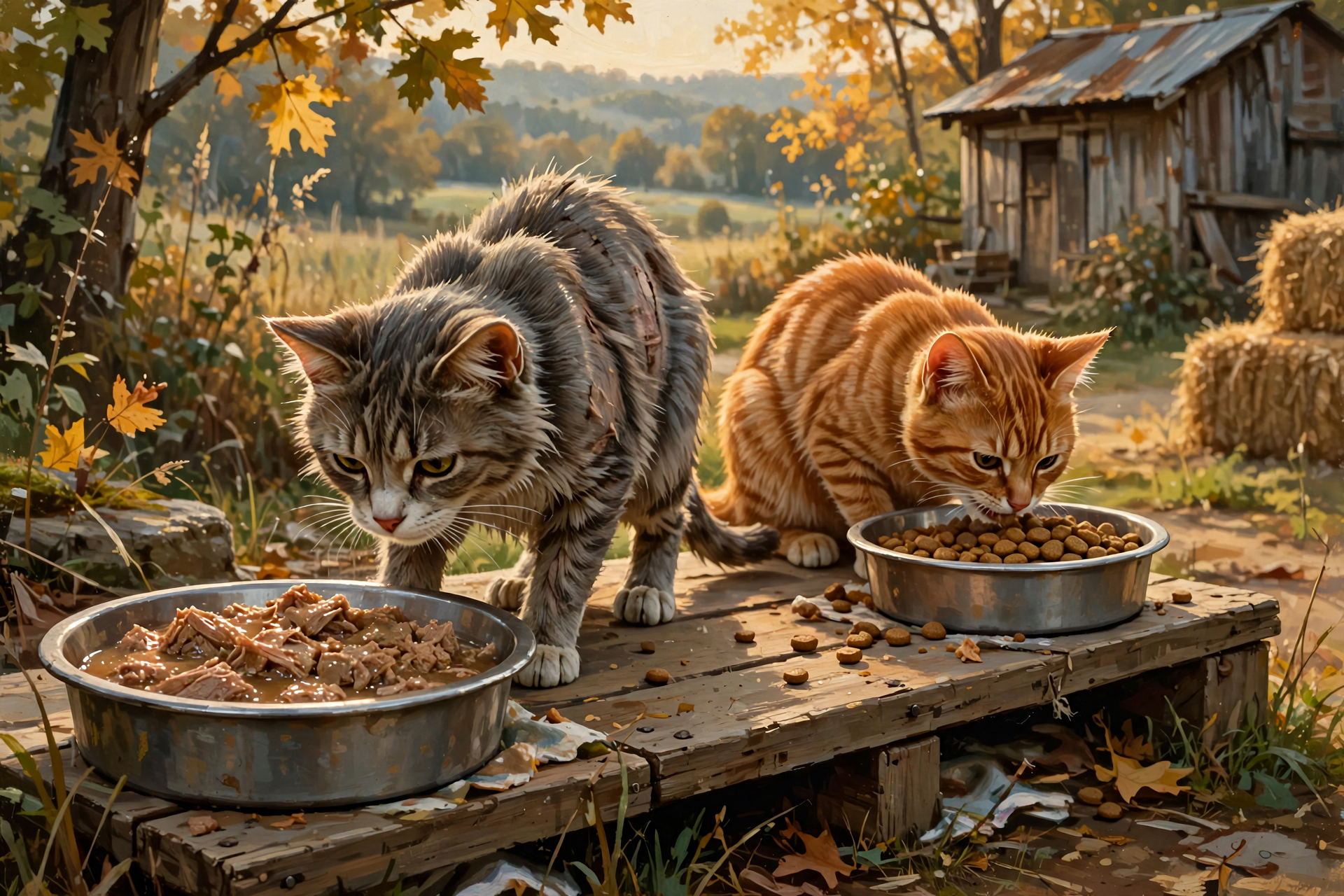
Outdoor colonies contain individuals.
Some are young.
Some old.
Some healthy.
Some recovering.
Some timid.
Some simply picky.
A strongly aromatic wet food may help encourage eating when a cat isn’t enthusiastic about dry food.
That doesn’t mean we need to feed forty cats canned food at every meal.
It means wet food can be a useful tool.
🥣 Maybe Wet Food Works Best as a Topper
This is where the economics start getting interesting.
Instead of:
dry food OR wet food
perhaps the better system is:
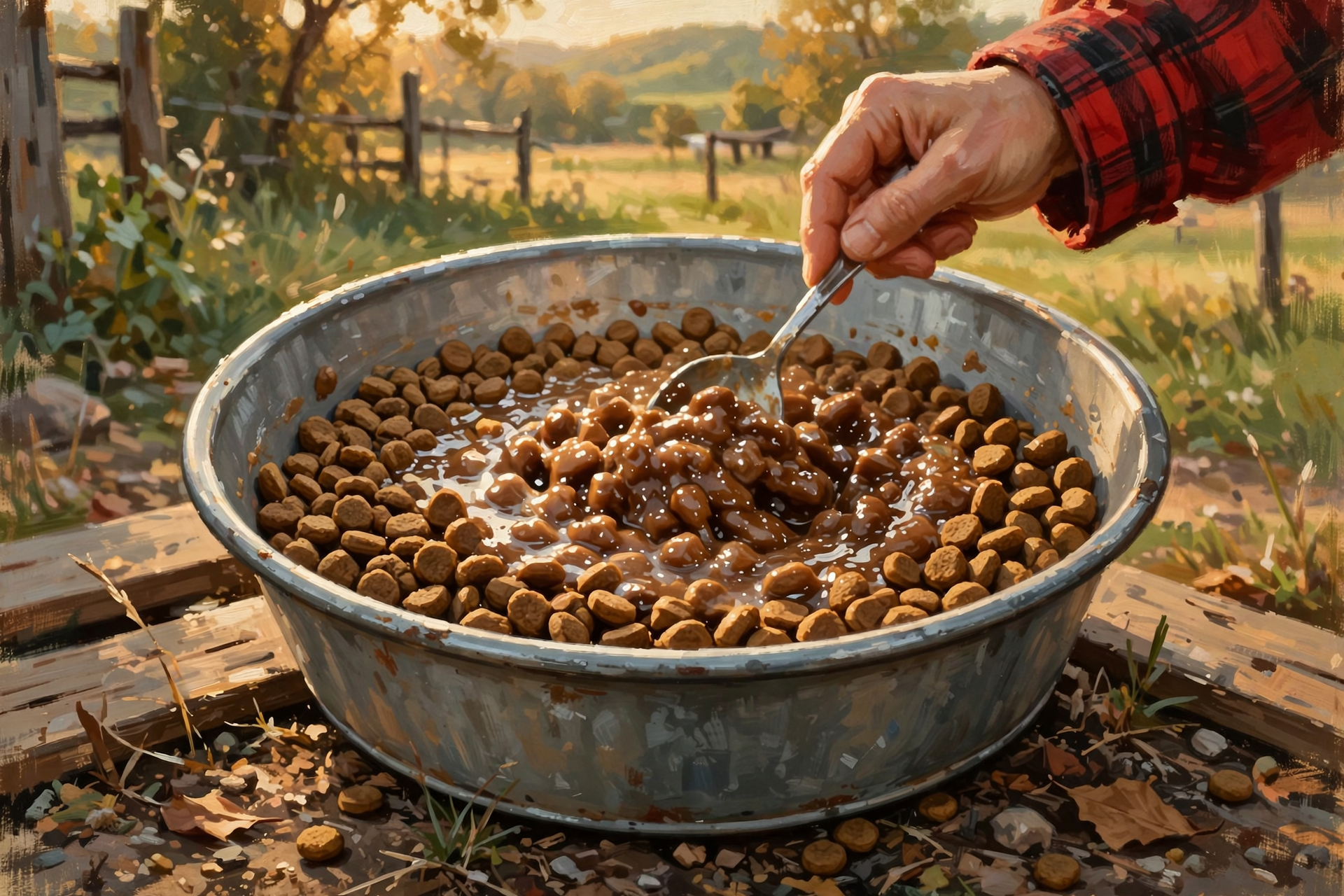
complete dry food + strategic wet food.
A spoonful of wet food mixed through dry food might:
- 😸 Improve palatability
- 💧 Add moisture
- 🥩 Add variety
- 💵 Cost far less than feeding an entire canned meal
That sounds particularly relevant for our colony.
🐟 Scaredy Has Been Demonstrating This Principle With Tuna for Years
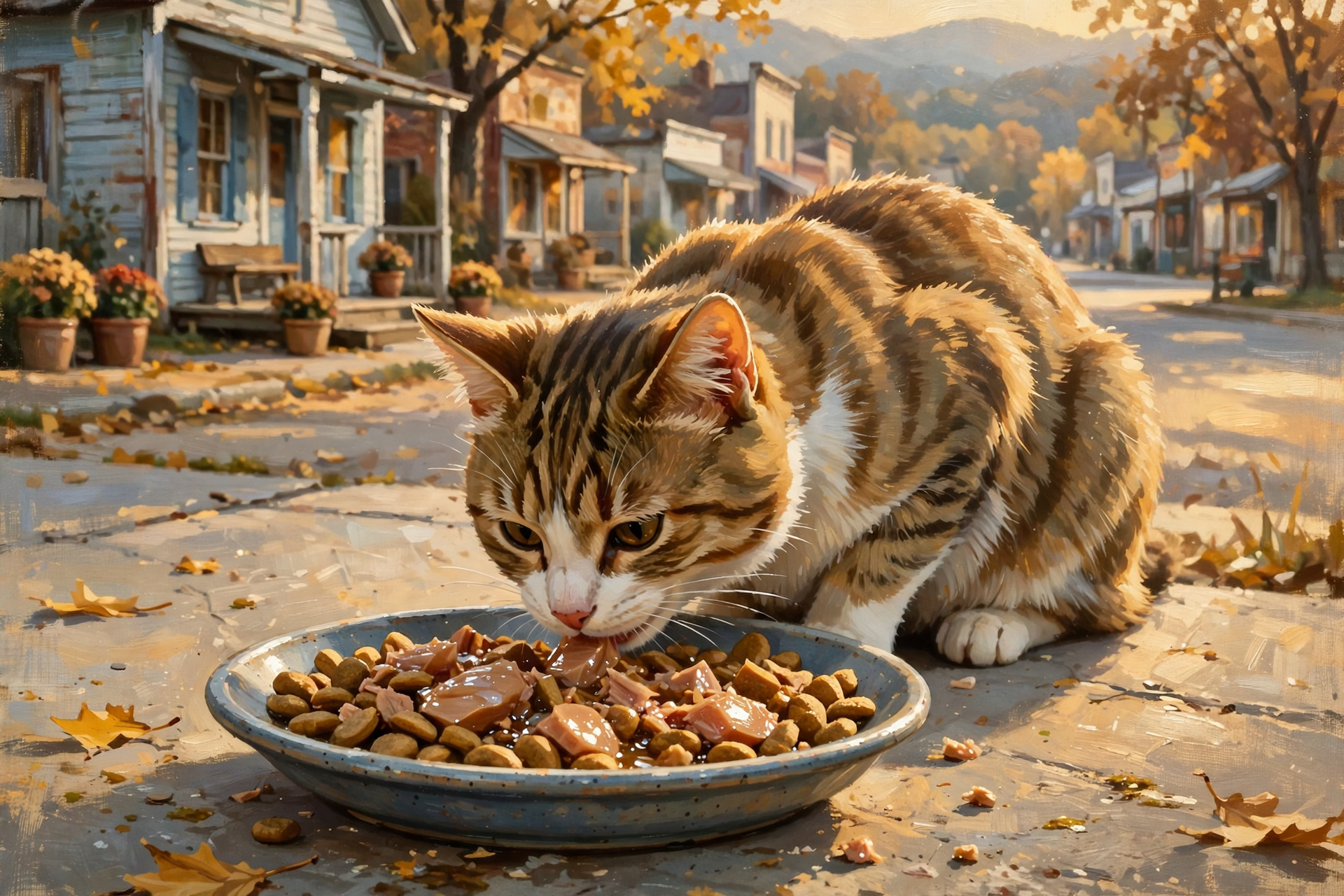
Apparently Scaredy was conducting feeding research before I realized it.
A little tuna can make ordinary food considerably more interesting.
That doesn’t mean the entire meal needs to be tuna.
The same principle could apply to complete canned cat food.
Use enough to make the meal appealing.
Not necessarily enough to provide every calorie.
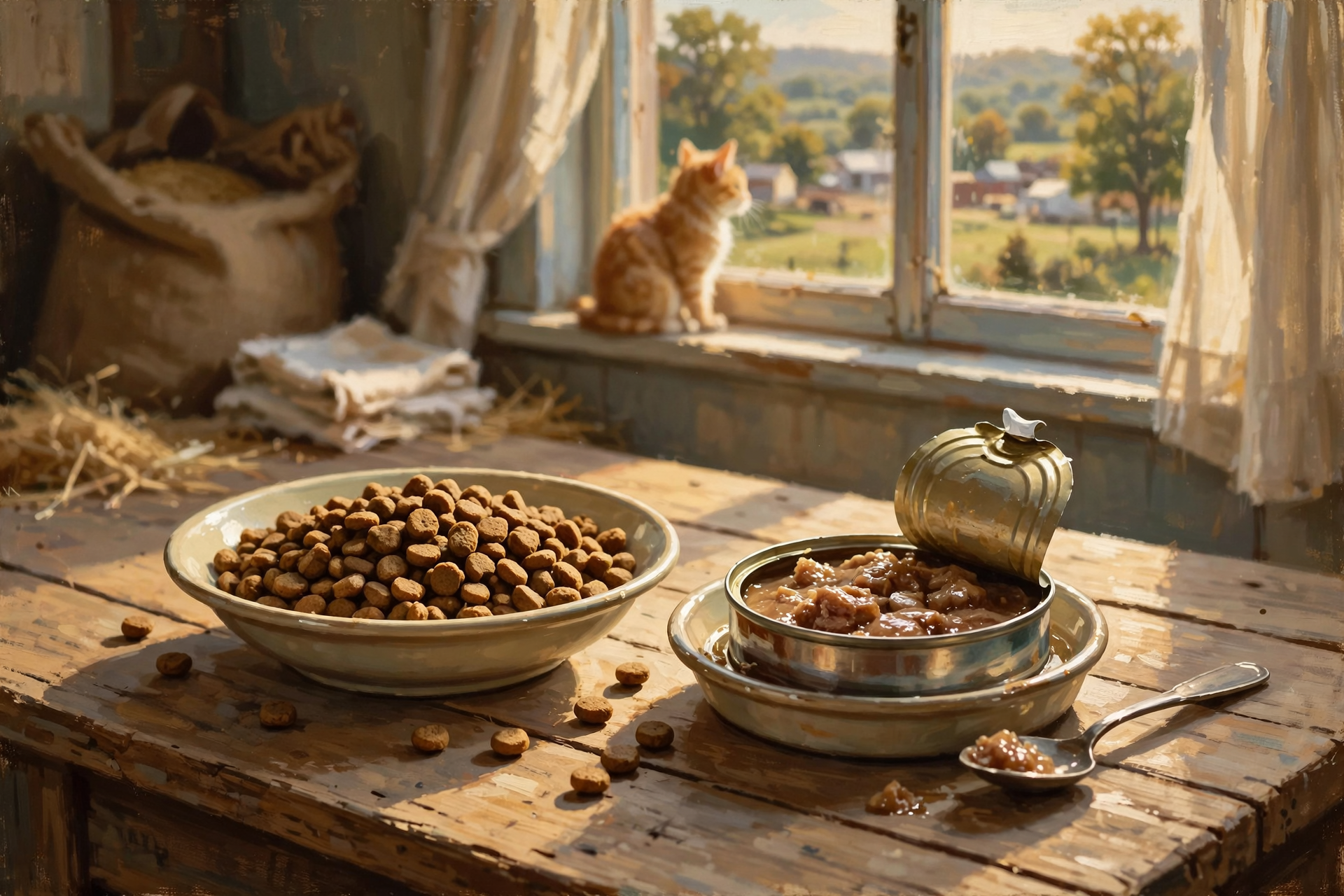
💰 Think of Wet Food as a Nutritional Tool, Not Necessarily the Base
This framing helps me.
🥣 Dry Food
Potentially our economical calorie and complete-nutrition foundation.
🥫 Wet Food
Potentially our hydration and palatability tool.
That isn’t a universal prescription.
It’s a practical hypothesis we can test with our cats.
❄️ Winter Changes the Equation Again
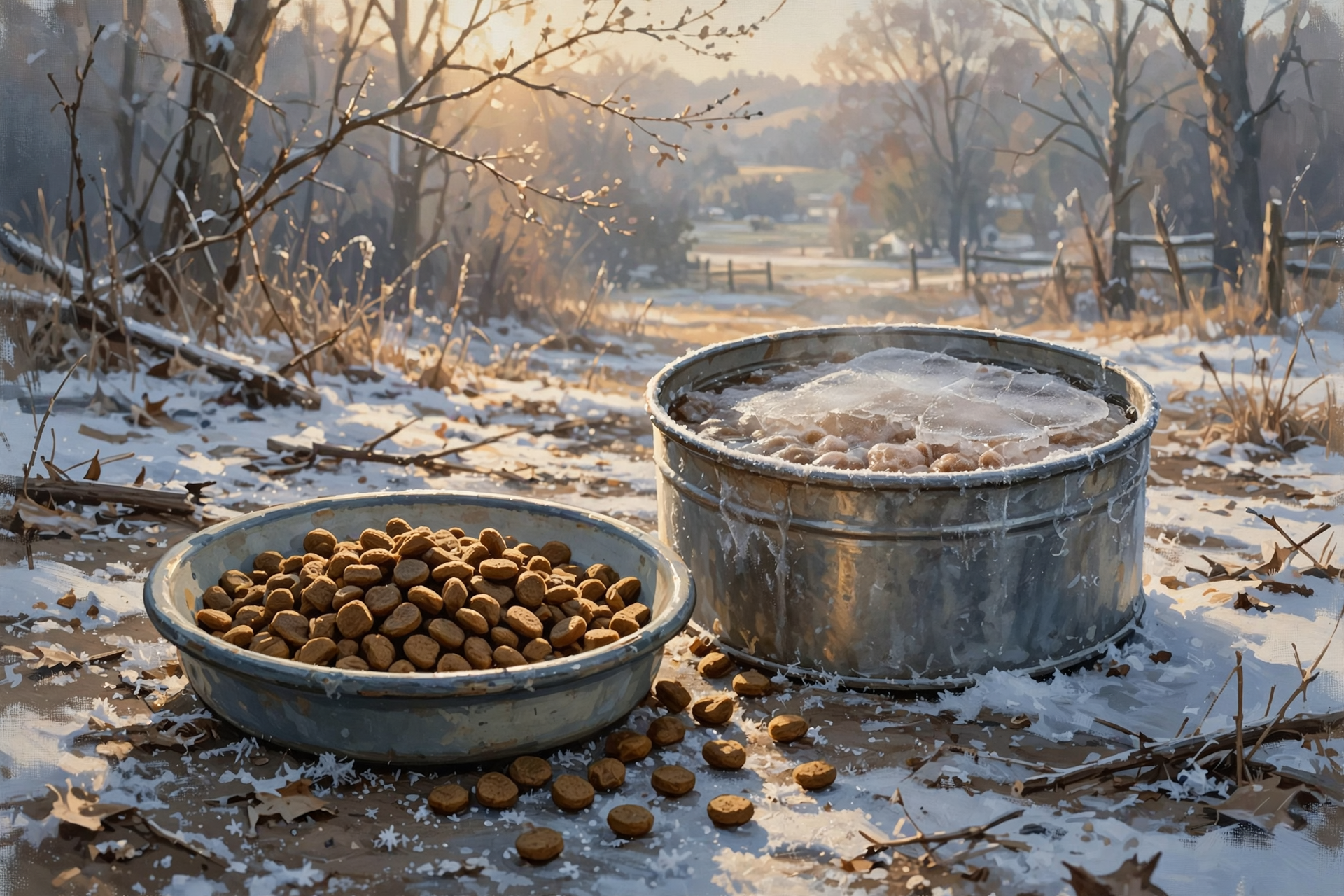
Outdoor wet food has a fairly obvious problem when temperatures fall below freezing.
It freezes.
Alley Cat Allies specifically notes that primarily dry food can be practical during frigid weather because dry food will not freeze the way wet food does.
They also recommend serving wet food warmed when it is used and picking up leftovers rather than allowing food to freeze outdoors.
That’s a strong argument for keeping dry food in our winter strategy.
🔥 Winter Cats May Need More Calories Too

Cold weather raises another issue.
Outdoor cats may need additional food to maintain body heat.
That makes calorie density particularly useful.
Dry food packs a lot of calories into a relatively small amount of food.
For a large colony, that makes winter feeding considerably easier.
💧 But Winter Water Is Still a Problem

Dry food doesn’t freeze easily.
Water certainly does.
So winter feeding can’t simply become:
“Put out kibble and forget about hydration.”
We still need reliable unfrozen water.
That may mean:
- 🔥 Heated water bowls
- 🥣 Deeper bowls
- 🌬️ Wind protection
- ☀️ Strategic placement
- 🔄 Frequent water changes
🏡 Feeding Stations Make Both Formats Work Better

A proper feeding station protects food from:
- 🌧️ Rain
- ☀️ Direct sun
- 🍃 Wind
- 🐾 Some contamination
It also creates one predictable location where we can monitor:
How much food we put out.
How fast it disappears.
Which cats show up.
How much remains.
That matters whether the bowl contains wet or dry food.
🗑️ Waste May Decide Which Food Is Really Cheaper
Suppose dry food costs half as much per calorie.
Sounds like an easy win.
But suppose the cats dislike it and leave 25 percent behind.
Now the economics change.
Suppose adding a small amount of wet food reduces waste to nearly zero.
Now the supposedly expensive wet food may actually save money.
That’s why we need real-world measurement rather than ideology.
📊 The Metric Should Be Cost Per Calorie Actually Eaten

This is the number I eventually want.
Not:
cost per bag.
Not:
cost per can.
Not even:
cost per 1,000 calories purchased.
The gold-standard number would be:
cost per 1,000 calories actually consumed.
That’s harder to measure with forty cats.
But even reasonable estimates would improve our decisions dramatically.
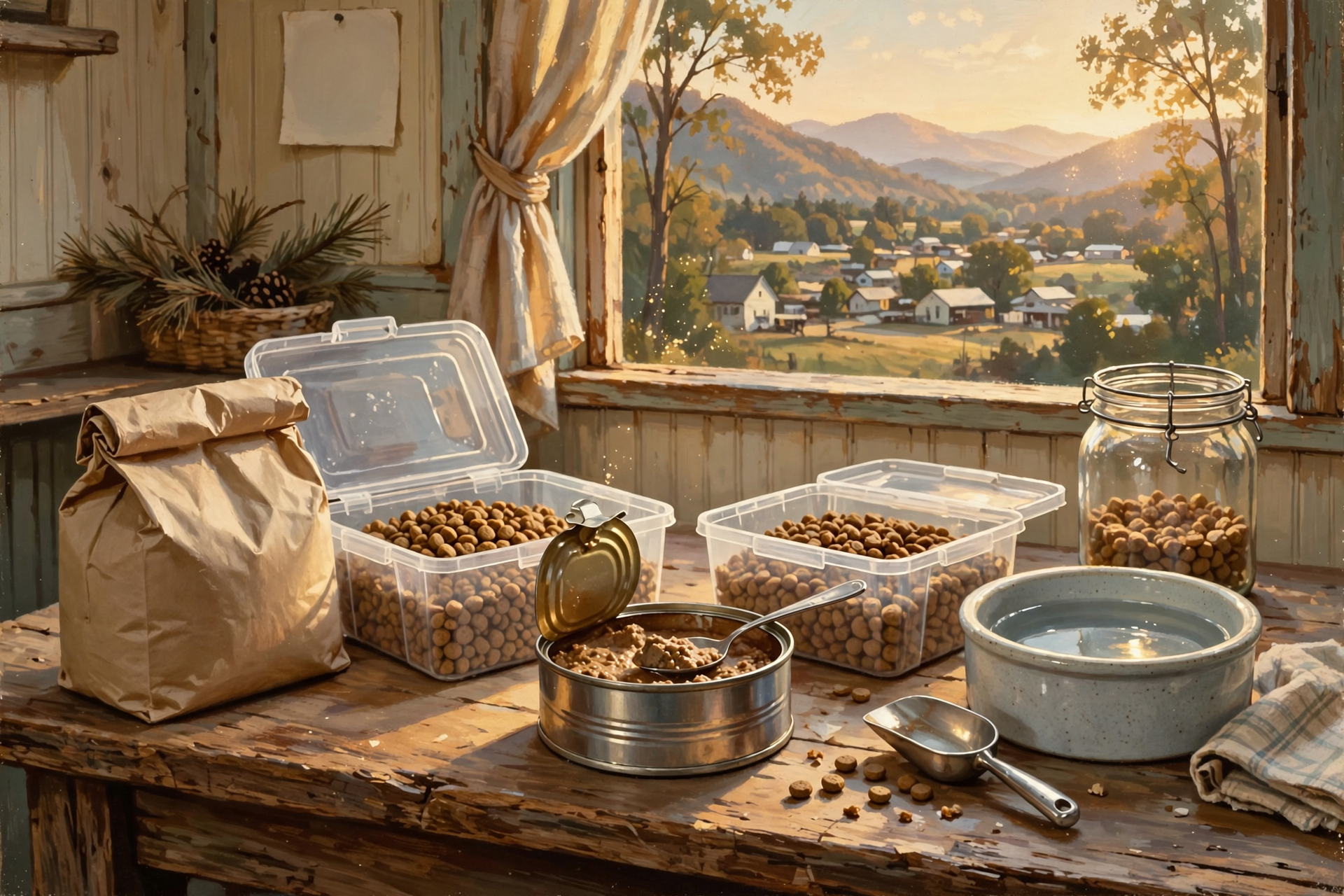
📦 Dry Food Has Its Own Storage Rules
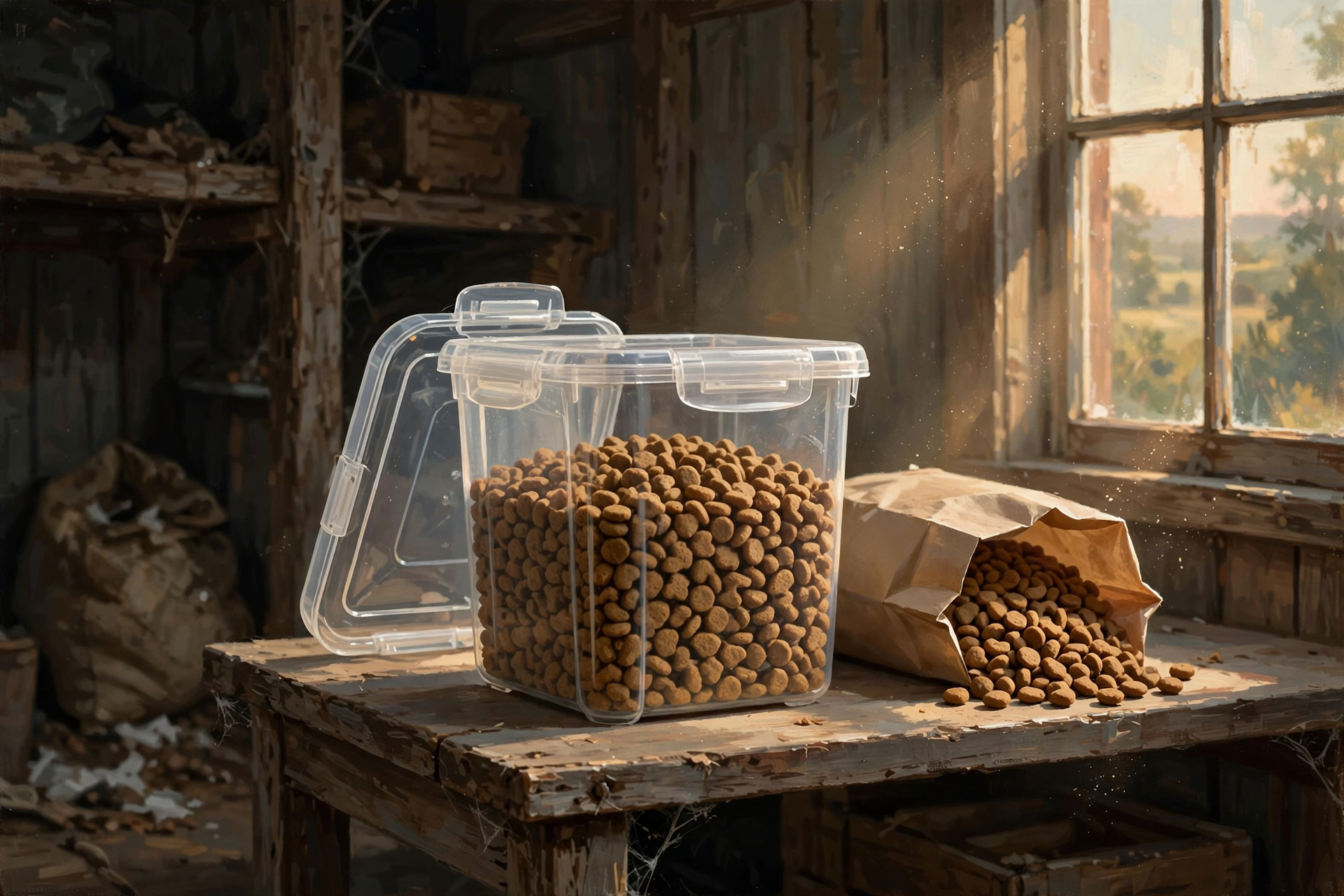
Dry food is convenient.
That doesn’t mean it lasts forever.
Cornell recommends keeping unused dry food in a cool, dry place and using an airtight container to help maintain quality.
Long storage can reduce the potency of some vitamins and allow fats to become rancid.
That means bulk buying still has limits.
A year’s worth of food isn’t automatically a bargain if it spends most of that year deteriorating in a hot shed.
🪣 Maybe the Original Bag Belongs Inside the Container
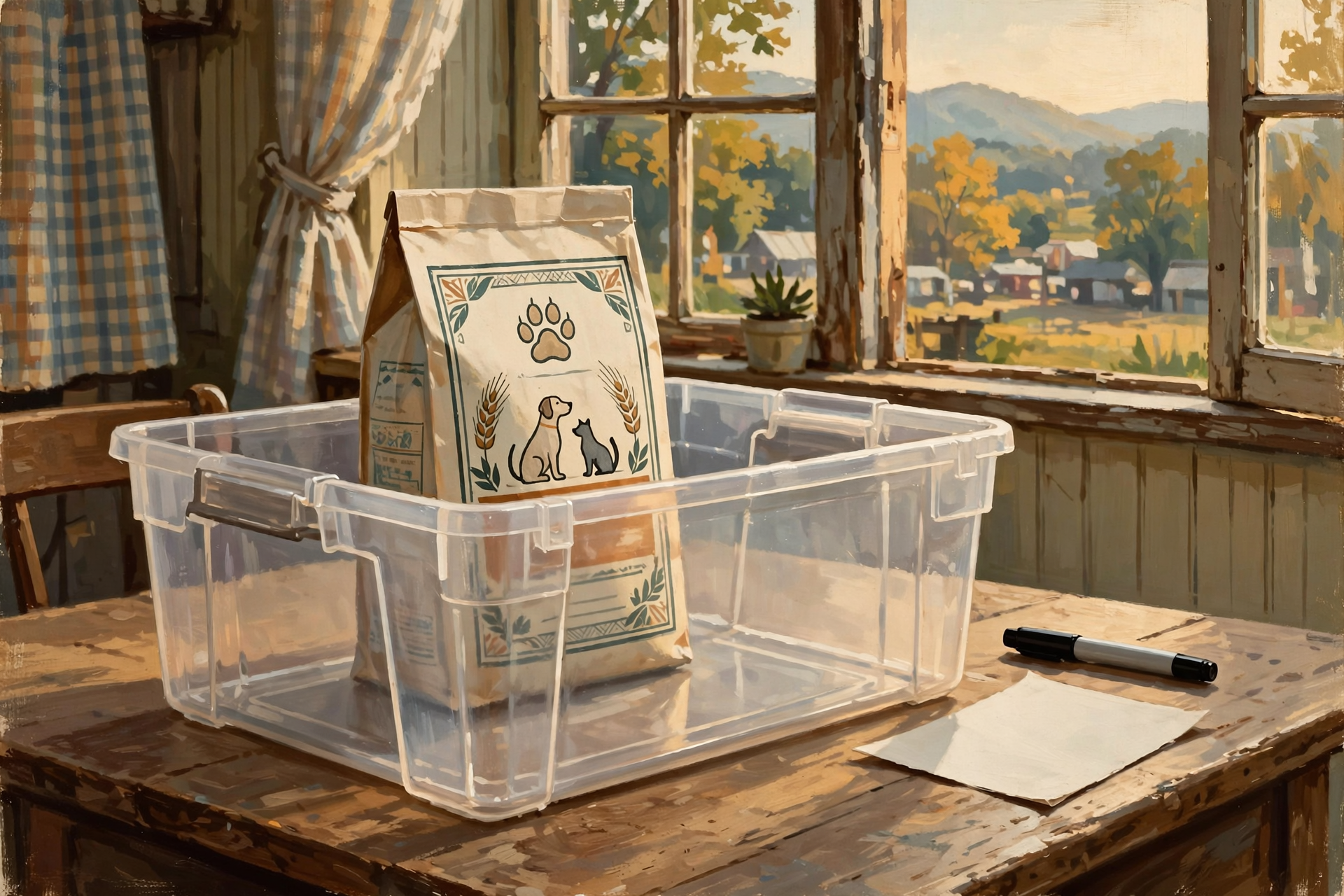
For practical colony management, I like the idea of retaining the original packaging information even when using sealed storage bins.
That preserves:
- 🏷️ Brand and product identity
- 📅 Expiration information
- 📦 Lot information
- 🔥 Calorie information
- 🥣 Feeding directions
We don’t want a giant bin labeled:
“Brown Cat Food.”
That’s not much of an inventory system.
🥫 Wet Food Has Excellent Shelf Life—Until You Open It
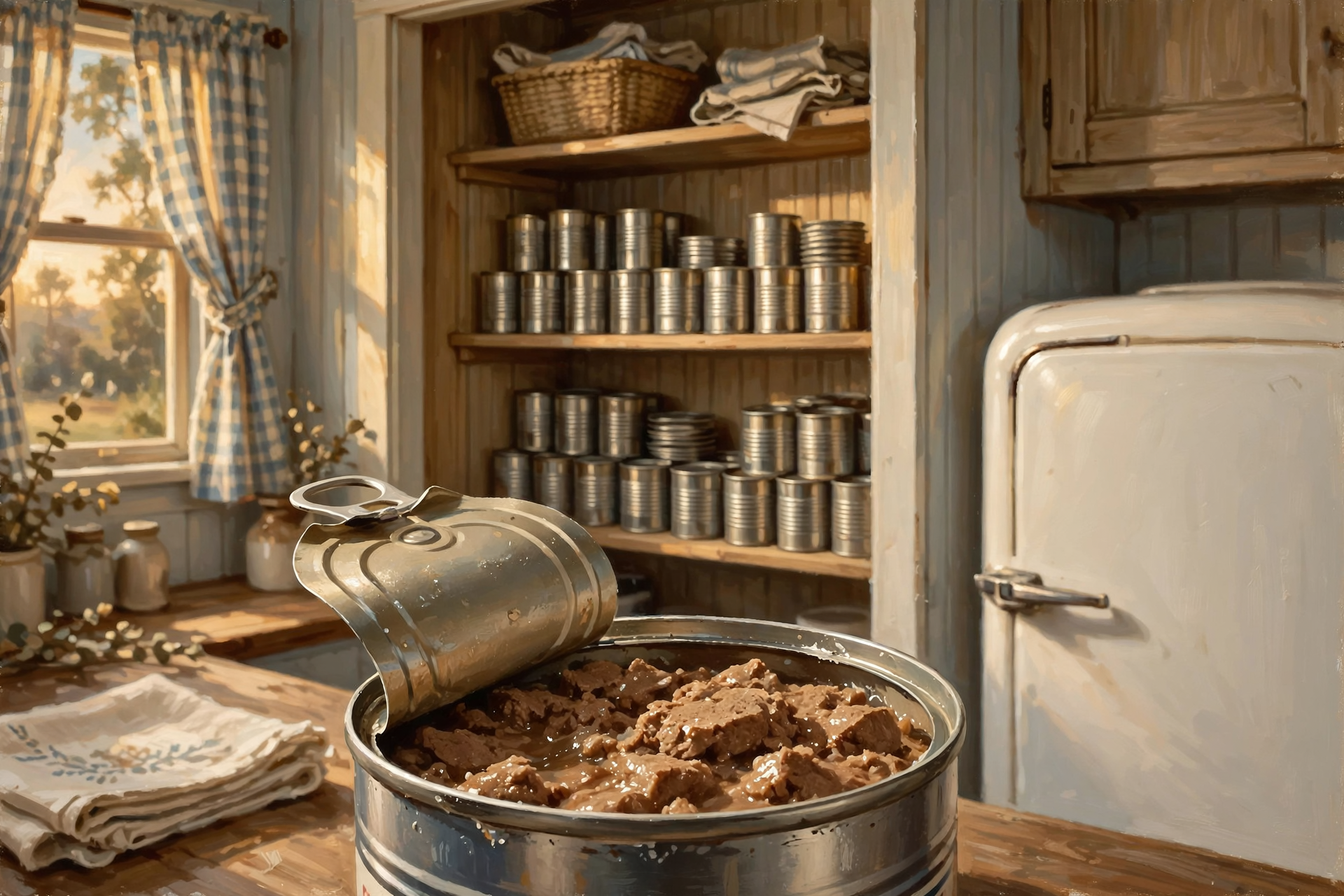
Cornell notes that unopened canned food stores very well.
That’s convenient.
Once the can is opened, however, unused portions need refrigeration to maintain quality and avoid spoilage.
That creates an interesting colony-feeding rule:
small cans may waste less, while large cans may cost less per ounce.
Another thing to measure.
📏 Can Size Could Affect Real Cost
Imagine two choices.
Small Can
Higher price per ounce.
But we use all of it immediately.
Large Can
Lower price per ounce.
But half goes unused or spoils.
The cheap can just became expensive.
For forty cats, we may actually be able to use large cans efficiently.
That’s one advantage colony scale gives us.
🐾 Kittens Make Wet Food Especially Interesting
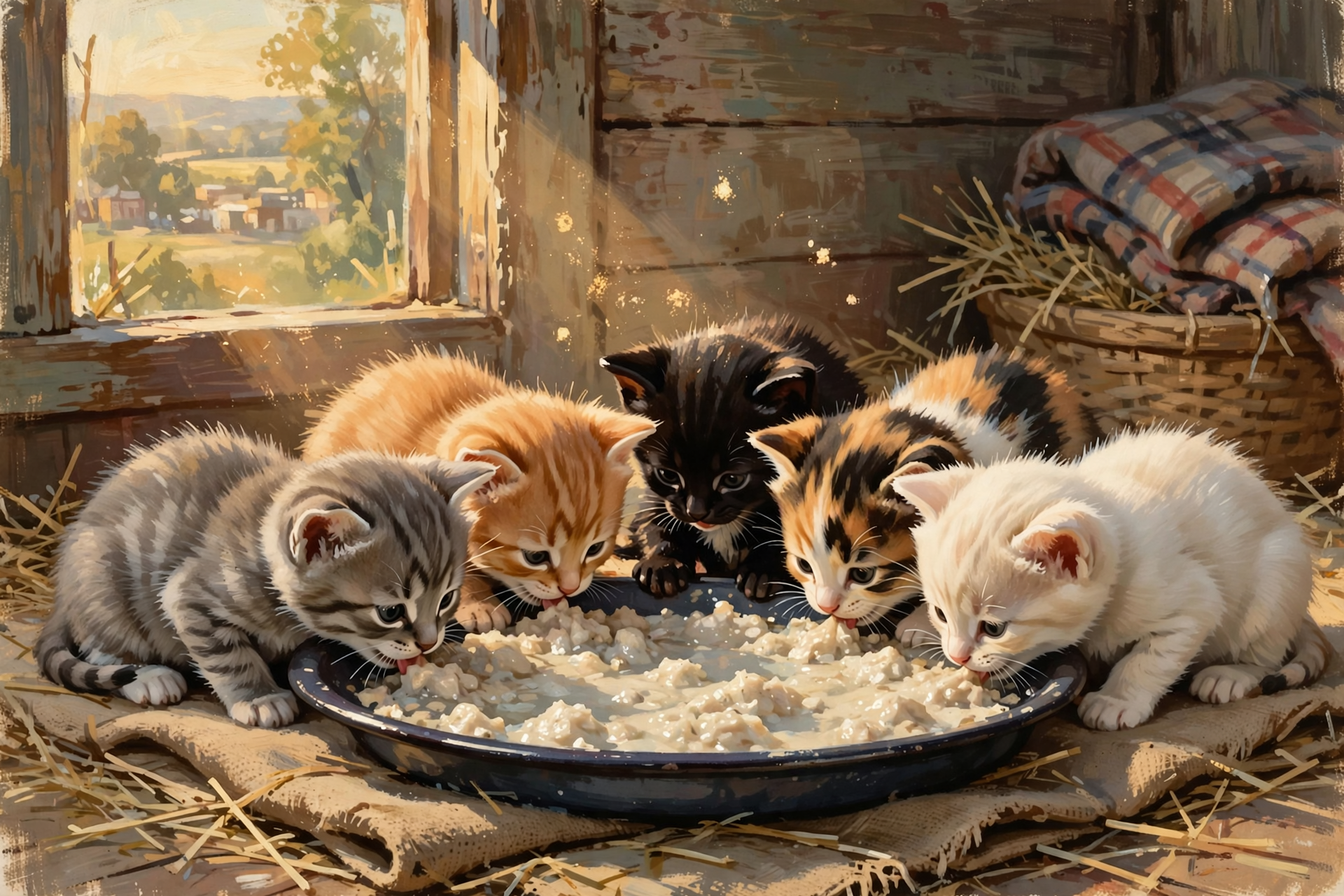
Kittens need complete nutrition formulated for growth.
That can come in wet or dry form.
But wet kitten or all-life-stages food can be particularly easy for very young animals to eat.
At the same time, complete dry kitten food may be substantially more economical for a large group.
Again, this argues for flexibility rather than ideology.
👴 Older Cats May Prefer Softer Food
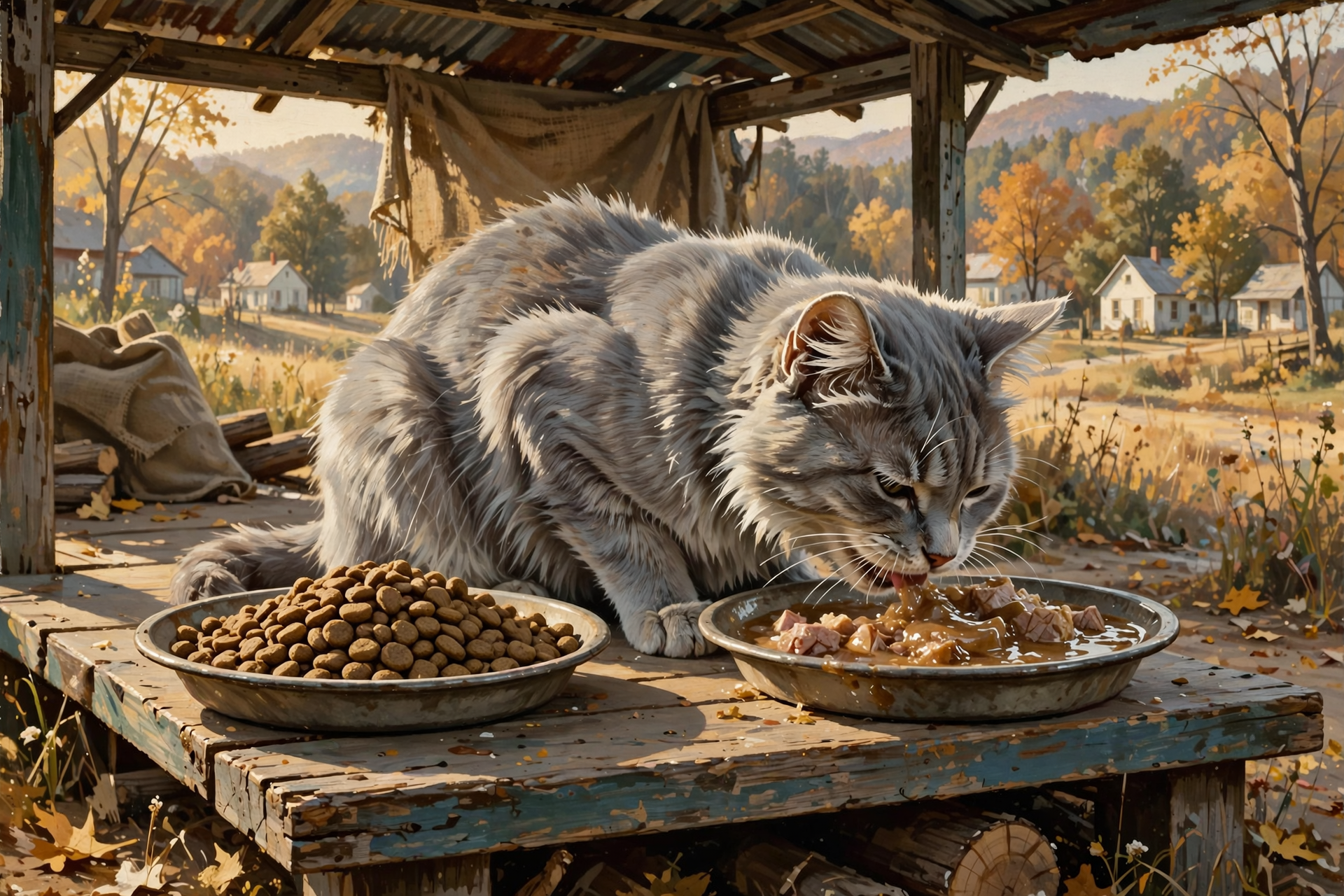
As The Scaredy Cat Project matures, some of our colony will mature too.
Older cats may develop dental issues.
Softer wet food may become easier for some individuals to eat.
That supports another idea:
the colony may need a standard feeding system plus exceptions for individual cats.
Scaredy would like to be classified as an exception immediately.
🐱 The Bold Cats Can Distort What We Think the Colony Is Eating
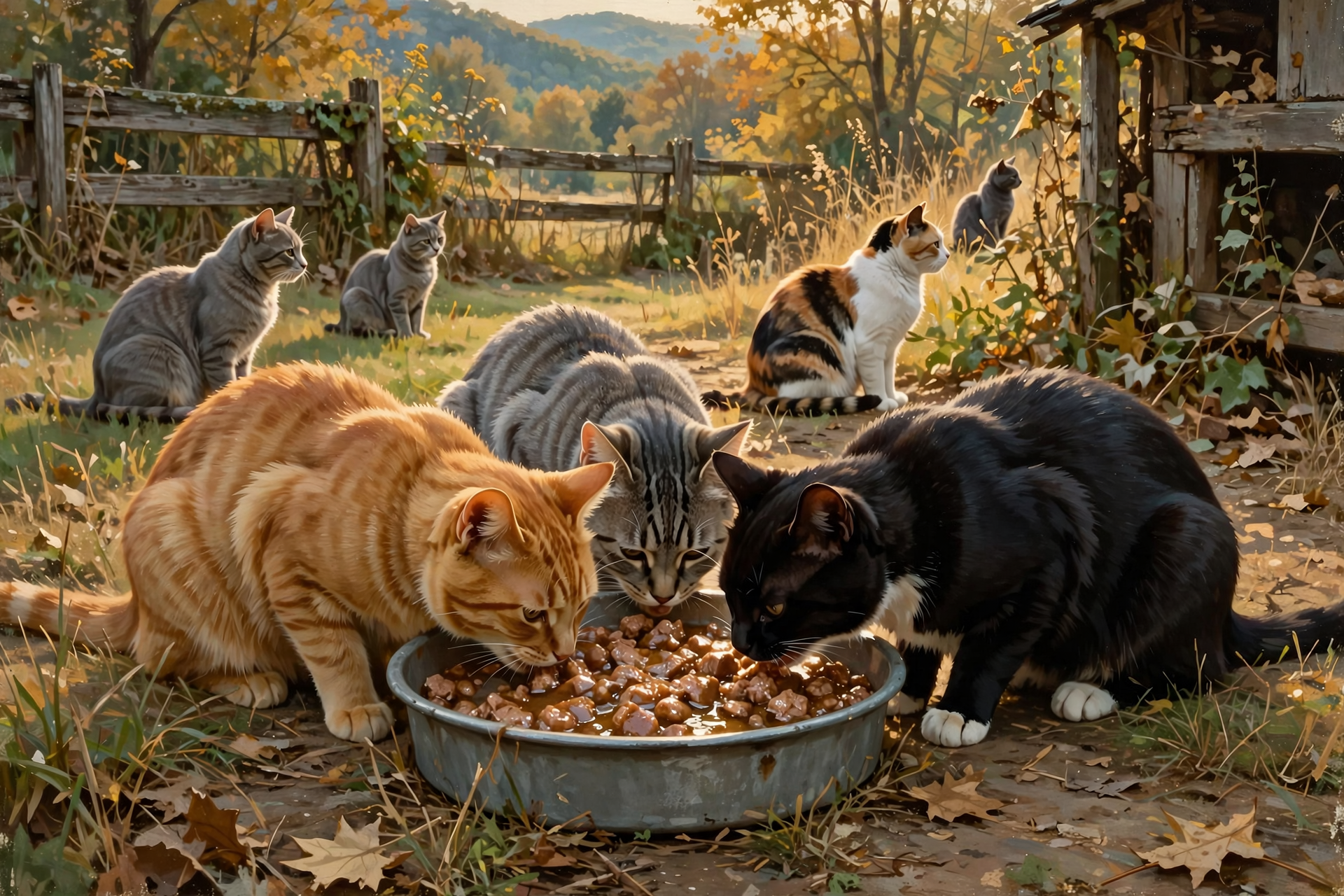
This is another practical complication.
If we put one dish of expensive wet food in front of forty cats, the boldest cats may eat most of it.
Then we could mistakenly conclude:
“The colony loves wet food.”
Perhaps six cats love wet food and the others never got near it.
Multiple feeding bowls and locations may give us better information.
🥫 Wet Food May Be Best Used Selectively
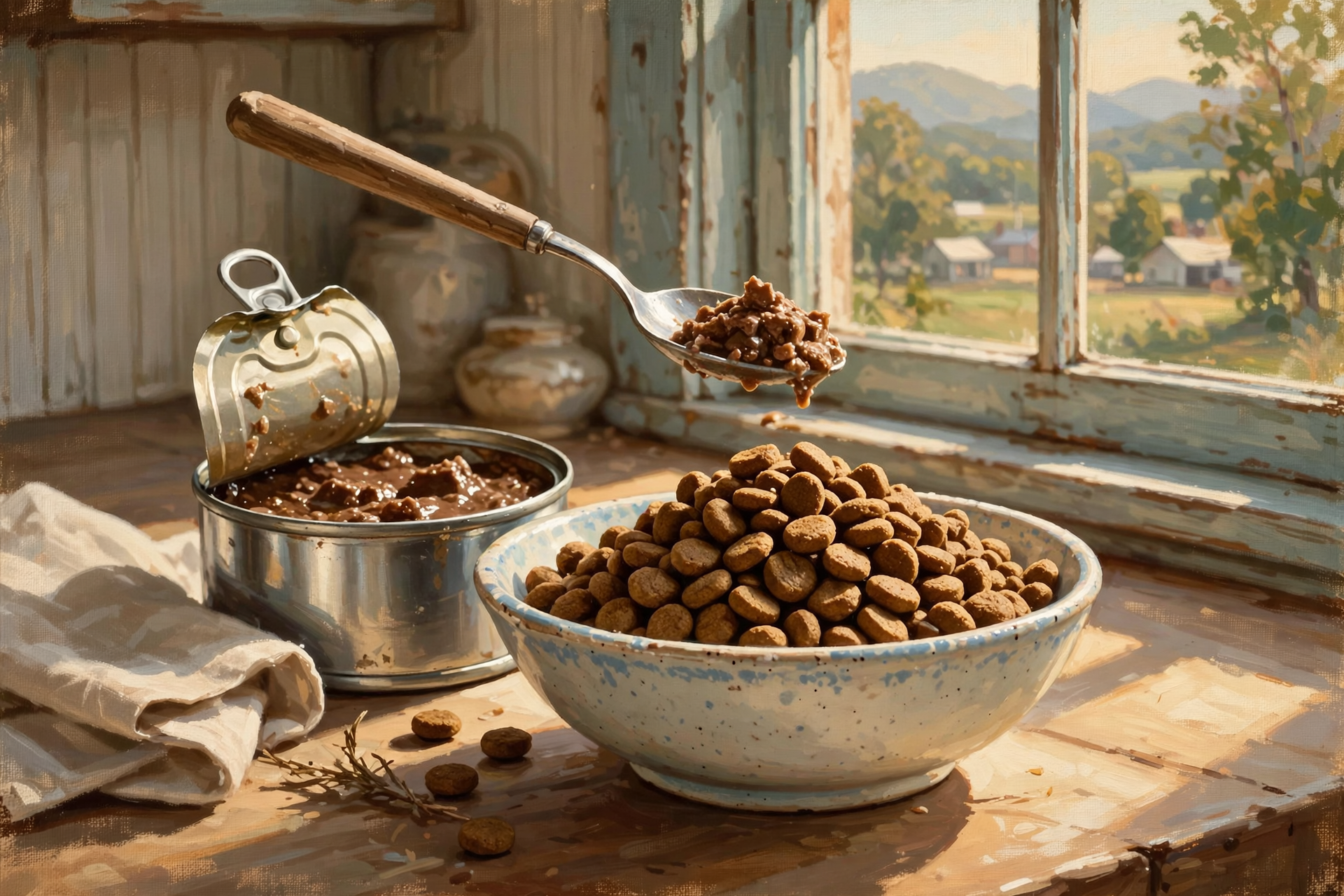
I’m beginning to see several specific jobs for wet food.
💧 Hot Weather
Additional dietary moisture.
😿 Poor Appetite
Strong aroma and palatability.
🐾 Young Kittens
Softer texture when appropriate complete food is selected.
👴 Older or Dental-Challenged Cats
Easier eating.
💊 Medication
Potentially useful for an individual cat when medication needs to be hidden in food.
😸 Dry-Food Topper
Use a small amount to make an economical complete dry diet more appealing.
🥣 Dry Food May Be Best at the Jobs It Already Does Well
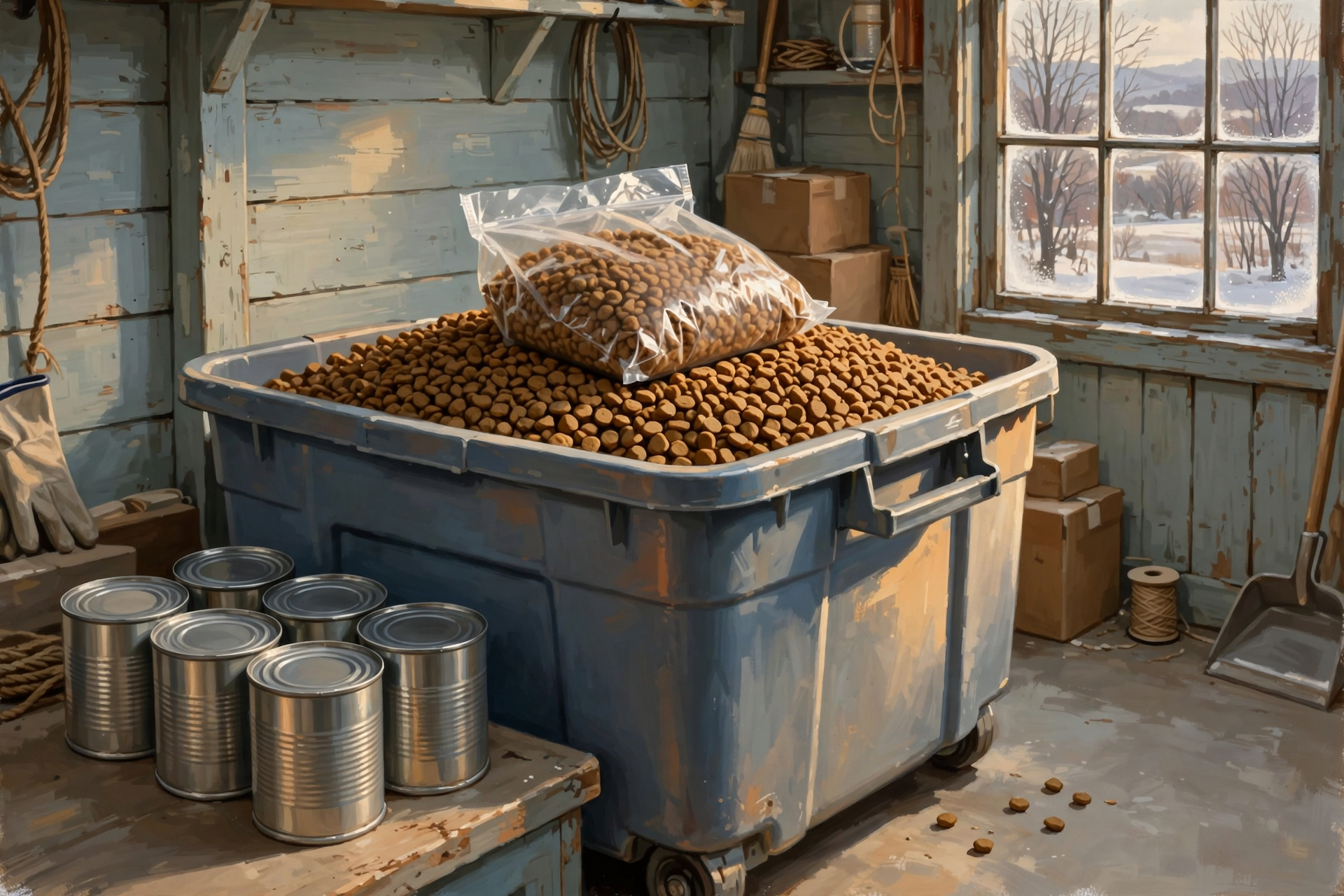
💵 Bulk Calories
Usually economical.
📦 Storage
Compact and convenient.
❄️ Cold Weather
Doesn’t freeze like wet food.
🚗 Transportation
Much easier than hauling the equivalent calories in cans.
🐱 Large-Colony Feeding
Easy to distribute and measure.
💡 Maybe the Best System Is 80/20—or 90/10—or Something Else Entirely
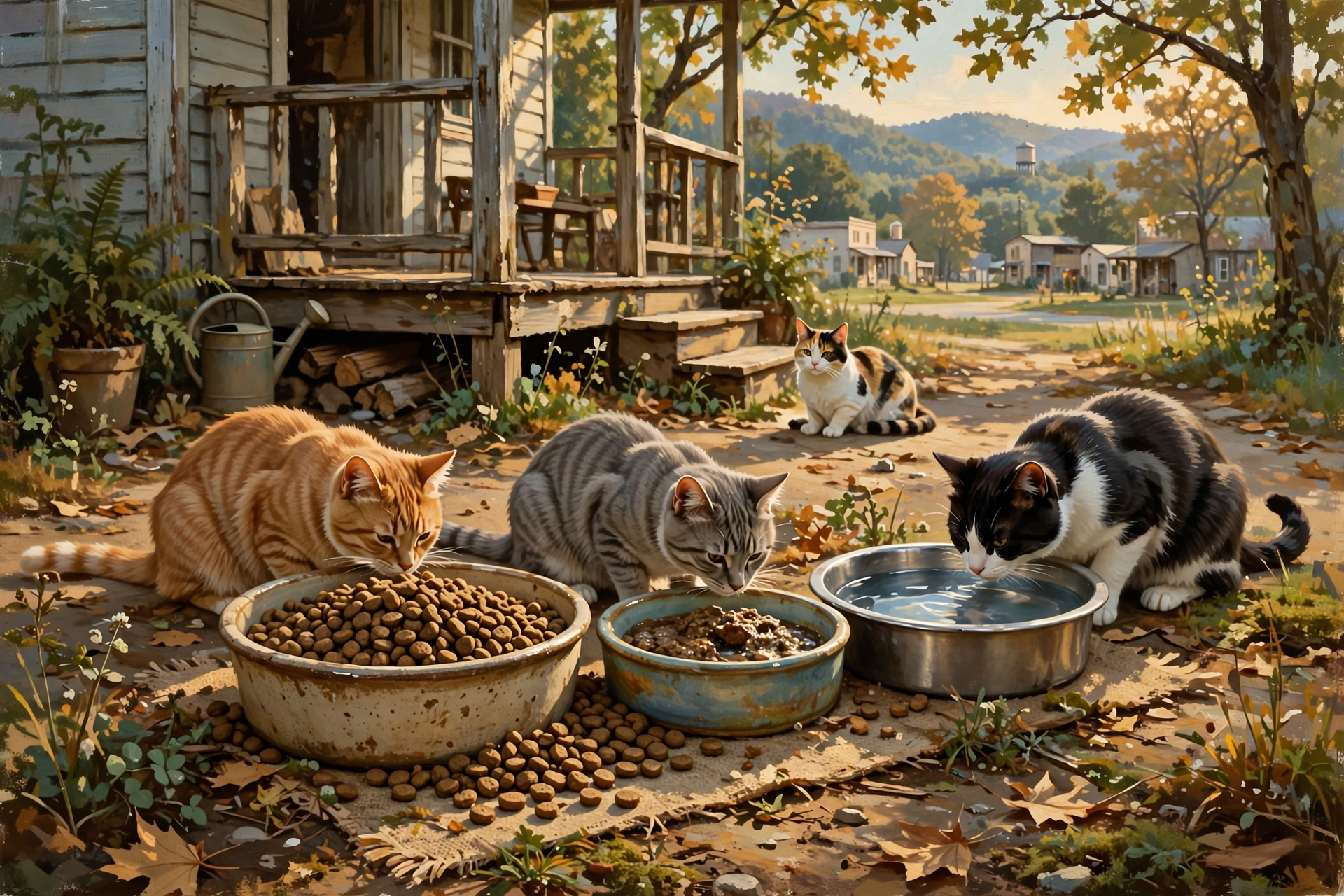
I don’t mean those numbers as nutritional recommendations.
I mean we should experimentally determine how much of our feeding system needs to be wet versus dry.
Perhaps dry food provides most calories.
Wet food provides strategic hydration and palatability.
Locally sourced ingredients provide occasional supplemental protein and variety.
Fresh water remains available constantly.
That sounds more promising to me than choosing one food format and declaring victory.
🧪 How We Could Test Wet Versus Dry With Our Colony

1️⃣ Establish Our Dry-Food Baseline
Brand.
Price.
Calories.
Amount served.
Waste.
2️⃣ Add a Measured Amount of Complete Wet Food
Not random leftovers.
3️⃣ Reduce Dry Food Appropriately
Otherwise we’re measuring extra calories, not substitution.
4️⃣ Observe Consumption
Does dry-food waste decrease?
5️⃣ Watch Distribution
Are all cats getting access?
6️⃣ Track Weather
Does the answer change between July and January?
7️⃣ Calculate Cost Per Cat Per Day
Compare with our baseline.
8️⃣ Calculate Waste
Especially wet food that has to be discarded.
9️⃣ Observe Body Condition
We’re feeding animals, not merely optimizing a spreadsheet.
📋 The Scaredy Cat Format Scorecard: Dry Food
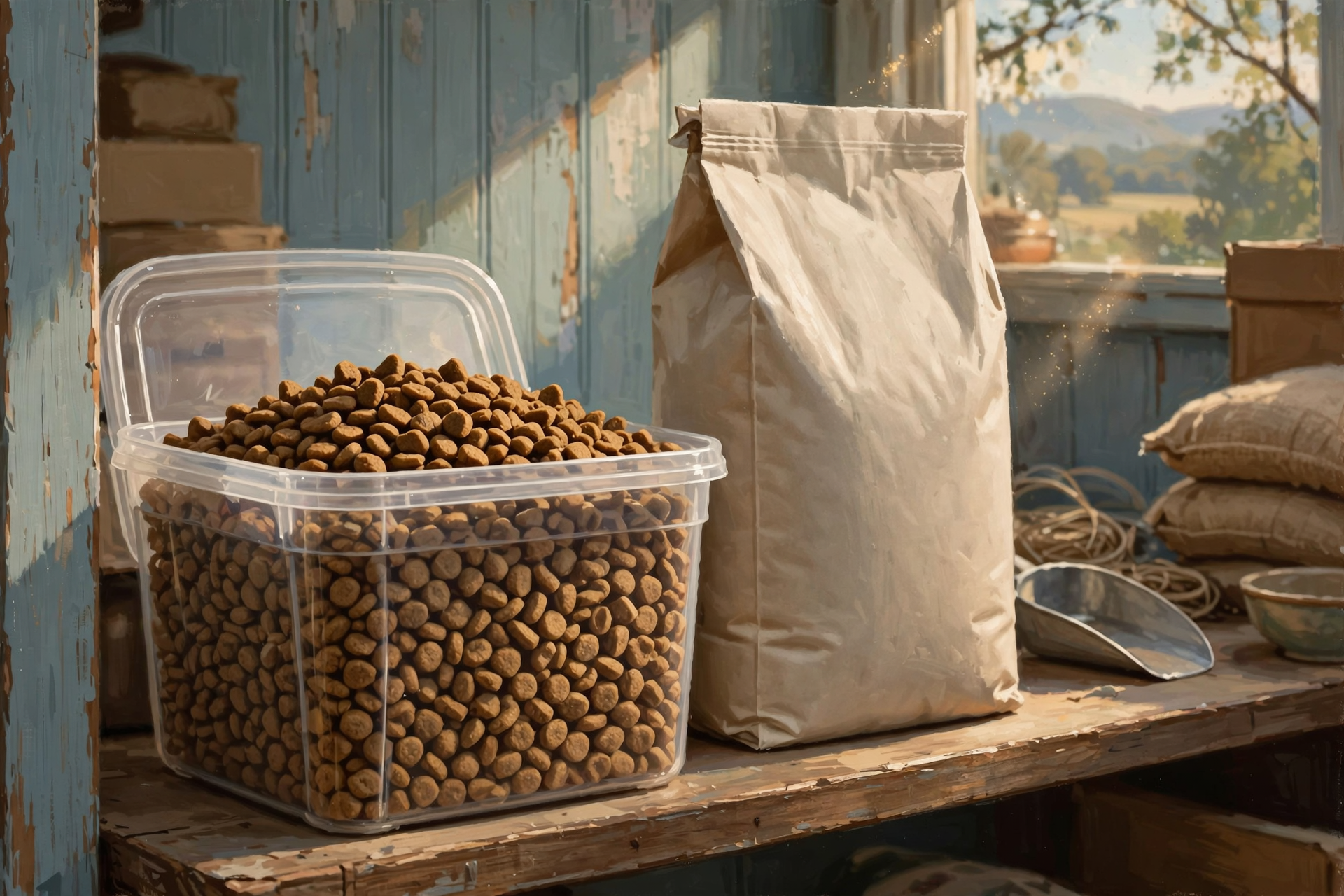
🥩 Complete Nutrition Potential
Excellent when labeled complete and balanced for the appropriate life stage.
💧 Moisture
Low compared with wet food.
Reliable fresh water becomes particularly important.
🔥 Calorie Density
High.
Excellent for delivering substantial calories efficiently.
💵 Cost Efficiency
Usually excellent.
Especially when comparing complete diets on a calorie basis.
📦 Storage
Excellent.
Keep cool, dry and protected from air and pests.
❄️ Winter Practicality
Excellent.
Doesn’t freeze the way wet food does.
☀️ Summer Practicality
Good.
But water availability becomes especially important.
😸 Palatability
Good but cat-dependent.
🐱 Scaredy Cat Project Rating
Excellent Foundation Food for Colony Economics and Logistics.
📋 The Scaredy Cat Format Scorecard: Wet Food
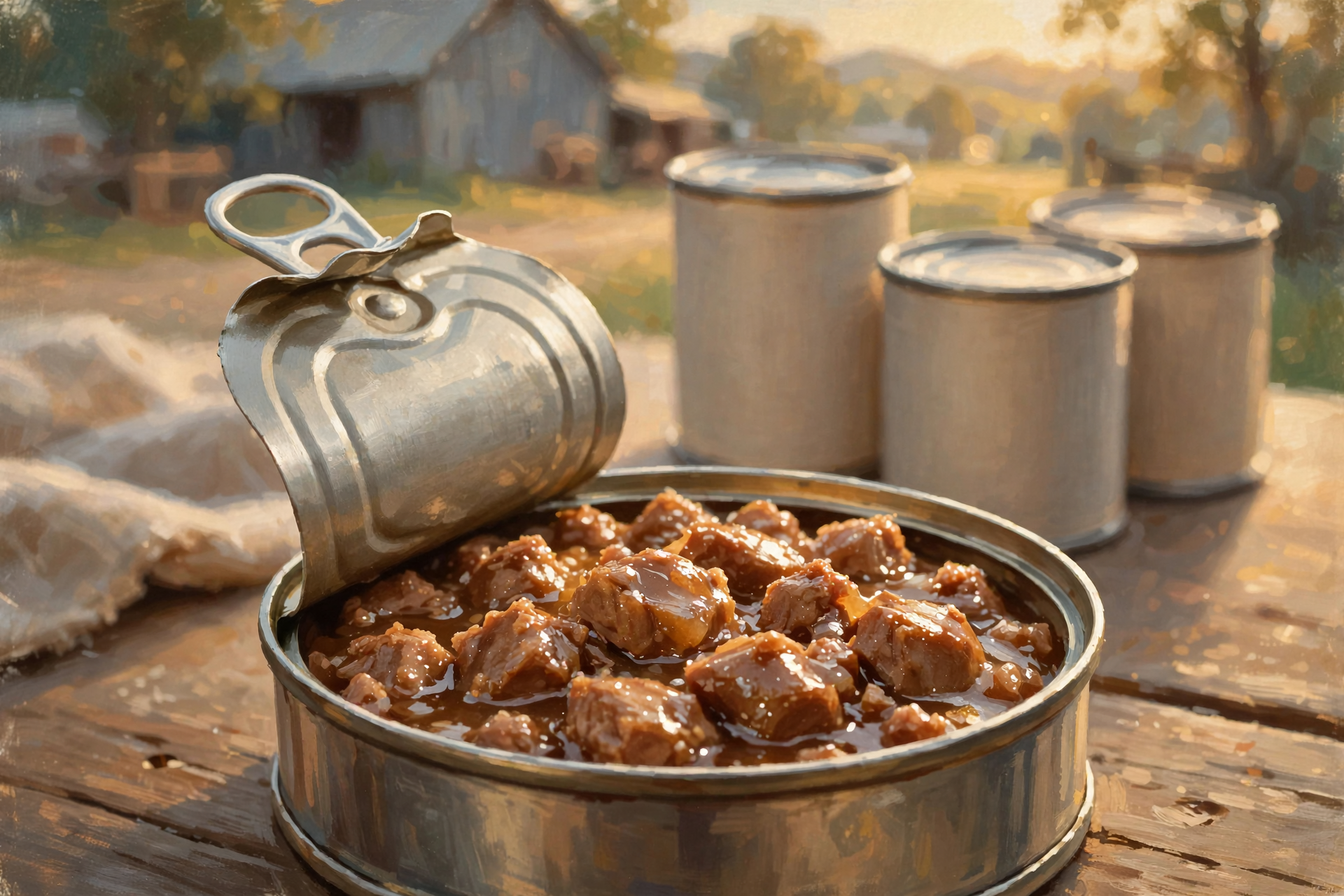
🥩 Complete Nutrition Potential
Excellent when labeled complete and balanced.
Not every specialty or supplemental canned product is nutritionally complete, so the label matters.
💧 Moisture
Excellent.
Cornell reports canned cat food contains at least about 75 percent moisture.
🔥 Calorie Density
Lower by weight because of water content.
💵 Cost Efficiency
Usually lower than dry food on a calorie basis.
But palatability and reduced waste may offset part of that difference.
📦 Storage
Excellent unopened; more complicated after opening.
❄️ Winter Practicality
Moderate to poor outdoors.
Freezing becomes an issue.
☀️ Summer Practicality
Nutritionally useful but operationally demanding.
Excellent moisture contribution, but uneaten food must be removed promptly.
😸 Palatability
Often excellent.
🐱 Scaredy Cat Project Rating
Excellent Strategic Tool—Especially for Hydration, Appetite and Targeted Feeding.
🏆 So Which One Wins?
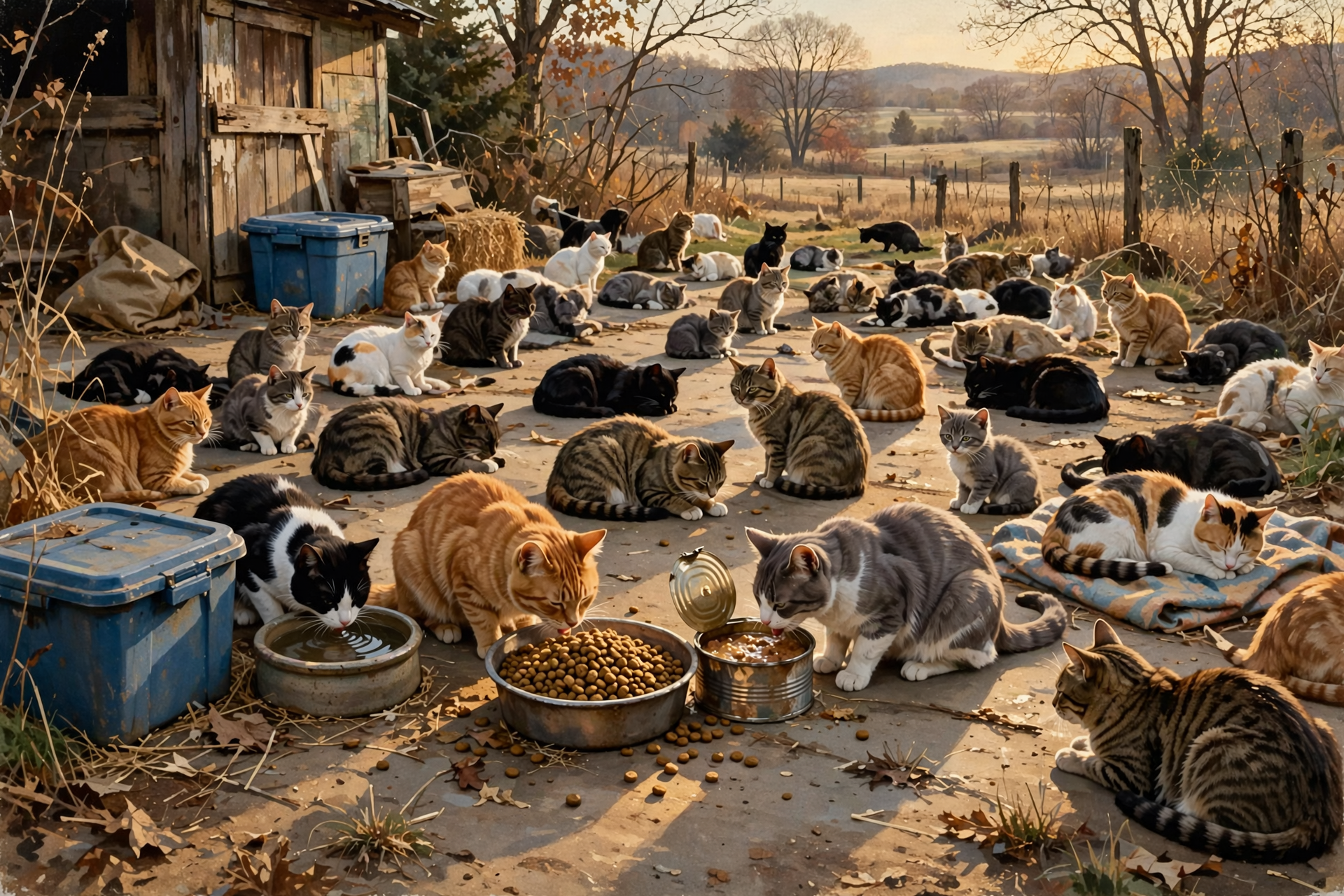
Neither.
Or both.
That’s probably the least exciting headline and the most useful answer.
If we were feeding one individual cat with unlimited budget and perfect supervision, the answer might be different.
We’re not.
We’re feeding a mixed group of roughly forty animals outdoors in Tennessee.
We need:
- 🥩 Complete nutrition
- 🔥 Enough calories
- 💧 Good hydration
- 💵 Sustainable cost
- 📦 Practical storage
- 🌡️ Weather tolerance
- 🗑️ Minimal waste
A combination may serve those goals better than either format alone.
❤️ The Better Question Is “What Job Are We Hiring This Food to Do?”
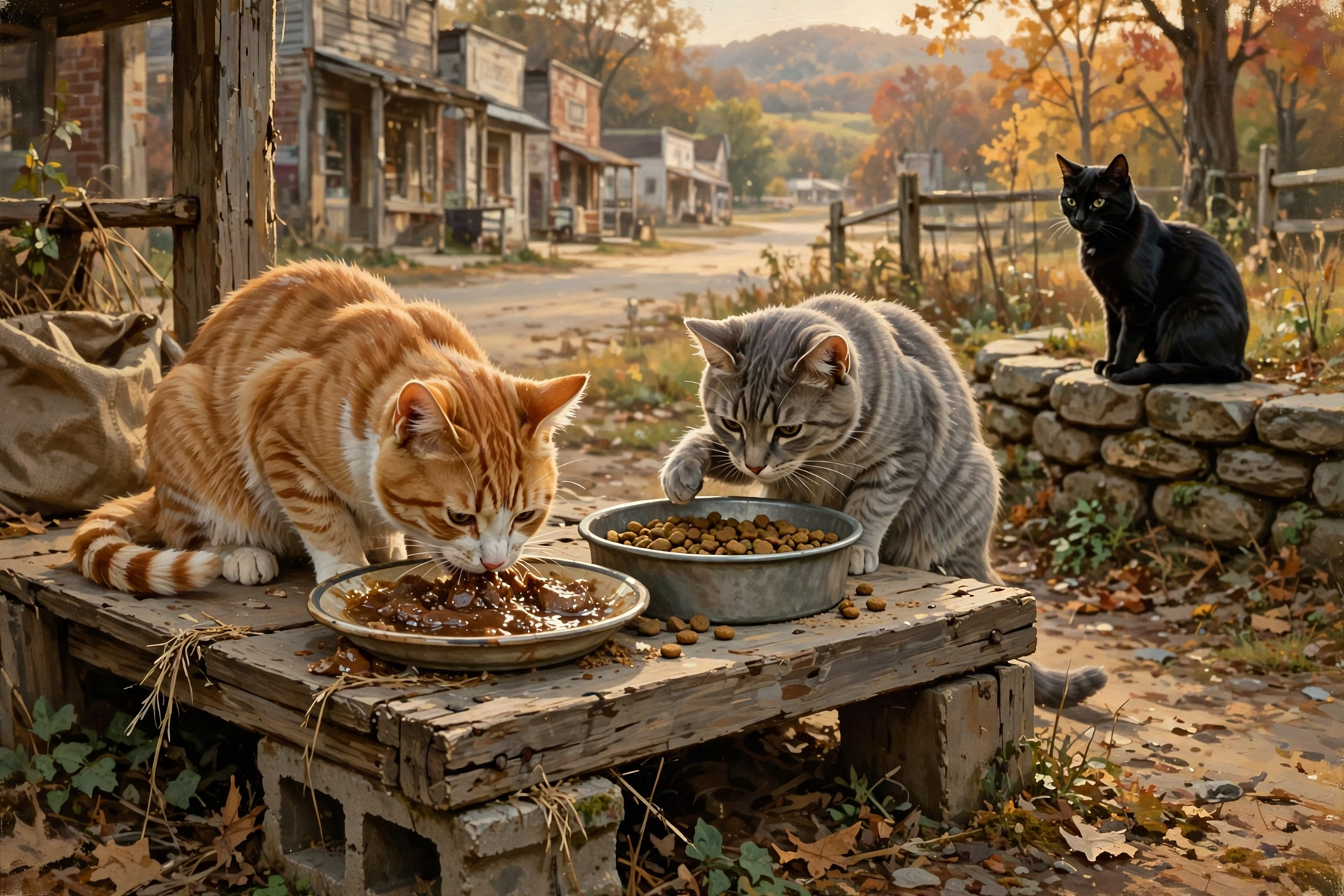
This may be the biggest lesson of the article.
Don’t ask:
“Which food is best?”
Ask:
“What job do I need this food to do?”
Need inexpensive complete calories?
Dry may win.
Need more moisture?
Wet may win.
Need to tempt a reluctant eater?
Wet may win.
Need food that won’t freeze quickly at an outdoor station?
Dry may win.
Need a practical feeding system for forty cats?
Perhaps both.
🔜 Next: What Should We Actually Buy? Building the Scaredy Cat Project Feeding Plan
We’ve now done enough homework that I think we’re ready to stop speaking only in theories.
The next article should begin assembling an actual practical feeding strategy.
We’ll combine what we’ve learned about:
- 🥣 Complete dry food
- 🥫 Complete wet food
- 🍗 Supplemental local ingredients
- 💧 Water
- 🔥 Calories
- 💵 Cost per cat per day
- 🧊 Storage
- 🗑️ Waste
- 🌡️ Seasonal changes
And we’ll ask:
If we were designing the feeding system for our roughly forty cats from scratch today, what would we actually buy and how would we use it?
That may become the most practical article in the series yet.
📣 Wet, Dry, or Both?
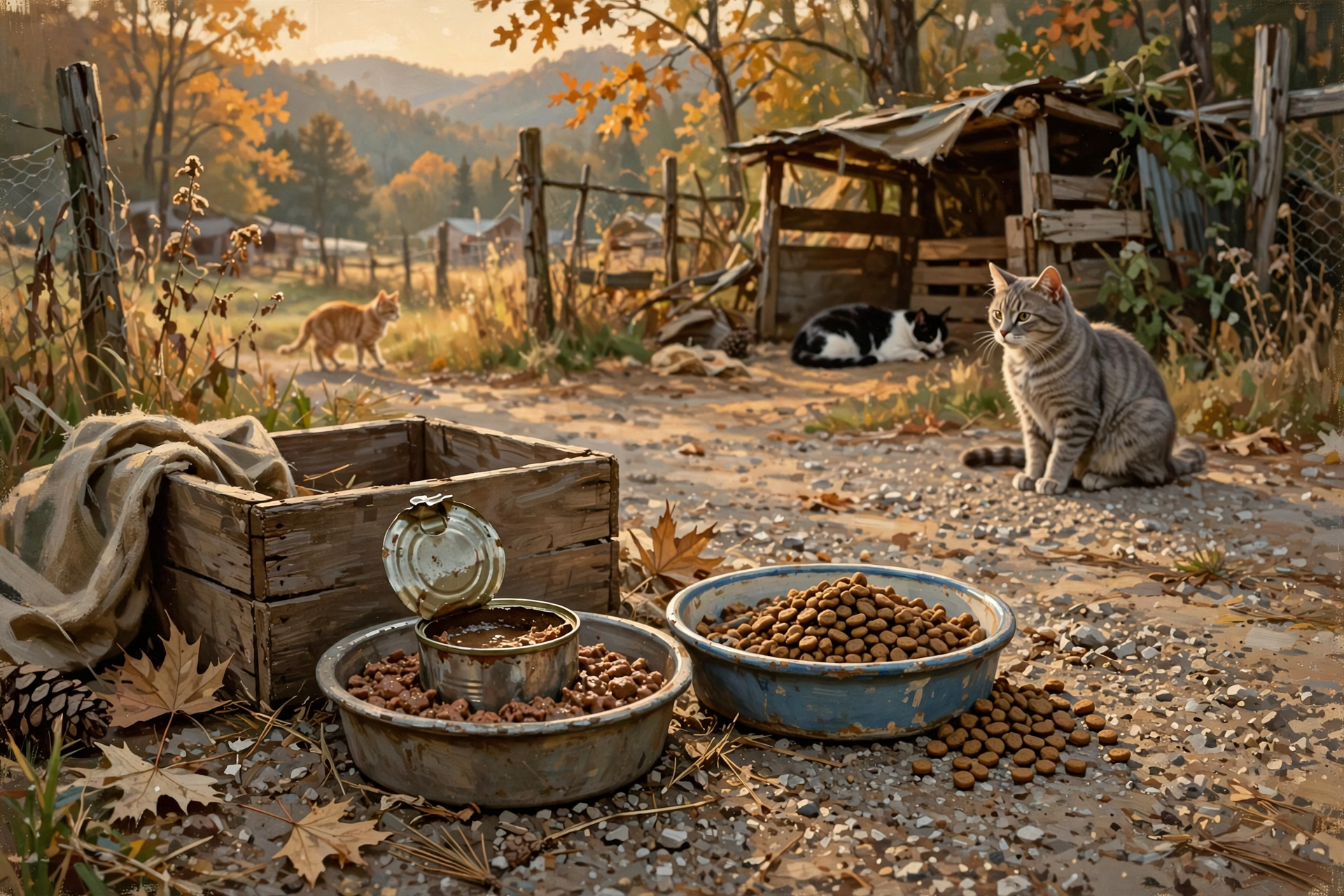
If you feed community cats around Dunlap or Sequatchie County, we’d like to hear what actually works for you.
Do you use mostly dry food?
Wet food?
A combination?
Does your strategy change with the weather?
Have you found a complete food that produces very little waste?
Do you use wet food only for kittens, older cats or sick animals?
Those real-world experiences can help us build a better local feeding model.
❤️ Feed Them. Fix Them. Find Them Homes When We Can. Help the Rest Age Gracefully.

Scaredy would probably prefer the conclusion:
Wet food wins.
Especially if “wet food” is interpreted generously enough to include tuna.
But feeding forty cats requires a little more discipline.
The best solution may not be the fanciest one.
It may be a combination:
Complete dry food for affordable calories.
Wet food where moisture and palatability matter.
Useful local ingredients when they make nutritional and economic sense.
Fresh water every day.
And enough measurement to know whether the system actually works.
We’re not choosing sides.
We’re choosing tools.
🐾 Feed them. Fix them. Find them homes when we can. Help the rest age gracefully.
🔎 Sources & Further Reading

- Cornell University College of Veterinary Medicine — Feline Health Center, Feeding Your Cat
- Alley Cat Allies — Community & Feral Cat Feeding Tips
- Alley Cat Allies — Best Practices: Community Cat Colony Care
- Alley Cat Allies — Summer Weather Tips
- Alley Cat Allies — Winter Weather Tips for Outdoor Cats
Sources
Know about an upcoming event or story in the Sequatchie Valley? Submit it here.



0 Comments