
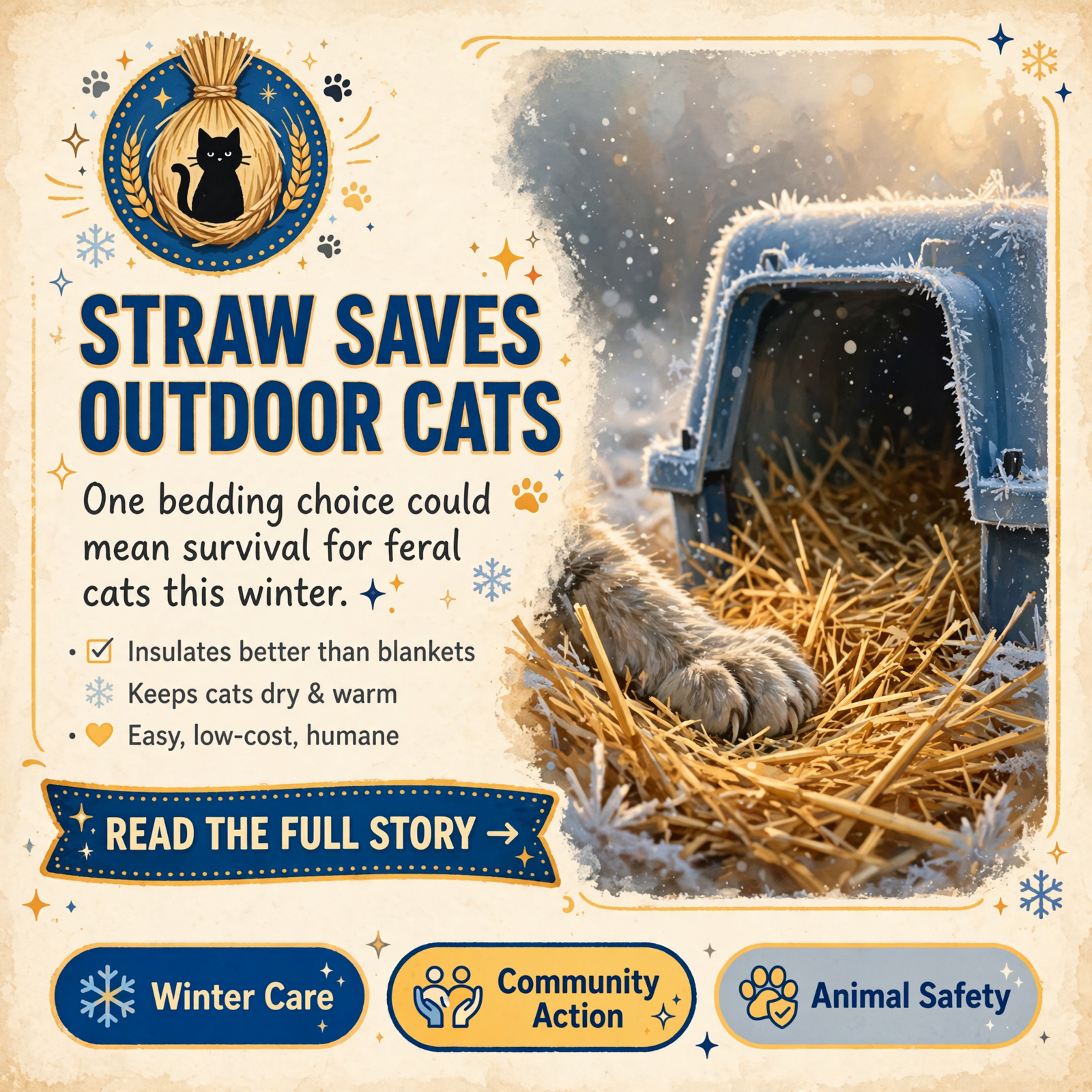
❄️ Straw, Not Blankets: The Right Way to Shelter Outdoor Cats in Winter
As temperatures drop across the region, community members caring for outdoor and feral cats face a critical choice about shelter bedding. What feels cozy indoors can become dangerous in an unheated outdoor shelter-and the difference between the right material and the wrong one can mean survival for vulnerable animals during cold months.
🧊 Why Blankets Fail in the Cold
Blankets, towels, and even hay may seem like natural choices for a cat shelter, but each carries hidden risks in winter conditions. Blankets and towels absorb moisture; once wet, they lose their insulating value and can freeze solid, trapping cats in a damp, frigid environment. Hay-dried plant material used for animal feed-holds moisture, can develop mold, and flattens into a damp layer that offers little protection. ❌
✨ Why Straw Works Better
Straw, the stalk material left after grain harvests, is fundamentally different. Its hollow structure traps insulating air, and cats can burrow into it to conserve body heat. Straw resists moisture far better than fabric or hay, keeping the shelter dry and warm even as outdoor temperatures plummet. 🌾
When shopping for straw, look for material that is golden yellow and feels stiff with hollow stalks. Ask for straw specifically at a farm or feed store-don’t rely on color alone, as hay can sometimes look similar.
🏠 Building a Winter Cat Shelter
For those making a DIY shelter, the foundation matters as much as the bedding. Start with a sturdy plastic tote with a fitted lid. Line the floor, walls, and underside of the lid with foam insulation, or fit a foam cooler inside for extra protection. 📦
Cut an entrance about 6 inches across, positioned several inches above the bottom so cats can pass through comfortably. Make sure the opening aligns through the insulation and cover any rough edges. Add loose straw for burrowing, then raise the shelter on a stable base and secure it against wind. Face the entrance away from prevailing winds and choose a protected location. In areas where predators are a concern, a second exit may help-though it does allow more cold air inside. 🌬️
🔄 Maintenance and Care
Even straw can get wet, so check shelters often and replace damp, dirty, or moldy bedding regularly. Clear snow from entrances after storms. Provide food nearby in a protected spot, and keep water outside the sleeping shelter, replacing it whenever it freezes. 💧
For dogs, dry straw can help insulate a suitable doghouse-but the best practice is to bring dogs indoors during cold weather, especially during severe conditions.
❤️ A Small Choice, Big Impact
The choice between blankets and straw might seem minor, but for outdoor cats facing winter nights, it’s the difference between comfort and danger. Community members caring for feral or outdoor cats-whether through formal shelters or informal feeding stations-can make a real difference by using the right materials and checking shelters regularly. 🐱
🤔Source
Gardening Joy – An informative post advising on the best bedding material, specifically straw instead of blankets or hay, for outdoor and community cat shelters during winter.
Know about an upcoming event or story in the Dunlap, TN area? Submit it here.



0 Comments