
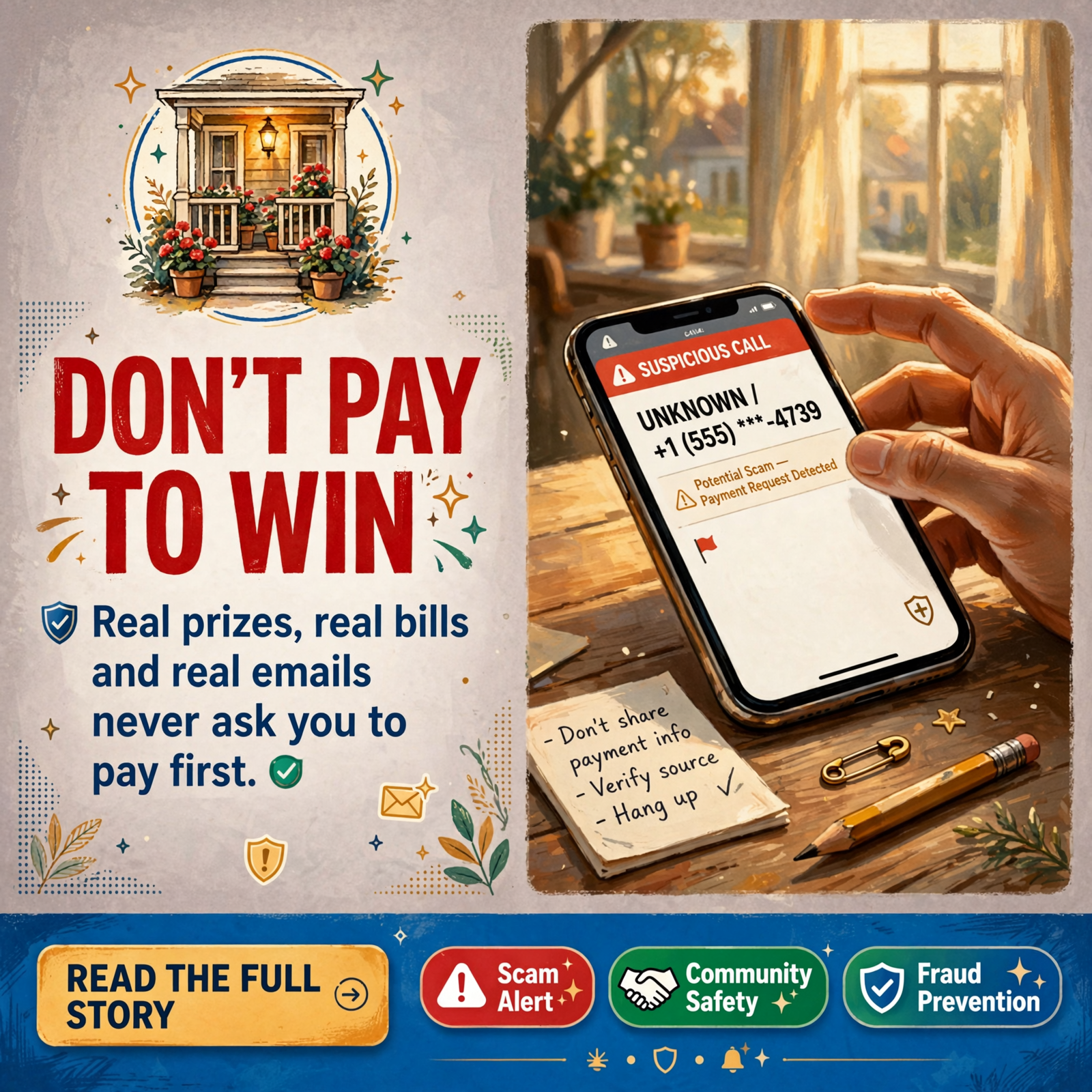
🚗 A Free Car You Never Entered to Win, a Ruby Falls Ticket Site That Isn't Ruby Falls, a Debt You Don't Owe and an Email That Got Away From You: Your Scam Watch for This Week

Or: If You Didn’t Start It, Don’t Pay to Finish It
By Thomas Seest, Dunlap.Today · Tuesday, October 20, 2026
Good Tuesday morning, neighbors. The coffee’s poured and the porch light’s still on, so here’s a short list to read before the day gets going. This week’s scams share one easy tell: they start with something you never asked for. A prize you didn’t enter for. A debt you don’t remember. A bond call you didn’t expect. Real business usually starts with you. When it starts with a stranger and ends with “pay now,” you can set the phone down and check it yourself. Nothing here calls for worry, and every item comes with one simple step.
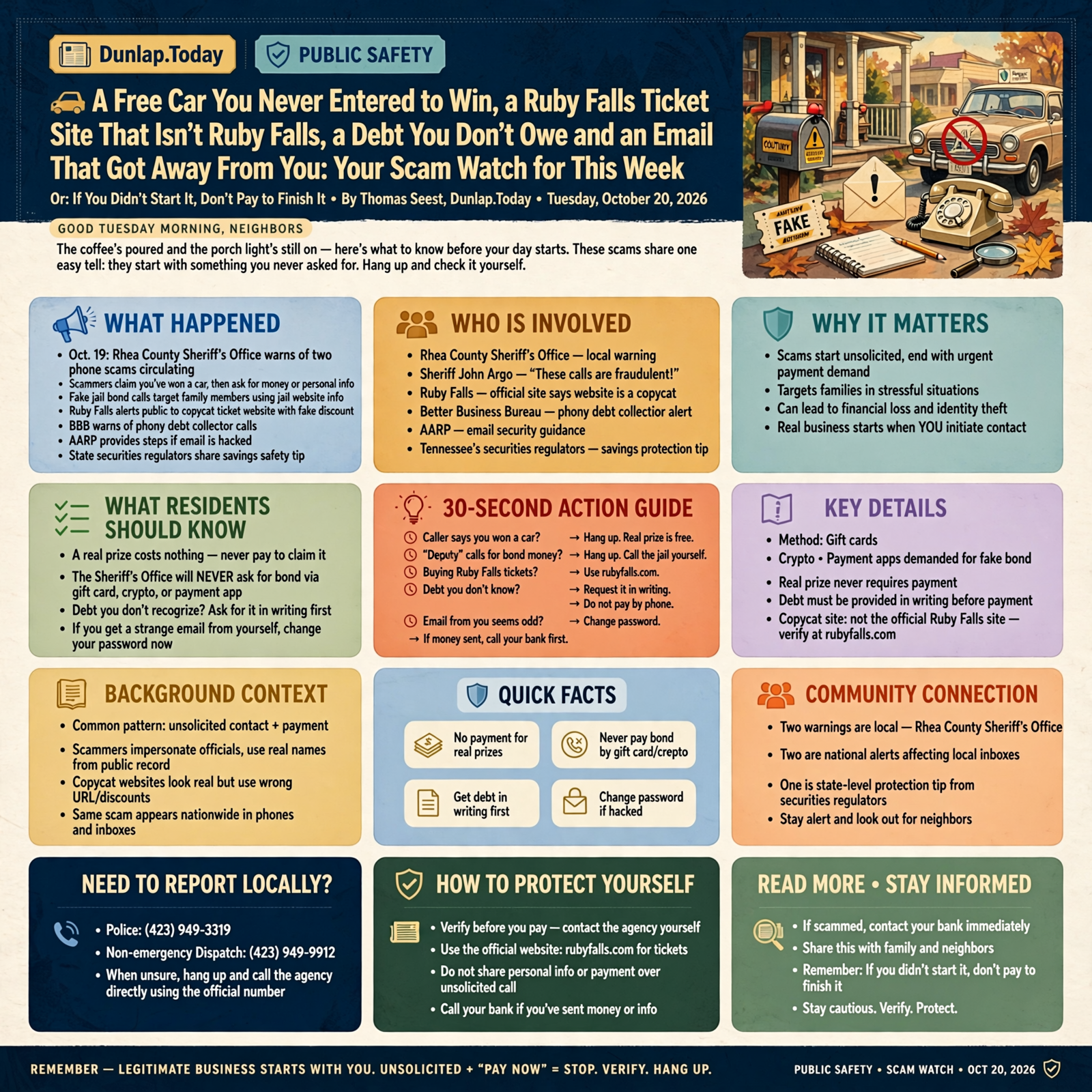
Here’s what’s on the line: right next door, the Rhea County Sheriff’s Office is warning about “you’ve won a car” calls and fake jail bond calls; Ruby Falls in Chattanooga says a copycat ticket website is advertising a discount that doesn’t exist; the Better Business Bureau warns about phony debt collectors; AARP lays out what to do if your email gets hacked; and Tennessee’s securities regulators share one easy way to put a safety net on your savings. Two items are local to our corner of Tennessee, one is statewide and two are national warnings that reach right into Valley phones and inboxes. We’ll tell you which is which.
⏱️ What this means for you in 30 seconds
- A caller says you won a car but need to pay or share information first? Hang up. A real prize doesn’t cost you a dime.
- A “deputy” calls asking for bond money by gift card, crypto or payment app? It’s a scam, even if they know your loved one’s name. Call the jail yourself.
- Buying Ruby Falls tickets? Use rubyfalls.com and check the web address before you pay.
- Someone says you owe a debt you don’t recognize? Ask for it in writing. Don’t pay over the phone.
- A friend got a strange email “from you”? Change your email password first, then warn your contacts.
- Already sent money? Call your bank first. In Dunlap, call police at (423) 949-3319 or non-emergency dispatch at (423) 949-9912.
🚗 “Congratulations, You’ve Won a Car!” Next Door in Rhea County, That’s the Sheriff’s Cue to Hang Up

Local: Rhea County Sheriff’s Office (our neighbor across Walden Ridge)
On Oct. 19, the Rhea County Sheriff’s Office warned residents about two phone scams going around. In the first, callers tell people they’ve won a vehicle, then ask for money or personal information before the “prize” can be claimed. The sheriff’s office says not to send money or give out personal information if you get one of these calls.
The second is an update on a scam we’ve covered before: fake jail bond calls. Rhea County says scammers are taking names from the county jail website and calling those folks’ family members, pretending to work for the sheriff’s office and saying money must be sent to bond a loved one out. “These calls are fraudulent!” Sheriff John Argo said. “The Sheriff’s Office will never require you to send bond money to an employee through gift cards, cryptocurrency, or personal payment apps.” Over in Nashville, the Davidson County Sheriff’s Office went so far as to stop posting active inmate and booking information on its website earlier this month after a rash of similar bond scams.
What it means for you: A prize that costs money to collect is like a “free” puppy that comes with a $500 shipping bill. It was never free. And a caller who knows a loved one’s name has only read a public list, the same as anybody could. Rhea County’s advice works anywhere in the Valley: don’t trust a caller just because they know a name, remember that caller ID can be faked, and hang up and call the sheriff’s office or jail directly using a number you look up yourself.
👉 Read more (NewsChannel 9: Rhea County sheriff warns of car prize and fake jail bond scams) · WDEF: Rhea Co. Sheriff’s Office warns of local scams
🎟️ Ruby Falls Tickets 25% Off? Check the Address Bar Before You Check Out
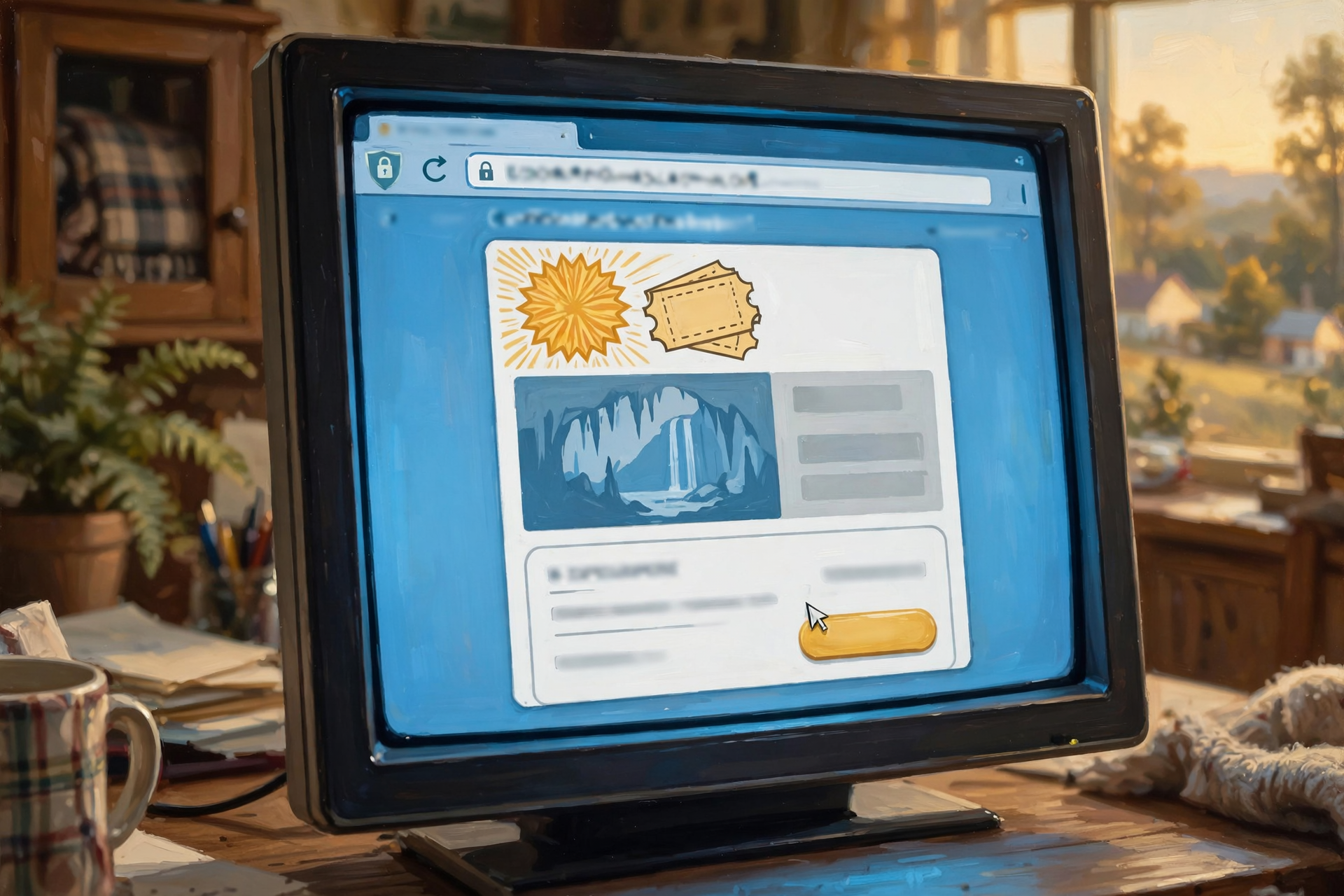
Regional: Ruby Falls, Chattanooga
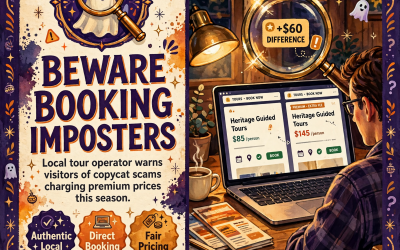
Fall is a popular time for a day trip up Lookout Mountain, and Ruby Falls is warning visitors about a fraudulent website made to look nearly identical to its official ticketing site. According to Ruby Falls’ warning, as reported by Dunlap.Today on Oct. 19, tickets bought on the copycat site will be invalid when you arrive, and the fake site has even advertised a 25% discount that doesn’t exist. Ruby Falls says to buy tickets only through its official site, rubyfalls.com, and to check the web address in your browser before you pay.
What it means for you: A look-alike website is like a store with the right sign out front but nobody behind the counter. It’s a short drive from Dunlap to Chattanooga, and nobody wants to load the grandkids in the car only to be turned away at the gate. Type rubyfalls.com yourself instead of clicking an ad or a search result, and save it as a bookmark. If you think you already bought tickets from the wrong site, contact Ruby Falls to check them before your trip, and call your card company about the charge. The same habit works for any show, ballgame or attraction: buy from the venue’s own website or box office.
👉 Read more (Dunlap.Today: Ruby Falls warns visitors about fraudulent ticket website) · Official Ruby Falls tickets
📬 “You Owe Us, and We’ll Sue Tomorrow.” A Real Debt Comes With Paperwork

National: Better Business Bureau
In a scam alert published this week, the Better Business Bureau warns about fake debt collectors. Someone calls or texts claiming to represent a loan company, law firm or government agency and says you or a family member owe money. If you question it, BBB says they may threaten a lawsuit, wage garnishment or even an arrest warrant to scare you into paying. In one report to BBB Scam Tracker, a caller claimed a consumer owed more than $400 on a credit card they never had, refused to send proof and hung up. In another, a consumer lost $230.11 paying a fake settlement on a bank account that had been closed nearly 15 years earlier.
BBB notes these callers sometimes know personal details, even a Social Security number, which can make them sound real. Its advice: ask for a written validation notice showing the amount and the creditor, look up the company’s phone number yourself, never pay under pressure by wire transfer, gift card or digital wallet app, and check your credit report for accounts you don’t recognize.
What it means for you: A real bill is like a real deed. There’s paper to show for it. If a caller can’t or won’t put it in writing, you don’t owe them a conversation, let alone a payment. And as Tennessee sheriffs keep reminding folks, law enforcement doesn’t call demanding money to stop an arrest. You can get your free credit reports at AnnualCreditReport.com to see what’s really in your name.
👉 Read more (BBB scam alert: Beware demands to pay debts you do not owe) · CFPB: Is that debt collector real?
📧 Clicked a Bad Link and Your Email Got Away From You? Here’s the Order to Fix It

National: AARP
This is the “what to do if you clicked” item. AARP published a guide this month on what to do if your email account is hacked. It opens with a woman who clicked what looked like a party invitation from her cousin and logged in to read it. Within moments, Google was alerting her phone about suspicious activity, and it shut the attempt down. AARP explains why crooks want your email: it’s the key that resets passwords for almost everything else, and they can use your contact list to send convincing messages to your friends.
Signs you’ve been hacked include a password that suddenly doesn’t work, an unknown device signed in, messages you didn’t send, or a friend getting a strange email from you. AARP’s steps, in order: contact your email provider if you’re locked out; change your email password first, then your banking, medical and social media passwords; sign out of all devices from your account settings; warn your contacts to ignore odd requests from you; check your sent and deleted folders; and make sure no one turned on auto-forwarding or switched off your security settings.
What it means for you: Your email is like the key ring hanging by the back door. Whoever holds it can open most of the other locks. So if something’s off, fix the email first, then everything else. Going forward, AARP recommends long passwords (at least 16 characters, per the National Cybersecurity Alliance), a different password for each account and the extra login step called multi-factor authentication. The Identity Theft Resource Center offers free help at 888-400-5530.
👉 Read more (AARP: What to do if your email account is hacked)
🛟 Tennessee’s Money Watchdogs Suggest One Easy Safety Net: A “Trusted Contact”

Statewide: Tennessee Department of Commerce & Insurance, Securities Division
The Securities Division of the Tennessee Department of Commerce & Insurance, which watches over investments in our state, issued an advisory reported Oct. 19 saying financial exploitation is a growing threat to Tennesseans of all ages. It points to digital asset schemes, social media fraud, AI-enabled impersonation and efforts to take advantage of the trust and goodwill of seniors.
The division’s tips: be skeptical of anything that sounds too good to be true and feel free to walk away; check out brokers and advisers on BrokerCheck; make sure anyone offering an investment is properly registered; understand that you can lose money you invest; and name a trusted contact on your brokerage account. That’s a person your financial firm can reach if it suspects fraud or can’t reach you. Federal regulators note that a trusted contact can’t make trades or decisions on your account.
What it means for you: Naming a trusted contact is like giving a neighbor your phone number so they can call if your cows get out. They can’t sell the herd. They just get a heads-up. If you have a retirement or brokerage account, it takes one phone call to your firm to add someone. To report suspected investment fraud, or if you’re worried about an older loved one, call the TDCI Securities Division at (615) 741-2947 or toll-free (800) 863-9117.
👉 Read more (3B Media News: Tennessee regulators warn on digital and AI financial scams) · Investor.gov: Why add a trusted contact
✅ Your Front-Porch Scam Checklist

- ✅ If you have to pay to collect a prize, it isn’t a prize. Hang up.
- ✅ Bond money is never paid to a “deputy” by gift card, crypto or payment app. Call the jail yourself.
- ✅ A caller knowing a name or a detail doesn’t make them real. Caller ID can be faked, too.
- ✅ Buy attraction and event tickets from the venue’s own website, like rubyfalls.com, and check the address bar.
- ✅ A debt you don’t recognize gets a “Send it to me in writing,” not a payment.
- ✅ If your email acts strange, change that password first, sign out of all devices and warn your friends.
- ✅ Name a trusted contact on your retirement or investment accounts.
- ✅ Already paid? Call your bank or card company now, save your texts and receipts, then call local police and report it at ReportFraud.ftc.gov.
The practical rule: If you didn’t start it, don’t pay to finish it. Hang up, look up the number yourself and call back.
— Dunlap.Today
📚 Plain-English Glossary
- Prize scam: A call or message saying you’ve won something, followed by a request for a fee, taxes or personal information to “release” it.
- Jail bond scam: A caller pretends to be from the sheriff’s office or jail and demands money to get a loved one released.
- Spoofing: Faking the name or number that shows up on your caller ID so a call looks like it’s from someone you trust.
- Copycat (look-alike) website: A fake site built to look like a real business’s site, often with a web address that’s just slightly different.
- Debt validation notice: A written notice from a debt collector that lists the amount owed and who it’s owed to. Real collectors can provide one.
- Phishing: A fake email, text or message meant to trick you into clicking a link or typing in your password.
- Auto-forwarding: An email setting that quietly sends copies of your incoming mail to another address. Hackers sometimes turn it on.
- Trusted contact: A person you name on a financial account whom the firm can call if it suspects fraud or can’t reach you. They can’t make decisions on your account.
- BrokerCheck: A free online tool for looking up the background of investment brokers and firms.
❓ Frequently Asked Questions

Someone called saying I won a car. Could it be real?
The Rhea County Sheriff’s Office says these calls are scams. If a caller wants money or personal information before you can claim a prize, don’t give either one. Just hang up. A real prize doesn’t make you pay to receive it.
A caller said they’re with the sheriff’s office and need bond money for my relative. What do I do?
Hang up and call the sheriff’s office or jail yourself, using a number you look up. Rhea County Sheriff John Argo says his office will never require bond money to be sent to an employee by gift card, cryptocurrency or personal payment app. Knowing your relative’s name doesn’t make a caller real, since jail lists can be public.
How do I know I’m on the real Ruby Falls website?
Ruby Falls says to buy tickets only through rubyfalls.com. Type that address in yourself, check that the address bar matches before you pay, and skip any “25% off” offer from another site. If you’re unsure about tickets you already bought, contact Ruby Falls before your visit.
A debt collector says I owe money and threatened to sue. Should I pay to make it go away?
Not on the phone. BBB recommends asking for a written validation notice that shows the amount and the creditor, looking up the company’s number yourself and checking your credit report. Never pay under pressure by wire transfer, gift card or a digital wallet app.
I clicked a link in an email and typed my password. What now?
Change that email password right away, then change the passwords for your bank and other important accounts. Sign out of all devices in your account settings, turn on multi-factor authentication and check that no one set up auto-forwarding. Warn your contacts to ignore odd messages from you. The Identity Theft Resource Center (888-400-5530) and the AARP Fraud Watch Network Helpline (877-908-3360) offer free help.
What is a “trusted contact,” and do I need one?
It’s someone you name on a brokerage or investment account whom the firm can call if it suspects fraud or can’t reach you. That person can’t trade or make decisions for you. Tennessee’s Securities Division recommends naming one. Call your financial firm to add someone.
I already sent money. Is it too late?
Act quickly. Call your bank, card company or payment app using the number on your card or statement. Save texts, receipts and call logs. Then call local police (Dunlap Police: (423) 949-3319) and file reports at ReportFraud.ftc.gov and with the Tennessee Attorney General at tn.gov/consumer. If your personal information was taken, IdentityTheft.gov has a step-by-step recovery plan.
🔗 Other Resources

- NewsChannel 9: Rhea County car prize and jail bond scams · Rhea County Sheriff’s Office: (423) 775-7837
- Ruby Falls official tickets (rubyfalls.com)
- BBB: How to recognize phony debt collection calls · CFPB: Is that debt collector legitimate?
- AnnualCreditReport.com (free credit reports)
- AARP: What to do if your email is hacked · Identity Theft Resource Center: 888-400-5530
- FINRA BrokerCheck · Investor.gov: Trusted contacts · TDCI Securities: (800) 863-9117
- AARP Fraud Watch Network Helpline · 877-908-3360
- TN Attorney General: Scams, Schemes & Swindles
- IdentityTheft.gov (recovery steps)
- Report a scam: ReportFraud.ftc.gov · FBI: ic3.gov
- BBB Scam Tracker · Chattanooga BBB: 423-266-6144
🌄 Rest Easy: The Things That Are Really Yours Don’t Need a Fee to Reach You

Here’s the calm takeaway: a real prize, a real ticket, a real bill and a real email from a friend don’t need you to hurry. The scams on this week’s list all start with something you didn’t ask for and end with a push to pay right now. You don’t need to be a computer whiz to beat them. You only need to pause, look up the number or website yourself, and check. That habit costs nothing, and it keeps your money right where it belongs.
Share this with the neighbor planning a Ruby Falls trip, the relative who answers every unknown number, or anyone who keeps their whole life in their email. We’ll keep watch and bring you what’s new. Read Dunlap.Today and sign up for our newsletter for plain-English scam alerts and Valley news.
Sources
Know about an upcoming event or story in the Sequatchie Valley? Submit it here.



0 Comments