
🏧 Bitcoin Machines Are Banned in Tennessee, a Barcode at the Checkout, a “Permit Fee” Email and a Lottery You Never Entered: Your Scam Watch for This Week
Or: When Somebody Tells You Exactly Where and How to Pay, That’s Your Cue to Stop
By Thomas Seest, Dunlap.Today · Sunday, October 18, 2026
Good Sunday morning, neighbors. Pour that second cup, because this week’s list is about one simple idea: a crook always has to tell you how to pay. Drive to a Bitcoin machine. Load cash onto a barcode at the store. Wire the permit fee. Pay the “taxes” on your prize. The story changes every week, but the payment instructions give the game away every time. None of this calls for worry. Each item comes with one easy step you can take from your kitchen table.
Here’s what’s on the line: a reminder that Bitcoin ATMs have been banned in Tennessee since July 1, while a sheriff’s office just across the Georgia line lists them among the ways scammers demand payment; a barcode and QR code payment trick the Social Security inspector general is warning about nationwide; fake “permit fee” emails sent to folks with building or zoning applications, from an FBI alert that a South Carolina town flagged again this week; prize and online-casino posts borrowing the Tennessee Lottery’s name; holiday job offers that are too good to be true; and some honest-to-goodness good news about robocalls.
⏱️ What this means for you in 30 seconds
- Anyone tells you to put cash in a Bitcoin machine? It’s a scam. Those machines aren’t even allowed in Tennessee anymore.
- Got a text with a barcode or QR code and orders to load money onto it at a store? Hang up. No government office or police department collects money that way.
- Email about fees for your building permit or zoning request? Call the city or county office yourself, using the number on its official website, before you pay a cent.
- “You won!” from the Tennessee Lottery? If you didn’t enter a Lottery promotion or second-chance drawing, you didn’t win. A real prize never costs a fee.
- Holiday job with no interview and big pay? Slow down. Real employers don’t charge for training or supplies.
- Already sent money? Call your bank first. In Dunlap, call police at (423) 949-3319 or non-emergency dispatch at (423) 949-9912.
🏧 Told to Feed Cash Into a Bitcoin Machine? That Settles It. It’s a Scam
Statewide: Tennessee law · Regional: Catoosa County, Ga.
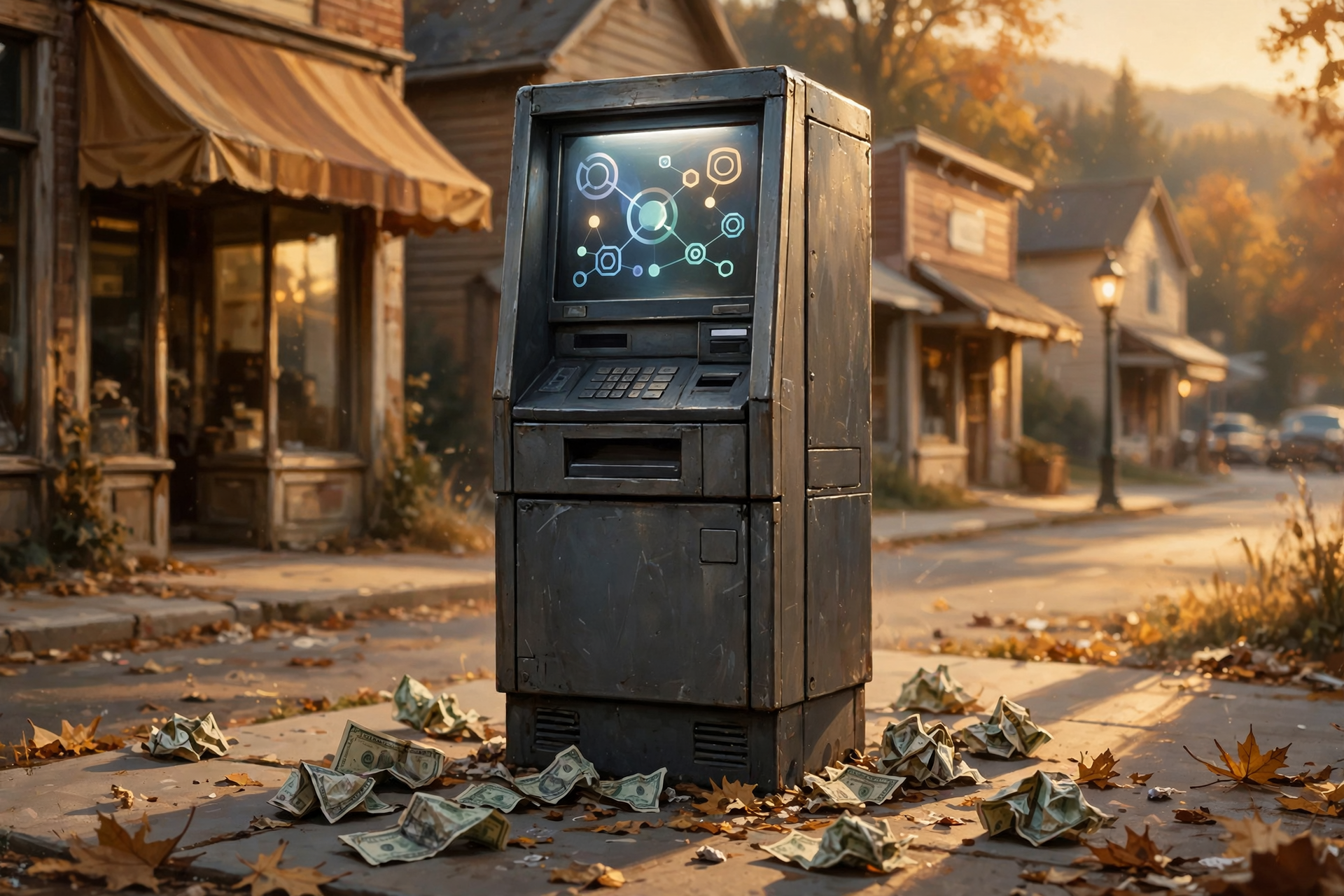
Tennessee’s ban on cryptocurrency ATMs (sometimes called Bitcoin ATMs or crypto kiosks) took effect July 1, 2026. Public Chapter 766 makes it a Class A misdemeanor to knowingly install, allow, place or operate one of these machines in the state. On July 7, Attorney General Jonathan Skrmetti announced that a federal court had refused to block the law while a lawsuit from crypto ATM companies goes forward. “Cryptocurrency ATMs are tools for scammers targeting vulnerable Tennesseans,” he said, and he urged families to step in if an older relative or friend is trying to make an unusual cryptocurrency payment.
Just over the state line, the Catoosa County Sheriff’s Office in Georgia warned on Sept. 29 that callers pretending to be law enforcement are telling people they have a warrant or missed jury duty, then demanding payment by Bitcoin, Bitcoin ATM, cryptocurrency or gift cards. The sheriff’s office says government agencies will never demand payment that way to stop an arrest.
What it means for you: Think of a Bitcoin machine like a one-way gate in a cow pasture: once the money goes through, it doesn’t come back. That’s exactly why crooks love them. Tennessee lawmakers saw the same thing and shut the gate. So if a caller ever tells you to drive somewhere, even across the line into Georgia, and feed cash into a crypto machine, you can stop wondering. No sheriff, bank, utility, Medicare office or grandchild in trouble needs you to do that. Hang up and call someone you trust.
👉 Read more (TN Attorney General: Crypto ATM ban takes effect) · Local 3 News: Catoosa Co. scam warning
🔲 A Barcode in Your Texts and Orders to “Load It Up” at the Store
National: Social Security Office of the Inspector General
The Social Security Administration’s Office of the Inspector General (OIG) put out a scam alert called “Think Before You Scan,” dated Sept. 28, and Social Security has been sharing it with its email subscribers. It describes a fast-growing twist on the old gift card scam. It starts with a scary call about a debt, a fine, a legal problem or a loved one who’s been “arrested.” Then the caller texts or emails one or more barcodes or QR codes and tells you to go to a big-name store, load money onto each one, and read the code back once it’s paid.
The OIG says some people lose thousands this way without ever giving up a Social Security number. The barcode itself is the scam. It also warns that the “family member” on the phone may sound real, because voice-copying tools are cheap and easy to find. Its rule is plain: law enforcement, Social Security and other government agencies will never demand payment through a barcode or QR code.
What it means for you: Paying a stranger’s barcode at the checkout is like handing your billfold through a car window to someone you can’t see. The cashier can’t tell it’s a scam. Only you can. If anyone sends you a code to “pay off” at a store, hang up or ignore the message. If the call was about a loved one, call that person or another family member on the number you already have. And never trust a call that gets “transferred” to an agent. Hang up and look up the real number yourself.
👉 Read more (SSA OIG: Think Before You Scan)
🏗️ Building a Shop or Splitting a Lot? Check Any “Permit Fee” Email Twice
National: FBI alert · Regional example: Walhalla, S.C.
The FBI’s Internet Crime Complaint Center has warned about scammers pretending to be city and county planning and zoning officials. They pull public permit records, then email people with active applications. The emails can include your real property address, your case number and even the names of real local officials. Attached is a PDF “invoice” for permit fees, with orders to pay by wire transfer, payment app or cryptocurrency. Some ask you to get payment instructions by email instead of by phone, which is a trick to keep you from calling the office.
The FBI says the emails often come from addresses that look official but end in something other than a government domain (one example it gives is “@usa.com”), and they’re often timed to land right when you’re already talking with the office about your project. On Oct. 13, a radio station in Seneca, S.C., reported that nearby Walhalla’s planning commission had been alerted after the city’s public information was used in a false invoice for city services.
What it means for you: If you’ve got a building permit, a zoning change or a variance in front of any city or county office in the Valley, an email asking for fees can look perfectly normal. That’s the whole point. It’s like getting a bill for feed you did order, just from the wrong store. Before you pay, pick up the phone and call the office using the number on its official website or the paperwork it gave you in person. Ask, “Do I owe this?” Government offices don’t take permit fees in crypto or through a payment app.
👉 Read more (FBI IC3: Criminals impersonating city and county officials) · WSNW: How scammers now impersonate city governments
🎰 “Congratulations From the Tennessee Lottery!” Did You Buy a Ticket for That?
Statewide: Tennessee Education Lottery
The Tennessee Education Lottery has posted a 2026 scam alert about social media posts promoting online casinos that appear to be tied to the Lottery. The Lottery says it does not operate any casinos and does not endorse any of those businesses.
Its standing guidance is worth taping to the fridge. The Lottery says it only contacts winners who entered one of its own promotions or second-chance drawings. No money or “special fee” is ever required to claim a Lottery prize, and anyone asking for upfront taxes, fees or insurance before you get your prize is probably not legitimate. It has also flagged fake letters and emails using the names of Lottery leaders and real past winners.
What it means for you: You can’t win a pie contest you never baked for. If a post, letter, call or text says you’ve won something you didn’t enter, it’s bait. And if a “prize” comes with a bill, it isn’t a prize. Don’t click, don’t call the number in the message, and don’t pay. If you’re not sure, call Lottery Security at (615) 324-6688 or check tnlottery.com yourself.
👉 Read more (Tennessee Lottery: Scam Information)
💼 Holiday Hiring Is Here. Real Jobs Don’t Charge You to Start

National: Better Business Bureau
Stores and shippers are hiring seasonal help, and the Better Business Bureau says that makes this prime time for job scams. In a Sept. 30 warning shared on Chicago’s WBBM Newsradio, BBB said many fake offers promise immediate work with little or no interview, and some scammers pose as well-known retailers to rush you. The goal is often to steal personal information that can lead to identity theft.
BBB’s holiday job tips are short and sensible: employers never ask for payment upfront for supplies, applications or training; be wary of any offer made without an interview; watch out for big pay for simple tasks like reshipping packages or stuffing envelopes; and never start working before you have a written offer with a start date and pay.
What it means for you: A good job is like a good fishing hole. You find it by asking around, not because it jumps in your boat. Whether it’s a grandchild home from school or a retiree wanting a little Christmas money, go to the company’s own website or store to apply. And keep your Social Security number and bank details to yourself until you’ve confirmed the job is real.
👉 Read more (BBB: Avoiding holiday job scams) · BBB on WBBM: Don’t apply for a holiday hiring scam
📉 Some Good News: Robocalls Hit Their Lowest 12-Month Total in Over Five Years

National: YouMail Robocall Index and the FCC
According to the YouMail Robocall Index, released Oct. 7, Americans got about 3.84 billion robocalls in September 2026, a little over 1% fewer than in August. Over the past 12 months the total was 48.2 billion, the lowest 12-month total YouMail has recorded since April 2021. Unwanted telemarketing and scam calls fell more than 8%. YouMail said the biggest September campaigns were again “pre-approved” debt-consolidation loan voicemails, which it calls likely scams. (We covered those loan calls on Oct. 9.)
What it means for you: The weeds are thinning out, but the garden still needs hoeing. The FCC’s advice is simple: don’t answer numbers you don’t know, ask your phone company about free call-blocking tools, forward spam texts to 7726 (that spells SPAM) if your carrier supports it, and register your numbers for free on the National Do Not Call Registry at donotcall.gov or 1-888-382-1222. The registry won’t stop crooks, but it cuts down on the legitimate sales calls, so the ones that slip through stand out.
👉 Read more (YouMail Robocall Index: September 2026) · FCC: Stop unwanted robocalls and texts
✅ Your Front-Porch Scam Checklist

- ✅ A Bitcoin machine is never the answer. If someone sends you to one, it’s a scam.
- ✅ No government office or police department takes payment through a barcode or QR code at a store.
- ✅ Permit or zoning fee by email? Call the office on the number from its official website before you pay.
- ✅ You can’t win a drawing you didn’t enter, and real prizes don’t charge fees.
- ✅ Real jobs don’t charge for training, supplies or applications, and they interview you first.
- ✅ A caller who “transfers” you to an agent or tells you to keep it secret is a scammer.
- ✅ Already lost money? Beware of anyone who offers to get it back for a fee. That’s a second scam.
- ✅ Already paid? Call your bank or card company now, save your receipts and messages, then call local police and report it at ReportFraud.ftc.gov.
The practical rule: When someone tells you exactly where and how to pay, stop right there. The payment instructions are the scam.
— Dunlap.Today
📚 Plain-English Glossary
- Cryptocurrency (crypto): Digital money such as Bitcoin. Once you send it, it’s very hard to get back.
- Bitcoin ATM / crypto kiosk: A machine that turns cash into cryptocurrency and sends it to someone. These machines are banned in Tennessee as of July 1, 2026.
- Barcode or QR code payment: A code a scammer texts you and tells you to “load” with cash at a store. The money goes straight to the scammer.
- Phishing email: A fake email made to look official so you’ll pay money or give up personal information.
- Domain: The part of an email address after the @ sign. Many government offices use addresses ending in .gov or their state’s official domain.
- Recovery scam: When someone promises to get back money you lost to a scam, but only if you pay them first.
- Robocall: A call made by a machine, often with a recorded or computer-made voice.
- Do Not Call Registry: A free national list that tells legitimate telemarketers not to call your number.
❓ Frequently Asked Questions

Are Bitcoin ATMs really illegal in Tennessee?
Yes. Since July 1, 2026, it’s been a Class A misdemeanor to knowingly install, allow, place or operate a cryptocurrency kiosk in Tennessee. The law is aimed at the people and companies who run the machines or let them sit on their property. A lawsuit challenging it is still in court, but a federal judge let the law take effect while the case continues.
A caller texted me a barcode to pay a fine at the store. What should I do?
Don’t pay it. Hang up or ignore the message. The Social Security OIG says no government agency or police department will ever demand payment through a barcode or QR code. If the caller claimed to be from Social Security, you can report it at ssa.gov/scam or call the SSA OIG Fraud Hotline at 1-800-269-0271.
I got an email asking me to pay fees for my building permit. How do I know if it’s real?
Call the city or county office directly, using the phone number listed on its official website or the paperwork it handed you. Check the email address carefully, especially the part after the @ sign. If the email asks you to pay by wire, payment app or crypto, or to get payment instructions only by email, treat it as a scam and report it at ic3.gov.
Someone online says I won a Tennessee Lottery prize. Could it be real?
Only if you entered one of the Lottery’s own promotions or second-chance drawings. The Lottery says no fee is ever required to claim a prize, and it doesn’t run any casinos. When in doubt, call Lottery Security at (615) 324-6688.
I already lost money, and now someone says they can get it back for a fee. Should I pay?
No. The FTC calls these refund and recovery scams. Scammers trade lists of people who’ve already been scammed and call back pretending to be a government agency, law firm or helper group. Government agencies and legitimate groups never charge a fee to help you get a refund.
I already paid a scammer. What now?
Act quickly. Call your bank, card company or payment app using the number on your card or statement. Save receipts, texts and transaction details. Then call local police (Dunlap Police: (423) 949-3319) and file reports at ReportFraud.ftc.gov and with the Tennessee Attorney General at tn.gov/consumer. If your personal information was taken, IdentityTheft.gov has a step-by-step recovery plan.
🔗 Other Resources

- TN Attorney General: Crypto ATM ban takes effect · TN Dept. of Financial Institutions: Virtual currency kiosks bulletin
- SSA OIG: Think Before You Scan · SSA: Protect yourself from Social Security scams
- FBI IC3: Phishing emails for planning and zoning permits
- Tennessee Lottery: Scam Information · Lottery Security: (615) 324-6688
- BBB: Avoiding holiday job scams
- FTC: Refund and recovery scams
- FCC: Stop unwanted robocalls and texts · National Do Not Call Registry
- TN Attorney General: Scams, Schemes & Swindles
- IdentityTheft.gov (recovery steps)
- Report a scam: ReportFraud.ftc.gov · FBI: ic3.gov
- BBB Scam Tracker · Chattanooga BBB: 423-266-6144
🌄 Rest Easy: You Hold the Wallet, So You Make the Rules

Here’s the calm takeaway: every scam on this week’s list needs you to pay a certain way, whether that’s a Bitcoin machine, a store barcode, a wire or a “fee” for a prize. You don’t have to understand the technology to beat any of them. You only have to notice when a stranger is giving you payment instructions, then stop and check with someone you trust. And the news isn’t all bad: the 12-month robocall count is the lowest in more than five years, and Tennessee has banned crypto ATMs.
Share this with the family member who’s working on a building project, the grandchild hunting for a holiday job, or the neighbor who loves a good giveaway. We’ll keep watch and bring you what’s new. Read Dunlap.Today and sign up for our newsletter for plain-English scam alerts and Valley news.




0 Comments