

🕵️ A Fake Teen, a Fleet-Wide Bathroom Sweep, and Voices on Loan
Or: The Cops Made a Kid Out of Thin Air, the Navy Checked Every Bathroom, and the Phone Call Might Not Be Who You Think
By Thomas Seest, Dunlap.Today · Saturday, October 17, 2026
Most weeks, the AI news in the snooping-and-sweeping world is about the bad guys getting new toys.
This week, the good guys showed off theirs. Police in Michigan built a teenager who doesn’t exist, used face search to put a name on the man who answered, and followed his car with plate cameras right to the handcuffs.
Here’s the roundup for folks who buy bug sweeps and the private investigators who do the work: an AI sting from start to finish, a navy that checked every bathroom it owns, cloned voices in campaign season, courts getting serious about fakes, and smarter tools for investigators.
⏱️ What this means for you in 30 seconds
- Running a gym, school, or shared workplace? One hidden camera sent a whole navy checking every bathroom. Have a sweep plan before you need it.
- Get a call from a candidate asking for money? The FBI says voices can be cloned. Look up the campaign yourself before you give a dime.
- Somebody says your evidence “might be AI”? Courts want proof, not guesses. Keep the original file and where it came from.
- Found a mystery recorder? It might be a lost AI note-taker—or one of several bugs. Report it, bag it, and call a pro.
- Talking with someone new online? A voice can be faked in real time. Don’t open “photos” that won’t load.
🤖 The Teenager Who Didn’t Exist
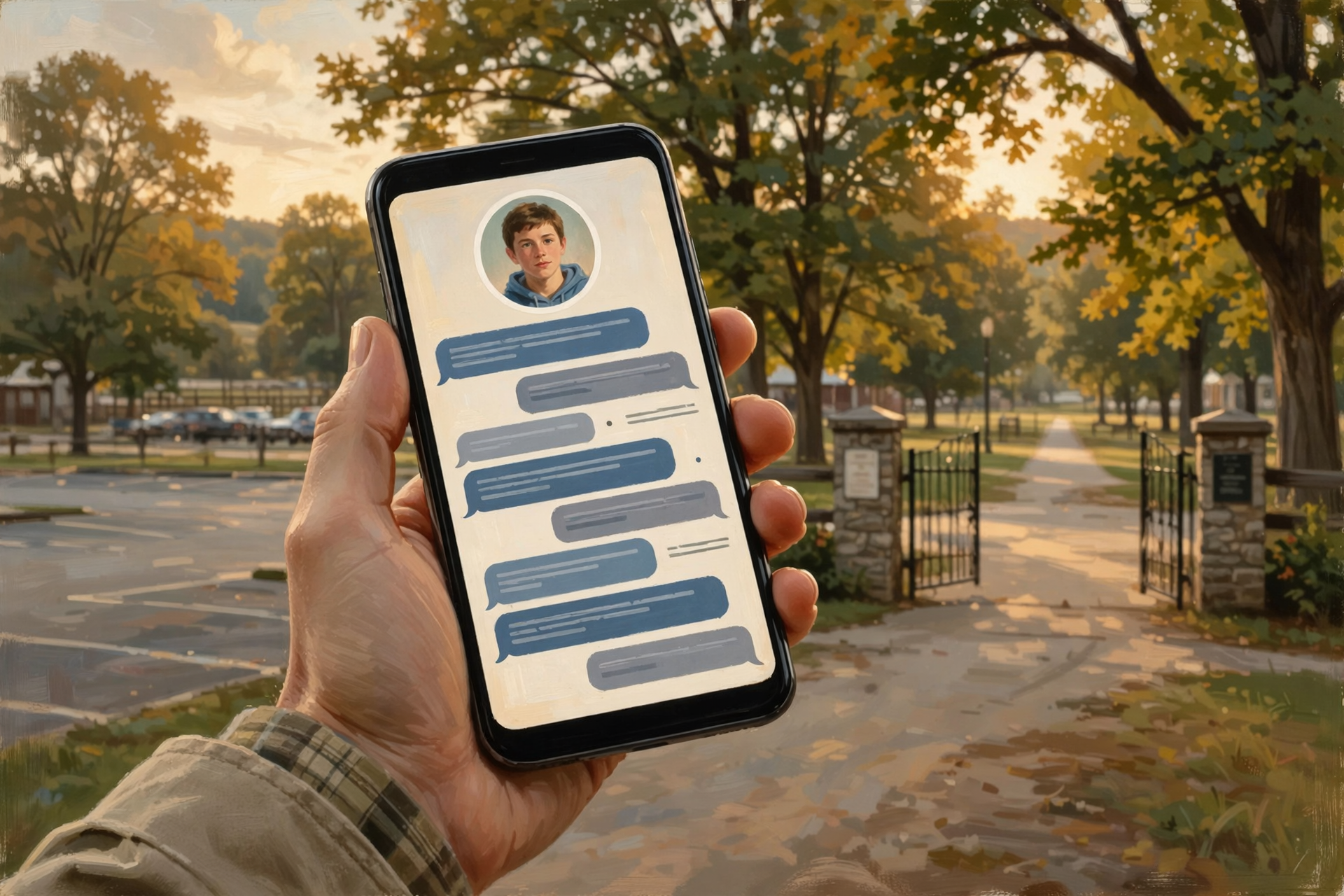
Court papers say a federal task-force officer with the Livonia, Michigan, police set up a dating-app profile with an AI-generated picture of a teenage boy named “Caleb.” When a man from Illinois messaged the account and was told Caleb was 15, investigators ran his phone number through a records database and his face through Clearview AI to identify him.
When he drove to meet “Caleb” at a Livonia park, police watched his car on Flock plate cameras along the way and arrested him when he got out. He’s presumed innocent.
It’s like Grandpa’s old duck decoy. It doesn’t have to be a real duck—it just has to look real enough to bring the right bird in.
What it means for you: If you hire a PI who uses AI tools, ask how they document every step. In court, the other side will ask how the picture was made, how good the face match was, and who looked up the plates.
👉 The full story (404 Media) · CBS Detroit
🚿 One Hidden Camera, Every Bathroom in the Fleet

A recording device was found in a women’s bathroom on the Australian navy ship HMAS Leeuwin while it was docked in Cairns. A member of the Defence Force has been named a person of interest. The head of the navy called it a “despicable betrayal of trust” and ordered “a 100% audit of all of our bathrooms across the Fleet.”
A senator said she’d been told some footage may have been posted online before the camera was found. Defence didn’t answer that question.
Closer to home, a 21-year-old student at an Ontario flight school was charged this week, thirteen months after a camera was found in a private washroom there.
What it means for you: If one camera turns up, assume there could be more and check everywhere. And have a plan for what to do if footage has already leaked—that part gets harder every year.
👉 Navy story (ABC News) · Flight-school case
📞 Cloned Voices in Campaign Season

The FBI warned that scammers are using AI to make realistic voices, pictures, and messages that pretend to be candidates, campaigns, and people you trust—asking for donations, selling merchandise that never ships, or sending fake “you’re not registered to vote” links. A second FBI and CISA alert said deepfake audio and video are being aimed at election officials, too.
In Ukraine, police say a scam call center used software that turned men’s voices into women’s voices in real time to fool people on dating sites—then sent “photos” loaded with malware to empty their bank accounts.
And one identity expert told The Independent to quit trying to spot fakes by eye or ear. Verify the person instead: hang up, call back on a number you already have, and use a family code word.
It’s like checking the label on a jar of Grandma’s preserves. Doesn’t matter how good it looks—you want to know who actually put it up.
What it means for you: Campaign donations are never an investment, and a familiar voice isn’t proof. Look up campaigns on the FEC website and check your registration at vote.gov.
👉 FBI warning · Verify the person (The Independent)
⚖️ Courts Say: Show Your Work on Fakes

A federal committee that writes the rules of evidence held a panel of deepfake experts on Oct. 15. A draft rule it’s been working on would make anyone who claims evidence is a fake show some proof first—and then make the other side prove the evidence is more likely real than not.
Iowa’s Supreme Court already took that approach. It upheld a conviction where the defendant called a video a “deepfake” without any evidence to back it up. Just saying “AI did it” wasn’t enough.
What it means for you: Keep original files, phones, and the details of where every photo or recording came from. That’s what wins the “is it real?” fight.
👉 Evidence committee materials · Iowa ruling
🔎 Smarter Tools for the Folks Doing the Digging

TRM Labs launched Ardence, an AI investigation platform that searches dozens of data sources at once and keeps every finding linked to where it came from. Nexus updated its tool so investigators can describe what they need in plain English and let it run up to 47 kinds of checks. Babel Street says it’s building AI agents meant to work like a senior analyst.
Samsung and Reality Defender are building deepfake detection right into business phones in Singapore, so a fake voice or video can be flagged before anyone acts on it.
Meanwhile, Kling 4.0 came out with the ability to make 30-second videos and use voice samples—proof that the fake-makers are moving just as fast.
What it means for you: A good AI tool shows you where every fact came from. If your investigator can’t show the source, it won’t hold up.
👉 TRM Ardence · Nexus update · Samsung + Reality Defender
🎙️ Spare Bugs, Lost Note-Takers, and an Off Switch

New detail in the OpenAI case: prosecutors say security found a second, similar recorder in a bag that held the accused engineer’s ID. In the Czech Republic, a “bug” found in the cabinet meeting room turned out to be a minister’s lost AI note-taker—and nobody told police or intelligence services.
On the gadget side, Ledger unveiled a new device with a physical switch that cuts power to the camera and microphone, so no app or hacker can turn them back on.
It’s like a gate with a padlock instead of a “please close the gate” sign. One of them actually keeps the cows in.
What it means for you: Treat every found device as possibly one of several. Make a rule about AI recorders in private meetings. And when you can, pick gear with a real off switch.
👉 OpenAI case (Nextgov) · Czech note-taker · Ledger Atom
🚘 Plate Cameras, Aging Photos, and a Wiretap Assistant
Georgetown, Kentucky, suspended its Flock cameras while it studies them. Providence sent a proposed Flock ban to committee, and Renton, Washington’s cameras are still bagged as its contract runs out Nov. 2. ICE, meanwhile, wants a plain-English AI assistant to search live wiretaps, phone locations, and tower records. And in Mexico, a university built an AI tool that shows how missing children’s faces have likely changed over the years.
What it means for you: AI is changing what gets collected and what can be searched. Ask your town who can see its camera data—and if you’re searching for a missing loved one, ask about updated age-progressed photos.
👉 Georgetown pause · ICE AI plan · Mexico age-progression
— Dunlap.Today
📚 Plain-English AI Glossary

- AI-generated persona: A fake person—photo, name, and personality—made with AI. Police sometimes use them in undercover stings.
- Face search: Software that compares a photo against huge collections of online pictures to suggest who someone might be.
- ALPR: Automatic license-plate reader—roadside cameras that log plates into a searchable database.
- Voice changer: Software that changes how a voice sounds while someone is talking, even making a man sound like a woman.
- Deepfake: A fake video, picture, or recording made with AI to look or sound like a real person.
- Agentic AI: AI that can carry out a series of tasks on its own, like running a list of background checks.
- Chain of custody: A record of who had a piece of evidence and when, so a court can trust it hasn’t been changed.
❓ Frequently Asked Questions

Is it legal for police to use AI-made pictures in a sting?
Police have used computer-made decoys for years, and this case went forward. Defense lawyers can still challenge how the investigation was done, so departments need careful records.
How do I know if there’s a hidden camera in a bathroom?
Look for things that don’t belong—odd chargers, smoke detectors in strange spots, tiny holes, or glints from a lens when you shine a flashlight. If you’re responsible for a building, hire a professional sweep; many cameras record to a memory card and don’t send any signal.
Can I tell a cloned voice by listening closely?
Not reliably anymore. Hang up and call back on a number you already know, or ask a question only the real person could answer.
What should I do if I find a recorder in an office?
Don’t unplug it or handle it more than you must. Note where it was, take photos, and call security, the police, or a TSCM professional. It could be a lost gadget, or it could be one of several.
Are AI investigation tools reliable?
They’re good at finding leads fast. But a lead isn’t proof. A careful investigator checks every result and can show where each fact came from.
✅ This Week’s Counter-Surveillance Checklist

- ✅ Have a sweep plan for bathrooms, locker rooms, and shared spaces—before something is found
- ✅ Look up campaigns yourself before donating; never trust a voice alone
- ✅ Keep original files and device records for any photo or recording you might use in court
- ✅ Set a rule for AI note-takers and recorders in private meetings
- ✅ Treat any found recorder as possibly one of several—photograph it and call a pro
- ✅ Don’t open “photos” from new online contacts that won’t load or ask you to share your screen
- ✅ Ask your investigator how they document AI-assisted findings
Practical rule: AI can fake a face, borrow a voice, and search a mountain of data in seconds—so trust the callback, the original file, and the sweep, not how real something looks or sounds.

Sources
Know about an upcoming event or story in the Sequatchie Valley? Submit it here.




0 Comments