

Every Man Deserves a Server Rack. Why the Spare Bedroom Is Wasted on Guests.

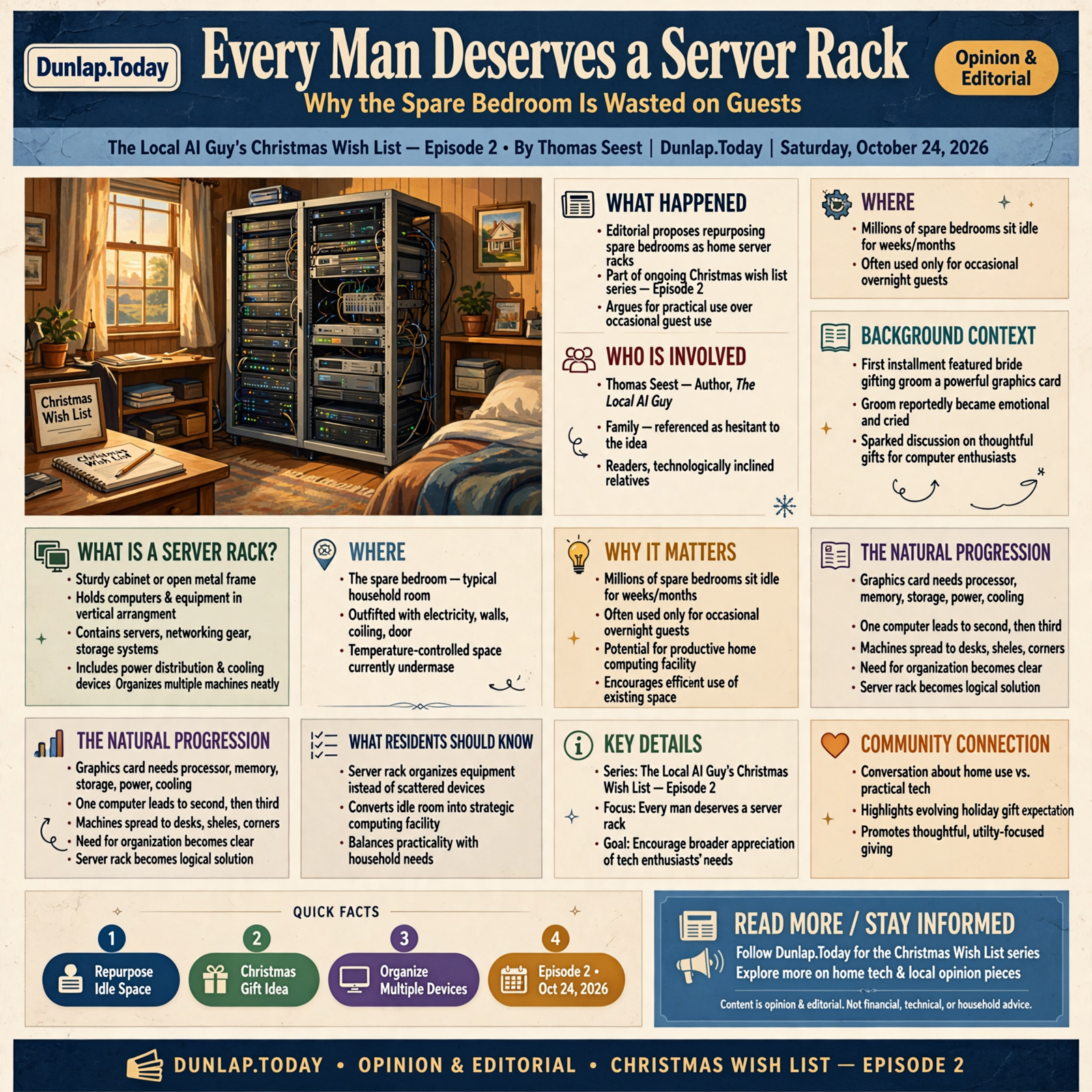
The Local AI Guy’s Christmas Wish List — Episode 2: Every Man Deserves a Server Rack
I have recently come to the conclusion that one of the greatest problems facing American households is the inefficient use of the spare bedroom.
Across this magnificent nation, millions of perfectly respectable rooms sit idle for weeks or months at a time, awaiting the arrival of relatives who may or may not visit, who may or may not stay overnight, and who, when they finally arrive, may do little more than sleep.
This represents an enormous waste of potential.
Here we have a room equipped with electricity, walls, a ceiling, a door, and usually some means of controlling the temperature, yet its principal purpose is to accommodate an occasional human being who spends approximately one-third of his visit unconscious.
There are better uses for such a room.
For example, it could contain a server rack.
I raised this possibility with my family recently, and I regret to report that the suggestion was not greeted with the enthusiasm I had anticipated.
I believe this is largely because they have not yet grasped the distinction between a spare bedroom and a strategic computing facility.
I intend to correct that misunderstanding today.
The Natural Progression of Thoughtful Gift Giving

Readers may recall that in the first installment of this Christmas series, we examined the touching story of a bride who presented her groom with an exceptionally powerful graphics card.
The groom reportedly became so emotional that he cried.
I found his reaction entirely understandable.
At the time, I suggested that the incident might provide useful guidance to families attempting to select thoughtful Christmas presents for their technologically inclined relatives.
Some readers may have interpreted that article as an attempt to secure a particularly expensive graphics card for myself.
This was unfair.
I was merely encouraging a broader appreciation of the emotional needs of computer enthusiasts.
However, after further reflection, I have discovered a weakness in my original argument.
A graphics card, no matter how magnificent, is only one component of a computer.
It requires a processor, memory, storage, a power supply, cooling, and various other supporting parts.
And once a fellow has assembled a powerful computer, he may find that a second computer would be useful.
Then a third.
Eventually, the machines begin occupying desks, shelves, corners, and surfaces previously reserved for such things as family photographs and decorative lamps.
At this stage, a reasonable person recognizes the need for organization.
And the most logical organizational solution is a server rack.
Thus, what began as a humble request for a Christmas graphics card has developed, through a perfectly rational sequence of engineering decisions, into a proposal for a small household data center.
I do not see why my family finds this alarming.
What Is a Server Rack, and Why Should You Care?
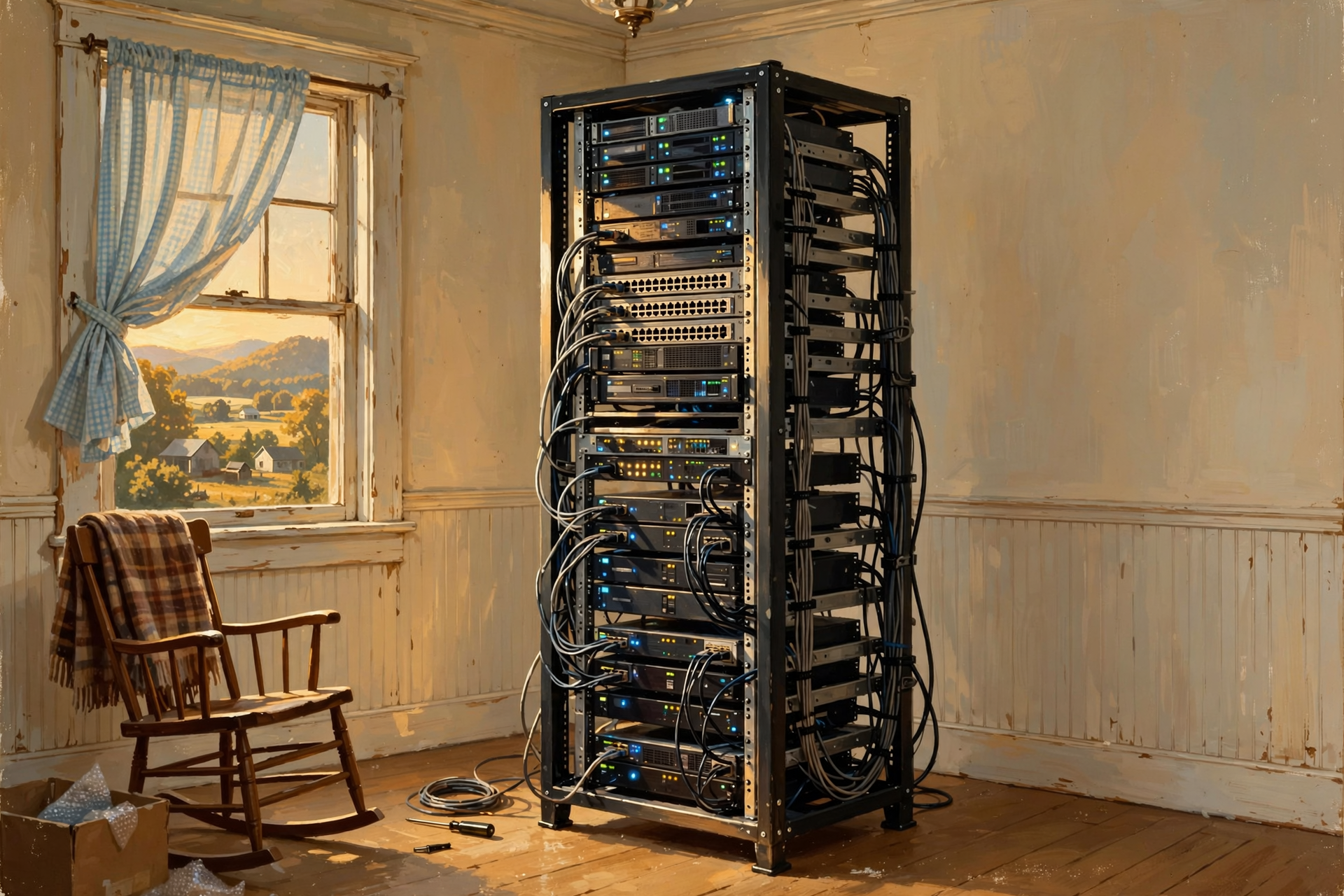
For readers who have never encountered one, a server rack is essentially a sturdy cabinet or open metal frame designed to hold computers and related equipment in an organized arrangement.
Instead of placing computers across several desks, a rack allows compatible equipment to be mounted vertically.
It can contain servers, networking equipment, storage systems, power distribution devices, and other technology necessary to support a modest computing operation.
Think of it as the difference between throwing every tool in your workshop onto the floor and installing a proper wall of organized tool cabinets.
Or the difference between storing canned vegetables in random corners of the house and constructing a respectable pantry.
Or the difference between parking your tractor in the living room and building a barn.
Actually, that last comparison may be especially useful.
Nobody would accuse a farmer of being extravagant for wanting a barn to house his equipment.
Why, then, should a man who owns several computers be regarded as unreasonable for proposing a suitable building arrangement?
I am not even asking for a separate barn.
Not yet.
I am suggesting that we begin with a small, tasteful installation in a room the family already owns.
This strikes me as the very definition of thrift.
The Spare Bedroom: A Study in Misplaced Priorities

Let us consider the typical spare bedroom.
There is usually a bed.
There may be a dresser.
Possibly a chair, a lamp, and a framed picture selected by someone who felt the room needed a little character.
The bed consumes a remarkable amount of floor space, considering that nobody uses it most nights.
A server rack, by contrast, occupies a relatively compact footprint while making productive use of vertical space.
Depending on the equipment installed, it could accommodate machines that work day and night, processing information, storing files, analyzing business records, assisting with software development, and performing countless other useful tasks.
At no point does a server complain about the quality of the pillows.
It does not require fresh towels.
It does not ask what time breakfast will be served.
It does not leave wet washcloths on the bathroom floor.
And, provided it has sufficient electricity and cooling, it can work throughout the night without requiring coffee the following morning.
Now compare this with Uncle Harold.
Uncle Harold visits twice a year, sleeps until nine, watches television, and asks whether there is any more bacon.
I bear Uncle Harold no ill will.
He is undoubtedly a fine fellow.
But from the standpoint of room utilization, the server rack presents a compelling argument.
If Harold requires overnight accommodations, we can explore alternative arrangements.
There are hotels.
There are inflatable mattresses.
There are comfortable reclining chairs.
And if Harold is truly committed to family togetherness, I see no reason he cannot sleep beside the server rack, provided he does not interfere with the airflow.
But Why Would Anyone Need Several Computers?
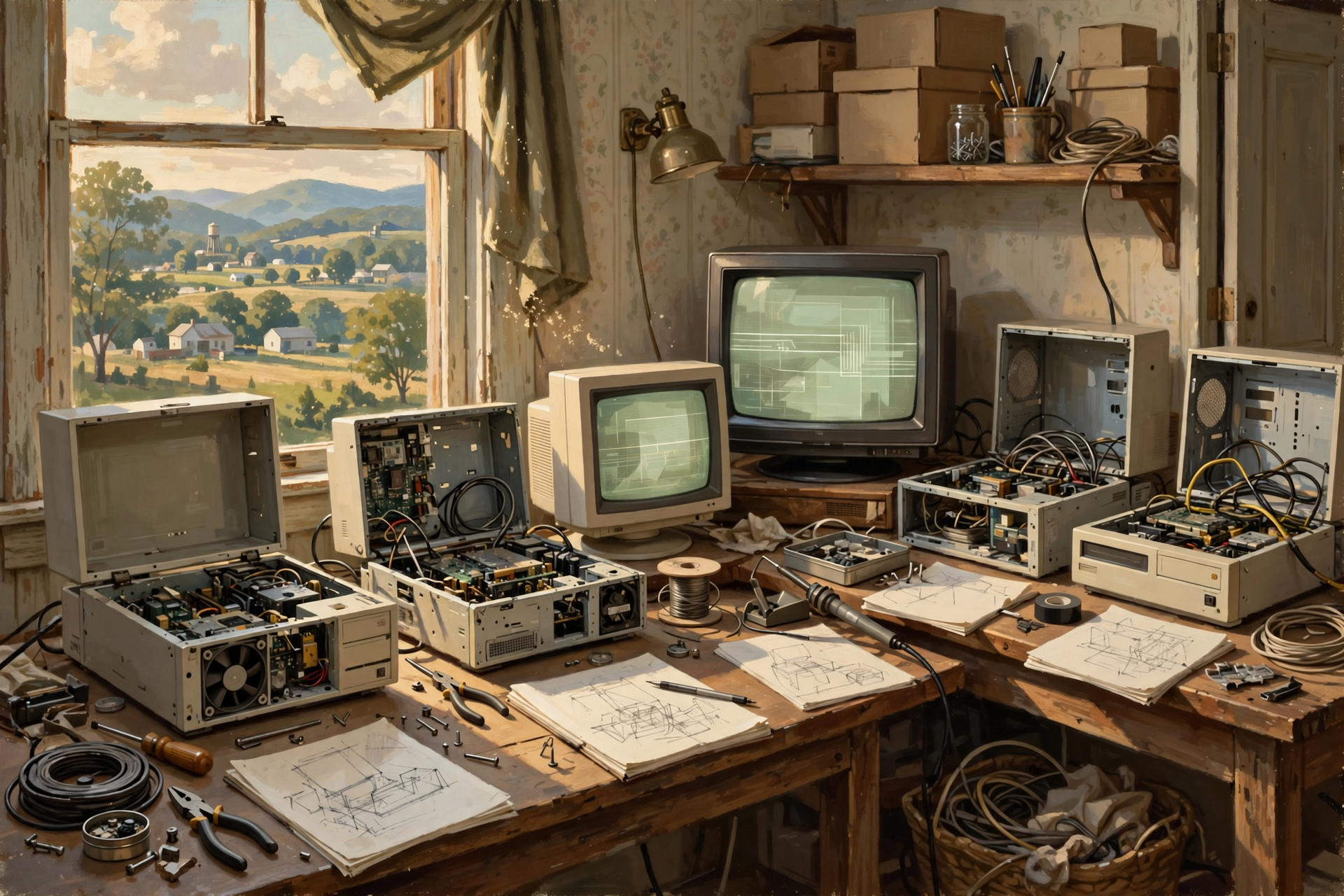
This is another question my family has been known to ask.
Occasionally, they ask it with the same expression ordinarily reserved for discovering that someone has purchased another tractor despite owning three that appear perfectly serviceable.
The answer is that computers, like tractors, can have different jobs.
One machine might run accounting software.
Another might host an artificial intelligence model.
A third might process photographs, video, or documents.
A fourth could store backups.
A fifth might provide a testing environment where new software can be examined without endangering the systems already performing useful work.
Of course, modern computers can handle multiple tasks, and some software allows one physical machine to behave like several independent computers. This is called virtualization.
But different workloads have different requirements, and there are circumstances where keeping them separate is useful.
For example, a business owner might want financial records kept on one carefully controlled machine while experimental software runs elsewhere.
A school or community organization might want a local server to hold documents and provide services even when the Internet connection is unavailable.
A software developer might want one machine for everyday work and another for testing programs that are not yet ready for ordinary use.
These are not unusual ideas.
They are practical applications of equipment that many people already use, often without realizing it.
My personal interest happens to extend somewhat further.
I enjoy building software that uses artificial intelligence to help people accomplish useful things.
Sometimes those projects require significant computing resources.
Sometimes they require several machines.
And sometimes, when a fellow has been working on a difficult problem for eighteen hours, he begins to suspect that purchasing another computer is not merely an option but a moral obligation.
I recognize that this last conclusion may not be universally accepted.
The Wonderful Advantages of Running AI at Home
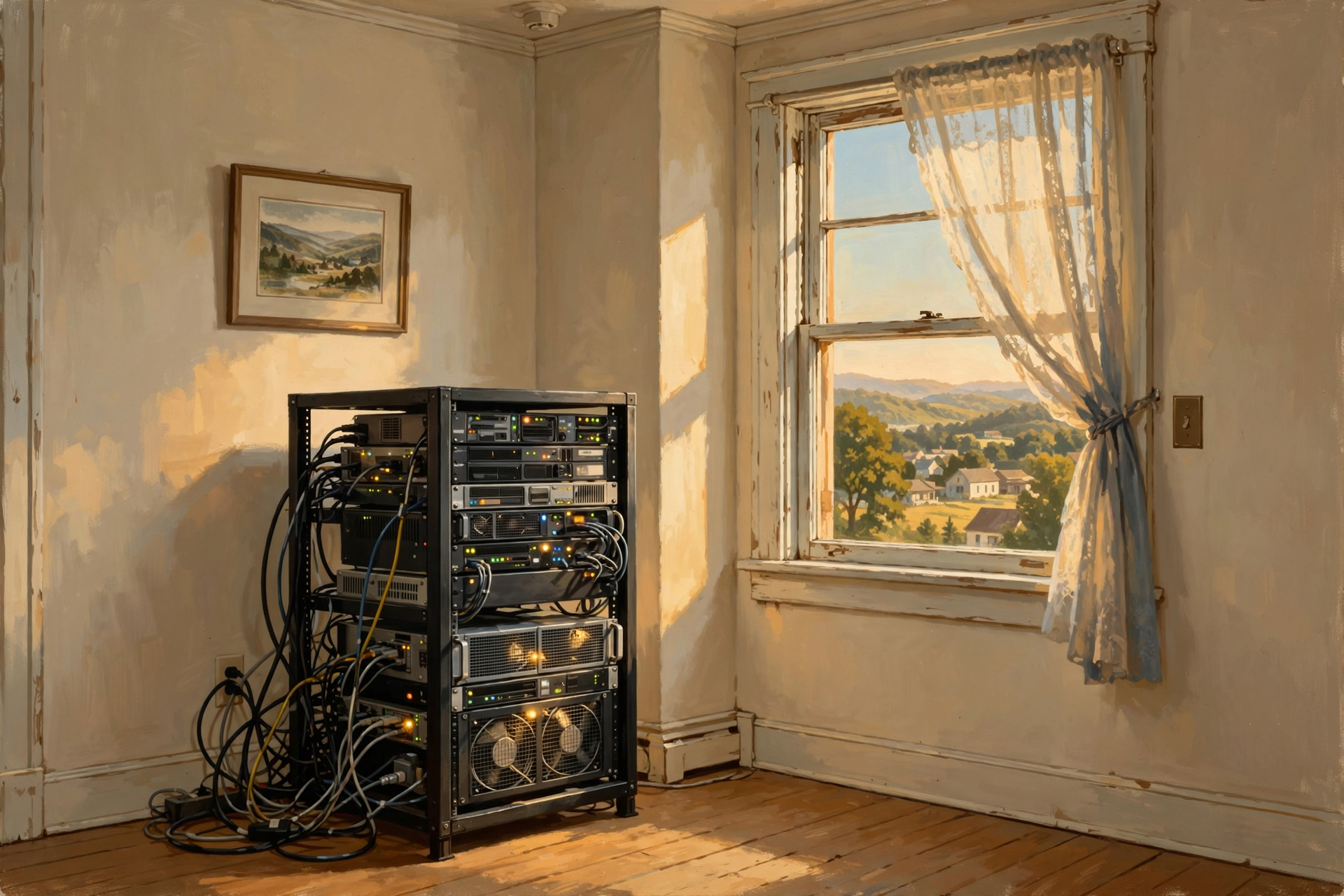
Most people who use artificial intelligence interact with systems operated by large technology companies.
They type a question into a website or application, and the work is performed on computers located somewhere else.
There are good reasons for this arrangement.
Large providers can operate powerful systems, maintain specialized equipment, and make sophisticated AI available to people who could never afford to purchase the required hardware themselves.
But it is also possible to run certain AI models locally, using computers at home or at work.
This is where a personal server setup becomes interesting.
With suitable equipment, someone can experiment with AI models without sending every request to a remote service.
That can be useful when working with private information, developing specialized software, or simply learning how the technology works.
It can also allow selected tasks to continue during an Internet outage, provided the local network and electricity remain available.
Of course, locally operated AI systems have limitations. They require hardware, maintenance, updates, electricity, and thoughtful security arrangements. Some large models cannot run effectively on ordinary home equipment.
There is no magic involved.
Just processors, memory, storage, software, electricity, and a remarkable assortment of cables.
The advantage is control.
For someone who enjoys experimenting and building useful tools, that control can be valuable.
For someone who simply wants to ask AI what to cook for dinner, purchasing an entire server rack would probably be unnecessary.
I make this distinction because I wish to be fair.
I would hate for anyone to think I was encouraging the public to purchase elaborate computing equipment without a legitimate reason.
For my own purposes, of course, the reasons are numerous and becoming more persuasive by the minute.
The Cooling Question, or Why Winter May Become Optional
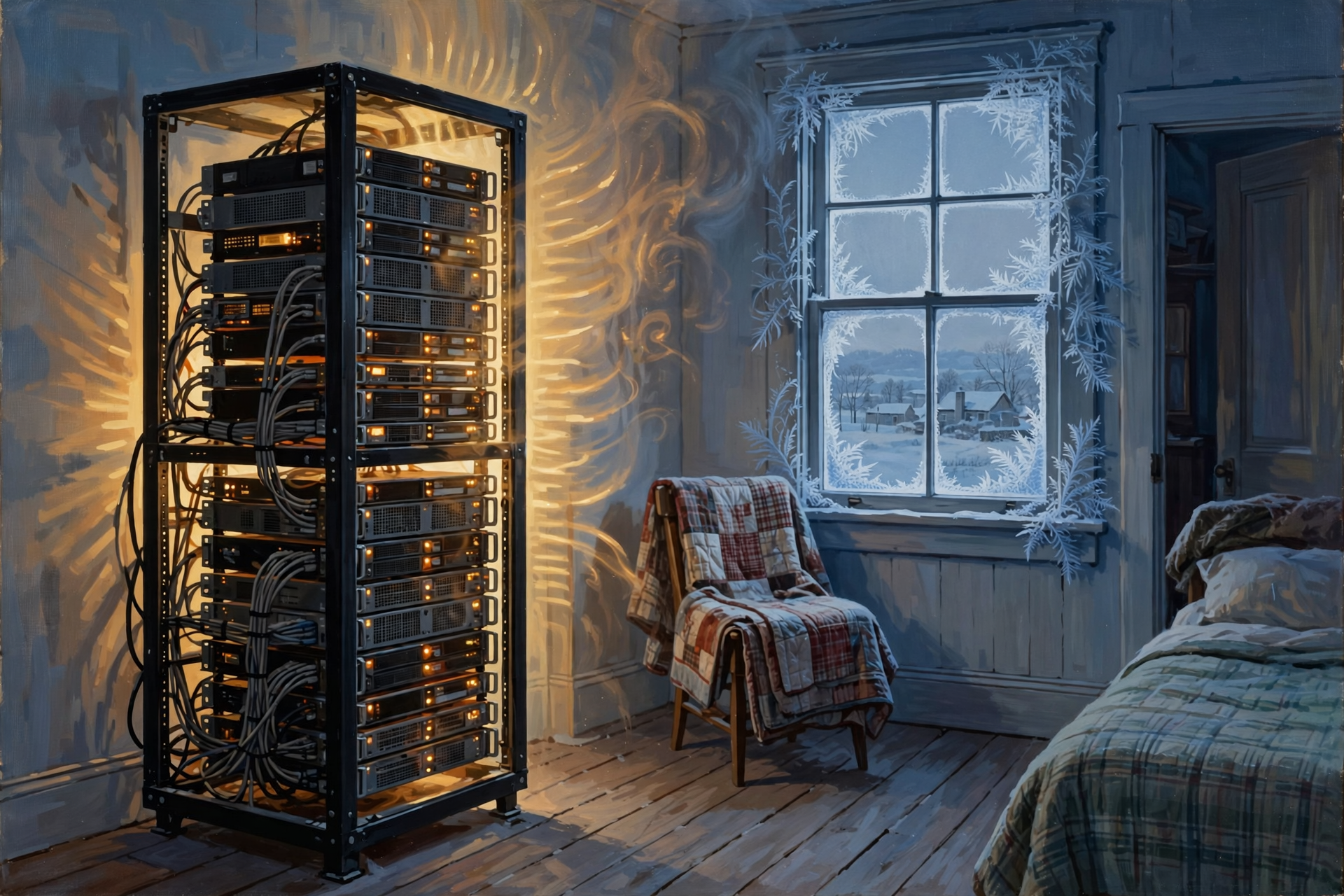
There is one small technical matter that must be considered when installing computing equipment.
Heat.
Computers use electricity, and much of that electricity ultimately becomes heat.
The more powerful the equipment, and the more heavily it is used, the more heat it may produce.
A room containing several busy computers can become noticeably warmer.
This is why server rooms and data centers pay careful attention to airflow, temperature, ventilation, and cooling.
Equipment that becomes too hot can slow down, malfunction, or shut itself off to prevent damage.
My family regards this as an argument against placing a server rack in the spare bedroom.
I regard it as an opportunity.
Consider the advantages during a Tennessee winter.
While other households struggle with rising heating costs, we could be enjoying the gentle warmth produced by an industrious collection of computers.
Why burn additional energy merely to heat a room when the electricity being consumed can also perform useful calculations?
This is not an entirely foolish observation. Computer equipment really does release heat, and there are situations where its waste heat can reduce the need for other heating.
But there is an important distinction between generating useful heat and heating a house efficiently.
A computer consumes electricity whether the weather is hot or cold, and it may require additional cooling during much of the year. It is not automatically a cheaper substitute for a properly designed home heating system.
These technical details should be considered carefully.
Preferably after the server rack has been approved.
I have also suggested that the family could treat the server room as a winter gathering place.
We could install comfortable chairs, bring in refreshments, and enjoy the warmth while the machines carried out important calculations.
My proposal was met with silence.
I believe they were considering the possibilities.
The Minor Matter of Electricity

When discussing a home server room, someone invariably brings up the electric bill.
There is always one person in every family who insists upon introducing mathematics into what should be an inspirational discussion.
It is certainly true that computers consume electricity.
It is also true that powerful equipment can require significant amounts of it.
Some server arrangements operate comfortably on ordinary household circuits, while others may require electrical improvements, careful load planning, or dedicated circuits.
Electrical capacity should be evaluated before equipment is installed, particularly when several machines will operate continuously.
A server rack is not something a person should fill with high-powered equipment and then connect to a questionable extension cord behind the dresser.
Even I recognize that this would be unwise.
However, I believe we should distinguish between unnecessary spending and productive investment.
When a local business buys a delivery truck, nobody expects it to operate without fuel.
When a farmer purchases a tractor, everyone understands that diesel will be required.
When a restaurant installs a commercial refrigerator, electricity is part of the operating expense.
Likewise, when a man installs a personal AI computing facility, some additional electricity should be anticipated.
The important question is whether the equipment produces enough value to justify its cost.
This is a sensible question.
It is one I fully intend to answer just as soon as I have finished calculating how much equipment could fit in the room.
We Must Discuss the Noise
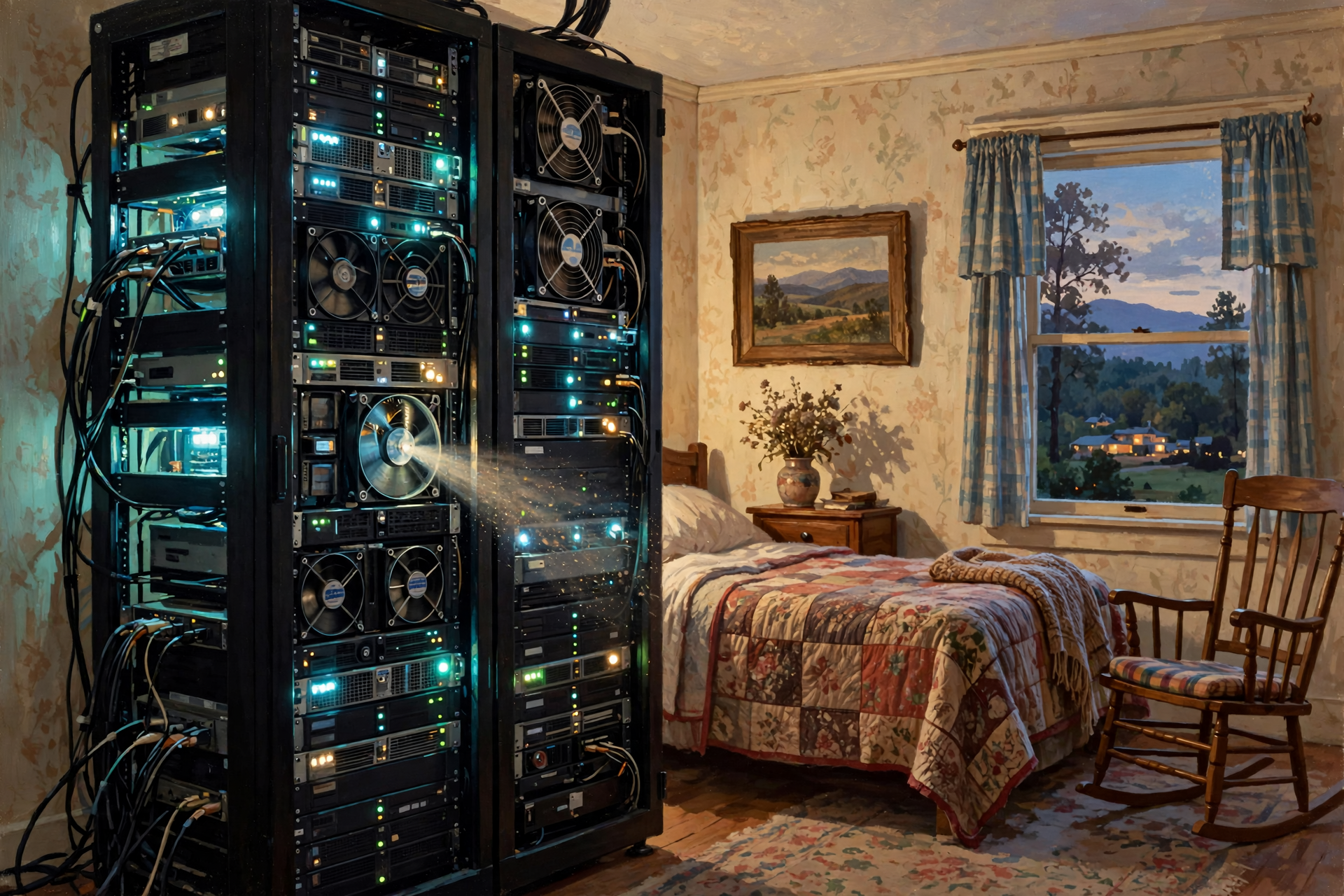
Another frequent objection concerns noise.
Some servers use fans that can become quite loud under heavy workloads.
This is understandable.
The machines are working hard.
They require cooling.
And they have no particular concern for whether someone nearby is attempting to watch a television program.
Traditional business servers can be especially noisy compared with carefully designed desktop computers or home-lab systems.
Fortunately, not every server rack needs to sound like an airplane preparing for departure.
There are quieter components, different cooling arrangements, and equipment designed for environments where excessive noise would be unwelcome.
In fact, the ability to choose suitable hardware is one of the advantages of planning a system properly.
My family has suggested that the simplest way to avoid server noise is not to purchase servers.
This strikes me as technically correct but spiritually disappointing.
One could also eliminate lawn mower noise by abandoning the yard, but I doubt the neighbors would appreciate the result.
A Beautiful Cabinet Full of Blinking Lights
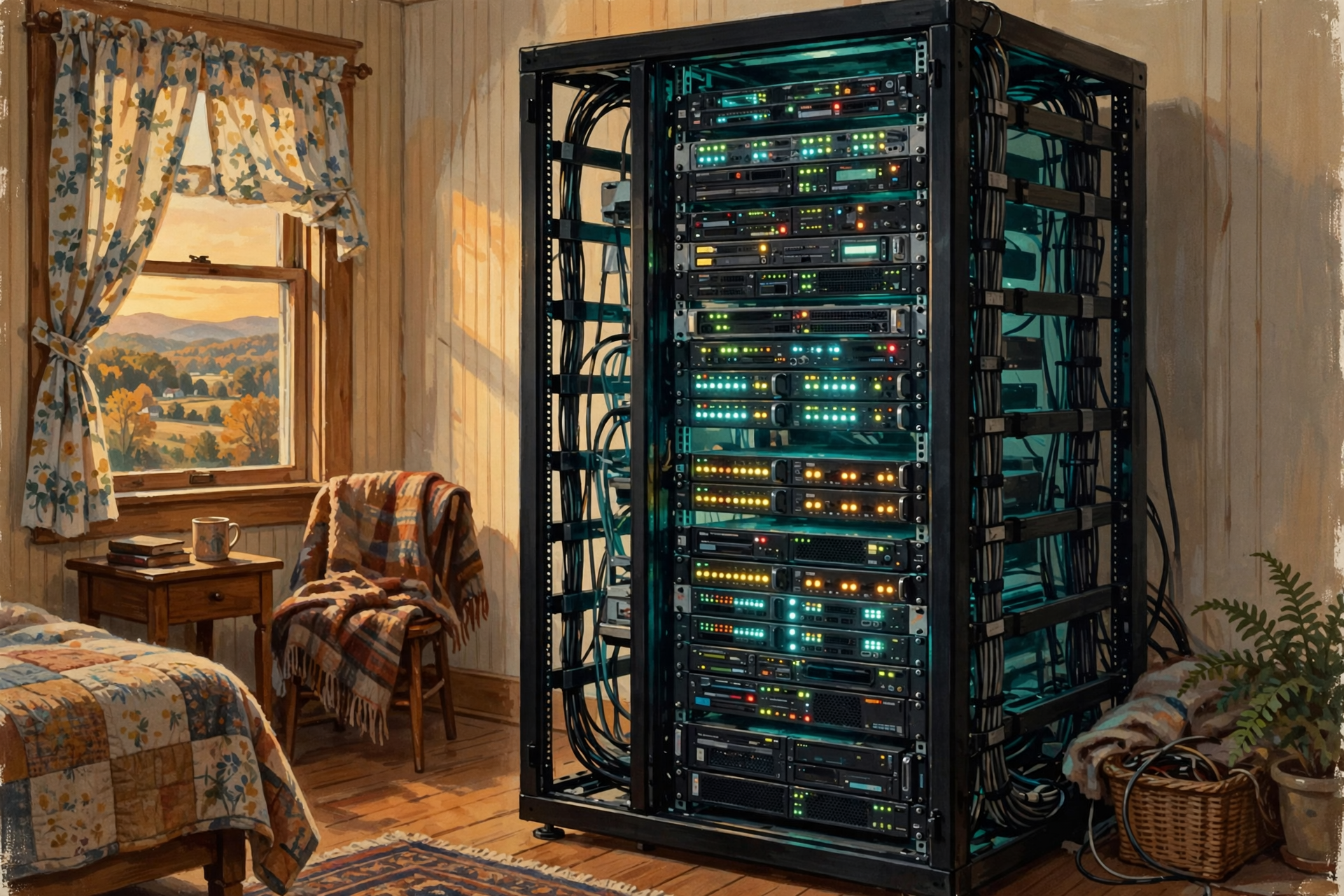
There is another advantage to a server rack that is frequently overlooked by those who do not appreciate modern technology.
It can be surprisingly attractive.
Some equipment has neatly arranged indicator lights.
Network switches display small blinking signals that indicate activity.
Storage systems may include rows of drives with carefully organized labels.
Good cable management can make an entire installation look orderly and professional.
For the aesthetically minded, this presents fascinating decorating opportunities.
Imagine a room containing a beautifully arranged rack, neatly labeled cables, soft lighting, and the quiet hum of useful machinery.
To the uninitiated, it might resemble a small industrial facility.
To the experienced computer enthusiast, it would be a thing of beauty.
And during Christmas, it could serve a second purpose.
Why purchase an elaborate display of decorative lights when the equipment already has blinking indicators?
A little greenery, perhaps a tasteful ribbon, and one could have the most technologically sophisticated Christmas decoration in the entire Sequatchie Valley.
We would naturally avoid blocking ventilation or placing combustible decorations near hot equipment.
Safety is important.
But I see no reason we cannot celebrate the season with responsible industrial elegance.
How Much Does a Server Rack Cost?

I knew we would eventually arrive at this unpleasant subject.
People always want to discuss the price before they have fully appreciated the vision.
The cost of a server setup can vary enormously.
A simple open rack or small cabinet may be reasonably affordable.
A larger enclosed cabinet costs more.
Then there is the equipment that goes inside.
Servers.
Storage drives.
Networking devices.
Power protection.
Cooling.
And, depending on the intended use, perhaps specialized AI accelerators or powerful graphics cards.
Not every system needs all these things, and many useful home servers can be assembled from inexpensive or previously owned equipment.
A well-planned small system can be a sensible investment for someone with the right needs.
But costs can rise quickly when high-performance computing becomes the objective.
I mention this because the family should understand that I am not necessarily requesting the most expensive possible arrangement.
I would be perfectly content to begin with a modest rack.
Perhaps a few shelves.
One or two servers.
Some additional storage.
A little networking equipment.
A battery backup.
Possibly a new electrical circuit.
And a proper cooling solution.
Nothing excessive.
There is no reason to purchase everything at once.
Christmas comes every year, and I have always believed that thoughtful families should plan for the future.
The Family Meeting Did Not Go as Expected

Having assembled these arguments, I imagined presenting them to my family in an orderly manner.
I would explain the benefits of local artificial intelligence.
I would discuss data privacy, technological independence, improved productivity, and the economic value of specialized computing resources.
I would describe the server rack as an infrastructure investment rather than a personal indulgence.
Then, with the confidence of a man presenting an obviously reasonable proposal, I would explain that the spare bedroom could be converted with only modest adjustments.
I had even considered preparing diagrams.
Unfortunately, family discussions have a way of departing from the agenda.
Instead of focusing on the exciting possibilities, my imagined audience concentrated on minor details.
“Where would guests sleep?”
“How much electricity would it use?”
“Wouldn’t those machines make a lot of noise?”
“What happens if the air conditioner quits?”
“Don’t you already have enough computers?”
This last question is particularly difficult because it contains a fundamental misunderstanding of technology.
Asking a computer enthusiast whether he has enough computers is like asking a farmer whether he has enough tools.
The answer depends entirely upon the work that needs doing.
And there is always more work.
At some point, someone suggested that I could simply use the computers I already own more efficiently.
This was a hurtful remark.
I have been working toward greater technological efficiency for years, and it seems unfair that the family should suddenly develop an interest in the subject precisely when I am proposing to purchase additional equipment.
A Compromise in the Spirit of Christmas
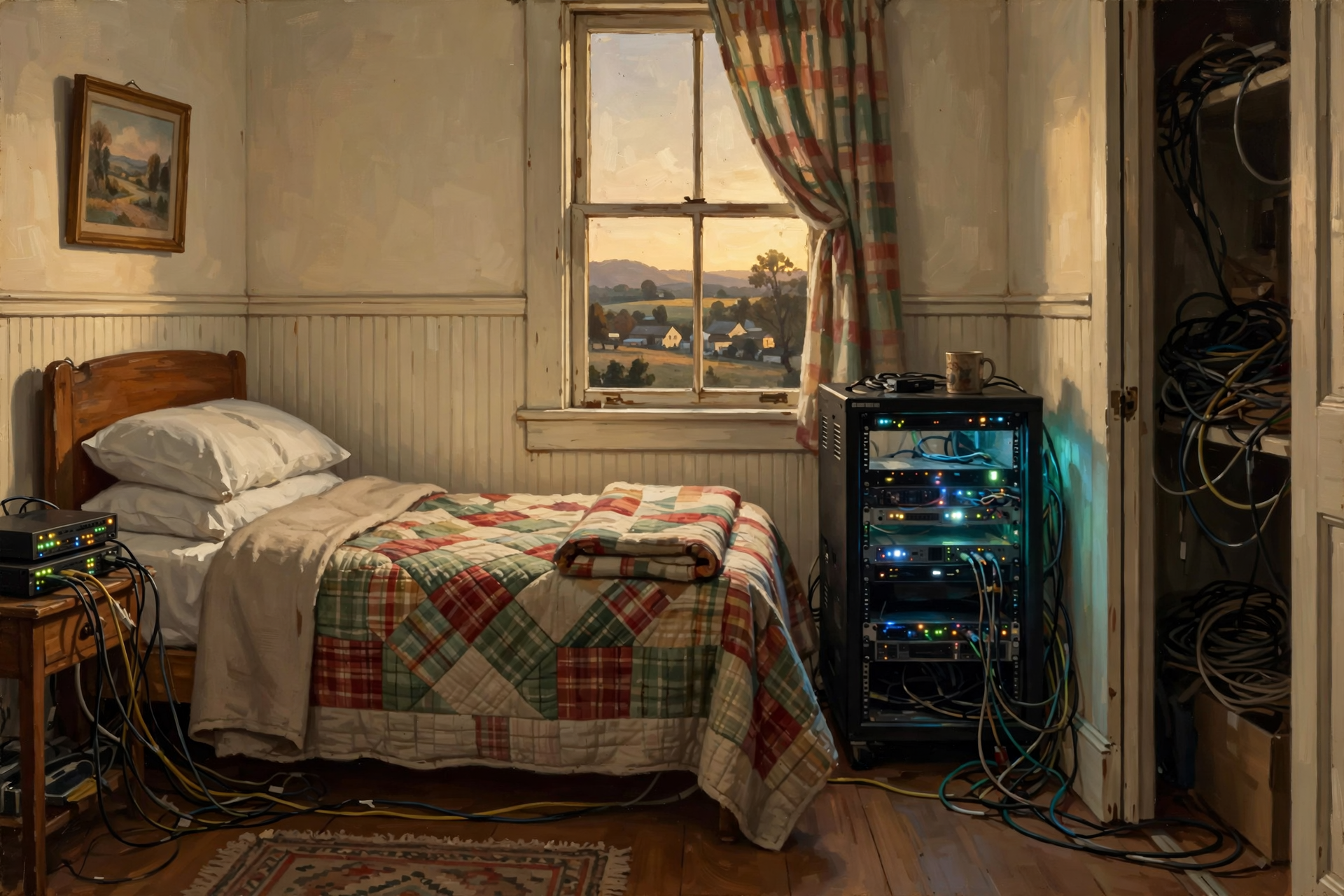
Because I am a reasonable man, I am prepared to compromise.
I do not insist that the entire spare bedroom be converted immediately.
We could begin with one side of the room.
The bed could remain for the time being, provided it does not obstruct the equipment.
We might replace the dresser with a small equipment cabinet.
The nightstand could accommodate a network switch.
The closet could hold spare cables, provided ventilation and safety requirements are respected.
Guests could still use the room under ordinary circumstances.
They would simply need to understand that the computers must not be unplugged, the equipment doors must remain unobstructed, and the room temperature may reflect the needs of the machines rather than the personal preferences of the occupants.
I believe any considerate guest would accept these conditions.
After all, hospitality is a two-way street.
We provide the room.
They respect the computing infrastructure.
If necessary, we could provide earplugs.
This seems fair.
What This Really Means for Christmas

The holiday season is a time of generosity, reflection, and appreciation for the people who matter most in our lives.
It is an opportunity to understand their interests, encourage their ambitions, and sometimes surprise them with something they would never purchase for themselves.
For some people, that might be a fishing rod.
For others, a sewing machine.
Perhaps a new woodworking tool, a set of golf clubs, or an especially fine kitchen appliance.
And for the occasional technology enthusiast, it might be a 42U server rack with appropriate ventilation, secure mounting hardware, and enough electrical capacity to accommodate future expansion.
The number 42U refers to the standardized vertical space available for mounting equipment. It is a common full-height rack size, not a reference to the age at which a man finally develops good judgment.
I thought that distinction might be helpful.
Of course, a full-height rack would be excessive for many home installations, and a smaller rack could be entirely adequate.
But if a family is determined to be generous, I would not wish to discourage them through unnecessary restrictions.
A Personal Christmas Message to My Family

Dear Family:
Last week, I shared the inspiring story of a bride who gave her husband a magnificent graphics card.
This week, I have attempted to explain that even the finest graphics card requires an appropriate home.
I hope you will recognize the thoughtful progression of these discussions.
I am not demanding a data center.
I am not insisting that we sell the furniture.
I am not asking anyone to abandon their favorite television programs so the household can redirect electricity toward artificial intelligence experiments.
I merely suggest that we examine the available floor space with an open mind.
A server rack would be organized.
It would be productive.
It would support useful projects.
It might even contribute a little warmth during the colder months.
And most important, it would demonstrate that my family understands the deep emotional connection between a man and his computing infrastructure.
I am willing to accept a smaller rack if necessary.
I am willing to install the equipment myself.
I am willing to label every cable.
And in the true spirit of Christmas generosity, I am even willing to let the family select the cabinet color.
Within reason.
With love,
Your Local AI Guy
Wisdom From the Front Porch

There comes a time in every man’s life when he must decide what sort of legacy he intends to leave.
Some men build barns.
Some plant orchards.
Some restore old tractors or accumulate woodworking equipment.
Others assemble model railroads that gradually consume entire basements.
And a few of us find meaning in building computers that can help people solve problems, learn new skills, and perhaps create businesses that would have been difficult to imagine only a few years ago.
There is room in this world for all of us.
Although, in my particular case, I could use just a little more room.
Preferably the spare bedroom.
I realize that my proposal may require additional discussion.
I realize that the family may have reservations.
I realize that some people continue to believe that a guest bed is more important than a collection of beautifully organized servers.
These disagreements are natural in any healthy family.
But I remain optimistic.
Christmas is a season of miracles.
And if a bride can surprise her groom with an extraordinary graphics card, surely a loving family in Tennessee can find its way toward accepting one small, tastefully arranged computing cabinet.
I ask for nothing more.
Except, perhaps, the servers to put inside it.
And the cooling.
And possibly a small uninterruptible power supply.
But we shall discuss that another time.
Merry Christmas, and remember: a guest bedroom serves a few people occasionally. A server room can serve a great many people every day.
Provided, of course, someone remembers to pay the electric bill.
Editor’s note: This is Episode 2 of “The Local AI Guy’s Christmas Wish List,” an ongoing Dunlap.Today investigation into the gift-giving challenges faced by families whose loved ones have mistaken industrial computing equipment for ordinary household necessities. The author insists that these articles are educational rather than an organized campaign to obtain expensive technology. His family has requested additional evidence. Next time, we will examine the surprisingly romantic possibilities of computer cooling systems and why a dedicated electrical circuit may be the greatest expression of love ever conceived.




0 Comments