
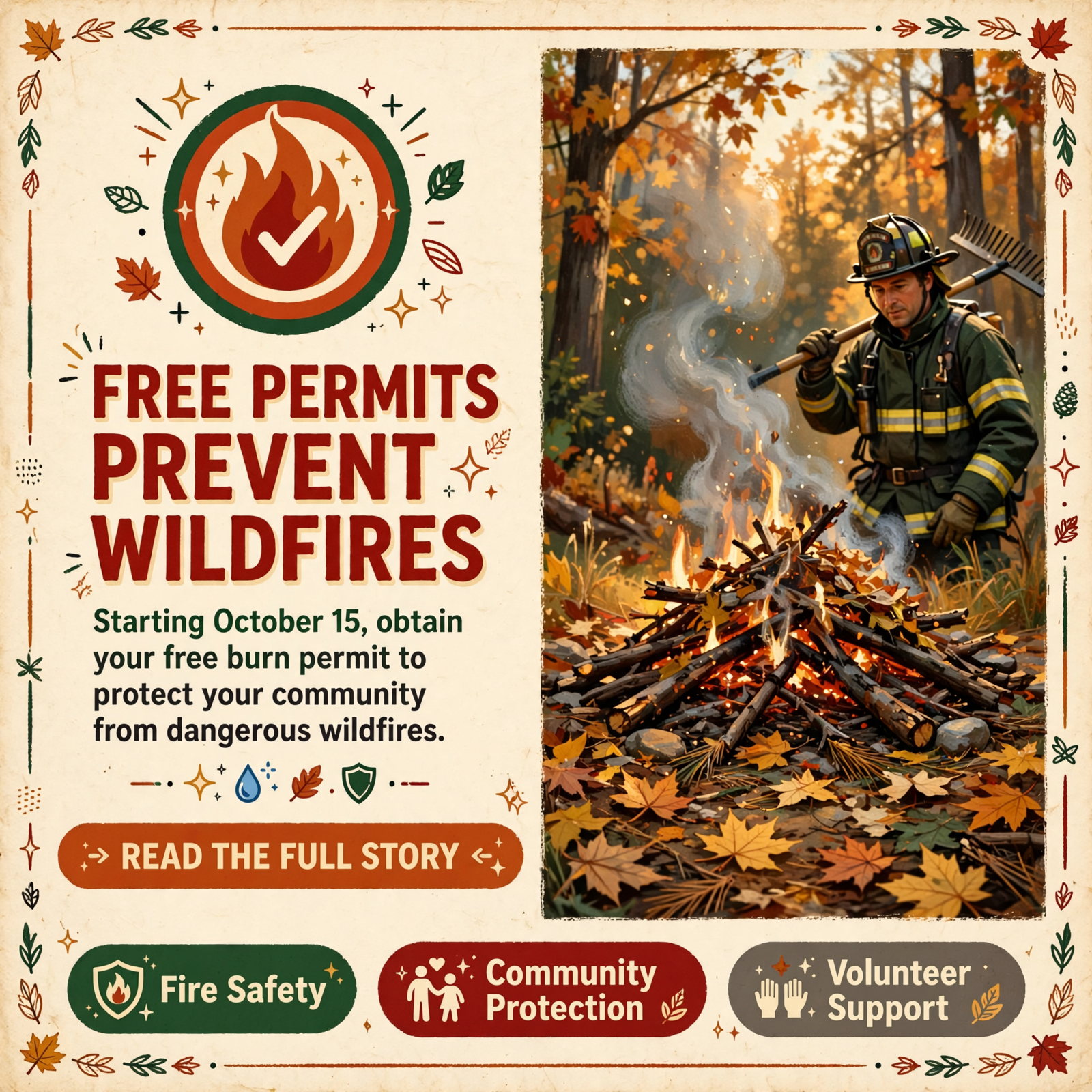
🔥 Free Burn Permits Required in Tennessee Starting October 15
As fall arrives and residents prepare to clear leaves and natural debris from their properties, Tennessee is reminding homeowners and landowners of an important fire safety requirement. Beginning October 15, anyone planning to burn leaves, yard debris, or conduct prescribed burns must first obtain a free burn permit-a straightforward step designed to prevent uncontrolled wildfires and protect communities across the region.
📋 What You Need to Know
Tennessee’s burn permit requirement takes effect Thursday, October 15, and applies to all open burning of leaves, natural debris, and prescribed burns. The permits are free and available to residents and property owners. This seasonal requirement is part of the state’s fire prevention strategy, particularly important as dry conditions in fall and spring can turn a small backyard fire into a dangerous wildfire that threatens homes, forests, and neighboring properties. 🏡
The permit system exists to give fire departments advance notice of planned burns, allowing them to monitor conditions, respond quickly if a fire spreads unexpectedly, and coordinate resources across the region. It also helps prevent accidental fires that start when burning debris gets out of control.
❓ Why This Matters Locally
Communities across the Sequatchie Valley and surrounding areas depend on volunteer fire departments-including the Dunlap Volunteer Fire Department, Spencer Fire & Rescue, and other local services-to respond to emergencies. When uncontrolled burns occur, these departments must divert resources from other calls, putting strain on already-stretched volunteer crews. A single escaped burn can threaten multiple homes, destroy timber, and create hazardous smoke that affects air quality for neighbors and nearby towns. 🚒
For property owners, the permit requirement is also practical protection. If a fire escapes and damages neighboring property or threatens the community, liability questions may arise. A free permit on file demonstrates that you took reasonable precautions and followed state law-an important distinction if disputes occur later.
🌍 Community Connections
Local fire departments and emergency services rely on residents to follow fire safety rules. When burn permits are obtained, fire chiefs and crews know where burns are planned, can assess weather and ground conditions, and can respond faster if something goes wrong. This partnership between residents and volunteer firefighters strengthens community safety and reduces the risk that a small mistake becomes a neighborhood disaster. 🤝
Seasonal burning is a long-standing practice in rural and semi-rural areas-a practical way to clear land and reduce fire fuel. The permit system doesn’t eliminate burning; it makes it safer and more predictable for everyone involved.
💡 What Residents Should Know
Before you burn leaves or debris this fall, contact your local fire department or visit the Tennessee Division of Forestry website to obtain your free burn permit. The process is simple and designed to take only a few minutes. Permits are typically issued quickly, and many departments allow online applications or phone requests. 📞
When you apply, be prepared to provide basic information: your property location, the type of material you plan to burn, and the date you intend to burn. Fire departments may also advise you on safe burning conditions-for example, avoiding burns on windy days or when air quality alerts are in effect. Following that guidance protects your property and your neighbors.
🔮 What Happens Next
As October 15 approaches, local fire departments will begin processing burn permit requests. Residents who plan fall cleanup burns should apply early to avoid delays. Throughout the fall and into spring (when the requirement typically remains in effect), fire departments will monitor permitted burns and respond to any that escape control. 📅
If you’re unsure whether your planned burning requires a permit, contact your local fire department directly. It’s better to ask than to assume-and the answer is always free.
🤔 Questions for Your Community
- Do you have a plan for clearing fall leaves and debris from your property, and have you considered how a burn permit fits into that plan?
- How can neighbors communicate with each other about planned burns to ensure everyone is aware and prepared?
- What role can community members play in supporting local fire departments’ fire prevention efforts?
- Are there safer or more efficient alternatives to open burning that your community might explore together?
🌱 Long-Term Community Impact
Burn permit systems protect more than just individual properties-they preserve the health and safety of entire communities. When residents follow fire safety rules, volunteer fire departments can focus resources on other emergencies, response times improve, and the risk of catastrophic wildfires decreases. Over time, this creates a culture of shared responsibility and trust between residents and emergency services. Communities with strong fire prevention practices also tend to have lower insurance costs and stronger property values. ✨
For the Sequatchie Valley region and surrounding areas, where volunteer fire departments serve as the backbone of emergency response, resident compliance with burn permits is an investment in collective safety and community resilience.




0 Comments