
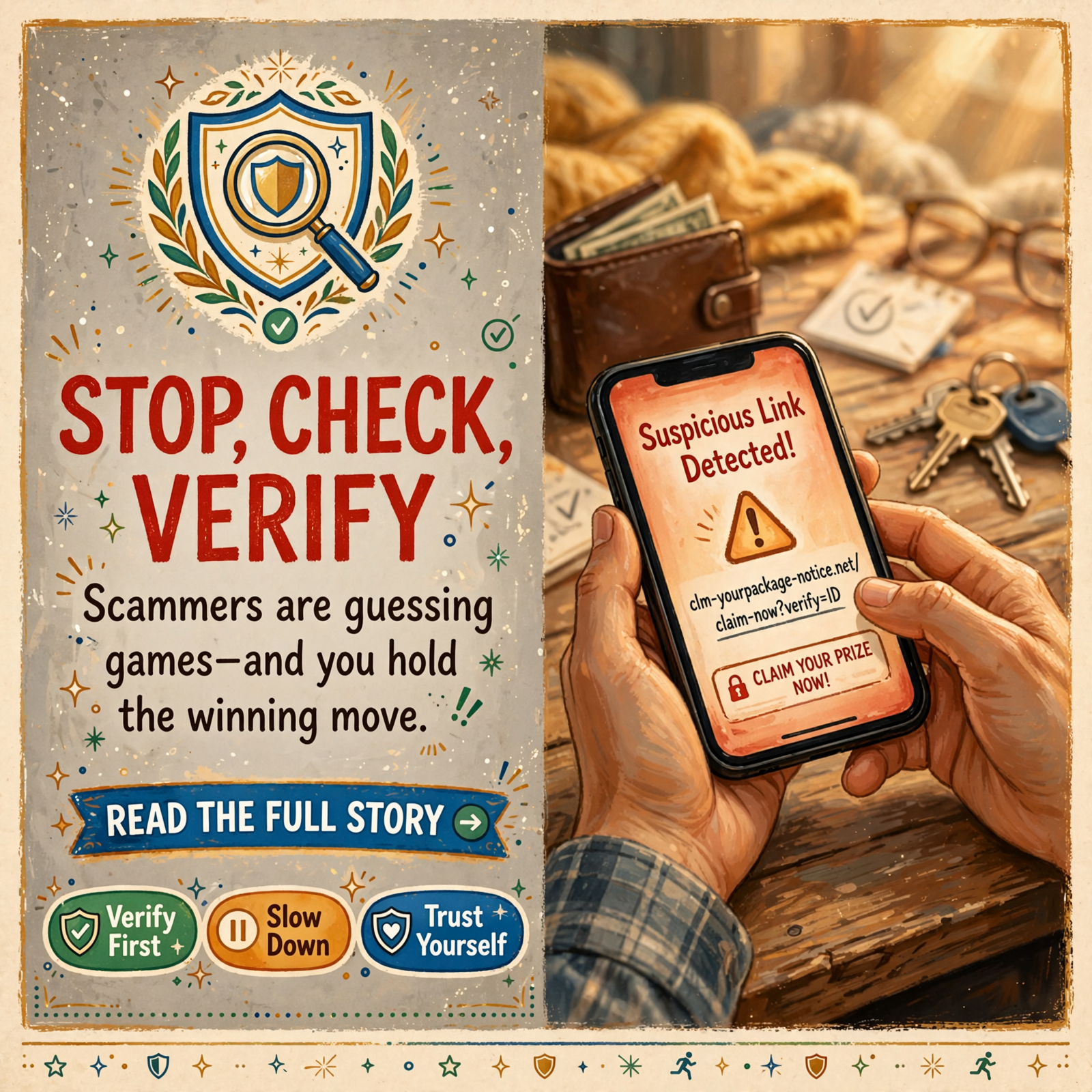
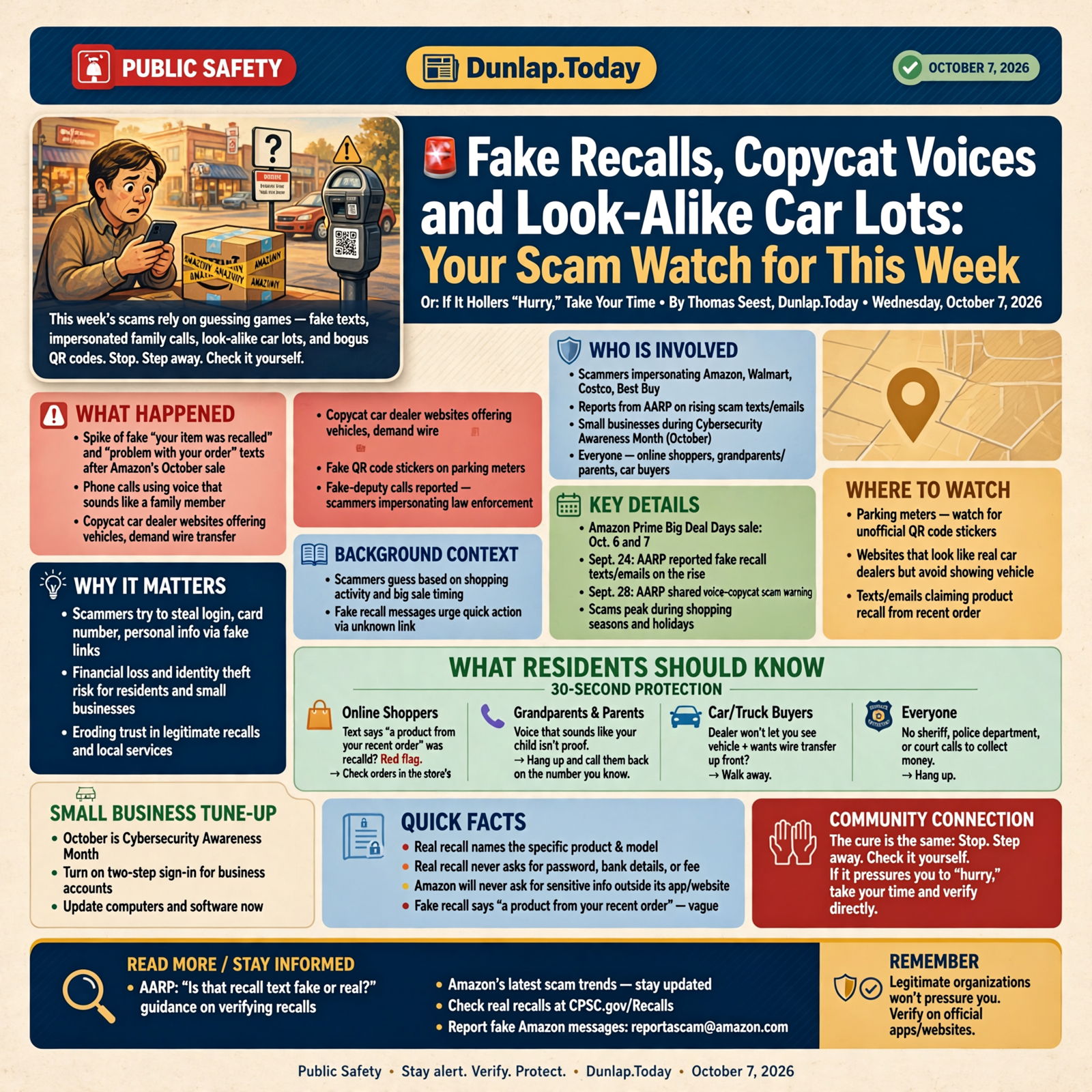
🚨 Fake Recalls, Copycat Voices and Look-Alike Car Lots: Your Scam Watch for This Week

Or: If It Hollers “Hurry,” Take Your Time
Scammers are like the fellow at the fair who guesses your weight. They don’t really know a thing about you. They’re just good at guessing, and they count on you being surprised enough to play along.
This week’s list is all about guessing games: a text that guesses you bought something online, a phone call that sounds like someone you love, a car lot that looks real but isn’t there and a parking sticker that isn’t what it seems. The cure is the same as always. Stop, step away and check it yourself.
Here’s what’s making the rounds: fake “your item was recalled” and “problem with your order” texts right after Amazon’s October sale, phone calls using a voice that sounds like a family member, copycat car dealer websites, fake QR code stickers on parking meters, an update on fake-deputy calls in Tennessee and a simple security tune-up for small businesses during Cybersecurity Awareness Month.
⏱️ What this means for you in 30 seconds
- Online shoppers: A text that says “a product from your recent order” was recalled is a red flag. Check your orders in the store’s own app instead.
- Grandparents and parents: A voice that sounds just like your child isn’t proof. Hang up and call them back on the number you know.
- Car and truck buyers: If a dealer won’t let you see the vehicle and wants a wire transfer up front, walk away.
- Headed to Chattanooga or Nashville? Look twice at a QR code sticker on a parking meter. Use the official parking app or sign instead.
- Everyone: No sheriff, police department or court calls to collect money. Hang up.
- Small business owners: October is a good month to turn on two-step sign-in and update your computers.
📦 “A Product From Your Recent Order Has Been Recalled.” Maybe Not.
Amazon’s Prime Big Deal Days sale runs Oct. 6 and 7, and lots of Valley folks have packages on the way. Scammers know it. Amazon says scam texts tend to spike in the days right after its big sales, when people expect delivery and refund updates.
One trick that’s growing is the fake recall. On Sept. 24, AARP reported on texts and emails that claim something you bought has been recalled for safety reasons and tell you to tap a link for a refund. The link leads to a fake website that asks for your login, card number or personal information. AARP said Amazon is the store scammers pretend to be most often, with Walmart, Costco and Best Buy showing up too. It also said these scams tend to peak during shopping seasons, and it expects more around the holidays.
What it means for you: A real recall is like a note from the school nurse. It names your child, the problem and what to do. A fake one says “a product from your recent order,” because the scammer doesn’t know what you bought. AARP says a real recall names the specific product and model, and it never asks for your password, bank details or a fee. Don’t tap the link. Open the store’s own app or type its website yourself and look at your orders. You can also look up real recalls at CPSC.gov/Recalls. Amazon says it will never ask for sensitive information outside its own website or app, and you can report fake Amazon messages to reportascam@amazon.com.
👉 Read more (AARP: Is that recall text fake or real?) · Amazon’s latest scam trends
📞 “Dad, I’m in Trouble.” It Sounded Just Like Him. It Wasn’t.

On Sept. 28, AARP shared the story of a New Hampshire retiree who got a call from a man claiming to be an attorney. The caller said the family’s son had been arrested and then put “the son” on the line. The voice sounded exactly like him, right down to “I love you, Dad.” The family was told it needed $15,000, supposedly 10% of the bail, to keep him out of jail over the weekend. They paid, and it was a scam. The man now volunteers with AARP to warn others.
AARP says that as voice-cloning technology improves, calls like this can sound more and more convincing. The Federal Trade Commission (FTC) has explained how: a scammer needs only a short clip of a family member’s voice, which can come from videos posted online, plus a voice-cloning program.
What it means for you: You can’t trust your ears anymore, but you can trust your phone book. The FTC’s advice is simple: don’t trust the voice. Hang up and call your loved one on a number you know is theirs. If you can’t reach them, call another family member or a friend of theirs. Better yet, sit down at Sunday dinner and pick a family code word, something silly that would never be posted online, like the name of Grandpa’s first coonhound. If a “grandchild” calls in a panic and can’t give the word, you know what to do.
👉 Read more (AARP) · FTC: How voice cloning works in family emergency scams
🚗 That Shiny Truck on a Slick Website Might Not Exist
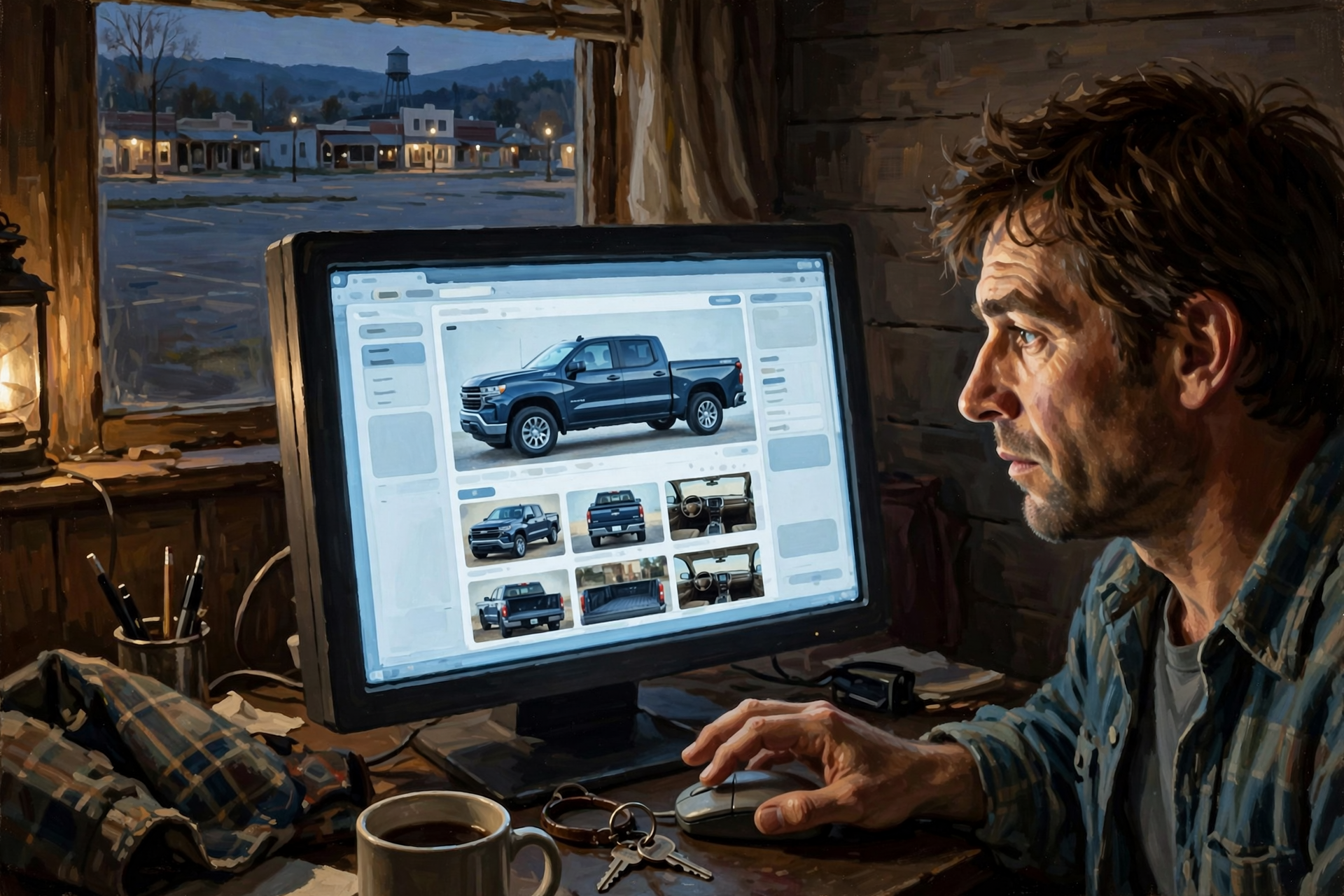
Last week we warned about fake farm equipment dealers. Car and truck buyers have a cousin of that scam to watch for. On Sept. 1, the FTC warned that scammers are cloning real car dealers’ websites, often using artificial intelligence (AI), and copying the logos, vehicle listings and photos down to the last detail. Some even post fake customer reviews and offer easy return policies to put you at ease. Buyers pay up front for a vehicle they never get.
The Tennessee Attorney General’s Office has warned about the same thing here at home, with fake classic car and heavy equipment dealer websites offering very low prices. It said these scammers may answer the phone, send videos and even show fake business licenses.
What it means for you: Buying a vehicle you’ve never seen is like buying a coon dog over the phone. You’d want to see him hunt first. The FTC says to ask to see the car and the dealership in person. If it’s too far, ask to send a mobile inspection service, and if the seller says no, pump the brakes. Search the dealer’s name with the words “scam,” “review” or “complaint.” The Tennessee AG suggests checking a business with the Secretary of State’s free business search and paying by check or credit card instead of a wire transfer. If a dealer insists on a wire transfer only, walk away.
👉 Read more (FTC consumer alert) · Tennessee Attorney General warning
🅿️ Headed to Town? Look Twice Before You Scan That Parking Meter
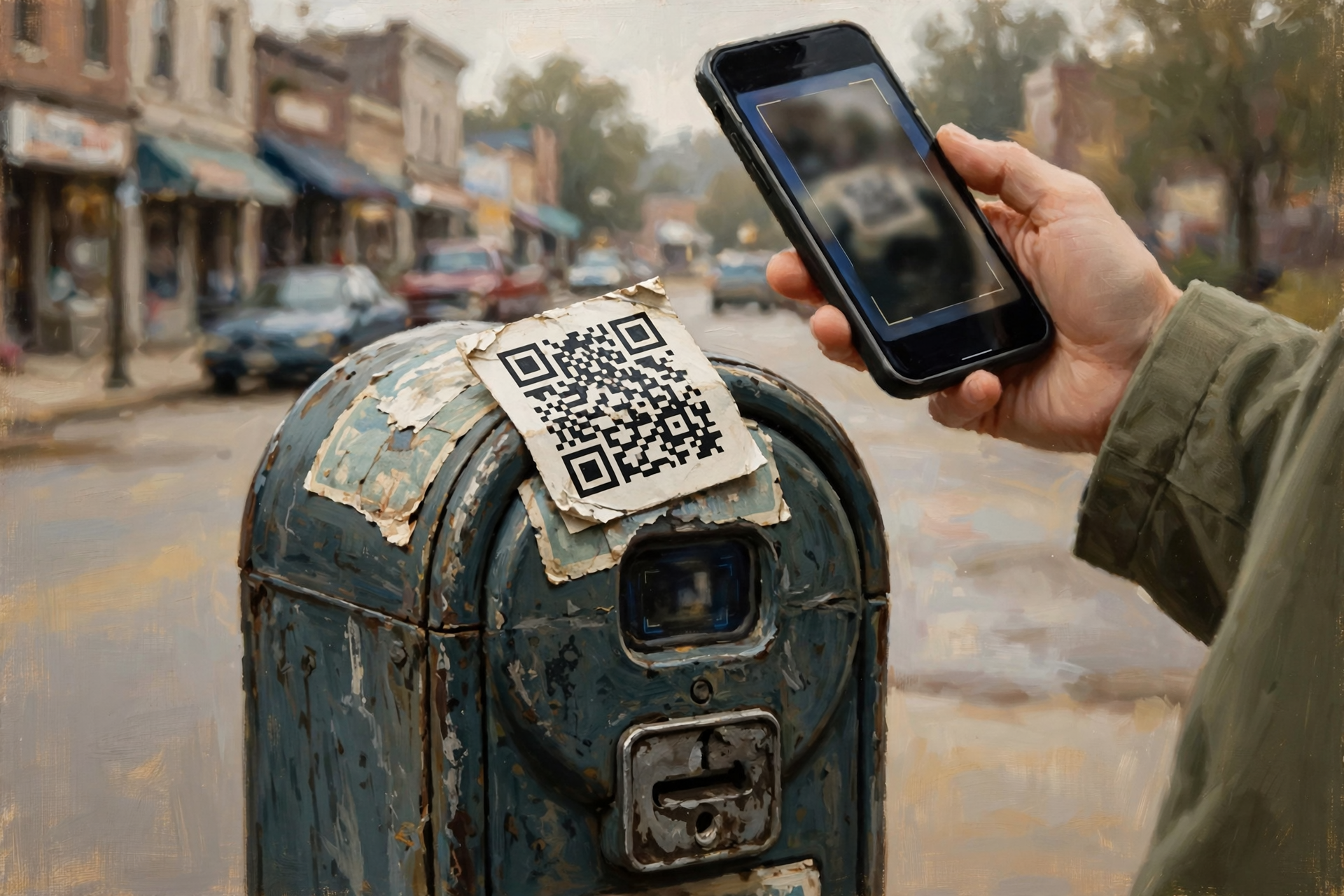
More cities let you pay for parking by scanning a QR code with your phone camera. On Sept. 3, the FTC said people have reported scammers sticking their own QR code stickers over the real ones on parking meters. Scan the fake one, and it can take you to a website built to steal your money, your personal information or both.
What it means for you: If you’re parking for a Chattanooga doctor’s visit, a ballgame or a day in Nashville, treat a QR sticker like a handwritten “Free Puppies” sign. It might be fine, but check before you take one home. The FTC says many phones show a preview of the web address before you open it, so look for misspellings or switched letters. A sticker that looks slapped on top of another one is a warning sign. When in doubt, pay with coins, a card at the meter, or the city’s official parking app you downloaded yourself. If you think you scanned a bad one, change any password you typed and watch your bank and card statements.
👉 Read more (FTC consumer alert)
🚔 Update: The Fake-Deputy Calls Haven’t Slowed Down

We covered the “you missed jury duty” calls last week, and there’s an update. On Oct. 6, the Franklin Police Department in Middle Tennessee said officers are getting reports of scams nearly every day, and they expect even more as the holidays get closer. Callers pretend to be officers or government officials and claim there’s a warrant for you or a family member, that you missed jury duty or that you owe a fine. Franklin police said some scammers have even demanded jewelry.
Closer to home, the Hamilton County Sheriff’s Office in Chattanooga has said it never calls anyone to ask for money, demand payment of fines or tell them to buy prepaid debit cards, and that official notices typically come by mail.
What it means for you: Franklin police added one tip worth taping to the fridge: talk with a trusted family member or friend before you do anything. Scammers want you alone and in a hurry, like a fox wants the henhouse door left open. A two-minute call to your son, daughter or neighbor shuts that door. Then hang up on the caller, look up the agency’s real number yourself and call it.
👉 Read more (Williamson Herald) · Hamilton County Sheriff’s Office warning (WDEF)
💻 Small Business Corner: A Four-Step Security Tune-Up for October

October is Cybersecurity Awareness Month. This year the National Cybersecurity Alliance, which leads the month with the federal Cybersecurity and Infrastructure Security Agency (CISA), picked the theme “Don’t Make It Easy for Them.” Its point is that staying safe online isn’t about one perfect decision. It’s about a few simple habits done every day: strong, unique passwords, multifactor authentication (a second step when you sign in, like a code texted to your phone), keeping devices updated and pausing to look hard at suspicious messages.
One newer trick is worth knowing. On Sept. 1, the FBI warned about “consent phishing,” aimed so far at prominent people and their families. A message with a link leads to a real-looking screen asking you to “Allow” an app to reach your email or files. Click Allow, and the scammer can read and send your email without ever needing your password. The FBI says changing your password won’t undo it. The app has to be removed in your account’s security settings.
What it means for you: Think of it like locking up the shop at night. The lock, the alarm and the porch light each do a little, and together they send a burglar down the road. If you run a store, office or farm business, take 15 minutes this week to turn on two-step sign-in for your email and bank, run updates on every computer and phone, and remind whoever answers the phone and email not to click “Allow” on anything they didn’t ask for.
👉 Read more (National Cybersecurity Alliance) · FBI consent phishing warning
✅ Your Scam Watch Checklist for This Week
- ✅ Got a recall or order-problem text? Don’t tap it. Check your orders in the store’s own app.
- ✅ Look up real recalls at CPSC.gov/Recalls.
- ✅ Pick a family code word this weekend, and share it in person only.
- ✅ Panicked call from a loved one? Hang up and call them back on the number you know.
- ✅ Buying a vehicle online? See it in person or send an inspector, and never wire money to a stranger.
- ✅ Paying for parking? Check the QR code for a sticker on top, or use the official app.
- ✅ Before you send money to anyone, call a family member or friend first.
- ✅ Business owners: turn on two-step sign-in and run your updates.
- ✅ Forward scam texts to 7726 (it spells SPAM) and report scams at ReportFraud.ftc.gov.
Practical rule: If a message hurries you, guesses at you or wants money before you can check, step away and look it up yourself.
— Dunlap.Today
📚 Plain-English Scam Glossary
- Smishing: A scam sent by text message, usually with a link to tap.
- Phishing: A fake email or message meant to trick you into clicking a link or sharing personal information.
- Voice cloning: Using a computer program to copy someone’s voice from a short recording so it can “say” things they never said.
- Family code word: A private word your family agrees on, in person, to prove who’s really calling in an emergency.
- Recall: An official notice that a product has a safety problem. Real ones name the product and model and tell you what to do.
- QR code: The square, checkerboard-looking code you scan with your phone camera to open a website.
- Cloned website: A fake website made to look exactly like a real business’s site.
- Wire transfer: Sending money electronically from one bank to another. It’s very hard to get back once it’s gone.
- Multifactor authentication (two-step sign-in): A second check when you sign in, like a code sent to your phone, so a stolen password alone isn’t enough.
- Consent phishing: Tricking someone into clicking “Allow” so a scammer’s app can get into their email or files.
❓ Frequently Asked Questions

I tapped a fake recall or delivery link. What now?
Don’t panic, and don’t type anything else into that page. Close it. If you entered a password, change it right away, along with any other account that uses the same password. If you entered a card number, call your bank or card company using the number on the back of your card. Then watch your statements for charges you don’t recognize, and report it at ReportFraud.ftc.gov.
How can I tell if a recall is real?
AARP says real recalls name the specific product and model and tell you what to do, usually to stop using it. They never ask for your password, bank details or a fee. Look it up at CPSC.gov/Recalls, or open the store’s app or website yourself and check your orders and messages there.
Can scammers really copy a voice from a few seconds of video?
The FTC says a scammer needs only a short audio clip of someone’s voice, which could come from something posted online, plus a voice-cloning program. That’s why the voice alone isn’t proof. Call your loved one back on a number you know.
How should my family pick a code word?
Choose something easy to remember that a stranger couldn’t guess or find online, like an old pet’s name or a family joke. Share it face to face, not by text or social media. Make sure grandparents and teenagers both know it.
How can I check out a car dealer I found online?
Search the dealer’s name with “scam,” “review” or “complaint.” Ask to see the vehicle and the lot in person, or send an independent inspector. In Tennessee, you can look up a business on the Secretary of State’s free business entity search. Pay with a check or credit card when you can, and walk away from wire-only deals.
I think I scanned a fake QR code. What should I do?
The FTC says not to keep talking to anyone through that website. Change any username or password you typed, check your bank and card statements for charges you didn’t make and report it at ReportFraud.ftc.gov.
Who can I call to talk it over?
AARP’s Fraud Watch Network Helpline offers free help at 877-908-3360, Monday through Friday, 8 a.m. to 8 p.m. Eastern (7 a.m. to 7 p.m. Central). You can also call your local sheriff’s office on its non-emergency line, or the Tennessee Division of Consumer Affairs at 615-741-4737.
🔗 Other Resources

- U.S. Consumer Product Safety Commission: Look up real recalls
- Amazon: Latest scam trends and how to report them
- FTC: Report a scam at ReportFraud.ftc.gov
- FTC: What to do if you were scammed
- Tennessee Division of Consumer Affairs: File a complaint
- Tennessee Secretary of State: Business entity search
- FBI Internet Crime Complaint Center (IC3)
- AARP Fraud Watch Network Helpline (877-908-3360)
- National Cybersecurity Alliance: Cybersecurity Awareness Month
- CISA: Cybersecurity Awareness Month
🌄 Slow and Steady Wins This Race

You don’t have to know every trick in the book. You just have to remember that the real folks, from your grandson to the sheriff to the car lot down the road, will still be there after you take a breath and check. Scammers are the only ones who can’t wait.
Pass this along to someone who shops online, drives into town or has grandkids with a phone. That covers about all of us. We’ll keep watch and bring you what’s new each week. Read Dunlap.Today and sign up for our newsletter for plain-English scam alerts and Valley news.



0 Comments