
Marketing Isn’t Advertising: So What Is It?

If somebody says the word marketing, what comes to mind?
A Facebook ad?
A television commercial?
A billboard?
A newspaper advertisement?
A business posting on social media?
All of those can be part of marketing.
But none of them, by themselves, are marketing.
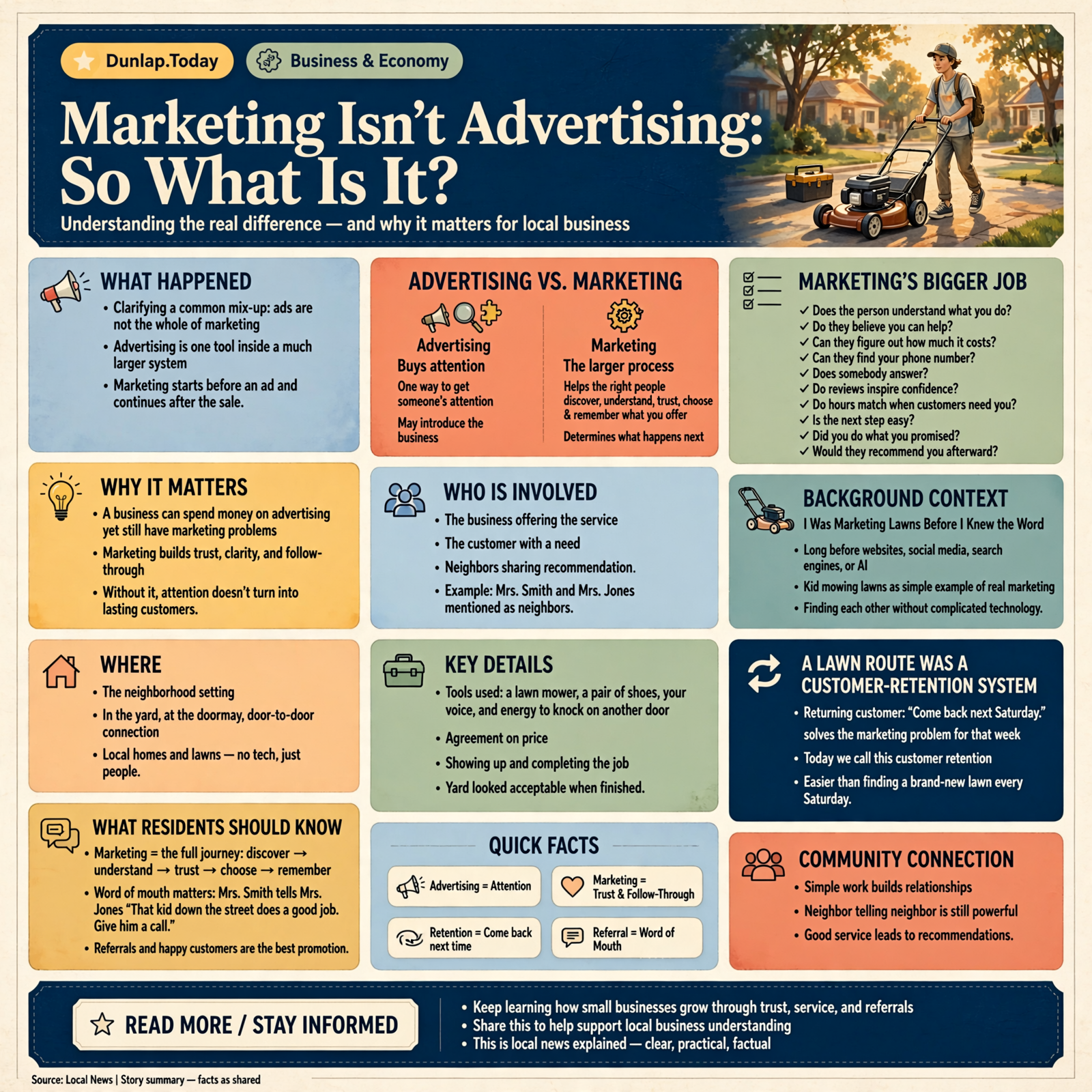
Advertising is one tool inside a much larger system.
Marketing begins long before somebody creates an advertisement, and if the business does its job well, marketing continues long after the customer hands over the money.
That distinction matters because a business can spend plenty of money on advertising while having serious marketing problems.
Advertising Buys Attention. Marketing Has a Bigger Job.

Here is a simple way to separate the two:
Advertising is one way to get someone’s attention. Marketing is the larger process of helping the right people discover, understand, trust, choose and remember what you offer.
Advertising may introduce the business.
Marketing determines what happens next.
Does the person understand what you do?
Do they believe you can help?
Can they figure out how much it costs?
Can they find your phone number?
Does somebody answer?
Do your reviews inspire confidence?
Do your hours match when customers actually need you?
Do you make the next step easy?
Do you do what you promised?
Would that customer recommend you afterward?
Those are marketing questions too.
I Was Marketing Lawns Before I Knew the Word

Long before websites, social media, search engines or artificial intelligence entered my life, I was learning pieces of marketing through the kinds of work a kid could do.
Mowing lawns is a wonderfully simple example.
You have a person with grass that needs cutting.
You have somebody willing to cut it.
Somehow those two people need to find each other.
As a kid, that might mean walking through the neighborhood, talking to people, having somebody mention you to a neighbor or simply being seen working in another yard.
There was no complicated marketing technology involved.
The technology might have consisted of:
- a lawn mower,
- a pair of shoes,
- your voice,
- and enough energy to knock on another door.
But the marketing system was already there.
Somebody had to know I existed.
They had to understand what I was offering.
They had to decide whether they trusted me to do it.
We had to agree on a price.
I had to show up.
The yard had to look acceptable when I finished.
And if they were happy, perhaps I came back the next week.
Better yet, maybe they told a neighbor.
Today we might apply impressive-sounding terms to all of that.
Customer acquisition.
Conversion.
Service delivery.
Retention.
Referral marketing.
Back then, it was just:
“Mrs. Smith wants her grass cut again Saturday.”
The vocabulary got more complicated.
The underlying business process did not.
A Lawn Route Was a Customer-Retention System

This is worth noticing because it illustrates how easy it is to make marketing sound harder than it really is.
Suppose I had to find a brand-new lawn every Saturday.
That would take work.
I would have to locate another homeowner, explain what I was offering, agree on a price and convince that person to give me a chance.
But if last week’s customer simply said:
“Come back next Saturday.”
I had solved much of the marketing problem for that week.
Today we call that customer retention.
If Mrs. Smith then told Mrs. Jones:
“That kid down the street does a good job. Give him a call.”
we would call that referral marketing or word of mouth.
If Mrs. Jones saw me mowing Mrs. Smith’s lawn and decided I must be worth asking, we’d call that social proof.
The fancy terms describe very ordinary human behavior.
Marketing Includes the Product Itself

One of the easiest mistakes to make is to think marketing begins after the product or service has already been created.
But one of the most important marketing questions is:
What should we offer in the first place?
Imagine a small restaurant.
The owner could advertise all day long.
But before buying ads, somebody has to decide:
- What kind of food should we serve?
- Who are we serving?
- What should it cost?
- When should we be open?
- Should we offer takeout?
- Do local customers want breakfast?
- Do families need larger tables?
- Should there be a children’s menu?
- Is parking easy?
Those decisions affect whether the restaurant fits the market.
Marketing isn’t merely telling people what you made.
Good marketing also involves understanding what people might actually want or need before deciding what to make.
Marketing Includes Price

Price is not simply an accounting decision.
Price communicates.
A $7 hamburger and a $22 hamburger create different expectations.
The more expensive one may come with better ingredients, better service, a different atmosphere or simply a stronger reputation.
Or it may just be overpriced.
The customer has to decide.
But price is part of the message.
The same thing happens with contractors.
The lowest bid may attract one type of customer.
Another customer may become suspicious if a quote is dramatically lower than everyone else’s.
A higher price might communicate better materials, greater expertise, stronger warranties or less risk.
Sometimes it communicates none of those things.
That’s why pricing belongs inside the marketing conversation rather than being treated as a completely separate subject.
Marketing Includes Convenience

Suppose two businesses sell essentially the same thing for approximately the same price.
One:
- answers the phone,
- accepts text messages,
- has accurate business hours online,
- accepts credit cards,
- offers appointments,
- and sends a reminder.
The other:
- doesn’t answer,
- has an outdated voicemail message,
- lists the wrong hours on Google,
- and eventually calls back three days later.
Which business has the better marketing?
Neither example required an advertisement.
One business simply removed more friction between “I need this” and “I bought it.”
Convenience can be marketing.
Marketing Includes Trust
This becomes especially important as the cost or risk of a purchase increases.
Hiring somebody to mow your yard involves relatively little risk.
Hiring somebody to paint your house involves more.
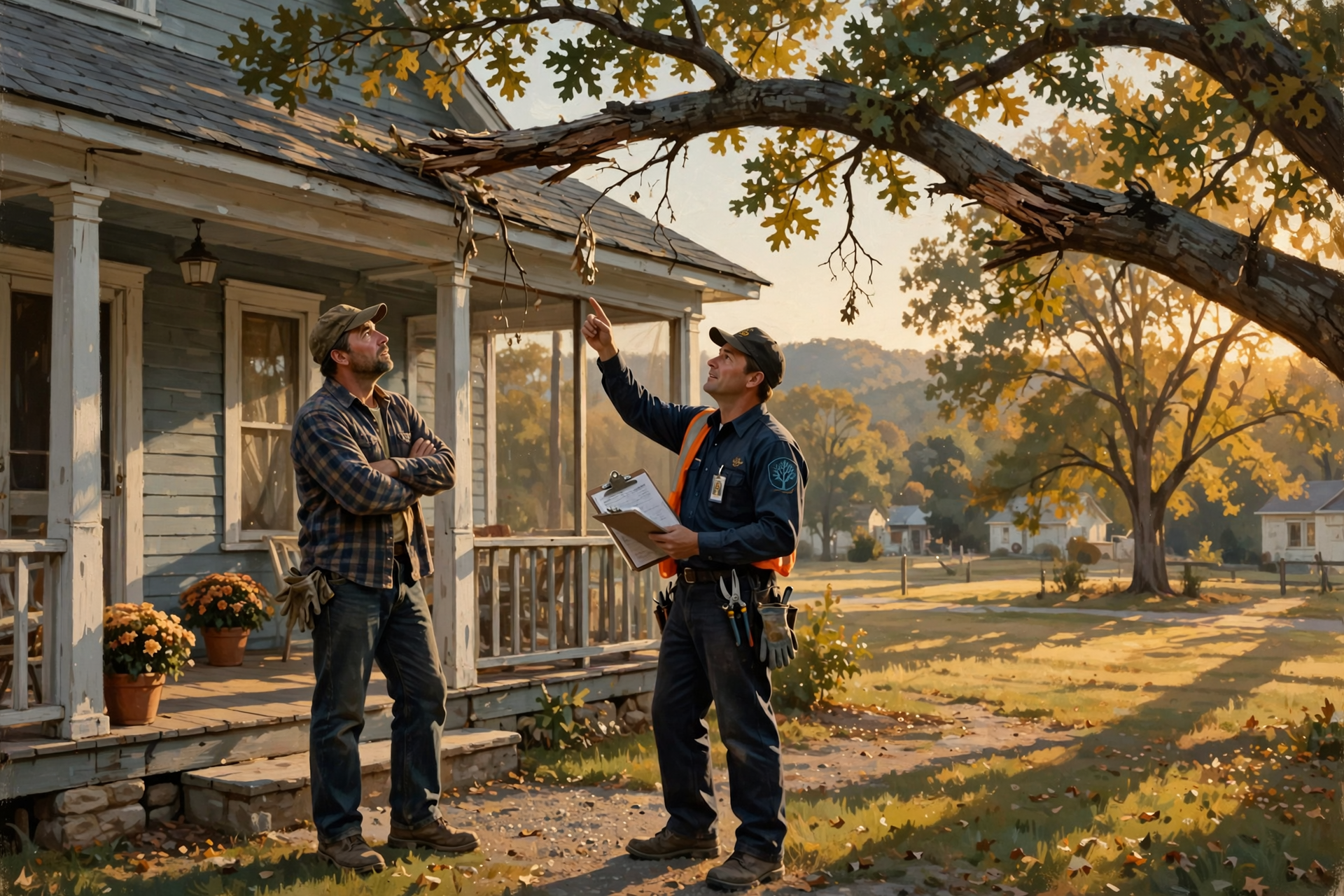
Hiring somebody to trim a large tree hanging over your roof involves more again.
The customer begins asking different questions.
Do they know what they’re doing?
Will they damage something?
Will they finish the job?
Are they insured?
Can I trust them on my property?
What happens if something goes wrong?
This leads to an important marketing principle:
As the customer’s perceived risk increases, the amount of trust needed before a purchase usually increases too.
That trust might come from reputation.
It might come from experience.
It might come from a neighbor’s recommendation.
Today it might also come from:
- online reviews,
- photos of previous work,
- licenses or certifications,
- a professional website,
- clear warranties,
- educational articles,
- and transparent pricing.
Again, none of those are necessarily advertisements.
But all can affect the buying decision.
Marketing Includes Reputation

In a small community, reputation may be one of the strongest marketing systems ever invented.
Ask:
“Who would you call?”
That question can produce more business than an expensive advertising campaign.
Someone may answer:
“Call Jim. He did ours.”
That little sentence contains an extraordinary amount of marketing.
It says:
- I know someone who does this.
- I trusted him enough to hire him.
- I experienced his work personally.
- The experience was good enough that I’m willing to attach my reputation to recommending him.
That recommendation is powerful precisely because the business didn’t write it.
A trusted person did.
Marketing Includes Customer Service

Traditionally, businesses sometimes separated marketing and customer service into different departments.
The customer doesn’t care about the organizational chart.
If marketing promises:
“We treat every customer like family.”
and the person answering the phone acts annoyed that a customer called, the person answering the phone just overruled the advertisement.
Customer experience becomes part of marketing because customers remember it.
And increasingly, they publish it.
A customer experience can become:
- a five-star review,
- a one-star review,
- a Facebook post,
- a recommendation,
- a warning to friends,
- or simply a decision never to return.
The sale doesn’t end the marketing process.
It creates the next chapter of it.
Marketing Includes Sales, but Sales Has a Different Job

Marketing and sales overlap, but they aren’t identical.
Here’s one simple way to think about it:
Marketing helps create the opportunity for a buying decision.
Sales helps the customer make that decision.
A person might discover a contractor through Google.
They read several reviews.
They visit the contractor’s website.
They look at photographs.
They see that the company services their area.
They read an article explaining their particular problem.
Eventually, they call.
A great deal of marketing has already happened before anybody says:
“Would you like us to schedule the job?”
That’s why judging marketing only by advertisements misses most of the journey.
Then, Now & Next: Getting Someone’s Attention

Then
When I was mowing lawns, painting houses or trimming trees, reaching potential customers might mean walking down the street, talking to neighbors or relying on somebody who knew somebody.
Physical proximity mattered enormously.
Your marketing territory might literally have been as far as you were willing to walk, ride a bicycle or push a mower.
Now
A local business can be discovered through:
- Google,
- Bing,
- Apple Maps,
- Facebook,
- online directories,
- reviews,
- websites,
- email,
- text messaging,
- video,
- social networks,
- and increasingly AI systems.
A business in rural Tennessee can publish something that reaches somebody across the county, across the country or across the world.
The cost of distributing information has collapsed compared with earlier generations.
Next
Over the coming decade, we may increasingly ask artificial-intelligence assistants to help find, compare and evaluate businesses for us.
Instead of typing:
“best HVAC company near me”
a homeowner might tell an AI assistant:
“Find a reputable company that can replace my heat pump this week. I care more about dependable service and a good warranty than getting the absolute lowest price.”
The assistant may eventually help examine:
- business information,
- availability,
- reviews,
- pricing,
- warranties,
- service areas,
- financing,
- and customer preferences.
The technology will be radically different from knocking on Mrs. Smith’s door.
But the underlying question will still be remarkably familiar:
How does somebody who needs what I provide discover me, understand me and decide to trust me?
The Tools Keep Making Marketing Easier—and More Complicated

Technology has repeatedly lowered the cost of doing things that once required enormous effort.
Personal computers made it easier to manage information.
Printers made it easier to create professional-looking documents.
Desktop publishing made it easier to create brochures and newsletters.
The internet made publishing inexpensive.
Search engines made businesses easier to discover.
Email made communication nearly free.
Social media gave almost anyone a publishing platform.
Smartphones put cameras, maps, search engines and communication tools in everyone’s pocket.
Automation reduced repetitive work.
Artificial intelligence is now reducing the effort required for writing, research, analysis, design, customer service and other tasks.
Each new generation of tools makes some things easier.
It also creates new competition.
If everyone can publish, everyone competes for attention.
If everyone can produce content cheaply, simply producing more content becomes less valuable.
If AI can generate an advertisement in seconds, having an advertisement is no longer much of an advantage.
That pushes us back toward the fundamentals:
- Do you solve a real problem?
- Do you understand the customer?
- Can people find you?
- Do they understand you?
- Do they trust you?
- Is your offer useful?
- Is doing business with you easy?
- Do you deliver what you promised?
Technology changes the tools.
It doesn’t eliminate the fundamentals.
A Simple Marketing Model

For the purposes of this series, we can think about marketing as a system with several connected jobs:
Understand → Create → Communicate → Build Trust → Make It Easy → Deliver → Stay Connected
Understand: Who are we helping, and what do they actually need?
Create: What product, service or solution should we offer?
Communicate: How will people discover and understand it?
Build Trust: Why should they believe us?
Make It Easy: Can they conveniently take the next step?
Deliver: Does the experience match the promise?
Stay Connected: Will they return, recommend us or remember us later?
Advertising can help with the communication part.
But notice how much of the system exists outside advertising.
Why This Matters for Small Businesses
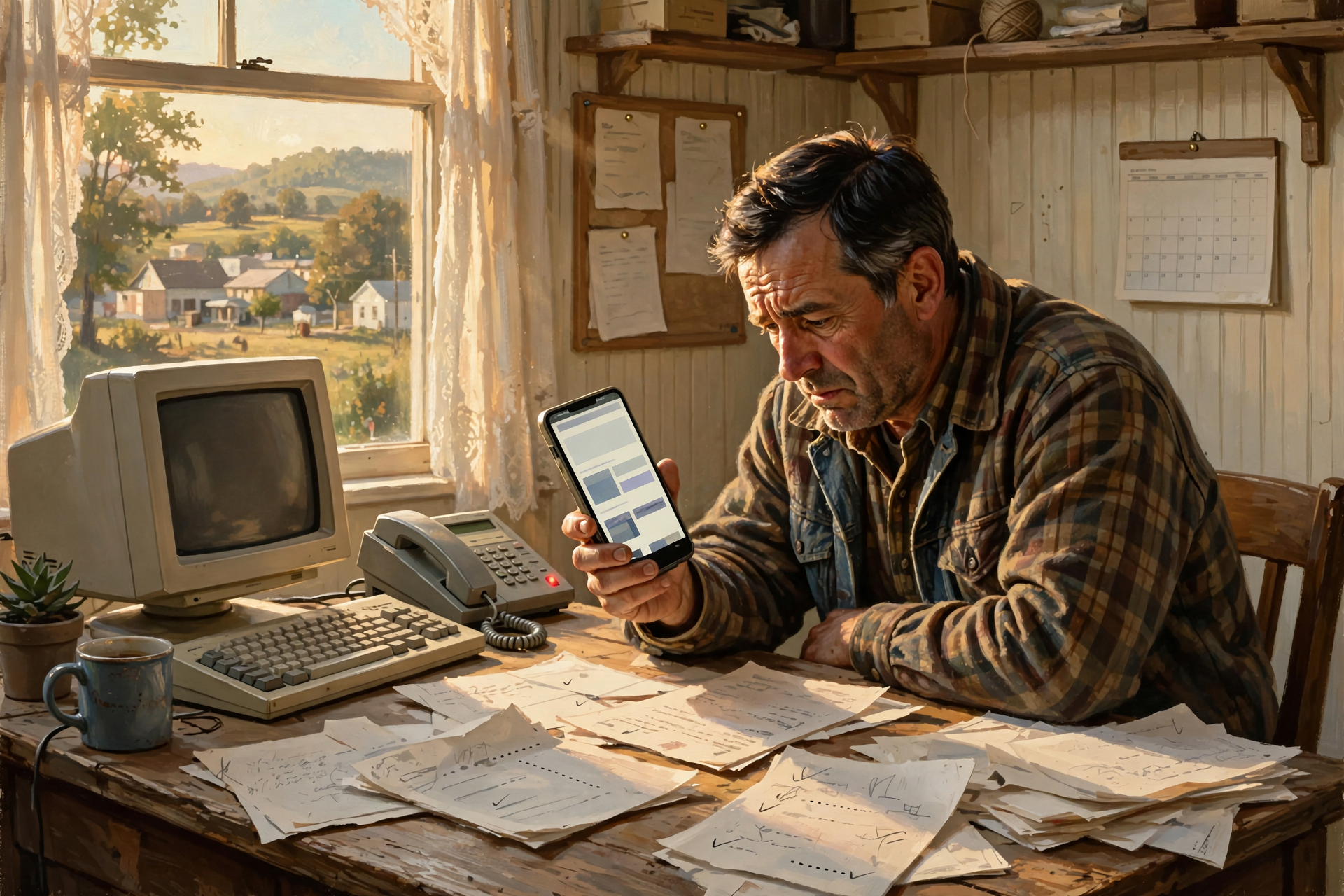
This distinction can save a business owner a great deal of wasted money.
When sales are slow, the automatic reaction is often:
“We need more advertising.”
Maybe.
But what if the real problem is:
- people don’t understand the offer,
- the business has poor reviews,
- the website doesn’t work well on phones,
- Google lists the wrong hours,
- nobody answers inquiries,
- the pricing is confusing,
- the service area isn’t clear,
- customers don’t trust the guarantee,
- or competitors simply make the buying process easier?
Buying more advertising might simply send more people into a broken system.
Sometimes the best marketing investment isn’t another ad.
It might be fixing the problem customers encounter after they see the ad.
Marketing Is Happening Whether You Manage It or Not

This may be the most important idea in this article.
Every business is already marketing.
The question is whether it is doing so intentionally.
Your sign says something.
Your building says something.
Your prices say something.
Your reviews say something.
Your employees say something.
Your website says something.
Your unanswered voicemail says something.
Your delivery truck says something.
Your return policy says something.
Your reputation says something.
Even silence says something.
The business doesn’t get to decide whether customers receive a message.
It can only influence what that message becomes.
The Marketing Lesson

When I was a kid mowing lawns, I wasn’t thinking about funnels, customer acquisition costs or lifetime customer value.
I was trying to find somebody whose grass needed cutting.
When I sold solar panels, the challenge became different. The customer first needed to understand an unfamiliar product.
When personal computers such as the Atari 800 arrived, another generation of businesses faced a similar problem: people had to understand why an ordinary person might want a computer in the first place.
Every technological shift adds new tools and new vocabulary.
But marketing keeps returning to human questions:
Who needs this?
How will they discover it?
How will they understand it?
Why should they trust it?
What makes them decide?
And what happens after they do?
Answer those questions well and advertising becomes much more useful.
Ignore them, and even a very expensive advertisement may accomplish remarkably little.
Share This With Someone Learning How Business Really Works
If you know someone who is starting a business, running a newer business, or trying to figure out why simply buying ads is not enough, send this article their way.
Marketing Without the Mumbo Jumbo is designed to make the fundamentals easier to understand by connecting them to everyday business situations, familiar examples, and the tools small businesses actually use.
A better understanding of marketing can save a new business owner a lot of wasted time, money and frustration. If this article helped clarify the difference between marketing and advertising, share it with someone who may need that same lesson.
Next: Sales and Marketing Aren’t the Same Thing
In the next article in Marketing Without the Mumbo Jumbo, we’ll separate two ideas that frequently get thrown into the same bucket: marketing and sales.
We’ll look at what happens before somebody is ready to buy, what changes when the actual buying conversation begins, and why asking for the sale too early can be a little like proposing marriage on the first date.
We’ll also continue following marketing through time—from neighborhood businesses and early product selling to today’s digital customer journey and tomorrow’s AI-assisted buying process.


0 Comments