
🏍️ Motorcycle and SUV Collision at Coops Creek Crosswalk – No Serious Injuries Reported
A traffic collision near the Coops Creek Bridge in Dunlap on the evening of October 5th brought quick community response and a reminder of how pedestrian safety intersects with everyday traffic patterns in the area. The incident unfolded in seconds but illustrates the importance of attentive driving and the role bystanders play in emergency situations.
📍 What Happened
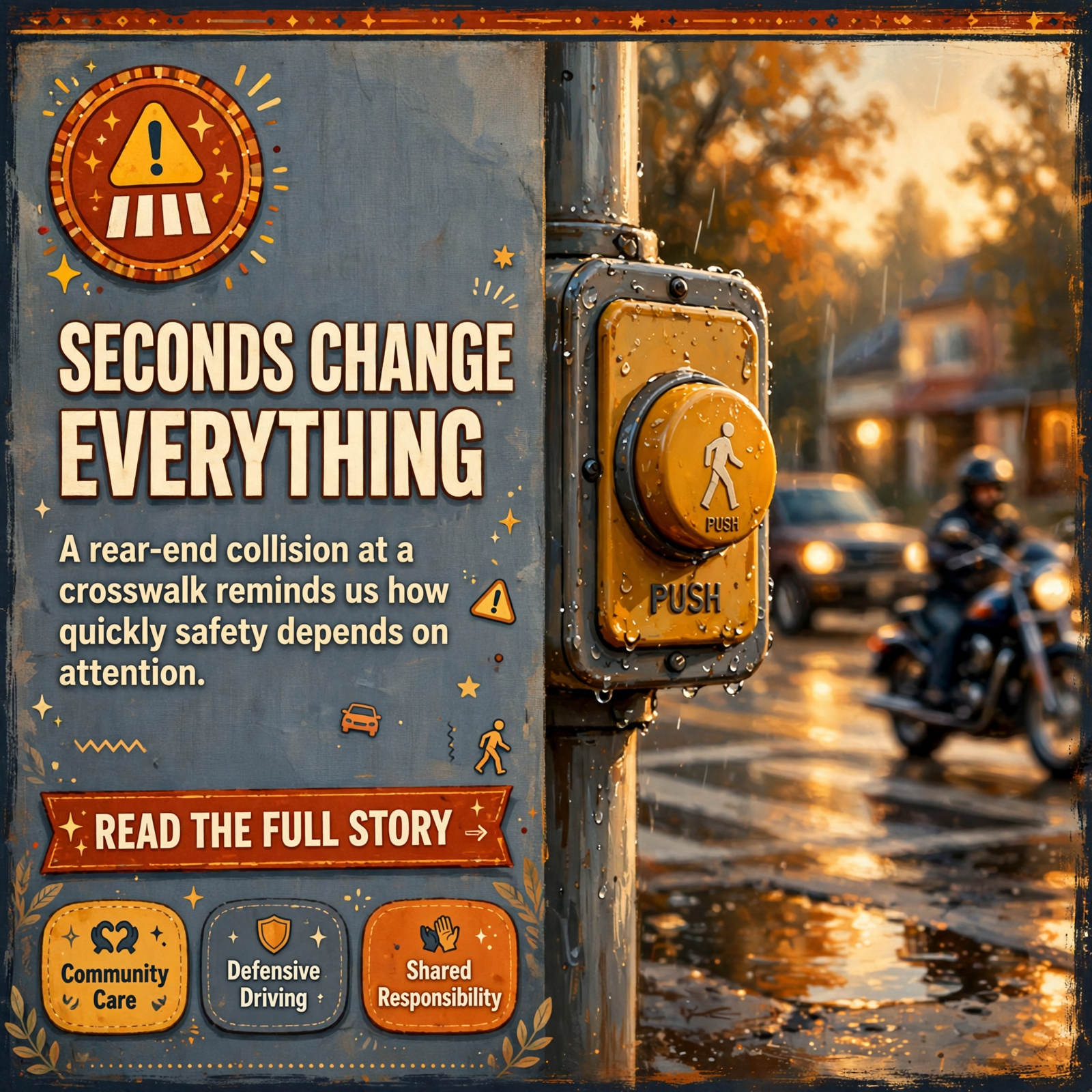
Around 6:07 p.m., Sequatchie Post received a report of a possible pedestrian incident at the crosswalk near the Coops Creek Bridge. Within minutes, the situation was clarified: a motorcycle traveling behind an SUV collided with the vehicle after the SUV came to an abrupt stop at the crosswalk. ✨
According to a firsthand witness account shared with Sequatchie Post, the sequence of events unfolded quickly. A pedestrian had pressed the crossing button, and the crosswalk signal activated. The SUV driver then braked suddenly-and the motorcyclist behind had no time to react or stop, resulting in a rear-end collision. Emergency responders arrived within minutes of the 911 call. Importantly, authorities reported no serious injuries from the collision. 🚨
❤️ Community Response in Action
What stands out in this incident is how bystanders and community members responded. The witness who called 911 was standing near the crosswalk with family members. While making the emergency call, the witness’s mother crossed over to check on the motorcyclist. Other bystanders took initiative to direct traffic until police arrived-a small but meaningful act of community care during a chaotic moment. 🤝
This kind of immediate, coordinated response reflects the interconnected nature of small communities where neighbors look out for one another, even in stressful situations. The willingness of strangers to step in and help-whether calling for help, checking on an injured person, or managing traffic-can make a real difference in how an emergency unfolds.
💡 Why This Matters Locally
Crosswalk safety is a shared responsibility. This collision highlights how quickly traffic situations can escalate when drivers and riders are not fully attentive or when stopping distances are misjudged. For residents who use the Coops Creek crosswalk regularly-whether walking, biking, or driving-this incident serves as a practical reminder of the importance of defensive driving and pedestrian awareness. 🚗
In a valley community where traffic patterns are familiar and speeds can feel routine, incidents like this underscore that every crossing, every intersection, and every moment behind the wheel carries real consequences. The fact that no serious injuries occurred in this case is fortunate-but it also reflects the importance of quick emergency response and community vigilance.
🗓️ What Residents Should Know
If you witnessed the collision or have additional information, Sequatchie Post continues to monitor the situation and may update the community as more details emerge. For residents who use the Coops Creek crosswalk area regularly, this incident is a timely reminder to:
- Allow extra stopping distance when approaching crosswalks, especially during busy times
- Stay alert to pedestrians and other road users, even on familiar routes
- Not hesitate to call 911 if you witness a collision or emergency
- Be prepared to offer assistance to others in crisis, as the bystanders did in this case
🔄 What Happens Next
Sequatchie Post indicated it will continue to update the community as new information becomes available. Local law enforcement will likely complete their investigation into the collision, and any citations or follow-up actions would be part of that process. For the individuals involved, recovery and insurance matters will proceed in the coming days and weeks. 📋
🧵 Community Threads: Bystander Care and Emergency Response
The Bystander-Emergency Response Connection: This incident reveals an important community thread-the relationship between alert, caring bystanders and effective emergency response. When community members are willing to call 911, check on others, and manage immediate safety, they extend the reach of professional responders and often determine outcomes. In smaller communities, this thread is especially visible because neighbors know each other and feel a personal stake in one another’s safety. Understanding this connection helps residents recognize that their own attentiveness and willingness to help can matter significantly in a crisis.
The Crosswalk as Community Intersection: The Coops Creek crosswalk is more than a traffic control point-it’s a place where pedestrians, cyclists, and drivers converge. This collision illustrates how community infrastructure depends on shared responsibility. When drivers, riders, and pedestrians all understand their role in keeping that space safe, the crosswalk functions as intended. When attention lapses, even briefly, consequences can follow. This thread connects individual behavior to collective safety.
❓ Questions for Community Reflection
- How often do you use the Coops Creek crosswalk or similar pedestrian crossings in the area, and what safety practices do you rely on?
- Have you witnessed other close calls or incidents at local crosswalks, and what did you notice about driver or pedestrian behavior?
- What role do you think community members can play in promoting safer driving and pedestrian awareness beyond official traffic enforcement?
- How can local residents support one another in staying alert and safe on familiar routes where complacency can sometimes set in?
🌄 Long-Term Community Impact
While this single incident will likely fade from immediate attention, it contributes to a broader community conversation about traffic safety and mutual responsibility. Over time, when residents reflect on incidents like this one and adjust their own behavior-driving more defensively, staying alert at crosswalks, being willing to help in emergencies-the cumulative effect is a safer community. Additionally, incidents like this can inform local discussions about crosswalk visibility, traffic calming measures, or driver education efforts. The willingness of bystanders to help also strengthens community bonds and reminds residents that they are not isolated individuals but part of an interconnected network where care and attention matter. ✨

0 Comments