
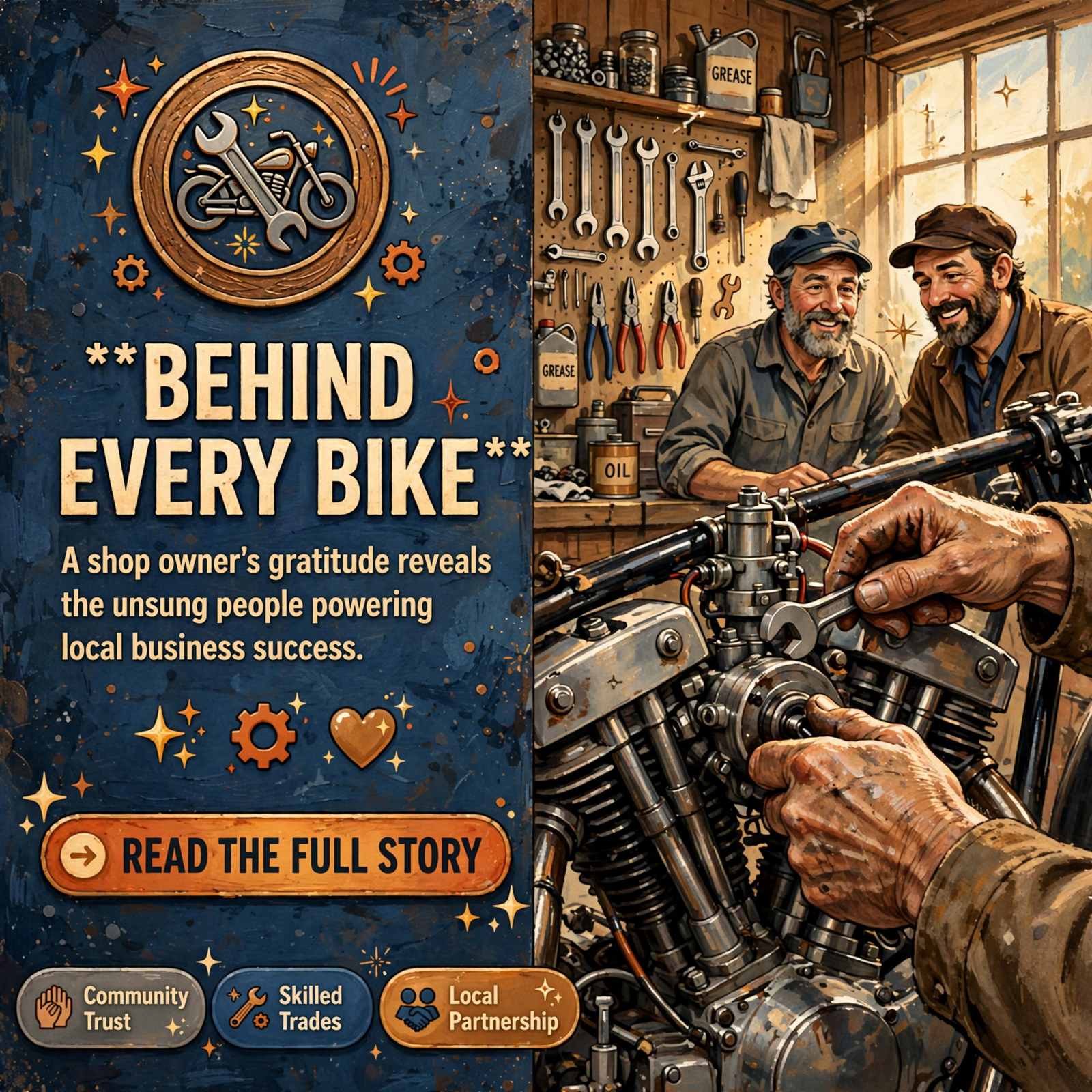
🏍️ John Pauls Cycle Shop Owner Thanks Community for Support Behind the Scenes
A heartfelt message from John Pauls Cycle Shop in Sale Creek reflects the quiet backbone of small-business success in East Tennessee: the people who show up, day after day, to make it work. The owner’s recent post thanking customers, family, friends, and his longtime mechanic Jesse James offers a window into what it takes to keep a full-service motorcycle repair shop running in a region where riders depend on trusted local expertise.
💪 Why This Matters
Small businesses in rural and semi-rural areas like Sale Creek and the surrounding communities survive on relationships, not just transactions. When a shop owner takes time to publicly acknowledge the people who made something possible, it signals something important: this is a business built on loyalty, partnership, and genuine community investment. For riders across Sale Creek, Dunlap, and Dayton who trust John Pauls Cycle Shop with their bikes, that message reinforces why they keep coming back. For the broader local economy, it’s a reminder that behind every functioning business is a network of supporters-employees, customers, and family-who believe in what’s being built.
👥 Community Connections
The mention of Jesse James as “my friend my brother and mechanic” reveals a deeper truth about how small businesses operate in close-knit communities. Mechanics, shop owners, and service providers in East Tennessee often work as extended family units, where professional relationships deepen into genuine friendships over years of shared work. This kind of partnership-where someone is “by my side from the start”-is the glue that holds local service businesses together through slow seasons, equipment failures, and the everyday challenges of keeping a shop running. For customers, knowing that a mechanic has that kind of trust and history with the owner adds another layer of confidence when they bring their motorcycle in for repair or maintenance.
🤝 Human Impact
For Jesse James and others who work in the shop, this public acknowledgment matters. Being recognized not just as an employee but as a brother and partner validates the emotional and professional investment they’ve made. For customers, it reinforces that they’re dealing with people who care about their work and each other-not just a transaction point. For the owner, expressing gratitude publicly is a way of saying: this didn’t happen alone, and I know it.
🛠️ What This Reveals About Local Business Culture
In communities across the Sequatchie Valley and nearby areas, motorcycle repair shops and automotive service businesses are often family operations or tight-knit teams. The willingness to credit others publicly-especially a key mechanic-reflects a business philosophy that values people over ego. That approach tends to create loyal customer bases and stable employment, which in turn strengthens the local economy. When riders know they’re working with a shop where the owner and mechanic genuinely respect each other, they’re more likely to return and recommend the business to others.
🏪 Supporting Local Expertise
For riders in Sale Creek, Dunlap, Dayton, and surrounding areas, having access to a full-service motorcycle repair shop with experienced, trusted mechanics is valuable. Whether it’s routine maintenance, repairs, or custom work, local shops like John Pauls Cycle Shop provide expertise and accountability that riders can count on. The owner’s message suggests a commitment to that standard of service-backed by people who’ve earned trust over time.
💭 Community Questions Worth Considering
- What role do long-term employee relationships play in the quality of service at local repair shops?
- How does public recognition of team members affect customer confidence in a business?
- Why do tight-knit business partnerships matter more in rural and semi-rural communities than in larger markets?
- What does it mean for a community when business owners prioritize acknowledging their people?
🌱 Long-Term Community Impact
Businesses that publicly value their employees and acknowledge the people behind their success tend to have lower turnover, stronger reputations, and deeper roots in their communities. Over time, that stability creates jobs, mentorship opportunities, and a culture where skilled trades are respected and passed down. For a region like East Tennessee, where motorcycle culture and automotive expertise are part of the local identity, shops like John Pauls Cycle Shop that operate with that philosophy help sustain both the industry and the community fabric that supports it.
🔗 Community Threads: The Mechanic-Owner Partnership
One of the strongest invisible connections in small-town business is the mechanic-owner relationship. When a shop owner credits their mechanic as a brother and partner “from the start,” it signals a bond that likely took years to build. That partnership affects everything: the quality of work, the shop’s reputation, customer retention, and the owner’s ability to take time off or handle emergencies. For the community, it means the shop is likely to stay open, stay reliable, and continue serving riders. For Jesse James, it means his work is seen and valued. Understanding this thread helps residents appreciate why certain local shops become institutions-they’re built on relationships that matter.



0 Comments