
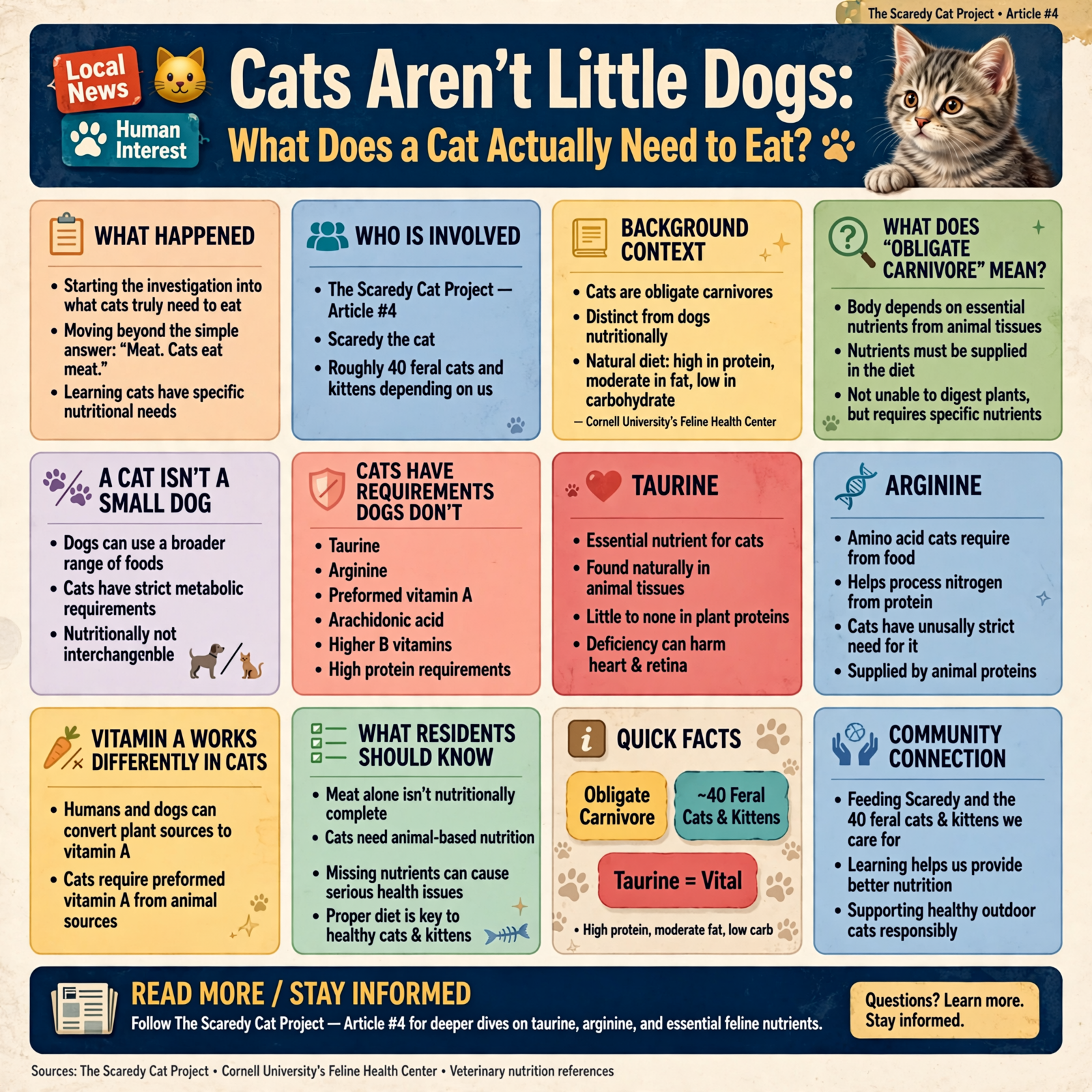
🐱 Cats Aren’t Little Dogs: What Does a Cat Actually Need to Eat?
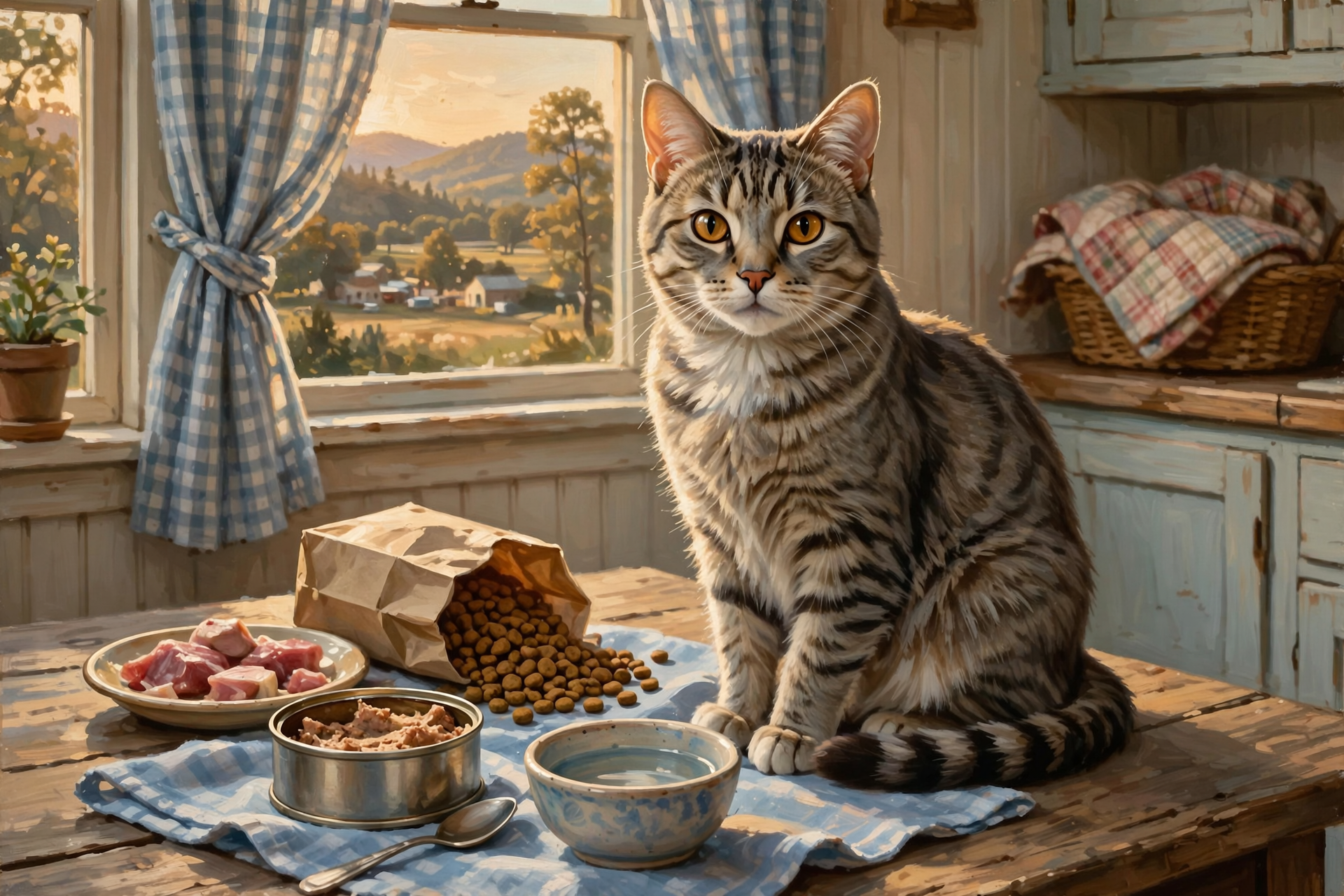
🐾 The Scaredy Cat Project — Article #4
Before we start buying chicken hearts, saving eggs, calling deer processors, or deciding whether Scaredy deserves another can of tuna, we probably ought to answer one fairly important question.
What does a cat actually need to eat?
I thought I knew the basic answer.
Meat.
Cats eat meat.
Problem solved.
Except, like most things I’ve started investigating lately, the simple answer lasted about five minutes.
Cats do need animal-based nutrition.
But that doesn’t mean you can put a pile of hamburger in a bowl and call it nutritionally complete cat food.
In fact, one of the first things I’ve learned while researching how to better feed Scaredy and the roughly 40 feral cats and kittens depending on us is this:
Cats are nutritionally peculiar little creatures.
🐕 First Things First: A Cat Isn’t a Small Dog

A cat and a dog may both live in your house.
They may both sleep on furniture they technically aren’t supposed to be sleeping on.
They may both know exactly when you open the refrigerator.
But nutritionally, they are not interchangeable.
Dogs can generally make use of a broader range of foods.
Cats are what scientists and veterinarians call obligate carnivores.
That phrase gets tossed around a lot, so let’s translate it into normal English.
🥩 What Does “Obligate Carnivore” Actually Mean?
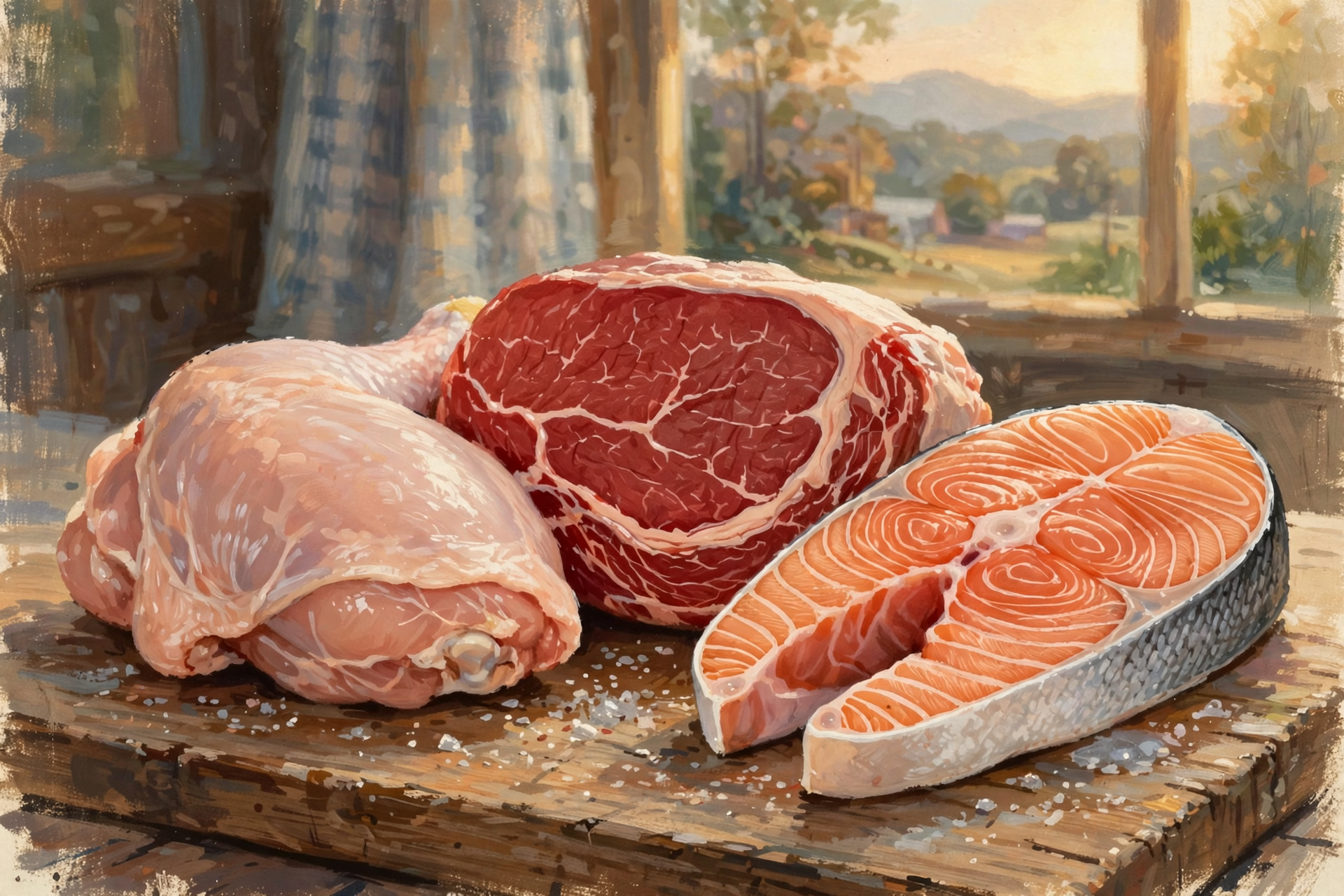
An obligate carnivore is an animal whose body depends on certain essential nutrients that are naturally found in animal tissues or must otherwise be specifically supplied in the diet.
It doesn’t mean a cat will explode if it accidentally eats a pea.
It doesn’t mean cats are physically incapable of digesting every plant ingredient.
It means their bodies have some very specific nutritional requirements that differ from those of people and dogs.
Cornell University’s Feline Health Center describes cats as obligate carnivores whose natural dietary pattern is relatively high in protein, moderate in fat, and comparatively low in carbohydrate.
But protein and fat aren’t the whole story.
Cats also require specific amino acids, fatty acids, vitamins, minerals, and other nutrients.
🧬 Cats Have Some Nutritional Requirements Dogs Don’t
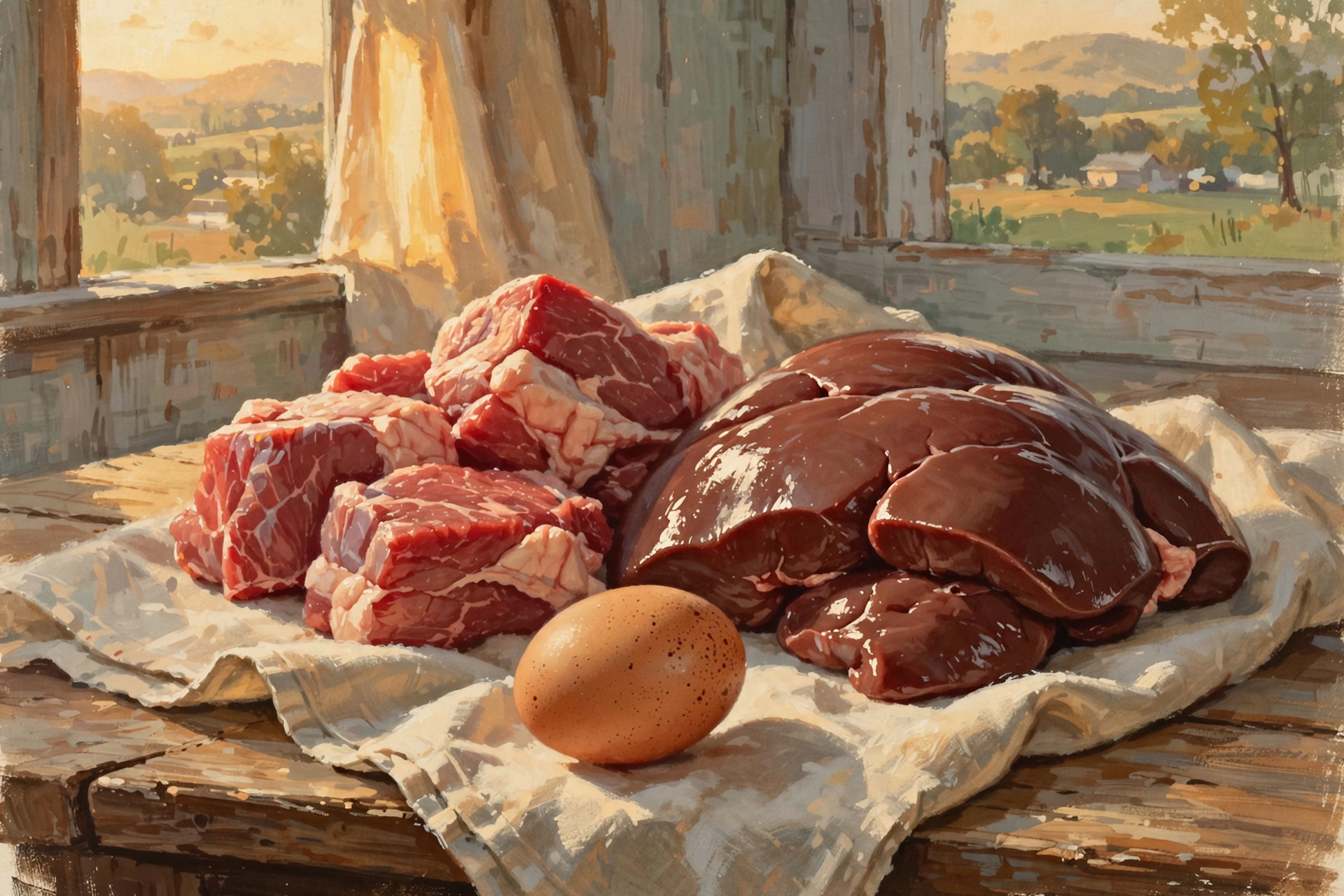
This is where things started getting interesting to me.
According to veterinary nutrition references, cats have several metabolic requirements that distinguish them from dogs.
Among the most important are:
- ❤️ Taurine
- 🧬 Arginine
- 🥩 Preformed vitamin A
- 🧈 Arachidonic acid
- 💊 Higher requirements for certain B vitamins
- 🥩 Relatively high protein requirements
We’ll eventually devote individual stories to some of these.
But here’s the short version.
❤️ Taurine
Taurine is one of the nutrients we’re going to talk about repeatedly throughout The Scaredy Cat Project.
Cats require taurine in their diet.
Animal tissues are natural sources of taurine, while plant proteins generally contain little or none.
A long-term taurine deficiency can cause serious problems in cats, including damage to the heart and retina.
That makes taurine considerably more important than another trendy word somebody printed on a pet-food bag.
🧬 Arginine
Arginine is another amino acid cats require from food.
It’s involved in helping the body safely process nitrogen produced when protein is metabolized.
Cats have unusually strict dietary requirements for it.
Fortunately, animal proteins normally provide arginine.
🥕 Vitamin A Works Differently in Cats
Humans and dogs can convert certain plant compounds such as beta-carotene into usable vitamin A much more effectively than cats can.
Cats require preformed vitamin A, which is naturally found in animal tissues such as liver.
Before anyone reads that sentence and decides Scaredy needs a mixing bowl full of liver every night, there’s another important lesson coming:
More isn’t always better.
Too much vitamin A can also cause problems.
🧈 Arachidonic Acid
Cats also require the fatty acid called arachidonic acid in their diet.
Dogs can manufacture more of it from other fatty acids.
Cats generally can’t make enough themselves.
Arachidonic acid is found naturally in animal fats, including meat, poultry, and eggs.
🥩 Cats Need More Protein Than Dogs
Cats don’t just prefer protein.
Their metabolism is adapted to using substantial amounts of it.
Current AAFCO-based nutritional guidance lists a minimum of approximately 26% protein on a dry-matter basis for adult maintenance and 30% for growing kittens and reproduction.
Those numbers are minimum nutritional standards, not a recommendation that every cat food should contain exactly those percentages.
But they illustrate an important point.
Kittens especially aren’t simply miniature adult cats.
🐾 Why Our Kittens Complicate Everything
We’re not feeding one healthy adult house cat.
Our group includes kittens.
Possibly pregnant females.
Nursing mothers.
Adult males.
Older cats.
And cats whose exact ages we don’t necessarily know.
A growing kitten needs more food relative to its body weight than an adult cat and needs nutrients specifically balanced for growth.
Cornell notes that kittens generally require more food per pound of body weight and should be fed more frequently during early growth.
That makes the words printed on a bag of cat food more important than I used to realize.
🏷️ Look for the Words “Complete and Balanced”
Here’s one of the simplest lessons I’ve learned so far.
If we’re buying commercial cat food as the nutritional foundation for our colony, I want to know whether it is labeled as complete and balanced for the appropriate life stage.
That phrase actually means something.
A complete diet is intended to contain the nutrients the cat requires.
A balanced diet is intended to provide them in appropriate proportions.
AAFCO’s feline nutrient profiles contain 44 nutritional parameters.
Forty-four.
I don’t know about you, but I was not mentally checking 44 nutritional parameters when I previously bought a bag of cat food.
I was more likely comparing:
- 💵 Price
- 📦 Bag size
- 🐱 Whether the cats would eat it
Now I know we need another question:
Is this actually formulated as a complete diet for the animals we’re feeding?
🔎 Where Is That Information on the Bag?
Pet-food packaging usually includes a nutritional adequacy statement.
That’s worth finding.
You may see language indicating that the food is formulated to meet nutritional levels established for:
- 🐈 Adult maintenance
- 🐾 Growth
- 🤰 Gestation and lactation
- 🐱 All life stages
For our situation, the phrase “all life stages” immediately caught my attention because we’re dealing with a mixed population.
That doesn’t automatically mean every all-life-stages food is the best choice for every individual cat.
But it gives us something useful to investigate as we try to simplify feeding a colony containing both adults and growing kittens.
🍔 Why Can’t We Just Feed Them Hamburger?
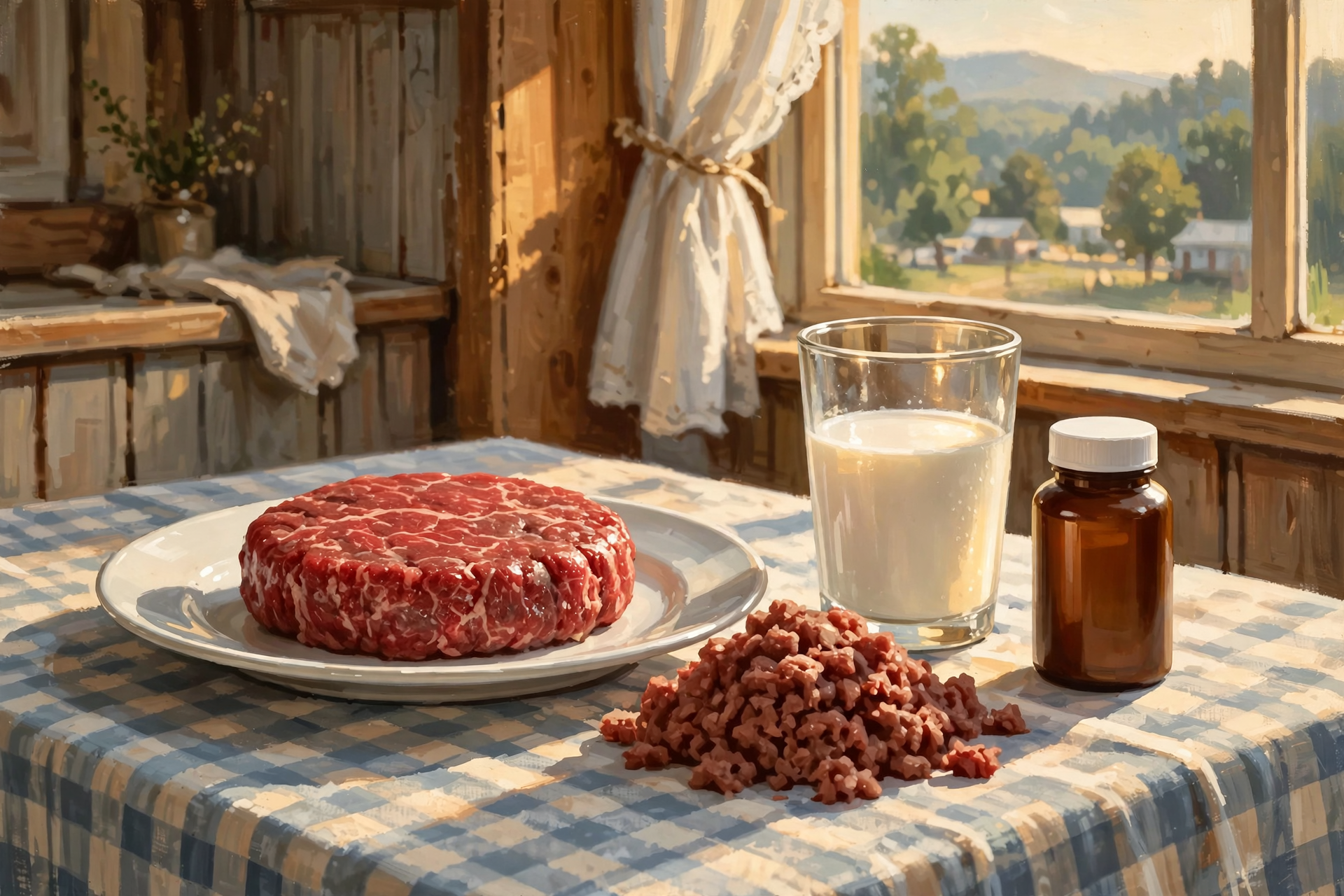
This was one of my original questions.
If cats need animal-based nutrition and hamburger is meat, why isn’t hamburger cat food?
Because muscle meat is only one piece of the nutritional puzzle.
A diet dominated by plain muscle meat can have serious mineral imbalances.
One particularly important example is calcium.
Muscle meat provides plenty of phosphorus but relatively little calcium.
Over time, an improperly balanced calcium-to-phosphorus ratio can create significant health problems.
The same principle applies to chicken breasts, steaks, venison, and many other foods that look like excellent sources of animal protein.
They may be wonderful ingredients.
That doesn’t automatically make them a complete diet.
🐁 The Mouse Explains This Better Than I Can
If we want to understand feline nutrition, consider the difference between eating a whole prey animal and eating one isolated cut of meat.
A mouse is not simply mouse-flavored muscle meat.
It contains many different tissues.
That can include:
- 🥩 Muscle tissue
- 🫀 Organs
- 🦴 Bone and minerals
- 🩸 Blood
- 🧈 Fat
- 💧 Water
- 🧬 Micronutrients
- 🐭 Other tissues people normally don’t think about as “food”
That’s a much more complete biological package than a chicken breast sitting on a Styrofoam tray at the grocery store.
That’s also why locally sourced ingredients can be useful without necessarily being nutritionally sufficient by themselves.
🫀 If Liver Is Nutritious, Why Not Feed Lots of Liver?
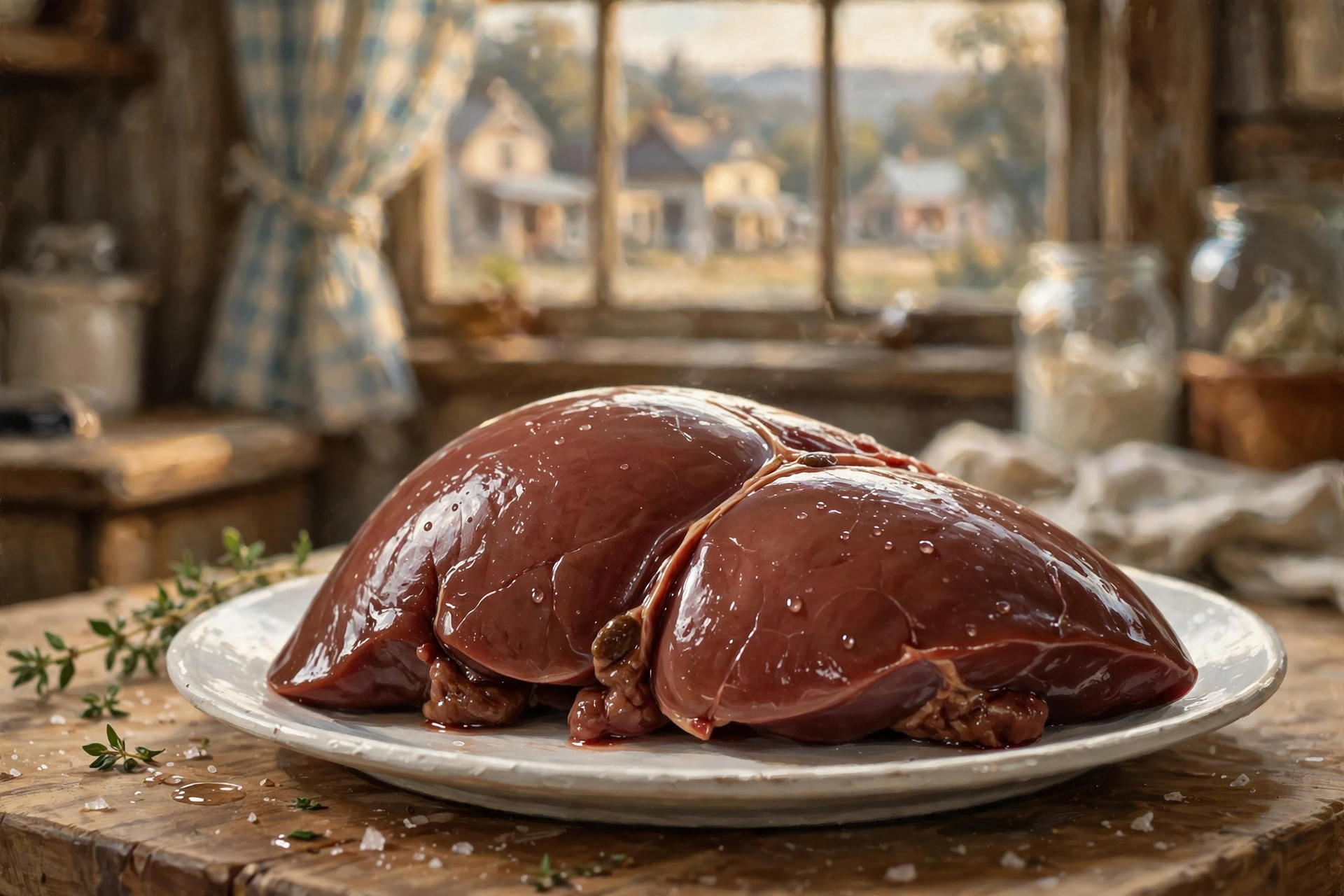
This is where nutrition frequently becomes counterintuitive.
Liver is incredibly nutrient-dense.
It contains vitamin A, copper, iron, B vitamins, protein, and other nutrients.
So liver must be wonderful.
It is.
In appropriate quantities.
But an excessive amount of liver can provide too much vitamin A.
Veterinary nutrition references specifically warn that diets containing excessive liver can lead to vitamin A toxicity.
That’s another lesson worth remembering throughout this series:
A healthy ingredient isn’t automatically healthy in unlimited quantities.
🐟 The Same Problem Shows Up With Fish
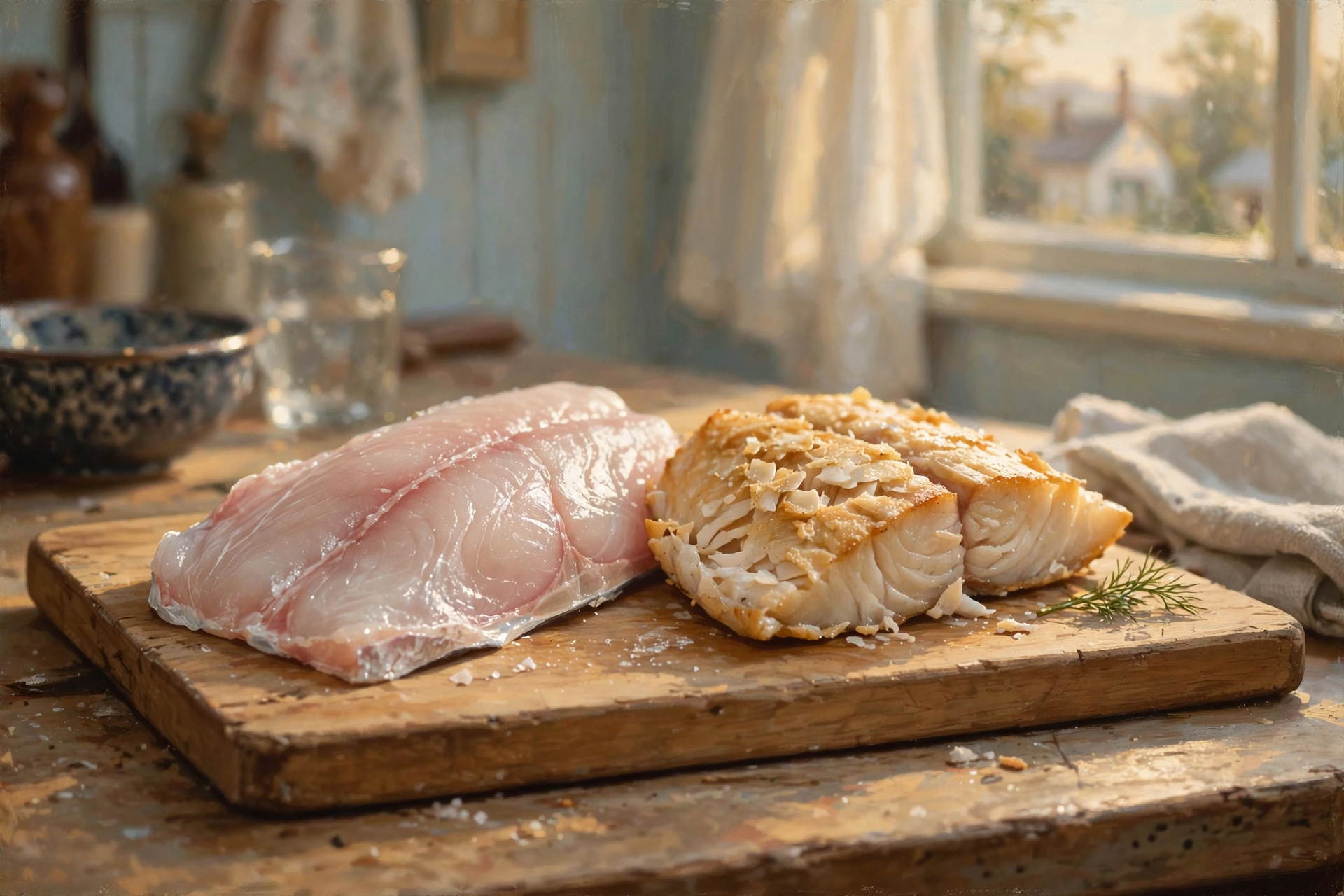
Scaredy would like to register an objection to this section.
Fish can provide excellent protein and useful fats.
But again, the word is ingredient.
Not necessarily complete diet.
Certain raw fish also contain enzymes called thiaminases that can destroy thiamine, an essential B vitamin.
Cooking can deactivate some of those enzymes.
And different fish species have very different nutritional profiles.
So our eventual fish article is going to require more investigation than:
“Cats like fish.”
Scaredy may consider that sentence sufficient scientific evidence.
I do not.
🥚 What About Eggs?

Eggs are another fascinating local ingredient.
They provide high-quality protein, fat, vitamins, and minerals.
And here in rural Tennessee, eggs may be one of the easiest locally produced foods to find.
But again:
An egg is food.
An egg is not a complete feline diet.
Raw egg whites also contain avidin, which can interfere with biotin availability when consumed in problematic amounts. Cooking largely neutralizes that issue.
We’ll eventually examine eggs separately because I suspect they may have a useful role in what we’re trying to accomplish.
🥕 Does “Obligate Carnivore” Mean Cats Can’t Eat Plants?
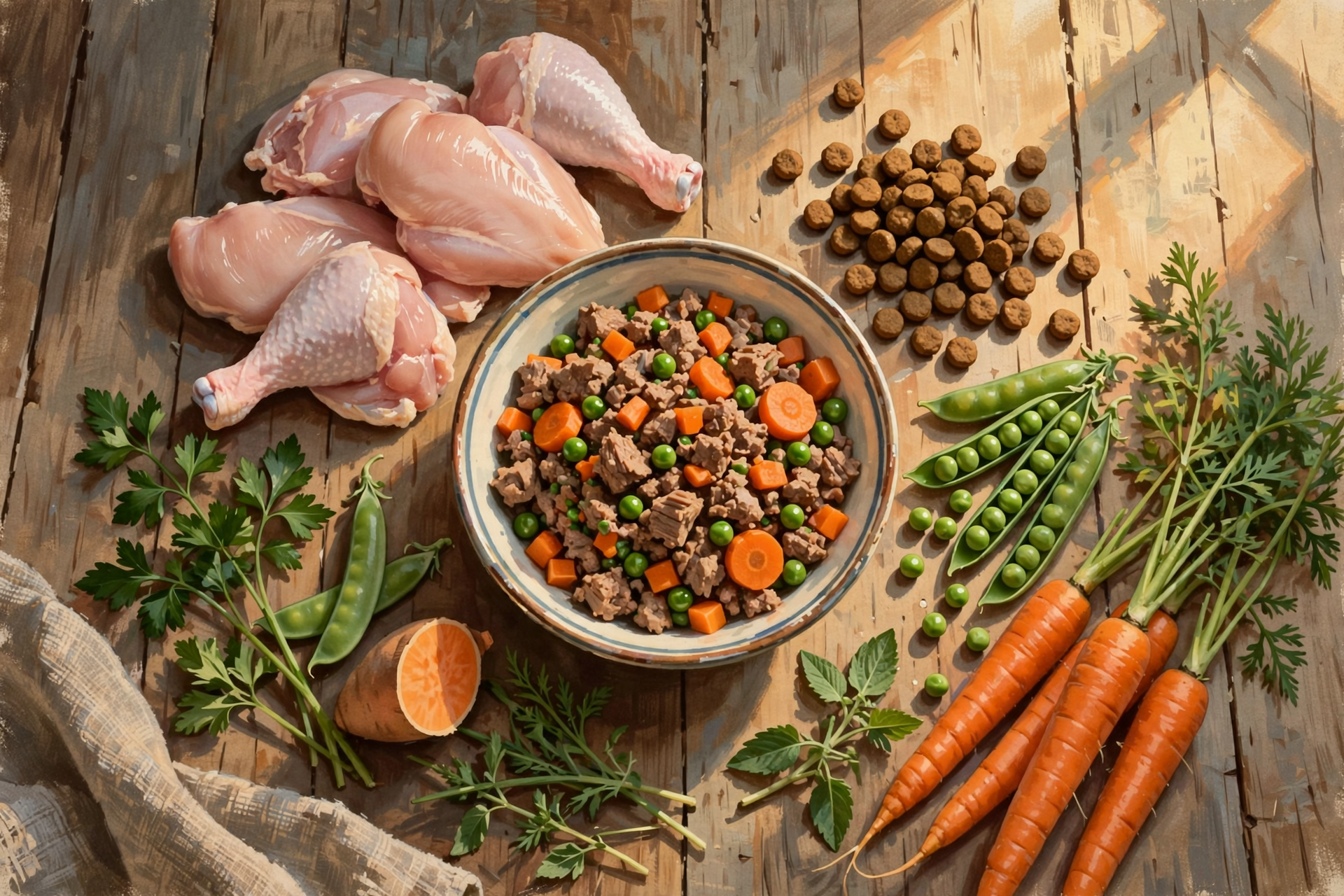
This is where internet arguments tend to become louder than necessary.
Cats can digest certain nutrients from plant sources.
Properly processed carbohydrates aren’t automatically poison to a cat.
The important distinction is nutritional requirement.
Cats have biological requirements for certain nutrients that are naturally abundant in animal tissues or must otherwise be specifically supplied in a usable form.
So I think a more useful question than:
“Does this food contain corn?”
is:
“Does this entire diet provide the nutrients this cat requires in the right amounts?”
That’s the standard we’re going to use throughout this project.
🐕 Why Can’t We Feed Cheap Dog Food to the Cats?
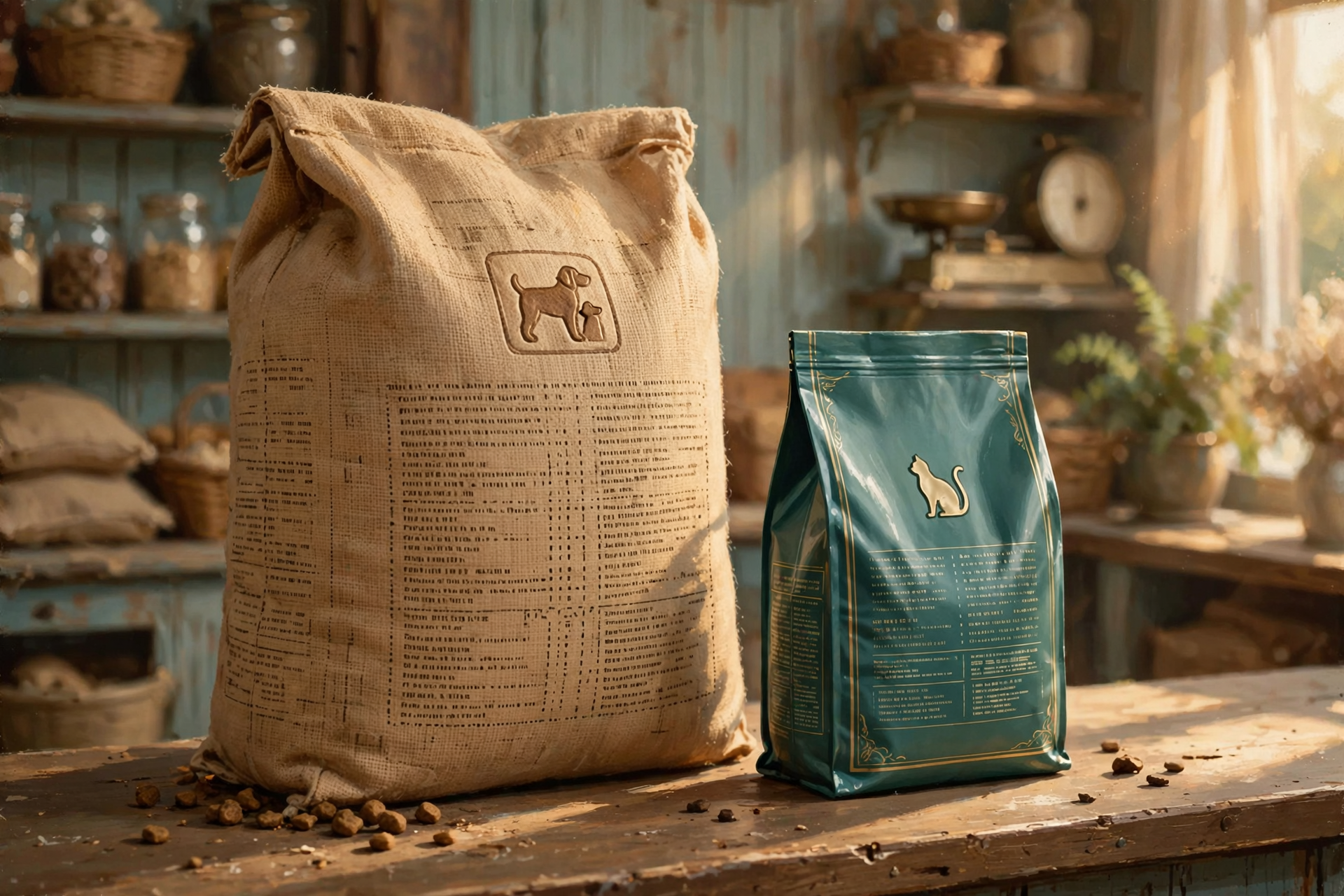
This is a particularly important question when you’re feeding dozens of animals and see dog food selling for considerably less.
Dog food generally isn’t formulated to meet a cat’s nutritional requirements.
It may contain less protein.
It may not provide assured levels of taurine appropriate for cats.
It may not provide enough preformed vitamin A.
It may not supply arachidonic acid in the necessary amounts.
Other vitamins and minerals may also be present in proportions designed for dogs rather than cats.
So while a cat stealing a bite of dog food is one thing, building a cat-feeding program around dog food would be another.
Cheap calories aren’t necessarily inexpensive nutrition.
🥫 Wet Food or Dry Food?
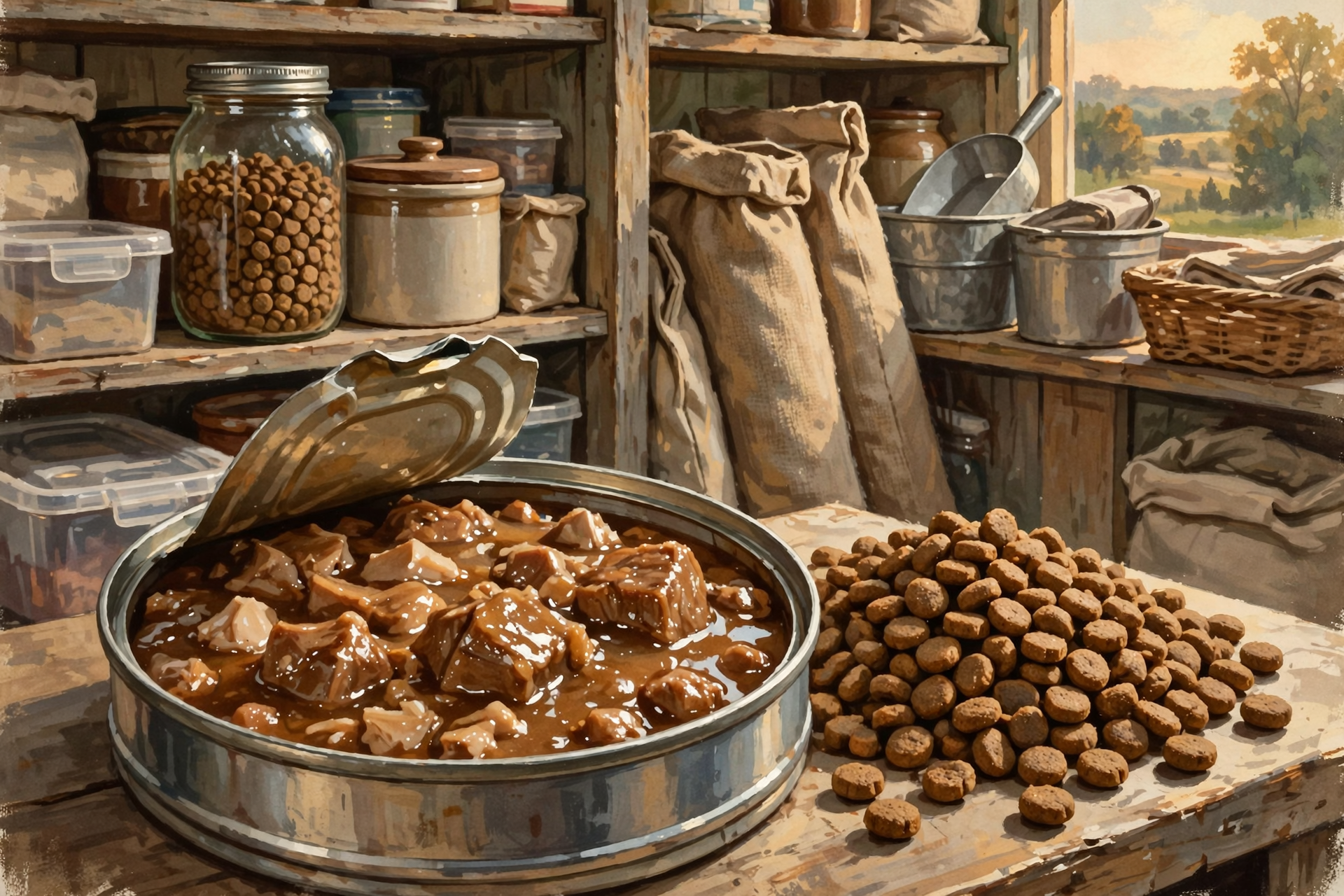
I suspect we’ll eventually devote an entire article to this argument too.
For now, the important point is that both canned and dry foods can be formulated to provide complete nutrition.
The major practical difference is water.
Canned foods generally contain substantially more moisture.
Dry food is much more concentrated and usually considerably easier to store and distribute when you’re feeding a large colony.
For forty cats, economics and logistics matter.
We don’t have to turn this into a religious argument about kibble versus canned food.
We can measure:
- 💵 Cost
- 🔥 Calories
- 💧 Moisture
- 🐱 Acceptance
- 📦 Storage
- 🗑️ Waste
- 🥩 Nutritional adequacy
Then we can decide what works for our situation.
💧 Water May Be the Cheapest Nutrient We Can Improve
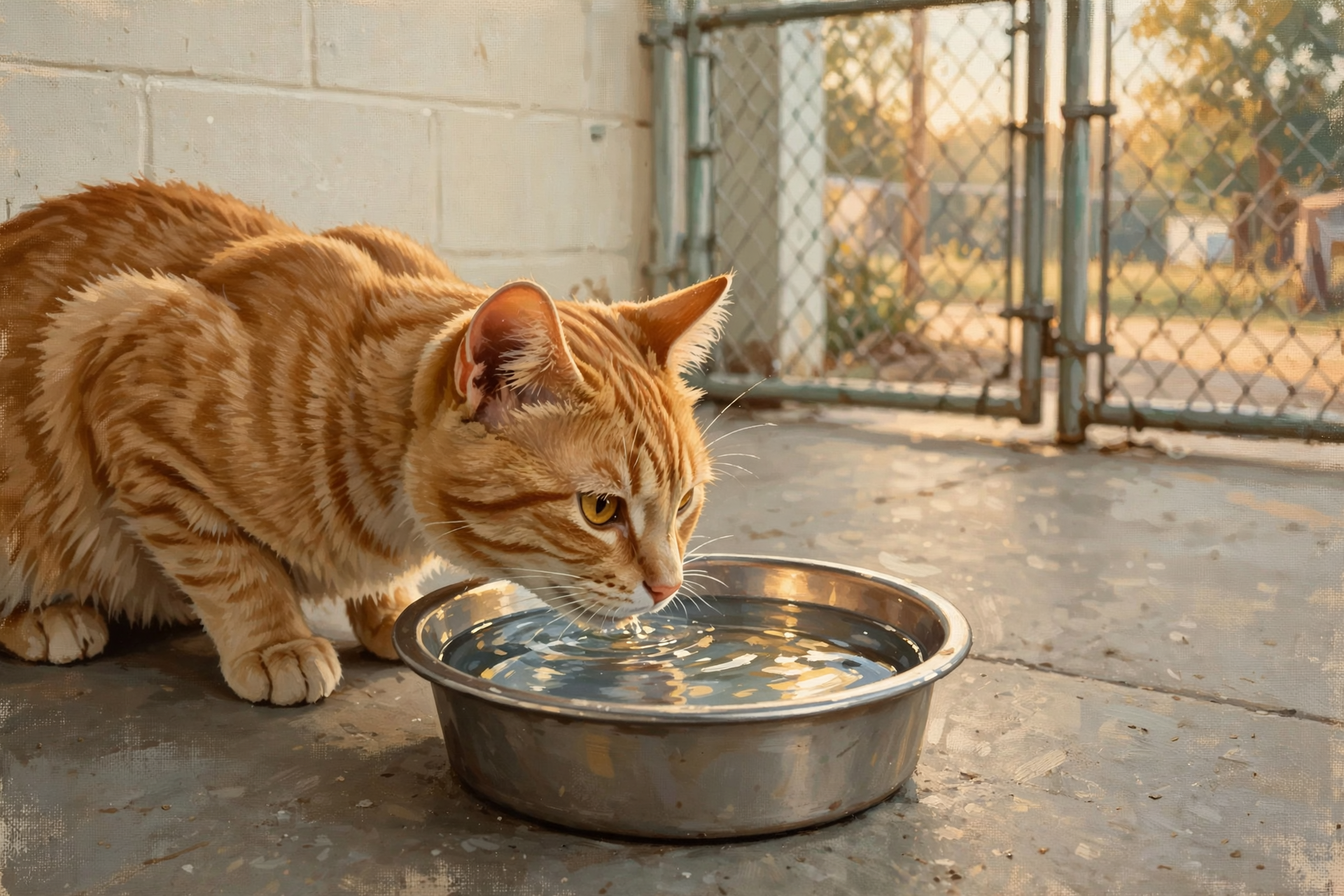
One thing every cat needs is clean water.
That seems obvious.
But cats often obtain a meaningful amount of moisture from animal-based foods.
A dry-food-fed colony therefore needs dependable access to fresh water.
For our project, improving water availability may turn out to be one of the least expensive nutritional improvements we can make.
We’re going to pay more attention to that too.
🧪 Why Homemade Cat Food Is Harder Than It Looks

I enjoy solving problems.
And when I first started thinking about 40 cats and the cost of commercial food, my instinct was predictable.
Surely we can make this ourselves cheaper.
Maybe.
But “cheaper” isn’t useful if we accidentally leave something essential out.
AAFCO points out that its feline nutrient profiles contain 44 nutritional parameters, with minimums, some maximums, and different requirements depending upon life stage.
That means homemade cat food isn’t simply:
Meat + something healthy + vitamin powder = cat food.
The amounts and ratios matter.
That’s why our starting strategy isn’t going to be:
Stop buying cat food and invent our own recipe.
It’s going to be:
Use complete nutrition as the foundation and investigate where locally sourced foods can intelligently help.
💰 This Doesn’t Kill the Affordable-Food Idea
Actually, I think it makes the idea considerably more interesting.
We don’t need to prove that we can replace commercial cat food.
We need to ask better questions.
🥩 Can Local Protein Supplement a Complete Diet?
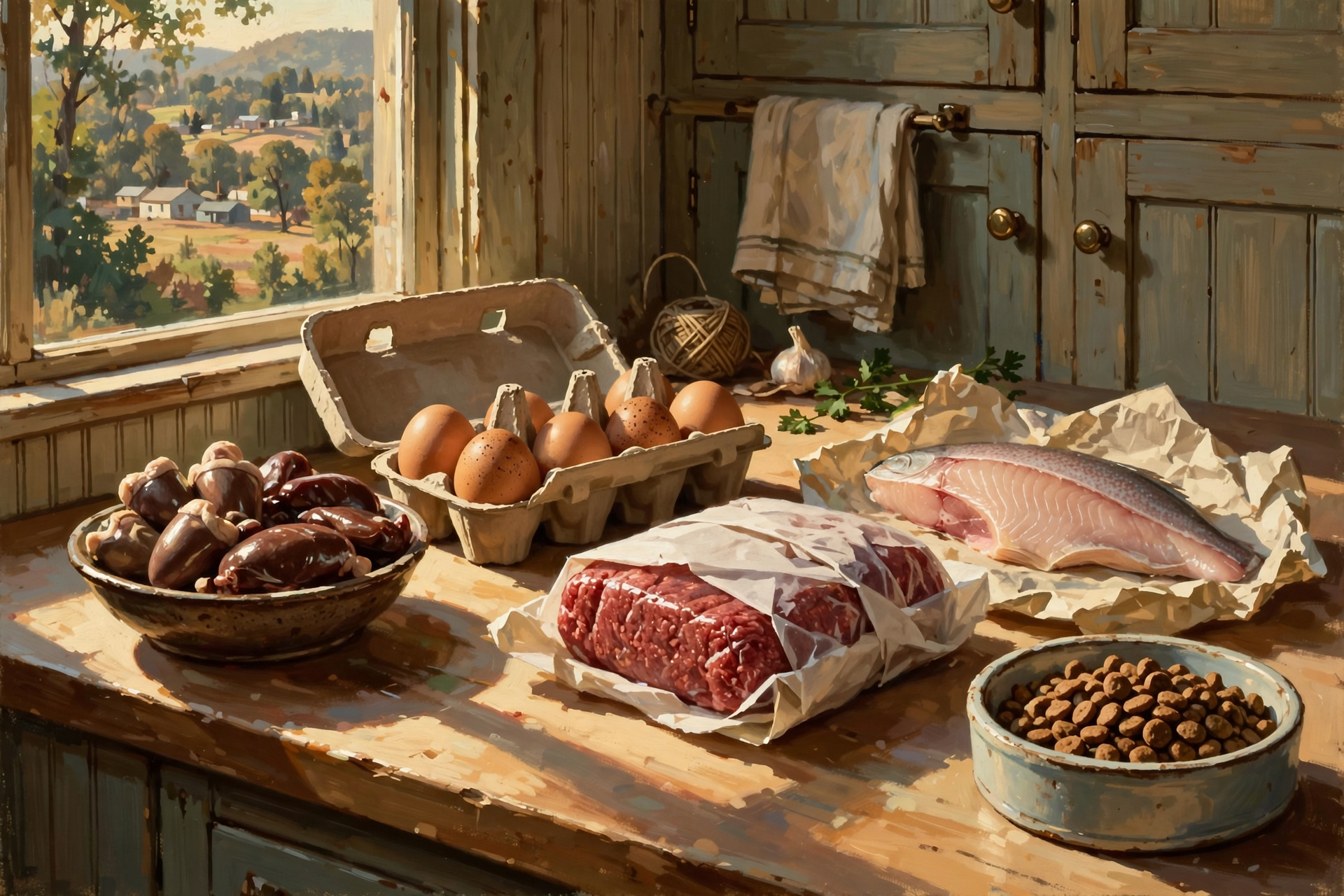
Chicken hearts, gizzards, eggs, venison, beef, rabbit, and fish may have useful roles.
💧 Can We Improve Hydration?
Could appropriate wet foods or locally sourced animal foods help increase moisture consumption?
😸 Can We Improve Palatability?
Could inexpensive meat toppers encourage cats to eat nutritionally complete food they might otherwise ignore?
💵 Can We Reduce Effective Cost?
If some useful supplemental ingredients are inexpensive or donated, could we reduce the total cost of feeding without compromising nutrition?
♻️ Can We Prevent Appropriate Food From Going to Waste?
Are there safe foods currently discarded by households, farms, hunters, grocers, or processors that could have a legitimate role?
Those are the questions worth testing.
🐾 Our Four Rules Going Forward
After looking at the nutritional basics, I think The Scaredy Cat Project needs some ground rules.
1️⃣ Food Is Not Automatically a Complete Diet
Chicken is food.
Eggs are food.
Venison is food.
Tuna is food.
None of those statements means that any one of them provides everything a cat needs.
2️⃣ Complete Nutrition Comes First
Until we have a properly balanced alternative, commercially prepared complete-and-balanced cat food will remain our nutritional foundation.
3️⃣ Local Ingredients Have to Earn Their Place
We’ll evaluate them for:
- 🥩 Nutritional value
- 💵 Cost
- 😸 Whether cats actually eat them
- 🧊 Storage
- 🍳 Preparation requirements
- ⚠️ Potential problems
- 🏡 Local availability
4️⃣ We’re Going to Measure Instead of Guess
If we can obtain an ingredient locally, we’ll try to understand what it contributes and what it costs.
And when practical, our approximately 40 cats can tell us whether they’re interested.
🐱 Scaredy Will Be Handling Quality Control
Scaredy has volunteered for this position.
Actually, she appointed herself.
She has extensive experience evaluating:
- 🥫 Tuna
- 🥣 Dry food
- 🍗 Things on my plate that weren’t offered to her
- 🚪 The speed at which doors are opened
- 🙋 The overall quality of human service
Her scientific methodology remains questionable.
Her enthusiasm is not.
🔜 Next: Why Cats May Want the Parts of the Chicken We Don’t
Now that we understand the basic nutritional puzzle, we can finally start examining ingredients.
And chicken seems like the obvious place to begin.
Not necessarily chicken breast.
The interesting parts may be the ones people value less.
Hearts.
Gizzards.
Liver.
Thighs.
Skin.
Necks.
Perhaps even portions that normally don’t make it onto our dinner tables at all.
What do they provide?
What are they missing?
Which ones are affordable?
Which ones can we obtain locally?
And which ones do cats actually want?
That’s where we’re headed next.
❤️ Feed Them. Fix Them. Find Them Homes When We Can. Help the Rest Age Gracefully.
Learning what cats need nutritionally isn’t academic for us.
There are roughly forty little reasons wandering around our property.
Some may eventually become house cats like Scaredy.
Some may live their entire lives outdoors.
Some are still growing.
Some will eventually grow old.
Our job isn’t to provide them with the fanciest food on earth.
And it isn’t to provide the cheapest calories we can find.
It’s to find the best practical balance we can between:
nutrition, cost, availability, and compassion.
That’s what The Scaredy Cat Project is going to keep trying to figure out.
📣 What Do You Feed Your Cats?

If you care for indoor cats, barn cats, strays, or community cats around Dunlap and Sequatchie County, we’d like to hear from you.
What food works for you?
Have you tried supplemental meats or eggs?
Do you buy in bulk?
Have you found an economical source of nutritionally complete cat food?
Do you have a farm or business that produces animal foods that might be useful?
We’re not assuming we already know the answers.
We’re building the answers one ingredient—and one cat—at a time.
🐾 The Scaredy Cat Project
Feed them. Fix them. Find them homes when we can. Help the rest age gracefully.
🔎 Sources & Further Reading

- Cornell University College of Veterinary Medicine — Feline Health Center, “Feeding Your Cat”
- Association of American Feed Control Officials — Understanding Pet Food
- Merck Veterinary Manual — Nutritional Requirements of Small Animals
- Merck Veterinary Manual — Dog and Cat Foods



0 Comments