
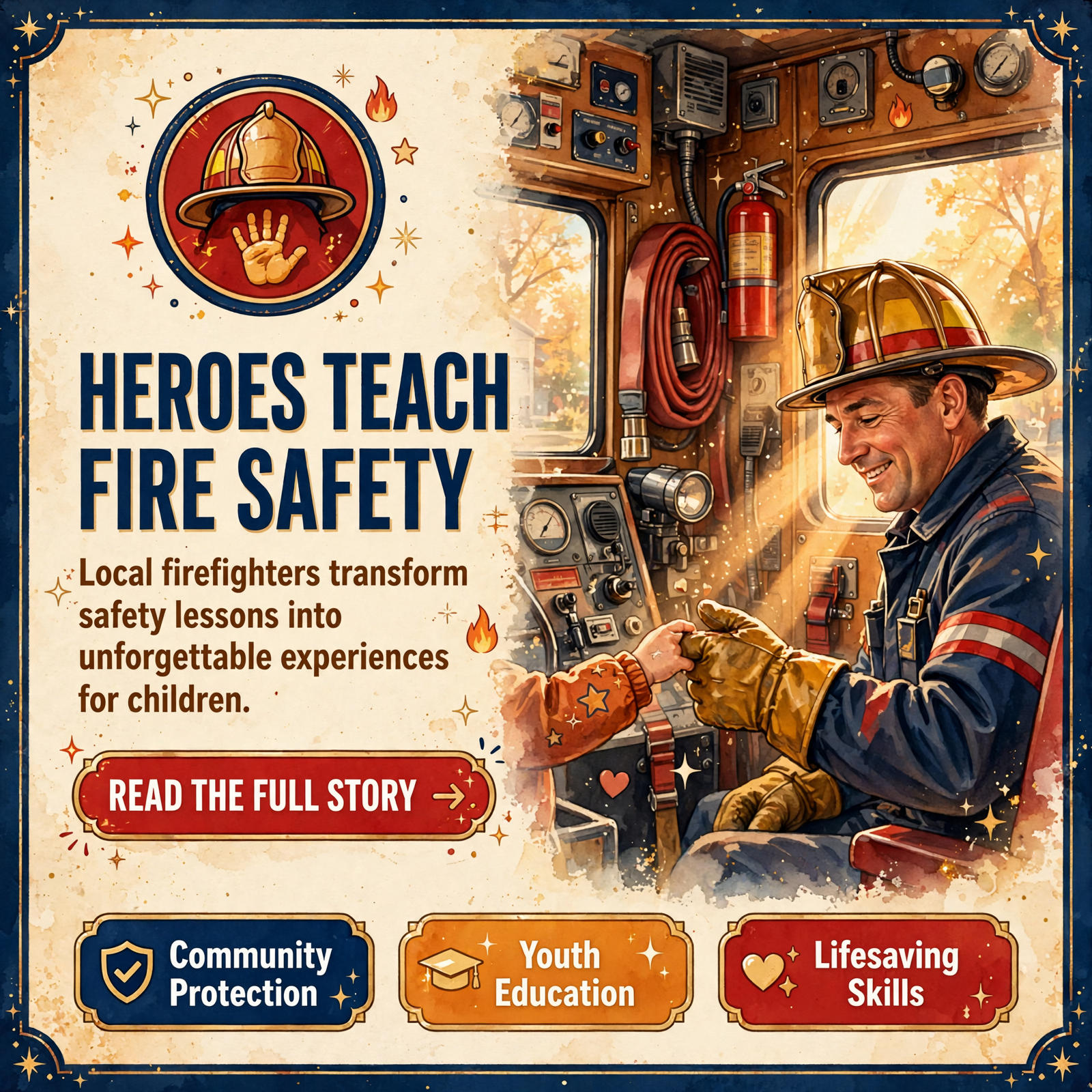
🚒 Local Firefighters Visit to Teach Kids About Fire Safety and Emergency Response
Community firefighters recently spent time with children in the area, sharing hands-on lessons about fire safety, protective gear, and the equipment that keeps neighborhoods safe. The visit reflects a long-standing tradition in rural and small-town Tennessee of fire departments building direct relationships with young people and families.
📚 Why This Matters
Fire safety education for children can be lifesaving. When kids learn early how to recognize fire hazards, respond to alarms, and understand what firefighters do, they develop habits and awareness that protect themselves and their families. These visits also build trust between emergency responders and the community-children who meet firefighters in person are more likely to listen to safety instructions and feel confident calling for help in an emergency.
❤️ Community Connections
Firefighting in rural areas depends on volunteer service and deep community ties. When local fire departments take time to visit schools, daycares, and community groups, they strengthen those bonds. Firefighters are neighbors-people who live and work in the same communities they serve. These educational visits reinforce that connection and remind families that emergency responders are part of the local fabric.
👨👩👧👦 Human Impact
For children, seeing a fire truck up close and meeting firefighters in person transforms abstract safety lessons into memorable experiences. Kids who explore the truck, see the gear, and hear directly from responders often become more engaged with fire safety at home-checking smoke detectors, planning escape routes, and understanding why they should never hide from firefighters. Parents and caregivers also benefit from these visits, as they often learn updated safety practices and resources they can share with their families.
🌄 Local Perspective
In Sequatchie Valley and surrounding communities, volunteer fire departments are essential services that depend on strong community relationships. These educational visits are part of how local departments maintain public trust and ensure that the next generation understands fire safety. The willingness of firefighters to spend time with children-often outside their regular duties-reflects the commitment to prevention and community care that defines rural emergency services.
💡 What Residents Should Know
If you’re a parent, teacher, or community leader interested in arranging a similar visit, many local fire departments welcome requests for fire safety education programs. These visits typically cover topics like escape planning, stop-drop-and-roll techniques, and what to do if you encounter a fire. Departments can often customize presentations for different age groups and settings. Reaching out to your local fire department is a simple way to bring this valuable education to your school or organization.
🔄 What Happens Next
Fire safety education is an ongoing effort. As children grow and move through different schools and stages of life, repeated exposure to fire safety messages reinforces good habits. Families can continue these lessons at home by practicing escape plans, maintaining working smoke detectors, and talking regularly about fire safety. Community members who see value in these programs can also support their local fire departments through volunteer opportunities, donations, or advocacy for emergency services funding.
🤝 Community Threads
The Volunteer-Community Partnership: Local fire departments rely on volunteers who are also neighbors, parents, and business owners. When firefighters visit children, they’re not just teaching safety-they’re investing in the community’s future and modeling the civic commitment that keeps rural areas resilient. This thread connects emergency services, families, schools, and the shared responsibility for keeping everyone safe.
Prevention as Community Care: Fire safety education is preventive medicine for communities. By teaching children early, departments reduce the likelihood of fire-related injuries and deaths. This reflects a broader local value: that taking care of each other starts with knowledge, preparation, and trust. When firefighters spend time with kids, they’re saying, “Your safety matters, and we’re here to help you protect yourself.”
❓ Questions for Reflection
- Does your family have a fire escape plan, and have you practiced it with your children?
- When was the last time you checked the batteries in your smoke detectors?
- How can community members support local fire departments beyond emergency calls?
- What other fire safety lessons would be valuable for children and families in your area?



0 Comments