
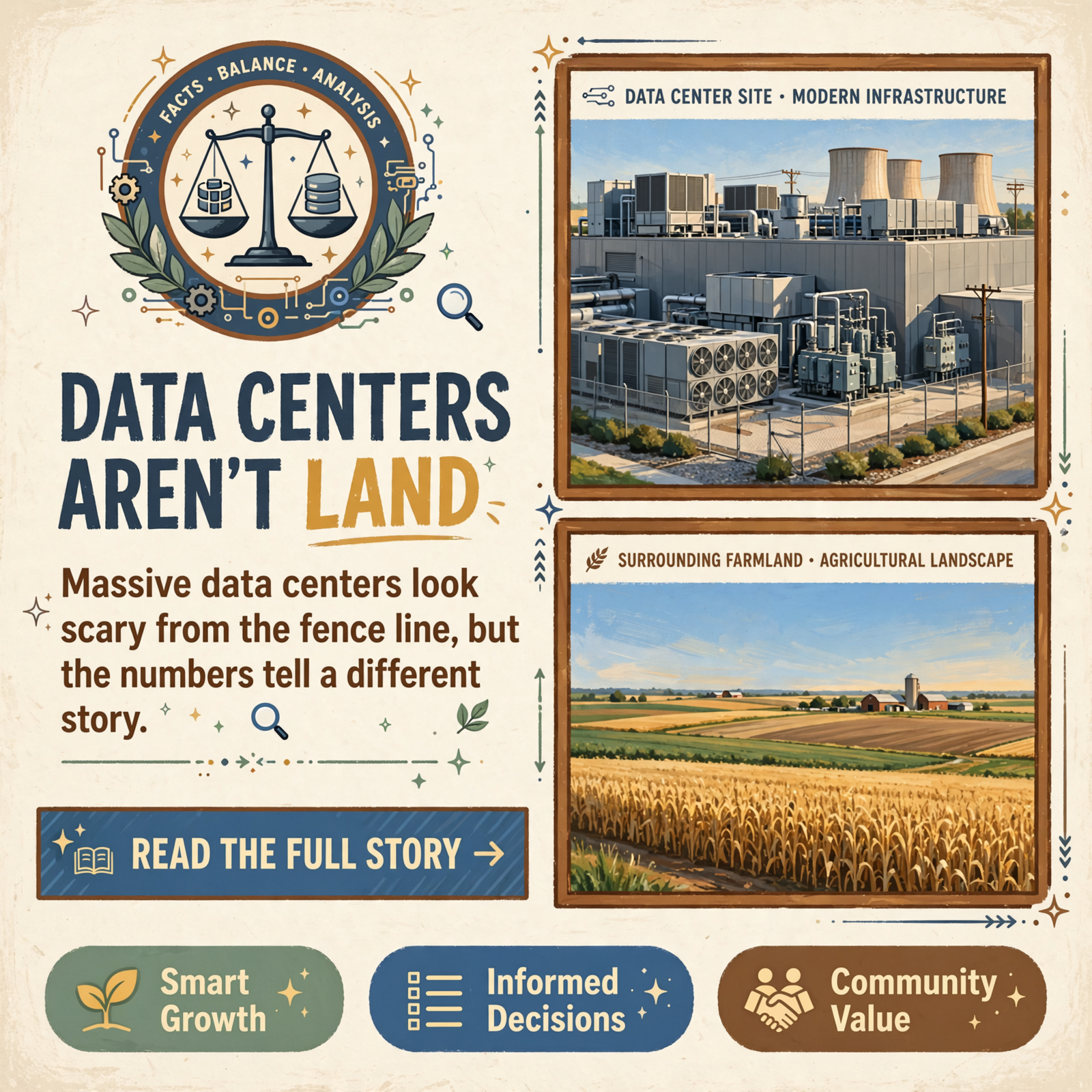
The Data Center Ate the Farm? Not Quite. Let’s Look at the Acres.
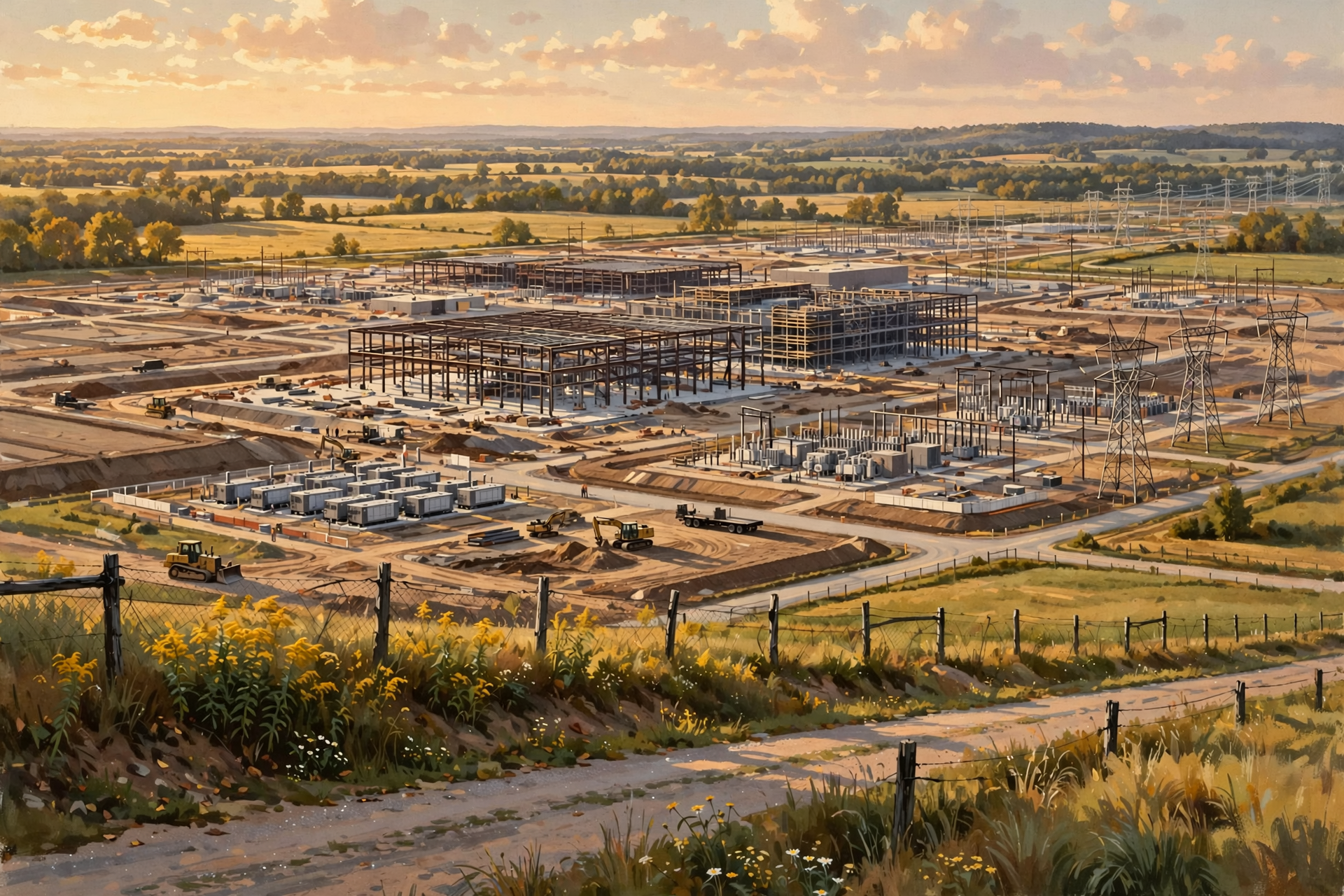
🏭🌾 Drive past a large data center under construction and I understand the reaction.
Good grief. Look at the size of that thing.
Hundreds of acres.
Massive buildings.
Electrical substations.
Transmission lines.
Backup generators.
Roads where perhaps there used to be corn, cows, trees, or nothing much at all.
From the fence line, a modern data center can look like it is swallowing the countryside.
But there is a problem with judging national land use from the fence line.
America is really, really big.
And once we start putting the acreage into perspective, the argument that data centers are going to consume America’s farmland starts looking considerably weaker.
🌎 First, Let’s Look at How Much Land America Actually Has
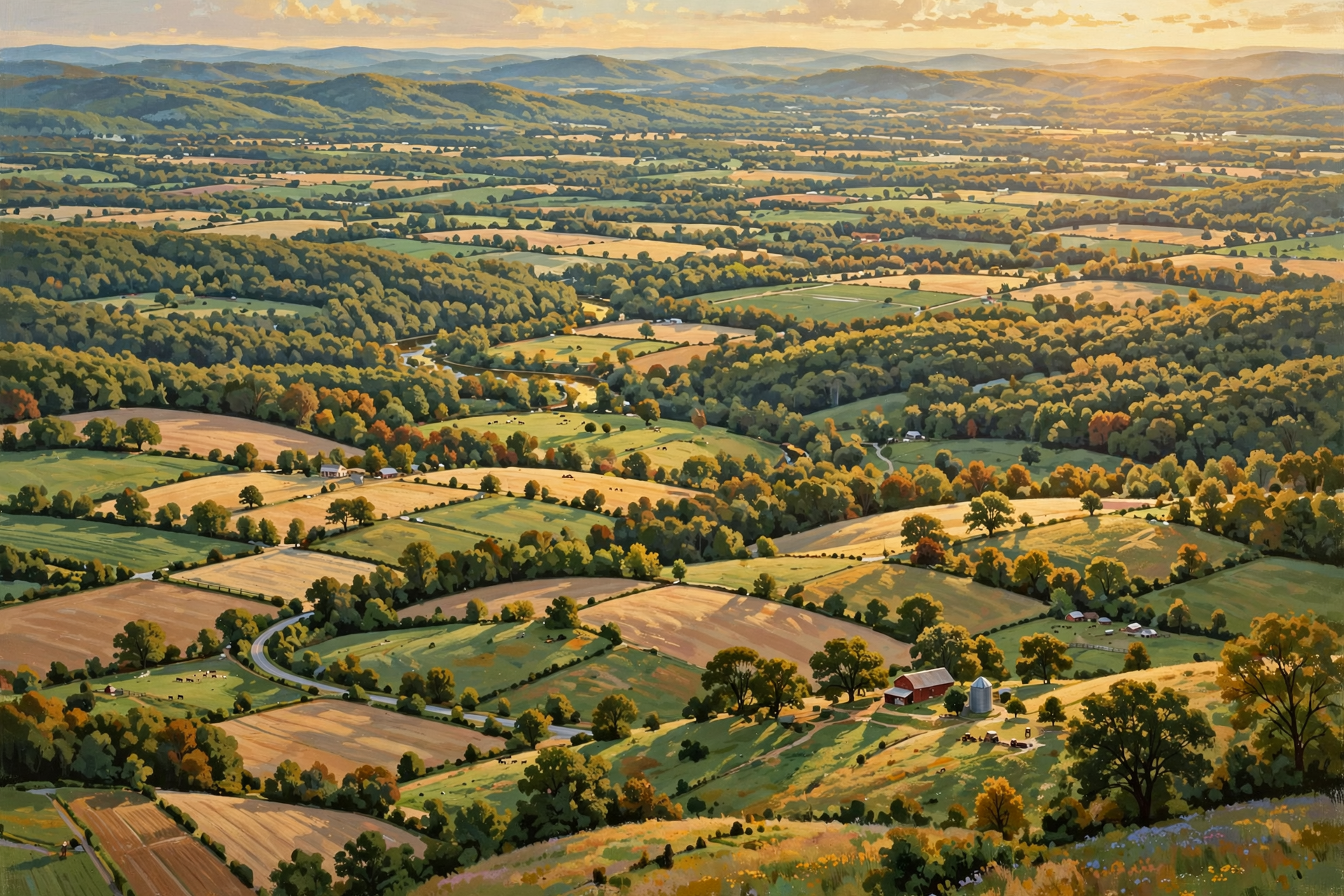
The United States contains approximately 2.26 billion acres of land.
That is billion with a B.
According to the USDA National Agricultural Statistics Service, American farms occupied approximately 873.95 million acres in 2025.
That’s nearly 874 million acres devoted to farms and ranches.
USDA’s broader land-use accounting, meanwhile, puts America’s urban footprint at approximately 66 million acres in 2022.
So before we even get into the data-center argument, keep three numbers in your head:
- 🌎 Total U.S. land: roughly 2.26 billion acres
- 🚜 Land in farms: roughly 874 million acres
- 🏙️ Urban land: roughly 66 million acres
Now let’s add the computers.
🖥️ How Much Land Do Data Centers Actually Use?
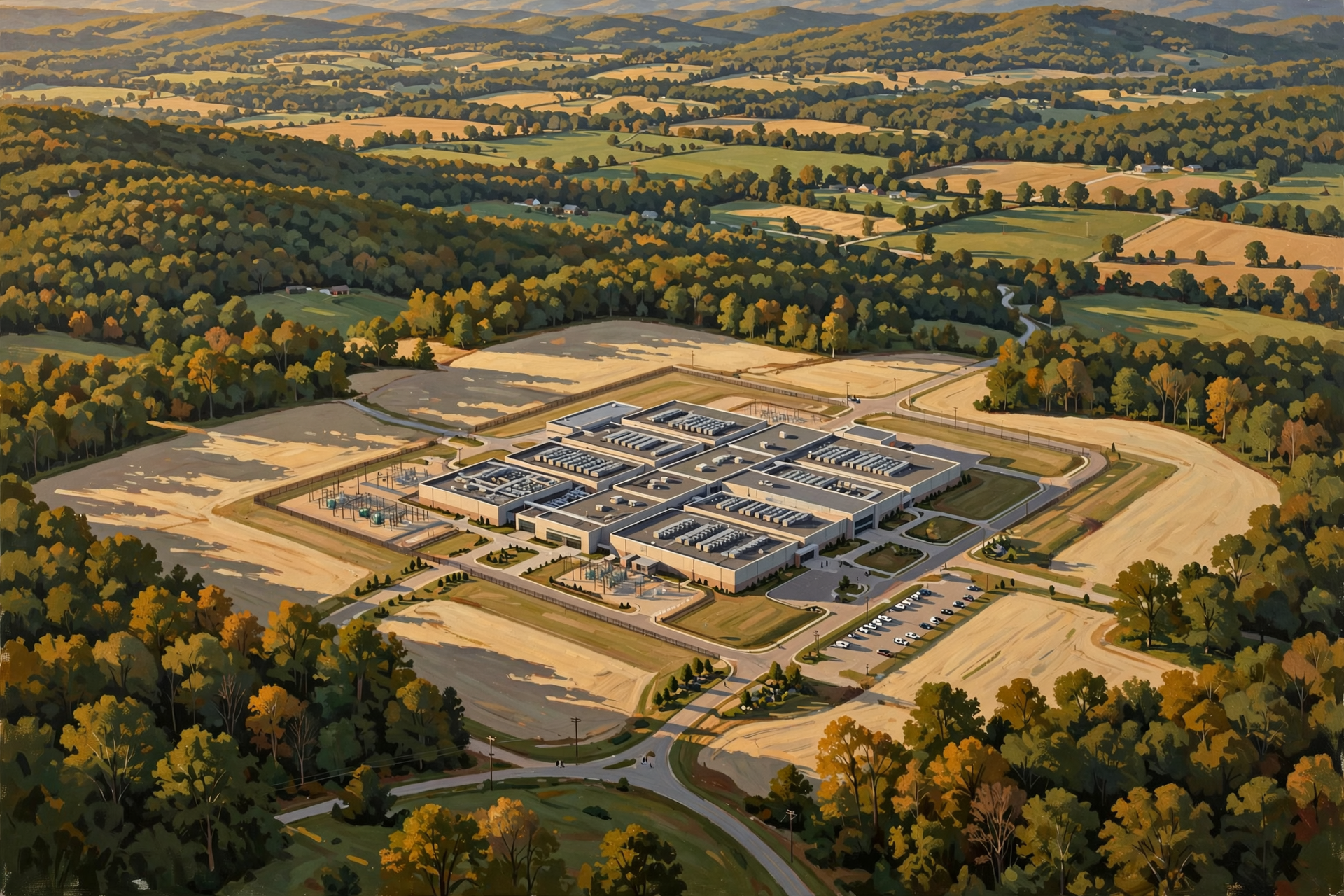
📊 Put the Acres in Perspective
🇺🇸 Total U.S. land: ~2.26 billion acres
🚜 Land in U.S. farms, 2025: ~873.95 million acres
🏙️ U.S. urban land, 2022: ~66 million acres
🖥️ Estimated data-center land: ~250,000–450,000 acres
If the 450,000-acre estimate is approximately correct:
- Data centers occupy about 0.02% of America’s land area.
- There are roughly 1,940 farm acres for every estimated data-center acre.
- Data-center acreage would equal less than 0.7% of America’s urban-land footprint.
⚠️ Data-center acreage is an estimate rather than an official federal land-use category. Facility definitions, planned projects, undeveloped campus land and land banking make an exact national total difficult to establish.
This number is harder to calculate.
There is no federal agency publishing an annual report called Data Centers and Land in Data Centers the way USDA carefully tracks farms.
Different databases count facilities differently. A tiny enterprise data center is not the same thing as a 1,000-acre hyperscale AI campus. Some reported projects are operating. Others are under construction. Others are proposed. And some companies buy more land than they immediately develop.
So we should not pretend we have a perfectly precise national number.
But reasonable estimates place the current American data-center footprint in the neighborhood of several hundred thousand acres.
A working range of approximately 250,000 to 450,000 acres gives us a useful way to understand the scale.
World Resources Institute reports that the average data-center site in 2024 covered approximately 224 acres, while today’s largest hyperscale campuses can exceed 1,000 acres.
Those are undeniably large projects.
But something strange happens when we zoom out.
🔎 450,000 Acres Sounds Huge Until You Divide It by 2.26 Billion
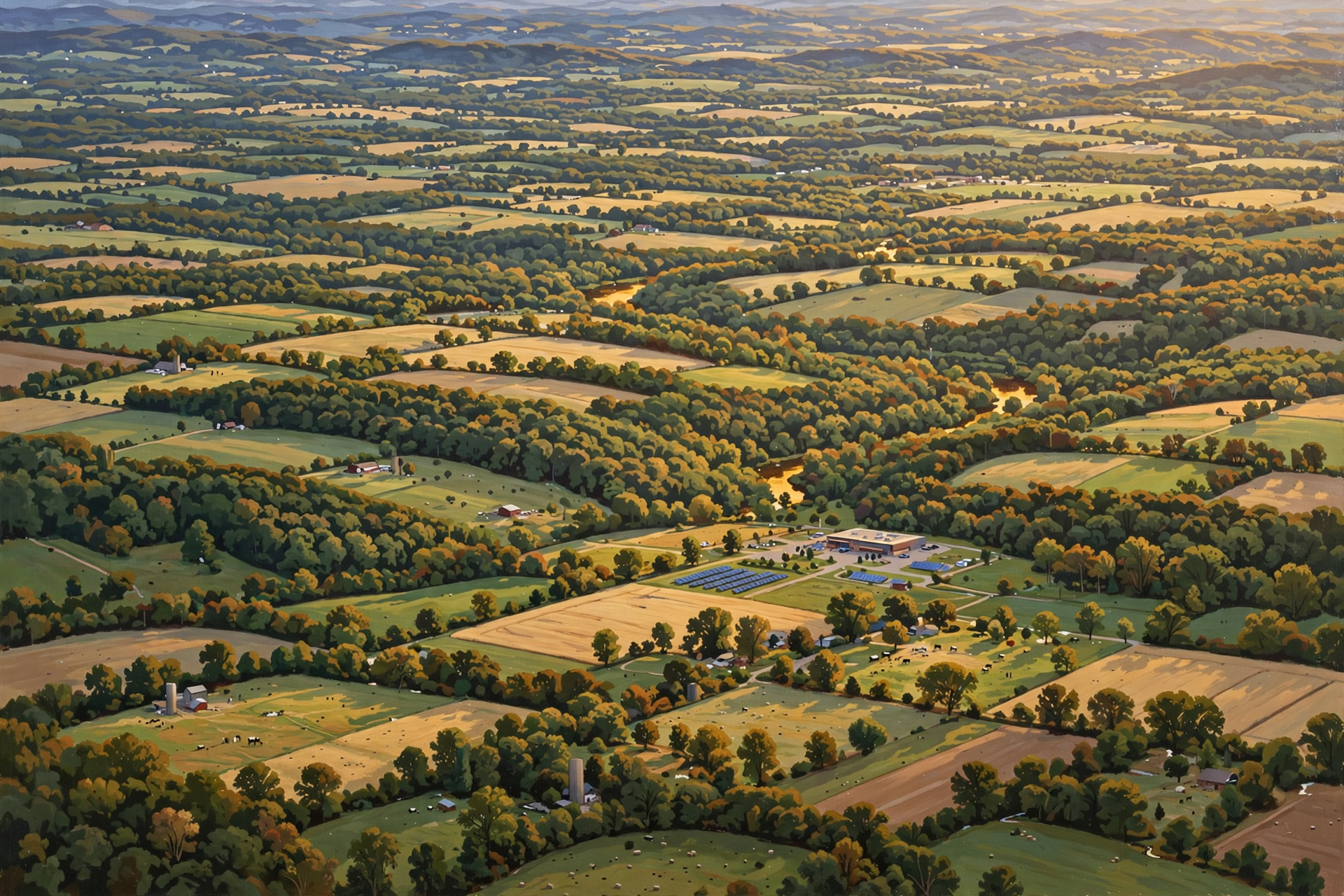
Suppose we deliberately use the upper end of that estimated range:
450,000 acres.
Compared with America’s approximately 2.26 billion acres of land, that would represent roughly:
0.02% of the American land base.
Not two percent.
Not two-tenths of one percent.
Approximately two-hundredths of one percent.
Using the lower 250,000-acre estimate gets us closer to 0.01%.
In other words, depending on how we define and count the facilities, something on the order of 99.98% to 99.99% of American land is not occupied by a data center.
That doesn’t sound quite like the computers have eaten Kansas yet.
🚜 Now Compare Data Centers With American Farms
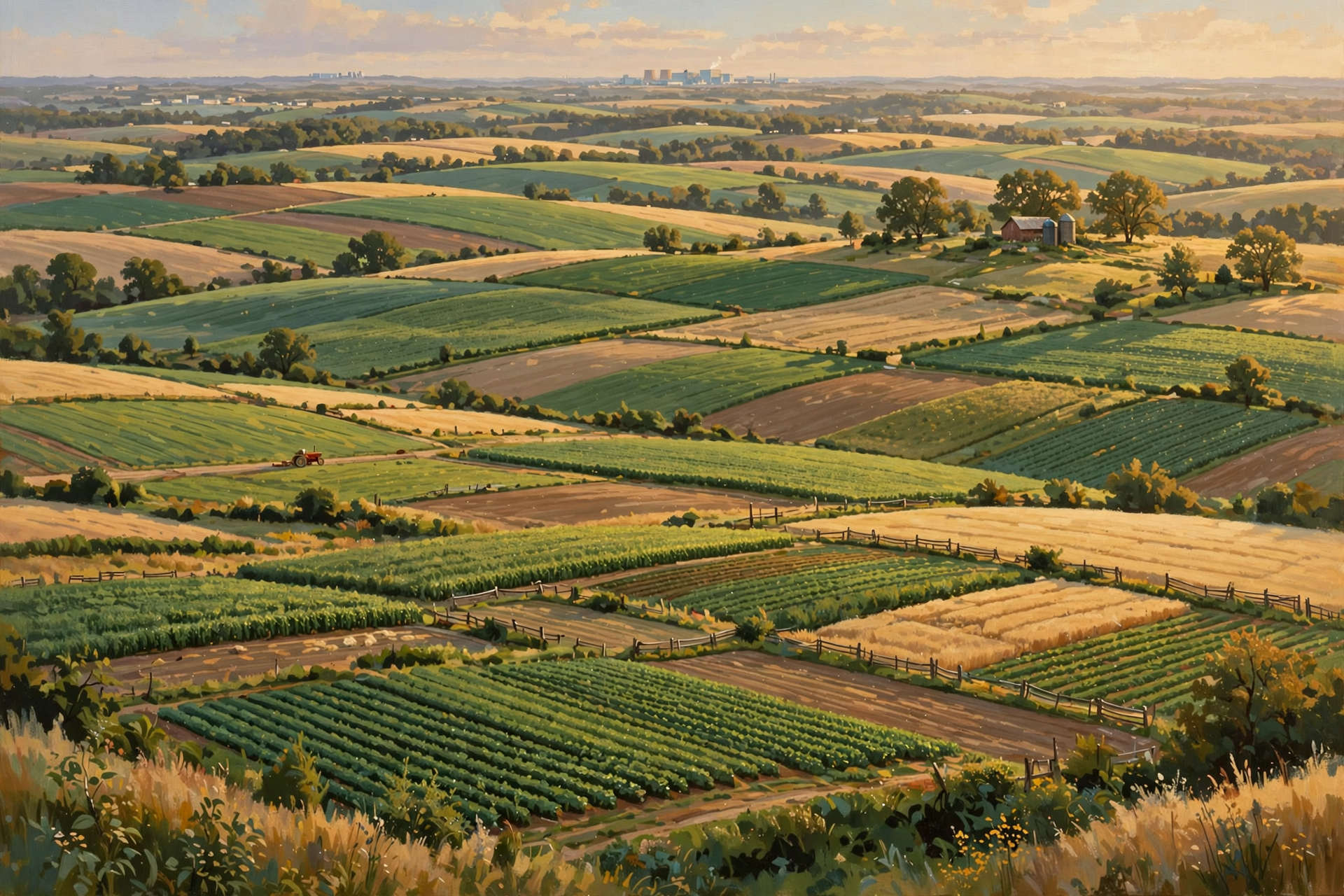
This comparison is even more interesting.
America currently has approximately:
873,950,000 acres of land in farms.
Suppose data centers occupy 450,000 acres.
For every acre occupied by a data center, there would still be roughly 1,940 acres of American farmland.
At the 250,000-acre estimate, the ratio approaches 3,500 farm acres for every data-center acre.
🌽🐄🖥️
That doesn’t mean losing productive agricultural land is irrelevant.
It means we need to understand the scale of the problem we are discussing.
🏙️ Even Compared With Cities, the Footprint Is Tiny
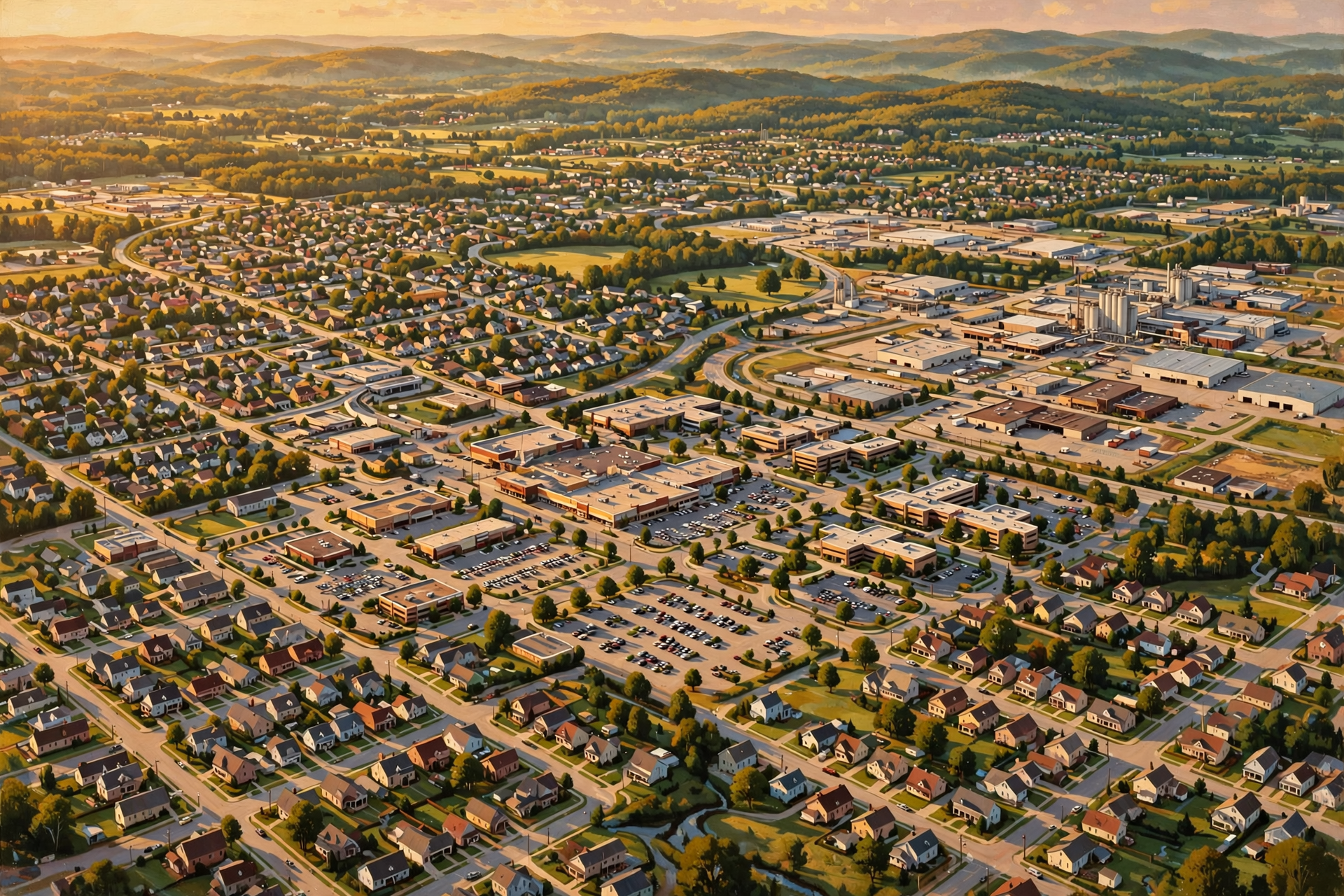
USDA’s latest comprehensive Major Land Uses data identifies roughly 66 million acres as urban land.
Using our high 450,000-acre data-center estimate, data centers would amount to less than seven-tenths of one percent of America’s existing urban-land footprint.
And remember: America’s urban category contains homes, subdivisions, shopping centers, offices, factories, streets and countless other developed uses.
Data centers are visible because they are new, large and unfamiliar.
But visibility is not the same thing as national scale.
📏 A 500-Acre Project Can Be Both Huge and Tiny
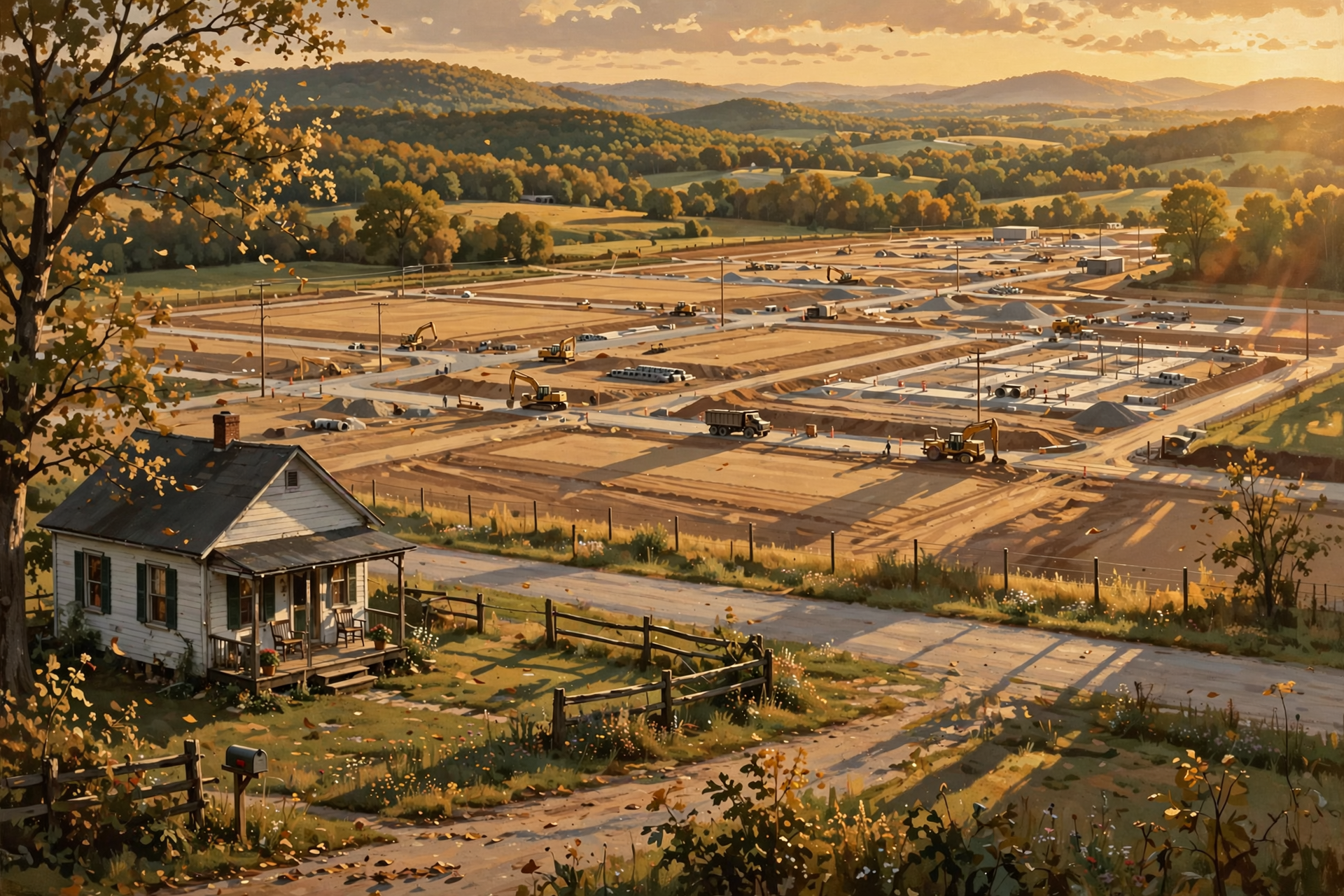
This is where two apparently contradictory things can be true at exactly the same time.
A 500-acre data center is enormous to the neighbor who lives across the road.
And…
A 500-acre data center is almost statistically invisible on the map of the United States.
Both statements are true.
Think about an airport.
An airport can dominate a community when you’re standing next to it. Its roads, noise, lighting and economic influence may affect everything nearby.
But nobody concludes from that observation that airports are about to consume the American continent.
Scale depends on where you’re standing.
🌾 The Better Question Isn’t “How Many Acres?”
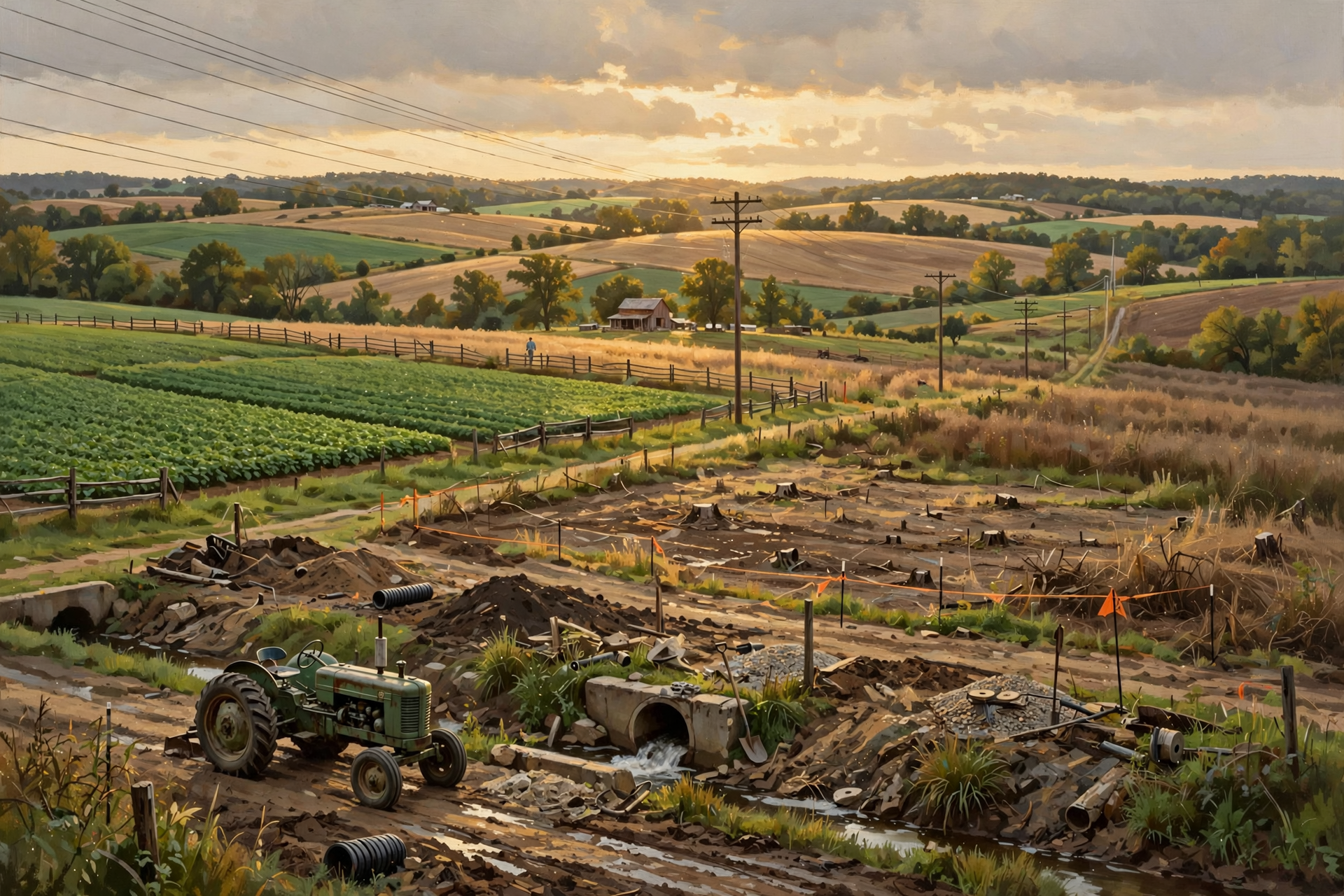
This is where I think rural communities need to be careful.
If we spend all our energy arguing that data centers simply consume too much American land, we may be fighting on the weakest battlefield.
There are much better questions.
For example:
- ⚡ Where will the electricity come from?
- 💧 How much water will the facility actually consume?
- 💵 Who pays for new electrical and utility infrastructure?
- 🏠 Could residential customers end up subsidizing industrial growth?
- 🔊 What noise will cooling equipment, transformers and generators create?
- 🌧️ How will hundreds of acres of development affect drainage and stormwater?
- 🚜 Is prime productive farmland being chosen when less-sensitive land is available?
- 💰 What tax revenue does the community receive?
- 👷 What permanent jobs and local contracts will actually result?
- 🏫 Do schools, emergency services and local governments benefit?
- 🔌 Does the new electrical infrastructure leave the community stronger afterward?
- 🤝 What commitments are enforceable rather than merely promised?
Those are serious questions.
And unlike the claim that computers are going to gobble up America’s land, many of them can materially affect the families already living there.
⚡ Data Centers May Be Power Hogs Without Being Land Hogs
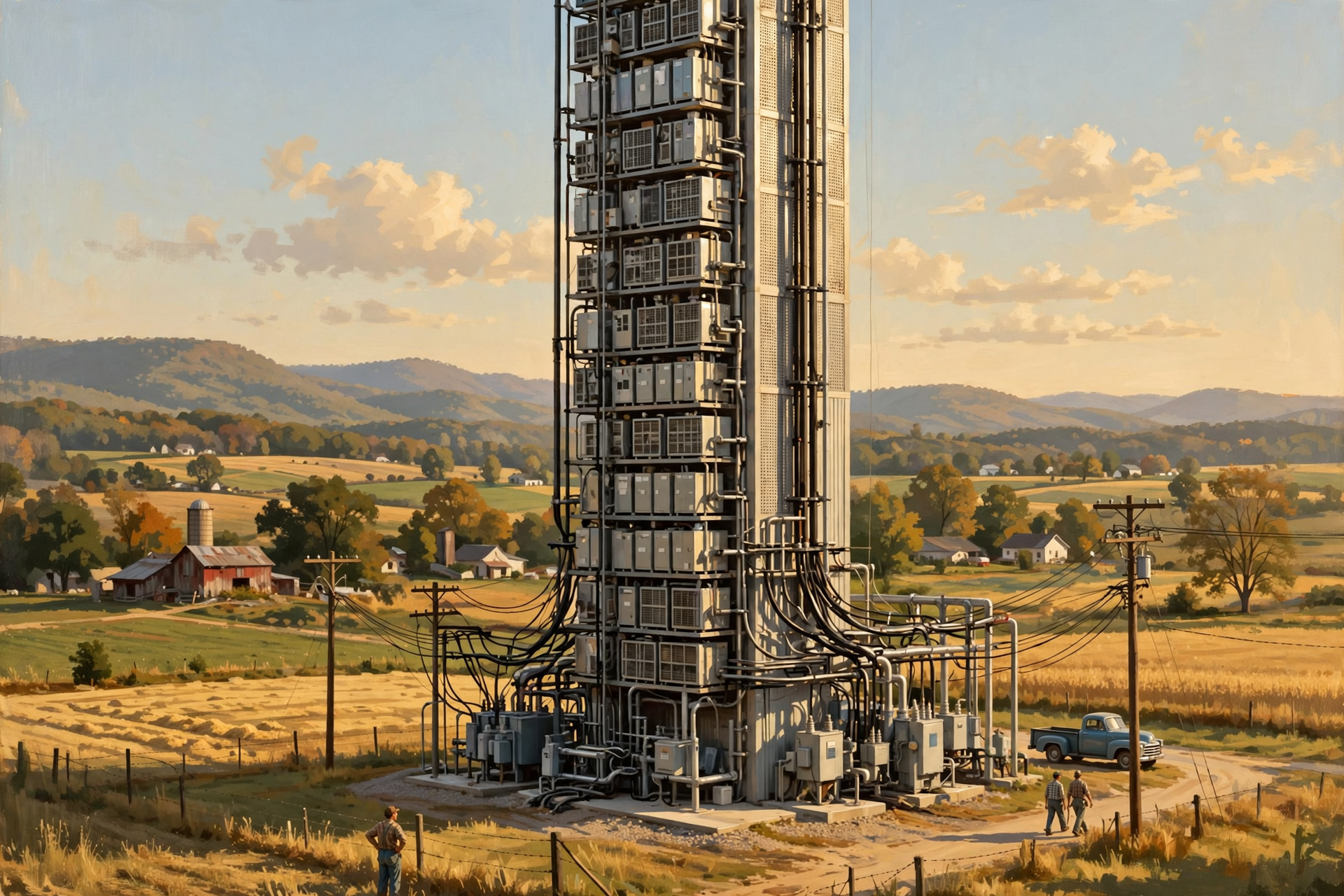
This distinction matters.
A data center can consume relatively little land while consuming an extraordinary amount of electricity.
That is because racks full of computers do something farmland cannot.
They stack economic activity vertically and densely.
A few hundred acres can contain billions of dollars of computing equipment drawing hundreds of megawatts of electricity.
So perhaps the easiest way to understand a modern AI data center isn’t as a sprawling new city.
Think of it more like an enormous industrial grain elevator for information.
It doesn’t need half the county.
But mercy, it needs a serious electrical connection.
🧮 Sometimes Percentages Are More Useful Than Photographs
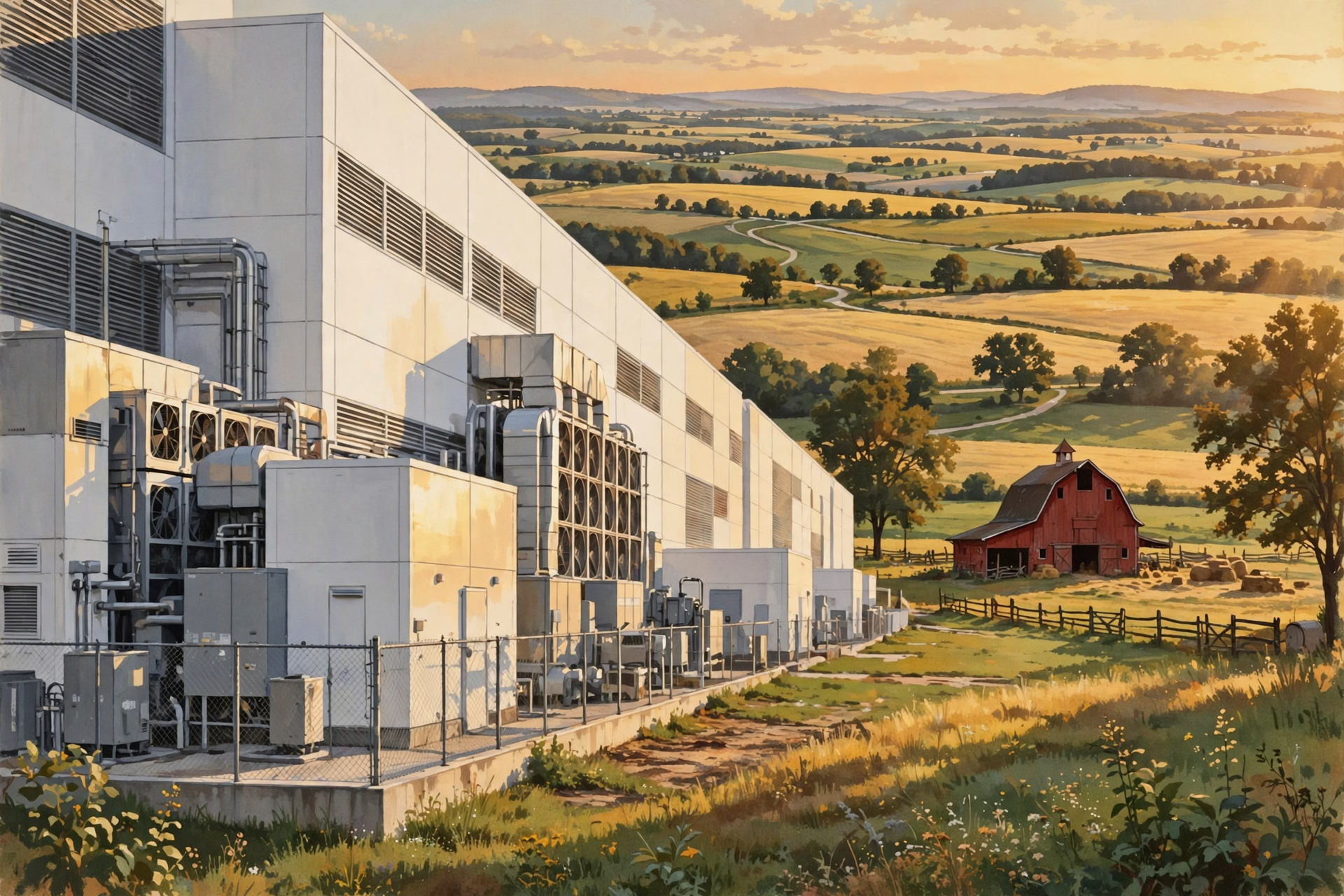
A photograph of a hyperscale data center beside a farm can be emotionally powerful.
One giant white building.
One little red barn.
You can practically hear the sad fiddle music starting.
But policy should not be made from camera angles.
The photograph answers one question:
“What does this development look like here?”
The acreage answers another:
“How large is this problem in context?”
We need both.
🌱 That Doesn’t Mean We Should Put Them Anywhere
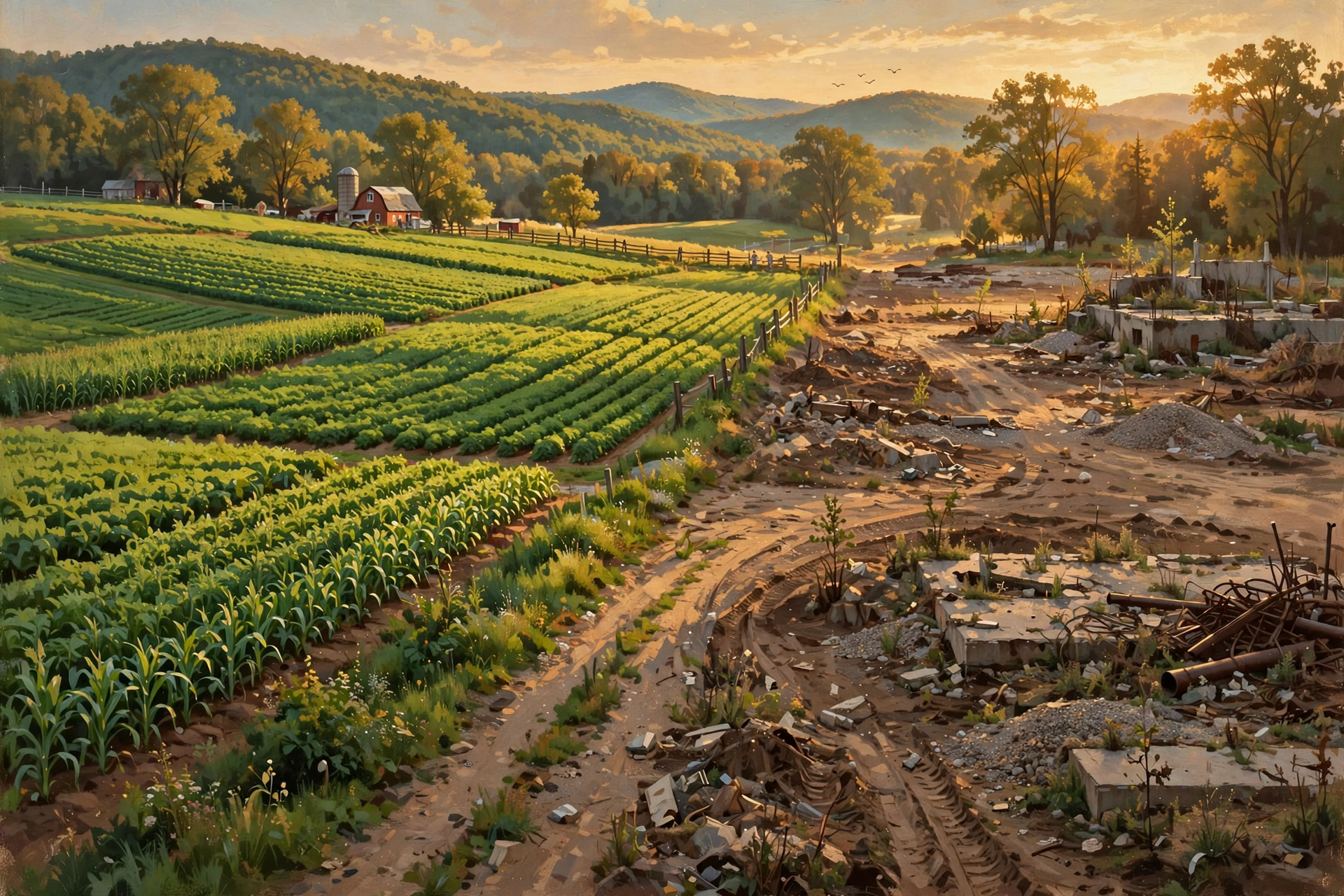
This is where the conversation becomes more sophisticated than simply being for or against data centers.
If a county has 500 acres of highly productive farmland beside another 500 acres of previously disturbed industrial property, perhaps those two parcels should not be treated as equally desirable.
If one site requires enormous public infrastructure subsidies while another can connect efficiently to existing transmission, that matters.
If one project consumes large quantities of potable water while another uses closed-loop cooling technology, that matters.
If a developer leaves neighbors staring at industrial walls and listening to equipment all night when reasonable buffers could have prevented it, that matters too.
Good development is not merely finding enough acres.
It is putting the right thing in the right place under the right terms.
🏡 Rural America Doesn’t Have to Choose Between Farms and Computers
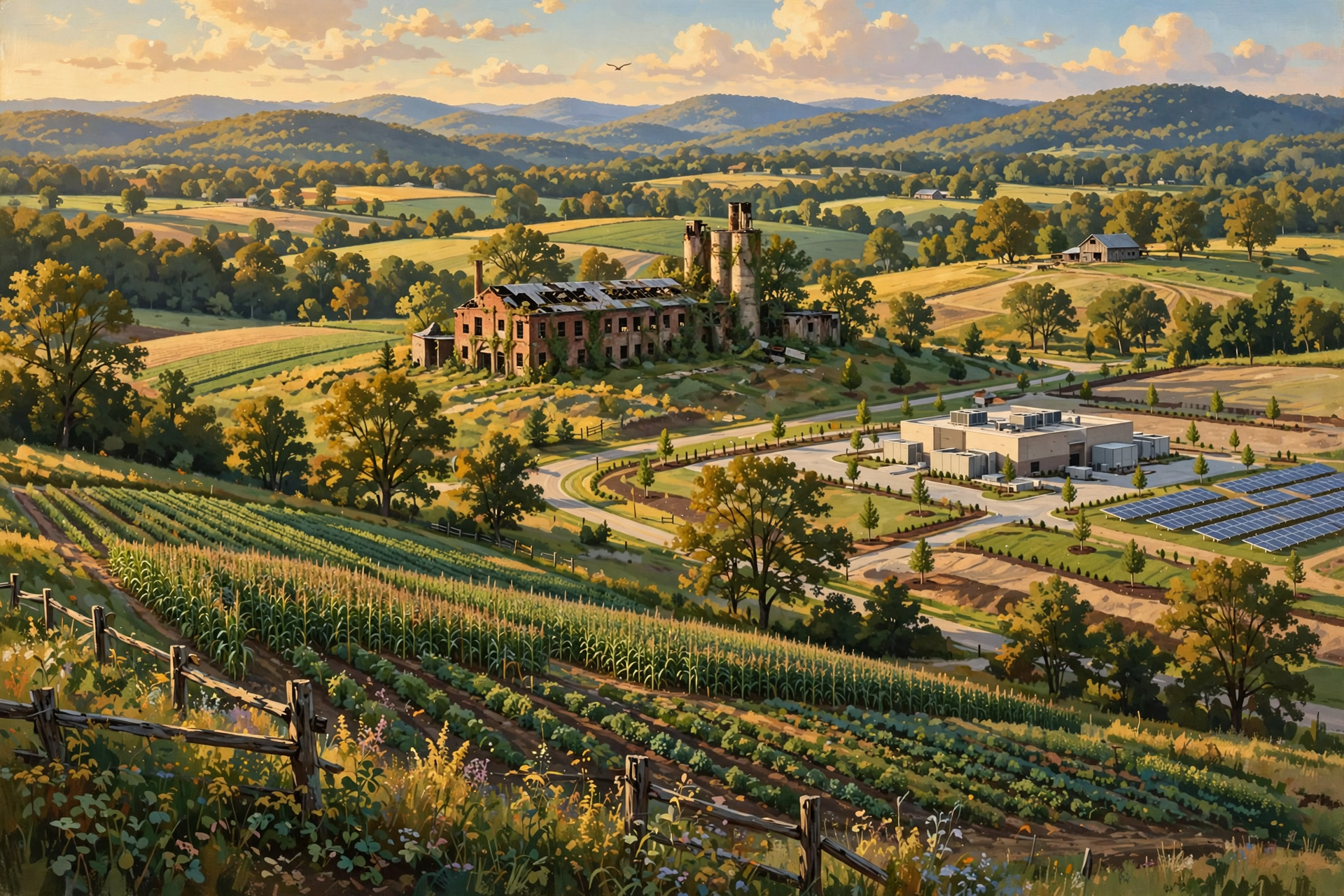
I think this may be one of the great mistakes in the way this debate is being framed.
We’re frequently presented with a false choice:
Do you want farms…
or
do you want technology?
Why?
America possesses hundreds of millions of agricultural acres.
It possesses former industrial properties.
It possesses reclaimed mines.
It possesses commercial corridors.
It possesses land near power infrastructure.
It possesses sites of wildly different agricultural, ecological and economic value.
The challenge isn’t deciding whether America has enough land for farms or computers.
It plainly does.
The challenge is deciding where infrastructure belongs and what the host community should receive in return.
💡 The Most Valuable Acre May Be the Acre We Use Wisely
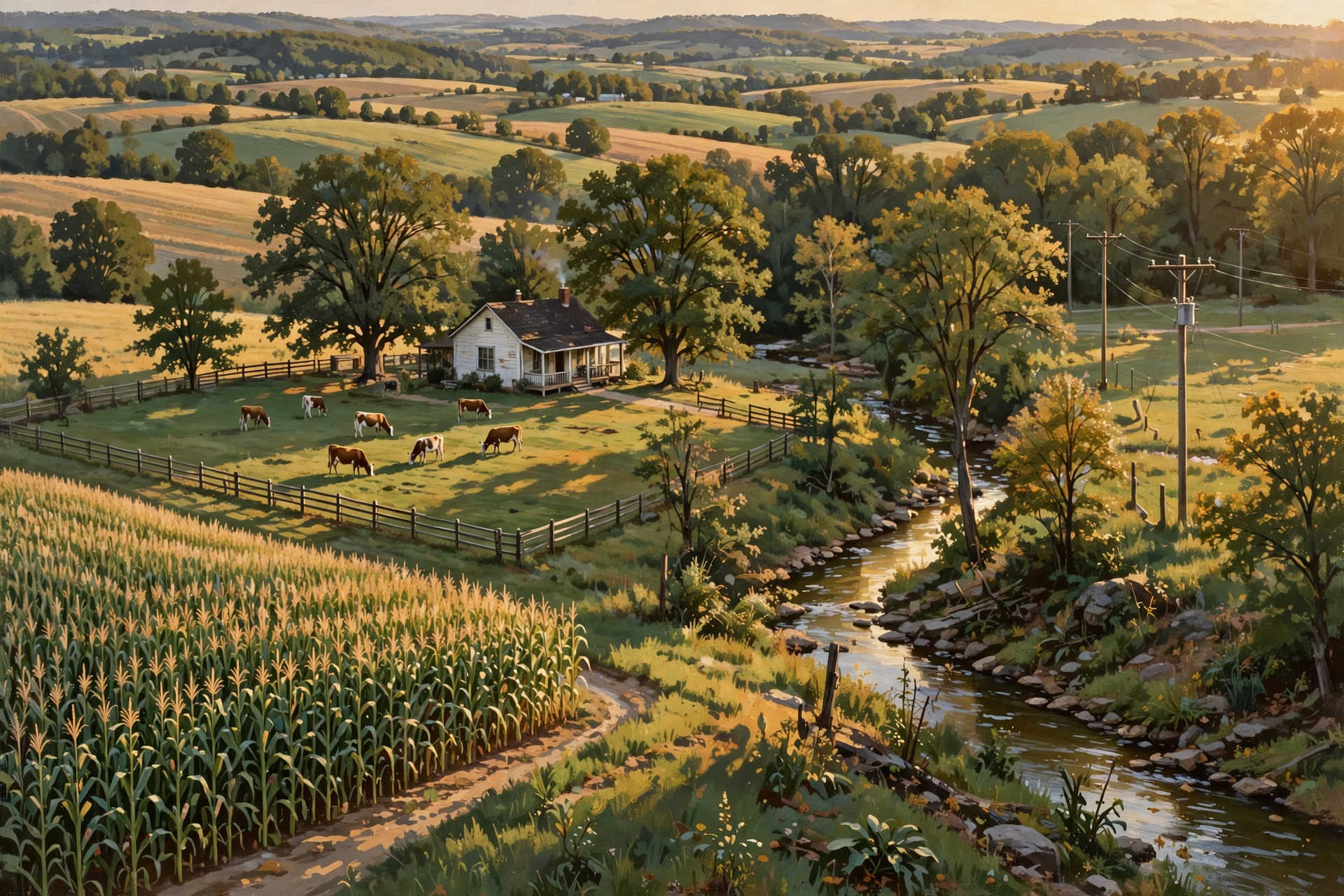
A rural acre is not merely an acre.
One acre might grow corn.
Another might hold cattle.
Another might contain somebody’s home.
Another might protect a creek.
Another might sit beside a transmission substation where virtually nobody has found an economically productive use for it in decades.
And another might someday hold millions of processors connecting a rural Tennessee community to an economy that didn’t exist when many of us were children.
The objective shouldn’t be to protect every acre from change.
Nor should it be to surrender every acre to whoever arrives carrying the largest checkbook.
The objective should be to understand what each acre can become.
🤔 So Are Data Centers Land Hogs?

Nationally?
The numbers make that argument very difficult to sustain.
Even generous estimates of America’s data-center footprint place it at only a few hundred thousand acres against approximately 2.26 billion acres of U.S. land and nearly 874 million acres presently classified as land in farms.
Locally?
A poorly located 500-acre development can absolutely create land-use conflicts.
And that is precisely why we should stop arguing about scary photographs and start asking better questions.
Not:
“How do we stop the data center from taking 500 acres?”
But:
“If we’re going to use these 500 acres, is this the right location, is this a good deal, and will the people who already live here be better off twenty years from now?”
That is a much harder question.
It is also the one worth answering.
🚧 The Future Is Going to Need Somewhere to Live

The internet lives somewhere.
Artificial intelligence lives somewhere.
Your photographs live somewhere.
Your banking records live somewhere.
Your streaming movies, medical systems, business software, maps, emails and increasingly much of America’s economic infrastructure live somewhere.
“The cloud” was always somebody else’s building.
Now some of those buildings may be coming closer to rural America.
We should scrutinize them.
We should negotiate.
We should protect our water, our electrical customers, our productive farmland and our neighbors.
We should demand transparency.
We should insist that communities receive real value when they host infrastructure serving the rest of the country.
But we should also keep our calculators nearby.
Because sometimes the monster at the edge of town becomes considerably smaller when somebody finally measures it.
And this particular monster may not be very hungry for land after all. 🌾🖥️
❓ Frequently Asked Questions About Data Centers and Land
Do data centers use a lot of land?
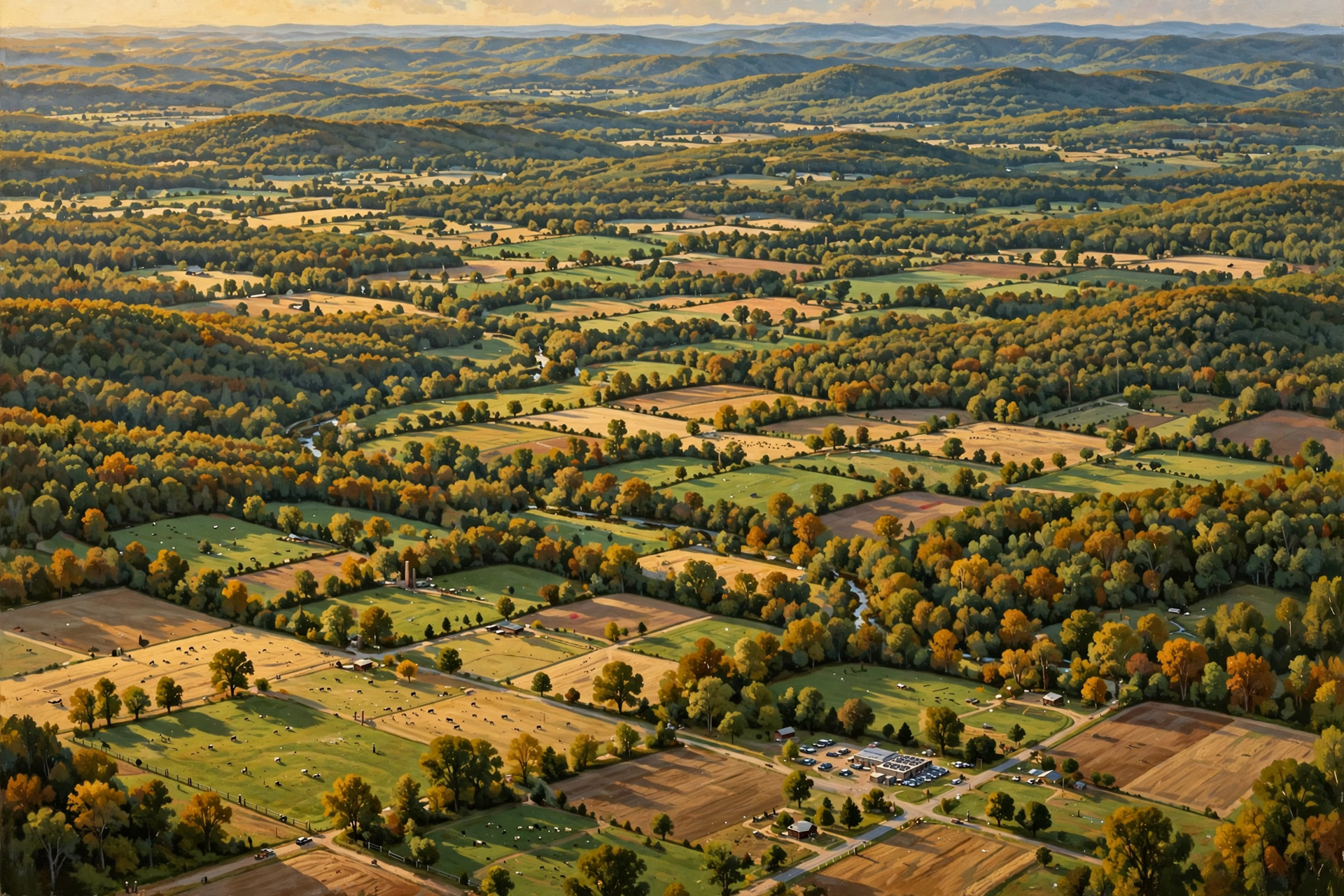
Individual hyperscale data-center campuses can occupy hundreds or even more than 1,000 acres, making them significant local developments. Nationally, however, the total data-center footprint appears to represent only a tiny fraction of the approximately 2.26 billion-acre U.S. land base.
How much farmland is there in the United States?
USDA’s National Agricultural Statistics Service estimated approximately 873.95 million acres of land in farms in 2025.
How much American land is urban?
USDA’s latest Major Land Uses update identifies approximately 66 million acres of urban land in 2022. USDA notes that changes in the Census Bureau’s urban definition complicate comparisons with earlier years.
How many acres do U.S. data centers occupy?
There is currently no single authoritative federal inventory of total U.S. land occupied by data centers. Available facility databases and reported site-size data suggest an order of magnitude of several hundred thousand acres, but estimates vary depending upon whether planned campuses, unused portions of sites and land banking are included.
Does that mean data centers have no environmental impact?
No. Land area is only one consideration. Electricity demand, water use, transmission infrastructure, noise, backup generation, stormwater, farmland quality and local economic effects can be more important questions for an individual project.
Should data centers be built on farmland?
That is a local land-use decision. Communities can distinguish between prime agricultural land, marginal land, former industrial property, reclaimed sites and property already located near electrical infrastructure rather than treating every acre as interchangeable.
🤔Source
USDA NASS — Farms and Land in Farms 2025 Summary:
USDA Farms and Land in Farms 2025 Summary
USDA ERS — Major Land Uses, updated August 2026:
USDA Major Land Uses
USDA ERS — 2022 agricultural and urban land overview:
USDA Agricultural Land Uses Account for Over Half of the U.S. Land Base
World Resources Institute — Data-center community impacts and land use:
WRI: From Energy Use to Air Quality, the Many Ways Data Centers Affect U.S. Communities
USGS — 2026 data-center infrastructure and siting analysis:
USGS Data Center Science Synthesis and Spatial Analysis
Cleanview — U.S. data-center project database:
Cleanview U.S. Data Center Tracker




0 Comments