
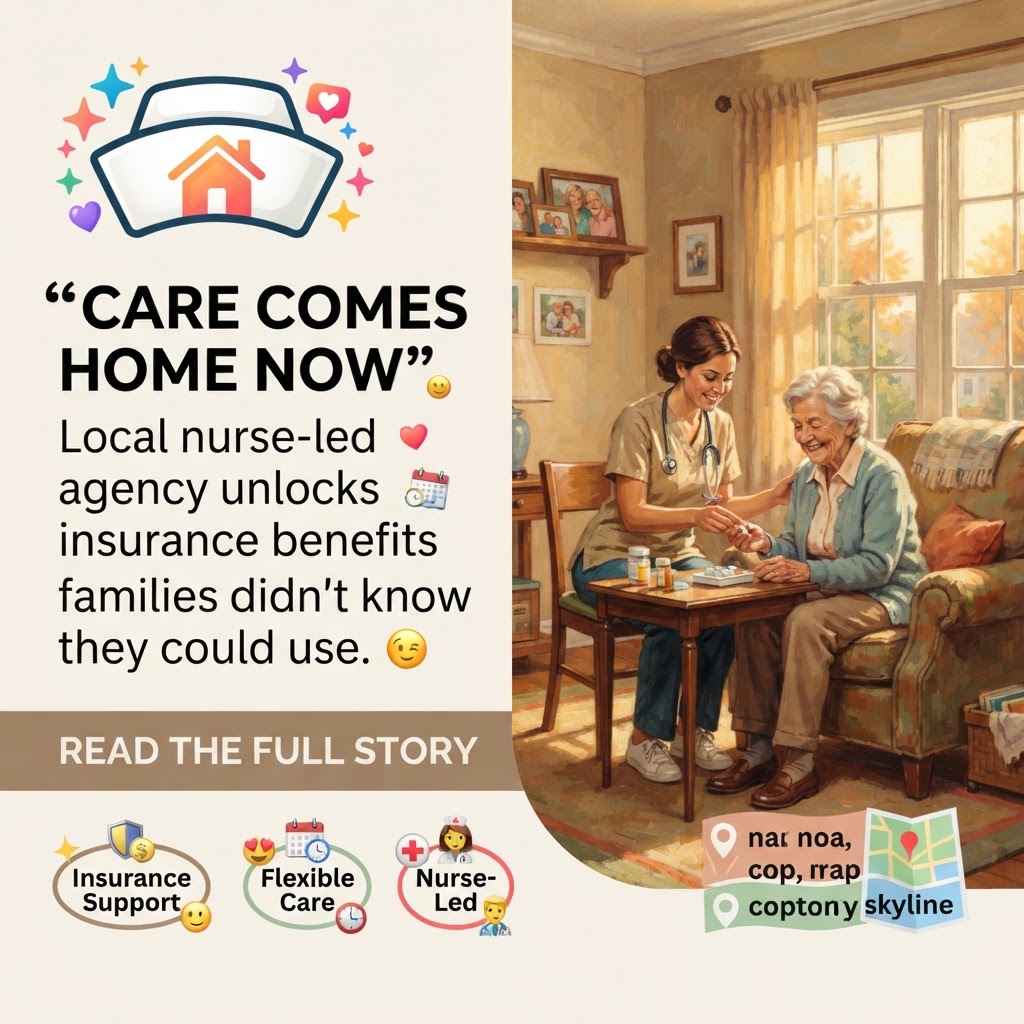
🏥 Nurse-Led In-Home Care Service Brings Long-Term Care Insurance Support to Chattanooga
As more families in the Sequatchie Valley region navigate the complexities of aging in place and long-term care planning, 1st Priority Homecare is stepping in with a service designed to help residents understand and use their existing insurance benefits. The locally owned, nurse-led agency is now accepting long-term care insurance claims and offering personalized care plans for seniors who want to remain at home.
❤️ Why This Matters for Local Families
Long-term care insurance can be confusing—many families don’t realize their policies may cover in-home care, or they struggle with the claims process. 1st Priority Homecare addresses a real gap in the community by offering to help families decode their benefits and connect them to actual care services. For seniors and their adult children, this removes a significant barrier to accessing support they’ve already paid for. The agency’s promise of no hourly minimum and a free first hour also lowers the threshold for families to explore whether in-home care is right for them. 💡
🤝 Community Connections and Care Networks
In-home care sits at the intersection of several community priorities: aging in place, family caregiving, and financial security. The agency’s emphasis on being “locally owned” and treating residents “like family” signals an understanding of how Chattanooga and Sequatchie Valley communities value personal relationships and trust in healthcare decisions. The service also connects to broader community support systems—families managing dementia, Alzheimer’s, post-surgery recovery, or respite care needs often rely on networks of doctors, therapists, social workers, and family members. A nurse-led agency that can coordinate with those existing relationships strengthens the entire care ecosystem. ✨
👥 Who May Benefit
The range of services suggests 1st Priority Homecare serves multiple populations within the community:
- Seniors recovering from surgery or hospitalization who need temporary support to regain independence at home
- Families managing dementia or Alzheimer’s who need specialized companionship and behavioral support
- Adult children and spouses serving as primary caregivers who need respite care—time away to rest, work, or attend to their own health
- Older adults with chronic conditions who benefit from medication reminders, meal preparation, and light housekeeping to maintain safety and nutrition
- Individuals with mobility challenges who need help with personal care, bathing, transportation, and errands
For each of these groups, the ability to receive care at home—rather than in a facility—can mean staying connected to their own community, routines, and independence. 🏡
💼 What Services Are Available
1st Priority Homecare’s service menu includes personal care and bathing assistance, companionship and sitter services, meal preparation and light housekeeping, medication reminders, transportation and errands, specialized dementia and Alzheimer’s support, respite care for family caregivers, post-surgery and recovery assistance, and overnight or 24-hour care options. The agency is nurse-led and nurse-operated, which means clinical oversight and coordination with healthcare providers. The flexibility to arrange care without hourly minimums and the offer of a free first hour suggest the agency is designed to meet families where they are—whether they need a few hours a week or round-the-clock support. 🩺
📞 What Residents Should Know
Contact Information: Families interested in learning more can call 1st Priority Homecare at (423) 208-4435 or visit 1stPriorityCare.com.
Long-Term Care Insurance: If you or a family member has a long-term care insurance policy, the agency can help explain what your policy covers and assist with the claims process. This is a significant advantage for families who have purchased insurance but aren’t sure how to use it.
No Hourly Minimum: Unlike some care agencies, 1st Priority Homecare doesn’t require a minimum number of hours per week, making it accessible for families who need occasional support rather than full-time care.
Free First Hour: The offer of a free first hour allows families to meet the care team, discuss needs, and assess fit before committing financially. 🎯
🔄 What Happens Next
Families considering in-home care typically move through several steps: first, they contact the agency to discuss their situation; second, the agency assesses the person’s care needs and insurance coverage; third, they develop a personalized care plan; and finally, care begins. For those with long-term care insurance, the agency’s willingness to help navigate the claims process can accelerate this timeline and reduce stress. Residents should expect follow-up conversations about scheduling, caregiver preferences, and ongoing communication about how the care plan is working. 📋
🤔 Questions for the Community to Consider
- If you or a family member has long-term care insurance, do you know what services it covers? Have you explored in-home care options?
- How might access to affordable, flexible in-home care change the experience of aging in place for seniors in your family or community?
- What role do you think locally owned, nurse-led care agencies play in building trust and continuity within a community’s healthcare network?
- For family caregivers, what would respite care—time away from caregiving—mean for your own health and well-being?
🌱 Long-Term Community Impact
The availability of quality in-home care services has ripple effects across a community. When seniors can age at home safely, they remain embedded in their neighborhoods, continue shopping at local businesses, attend churches and community events, and maintain social connections. Family caregivers who have access to respite care are less likely to experience burnout and more likely to remain employed and engaged in their own lives. Healthcare systems benefit when patients recover at home with professional support, reducing hospital readmissions and emergency visits. Over time, a robust network of in-home care providers can shift the entire culture of aging in a region—from viewing it as a crisis requiring institutional placement to seeing it as a natural life stage that communities can support. 🌟
🧵 Community Threads: The Invisible Network
The Insurance-to-Care Connection: Many families purchase long-term care insurance but never use it effectively because they don’t know how to access it or navigate the claims process. 1st Priority Homecare’s willingness to help families understand their benefits creates a bridge between financial planning and actual care—connecting insurance agents, financial advisors, and families to real services. This thread strengthens when more people know about it.
The Family Caregiver Support Network: Respite care is often the missing link for family caregivers. Adult children caring for aging parents, spouses caring for spouses, and grandparents raising grandchildren all face caregiver burnout. When a professional care agency offers respite services, it connects to churches, senior centers, support groups, and healthcare providers who all recognize caregiver stress. This thread weaves together multiple community resources into a safety net.
The Aging-in-Place Movement: Across the country and in the Sequatchie Valley, more seniors and their families are choosing to age at home rather than move to facilities. This preference connects to local values around independence, family involvement, and staying rooted in one’s community. In-home care agencies that understand and support this preference become part of the infrastructure that makes aging in place possible. 🏘️
The Nurse-Led Care Model: The emphasis on being “nurse-led and operated” signals a commitment to clinical quality and coordination with the broader healthcare system. This thread connects to local hospitals, primary care doctors, specialists, and rehabilitation services. When in-home care is coordinated by nurses, it strengthens communication across the entire care continuum.
🤔Source
1st Priority Homecare – 1st Priority Homecare is promoting their in-home care services, highlighting their acceptance of long-term care insurance and various services offered.




0 Comments