
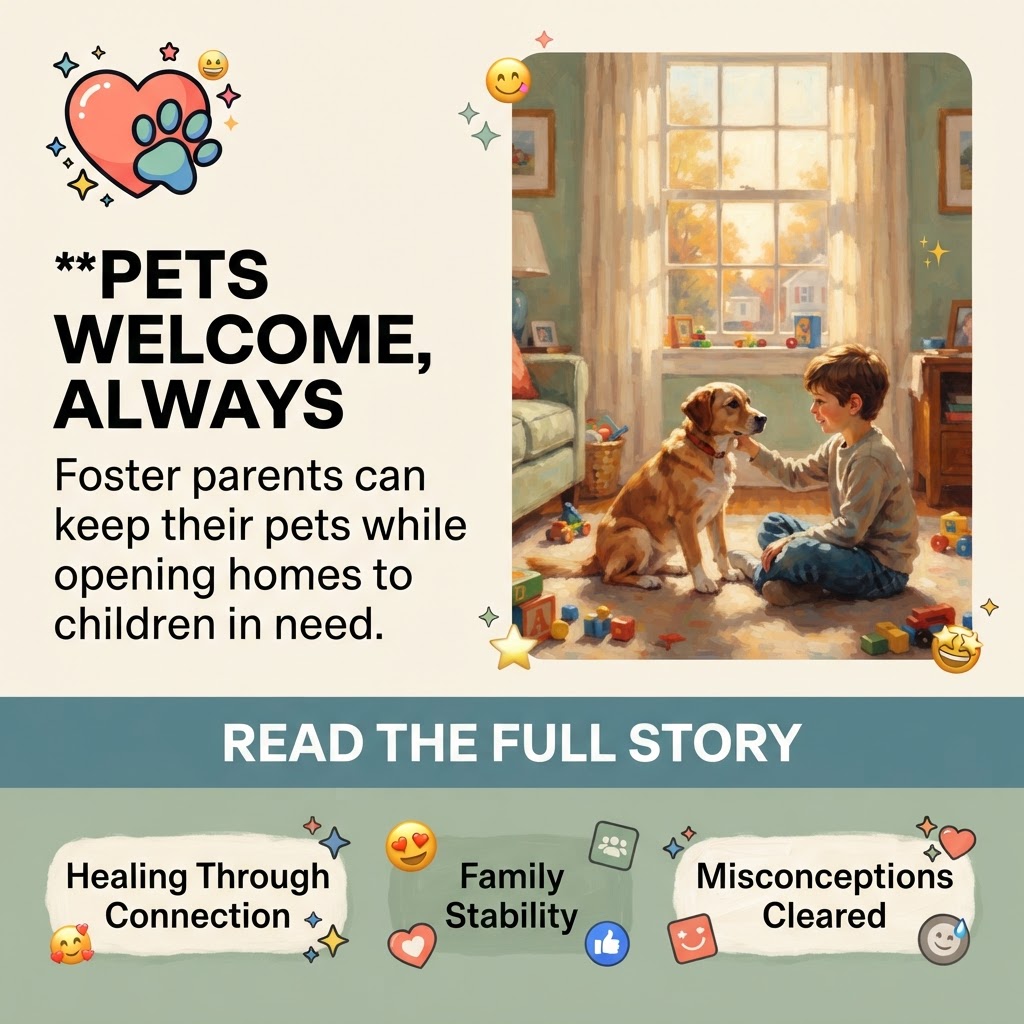
🏡 Foster Parents Can Have Pets — Here’s What You Need to Know
As summer brings conversations about family and caregiving to the forefront across the Sequatchie Valley, a local foster care organization is clearing up common misconceptions about what foster parenting looks like — including whether pets can be part of the home.
❤️ Why This Matters
For people considering foster parenting, questions about daily life often determine whether they take the step. The reality that pets are allowed — and can even benefit children in care — removes a significant barrier for families who worry they’d have to give up their animals to help a child in need. 🐾
For foster children themselves, the presence of a pet can mean the difference between feeling isolated and finding comfort. Children who have experienced trauma or abuse often struggle to trust adults, but animals offer unconditional affection without judgment. A family pet can become a bridge to healing.
🧒 Human Impact
Foster children arrive in new homes carrying emotional weight that adults may not immediately see. Many have experienced loss, instability, or harm. While foster parents provide safety and structure, a pet can provide something equally important: a non-threatening source of companionship and routine. Walking a dog, feeding a cat, or simply sitting with an animal can help a child begin to feel grounded in their new environment.
For foster families, pets also serve a practical role. They can help normalize daily life for a child, creating familiar rhythms and responsibilities that feel like a regular family — not an institutional placement. 🏠
📋 What Residents Should Know
If you’re considering foster parenting and have pets, here are the key requirements:
- Rabies vaccines must be current. This is a health and safety requirement, not optional.
- The animal must be kid-friendly. Aggressive or unpredictable pets won’t work in a foster home where children may have unpredictable reactions or behaviors.
- Pets are allowed. This is not a barrier to becoming a foster parent.
For more detailed information about foster parenting requirements, including questions about specific animals or behavioral concerns, the contact number is 1-888-MY-YV-KID. 📞
🤝 Community Connections
This message comes from Youth Villages, an organization working within the Sequatchie Valley community to support families and children in care. The organization’s summer question series suggests they’re actively engaging with the community through accessible, myth-busting conversations — breaking down barriers one misconception at a time.
Foster care is a community responsibility. When families open their homes, they’re not just helping one child — they’re strengthening the entire community by keeping children safe, stable, and connected to local schools, churches, and neighbors. 🌍
💡 Opportunities for Connection
If you’re interested in learning more about foster parenting — whether you have pets or not — reaching out to Youth Villages is a straightforward first step. The organization can answer questions about your specific situation, address concerns, and explain the full process. Many people who call with questions end up becoming foster parents; others become mentors, volunteers, or supporters in other ways.
If you know someone considering foster care, sharing this information can help them understand that their current life — including their pets — doesn’t disqualify them from making a difference. ✨
🔮 What Happens Next
Youth Villages appears to be running a summer education series designed to normalize foster parenting and address common concerns. If you’re curious about foster care, now is a good time to reach out. The organization can walk you through next steps, whether that’s an information session, an application process, or simply answering your questions.
❓ Questions Worth Asking
- Do you have pets at home, and have you ever wondered whether that would prevent you from fostering?
- How might a pet help a child in your care feel more at home during a difficult transition?
- What other misconceptions about foster parenting might be keeping caring families from stepping forward in your community?
- How can neighbors and community members support foster families beyond the foster parents themselves?
🌱 Long-Term Community Impact
Every child who finds stability in a foster home is a child who has a better chance at education, health, and future opportunity. Foster families are the backbone of that system. When the community understands that foster parenting is accessible — that you don’t have to change your entire life, including giving up your pets — more families step forward. More children find homes. More families stay connected to their communities rather than entering institutional care.
Over time, this ripples outward: stronger children become stronger adults, community bonds deepen, and the culture shifts from “foster care is something that happens to other people” to “foster care is something our neighbors do, and we support them.” 🌟

0 Comments