
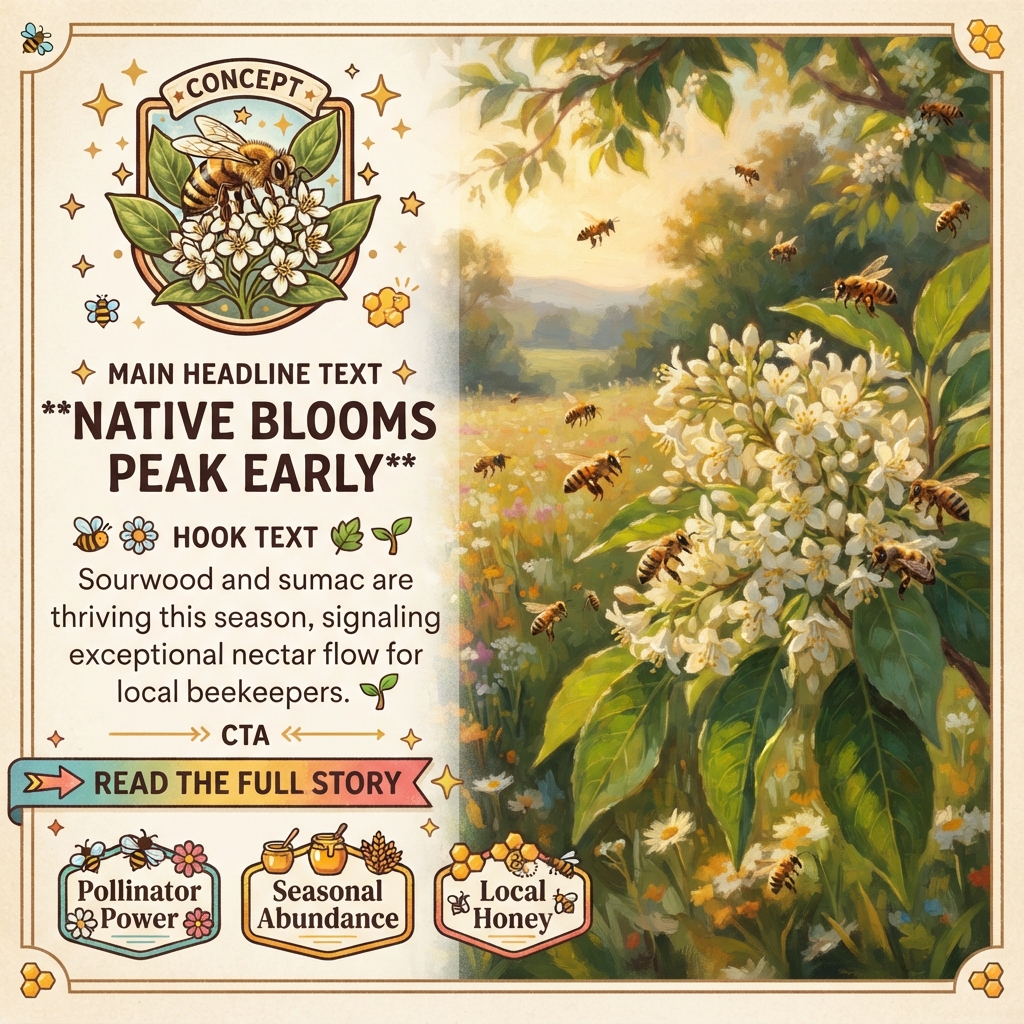
🌸 Sourwood and Summer Sumac Blooming on Lewis Chapel Mountain
As summer approaches in the Sequatchie Valley, the native flowering plants that define the region’s mountain landscape are entering one of their most vibrant seasons. The timing of these blooms carries significance for local beekeepers, naturalists, and anyone who pays attention to the seasonal rhythms that shape life in the valley.
🌿 What’s Blooming Now
According to observations from Lewis Chapel Apiary, sourwood trees are currently displaying particularly vibrant blooms—described as more striking than blooms seen in previous years on Lewis Chapel Mountain. 📸 Summer sumac is also developing buds and is expected to reach full bloom within the next couple of weeks. Both plants are native to the region and play important ecological roles throughout the growing season.
🐝 Why This Matters for the Community
For beekeepers and apiaries across the Sequatchie Valley, the timing and intensity of wildflower blooms directly affects honey production, bee health, and the success of local beekeeping operations. 💛 Sourwood honey, in particular, is prized for its distinctive flavor and is a product many valley beekeepers rely on. When blooms are vibrant and abundant, it signals a strong nectar flow—the period when bees can forage effectively and build their hive stores for the season ahead.
Beyond the apiary, these blooms matter to anyone who values the natural character of the valley. Sourwood and sumac provide food for pollinators, birds, and other wildlife. They’re part of the visual and ecological fabric that makes the Sequatchie Valley distinctive. 🌄
🌱 Local Perspective and Seasonal Patterns
The observation that this year’s sourwood blooms are more vibrant than in previous years on Lewis Chapel Mountain raises a natural question: What conditions—weather, rainfall, temperature patterns—contributed to this exceptional display? In the Sequatchie Valley, where seasonal variations can be significant, residents who pay attention to these natural cycles often notice year-to-year differences. The timing of blooms, their intensity, and their duration all reflect the unique conditions of each growing season.
For those who live on or near mountain ridges like Lewis Chapel, these flowering plants are familiar markers of early summer. Their appearance signals that the season is shifting, that the valley is entering its warmest, most lush period. 🌞
💡 What Residents Should Know
If you’re interested in observing these blooms or learning more about native plants in the Sequatchie Valley, the next couple of weeks offer a window to see sourwood and sumac at or near peak bloom. Local beekeepers, naturalists, and gardeners often have knowledge about where these plants grow and what to look for. The vibrant display this year may be worth seeking out if you enjoy wildflowers or photography.
🔄 What Happens Next
Over the coming weeks, sourwood and summer sumac will move through their full bloom cycle. For beekeepers, this is a critical foraging period—bees will be actively visiting these flowers to collect nectar and pollen. By mid-to-late summer, these blooms will fade, and the valley’s flowering plants will shift to other species. The honey produced during this sourwood bloom period will eventually be harvested and may become part of the local honey supply that many valley residents and visitors seek out. 🍯
❓ Questions Worth Considering
As you notice the seasonal changes in the Sequatchie Valley this summer, you might wonder:
- What other native plants are blooming right now in your part of the valley, and how do they support local pollinators?
- Have you noticed differences in bloom timing or intensity from year to year in your area?
- Do you know where sourwood honey comes from, and have you tried it from a local beekeeper?
- How do seasonal plant cycles affect the wildlife and ecosystems you see around your home or community?
🌾 Long-Term Community Impact
The health and abundance of native flowering plants like sourwood and sumac reflect the broader ecological health of the Sequatchie Valley. When these plants thrive, they support the pollinators, beekeepers, and food systems that depend on them. They also contribute to the valley’s natural beauty and character—qualities that draw residents and visitors alike. Over time, paying attention to these seasonal cycles helps communities understand and protect the natural resources that make the region distinctive. 🏞️
🧵 Community Threads
Local Beekeeping Heritage: The observation from Lewis Chapel Apiary connects to a broader tradition of beekeeping in the Sequatchie Valley. Beekeepers across the region depend on native flowering plants, and their success is intertwined with the valley’s ecological health. When one apiary shares observations about bloom timing, it contributes to collective knowledge that other beekeepers, gardeners, and nature enthusiasts can learn from.
Mountain Stewardship: Lewis Chapel Mountain is a specific place with its own character and seasonal patterns. Residents who live there or visit regularly develop familiarity with its plants, wildlife, and rhythms. Sharing observations about what’s blooming strengthens the connection between people and place, and helps build a community of people who notice and care about the natural world around them. 🏔️
Seasonal Awareness and Connection: In a region where seasons shape daily life—from farming to outdoor recreation to local food production—paying attention to when plants bloom, when wildlife is active, and when natural resources are abundant is part of how communities stay connected to their environment. These observations, shared through social media or conversation, help neighbors understand the valley’s rhythms together.



0 Comments