
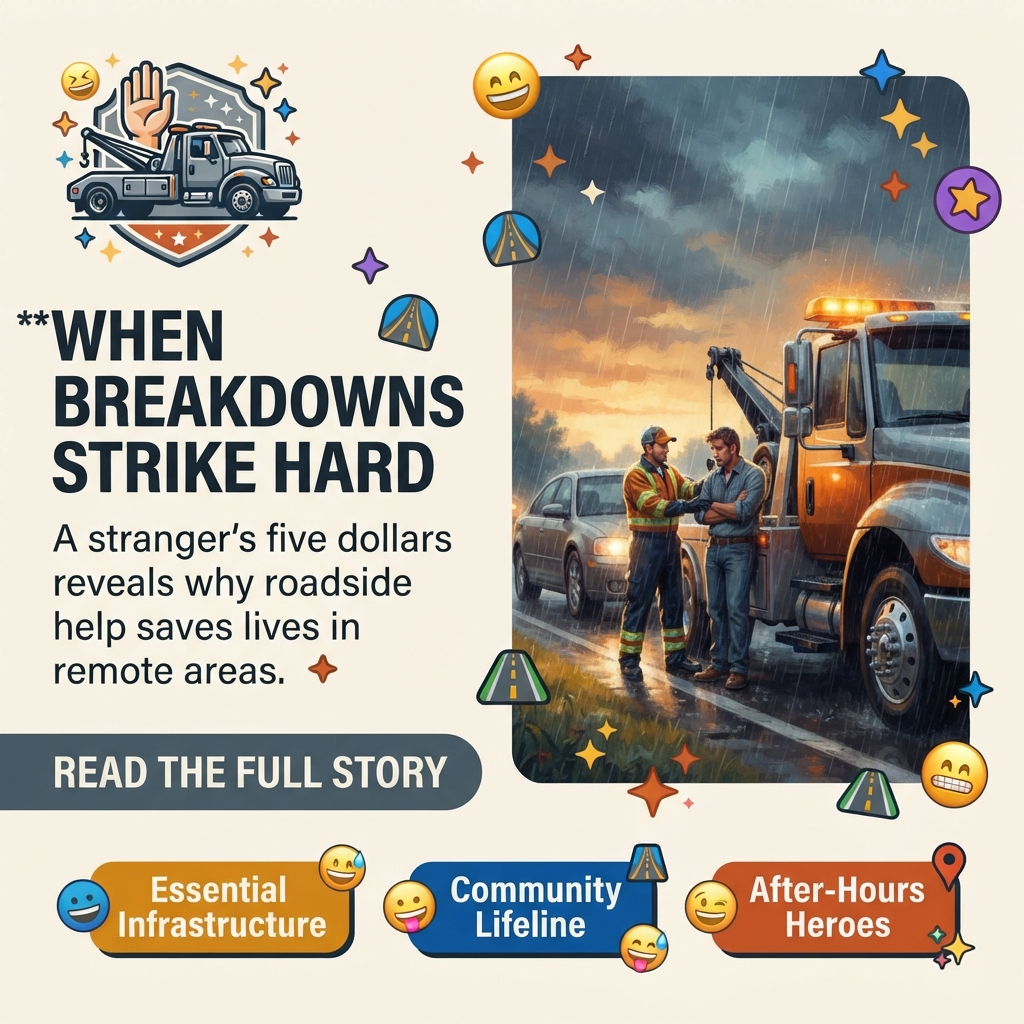
🚗 When Your Car Breaks Down After Hours: Why Roadside Help Matters in Rural Communities
In the Sequatchie Valley, where distances between towns can stretch well over an hour and cell service isn’t always reliable, a breakdown on a rainy Friday night isn’t just an inconvenience—it’s a crisis. Lucky 13 Transport recently shared a story that captures why local towing and roadside assistance services are essential infrastructure for residents navigating rural life.
❤️ A Moment of Unexpected Kindness
The scene was difficult: a vehicle broken down at a gas pump on a Friday evening when all nearby shops had closed, heavy rain pouring down, and frustrated customers waiting to use the pump. The tow operator was more than an hour away from home, working in conditions that most people would prefer to avoid. But in a moment that speaks to the character of rural communities, a stranger approached and handed the operator $5—not as payment, but as a gesture of gratitude and recognition for the work being done. “He said he was so appreciative of what we get out and do,” the operator shared. It’s a small act that reveals something larger: people in the Sequatchie Valley understand that roadside assistance isn’t glamorous work, but it’s vital work.
🛠️ Why This Work Matters
In areas where the nearest repair shop may be 30, 45, or 60 minutes away, a breakdown isn’t just about getting a vehicle towed. It’s about safety, especially in bad weather. It’s about parents who need to get home to their children, workers who can’t afford to miss shifts, elderly residents who may be stranded, and families traveling through the region who have no local connections to call for help. When a vehicle fails at a gas pump during heavy rain, after hours, with no nearby options, the person who answers that call becomes a lifeline.
💼 Community Threads: The Hidden Network
Roadside assistance operators are part of an invisible network that holds rural communities together. They work alongside local mechanics, gas station owners, and emergency responders. They know the roads, the weather patterns, and the challenges of rural infrastructure. They’re often the first responders to accidents or emergencies on remote stretches of highway. They understand that in a place where neighbors matter, showing up matters—even when it’s inconvenient, even when it’s late, even when it’s pouring rain.
📍 What Residents Should Know
If you find yourself stranded on a rural road in the Sequatchie Valley, having a reliable towing service on speed dial can mean the difference between a manageable problem and a crisis. Lucky 13 Transport operates after hours and in severe weather conditions—times when most businesses are closed and residents are most vulnerable. The operator’s message is direct: “If you find yourself in need of our services, give me a call.” For residents who spend time on rural roads, whether commuting, traveling for work, or visiting family, knowing who to call before an emergency happens is practical wisdom.
🤔 Questions Worth Considering
As you think about this story and what it reveals about rural life in the Sequatchie Valley, consider these questions:
- How many residents have a reliable towing service saved in their phone contacts?
- What other “invisible” services do rural communities depend on that often go unrecognized?
- How does the distance between towns and limited after-hours services shape the way people plan their travel and prepare for emergencies?
- What role do small gestures of appreciation—like the $5 from a stranger—play in sustaining the people who keep rural infrastructure running?
⭐ The Bigger Picture
This story isn’t really about a single breakdown on a rainy Friday. It’s about the infrastructure that keeps rural communities functioning—the people who work when others are home, who show up in bad weather, who understand that in a place where distances are long and options are limited, reliability is everything. It’s also about the culture of recognition and gratitude that emerges when people understand how much they depend on each other. The stranger who gave $5 wasn’t just thanking a tow operator; he was acknowledging that rural life works because people like that operator are willing to work when it’s hard, when it’s inconvenient, and when it matters most.

0 Comments