
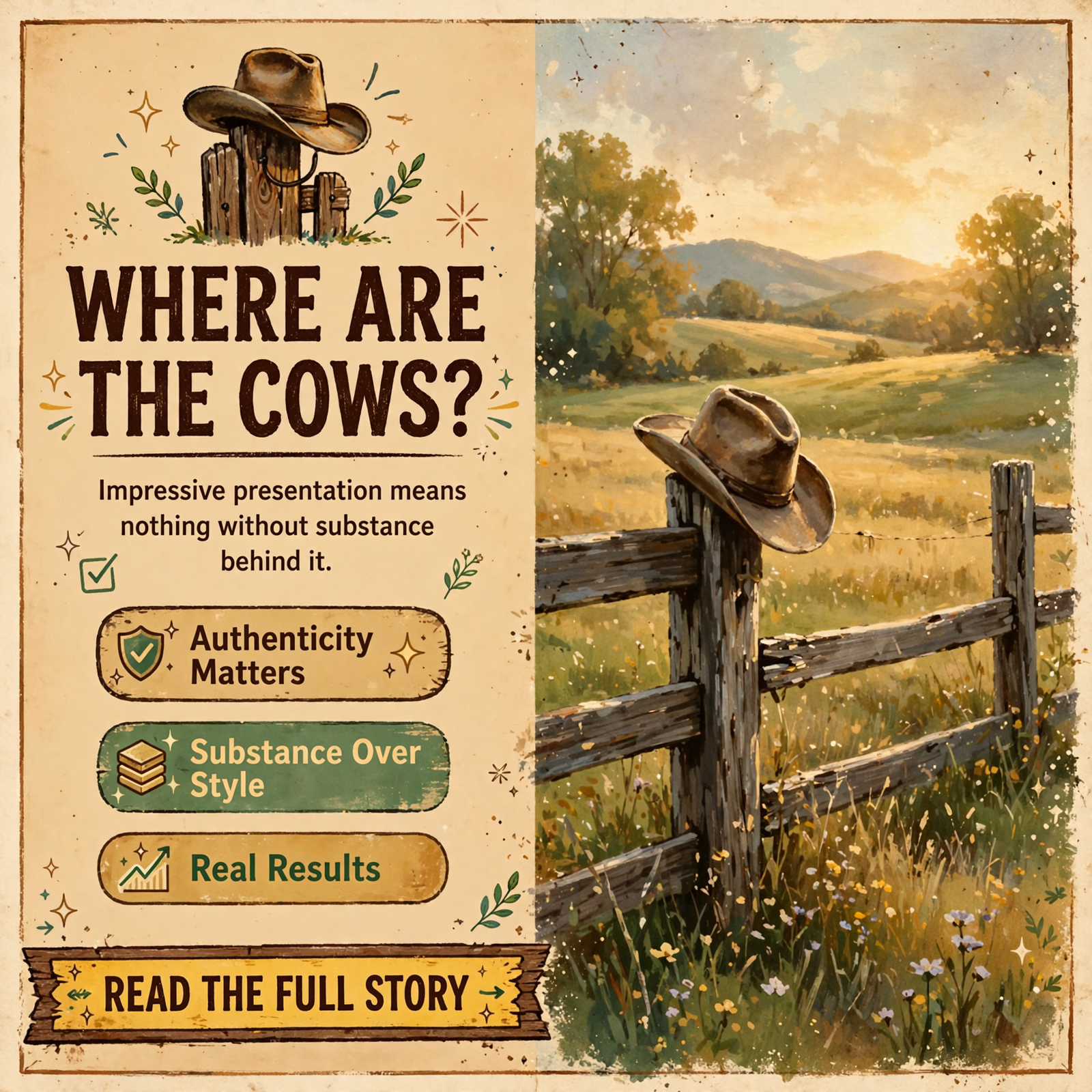
All Hat and No Cattle: Before Personal Branding Became a Career

There was a time when a man could not simply announce that he was a cattle baron.
Eventually, somebody was going to ask where the cattle were.
This created a certain inconvenience for people whose ambitions were considerably larger than their livestock.
Fortunately, country people developed a technical term for this condition:
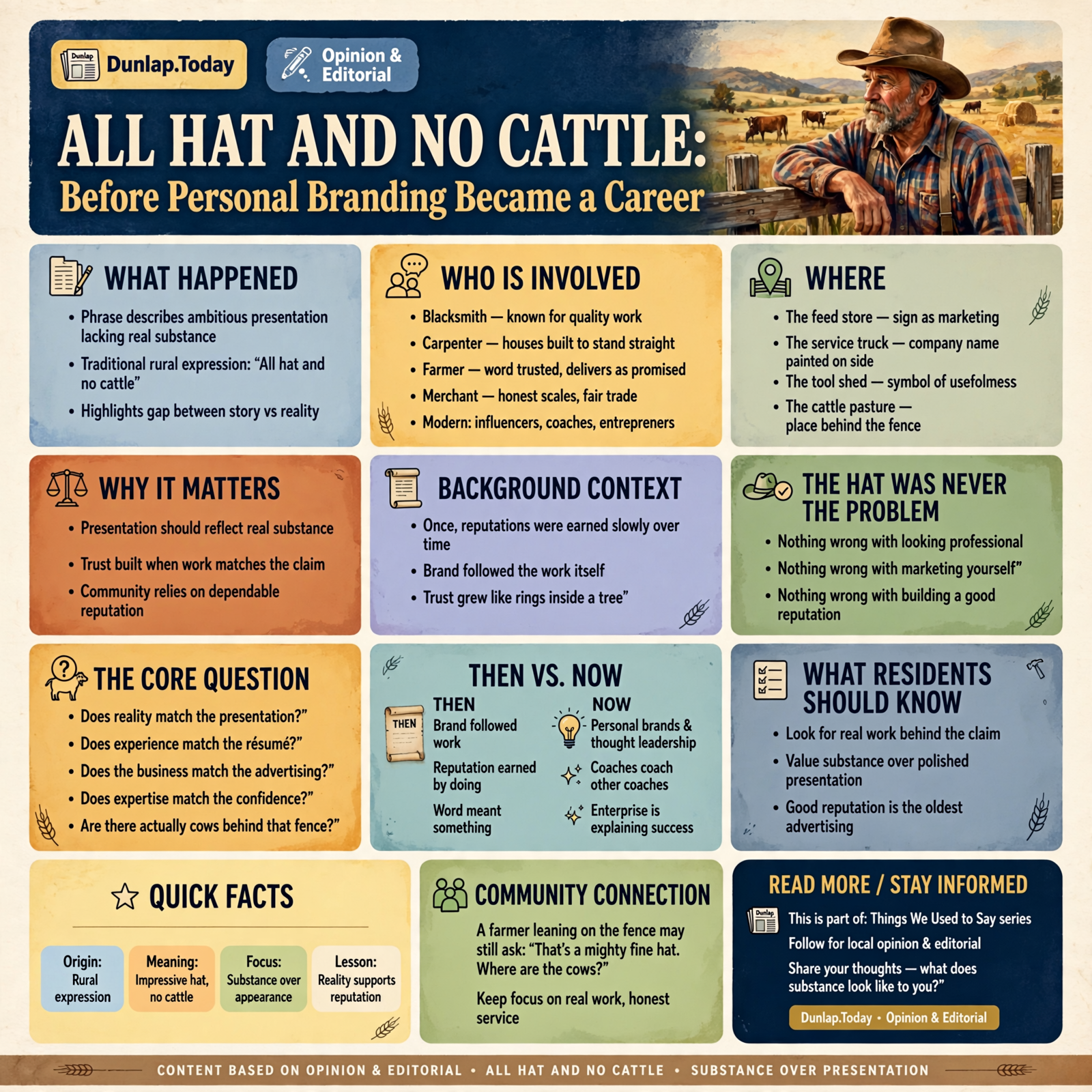
“All hat and no cattle.”
The meaning was simple.
The hat was impressive.
The story was impressive.
The confidence was impressive.
The cattle, however, appeared to be experiencing significant attendance problems.
Today we have considerably more sophisticated terminology.
We have personal brands.
We have thought leadership.
We have influencers.
We have coaches who coach other coaches on how to become coaches.
We have entrepreneurs whose primary visible enterprise appears to be explaining how successful they are at entrepreneurship.
And every once in a while, the old farmer leaning against the fence might still offer the most useful analysis:
“That’s a mighty fine hat. Where are the cows?”
The Hat Was Never Really the Problem

It is worth clearing something up before we accidentally declare war on hats.
There is nothing wrong with looking professional.
There is nothing wrong with telling people what you do.
There is nothing wrong with marketing yourself, building a reputation, maintaining a good website, taking a decent photograph, or explaining your experience.
Those things can be useful.
A sign on a feed store is marketing.
A clean service truck with the company name painted on the side is branding.
A farmer telling his neighbors he has hay for sale is promotion.
A good reputation is one of the oldest forms of advertising humanity ever invented.
The trouble begins when the hat becomes more important than the cattle.
That is when presentation stops describing reality and starts trying to replace it.
From the Tool Shed to the Cattle Pasture

In the previous installment of Things We Used to Say, we considered the fellow who “ain’t the sharpest tool in the shed.”
That old saying reminded us that people have different kinds of intelligence and usefulness.
“All hat and no cattle” asks a different question.
It is not primarily about intelligence.
It is about substance.
Does the reality match the presentation?
Does the experience match the résumé?
Does the business match the advertising?
Does the expertise match the confidence?
In other words:
Are there actually cows behind that fence?
Before Personal Branding Needed a Strategy
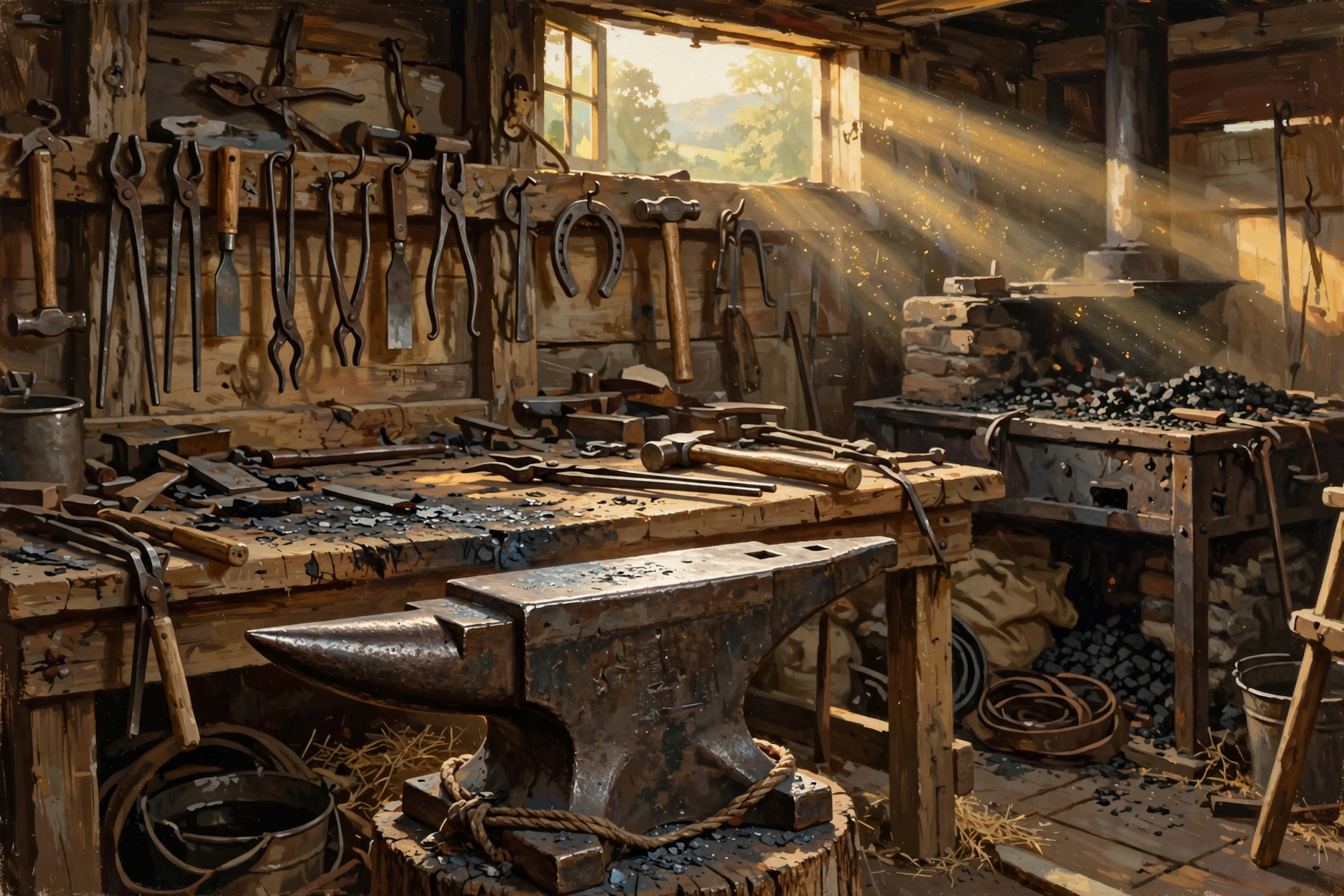
People have always managed their reputations.
There is nothing particularly modern about wanting others to think well of us.
A blacksmith wanted people to know he did good work.
A carpenter wanted his houses to stand straight.
A farmer wanted his word to mean something when he said he would deliver ten bales on Tuesday.
A merchant wanted customers to believe his scales were honest.
That was personal branding before anybody had the good sense to charge $4,995 for a seminar about it.
The difference was that the brand usually followed the work.
You became known as dependable because you repeatedly showed up.
You became known as skilled because things you repaired stayed repaired.
You became known as trustworthy because people trusted you and lived to recommend you to somebody else.
The reputation accumulated slowly, like rings inside a tree.
Modern technology has changed the order of operations.
Today it is possible to construct the appearance of a reputation before there is much reputation underneath it.
That does not automatically make the person dishonest.
But it does make verification more important.
The Internet Has an Unlimited Supply of Hats

The old cattleman had practical limitations.
A large hat cost money.
A fancy truck cost money.
If he bragged too much at the feed store, somebody probably knew his brother.
The community contained built-in fact-checking.
The internet changed that.
Today, almost anyone can build an impressive-looking presence.
A polished photograph can be created in minutes.
A website can make a one-person operation resemble a multinational company.
A social-media biography can turn “I started learning this last Tuesday” into “Founder | Visionary | Strategist | Disruptor.”
A rented automobile can become part of a success story.
A hotel lobby can become an executive office for the duration of a photograph.
And a person can become a “thought leader” before there is sufficient evidence that the thoughts have been followed anywhere.
This does not mean everything online is fake.
It means the cost of acquiring a hat has fallen considerably faster than the cost of acquiring cattle.
The Guru Problem

Every generation has had experts.
Some deserved the title.
Some merely arrived early and spoke confidently.
The internet has improved the distribution system.
If a person discovers how to succeed at something, there may be value in teaching others.
That is perfectly reasonable.
But there is a useful question to ask:
Did this person become successful by doing the thing, or by selling instructions about how to do the thing?
Those are not necessarily the same business.
Imagine a fellow arriving in Dunlap and announcing himself as Tennessee’s foremost cattle expert.
He sells a course called Seven Secrets of Explosive Herd Growth.
He offers premium coaching.
He hosts a cattle-success mastermind.
He has 800,000 followers.
He poses for photographs wearing boots that have never encountered anything unfortunate in a pasture.
Eventually, somebody asks a troublesome question:
“How many cattle do you own?”
He clears his throat.
“Well, my real expertise is helping other people maximize their bovine potential.”
Grandpa slowly removes his hat.
We have entered familiar territory.
The Small-Business Version

This old saying matters to small-business owners because modern marketing can create pressure to look bigger, busier, more successful, and more sophisticated than reality.
A new business owner sees competitors with expensive websites, professionally produced videos, hundreds of reviews, polished social feeds, and impressive claims.
The temptation is understandable.
Maybe I need to look like that.
Sometimes better presentation genuinely helps.
A professional website can reassure customers.
Good photographs can communicate quality.
Clear descriptions help people understand what you sell.
Reviews provide useful evidence.
But a small business should not confuse looking trustworthy with being trustworthy.
The strongest marketing asset is still the thing that happens after somebody hires you.
Did you answer the phone?
Did you arrive when promised?
Did you do good work?
Did the price resemble the estimate?
Did you fix the problem?
Did you treat the customer fairly when something went wrong?
Those are cattle.
A Five-Star Hat Still Needs a Herd

Reviews have become part of modern reputation.
Used properly, they help customers reduce uncertainty.
But the same principle applies.
Stars are evidence only when they represent real experiences.
A business owner who spends more energy manufacturing the appearance of popularity than improving the underlying service is polishing the hat.
The healthier approach is almost boringly simple:
- Do good work.
- Ask real customers for honest reviews.
- Respond professionally when somebody is unhappy.
- Correct mistakes when possible.
- Let the reputation accumulate.
That approach is slower.
Most things involving actual cattle are.
Social Media Makes Counting Cattle Difficult
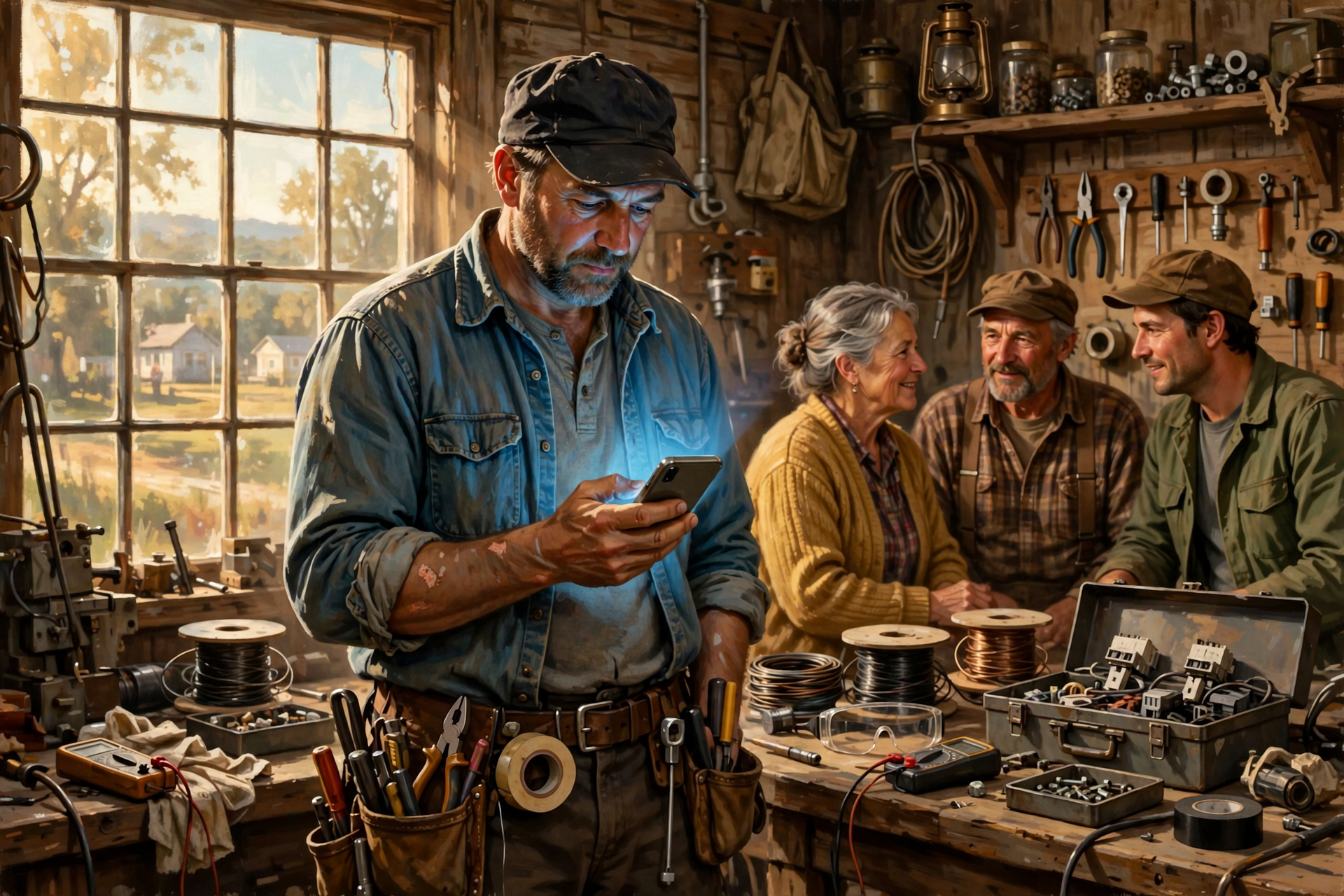
Followers are especially interesting.
A person with a million followers may be extraordinarily influential.
Or not.
A local electrician with 742 followers may have more meaningful influence over purchasing decisions in his community than somebody with 300,000 followers scattered across six continents.
The visible number is easy to measure.
The useful relationship underneath it is harder.
This is one reason modern metrics can confuse us.
We count what can be counted.
Followers.
Likes.
Views.
Impressions.
Subscribers.
But the harder questions remain:
Do people trust you?
Do they listen?
Do they come back?
Would they recommend you when no discount is offered?
Would they still think highly of you if the internet disappeared tomorrow?
Those numbers are harder to put on a dashboard.
They may also matter more.
Artificial Intelligence Has Entered the Hat Business

Artificial intelligence makes this discussion even more interesting.
AI can help a one-person business create materials that once required an entire marketing department.
It can help write descriptions.
Organize information.
Create drafts.
Answer common questions.
Improve photographs.
Develop ideas.
Help a small company communicate as clearly as a much larger one.
That can be enormously useful.
But AI can also make an empty hat look unusually impressive.
It can produce authoritative language faster than someone can acquire authoritative experience.
It can turn a thin idea into twelve polished paragraphs.
It can make weak claims sound confident.
It can give an inexperienced person the vocabulary of an expert without supplying the years that normally stand behind the vocabulary.
So we arrive at another useful distinction:
AI can help you explain your cattle. It cannot magically give you a herd.
Confidence Is Not Evidence
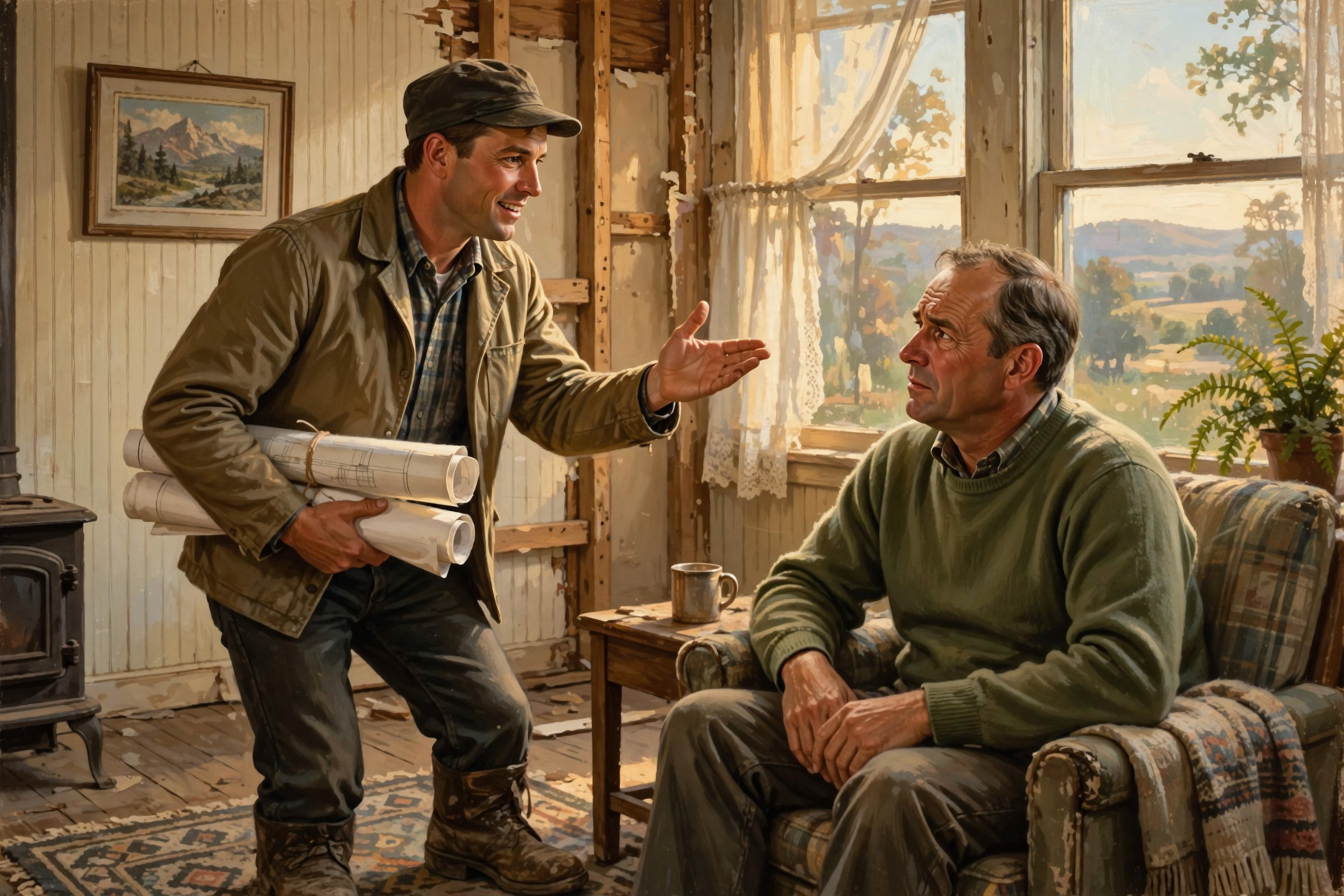
Humans have always been vulnerable to confidence.
If two people give different answers, we often find ourselves leaning toward the one who sounds more certain.
Unfortunately, confidence and correctness are distant cousins who occasionally attend the same reunion.
The confident contractor may be excellent.
Or merely confident.
The confident investment expert may understand markets.
Or may understand video production.
The confident business coach may have built several successful companies.
Or may have built a successful business selling business coaching.
The confident online commentator may have spent twenty years studying the subject.
Or twenty minutes.
Presentation gives us clues.
It does not give us proof.
How to Look for the Cattle

You do not need to become suspicious of everybody.
You simply need to develop the habit of looking past the hat.
When somebody makes a big claim, ask what would reasonably support it.
- Experience: What have they actually done?
- Evidence: Can you see examples, outcomes, references, or results?
- Specificity: Can they explain how something works without hiding behind fancy language?
- Limits: Will they admit what they do not know?
- Consistency: Does their behavior match their message?
- Reputation: What do people who have actually dealt with them say?
- Incentives: How do they make money from the advice they are giving you?
None of these questions proves honesty or expertise by itself.
Together, they help you see whether something besides a hat is standing in the pasture.
Sometimes the Quiet Fellow Owns Most of the Cows
There is a reverse lesson here too.
Do not assume the person with the smallest hat has the smallest herd.
Some extraordinarily capable people are terrible at promoting themselves.
Rural communities are full of them.
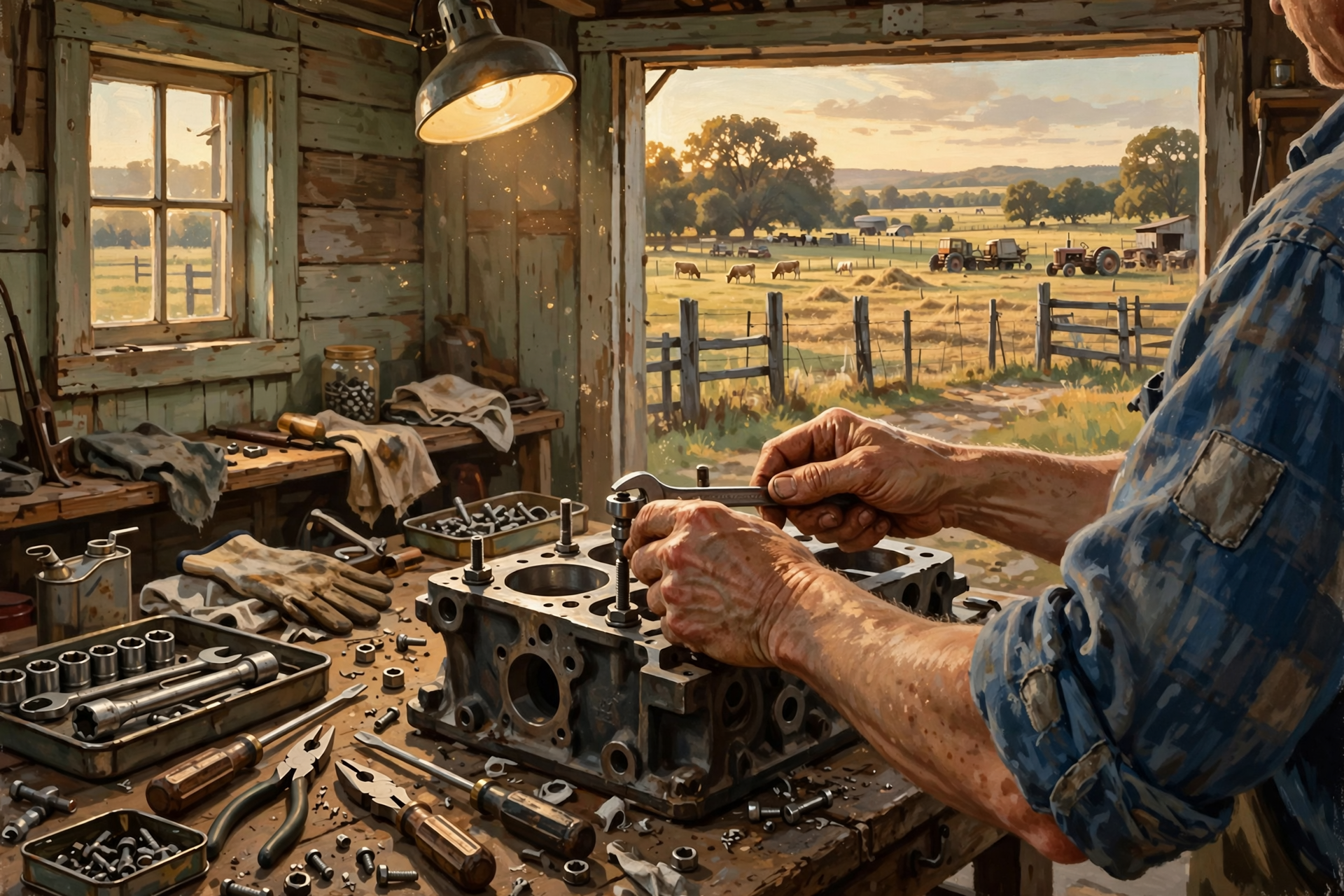
The mechanic with no website may know more about your engine than the company with the slickest advertisements.
The woman selling baked goods from a modest storefront may understand customer loyalty better than somebody teaching a university marketing course.
The farmer who rarely posts online may operate a business involving land, equipment, logistics, weather, biology, finance, labor, regulation, and risk—all before breakfast.
A lack of polish is not proof of competence either.
But it is worth remembering:
The cattle do not always advertise.
There Is Also Such a Thing as Too Little Hat

This series would be cheating if we only laughed at the obvious target.
There is another side to the saying.
Some people have plenty of cattle and refuse to put on any hat at all.
They do excellent work but never tell anybody.
Their website has not been updated since flip phones were fashionable.
The phone number online is wrong.
The Google listing says they close at 4:00 even though they have closed at 5:00 for six years.
The only photograph of the business was apparently taken through the windshield of a passing car.
Then the owner wonders why customers cannot find them.
Substance matters.
But visibility matters too.
The goal should not be no hat.
The goal is a hat that honestly represents the cattle.
For a Local Business, That Balance Matters
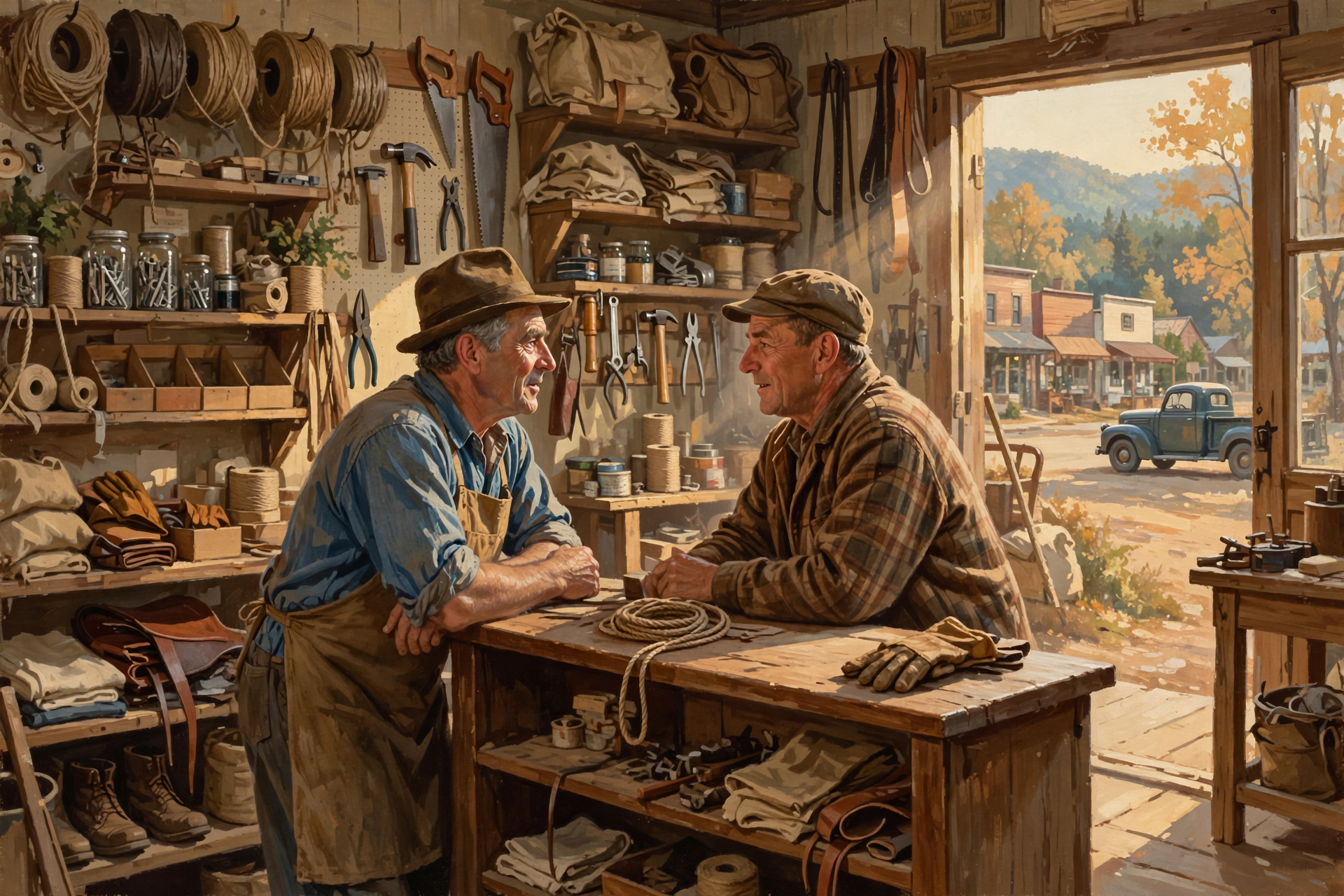
Small businesses in places like the Sequatchie Valley often compete against larger companies with more marketing money.
That does not mean the local business needs to pretend to be something it is not.
Quite the opposite.
Its strongest advantages may be real things that are difficult for a distant competitor to manufacture:
- local knowledge,
- real relationships,
- years of experience,
- familiar names and faces,
- community accountability,
- the ability to answer the telephone,
- and a reputation earned one customer at a time.
Modern tools can help make those strengths visible.
That is good branding.
You are not inventing cattle.
You are opening the gate so people can see them.
Wisdom From the Front Porch

Maybe the old expression survives because it asks one of the simplest and most useful questions in life:
Does the outside match the inside?
Not perfectly.
Nobody manages that.
But reasonably.
If somebody says they are experienced, is there experience?
If a company claims excellent service, do customers receive it?
If a product promises remarkable results, are there results?
If a person builds a reputation around knowing something, do they actually know it?
And when the answer is uncertain, we do not need to become cynical.
We just need to keep asking reasonable questions.
The hat is information.
The cattle are evidence.
Plain-English Glossary

Personal brand: The reputation, image, expertise, and qualities people associate with a person. In plain English, it is what people think of when your name comes up.
Influencer: Someone whose audience may affect what other people notice, believe, discuss, or buy. Audience size alone does not tell you how much real influence the person has.
Thought leader: A loose term for someone recognized for ideas or expertise in a field. There is no official licensing office handing out thought-leader permits.
Social proof: Evidence that other people trust, use, recommend, or approve of something—such as reviews, testimonials, referrals, or visible customers.
Vanity metric: A number that looks impressive but may not tell you much about meaningful results. A large follower count, for example, may or may not translate into trust, customers, or impact.
Credibility: The degree to which there is good reason to believe someone is knowledgeable, reliable, or trustworthy.
Frequently Asked Questions
Does “all hat and no cattle” simply mean somebody is a fake?
Not always. It usually suggests that someone’s appearance, claims, confidence, or presentation exceeds the substance supporting it. That could involve deliberate deception, innocent exaggeration, inexperience, or simply an enthusiasm that got several miles ahead of reality.
Is personal branding bad?
No. Personal branding can help people understand who you are, what you know, and what you offer. The problem occurs when branding becomes a substitute for competence instead of a way to communicate competence.
Should I distrust people with polished websites and large audiences?
No. Good presentation may reflect real success and professionalism. The sensible approach is neither automatic trust nor automatic suspicion. Look for supporting evidence.
Are reviews enough to establish credibility?
Reviews can be useful evidence, but they are only one piece of the picture. Look at patterns, detail, how a business responds to criticism, your own interactions, and recommendations from people whose judgment you trust.
How should a small business use AI without becoming “all hat and no cattle”?
Use AI to communicate genuine strengths more effectively—not to manufacture expertise, history, customers, capabilities, or results that do not exist. Let technology improve the sign on the barn. Do not ask it to invent the herd.
A Quick Hat-and-Cattle Checklist

The next time an impressive claim crosses your screen, try these questions:
- What exactly is being claimed?
- What evidence would reasonably support that claim?
- Can I find examples of the person or business actually doing the work?
- Are there independent customers, references, results, or experiences?
- Does the explanation remain convincing after the fancy terminology is removed?
- Does the person acknowledge limitations and uncertainty?
- How does this person make money, and could that influence the advice?
- Am I impressed by the results—or mostly by the presentation?
You do not need every answer every time.
You simply want to remember that hats are easier to manufacture than cattle.
Final Thought

Modern life has given us extraordinary tools for making good work visible.
A tiny Tennessee business can reach customers around the world.
A craftsman can show photographs of his work.
A farmer can explain how food is produced.
An expert can teach people she may never meet.
A new entrepreneur can look professional without spending a fortune.
Those are genuine benefits.
But the same tools can make appearance easier to manufacture than substance.
So perhaps the old cattle-country expression deserves a place in the digital age.
Admire the hat.
Appreciate good branding.
Enjoy the polished website.
Listen to the confident presentation.
Then look over the fence.
Because sooner or later, if somebody is selling cattle, there ought to be a cow somewhere.
And if there isn’t?
Well…
Bless their heart.

0 Comments